You help make Hymnary.org possible. More than 10 million people from 200+ countries found hymns, liturgical resources and encouragement on Hymnary.org in 2025, including you. Every visit affirms the global impact of this ministry.

If Hymnary has been meaningful to you this year, would you take a moment today to help sustain it? A gift of any size—paired with a note of encouragement if you wish—directly supports the server costs, research work and curation that keep this resource freely available to the world.

Give securely online today, or mail a check to:
Hymnary.org
Calvin University
3201 Burton Street SE
Grand Rapids, MI 49546

Thank you for your partnership, and may the hope of Advent fill your heart.

Person Results

Text Identifier:"^here_o_my_god_i_cast_me_at_thy_feet$"
In:people

Planning worship? Check out our sister site, ZeteoSearch.org, for 20+ additional resources related to your search.
Showing 1 - 3 of 3Results Per Page: 102050

Anonymous

Author of "Here, O my God, I cast me at Thy feet" In some hymnals, the editors noted that a hymn's author is unknown to them, and so this artificial "person" entry is used to reflect that fact. Obviously, the hymns attributed to "Author Unknown" "Unknown" or "Anonymous" could have been written by many people over a span of many centuries.

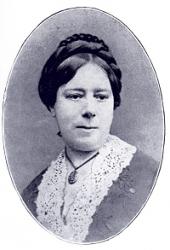
Catherine Winkworth

1827 - 1878 Translator of "Here, O my God, I cast me at Thy feet" Catherine Winkworth (b. Holborn, London, England, 1827; d. Monnetier, Savoy, France, 1878) is well known for her English translations of German hymns; her translations were polished and yet remained close to the original. Educated initially by her mother, she lived with relatives in Dresden, Germany, in 1845, where she acquired her knowledge of German and interest in German hymnody. After residing near Manchester until 1862, she moved to Clifton, near Bristol. A pioneer in promoting women's rights, Winkworth put much of her energy into the encouragement of higher education for women. She translated a large number of German hymn texts from hymnals owned by a friend, Baron Bunsen. Though often altered, these translations continue to be used in many modern hymnals. Her work was published in two series of Lyra Germanica (1855, 1858) and in The Chorale Book for England (1863), which included the appropriate German tune with each text as provided by Sterndale Bennett and Otto Goldschmidt. Winkworth also translated biographies of German Christians who promoted ministries to the poor and sick and compiled a handbook of biographies of German hymn authors, Christian Singers of Germany (1869). Bert Polman ======================== Winkworth, Catherine, daughter of Henry Winkworth, of Alderley Edge, Cheshire, was born in London, Sep. 13, 1829. Most of her early life was spent in the neighbourhood of Manchester. Subsequently she removed with the family to Clifton, near Bristol. She died suddenly of heart disease, at Monnetier, in Savoy, in July, 1878. Miss Winkworth published:— Translations from the German of the Life of Pastor Fliedner, the Founder of the Sisterhood of Protestant Deaconesses at Kaiserworth, 1861; and of the Life of Amelia Sieveking, 1863. Her sympathy with practical efforts for the benefit of women, and with a pure devotional life, as seen in these translations, received from her the most practical illustration possible in the deep and active interest which she took in educational work in connection with the Clifton Association for the Higher Education of Women, and kindred societies there and elsewhere. Our interest, however, is mainly centred in her hymnological work as embodied in her:— (1) Lyra Germanica, 1st Ser., 1855. (2) Lyra Germanica, 2nd Ser., 1858. (3) The Chorale Book for England (containing translations from the German, together with music), 1863; and (4) her charming biographical work, the Christian Singers of Germany, 1869. In a sympathetic article on Miss Winkworth in the Inquirer of July 20, 1878, Dr. Martineau says:— "The translations contained in these volumes are invariably faithful, and for the most part both terse and delicate; and an admirable art is applied to the management of complex and difficult versification. They have not quite the fire of John Wesley's versions of Moravian hymns, or the wonderful fusion and reproduction of thought which may be found in Coleridge. But if less flowing they are more conscientious than either, and attain a result as poetical as severe exactitude admits, being only a little short of ‘native music'" Dr. Percival, then Principal of Clifton College, also wrote concerning her (in the Bristol Times and Mirror), in July, 1878:— "She was a person of remarkable intellectual and social gifts, and very unusual attainments; but what specially distinguished her was her combination of rare ability and great knowledge with a certain tender and sympathetic refinement which constitutes the special charm of the true womanly character." Dr. Martineau (as above) says her religious life afforded "a happy example of the piety which the Church of England discipline may implant.....The fast hold she retained of her discipleship of Christ was no example of ‘feminine simplicity,' carrying on the childish mind into maturer years, but the clear allegiance of a firm mind, familiar with the pretensions of non-Christian schools, well able to test them, and undiverted by them from her first love." Miss Winkworth, although not the earliest of modern translators from the German into English, is certainly the foremost in rank and popularity. Her translations are the most widely used of any from that language, and have had more to do with the modern revival of the English use of German hymns than the versions of any other writer. -- John Julian, Dictionary of Hymnology (1907) ============================ See also in: Hymn Writers of the Church

Christian Scriver

1629 - 1693 Author (attributed to) of "Here, O my God, I cast me at Thy feet" Scriver, Christian, son of Christian Scriver (Schriver, Schreiber), merchant at Rendsburg in Holstein, was born at Rendsburg, Jan. 2, 1629; and was from his birth destined for the ministry. His father died of the plague, in 1629, but by the help of a rich great-uncle, he was able eventually to matriculate at the University of Rostock in Oct., 1647 (M.A., 1649). In 1650 he became tutor to a family at Segeberg, near Lübeck. While visiting a married half-sister at Stendal, he preached there with much acceptance, and was appointed, in 1653, archidiaconus of St. James's Church there. He then became, in 1667, pastor of St. James's Church at Magdeburg, where he was also appointed, in 1674, assessor at the consistory, in 1676 as Scholarch, in 1679 as Senior; and in 1685 had also the parishes and schools of the so-called Holzkreis placed under his inspection. At length he found his work too heavy, and, in 1690, accepted an invitation to Quedlinburg as consistorialrath and chief court preacher at the church of St. Servatius, and also as private chaplain to Anna Dorothea, Duchess of Saxony, and Abbess of the Lutheran Stift at Querllinburg. After a series of strokes of paralysis, he died at Quedlinburg, April 5, 1693 (Koch, iv. 78; Herzog's Real-Encyldo-pädie, xiv. p. 1, &c). Scriver was a most popular, useful, and influential preacher; his earnestness being deepened by the memory of his many wonderful escapes from accident and pestilence. He was also the author of various devotional works, which found much acceptance, e.g. his Gottholds 300 Zufällige Andachte, Magdeburg, 1663 (1671, and later eds., have 400 Andachten: English version, as Gotthold's Emblems, by R. Menzies, D.D., Edinburgh, 1857); his Seelen-Schatz, in 5 parts 1675-92; and his Gotthold's Siech-und Sieges-Bette, in 2 parts, 1687-94. It is difficult to say how many hymns Scriver wrote, apparently about ten. He refers to one or two in hisSeelenschatz and his Andachten, but does not give the full texts. A number are included, as by him, in C. Weise's abridgment of the Seelenschatz, which, was published at Wittenberg, in 1704, as the Seelenschatzes Kraft und Safft; and C. O. Weinschenk, pastor of St. Ulrich's in Magdeburg, in his Erbauliche Leben of Scriver (Magdeburg and Leipzig, 1729), gives a list of those he considers genuine. Those of Scriver's hymns which have passed into English are:— i. Auf, Seel, und danke deinem Herrn. Morning. Included, 1704, as above, and in 1729, also marked as by Scriver. But Scriver's son-in-law, Johann Heinrich Havecker …claims it as his own. Translated as, "To God, my Soul, Thank-offerings pay." By H. J. Bucholl, 1842, p. 30. ii. Der lieben Sonne Licht und Pracht. Evening. This is Scriver's best hymn. Regarding it Lauxmann, in Koch, viii. 201, speaks thus:-—"Of the beautiful hymn of this true Teacher, the Chrysostom of our Lutheran church, in which the thoughts of Gerhardt's evening hymn ring and are powerfully re¬echoed ; st. vi.-viii., are of the greatest force, and of these especially st. viii." He also gives a portion of a sermon on Rogation Sunday, 1671, in which Scriver quotes st. viii. as expressing the deepest sentiments of his heart. Translated as:— 1. With Thee I lay me down to sleep. This is a translation of stanza v., vii., viii., as No. 481, in pt. i. of the Moravian Hymn Book, 1754. It is also found in the following forms:— i. In peace I'll now lie down to sleep. In the Moravian Hymn Book, 1789. ii. I lay me down with Thee to sleep. In Maurice's Choral Hymn Book, 1861. iii. In peace will I lie down to sleep. In the Moravian Hymn Book, 1886. 2. My praise again I offer Thee. A tr. of st. iv., v., by A. T. Russell, as No. 6, in his Psalms & Hymns, 1851. 3. The lovely Sun has now fulfilled. This is a tr. of st. i., iv., v., ix., dated 1882, by M. W. Stryker, in his Hymns & Verses, 1883, p. 28, repeated in his Christian Chorals, 1885, No. 16. In his Song of Miriam, 1888, p. 26, it begins "The golden Sun has now fulfilled." iii. Hier lieg ich nun mein Gott zu deinen Füssen. Repentance. Lent . The translation in common use is:— Here, 0 my God, I cast me at Thy feet . This is a translation of st. i., iii., v., vi., x., xi., xxi., xxiii., xx vi., xxviii., by Miss Winkworth, in her Lyra Germanica, 1st Ser., 1855, p. 63. In her Chorale Book for England, 1863, No. 45, it begins, "Here, O my God, low at Thy feet I bend me;" is altered in metre; and omits the tr. of st. iii., 11. 3, 4; v.; vi., 11. 1, 2; and xxiv. [Rev. James Mearns, M.A.] --Excerpts from John Julian, Dictionary of Hymnology (1907)

Export as CSV
It looks like you are using an ad-blocker. Ad revenue helps keep us running. Please consider white-listing Hymnary.org or getting Hymnary Pro to eliminate ads entirely and help support Hymnary.org.