You help make Hymnary.org possible. More than 10 million people from 200+ countries found hymns, liturgical resources and encouragement on Hymnary.org in 2025, including you. Every visit affirms the global impact of this ministry.

If Hymnary has been meaningful to you this year, would you take a moment today to help sustain it? A gift of any size—paired with a note of encouragement if you wish—directly supports the server costs, research work and curation that keep this resource freely available to the world.

Give securely online today, or mail a check to:
Hymnary.org
Calvin University
3201 Burton Street SE
Grand Rapids, MI 49546

Thank you for your partnership, and may the hope of Advent fill your heart.

JESU A FE PADE

JESU A FE PADE

Composer: A. T. Olá Olude (1949)
Published in 10 hymnals


Printable scores: PDF, MusicXML
Audio files: MIDI

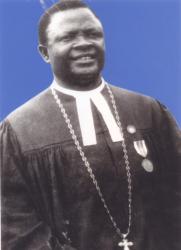
Composer: A. T. Olá Olude

Revd. (Dr.) Abraham Taiwo Olajide OLUDE was born at Abeokuta on July 16, 1908, to the family of Chief & Mrs. Joseph Sotayo Olude of Ikereku-Ikija, Abeokuta, Nigeria. He had his primary education at Ikereku Anglican Primary School, Abeokuta and later at Agbeni Methodist School, Ibadan. In 1921, he enrolled at Wesley College, Ibadan, where he distinguished himself as a brilliant scholar and a keen sportsman. He obtained the then Junior Cambridge Certificate and successfully completed the Sub-Pastor’s course in 1925. He remained at the same College till 1934 when he passed out as a full fledge Minister of Religion and was eventually ordained a Methodist Minister in 1938. He served the Church at various location both within the Northern and S… Go to person page >

Tune Information

Title: JESU A FE PADE
Composer: A. T. Olá Olude (1949)
Meter: Irregular
Incipit: 51351 32115 65611
Key: F Major

Notes

The tune name JESU A FE PADE is the incipit of the Yoruba text; the phrase means “worship (or praise) to Jesus.” African characteristics in the tune include the polyrhythmic combination of the quarter note and the dotted quarter note in 3/4 and 6/8 time, and the call/response structure in the first, second, and fourth phrases, suggesting responsorial or antiphonal performance.

A soloist or choir should sing the lines marked “unison,” and the responding group (choir or congregation) should sing the “harmony” lines. Use small hand drums, bongo drums, tambourines, woodblocks, or “shakers” (gourds, rattles) for the optional but very effective rhythmic parts.

--Psalter Hymnal Handbook, 1987

Timeline

Media

Psalter Hymnal (Gray) #245
Text: Jesus, We Love to Meet
  • Full Score (PDF, XML)
  • Bulletin Score (PDF)
  • Bulletin Score (melody only) (PDF)

Instances

Instances (1 - 7 of 7)

Hymnal #10

Lift Every Voice and Sing II #81

TextPage Scan

Moravian Book of Worship #563

Text InfoTune InfoTextScoreAudioPage Scan

Psalter Hymnal (Gray) #245

Audio

The United Methodist Hymnal #661

The United Methodist Hymnal Music Supplement #249

This Far By Faith #145

Include 3 pre-1979 instances
Suggestions or corrections? Contact us
It looks like you are using an ad-blocker. Ad revenue helps keep us running. Please consider white-listing Hymnary.org or getting Hymnary Pro to eliminate ads entirely and help support Hymnary.org.