

 My Starred Hymns
 My FlexScores
 My Hymnals
 My Purchased Files
Planning worship?
Check out our sister site, ZeteoSearch.org,
for 20+ additional resources related to your search.
- |
User Links
Person Results
Charles Wesley
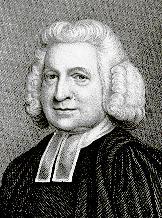
1707 - 1788 Author of "How happy every child of grace" in The Seventh-Day Adventist Hymn and Tune Book Charles Wesley, M.A. was the great hymn-writer of the Wesley family, perhaps, taking quantity and quality into consideration, the great hymn-writer of all ages. Charles Wesley was the youngest son and 18th child of Samuel and Susanna Wesley, and was born at Epworth Rectory, Dec. 18, 1707. In 1716 he went to Westminster School, being provided with a home and board by his elder brother Samuel, then usher at the school, until 1721, when he was elected King's Scholar, and as such received his board and education free. In 1726 Charles Wesley was elected to a Westminster studentship at Christ Church, Oxford, where he took his degree in 1729, and became a college tutor. In the early part of the same year his religious impressions were much deepened, and he became one of the first band of "Oxford Methodists."
In 1735 he went with his brother John to Georgia, as secretary to General Oglethorpe, having before he set out received Deacon's and Priest's Orders on two successive Sundays. His stay in Georgia was very short; he returned to England in 1736, and in 1737 came under the influence of Count Zinzendorf and the Moravians, especially of that remarkable man who had so large a share in moulding John Wesley's career, Peter Bonier, and also of a Mr. Bray, a brazier in Little Britain. On Whitsunday, 1737, [sic. 1738] he "found rest to his soul," and in 1738 he became curate to his friend, Mr. Stonehouse, Vicar of Islington, but the opposition of the churchwardens was so great that the Vicar consented that he "should preach in his church no more." Henceforth his work was identified with that of his brother John, and he became an indefatigable itinerant and field preacher. On April 8, 1749, he married Miss Sarah Gwynne. His marriage, unlike that of his brother John, was a most happy one; his wife was accustomed to accompany him on his evangelistic journeys, which were as frequent as ever until the year 1756," when he ceased to itinerate, and mainly devoted himself to the care of the Societies in London and Bristol. Bristol was his headquarters until 1771, when he removed with his family to London, and, besides attending to the Societies, devoted himself much, as he had done in his youth, to the spiritual care of prisoners in Newgate. He had long been troubled about the relations of Methodism to the Church of England, and strongly disapproved of his brother John's "ordinations." Wesley-like, he expressed his disapproval in the most outspoken fashion, but, as in the case of Samuel at an earlier period, the differences between the brothers never led to a breach of friendship. He died in London, March 29, 1788, and was buried in Marylebone churchyard. His brother John was deeply grieved because he would not consent to be interred in the burial-ground of the City Road Chapel, where he had prepared a grave for himself, but Charles said, "I have lived, and I die, in the Communion of the Church of England, and I will be buried in the yard of my parish church." Eight clergymen of the Church of England bore his pall. He had a large family, four of whom survived him; three sons, who all became distinguished in the musical world, and one daughter, who inherited some of her father's poetical genius. The widow and orphans were treated with the greatest kindness and generosity by John Wesley.
As a hymn-writer Charles Wesley was unique. He is said to have written no less than 6500 hymns, and though, of course, in so vast a number some are of unequal merit, it is perfectly marvellous how many there are which rise to the highest degree of excellence. His feelings on every occasion of importance, whether private or public, found their best expression in a hymn. His own conversion, his own marriage, the earthquake panic, the rumours of an invasion from France, the defeat of Prince Charles Edward at Culloden, the Gordon riots, every Festival of the Christian Church, every doctrine of the Christian Faith, striking scenes in Scripture history, striking scenes which came within his own view, the deaths of friends as they passed away, one by one, before him, all furnished occasions for the exercise of his divine gift. Nor must we forget his hymns for little children, a branch of sacred poetry in which the mantle of Dr. Watts seems to have fallen upon him. It would be simply impossible within our space to enumerate even those of the hymns which have become really classical. The saying that a really good hymn is as rare an appearance as that of a comet is falsified by the work of Charles Wesley; for hymns, which are really good in every respect, flowed from his pen in quick succession, and death alone stopped the course of the perennial stream.
It has been the common practice, however for a hundred years or more to ascribe all translations from the German to John Wesley, as he only of the two brothers knew that language; and to assign to Charles Wesley all the original hymns except such as are traceable to John Wesley through his Journals and other works.
The list of 482 original hymns by John and Charles Wesley listed in this Dictionary of Hymnology have formed an important part of Methodist hymnody and show the enormous influence of the Wesleys on the English hymnody of the nineteenth century.
-- Excerpts from John Julian, Dictionary of Hymnology (1907)
==================
Charles Wesley, the son of Samuel Wesley, was born at Epworth, Dec. 18, 1707. He was educated at Westminster School and afterwards at Christ Church, Oxford, where he graduated M.A. In 1735, he took Orders and immediately proceeded with his brother John to Georgia, both being employed as missionaries of the S.P.G. He returned to England in 1736. For many years he engaged with his brother in preaching the Gospel. He died March 29, 1788. To Charles Wesley has been justly assigned the appellation of the "Bard of Methodism." His prominence in hymn writing may be judged from the fact that in the "Wesleyan Hymn Book," 623 of the 770 hymns were written by him; and he published more than thirty poetical works, written either by himself alone, or in conjunction with his brother. The number of his separate hymns is at least five thousand.
--Annotations of the Hymnal, Charles Hutchins, M.A., 1872.
Charles Wesley
Isaac Watts
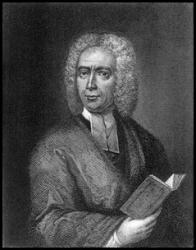
1674 - 1748 Author of "Lo! what a glorious sight appears" in New Christian Hymn and Tune Book Isaac Watts was the son of a schoolmaster, and was born in Southampton, July 17, 1674. He is said to have shown remarkable precocity in childhood, beginning the study of Latin, in his fourth year, and writing respectable verses at the age of seven. At the age of sixteen, he went to London to study in the Academy of the Rev. Thomas Rowe, an Independent minister. In 1698, he became assistant minister of the Independent Church, Berry St., London. In 1702, he became pastor. In 1712, he accepted an invitation to visit Sir Thomas Abney, at his residence of Abney Park, and at Sir Thomas' pressing request, made it his home for the remainder of his life. It was a residence most favourable for his health, and for the prosecution of his literary labours. He did not retire from ministerial duties, but preached as often as his delicate health would permit.
The number of Watts' publications is very large. His collected works, first published in 1720, embrace sermons, treatises, poems and hymns. His "Horae Lyricae" was published in December, 1705. His "Hymns" appeared in July, 1707. The first hymn he is said to have composed for religious worship, is "Behold the glories of the Lamb," written at the age of twenty. It is as a writer of psalms and hymns that he is everywhere known. Some of his hymns were written to be sung after his sermons, giving expression to the meaning of the text upon which he had preached. Montgomery calls Watts "the greatest name among hymn-writers," and the honour can hardly be disputed. His published hymns number more than eight hundred.
Watts died November 25, 1748, and was buried at Bunhill Fields. A monumental statue was erected in Southampton, his native place, and there is also a monument to his memory in the South Choir of Westminster Abbey. "Happy," says the great contemporary champion of Anglican orthodoxy, "will be that reader whose mind is disposed, by his verses or his prose, to imitate him in all but his non-conformity, to copy his benevolence to men, and his reverence to God." ("Memorials of Westminster Abbey," p. 325.)
--Annotations of the Hymnal, Charles Hutchins, M.A., 1872.
=================================
Watts, Isaac, D.D. The father of Dr. Watts was a respected Nonconformist, and at the birth of the child, and during its infancy, twice suffered imprisonment for his religious convictions. In his later years he kept a flourishing boarding school at Southampton. Isaac, the eldest of his nine children, was born in that town July 17, 1674. His taste for verse showed itself in early childhood. He was taught Greek, Latin, and Hebrew by Mr. Pinhorn, rector of All Saints, and headmaster of the Grammar School, in Southampton. The splendid promise of the boy induced a physician of the town and other friends to offer him an education at one of the Universities for eventual ordination in the Church of England: but this he refused; and entered a Nonconformist Academy at Stoke Newington in 1690, under the care of Mr. Thomas Rowe, the pastor of the Independent congregation at Girdlers' Hall. Of this congregation he became a member in 1693.
Leaving the Academy at the age of twenty, he spent two years at home; and it was then that the bulk of the Hymns and Spiritual Songs (published 1707-9) were written, and sung from manuscripts in the Southampton Chapel. The hymn "Behold the glories of the Lamb" is said to have been the first he composed, and written as an attempt to raise the standard of praise. In answer to requests, others succeeded. The hymn "There is a land of pure delight" is said to have been suggested by the view across Southampton Water. The next six years of Watts's life were again spent at Stoke Newington, in the post of tutor to the son of an eminent Puritan, Sir John Hartopp; and to the intense study of these years must be traced the accumulation of the theological and philosophical materials which he published subsequently, and also the life-long enfeeblement of his constitution.
Watts preached his first sermon when he was twenty-four years old. In the next three years he preached frequently; and in 1702 was ordained pastor of the eminent Independent congregation in Mark Lane, over which Caryl and Dr. John Owen had presided, and which numbered Mrs. Bendish, Cromwell's granddaughter, Charles Fleetwood, Charles Desborough, Sir John Hartopp, Lady Haversham, and other distinguished Independents among its members. In this year he removed to the house of Mr. Hollis in the Minories. His health began to fail in the following year, and Mr. Samuel Price was appointed as his assistant in the ministry. In 1712 a fever shattered his constitution, and Mr. Price was then appointed co-pastor of the congregation which had in the meantime removed to a new chapel in Bury Street. It was at this period that he became the guest of Sir Thomas Abney, under whose roof, and after his death (1722) that of his widow, he remained for the rest of his suffering life; residing for the longer portion of these thirty-six years principally at the beautiful country seat of Theobalds in Herts, and for the last thirteen years at Stoke Newington. His degree of D.D. was bestowed on him in 1728, unsolicited, by the University of Edinburgh. His infirmities increased on him up to the peaceful close of his sufferings, Nov. 25, 1748. He was buried in the Puritan restingplace at Bunhill Fields, but a monument was erected to him in Westminster Abbey.
His learning and piety, gentleness and largeness of heart have earned him the title of the Melanchthon of his day. Among his friends, churchmen like Bishop Gibson are ranked with Nonconformists such as Doddridge. His theological as well as philosophical fame was considerable. His Speculations on the Human Nature of the Logos, as a contribution to the great controversy on the Holy Trinity, brought on him a charge of Arian opinions. His work on The Improvement of the Mind, published in 1741, is eulogised by Johnson. His Logic was still a valued textbook at Oxford within living memory. The World to Come, published in 1745, was once a favourite devotional work, parts of it being translated into several languages. His Catechisms, Scripture History (1732), as well as The Divine and Moral Songs (1715), were the most popular text-books for religious education fifty years ago. The Hymns and Spiritual Songs were published in 1707-9, though written earlier. The Horae Lyricae, which contains hymns interspersed among the poems, appeared in 1706-9. Some hymns were also appended at the close of the several Sermons preached in London, published in 1721-24. The Psalms were published in 1719. The earliest life of Watts is that by his friend Dr. Gibbons. Johnson has included him in his Lives of the Poets; and Southey has echoed Johnson's warm eulogy. The most interesting modern life is Isaac Watts: his Life and Writings, by E. Paxton Hood. [Rev. H. Leigh Bennett, M.A.]
A large mass of Dr. Watts's hymns and paraphrases of the Psalms have no personal history beyond the date of their publication. These we have grouped together here and shall preface the list with the books from which they are taken.
(l) Horae Lyricae. Poems chiefly of the Lyric kind. In Three Books Sacred: i.To Devotion and Piety; ii. To Virtue, Honour, and Friendship; iii. To the Memory of the Dead. By I. Watts, 1706. Second edition, 1709. (2) Hymns and Spiritual Songs. In Three Books: i. Collected from the Scriptures; ii. Composed on Divine Subjects; iii. Prepared for the Lord's Supper. By I. Watts, 1707. This contained in Bk i. 78 hymns; Bk. ii. 110; Bk. iii. 22, and 12 doxologies. In the 2nd edition published in 1709, Bk. i. was increased to 150; Bk. ii. to 170; Bk. iii. to 25 and 15 doxologies. (3) Divine and Moral Songs for the Use of Children. By I. Watts, London, 1715. (4) The Psalms of David Imitated in the Language of the New Testament, And apply'd to the Christian State and Worship. By I. Watts. London: Printed by J. Clark, at the Bible and Crown in the Poultry, &c, 1719. (5) Sermons with hymns appended thereto, vol. i., 1721; ii., 1723; iii. 1727. In the 5th ed. of the Sermons the three volumes, in duodecimo, were reduced to two, in octavo. (6) Reliquiae Juveniles: Miscellaneous Thoughts in Prose and Verse, on Natural, Moral, and Divine Subjects; Written chiefly in Younger Years. By I. Watts, D.D., London, 1734. (7) Remnants of Time. London, 1736.
454 Hymns and Versions of the Psalms, in addition to the centos are all in common use at the present time.
--Excerpts from John Julian, Dictionary of Hymnology (1907)
==================================
Watts, I. , p. 1241, ii. Nearly 100 hymns, additional to those already annotated, are given in some minor hymn-books.
--John Julian, Dictionary of Hymnology, Appendix, Part II (1907)
=================
Watts, I. , p. 1236, i. At the time of the publication of this Dictionary in 1892, every copy of the 1707 edition of Watts's Hymns and Spiritual Songs was supposed to have perished, and all notes thereon were based upon references which were found in magazines and old collections of hymns and versions of the Psalms. Recently three copies have been recovered, and by a careful examination of one of these we have been able to give some of the results in the revision of pp. 1-1597, and the rest we now subjoin.
i. Hymns in the 1709 ed. of Hymns and Spiritual Songs which previously appeared in the 1707 edition of the same book, but are not so noted in the 1st ed. of this Dictionary:—
On pp. 1237, L-1239, ii., Nos. 18, 33, 42, 43, 47, 48, 60, 56, 58, 59, 63, 75, 82, 83, 84, 85, 93, 96, 99, 102, 104, 105, 113, 115, 116, 123, 124, 134, 137, 139, 146, 147, 148, 149, 162, 166, 174, 180, 181, 182, 188, 190, 192, 193, 194, 195, 197, 200, 202.
ii. Versions of the Psalms in his Psalms of David, 1719, which previously appeared in his Hymns and Spiritual Songs, 1707:—
On pp. 1239, U.-1241, i., Nos. 241, 288, 304, 313, 314, 317, 410, 441.
iii. Additional not noted in the revision:—
1. My soul, how lovely is the place; p. 1240, ii. 332. This version of Ps. lxiv. first appeared in the 1707 edition of Hymns & Spiritual Songs, as "Ye saints, how lovely is the place."
2. Shine, mighty God, on Britain shine; p. 1055, ii. In the 1707 edition of Hymns & Spiritual Songs, Bk. i., No. 35, and again in his Psalms of David, 1719.
3. Sing to the Lord with [cheerful] joyful voice, p. 1059, ii. This version of Ps. c. is No. 43 in the Hymns & Spiritual Songs, 1707, Bk. i., from which it passed into the Ps. of David, 1719.
A careful collation of the earliest editions of Watts's Horae Lyricae shows that Nos. 1, 7, 9, 10, 11, 12, 14, 16, p. 1237, i., are in the 1706 ed., and that the rest were added in 1709. Of the remaining hymns, Nos. 91 appeared in his Sermons, vol. ii., 1723, and No. 196 in Sermons, vol. i., 1721. No. 199 was added after Watts's death. It must be noted also that the original title of what is usually known as Divine and Moral Songs was Divine Songs only.
--John Julian, Dictionary of Hymnology, New Supplement (1907)
===========
See also in:
Hymn Writers of the Church
Isaac Watts
Anne Steele
1717 - 1778 Author of "Come, ye that love the Savior's name" in Sacred Hymns and Tunes Anne Steele was the daughter of Particular Baptist preacher and timber merchant William Steele. She spent her entire life in Broughton, Hampshire, near the southern coast of England, and devoted much of her time to writing. Some accounts of her life portray her as a lonely, melancholy invalid, but a revival of research in the last decade indicates that she had been more active and social than what was previously thought. She was theologically conversant with Dissenting ministers and "found herself at the centre of a literary circle that included family members from various generations, as well as local literati." She chose a life of singleness to focus on her craft. Before Christmas in 1742, she declined a marriage proposal from contemporary minister-hymnist Benjamin Beddome. All the same, some of Steele's sufferings were very real. She lost her mother at age 3, a potential suitor at age 20, her step mom at 43, and her sister-in-law at 45. She spent many years caring for her father until his death in 1769. For most of her life, she exhibited symptoms of malaria, including persistent pain, fever, headaches, and stomach aches. Caleb Evans, in his preface to Steele's posthumous Miscellaneous Pieces in Verse and Prose (1780), noted that she had been bed ridden for "some years" before her death: When the interesting hour came, she welcomed its arrival, and though her feeble body was excruciated with pain, her mind was perfectly serene. . . . She took the most affectionate leave of her weeping friends around her, and at length, the happy moment of her dismission arising, she closed her eyes, and with these animating words on her dying lips, "I know that my Redeemer liveth," gently fell asleep in Jesus. Historically, her most popular hymn has been "When I survey life's varied scene" (and its shortened form, "Father, whate'er of earthly bliss"), a hymn that turns earthly loss or denial into a spirit of thankfulness, published in over 800 North American hymnals since 1792. Not all of her work deals with personal agony. Her hymns span a wide doctrinal and ecclesiastical range, some crafted and used for her father's congregation. Her metrical psalms are among the finest of the genre. Steele's hymns and psalms were published in two volumes in 1760, Poems on Subjects Chiefly Devotional, under the pseudonym Theodosia, with an additional volume of material published after her death, in Miscellaneous Pieces in Verse and Prose, 1780. Another small collection, Verses for Children, was issued in 1788, with two other editions given in 1803 and 1806. Sixty-two of her hymns, including new material and some revisions by Steele, were published in a hymnal for Baptists in 1769, A Collection of Hymns Adapted to Public Worship, edited by Caleb Evans and John Ash. Forty seven were included in John Rippon's A Selection of Hymns from the Best Authors in 1787; the only author with larger representation was Philip Doddridge, with 101. These collections represent the earliest attempts to anthologize Baptist hymns and were vital for bringing Steele's hymns into wider public worship, where they have been a mainstay for over two hundred years.
Chris Fenner adapted from The Towers (Southern Baptist Theological Seminary, August 2015)
Recommended Bibliography:
Cynthia Y. Aalders, To Express the Ineffable: The Hymns and Spirituality of Anne Steele (Milton Keynes, U.K.: Paternoster, 2008).
Cynthia Y. Aalders, "In melting grief and ardent love: Anne Steele's contribution to eighteenth-century hymnody," The Hymn (summer 2009), 16-25.
J.R. Broome, A Bruised Reed: The Life and Times of Anne Steele (Harpenden, U.K.: Gospel Standard Trust Publications, 2007).
Joseph Carmichael, The Hymns of Anne Steele in John Rippon's Selection of Hymns: A Theological Analysis in the Context of the English Particular Baptist Revival (2012), dissertation, http://digital.library.sbts.edu/handle/10392/4112
Priscilla Wong, Anne Steele and Her Spiritual Vision (Grand Rapids: Reformation Heritage Books, 2012).
Timothy Whelan & Julia B. Griffin, eds., Nonconformist Women Writers, 1720–1840, vols. 1 & 2 (London: Pickering & Chatto, 2011).
========================
Steele, Anne, born in 1716, was the daughter of Mr. Wm. Steele, a timber merchant, and pastor, without salary, of the Baptist Church at Broughton, in Hampshire. At an early age she showed a taste for literature, and would often entertain her friends by her poetical compositions. But it was not until 1760 that she could be prevailed upon to publish. In that year two volumes appeared under the title of Poems on Subjects chiefly Devotional, by Theodosia. After her death, which occurred in November, 1778, a new edition was published with an additional volume and a Preface by the Rev. Dr. Caleb Evans, of Bristol (Bristol, 1780). In the three volumes are 144 hymns, 34 Psalms in verse, and about 30 short poems. They have been reprinted in one vol. by D. Sedgwick, 1863….
Among Baptist hymnwriters Miss Steele stands at the head, if we regard either the number of her hymns which have found a place in the hymnals of the last 120 years, or the frequency with which they have been sung. Although few of them can be placed in the first rank of lyrical compositions, they are almost uniformly simple in language, natural and pleasing in imagery, and full of genuine Christian feeling. Miss Steele may not inappropriately be compared with Miss F. R. Havergal, our "Theodosia" of the 19th century. In both there is the same evangelic fervour, in both the same intense personal devotion to the Lord Jesus. But whilst Miss Steele seems to think of Him more frequently as her "bleeding, dying Lord "—dwelling on His sufferings in their physical aspect—Miss Havergal oftener refers to His living help and sympathy, recognizes with gladness His present claims as "Master" and "King," and anticipates almost with ecstasy His second coming. Looking at the whole of Miss Steele's hymns, we find in them a wider range of thought than in Miss Havergal's compositions. She treats of a greater variety of subjects. On the other hand, Miss Havergal, living in this age of missions and general philanthropy, has much more to say concerning Christian work and personal service for Christ and for humanity. Miss Steele suffered from delicacy of health and from a great sorrow, which befell her in the death of her betrothed under peculiarly painful circumstances. In other respects her life was uneventful, and occupied chiefly in the discharge of such domestic and social duties as usually fall to the lot of the eldest daughter of a village pastor. She was buried in Broughton churchyard. [Rev W. R. Stevenson, M.A.]
A large number of Miss Steele's hymns are in common use, the larger proportion being in American hymnbooks. In addition to "Almighty Maker of my frame," “Far from these narrow scenes of night," "Father of mercies in Thy word," and others annotated under their respective first lines, there are also:—
i. From her Poems on Subjects Chiefly Devotional, 1760, vols. i., ii.
1. Come, let our souls adore the Lord. Pleading for Mercy. One of two hymns "On the Fast, Feb. 11, 1757," the first being "While justice waves her vengeful hand."
2. Come, tune ye saints, your noblest strains. Christ Dying and Rising.
3. Deep are the wounds which sin has made. Christ, the Physician.
4. Enslaved by sin, and bound in chains. Redemption.
5. Eternal power, almighty God. Divine Condescension.
6. Eternal Source of joys divine. Divine Assurance desired.
7. Great God, to Thee my evening song. Evening.
8. Great Source of boundless power and grace. Desiring to Trust in God.
9. Hear, gracious [God] Lord, my humble moan [prayer] . The presence of God desired.
10. Hear, O my God, with pity hear. Ps. cxliii.
11. How long shall earth's alluring toys ? On Longing after unseen pleasures.
12. How lovely, how divinely sweet. Ps. lxxziv.
13. How oft, alas, this wretched heart. Pardoning Love.
14. In vain my roving thoughts would find. Lasting Happiness.
15. Jesus, the spring of joys divine. Christ the Way.
16. Lord, how mysterious are Thy ways. Providence.
17. Lord, Thou hast been Thy Children's God. Ps. xc.
18. Lord, we adore Thy boundless grace. Divine Bounty.
19. Lord, when my [our] raptured thought surveys. Creation and Providence.
20. Lord, when my thoughts delighted rove. Passiontide.
21. My God, 'tis to Thy mercy seat. Divine Mercy.
22. My God, to Thee I call. Lent.
23. O for a sweet, inspiring ray. The Ascended Saviour.
24. O Thou Whose tender mercy hears. Lent.
25. Permit me, Lord, to seek Thy face. Strength and Safety in God alone.
26. Should famine o'er the mourning field. During Scarcity.
27. So fades the lovely, blooming flower. Death of a Child.
28. Stretched on the Cross the Saviour dies. Good Friday.
29. The Lord, my Shepherd and my Guide. Ps.xxiii.
30. The Lord, the God of glory reigns. Ps. xciii.
31. The Saviour calls; let every ear. The Invitation.
32. There is a glorious world on high. True Honour.
33. Thou lovely [only] Source of true delight. Desiring to know Jesus.
34. Thou only Sovereign of my heart. Life in Christ alone.
35. To Jesus, our exalted Lord. Holy Communion.
36. To our Redeemer's glorious Name. Praise to the Redeemer.
37. To your Creator, God. A Rural Hymn.
38. When I survey life's varied scene. Resignation.
39. When sins and fears prevailing rise. Christ the Life of the Soul.
40. Where is my God? does He retire. Rreathing after God.
41. While my Redeemer's near. The Good Shepherd.
42. Why sinks my weak desponding mind? Hope in God.
43. Ye earthly vanities, depart. Love for Christ desired.
44. Ye glittering toys of earih adieu. The Pearl of great Price.
45. Ye humble souls, approach your God. Divine Goodness.
ii. From the Bristol Baptist Collection of Ash & Evans, 1769.
46. Come ye that love the Saviour's Name. Jesus, the King of Saints.
47. How helpless guilty nature lies. Need of Receiving Grace.
48. Praise ye the Lord let praise employ. Praise.
iii. Centos and Altered Texts,
49. How blest are those, how truly wise. True honour. From "There is a glorious world on high."
50. How far beyond our mortal view. Christ the Supreme Beauty. From "Should nature's charms to please the eye," 1760, st. iii.
51. In vain I trace creation o'er. True happiness. From "When fancy spreads her boldest wings," 1760, st. ii.
52. Jesus, and didst thou leave the sky? Praise to Jesus. From “Jesus, in Thy transporting name," 1760, st. iv.
53. Look up, my soul, with cheerful eye. Breathing after God. From No. 40, st. v.
54. Lord, in the temple of Thy grace. Christ His people's Joy. From "The wondering nations have beheld," 1760, st. iii.
55. My God, O could I make the claim. Part of No. 9 above.
56. My soul, to God, its source, aspires. God, the Soul's only Portion. From "In vain the world's alluring smile," st. iii.
57. O could our thoughts and wishes fly. Part of No. 11 above, st. iv.
58. O for the eye of faith divine. Death anticipated. From "When death appears before my sight," 1760, st. iii., vii., viii. altered, with opening stanzas from another source.
59. O Jesus, our exalted Head. Holy Communion. From "To Jesus, our exalted Lord." See No. 35.
60. O world of bliss, could mortal eyes. Heaven. From "Far from these narrow scenes of night."
61. See, Lord, Thy willing subjects bow. Praise to Christ. From "O dearer to my thankful heart," 1780, st. 5.
62. Stern winter throws his icy chains. Winter. From "Now faintly smile day's hasty hours," 1760, st. ii.
63. Sure, the blest Comforter is nigh. Whitsuntide. From "Dear Lord, and shall Thy Spirit rest," 1760, st. iii.
64. The God of my salvation lives. In Affliction. From, "Should famine, &c," No. 26, st. iv.
65. The Gospel, O what endless charms. The Gospel of Redeeming Love. From "Come, Heavenly Love, inspire my song."
66. The mind was formed lo mount sublime. The Fettered Mind. From "Ah! why should this immortal mind?" 1760, st. ii.
67. The once loved form now cold and dead. Death of a Child. From "Life is a span, a fleeting hour," 1760, st. iii.
68. Thy gracious presence, O my God. Consolation in Affliction. From "In vain, while dark affliction spreads," 1780, st. iv.
69. Thy kingdom, Lord, for ever stands. Ps. cxlv. From "My God, my King, to Thee I'll raise," 1760, st. xii.
70. Triumphant, Christ ascends on high. Ascension. From "Come, Heavenly Love, inspire my song," 1760, st. xxxii.
71. When blest with that transporting view. Christ the Redeemer. From "Almighty Father, gracious Lord," 1760, st. xi.
72. When death before my sight. Death Anticipated. From "When death appears before my sight," 1760.
73. When gloomy thoughts and boding fears. Com¬forts of Religion. From "O blest religion, heavenly fair," 1760, st. ii.
74. When weary souls with sin distrest. Invitation to Rest. From "Come, weary souls, with sin distressed," 1760.
75. Whene'er the angry passions rise. Example of Christ. From “And is the gospel peace and love?" 1760, st. ii.
All the foregoing hymns are in D. Sedgwick's reprint of Miss Steele's Hymns, 1863.
--Excerpts from John Julian, Dictionary of Hymnology (1907)
====================
Steele, Anne, p. 1089, i., Additional hymns in common use:
1. Amazing love that stoop'd so low. Thankfulness. From "O dearer to my thankful heart," 1780, iii.
2. Bright scenes of bliss, unclouded skies. Saved by Hope. Poems, 1760, i. p. 228.
3. Jesus demands this heart of mine. Pardon De¬sired. Poems, 1760, i. p. 120.
4. Jesus, Thou Source divine. Christ the Way. Poems, 1760, i. p. 53, altered.
5. Lord, how mysterious are Thy ways. Mysteries of Providence. Poems, 1760, i. p. 131.
6. Lord^in Thy great, Thy glorious Name. Ps. xxxi. Poems, 1760, ii. p. 158.
--John Julian, Dictionary of Hymnology, Appendix, Part II (1907)
Anne Steele
William Hiley Bathurst
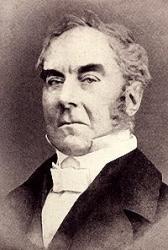
1796 - 1877 Person Name: William H. Bathurst (1796-1877) Author of "O for a Faith" in Seventh-day Adventist Hymnal Bathurst, William Hiley , M.A., son of the Rt. Hon. Charles Bragge (afterwards Bathurst) some time M.P. for Bristol, born at Clevedale, near Bristol, Aug. 28, 1796, and educated at Winchester, and Christ Church, Oxford, graduating B.A. in 1818. From 1820 to 1852 he held the Rectory of Barwick-in-Elmet, near Leeds. Resigning the Rectory in the latter year, through his inability to reconcile his doctrinal views with the Book of Common Prayer, he retired into private life, and died at Lydney Park, Gloucestershire, Nov. 25, 1877. His works include, The Georgics of Virgil: Translated by W. H. B., 1849; Metrical Musings; or, Thoughts on Sacred Subjects in Verse, 1849; and Psalms and Hymns for Public and Private Use, 1831 (2nd ed. 1842). This last contains 141 versions of Psalms, and 206 hymns. All the latter, and many of the former are original. Of his hymns, those in most extensive use are, "Hark! the distant isles proclaim," "Holy Spirit from on high,” "Jesus, Thy Church with longing eyes,” "Eternal Spirit, by whose power," "O for a faith that will not shrink” and “O Saviour, may we never rest." In addition to these and a few others (all of which are annotated under their first lines), the following are in common use, but mainly in America:—
1. Before Thy cross, my dying Lord. Faith.
2. Before Thy mercy-seat, O Lord. Holy Scriptures.
3. Behold what unspeakable love. Heaven.
4. Does the Lord of Glory speak? Holy Scripture.
5. Ere the world with light invested. Holy Spirit.
6. Except the Lord our labours bless. Ps. cxxvii.
1. Full of weakness and of sin. The Creator Spirit desired.
8. Glory to the Almighty Father. Praise.
9. Holy Lord, our hearts prepare. Preparation for Prayer.
10. Holy Spirit from on high. Holy Spirit's direction implored.
11. How blest are they who feel the weight. Repentance.
12. How strange that souls whom Jesus feeds. Conflict.
13. How sweet it is in early youth. Youthful Piety.
14. How sweet the hour of closing day. Death.
15. Led by a Father's gentle hand. Communion of Saints
16. Lord, a better heart bestow. Lent.
17. Lord, bid the light arise. To the Holy Spirit.
18. Lord, shed Thy glory as of old. Whitsuntide.
19. Lord, what blessed consolation. Safety of the Church.
20. Lord, when our offerings we present. Offertory.
21. 0 for a beam of heavenly light. Lent.
22. 0 for that flame of living tire. Holy Spirit.
23. 0 give thanks unto the Lord. Ps. cv.
24. Shepherd of Israel, from above. On behalf of Children.
25. This day the Lord hath called His own. Sunday.
26. When the world my heart is rending. Heaven.
27. Why search ye in the narrow tomb? Ascension.
28. Ye servants of the living God. Praise.
All these hymns were given in his Psalms & Hymns , &c, 1831 (Preface dated November 15th, 1830), and repeated, without alteration, in the 2nd ed., 1842. They are characterized by simplicity of language, and directness of aim; but do not in any instance rise above the ordinary level of passable hymn-writing. In some American collections Bathurst's name is contracted to "Bath," and this is regarded either as a complete surname or as a Bath Collection. The contraction was given by Bickersteth in his Christian Psalmody, 1833.
--John Julian, Dictionary of Hymnology (1907)
===================
Bathurst, William H., p. 117, ii. Additional hymns from his Psalms & Hymns, 1831, are in common use as follows:—
1. Great God, when I approach Thy throne. Redemption.
2. How bright a day was that which saw. The First Sabbath.
3. How frail and fallible I am. Jesus Unchangeable.
4. In Jesus' name with one accord. Divine Worship.
5. Lord, I claim Thee for my own. Ps. lxiii.
6. Lord shew Thy glory as of old. This is not "Lord shed Thy glory, &c," as stated at p. 118, i., 18.
7. Lord, when I lift my voice to Thee. Ps. ci.
8. O Lord, defend us as of old. Ps. lxxiv.
9. O Lord, how long shall heathens hold. Ps. lxxix.
10. 0 Lord, look down with pitying eye. Intercession for the Jews. Begins with st. iv. of “0 how is Zion's glory gone."
11. Praise God, O my soul. Ps. cxlvi.
12. Saviour, at Thy feet we bow. United Prayer.
13. 'Tis past, that agonizing hour. Ascension.
14. The Lord look'd all around. Universal Corruption.
15. To the Source of every blessing. Praise to the Father.
16. What can relieve the troubled soul? Christ the Comforter.
--John Julian, Dictionary of Hymnology, Appendix, Part II (1907)
William Hiley Bathurst
Anonymous
Person Name: Anon. Author of "Rejoice, believer, in the Lord" in The Seventh-Day Adventist Hymn and Tune Book In some hymnals, the editors noted that a hymn's author is unknown to them, and so this artificial "person" entry is used to reflect that fact. Obviously, the hymns attributed to "Author Unknown" "Unknown" or "Anonymous" could have been written by many people over a span of many centuries.
Anonymous
Jeremiah Ingalls
1764 - 1838 Person Name: Jeremiah Ingalls (1764-1828) Composer of "NORTHFIELD (Ingalls)" in Seventh-day Adventist Hymnal Jeremiah Ingalls USA 1764-1838. Born at Andover, MA, his father died of hardships from the American Revolutionary War when he was thirteen. In VT, he worked as a farmer, Cooper, Taverner, and choirmaster. He mastered the bass viol (similar to a cello) and became a composer. He moved to Newbury, VT, in 1787, and in 1791 he married Mary (Polly) Bigelow of Westminster, MA, and they had eleven children (nine living to adulthood): Smith, Jeremiah, Joshua, Jeremiah, Mary, Moses, Elizabeth, John, Almyra, Isaac, and Hannah. He taught singing and began leading the singing at the First Congregational Church there. The choir became well-known, and people came from miles around to hear them sing. In 1800 he built and operated a tavern. He also worked as a cooper. In 1803 he became a deacon, and in 1805 he published a song book, “Christian Harmony”, that contained folk and popular songs with tunes used in spiritual songs sung in early religious revivals and campmeetings, some becoming hymns in later song books. It was said that at times he would be so immersed in his music that his livelihood suffered as a result. He was removed and excommunicated from his church in 1810, having a falling out with the church due to marriage infidelity that he refused to repent of. He ran his tavern for a number of years, but finally sold it and moved to Rochester, VT, in 1819, where he became the first choirmaster of the Church of Christ. His tenure there was successful, and he was a signer of the document establishing construction of the first church building in Rochester (1812). Later, his son, John, succeeded him as choirmaster there. the family’s last move was to a farm near Hancock, VT. He was described as short, portly, good-humored, and absentminded, and having a high voice, but singing bass well. His family was musical, some noted for their musical abilities. A singing society in VT was named for him and promoted singing events. Some of his music became well-known around the world. He died at Hancock, VT.
Note: It is said that he wrote a letter to the First Congregational Church in Westminster 18 years after departing repenting of his infidelity (allegedly after his illegitimate son, Thomas, was of age, but the letter was lost in church records, although the church said they had received it.
John Perry
Jeremiah Ingalls
John Logan
1748 - 1788 Person Name: Logan Author of "Behold, the mountain of the Lord" in African Methodist Episcopal hymn and tune book Logan, John, son of a farmer, born at Fala, Midlothian, 1748, and educated at Edinburgh University, in due course entering the ministry of the Church of Scotland and becoming the minister of South Leith in 1770. During the time he held this charge he delivered a course of lectures on philosophy and history with much success. While he was thus engaged, the chair of Universal History in the University became vacant; but as a candidate he was unsuccessful. A tragedy, entitled Runnamede, followed. He offered it to the manager of Covent Garden Theatre, but it was interdicted by the Lord Chamberlain "upon suspicion of having a seditious tendency." It was subsequently acted in Edinburgh. In 1775 he formed one of the Committee by whom the Translations and Paraphrases of the Church of Scotland was prepared. In 1782 he was compelled to resign his charge at Leith in order to prevent deposition, and finally, having passed on to London, he supported himself partly by his pen, and died there, Dec. 28, 1788.
[Also, see Bruce, Michael]
The names of Michael Bruce and John Logan are brought together because of the painful controversy which has long prevailed concerning the authorship of certain Hymns and Paraphrases of Holy Scripture which are in extensive use in the Christian Church both at home and abroad. During the latter years of Bruce's short life he wrote various Poems, and also Hymns for a singing class at Kinnesswood, which were well known to his family and neighbours, and were eventually copied out by Bruce himself in a quarto MS. book, with the hope that some day he might see them in print. Immediately upon his death, in 1767, Logan called upon his father and requested the loan of this book that he might publish the contents for the benefit of the family. This was granted. Not till three years afterwards did a certain work, containing seventeen poems, and entitled Poems on Several Occasions, by Michael Bruce, 1770, appear, with a Preface in which it was stated that some of the Poems were by others than Bruce. Bruce's father immediately pointed out the absence from the volume of certain hymns which he called his son's "Gospel Sonnets," and members of the singing class at Kinnesswood also noted the absence of hymns with which they were familiar. Letters of remonstrance and demands for the return of the quarto manuscript book of Bruce by the father remaining unanswered, led him eventually to see Logan in person. No book was forthcoming, a few scraps of manuscript only were returned, and Logan accounted for the absence of the book by saying he feared "that the servants had singed fowls with it." For a time the matter rested here, only to be revived with renewed interest by the publication, in 1781 (14 years after the death of Bruce, and 11 after the Poems, &c, were issued), of Poems. By the Rev. Mr. Logan, One of the Ministers of Leith. In this volume, an "Ode to the Cuckoo," a poem of exquisite beauty, and other poetical pieces which appeared in the Poems on Several Occasions, by Michael Bruce, were repeated, and claimed as his own by Logan. In addition, certain Hymns and Paraphrases were included, most of which were of sterling merit, and poetical excellence. It has been shown, we think, most conclusively by Dr. Mackelvie in his Life of Bruce prefixed to the Poems, 1837 and by Dr. Grosart in his Works of M. Bruce, 1865, that the "Ode to the Cuckoo," "Lochleven," and other poetical pieces were taken from MS. book of M. Bruce. The Hymns and Paraphrases, most of which were included in the Translations and Paraphrases during the same year, were also claimed for Bruce.
Until clearer evidence is brought forward on behalf of Bruce, the hymns, or paraphrases, following must be ascribed to John Logan: —
"Who can resist th'Almighty arm"; "In streets and op'nings of the gates”; "Thus speaks the heathen: How shall man"; "Take comfort, Christians, when your friends"; "The hour of my departure's come."
The following, which are found only in the Translations and Paraphrases of 1781, are claimed by W. Cameron for Logan, and have never been seriously disputed by the friends of Bruce, the second being original, the first a revise from the Translations and Paraphrases of 1745; and the third a revise of Doddridge and Dr. Hugh Blair:—
"Let Christian faith and hope dispel"; “Thus speaks the high and lofty One"; "What though no flowers the fig-tree clothe."
In addition, we see no cause to deny to Logan the few changes, and new stanza, which are found in Doddridge's "0 God of Bethel, by Whose hand."
Of the above hymns 5 are recasts of hymns in the Scottish Translations and Paraphrases of 1745. Those are: "Behold the mountain of the Lord " (see "In latter days the mount of God "); "When Jesus by the Virgin brought" (see "Now let Thy servant die in peace"); "Behold the Ambassador divine" (see "Behold my Servant, see Him rise"); "Let Christian faith and hope dispel" (see “Now let our souls ascend above"); and "What though no flowers the fig-tree clothe" (see "So firm the saints' foundation stands").
…It is curious to note that every hymn which we have ascribed to M. Bruce has come into more or less extensive use outside of the Translations and Paraphrases, and that not one which we have ascribed to Logan, except "Let Christian faith and hope dispel," and “Take comfort, Christians," &c, is found beyond that work, unless we give to Logan the plaintive "The hour of my departure's come" (which Dr. Grosart claims for Bruce), and the recast "O God of Bethel, by Whose hand," whose success is due to Doddridge. This is the verdict of 100 years' use of those hymns, and shows conclusively the poetic strength of Bruce and the weakness of Logan.
--John Julian, Dictionary of Hymnology (1907)
================
http://en.wikipedia.org/wiki/John_Logan_%28minister%29
John Logan
Edgar L. Maxwell
1878 - 1940 Person Name: Edgar L. Maxwell (1878-1940) Vers. esp. of "¡Oh!, tenga yo la ardiente fe" in Himnario Adventista del Séptimo Día
Edgar L. Maxwell
Ann Taylor
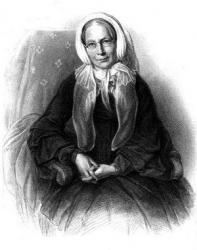
1782 - 1866 Person Name: Gilbert Author of "The nations call! from sea to sea" in African Methodist Episcopal hymn and tune book Gilbert, Ann, nèe Taylor, the elder of the two sisters, and daughter of Isaac Taylor, was born at London, Jan. 30, 1782, her father at that time being engaged in London as an engraver. Subsequently her father became a Congregational Minister, and resided, first at Colchester and then at Ongar. In 1813 she was married to the Rev. Joseph Gilbert, Classical and Mathematical Tutor at the Congregational College, Masborough, near Rotherham, Yorkshire. From Masborough they passed to Hull, and then to Nottingham, where Mr. Gilbert died in 1852. Mrs. Gilbert remained at Nottingham, and died there Dec. 20, 1866. In addition to contributing hymns to the joint works of herself and her sister Jane, a few were given in Collyer's Collection, 1812, signed " A." or "A. T.," and about 100 of her hymns appeared in Dr. Leifchild's Original Hymns, 1842, and a few in the Nottingham Hymn Book (1812, 20th edition, 1861). She published independently, Hymns for Sunday School Anniversaries, 1827; Hymns for Infant School, 1827; and The Wedding among the Flowers. Her Memoirs by her son, Josiah Gilbert, were published in 1874.
Mrs. Ann Taylor Gilbert is the author of the following (the date in brackets indicates the book in which each hymn appeared):—
1. Among the deepest shades of night (1812). Omniscience.
2. As Mary sat at Jesus' feet (1809). On repeating the Catechism.
3. Father, my spirit owns (1342). Resignation.
4. God is in heaven! Can he hear? God's care of Little Children.
5. Good Daniel would not cease to pray (1812). Prayer.
6. Hark the sound of joy and gladness (1842). Universal Peace.
7. How long, sometimes a day appears (1809). Time and Eternity.
8. I faint, my soul doth faint (1842). Contrition.
9. I thank the goodness and the grace (1809). Praise.
10. Jesus, that condescending King (1809). Coming to Jesus.
11. Jesus was once despised and low (1809). The Love of Jesus.
12. Jesus Who lived above the sky (1812). The Love of Jesus.
13. Lo, at noon, 'tis sudden night. Good Friday.
14. Lord, help us as we hear. Opening of Divine Service.
15. Lord, what is life? 'tis like a flower [the bow] (1809). Life.
16. My Father, I thank Thee for sleep (1809). Morning.
17. O [How] happy they who safely housed (1842). Death.
18. Spared to another spring (1827). Spring.
19. The God of heaven is pleased to see (1809). Brotherly Love.
20. This year is just going away (1810). New Year's Eve.
21. Wearied with earthly toil and care (1843). Sunday.
22. When I listen to Thy word. Comfort of the Scripture.
23. When little Samuel woke (1809). About Samuel.
24. Why should we weep for those who die (1843) . Death.
Mr. Gilbert's edition of the Hymns for Infant Minds, 1886, together with manuscript notes, are our authorities for the foregoing ascriptions of authorship. Mr. Gilbert cannot distinguish the authorship of the following hymns by her or her sister, Jane Taylor:—
1. Good David, whose Psalms have so often been sung (1812). Concerning David.
2. If Jesus Christ was sent (1812). Repentance.
3. King Solomon of old (1812). Concerning Solomon.
Taken as a whole, her hymns are somewhat depressing in tone. They lack brightness and warmth.
-- John Julian, Dictionary of Hymnology (1907)
Ann Taylor
Alice Cary
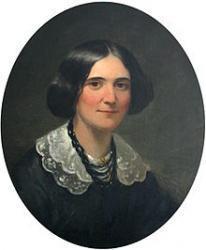
1820 - 1872 Person Name: Miss Alice Cary (1820-1871) Author of "Earth, with its dark and dreadful ills" in Hymns of the Ages Alice Cary (1820-1871) was born and raised in Mount Healthy in Hamilton County, Ohio. Her family had come from Lyme, New Hampshire when her grandfather was given land in return for his service in the Continental Army. She had been nationally recognized as an interpreter of pioneer traditions. Her short story collections depict Mount Healthy as it was transformed from an isolated rural village to a Cincinnati suburb. She and her sister Phoebe wrote for local religious periodicals before Alice moved to New York City. John Greenleaf Whitier praised Alice's stories as "simple, natural, truthful [with] a keen sense of humor and pathos of the comedy and tragedy of life in the country." Her hymn "Along the mountain track of life" was published in H.W.Beecher's Plymouth Collection, 1856. Her hymn titled "Nearer Home" was published in W.A.Ogden's Crown of Life (Toledo, OH: Whitney, 1875).
Mary Louise VanDyke
======================================
Cary, Alice, the elder of two gifted sisters, was born near Cincinnati, Ohio, 1820, removed to New York in 1852, and died there Feb. 12, 1871. The story of the two sisters—of their courageous move from a rural, western home, their life in the metropolis, their mutual affection, and inability to live apart—has attracted much admiring and sympathetic interest. As poets they were of nearly equal merit. Besides some prose works, Alice published a volume of Poems in 1850. Her hymns are:—
1. Earth with its dark and dreadful ills. Death anticipated. This fine lyric is given in Hymns and Songs of Praise, N. Y., 1874, and dated 1870.
2. Along the mountain track of life. Lent. The authorship of this hymn, although sometimes attributed to Alice Cary, is uncertain. It appeared anonymously in H. W. Beecher's Plymouth Collection, 1855, No. 438. It would seem from its tone and the refrain, "Nearer to Thee," to have been suggested by Mrs. Adams's "Nearer, my God, to Thee," which appeared in 1841.
In addition to these there are the following hymns by her in the Lyra Sacra Americana, 1868:—
3. Bow, angels, from your glorious state. Peace desired.
4. I cannot plainly see the way. Providence.
5. Leave me, dear ones, to my slumber. Death anticipated.
6. Light waits for us in heaven. Heaven.
7. A crown of glory bright. His Fadeless Crown. In the Methodist Sunday School Hymn Book (London), 1879. [Rev. F. M. Bird, M.A.]
--John Julian, Dictionary of Hymnology (1907)
======================
Cary, Alice, p. 214, i. From her Ballads, Lyrics and Hymns, N.Y., 1866, the following are in Horder's Worship Song, 1905:—
1. O day to sweet religious thought. Sunday.
2. Our days are few and full of strife. Trust in God. The original begins, "Fall, storms of winter, as you may."
3. To Him Who is the Life of life. God and Nature.
--John Julian, Dictionary of Hymnology, New Supplement (1907)
Alice Cary