You help make Hymnary.org possible. More than 10 million people from 200+ countries found hymns, liturgical resources and encouragement on Hymnary.org in 2025, including you. Every visit affirms the global impact of this ministry.

If Hymnary has been meaningful to you this year, would you take a moment today to help sustain it? A gift of any size—paired with a note of encouragement if you wish—directly supports the server costs, research work and curation that keep this resource freely available to the world.

Give securely online today, or mail a check to:
Hymnary.org
Calvin University
3201 Burton Street SE
Grand Rapids, MI 49546

Thank you for your partnership, and may the hope of Advent fill your heart.

Search Results

Text Identifier:"^amidst_temptation_and_distress$"

Planning worship? Check out our sister site, ZeteoSearch.org, for 20+ additional resources related to your search.

Texts

text icon
Text authorities

Amidst temptation and distress

Author: George Barrell Cheever Appears in 2 hymnals

Instances

instance icon
Published text-tune combinations (hymns) from specific hymnals
Page scan

Amidst temptation and distress

Author: C. Hymnal: Christian Melodies #273 (1851) Languages: English
Page scan

Amidst temptation and distress

Author: C. Hymnal: Christian Melodies #273 (1852) Languages: English

People

person icon
Authors, composers, editors, etc.

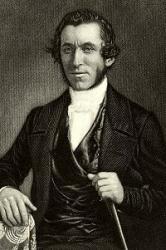
George Barrell Cheever

1807 - 1890 Author of "Amidst temptation and distress" Cheever, George Barrell, D.D., eminent in reform, philanthropy, and literature, born at Hallowell, Maine, April 17, 1807, and graduated at Bowdoin College, 1825. Dr. Cheever was a Congregational Pastor at Salem, Mass., 1833; New York, 1839; and the Church of the Puritans, N. Y., 1846-67. He has published several works, and one, Deacon Giles Distillery, procured him a month's imprisonment, in 1835. In 1831 he edited the American Common Place Book of Poetry, and in 1851 Christian Melodies. The latter contains 19 hymns by him. One of these, "Thy loving-kindness, Lord, I sing," is still in common use. It is adopted in an abbreviated form of 4 stanzas by Dr. Hitchcock, in Hymns & Songs of Praise, N. Y., 1874, where it is dated 1845. [Rev. F. M. Bird, M. A.] --John Julian, Dictionary of Hymnology (1907)
It looks like you are using an ad-blocker. Ad revenue helps keep us running. Please consider white-listing Hymnary.org or getting Hymnary Pro to eliminate ads entirely and help support Hymnary.org.