You help make Hymnary.org possible. More than 10 million people from 200+ countries found hymns, liturgical resources and encouragement on Hymnary.org in 2025, including you. Every visit affirms the global impact of this ministry.

If Hymnary has been meaningful to you this year, would you take a moment today to help sustain it? A gift of any size—paired with a note of encouragement if you wish—directly supports the server costs, research work and curation that keep this resource freely available to the world.

Give securely online today, or mail a check to:
Hymnary.org
Calvin University
3201 Burton Street SE
Grand Rapids, MI 49546

Thank you for your partnership, and may the hope of Advent fill your heart.

Search Results

Text Identifier:"^benedictus_qui_venit_in_nomine_domini$"

Planning worship? Check out our sister site, ZeteoSearch.org, for 20+ additional resources related to your search.

Texts

text icon
Text authorities
Page scans

Benedictus

Appears in 5 hymnals First Line: Benedictus, qui venit in nomine Domini

Tunes

tune icon
Tune authorities

[Benedictus qui venit]

Appears in 6 hymnals Composer and/or Arranger: Charles Gounod Tune Sources: From St. Cecilia Mass Incipit: 33331 22334 33321 Used With Text: Benedictus

Instances

instance icon
Published text-tune combinations (hymns) from specific hymnals
Page scan

Mass in C. (Benedictus)

Hymnal: The Catholic Youth's Hymn Book #151 (1871) First Line: Benedictus, Benedictus qui venit in nomine Domini
Page scan

Mass In Honor of Saint La Salle (Benedictus)

Hymnal: The De La Salle Hymnal #149 (1913) First Line: Benedictus qui venit in nomine Domini
Page scan

Benedictus

Hymnal: English and Latin Hymns, or Harmonies to Part I of the Roman Hymnal #A383a (1884) First Line: Benedictus, qui venit in nomine Domini

People

person icon
Authors, composers, editors, etc.

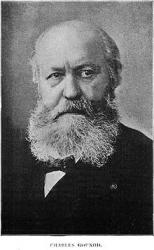
Charles F. Gounod

1818 - 1893 Person Name: Charles Gounod Composer of "[Benedictus qui venit]" in The Treble Choir Charles F. Gounod (b. Paris, France, 1818; d. St. Cloud, France, 1893) was taught initially by his pianist mother. Later he studied at the Paris Conservatory, won the "Grand Prix de Rome" in 1839, and continued his musical training in Vienna, Berlin, and Leipzig. Though probably most famous for his opera Faust (1859) and other instrumental music (including his Meditation sur le Prelude de Bach, to which someone added the Ave Maria text for soprano solo), Gounod also composed church music-four Masses, three Requiems, and a Magnificat. His smaller works for church use were published as Chants Sacres. When he lived in England (1870-1875), Gounod became familiar with British cathedral music and served as conductor of what later became the Royal Choral Society. Bert Polman
It looks like you are using an ad-blocker. Ad revenue helps keep us running. Please consider white-listing Hymnary.org or getting Hymnary Pro to eliminate ads entirely and help support Hymnary.org.