You help make Hymnary.org possible. More than 10 million people from 200+ countries found hymns, liturgical resources and encouragement on Hymnary.org in 2025, including you. Every visit affirms the global impact of this ministry.

If Hymnary has been meaningful to you this year, would you take a moment today to help sustain it? A gift of any size—paired with a note of encouragement if you wish—directly supports the server costs, research work and curation that keep this resource freely available to the world.

Give securely online today, or mail a check to:
Hymnary.org
Calvin University
3201 Burton Street SE
Grand Rapids, MI 49546

Thank you for your partnership, and may the hope of Advent fill your heart.

Person Results

Text Identifier:"^hearken_to_the_anthem_glorious$"
In:person

Planning worship? Check out our sister site, ZeteoSearch.org, for 20+ additional resources related to your search.
Showing 1 - 4 of 4Results Per Page: 102050

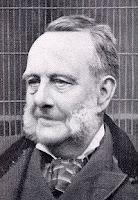
Richard Redhead

1820 - 1901 Person Name: Richard Redhead, 1820-1901 Composer of "LAUS DEO" in The Hymnal 1982 Richard Redhead (b. Harrow, Middlesex, England, 1820; d. Hellingley, Sussex, England, 1901) was a chorister at Magdalen College, Oxford. At age nineteen he was invited to become organist at Margaret Chapel (later All Saints Church), London. Greatly influencing the musical tradition of the church, he remained in that position for twenty-five years as organist and an excellent trainer of the boys' choirs. Redhead and the church's rector, Frederick Oakeley, were strongly committed to the Oxford Movement, which favored the introduction of Roman elements into Anglican worship. Together they produced the first Anglican plainsong psalter, Laudes Diurnae (1843). Redhead spent the latter part of his career as organist at St. Mary Magdalene Church in Paddington (1864-1894). Bert Polman

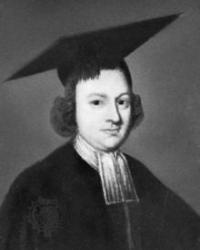
Christopher Smart

1722 - 1771 Person Name: Christopher Smart, 1722-1771 Author of "Hearken to the anthem glorious" in The Hymnal 1982 Smart, Christophe, M.A., was born at Shipburn, Kent, in 1722, and educated at Pembroke Hall, Cambridge, where he gained the Seatonian prize for five years, four of which were in succession, (B.A. 1747.) He removed to London in 1753, and gave some attention to literature: but neglecting both his property and his constitution, he became poor and insane. He died in the King's Bench, 1771. His Poems were published in 2 vols. in 1771. From that work "Father of light conduct my feet" (Divine Guidance), and "I sing of God the mighty Source" [God the Author of All), have been taken. --John Julian, Dictionary of Hymnology (1907)

David T. Childs

1938 - 2021 Person Name: David Thompson Childs, b. 1938 Composer of "FACIEM EJUS VIDETIS" in The Hymnal 1982

Percy Whitlock

1903 - 1946 Person Name: Percy William Whitlock, 1903-1946 Composer (desc.) of "LAUS DEO" in The Hymnal 1982

Export as CSV
It looks like you are using an ad-blocker. Ad revenue helps keep us running. Please consider white-listing Hymnary.org or getting Hymnary Pro to eliminate ads entirely and help support Hymnary.org.