You help make Hymnary.org possible. More than 10 million people from 200+ countries found hymns, liturgical resources and encouragement on Hymnary.org in 2025, including you. Every visit affirms the global impact of this ministry.

If Hymnary has been meaningful to you this year, would you take a moment today to help sustain it? A gift of any size—paired with a note of encouragement if you wish—directly supports the server costs, research work and curation that keep this resource freely available to the world.

Give securely online today, or mail a check to:
Hymnary.org
Calvin University
3201 Burton Street SE
Grand Rapids, MI 49546

Thank you for your partnership, and may the hope of Advent fill your heart.

Search Results

Text Identifier:"^heaven_is_here_where_hymns_of_gladness$"

Planning worship? Check out our sister site, ZeteoSearch.org, for 20+ additional resources related to your search.

Texts

text icon
Text authorities
TextAudio

Heaven Is Here, Where Hymns of Gladness

Author: John Adams Meter: 8.7.8.7 D Appears in 46 hymnals Lyrics: 1. Heaven is here, where hymns of gladness Cheer the toilers’ rugged way, In this world where clouds of sadness Often change to night our day; Heaven is here, where misery lightened Of its heavy load is seen, Where the face of sorrow brightened, By the deed of love hath been. 2. Where the sad, the poor, despairing, Are uplifted, cheered, and blest, Where in others’ labors sharing, We can find our surest rest; Where we heed the voice of duty, Tread the path that Jesus trod; This is Heaven, its peace, its beauty, Radiant with the love of God. Used With Tune: AUSTRIA (Haydn) Text Sources: Hymns for Christian Devotion, 1846, number 419

Tunes

tune icon
Tune authorities
Audio

AUSTRIA (Haydn)

Meter: 8.7.8.7 D Appears in 790 hymnals Composer and/or Arranger: Franz Josef Haydn Tune Sources: Croatian tune Tune Key: E Flat Major Incipit: 12324 32716 54323 Used With Text: Heaven Is Here, Where Hymns of Gladness
Page scansAudio

STOCKWELL

Appears in 345 hymnals Composer and/or Arranger: D. E. Jones Incipit: 15517 12171 32432 Used With Text: Heaven is here, where hymns of gladness
Page scansAudio

WELLESLEY

Appears in 391 hymnals Composer and/or Arranger: Lizzie S. Tourjee Incipit: 51217 52321 65432 Used With Text: Heaven is here, where hymns of gladness

Instances

instance icon
Published text-tune combinations (hymns) from specific hymnals
TextAudio

Heaven Is Here, Where Hymns of Gladness

Author: John Adams Hymnal: The Cyber Hymnal #2249 Meter: 8.7.8.7 D Lyrics: 1. Heaven is here, where hymns of gladness Cheer the toilers’ rugged way, In this world where clouds of sadness Often change to night our day; Heaven is here, where misery lightened Of its heavy load is seen, Where the face of sorrow brightened, By the deed of love hath been. 2. Where the sad, the poor, despairing, Are uplifted, cheered, and blest, Where in others’ labors sharing, We can find our surest rest; Where we heed the voice of duty, Tread the path that Jesus trod; This is Heaven, its peace, its beauty, Radiant with the love of God. Languages: English Tune Title: AUSTRIA (Haydn)
Page scan

Heaven Is Here

Author: John G. Adams Hymnal: Songs of Life #176 (1921) First Line: Heav'n is here, where hymns of gladness Tune Title: [Heav'n is here, where hymns of gladness]

Heaven is here, its [where] hymns of gladness

Author: J. G. Adams Hymnal: Tokyo Hymnal and Service Book #d22 (1920) Languages: English

People

person icon
Authors, composers, editors, etc.

John Zundel

1815 - 1882 Composer of "BEECHER" in A Hymnal for Joyous Youth John Zundel; b. 1815, near Stuttgart, Germany; organist in Brooklyn, N. Y., from 1847 to 1878; d. Cannstadt, Germany, 1882 Evangelical Lutheran Hymnal, 1908

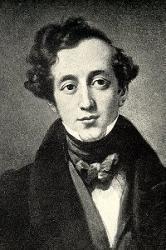
Felix Mendelssohn-Bartholdy

1809 - 1847 Person Name: Felix Bartholdy Mendelssohn Composer of "TRUST" in The American Hymnal for Chapel Service Felix Mendelssohn-Bartholdy (b. Hamburg, Germany, 1809; d. Leipzig, Germany, 1847) was the son of banker Abraham Mendelssohn and the grandson of philosopher Moses Mendelssohn. His Jewish family became Christian and took the Bartholdy name (name of the estate of Mendelssohn's uncle) when baptized into the Lutheran church. The children all received an excellent musical education. Mendelssohn had his first public performance at the age of nine and by the age of sixteen had written several symphonies. Profoundly influenced by J. S. Bach's music, he conducted a performance of the St. Matthew Passion in 1829 (at age 20!) – the first performance since Bach's death, thus reintroducing Bach to the world. Mendelssohn organized the Domchor in Berlin and founded the Leipzig Conservatory of Music in 1843. Traveling widely, he not only became familiar with various styles of music but also became well known himself in countries other than Germany, especially in England. He left a rich treasury of music: organ and piano works, overtures and incidental music, oratorios (including St. Paul or Elijah and choral works, and symphonies. He harmonized a number of hymn tunes himself, but hymnbook editors also arranged some of his other tunes into hymn tunes. Bert Polman

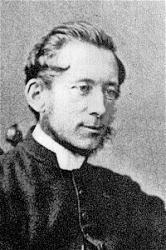
John Bacchus Dykes

1823 - 1876 Person Name: J. B. Dykes Composer of "SANCTUARY" in Hymns of Worship and Service As a young child John Bacchus Dykes (b. Kingston-upon-Hull' England, 1823; d. Ticehurst, Sussex, England, 1876) took violin and piano lessons. At the age of ten he became the organist of St. John's in Hull, where his grandfather was vicar. After receiving a classics degree from St. Catherine College, Cambridge, England, he was ordained in the Church of England in 1847. In 1849 he became the precentor and choir director at Durham Cathedral, where he introduced reforms in the choir by insisting on consistent attendance, increasing rehearsals, and initiating music festivals. He served the parish of St. Oswald in Durham from 1862 until the year of his death. To the chagrin of his bishop, Dykes favored the high church practices associated with the Oxford Movement (choir robes, incense, and the like). A number of his three hundred hymn tunes are still respected as durable examples of Victorian hymnody. Most of his tunes were first published in Chope's Congregational Hymn and Tune Book (1857) and in early editions of the famous British hymnal, Hymns Ancient and Modern. Bert Polman
It looks like you are using an ad-blocker. Ad revenue helps keep us running. Please consider white-listing Hymnary.org or getting Hymnary Pro to eliminate ads entirely and help support Hymnary.org.