You help make Hymnary.org possible. More than 10 million people from 200+ countries found hymns, liturgical resources and encouragement on Hymnary.org in 2025, including you. Every visit affirms the global impact of this ministry.

If Hymnary has been meaningful to you this year, would you take a moment today to help sustain it? A gift of any size—paired with a note of encouragement if you wish—directly supports the server costs, research work and curation that keep this resource freely available to the world.

Give securely online today, or mail a check to:
Hymnary.org
Calvin University
3201 Burton Street SE
Grand Rapids, MI 49546

Thank you for your partnership, and may the hope of Advent fill your heart.

Search Results

Text Identifier:"^listen_lordlings_unto_me$"

Planning worship? Check out our sister site, ZeteoSearch.org, for 20+ additional resources related to your search.

Texts

text icon
Text authorities
TextAudio

Listen, Lordings, unto Me

Author: Henry Ramsden Bramley Appears in 9 hymnals First Line: Listen, Lordings, unto me, a tale I will you tell Refrain First Line: Sing high, sing high, sing low, sing low Lyrics: 1. Listen, Lordings, unto me, a tale I will you tell; Which, as on this night of glee, in David’s town befell. Joseph came from Nazareth, with Mary that sweet maid: Weary they were, nigh to death; and for a lodging prayed. Refrain Sing high, sing high, sing low, sing low. Sing high, sing low, sing to and fro, Go tell it out with speed, Cry out and shout all round about, That Christ is born indeed. 2. In the inn they found no room; a scanty bed they made: Soon a Babe from Mary’s womb was in the manger laid. Forth He came as light through glass: He came to save us all. In the stable ox and ass before their Maker fall. [Refrain] 3. Shepherds lay afield that night, to keep the silly sheep, Hosts of angels in their sight came down from Heav’n’s high steep. Tidings! Tidings! unto you: to you a Child is born, Purer than the drops of dew, and brighter than the morn. [Refrain] 4. Onward then the angels sped, the shepherds onward went, God was in His manger bed, in worship low they bent. In the morning see ye mind, my masters one and all, At the altar Him to find, who lay within the stall. [Refrain] Used With Tune: [Listen, Lordings, unto me, a tale I will you tell] Text Sources: Christmas Carols New and Old, by Henry Bramley & John Stainer (London: Novello, Ewer & Co., 1871), number 18

Tunes

tune icon
Tune authorities
Page scansAudio

[Listen, Lordings, unto me, a tale I will you tell]

Appears in 9 hymnals Incipit: 11765 31234 53176 Used With Text: Carol for Christmas-Eve

Instances

instance icon
Published text-tune combinations (hymns) from specific hymnals
Page scan

Listen, lordlings, unto me, a tale I will you tell

Hymnal: Carols Old and Carols New #499 (1916) Topics: Christmas Languages: English Tune Title: [Listen, lordlings, unto me, a tale I will you tell]
Page scan

Carol for Christmas Eve

Hymnal: Christmas Carols and Hymns #12 (1910) First Line: Listen, lordlings, unto me, a tale I will you tell Refrain First Line: Sing high, sing low Languages: English Tune Title: [Listen, lordlings, unto me, a tale I will you tell]
Page scan

Carol for Christmas Eve

Hymnal: Christmas Carols and Hymns #12 (1910) First Line: Listen, lordlings, unto me, a tale I will you tell Refrain First Line: Sing high, sing low Languages: English Tune Title: [Listen, lordlings, unto me, a tale I will you tell]

People

person icon
Authors, composers, editors, etc.

F. A. Gore Ouseley

1825 - 1889 Person Name: Frederick Arthur Gore-Ouseley Composer of "[Listen, Lordings, unto me, a tale I will you tell]" in The Cyber Hymnal Born: August 12, 1825, London, England. Died: April 6, 1889, Hereford, England. Buried: Church of St. Michael and All Angels, Tenbury Wells, Hereford and Worcester, England. Gore-Ouseley was educated at Oxford University (BA 1846, MA 1849, DMus 1854), and was ordained in 1849. In 1855, he was appointed Oxford Professor of Music, succeeding Henry Bishop. At that time, Oxford music degrees were easy to obtain, as there were no conditions of residence. Candidates only had to submit a musical composition, (e.g., for choir or orchestra). This was then approved by the examiner, rehearsed and performed to a small, select audience at Oxford. As far as Ouseley was concerned, this only meant two or three trips to Oxford each year, usually for two or three days each time, as there was no music "taught" in the university and very little in Oxford itself at the time. Also in 1855, Ouseley was appointed Precentor of Hereford Cathedral, a post he held for the next 30 years, before becoming a Canon there. Although theoretically in charge of the cathedral choir, Ouseley only had to be in residence at the cathedral two months each year, and he arranged these to take place during the summer vacation, when he was not required to be at his College, although such was his commitment that he did make regular visits to the cathedral, which was only 18 miles from his College at St. Michael’s. His College of St. Michael’s, Tenbury, a "model" choir school, opened in 1856, mostly at his own expense. He founded the College and was its first Warden, which was the greater part of his work for the next 33 years. Ouseley’s compositions covered a wide range: operas, songs, chamber music and organ pieces. His works include the following treatises: Harmony (London: 1868) Counterpoint (London: 1869) Canon and Fugue (London: 1869) Form and General Composition (London: 1875) --www.hymntime.com/tch/

Henry Ramsden Bramley

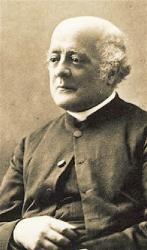
1833 - 1917 Author of "Listen, Lordings, unto Me" in The Cyber Hymnal English clergyman, a high-church Anglican. Text editor of Christmas Carols New and Old, 1871 (John Stainer was the music editor), a seminal work in the second period of carol revival. The usual four-part setting of "The First Nowell" appeared in this book. Published a number of translations of hymns and carols from the Latin. ============================= Bramley, Henry Ramsden, M.A., was born June 4, 1833, at Addingham, near Otley, Yorks, matriculated at Oriel College, Oxford, 1852, Scholar of University College 1853, Fellow of Magdalen 1857 (B.A. 1856, M.A. 1859). He was ordained D. 1856, P. 1858, was from 1861 to 1889 Vicar of Horspath, Oxon, and from 1895 to 1901 Canon and Precentor of Lincoln. His hymns and translations appeared principally in his own Christmas Carols (p. 212, ii.) and in the different Lyras edition by Mr. Shipley, generally marked as by " H. R. B." Of these, "The great God of Heaven is come down to earth" (Christmas), p. 212, ii., is in the English Hymnal, 1906. [Rev. James Mearns, M.A.] --John Julian, Dictionary of Hymnology, New Supplement (1907)
It looks like you are using an ad-blocker. Ad revenue helps keep us running. Please consider white-listing Hymnary.org or getting Hymnary Pro to eliminate ads entirely and help support Hymnary.org.