You help make Hymnary.org possible. More than 10 million people from 200+ countries found hymns, liturgical resources and encouragement on Hymnary.org in 2025, including you. Every visit affirms the global impact of this ministry.

If Hymnary has been meaningful to you this year, would you take a moment today to help sustain it? A gift of any size—paired with a note of encouragement if you wish—directly supports the server costs, research work and curation that keep this resource freely available to the world.

Give securely online today, or mail a check to:
Hymnary.org
Calvin University
3201 Burton Street SE
Grand Rapids, MI 49546

Thank you for your partnership, and may the hope of Advent fill your heart.

Joining the Song of the Church Triumphant

Representative Text

1 Sing we the song of those who stand
Around the eternal throne,
Of every kindred, clime, and land,
A multitude unknown.

2 Life's poor distinctions vanish here:
To-day the young, the old,
Our Saviour and his flock appear
One Shepherd and one fold.

3 Toil, trial, sufferings still await
On earth the pilgrim throng;
Yet learn we in our low estate
The Church Triumphant's song.

4 "Worthy the Lamb for sinners slain,"
Cry the redeemed above;
"Blessing and honor to obtain,
And everlasting love!"

5 "Worthy the Lamb," on earth we sing,
"Who died our souls to save!
Henceforth, O Death! where is thy sting?
Thy victory, O Grave!"

Source: Laudes Domini: a selection of spiritual songs, ancient and modern for use in the prayer-meeting #28

Author: James Montgomery

James Montgomery (b. Irvine, Ayrshire, Scotland, 1771; d. Sheffield, Yorkshire, England, 1854), the son of Moravian parents who died on a West Indies mission field while he was in boarding school, Montgomery inherited a strong religious bent, a passion for missions, and an independent mind. He was editor of the Sheffield Iris (1796-1827), a newspaper that sometimes espoused radical causes. Montgomery was imprisoned briefly when he printed a song that celebrated the fall of the Bastille and again when he described a riot in Sheffield that reflected unfavorably on a military commander. He also protested against slavery, the lot of boy chimney sweeps, and lotteries. Associated with Christians of various persuasions, Montgomery supported missio… Go to person page >

Text Information

First Line: Sing we the song of those who stand
Title: Joining the Song of the Church Triumphant
Author: James Montgomery
Meter: 8.6.8.6
Language: English
Copyright: Public Domain

Notes

Sing we the song of those who stand. J. Montgomery. [Communion of Saints.] Written for the Whitsuntide gathering of the Sheffield Sunday School Union, 1824, and first printed for that occasion. It was included in Montgomery's Christian Psalmist, 1825, No. 560: and, again, in his Original Hymns, 1853, No. 200, in 6 stanzas of 4 lines, and headed, in both instances, "The Church Militant learning the Church Triumphant's Song." It is in somewhat extensive use. See also, Worthy the Lamb for sinners slain.

-- John Julian, Dictionary of Hymnology (1907)

Hymnary Pro Subscribers
Access an additional article on the Canterbury Dictionary of Hymnology:
Hymnary Pro subscribers have full access to the Canterbury Dictionary of Hymnology. Get Hymnary Pro

Tune

OAKSVILLE


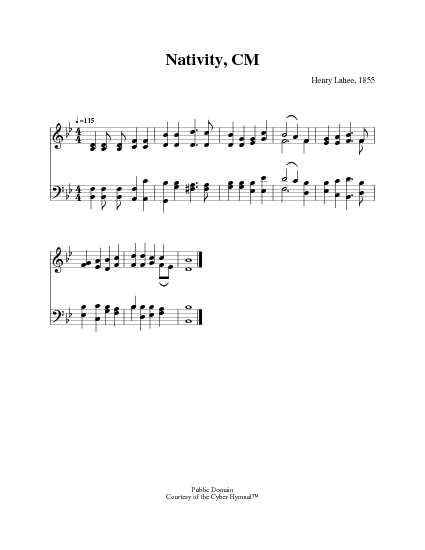
NATIVITY (Lahee)

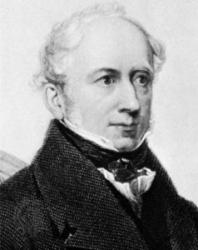
Henry Lahee (b. Chelsea, London, England, 1826; d. Croydon, London, 1912) composed NATIVITY, which was first published in 1855 and set to a nativity hymn (thus the tune's title), "High let us swell our tuneful notes," by Philip Doddridge (PsH 335). Because NATIVITY was published with Isaac Watts' (P…

Go to tune page >


ABRIDGE (Smith)


Timeline

Media

The Cyber Hymnal #6136
  • Adobe Acrobat image (PDF)
  • Noteworthy Composer score (NWC)
  • XML score (XML)

Instances

Instances (1 - 2 of 2)

Hymns and Psalms #821

TextScoreAudio

The Cyber Hymnal #6136

Include 103 pre-1979 instances
Suggestions or corrections? Contact us
It looks like you are using an ad-blocker. Ad revenue helps keep us running. Please consider white-listing Hymnary.org or getting Hymnary Pro to eliminate ads entirely and help support Hymnary.org.