You help make Hymnary.org possible. More than 10 million people from 200+ countries found hymns, liturgical resources and encouragement on Hymnary.org in 2025, including you. Every visit affirms the global impact of this ministry.

If Hymnary has been meaningful to you this year, would you take a moment today to help sustain it? A gift of any size—paired with a note of encouragement if you wish—directly supports the server costs, research work and curation that keep this resource freely available to the world.

Give securely online today, or mail a check to:
Hymnary.org
Calvin University
3201 Burton Street SE
Grand Rapids, MI 49546

Thank you for your partnership, and may the hope of Advent fill your heart.

Search Results

Text Identifier:"^to_calm_the_sorrows_of_the_mind$"

Planning worship? Check out our sister site, ZeteoSearch.org, for 20+ additional resources related to your search.

Texts

text icon
Text authorities

To calm the sorrows of the mind

Author: Thomas Jervis Appears in 30 hymnals

Tunes

tune icon
Tune authorities
Audio

LYTHAM

Meter: 8.6.8.6 Appears in 6 hymnals Composer and/or Arranger: James Thomas Lightwood Tune Key: A Flat Major Incipit: 32151 17765 6712 Used With Text: To Calm The Sorrows Of The Mind

Instances

instance icon
Published text-tune combinations (hymns) from specific hymnals
TextAudio

To Calm The Sorrows Of The Mind

Author: Thomas Jervis Hymnal: The Cyber Hymnal #12607 Meter: 8.6.8.6 Lyrics: 1 To calm the sorrows of the mind, Our heav’nly friend is nigh, To wipe the anxious tear that starts, Or trembles in the eye. 2 Thou canst, when anguish rends the heart, The secret woe control; The inward malady canst heal, The sickness of the soul. 3 Thou canst repress the rising sigh, Canst soothe each mortal care; And every deep and heartfelt groan Is wafted to Thine ear. 4 Thy gracious eye is watchful still; Thy potent arm can save From threatening danger and disease, And all-devouring grave. 5 When pale and languid all the frame, The ruthless hand of pain Arrests the feeble powers of life, The help of man is vain. 6 ’Tis Thou, great God! alone canst check The progress of disease; And sickness, awed by power divine, The high command obeys. 7 Eternal source of life and health. And every bliss we feel! In sorrow and in joy to Thee Our grateful hearts appeal. Languages: English Tune Title: LYTHAM
TextPage scan

To calm the sorrows of the mind

Hymnal: Hymns, Selected and Original #74 (1828) Meter: 8.6.8.6 Lyrics: 1 To calm the sorrows of the mind, Our heav'nly Friend is nigh, To wipe the anxious tear that starts Or trembles in the eye. 2 Thou canst, when anguish rends the heart, The secret wo control; The inward malady canst heal, The sickness of the soul. 3 Thou canst repress the rising sigh; Canst sooth each mortal care; And ev'ry deep and heart-felt groan Is wafted to thine ear. 4 Thy gracious eye is watchful still; Thy potent arm can save From threat'ning danger and disease, And the devouring grave. 5 When, pale and languid all the frame, The ruthless hand of pain Arrests the feeble pow'rs of life, The help of man is vain. 6 'Tis thou, great God! alone canst check The progress of disease; And sickness, aw'd by pow'r divine, The high command obeys. 7 Eternal source of life and health, And ev'ry bliss we feel! In sorrow and in joy, to thee Our grateful hearts appeal. Topics: God a present help in trouble; Providence of God
TextPage scan

To calm the sorrows of the mind

Hymnal: A Collection of Hymns and A Liturgy #84 (1814) Meter: 8.6.8.6 Lyrics: 1 To calm the sorrows of the mind, Our heav'nly Friend is nigh, To wipe the anxious tear that starts Or trembles in the eye. 2 Thou canst, when anguish rends the heart, The secret woe control; The inward malady canst heal, The sickness of the soul. 3 Thou canst repress the rising sigh; Canst sooth each mortal care; And ev'ry deep and heart-felt groan Is wafted to thine ear. 4 Thy gracious eye is watchful still; Thy potent arm can save From threat'ning danger and disease, And the devouring grave. 5 When, pale and languid all the frame, The ruthless hand of pain Arrests the feeble pow'rs of life, The help of man is vain. 6 'Tis thou, great God! alone canst check The progress of disease; And sickness, aw'd by pow'r divine, The high command obeys. 7 Eternal source of life, and health, And ev'ry bliss we feel! In sorrow and in joy, to thee Our grateful hearts appeal. Topics: Divine Providence and Government Languages: English

People

person icon
Authors, composers, editors, etc.

Thomas Jervis

1748 - 1833 Author of "To Calm The Sorrows Of The Mind" in The Cyber Hymnal Jervis, Thomas, son of a Presbyterian Minister of the same name, was born at Ipswich in 1748, and educated for the Ministry at Hoxton. In 1770 he was appointed classical and mathematical tutor at the Exeter Academy. From 1772 to 1783 he was tutor to the sons of the Earl of Shelburne, at Bowood, where Dr. Priestley was librarian. In the latter year Jervis succeeded Dr. A. Rees at St. Thomas's Southwark, moving in 1796, after the death of Dr. Kippis, to the Princes' St. Chapel, Westminster. From 1808 to 1818 he was minister at the Mill Hill Chapel, Leeds. After his retirement he lived in the neighbourhood of London, and died there in 1833. Jervis was one of the four editors of A Collection of Hymns & Psalms for Public & Private Worship, London, 1795. He contributed 17 hymns to the 1st ed., and 4 to its Supplement, 1807. Of these several are found in later Unitarian collections in Great Britain and America, including:— 1. God to correct a guilty world. Divine Providence. 2. Great God, Thine attributes divine. Confidence in God. 3. Lord of the world's majestic frame. Praise a Duty. 4. Shall I forsake that heavenly Friend? Constancy desired. 5. Sweet is the friendly voice which [that] speaks. Peace to the Penitent. 6. Thou, Lord, in mercy wilt regard. Penitence. 7. With sacred joy we lift our eyes. Divine Worship. This is given in Laudes Domini, N.Y., 1884, as: "With joy we lift our eyes." These hymns all date from 1795, and the most popular are Nos. 4 and 6. [Rev. Valentine D. Davis, B.A.] --John Julian, Dictionary of Hymnology (1907)

James T. Lightwood

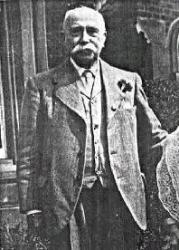
1856 - 1944 Person Name: James Thomas Lightwood Composer of "LYTHAM" in The Cyber Hymnal Born: 1856, Leeds, England. Died: 1944, Lytham, Lancashire, England. Son of Wesleyan minister Edward Lightwood, James was born and baptized while his father was on the Leeds Brunswick Circuit. He attended Kingswood School (1866-72), earned a BA from London University, and became Headmaster of Pembroke House, a private school in Lytham. He went on to serve for three years as a member of the Board of Improvement Commissioners in Lytham, on the Lytham Council for six years, and as Chairman of the Streets Committee for four years. His resolution to bring gas into Fairhaven was eventually carried by one vote. Apart from music, his other great love was cycling. He began cycling in 1874 on a "boneshaker." By 1885, he was a member of the Cyclists Touring Club (CTC), and soon gained prominence. He was Chief Consul for Lancashire, and a member of the Council of the CTC from 1887. Honorary life membership came in 1907 in recognition of his services to the club, and in particular with publication of the club’s route books and other writings. Music was his great love, though, and hymnody in particular. He was an accomplished organist, and after two years as deputy organist at the Drive Wesleyan Church, St. Annes, he was appointed Honorary Organist and Choirmaster in 1894. When the pressure of work due to his appointment as editor of the new Methodist publication The Choir and organizing the newly formed Music Department of the Methodist Publishing House, the trustees at Drive Church made him a grant of £20 to assist him in his research in hymnology. While advising Methodism on musical matters, he found the unique 1761 Snetzler organ for the New Room at Bristol. Lightwood’s works include: Hymn Tunes and Their Story (London: Charles H. Kelly, 1905) Charles Dickens and Music, 1912 Samuel Wesley, Musician: The Story of His Life Cyclists’ Touring Club: The Romance of 50 Years Cycling, 1928 The Music of the Methodist Hymn-Book (London: The Epworth Press, 1935) http://www.hymntime.com/tch/bio/l/i/g/lightwood_jt.htm
It looks like you are using an ad-blocker. Ad revenue helps keep us running. Please consider white-listing Hymnary.org or getting Hymnary Pro to eliminate ads entirely and help support Hymnary.org.