You help make Hymnary.org possible. More than 10 million people from 200+ countries found hymns, liturgical resources and encouragement on Hymnary.org in 2025, including you. Every visit affirms the global impact of this ministry.

If Hymnary has been meaningful to you this year, would you take a moment today to help sustain it? A gift of any size—paired with a note of encouragement if you wish—directly supports the server costs, research work and curation that keep this resource freely available to the world.

Give securely online today, or mail a check to:
Hymnary.org
Calvin University
3201 Burton Street SE
Grand Rapids, MI 49546

Thank you for your partnership, and may the hope of Advent fill your heart.

Search Results

Text Identifier:"^welcome_sweet_day_of_rest_that_saw_the$"

Planning worship? Check out our sister site, ZeteoSearch.org, for 20+ additional resources related to your search.

Texts

text icon
Text authorities
Page scans

Welcome, sweet day of rest

Author: Watts Meter: 6.6.8.6 Appears in 778 hymnals Used With Tune: LISBON

Tunes

tune icon
Tune authorities
Page scansAudio

LISBON

Meter: 6.6.8.6 Appears in 155 hymnals Composer and/or Arranger: Daniel Read Tune Key: A Flat Major Incipit: 16512 33214 32511 Used With Text: Welcome, sweet day of rest

SWEET DAY

Appears in 20 hymnals Composer and/or Arranger: B. C. Unseld, 1848-1923 Tune Key: G Major Incipit: 11112 33335 55333 Used With Text: Welcome, Sweet Day of Rest
Audio

ST. THOMAS

Appears in 1,155 hymnals Composer and/or Arranger: Aaron Williams Tune Key: G Major Incipit: 51132 12345 43432 Used With Text: Welcome sweet day of rest

Instances

instance icon
Published text-tune combinations (hymns) from specific hymnals
TextPage scan

Welcome, sweet day of rest

Author: Isaac Watts Hymnal: The Hymnal, Revised and Enlarged, as adopted by the General Convention of the Protestant Episcopal Church in the United States of America in the year of our Lord 1892 #27 (1894) Meter: 6.6.8.6 Lyrics: 1 Welcome, sweet day of rest, That saw the Lord arise; Welcome to this reviving breast, And these rejoicing eyes. 2 The King Himself comes near And feasts His saints to-day; Here may we seek, and see Him here, And love, and praise, and pray. 3 One day of prayer and praise His sacred courts within, Is sweeter than ten thousand days Of pleasurable sin. 4 My willing soul would stay In such a frame as this, And wait to hail the brighter day Of everlasting bliss. Topics: The Lord's Day Languages: English Tune Title: [Welcome, sweet day of rest]
TextPage scan

Welcome, Sweet Day of Rest

Author: Isaac Watts, 1674-1748 Hymnal: African Methodist Episcopal Church Hymnal #27 (2011) Meter: 6.6.8.6 Lyrics: 1 Welcome, sweet day of rest, That saw the Lord arise; Welcome to this reviving breast, And these rejoicing eyes! 2 The King Himself comes near, And feast His saints today; Here may we sit, and see Him here, And love, and praise, and pray. 3 One day within the place Which Thou dost Lord, frequent Is sweeter than ten thousand days In sinful pleasure spent. 4 My willing soul would stay In such a frame as this, And sit and sing herself away To everlasting bliss. Topics: Worship and Praise Morning; Morning; Opening; Peace Scripture: Acts 20:7 Languages: English Tune Title: LISBON
TextPage scanAudio

Welcome, sweet day of rest

Hymnal: The Southern Harmony, and Musical Companion (New ed. thoroughly rev. and much enl.) #154b (1854) Meter: 6.6.8.6 Lyrics: 1. Welcome, sweet day of rest, That saw the Lord arise; Welcome to this reviving breast, And these rejoicing eyes! 2. The King himself comes near, And feasts his saints today; Here we may sit, and see him here, And love, and praise, and pray. 3. One day amid the place, Where my dear God hath been, Is sweeter than ten thousand days Of pleasurable sin. 4. My willing soul would stay In such a frame as this, And sit and sing herself away to everlasting bliss. Languages: English Tune Title: LISBON

People

person icon
Authors, composers, editors, etc.

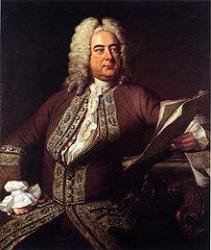
George Frideric Handel

1685 - 1759 Person Name: Handel Composer of "THATCHER" in The Church Hymnal George Frideric Handel (b. Halle, Germany, 1685; d. London, England, 1759) became a musician and composer despite objections from his father, who wanted him to become a lawyer. Handel studied music with Zachau, organist at the Halle Cathedral, and became an accomplished violinist and keyboard performer. He traveled and studied in Italy for some time and then settled permanently in England in 1713. Although he wrote a large number of instrumental works, he is known mainly for his Italian operas, oratorios (including Messiah, 1741), various anthems for church and royal festivities, and organ concertos, which he interpolated into his oratorio performances. He composed only three hymn tunes, one of which (GOPSAL) still appears in some modern hymnals. A number of hymnal editors, including Lowell Mason, took themes from some of Handel's oratorios and turned them into hymn tunes; ANTIOCH is one example, long associated with “Joy to the World.” Bert Polman

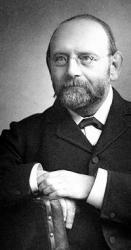
Joseph Barnby

1838 - 1896 Composer of "CHISELHURST" in Hymn Tunes Joseph Barnby (b. York, England, 1838; d. London, England, 1896) An accomplished and popular choral director in England, Barnby showed his musical genius early: he was an organist and choirmaster at the age of twelve. He became organist at St. Andrews, Wells Street, London, where he developed an outstanding choral program (at times nicknamed "the Sunday Opera"). Barnby introduced annual performances of J. S. Bach's St. John Passion in St. Anne's, Soho, and directed the first performance in an English church of the St. Matthew Passion. He was also active in regional music festivals, conducted the Royal Choral Society, and composed and edited music (mainly for Novello and Company). In 1892 he was knighted by Queen Victoria. His compositions include many anthems and service music for the Anglican liturgy, as well as 246 hymn tunes (published posthumously in 1897). He edited four hymnals, including The Hymnary (1872) and The Congregational Sunday School Hymnal (1891), and coedited The Cathedral Psalter (1873). Bert Polman

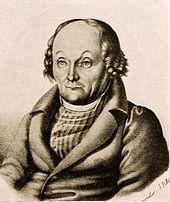
Hans G. Nägeli

1773 - 1836 Person Name: Hans G. Nageli Composer of "[Welcome, sweet day of rest]" in New Junior Songs Johann G. Nageli (b. Wetzikon, near Zurich, Switzerland, 1773; d. Wetzikon, 1836) was an influential music educator who lectured throughout Germany and France. Influenced by Johann Pestalozzi, he published his theories of music education in Gangbildungslehre (1810), a book that made a strong impact on Lowell Mason. Nageli composed mainly" choral works, including settings of Goethe's poetry. He received his early instruction from his father, then in Zurich, where he concentrated on the music of. S. Bach. In Zurich, he also established a lending library and a publishing house, which published first editions of Beethoven’s piano sonatas and music by Bach, Handel, and Frescobaldi. Bert Polman
It looks like you are using an ad-blocker. Ad revenue helps keep us running. Please consider white-listing Hymnary.org or getting Hymnary Pro to eliminate ads entirely and help support Hymnary.org.