You help make Hymnary.org possible. More than 10 million people from 200+ countries found hymns, liturgical resources and encouragement on Hymnary.org in 2025, including you. Every visit affirms the global impact of this ministry.

If Hymnary has been meaningful to you this year, would you take a moment today to help sustain it? A gift of any size—paired with a note of encouragement if you wish—directly supports the server costs, research work and curation that keep this resource freely available to the world.

Give securely online today, or mail a check to:
Hymnary.org
Calvin University
3201 Burton Street SE
Grand Rapids, MI 49546

Thank you for your partnership, and may the hope of Advent fill your heart.

Person Results

Text Identifier:"^who_has_seen_the_wind$"
In:person

Planning worship? Check out our sister site, ZeteoSearch.org, for 20+ additional resources related to your search.
Showing 1 - 5 of 5Results Per Page: 102050

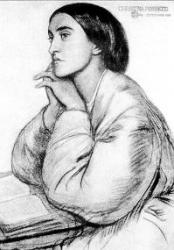
Christina Georgina Rossetti

1830 - 1894 Person Name: Christina Rossetti Author of "Who Has Seen the Wind?" in Sing for Joy Rossetti, Christina Georgina, daughter of Gabriel, and sister of Dante Gabriel and William Michael Rossetti, was born in London, Dec. 5, 1830, and received her education at home. Her published works include:— (1) Goblin Market, and Other Poems, 1862; (2) The Prince's Progress, and Other Poems, 1866 ; (3) Poems, mainly a reprint of Nos. 1 and 2, 1875; (4) A Pageant, and Other Poems, 1881, &c. In addition, Miss Rossetti has published several prose works, as:— Annus Domini (a book of prayers for every day in the year), 1874; Letter and Spirit of the Decalogue, 1883, and others. She has written very few hymns avowedly for church worship, but several centos have been compiled from her poems, and have passed into several hymn-books. These include:— 1. Dead is thy daughter, trouble not the Master. The raising of Jairus's daughter. From her Goblin Market, &c, 1862, into Lyra Mystica, 1865. 2. God the Father, give us grace. Invocation of the Holy Trinity. From Lyra Mystica into the Savoy Hymnary, for use in the Chapel Koyai, Savoy (see No. 8 below). 3. I bore with thee long weary days and nights. The Love of Christ. From her Goblin Market, &c, 1862, into Lyra Messianica, 1864. 4. I would have gone, God bade me stay. Resignation. From her Poems, Hymns, 1884, &c. 1875, into Horder's Congregational Hymns. 5. Once I thought to sit so high. A Body hast Thou prepared Me, or Passiontide. Contributed to Lyra Eucharistica, 1863. 6. The Advent moon shines cold and clear. Advent. From her Goblin Market, &c, 1862. 7 The flowers that bloom in sun and shade. The Eternity of God. In Mrs. C. Brock's Children's Hymn Book, 1881. 8. What are these that glow from afar? Martyrs. Part of the poem "We meet in joy though we part in sorrow," which appeared in Lyra Mystica, 1865, and then in Miss Rossetti's Prince's Progress, &c, 1866. It is the most widely used of her hymns. No. 2 above is also from the same poem. Miss Rossetti's verses are profoundly suggestive and lyrical, and deserve a larger place than they occupy in the hymnody of the church. Her sonnets are amongst the finest in the English language. [Rev.W. Garrett Horder] --John Julian, Dictionary of Hymnology (1907) ============== Rossetti, Christina G., p. 978, i. The following hymns by Miss Rossetti have recently come into common use:— 1. A burdened heart that bleeds and bears. [Lent.] In her Time Flies: A Reading Diary, ed. 1897, p. 59, for March 26; and her Verses, &c., ed. 1898, p. 113. Included in Church Hymns, 1903. 2. Give me the lowest place, not that I dare. [Humility.] From her Prince's Progress, 1866, p. 216. 3. In the bleak midwinter. [Christmas.] In her Poetical Works, 1904, p. 246, as "Before 1872"; repeated in The English Hymnal, 1906. 4. None other Lamb, none other Name. [Jesus, All, and in All] From her The Face of the Deep, &c, 1892 (3rd ed. 1895, p. 176); and her Verses, &c, 1898, p. 36. It is the second of two poetical meditations on Rev. v. 6. In Church Hymns, 1903. 5. The shepherds had an angel. [Christmas.] In her Poetical Works, 1904, p. 187, this is entitled "A Christmas Carol. For my Godchildren," and dated 6 October, 1856. Repeated in the Sunday School Hymnary, 1905. 6. We know not a voice of that River. [The River of the Eternal City.] In The Face of the Deep, &c, 1892 (3rd ed. 1895, p. 523), as a poetical meditation on Rev, xxii. Also in her Verses, &c., 1898, p. 81. Additional works by Miss Rossetti to those named on p. 978, i., include Time Flies A Reading Diary, 1885; Called to be Saints, 1881; Seek and Find, 1879; The Face of the Deep, A Devotional Commentary on the Apocalypse, 1892; and Verses ... reprinted fromCalled to be Saints, Time Flies, The Face of the Deep, 1893. It must be noted that (1) the hymn attributed to her, "Dead is thy daughter; trouble not the Master," is not by her, but by Mrs. C. F. Alexander, with whose name it appeared in Lyra Mystica, 1865; and (2) her “I would be gone; God bade me stay," is from her Prince's Progress, 1866, p. 204. Miss Rossetti d. Dec. 29, 1891. --John Julian, Dictionary of Hymnology, New Supplement (1907)

Elizabeth McEwen Shields

1879 - 1962 Person Name: Elizabeth McE. Shields Composer of "[Who has seen the wind?]" in Worship and Conduct Songs Shields, Elizabeth McEwen. (Camden, South Carolina, September 22, 1879--May 5, 1962, Asheville, North Carolina). She was named for her grandmother, Elizabeth McEwen of South Carolina. Director, Children's Work of the Presbyterian Board of Christian Education; Chair, children's section of what is now known as the National Council of Churches. Published many books for children, including Junior Hymns and Songs and Worship and Conduct Songs. --Tina Schneider, from information in the DNAH Archives, which includes correspondence from Elizabeth McEwen Shield's sister.

David Gregor Corner

1585 - 1648 Person Name: D. Corner Composer of "SPIRITUS" in The Winchester Hymn Supplement David Gregor Corner, born circa 1585 in Hirschberg, Germany (now Jelenia Góra, Poland) was a German Benedictine abbot, hymn writer and theologian best known for his influential 1631 Gross Catholisches Gesängbuch ("Great Catholic Hymnal"). He studied theology at Prague, Graz and Vienna, where he earned a doctorate. He became a pastor in Retz in 1614. In 1628 he became a novice monk at Göttweig Abbey. By 1636, Corner was the abbot of Göttweig, where he became a leading figure of the Counter-Reformation, and was made Rector of the University of Vienna in 1638. He died 9 January 1648 at Göttweig. His magnum opus, the Catholische Gesängbuch was published in 1625, and a later publication from 1631 contained 546 hymns and 276 melodies (including 76 Latin hymns), one of the largest song books of the 16th and 17th century. This collection featured devotional Catholic hymns for use in church, church festivals and processions. The collection was derived from a large variety of sources - earlier Jesuit hymn collections, manuscripts, and even Protestant writers. In the introduction to his work, he notes that he initially considered leaving out "all hymns found in heretical collections" but decided that they should be included after a colleague reminded him that many of the hymns of Martin Luther and other Protestant composers were derived from earlier Catholic melodies, and "it was in no way desirable to leave out such good old hymns...simply because they have been used by the enemies of the true faith and falsely ascribed to them." A separate collection, Geistliche Nachtigal ("Holy Nightingale") was published in 1649, perhaps posthumously. This contained 363 hymns and 181 melodies (including 42 Latin hymns), and was essentially a retitled and revised version of his original collection. After his death, editions of Geistliche Nachtigal were published in 1658, 1674 and 1676. --en.wikipedia.org/wiki/

Leslie H. Heward

1897 - 1943 Person Name: Leslie H. Heward (1897- ) Composer of "WIND IN THE TREES" in The Winchester Hymn Supplement Leslie Hays Howard

Grace Wilbur Conant

1858 - 1948 Composer of "[Who has seen the wind?]" in Songs for Little People Pseudonym: A. B. Ponsonby. Born: Sep­tem­ber 9, 1858, Bos­ton, Mass­a­chu­setts. Died: Ap­ril 7, 1948, Malden, Mass­a­chu­setts. Grace re­mained sin­gle all her life. Her mid­dle name was her mo­ther’s maid­en name. She served as mu­sic­al ed­it­or for the Kin­der­gar­ten Review for at least six years, star­ting in 1908. Her works in­clude: Songs for Lit­tle Peo­ple, with Fran­ces Weld Dan­i­el­son (Bos­ton, Mass­a­chu­setts: The Pil­grim Press, 1905) Worship and Song, with Ben­ja­min S. Win­ches­ter (Pilg­rim Press, 1913) Religious Dan­gers of Mo­dern Ten­den­cies in So-Called Re­li­gious Songs, 1917 Song and Play for Child­ren, with Fran­ces Weld Dan­iel­son (Pil­grim Press, 1925) --The Cyber Hymnal

Export as CSV
It looks like you are using an ad-blocker. Ad revenue helps keep us running. Please consider white-listing Hymnary.org or getting Hymnary Pro to eliminate ads entirely and help support Hymnary.org.