

 My Starred Hymns
 My FlexScores
 My Hymnals
 My Purchased Files
Planning worship?
Check out our sister site, ZeteoSearch.org,
for 20+ additional resources related to your search.
- |
User Links
Person Results
Henry Carey
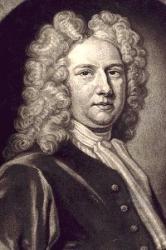
1687 - 1743 Person Name: Henry Carey, c.1687-1743 Topics: Worship The Word Composer of "SURREY" in Together in Song Henry Carey, b. 1685 (?); d. London, 1743
Evangelical Lutheran Hymnal, 1908
Henry Carey
Thomas Cotterill
1779 - 1823 Topics: The Word of God Author of "The Gospel of Christ" in The Pilgrim Hymnal Thomas Cotterill (b. Cannock, Staffordshire, England, 1779; d. Sheffield, Yorkshire, England, 1823) studied at St. John's College, Cambridge, England, and became an Anglican clergyman. A central figure in the dispute about the propriety of singing hymns, Cotterill published a popular collection of hymns (including many of his own as well as alterations of other hymns), Selection of Psalms and Hymns in 1810. But when he tried to introduce a later edition of this book in Sheffield in 1819, his congregation protested. Many believed strongly that the Church of England should maintain its tradition of exclusive psalm singing. In a church court the Archbishop of York and Cotterill reached a compromise: the later edition of Selection was withdrawn, and Cotterill was invited to submit a new edition for the archbishop's approval. The new edition was published in 1820 and approved as the first hymnal for the Anglican church of that region. Cotterill's suppressed book, however, set the pattern for Anglican hymnals for the next generation, and many of its hymns are still found in modern hymnals.
Bert Polman
===============
Thomas Cotterill was born in 1779; studied at S. John's College, Cambridge, graduating M.A.; ordained in 1806, and enterred upon parochial work at Tutbury; afterwards removed to Lane End, where he remained for nine years among the Potteries; in 1817, became perpetual Curate of S. Paul's, Sheffield. He died in 1823. He was the author of several books; among them, "A Selection of Psalms and Hymns for Public and Private Use, adapted to the Services of the Church of England." In the preparation of this collection (the 8th ed., 1819), he had the assistance of Montgomery, who in this work did what he condemned in others, viz., altering and remodeling other authors' hymns.
--Annotations of the Hymnal, Charles Hutchins, M.A., 1872.
======================
Cotterill, Thomas, M.A., was the son of a woolstapler at Cannock, Staffordshire, where he was born Dec. 4, 1779. After attending the local boarding-school of the Rev. J. Lomax, he proceeded to the Free School, Birmingham. He graduated at St. John's College, Cambridge (B.A. 1801, M.A. 1805), of which he became a Fellow. Taking Holy Orders, he became Curate of Tutbury in June, 1803 (not 1806, as stated by Miller in Singers & Songs of the Church). His subsequent charges were the Incumbency of Lane End, Staffordshire, 1808-17, and the Perpetual Curacy of St. Paul's Sheffield, 1817-23. He died at Sheffield Dec. 29, 1823 (not Jan. 5, 1824, as in the Gentleman’s Magazine), aged 44. His volume of Family Prayers attained to the sixth edi¬tion in 1824. As a hymn-writer, Cotterill is less known than as the compiler of a Selection of Psalms and Hymns which has had a most marked effect on modern hymnals. The first edition of that Selection was published in 1810, and the 9th in 1820. All subsequent issues were reprints of the last. The most important edition is the 8th, 1819. To that Selection Cotterill contributed at various dates 25 original hymns and versions of individual psalms. These, in common with all the hymns in the Selection, are given without author's name. Through the aid, however, of marked copies [in the collections of Brooke and Julian] and of members of Cotterill's family, we are enabled to identify most, if not all, of his original productions. In addition to those which are annotated under their first lines, we have—
i. In his Selection of Psalms & Hymns for Public and Private Use, adapted to the Festivals of the Church of England, &c, 1st ed., 1810:—
1. Awake, O sword, the Father cried. Atonement.
2. Before Thy throne of grace, O Lord. Lent.
3. From Sinai's mount, in might array'd. The Law and the Gospel.
4. From Thine all-seeing Spirit, Lord. Ps. 139.
5. In all the ways and works of God. Ps. 145.
6. Out of the deeps, O Lord, we call. Ps. 130.
7. The Lord, who once on Calvary. The Intercessor. This is based on “Where high the heavenly temple stands," q. v.
ii. In the Appendix to the 6th ed. of the same Selection, Staffordshire, 1815:—
8. Blessed are they who mourn for sin. Lent.
9. Father of mercies, let our songs [way, ways]. Thanksgiving.
10. I was alive without the law. Lent.
11. Lord of the Sabbath, 'tis Thy day. Sunday.
iii. In the 8th edition of the same, 1819 :—
12. Help us, O Lord, Thy yoke to wear. Charity Sermons. This is sometimes given as "Lord, let us learn Thy yoke to wear," as in Kennedy, 1863, &c.
13. I love the Lord, for He hath heard. Ps. 116.
14. Lo in the East a star appears. Epiphany. This in an altered form begins in Kennedy, 1863, No. 188, with stanza ii., "The ancient sages from afar."
15. Lord, cause Thy face on us to shine. For Unity.
16. When Christ, victorious from the grave. Easter. The 9th ed. of the Selection, 1820, was practically a new work. It was compiled by Cotterill, but revised by Dr. Harcourt, the Archbishop of York, and was dedi¬cated to him. It was the outcome of the compromise in the legal proceedings over the 8th ed., 1819. The 8th ed. contained 367 hymns in addition to 128 versions of the Psalms and 6 Doxologies, the 9th only 152. Its full title was A Selection of Psalms and Hymns for Public Worship, Lond., T. Cadell, 1820. It may be noted that copies of the 8th ed., 1819, are found with two distinct title-pages. One of these, accompanied with the preface, was for the general public, the second, without the preface, for the use of the congregations of St. James's and St. Paul's, Sheffield.
Of Cotterill's hymns the most popular are, "O'er the realms of pagan darkness," "Let songs of praises fill the sky," and "Jesus exalted far on high," but these are not distinguished by any striking features of excellence. He was more happy in some of his alterations of older hymns, and in the com¬piling of centos. Many of the readings introduced into the great hymns of the Church first appeared in his Selection. The most notable amongst these are, "Rock of Ages," in 3 stanzas, as in Hymns Ancient & Modern, 1861, the Wesleyan Hymn Book, and other collections; "Lo! He comes with clouds descending;" and “Great God, what do I see and hear." Cotterill's connection with the Uttoxeter Psalms & Hymns, 1805, is given in detail in the article on Staffordshire Hymn-books, and his lawsuit over the 8th ed. of his Selection, 1819, in the article on England Hymnody, Church of.
--John Julian, Dictionary of Hymnology (1907)
Thomas Cotterill
N. F. S. Grundtvig
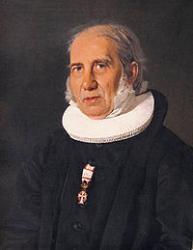
1783 - 1872 Topics: The Word Author of "God's Word Is Our Great Heritage" in Hymnal for Church and Home Nicolai Frederik Severin Grundtvig was the son of a pastor, and was born at Udby, in Seeland, in 1783. He studied in the University of Copenhagen from 1800-1805; and, like some other eminent men, did not greatly distinguish himself; his mind was too active and his imagination too versatile to bear the restraint of the academic course. After leaving the university he took to teaching; first in Langeland, then (1808) in Copenhagen. Here he devoted his attention to poetry, literature, and Northern antiquities. In 1810 he became assistant to his father in a parish in Jutland. The sermon he preached at his ordination, on the subject "Why has the Lord's word disappeared from His house," attracted much attention, which is rarely the case with "probationers'" sermons. On his father's death, in 1813, he returned to Copenhagen, and for eight years devoted himself mainly to literature. The poetry, both secular and religious, that he produced, drew from a friend the remark that "Kingo's harp had been strung afresh." In 1821 King Frederik vi. appointed him pastor of Prasloe, a parish in Seeland, from which he was the next year removed to Copenhagen, and made chaplain of St. Saviour's church in Christianshavn. From the time of his ordination he had been deeply impressed with Evangelical church sentiments, in opposition to the fashionable Rationalism and Erastianism of the day; and adhered to the anti-rationalist teaching of Hauge, whose death at this time (1824) seemed to be a call to Grundtvig to lift up his voice. An opportunity soon presented itself; Professor Clausen brought out a book entitled Katholicismens og Protestantismens Forfatning, Ldre, og Ritus ("The condition, teaching, and ritual of Catholicism and Protestantism"). This book was replete with the Erastian Rationalism which was so especially distasteful to Grundtvig, who forthwith, in his Kirkens Gjenmsele ("The Church's Reply," 1825), strongly opposed its teaching, and laid down truer principles of Christian belief, and sounder views of the nature of the Church. This caused a sensation: Grandtvig (who had not spared his opponent) was fined 100 rixdollars, and the songs and hymns which he had written for the coming celebration of the tenth centenary of Northern Christianity were forbidden to be used. On this he resigned his post at St. Saviour's, or rather was forced to quit it by a sentence of suspension which was pronounced in 1826, and under which he was kept for 13 years. He took the opportunity of visiting England in 1829, 30, and 31, and consulting its libraries, mainly with a view to a further insight into Northern antiquities, and to help his studies in the early English tongue. His edition of Cynewulfs beautiful poem of the Phenix from the Codex Exoniensis, the Anglo-Saxon (so-called) text, with a preface in Danish, and a fri Fordanskning (free rendering in Danish), published in 1840*, is a result of this journey and enforced leisure. Tired of his long silence, his numerous friends and admirers proposed to erect a church for him, and form themselves into an independent congregation, but this was not permitted. He was allowed, however, to hold an afternoon service in the German church at Christianshavn. There ho preached for eight years, and compiled and wrote his hymn-book, Sang-Vdrk til den Danske Kirkce ("Song-work for the Danish Church"). He still worked on towards his object of raising the Christian body to which ho belonged from the condition of a mere slate establishment to the dignity of a gospel-teaching national church. In 1839 (the year of the death of King Frederik vr., and the accession of his cousin Chrisliem vni.) the suspension was removed, and he was appointed chaplain of the hospital Vartou, a position which he held till his death. In 1863 the king (Frederik vn.) conferred on him the honorary title of bishop. The good old man died suddenly, in his 89th year, on Sept. 2, 1872, having officiated the day before. As Kingo is the poet of Easter, and Brorson of Christmas, so Grundtvig is spoken of as the poet of Whitsuntide.
--John Julian, Dictionary of Hymnology,, p. 1001 (1907)
N. F. S. Grundtvig
J. Jefferson Cleveland
1937 - 1986 Topics: Service of the Word Prayer Songs; The Service of the Word Prayer Songs Adapter of "The Lord's Prayer (West Indian)" in Renew! Songs and Hymns for Blended Worship Judge Jefferson Cleveland (1937-1986) was one of the most important scholars and editors of African-American congregational song of the 20th century. Along with Verogla Nix, he edited what is arguably the most groundbreaking collection of African-American song in the last half of the 20th century, Songs of Zion (1981/1982).
Lutheran hymnologist Marilyn Stulken provides a biographical sketch of Cleveland’s life and accomplishments. Born in Georgia, Cleveland graduated from Clark College (Atlanta), Illinois Wesleyan University and received his doctorate in education from Boston University.
He served on the faculty of three historically black Christian colleges: Claflin College (South Carolina), Langston University (Oklahoma), and Jarvis Christian College (Texas), before teaching at the University of Massachusetts and Wesley Theological Seminary in Washington, D.C.
Cleveland’s musical arrangements, historical research and scholarship on the performance practice of African-American song have proven invaluable for the advancement of black gospel song, not only among African Americans, but also in Anglo hymnals to the present day. For example, Cleveland’s essay, “A Historical Account of the Hymn in the Black Worship Experience,” in Songs of Zion is a helpful introduction for laypersons and scholars alike.
In addition to serving as a hymnody consultant for the United Methodist General Board of Discipleship, he toured the United States and Africa in 1981 and Europe in 1984 as a teacher, lecturer and performer.
--www.umportal.org/
J. Jefferson Cleveland
Johann Rudolf Ahle
1625 - 1673 Person Name: Johann R. Ahle Topics: Elements of Worship Hearing the Word Composer of "LIEBSTER JESU" in Lift Up Your Hearts Johann Rudolph Ahle, b. Mühlhausen, 1625; Ahle studied theology at Erfurt University. Little is known about his musical education, but be became well known as an organist while he was in Erfurt. He returned to Mühlhausen and became an organist at St. Blasius Church, he composed organ music but is know for his sacred choral music. He was the father of Johann Georg, who was also a composer and succeeded his father as organist at St. Blasius Church. Johann Rudolf became mayor of Mühlhausen late in his life and died there in 1673.
Dianne Shapiro (from Bach Cantatas Website www.bach-cantatas.com/Lib/Ahle-Johann-Rudolf.htm)
Johann Rudolf Ahle
William Walsham How
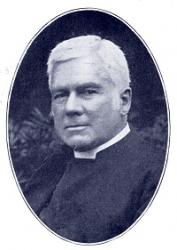
1823 - 1897 Person Name: William W. How, 1823-1897 Topics: The Word of God Author of "O Word of God Incarnate" in Baptist Hymnal 1956 William W. How (b. Shrewsbury, Shropshire, England, 1823; d. Leenane, County Mayo, Ireland, 1897) studied at Wadham College, Oxford, and Durham University and was ordained in the Church of England in 1847. He served various congregations and became Suffragan Bishop in east London in 1879 and Bishop of Wakefield in 1888. Called both the "poor man's bishop" and "the children's bishop," How was known for his work among the destitute in the London slums and among the factory workers in west Yorkshire. He wrote a number of theological works about controversies surrounding the Oxford Movement and attempted to reconcile biblical creation with the theory of evolution. He was joint editor of Psalms and Hymns (1854) and Church Hymns (1871). While rector in Whittington, How wrote some sixty hymns, including many for children. His collected Poems and Hymns were published in 1886.
Bert Polman
===============
How, William Walsham, D.D., son of William Wybergh How, Solicitor, Shrewsbury, was born Dec. 13, 1823, at Shrewsbury, and educated at Shrewsbury School and Wadham College, Oxford (B.A. 1845). Taking Holy Orders in 1846, he became successively Curate of St. George's, Kidderminster, 1846; and of Holy Cross, Shrewsbury, 1848. In 1851 he was preferred to the Rectory of Whittington, Diocese of St. Asaph, becoming Rural Dean in 1853, and Hon. Canon of the Cathedral in 1860. In 1879 he was appointed Rector of St. Andrew's Undershaft, London, and was consecrated Suffragan Bishop for East London, under the title of the Bishop of Bedford, and in 1888 Bishop of Wakefield. Bishop How is the author of the Society for Promoting Christian Knowledge Commentary on the Four Gospels; Plain Words , Four Series; Plain Words for Children; Pastor in Parochia; Lectures on Pastoral Work; Three All Saints Summers, and Other Poems , and numerous Sermons , &c. In 1854 was published Psalms and Hymns, Compiled by the Rev. Thomas Baker Morrell, M.A., . . . and the Rev. William Walsham How, M.A. This was republished in an enlarged form in 1864, and to it was added a Supplement in 1867. To this collection Bishop How contributed several hymns, and also to the S. P. C. K. Church Hymns , of which he was joint editor, in 1871. The Bishop's hymns in common use amount in all to nearly sixty.
Combining pure rhythm with great directness and simplicity, Bishop How's compositions arrest attention more through a comprehensive grasp of the subject and the unexpected light thrown upon and warmth infused into facia and details usually shunned by the poet, than through glowing imagery and impassioned rhetoric. He has painted lovely images woven with tender thoughts, but these are few, and found in his least appreciated work. Those compositions which have laid the firmest hold upon the Church, are simple, unadorned, but enthusiastically practical hymns, the most popular of which, "O Jesu, Thou art standing"; "For all the Saints who from their labours rest," and "We give Thee but Thine own," have attained to a foremost rank. His adaptations from other writers as in the case from Bishop Ken, "Behold, the Master passeth by," are good, and his Children's hymns are useful and popular. Without any claims to rank as a poet, in the sense in which Cowper and Montgomery were poets, he has sung us songs which will probably outlive all his other literary works.
The more important of Bishop How's hymns, including those already named, and "Lord, Thy children guide and keep"; "O Word of God Incarnate"; "This day at Thy creating word"; "Who is this so weak and helpless"; and others which have some special history or feature of interest, are annotated under their respective first lines. The following are also in common use:—
i. From Psalms & Hymns, 1854.
1. Before Thine awful presence, Lord. Confirmation.
2. Jesus, Name of wondrous love [priceless worth]. Circumcision. The Name Jesus .
3. Lord Jesus, when we stand afar. Passiontide.
4. O blessing rich, for sons of men. Members of Christ.
5. 0 Lord of Hosts, the earth is Thine. In time of War.
6. O Lord, Who in Thy wondrous love. Advent.
ii. From Psalms & Hymns, enlarged, 1864.
7. Lord, this day Thy children meet. Sunday School Anniversary.
iii. From Supplement to the Psalms & Hymns, 1867.
8. Hope of hopes and joy of joys. Resurrection.
9. 0 daughters blest of Galilee. For Associations of Women.
10. O happy feet that tread. Public Worship.
11. With trembling awe the chosen three. Transfiguration.
iv. From Parish Magazine, 1871, and Church Hymns, 1871.
12. O Jesu, crucified for man. Friday.
13. Yesterday, with worship blest. Monday.
v. From the S. P. C. K. Church Hymns. 1871.
14. Bowed low in supplication. For the Parish.
15. Great Gabriel sped on wings of light. Annunciation, of the Blessed Virgin Mary.
16. O blest was he, whose earlier skill. St. Luke.
17. O God, enshrined in dazzling light. Omnipresence. Divine Worship .
18. O heavenly Fount of Light and Love. Witsuntide.
19. O Lord, it is a blessed thing. Weekdays.
20. 0 One with God the Father. Epiphany.
21. O Thou through suffering perfect made. Hospitals.
22. Rejoice, ye sons of men. Purification of the B. V. M.
23. Summer suns are glowing. Summer.
24. The year is swiftly waning. Autumn.
25. Thou art the Christ, O Lord. St. Peter.
26. To Thee our God we fly. National Hymn.
27. Upon the holy Mount they stood. Transfiguration and Church Guilds.
28. We praise Thy grace, 0 Saviour. St. Mark.
vi. From the S. P. C. K. Children's Hymns, 1872.
29. Behold a little child. Jesus the Child's Example.
30. Come, praise your Lord and Saviour. Children's Praises.
31. It is a thing most wonderful. Sunday School Anniversary.
32. On wings of living light. Easter.
Bishop How's hymns and sacred and secular pieces were collected and published as Poems and Hymns, 1886. The Hymns, 54 in all, are also published separately. He d. Aug. 10, 1897.
--John Julian, Dictionary of Hymnology (1907)
===================
How, W. W., p. 540, i. He died Aug. 10, 1897. His Memoir, by F. D. How, was published in 1898.
--John Julian, Dictionary of Hymnology, New Supplement (1907)
William Walsham How
John Francis Wade
1711 - 1786 Topics: Christ The Word Attributed to of "O Come, All Ye Faithful" in Trinity Hymnal (Rev. ed.) John Francis Wade (b. England, c. 1711; d. Douay, France, 1786) is now generally recognized as both author and composer of the hymn "Adeste fideles," originally written in Latin in four stanzas. The earliest manuscript signed by Wade is dated about 1743. By the early nineteenth century, however, four additional stanzas had been added by other writers. A Roman Catholic, Wade apparently moved to France because of discrimination against Roman Catholics in eighteenth-century England—especially so after the Jacobite Rebellion of 1745. He taught music at an English college in Douay and hand copied and sold chant music for use in the chapels of wealthy families. Wade's copied manuscripts were published as Cantus Diversi pro Dominicis et Festis per annum (1751).
Bert Polman
John Francis Wade
St. Ambrose
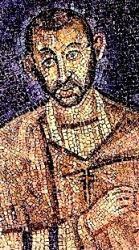
340 - 397 Person Name: Ambrose of Milan Topics: Christ The Word Author of "O Splendor of God's Glory Bright" in Trinity Hymnal (Rev. ed.) Ambrose (b. Treves, Germany, 340; d. Milan, Italy, 397), one of the great Latin church fathers, is remembered best for his preaching, his struggle against the Arian heresy, and his introduction of metrical and antiphonal singing into the Western church. Ambrose was trained in legal studies and distinguished himself in a civic career, becoming a consul in Northern Italy. When the bishop of Milan, an Arian, died in 374, the people demanded that Ambrose, who was not ordained or even baptized, become the bishop. He was promptly baptized and ordained, and he remained bishop of Milan until his death. Ambrose successfully resisted the Arian heresy and the attempts of the Roman emperors to dominate the church. His most famous convert and disciple was Augustine. Of the many hymns sometimes attributed to Ambrose, only a handful are thought to be authentic. Bert Polman =====================
Ambrosius (St. Ambrose), second son and third child of Ambrosius, Prefect of the Gauls, was born at Lyons, Aries, or Treves--probably the last--in 340 A.D. On the death of his father in 353 his mother removed to Rome with her three children. Ambrose went through the usual course of education, attaining considerable proficiency in Greek; and then entered the profession which his elder brother Satyrus had chosen, that of the law. In this he so distinguished himself that, after practising in the court of Probus, the Praetorian Prefect of Italy, he was, in 374, appointed Consular of Liguria and Aemilia. This office necessitated his residence in Milan. Not many months after, Auxentius, bishop of Milan, who had joined the Arian party, died; and much was felt to depend upon the person appointed as his successor. The church in which the election was held was so filled with excited people that the Consular found it necessary to take steps fur preserving the peace, and himself exhorted them to peace and order: when a voice suddenly exclaimed, "Ambrose is Bishop," and the cry was taken up on all sides. He was compelled to accept the post, though still only a catechumen; was forthwith baptized, and in a week more consecrated Bishop, Dec. 7, 374. The death of the Emperor Valentinian I., in 375, brought him into collision with Justina, Valentinian's second wife, an adherent of the Arian party: Ambrose was supported by Gratian, the elder son of Valentinian, and by Theodosius, whom Gratian in 379 associated with himself in the empire. Gratian was assassinated in 383 by a partisau of Maximus, and Ambrose was sent to treat with the usurper, a piece of diplomacy in which he was fairly successful. He found himself, however, left to carry on the contest with the Arians and the Empress almost alone. He and the faithful gallantly defended the churches which the heretics attempted to seize. Justina was foiled: and the advance of Maximus on Milan led to her flight, and eventually to her death in 388. It was in this year, or more probably the year before (387), that Ambrose received into the Church by baptism his great scholar Augustine, once a Manichaean heretic. Theodosius was now virtually head of the Roman empire, his colleague Valentinian II., Justina's son, being a youth of only 17. In the early part of 390 the news of a riot at Thessalonica, brought to him at Milan, caused him to give a hasty order for a general massacre at that city, and his command was but too faithfully obeyed. On his presenting himself a few days after at the door of the principal church in Milan, he was met by Ambrose, who refused him entrance till he should have done penance for his crime. It was not till Christmas, eight months after, that the Emperor declared his penitence, and was received into communion again by the Bishop. Valentinian was murdered by Arbogastes, a Frank general, in 392; and the murderer and his puppet emperor Eugenius were defeated by Theodosius in 394. But the fatigues of the campaign told on the Emperor, and he died the following year. Ambrose preached his funeral sermon, as he had done that of Valentinian. The loss of these two friends and supporters was a severe blow to Ambrose; two unquiet years passed, and then, worn with labours and anxieties, he himself rested from his labours on Easter Eve, 397. It was the 4th of April, and on that day the great Bishop of Milan is remembered by the Western Church, but Rome commemorates his consecration only, Dec. 7th. Great he was indeed, as a scholar, an organiser, a statesman; still greater as a theologian, the earnest and brilliant defender of the Catholic faith against the Arians of the West, just as Athanasius (whose name, one cannot but remark, is the same as his in meaning) was its champion against those of the East. We are now mainly concerned with him as musician and poet, "the father of Church song" as he is called by Grimm. He introduced from the East the practice of antiphonal chanting, and began the task, which St. Gregory completed, of systematizing the music of the Church. As a writer of sacred poetry he is remarkable for depth and severity. He does not warm with his subject, like Adam of St. Victor, or St. Bernard. "We feel," says Abp. Trench, "as though there were a certain coldness in his hymns, an aloofness of the author from his subject. "A large number of hymns has been attributed to his pen; Daniel gives no fewer than 92 called Ambrosian. Of these the great majority (including one on himself) cannot possibly be his; there is more or less doubt about the rest. The authorities on the subject are the Benedictine ed. of his works, the Psalterium, or Hymnary, of Cardinal Thomasius, and the Thesaurus Hymnologicus of Daniel. The Benedictine editors give 12 hymns as assignable to him, as follows:—1. Aeterna Christi munera. 2. Aeterne rerum Conditor. 3. Consors Paterni luminii. 4. Deus Creator omnium. 5. Fit porta Christi pervia, 6. Illuminans Altissimus. 7. Jam surgit hora tertia. 8. 0 Lux Beata Trinitas. 9. Orabo mente Dominum. 10. Somno refectis artubus. 11. Splendor Paternae gloriae. 12. Veni Redemptor gentium. Histories of these hymns, together with details of translations into English, are given in this work, and may be found under their respective first lines. The Bollandists and Daniel are inclined to attribute to St. Ambrose a hymn, Grates tibi Jesu novas, on the finding of the relics of SS. Gervasius and Protasius. These, we know, were discovered by him in 386, and it is by no means unlikely that the bishop should have commemorated in verse an event which he announces by letter to his sister Marcellina with so much satisfaction, not to say exultation.A beautiful tradition makes the Te Deum laudamus to have been composed under inspiration, and recited alternately, by SS. Ambrose and Augustine immediately after the baptism of the latter in 387. But the story rests upon a passage which there is every reason to consider spurious, in the Chronicon of Dacius, Bishop of Milan in 550. There is no hint of such an occurrence in the Confessions of St. Augustine, nor in Paulinue's life of St. Ambrose, nor in any authentic writing of St. Ambrose himself. The hymn is essentially a compilation, and there is much reason to believe, with Merati, that it originated in the 5th century, in the monastery of St. Honoratus at Lerins. [Te Deum.] -- John Julian, Dictionary of Hymnology (1907)
Also known as: Ambrotio, Ambrosio de Milán Ambrosius Mediolanensis Ambrosius Saint, Bp. of Milan Ambrosius von Mailand Aurelio Ambrogio, Saint, Bishop of Milan Aurelius Ambrosius, Saint, Bishop of Milan Milan, d. 397
St. Ambrose
Michael Perry
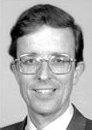
1942 - 1996 Person Name: Michael Perry, 1942-1996 Topics: Jesus Christ the Word Alterer of "God Is Our Fortress and Our Rock" in Common Praise (1998) Initially studying mathematics and physics at Dulwich College, Michael A. Perry (b. Beckenham, Kent, England, 1942; d. England, 1996) was headed for a career in the sciences. However, after one year of study in physics at the University of London, he transferred to Oak Hill College to study theology. He also studied at Ridley Hall, Cambridge, and received a M.Phil. from the University of Southhampton in 1973. Ordained a priest in the Church of England in 1966, Perry served the parish of St. Helen's in Liverpool as a youth worker and evangelist. From 1972 to 1981 he was the vicar of Bitterne in Southhampton and from 1981 to 1989, rector of Eversley in Hampshire and chaplain at the Police Staff College. He then became vicar of Tonbridge in Kent, where he remained until his death from a brain tumor in 1996. Perry published widely in the areas of Bible study and worship. He edited Jubilate publications such as Hymns far Today's Church (1982), Carols for Today (1986), Come Rejoice! (1989), and Psalms for Today (1990). Composer of the musical drama Coming Home (1987), he also wrote more than two hundred hymns and Bible versifications.
Bert Polman
Michael Perry
Louis F. Benson
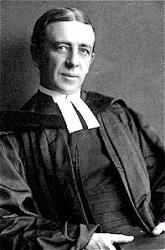
1855 - 1930 Topics: Christ The Word Trans. compiler of "O Splendor of God's Glory Bright" in Trinity Hymnal (Rev. ed.) Benson, Louis FitzGerald, D.D., was born at Philadelphia, Penn., July 22, 1855, and educated at the University of Penn. He was admitted to the Bar in 1877, and practised until 1884. After a course of theological studies he was ordained by the Presbytery of Philadelphia North, in 1888. His pastorate of the Church of the Redeemer, Germantown, Phila., extended from his ordination in 1888 to 1894, when he resigned and devoted himself to literary and Church work at Philadelphia. He edited the series of Hymnals authorised for use by the General Assembly of the Presbyterian Church in the U.S.A., as follows:—
(1) The Hymnal, Phila., 1895; (2) The Chapel Hymnal, 1898; and (3) The School Hymnal, 1899.
Dr. Benson's hymnological writings are somewhat extensive. They include:—
(1) Hymns and Verses (original and translations), 1897; (2) The Best Church Hymns, 1898; (3) The Best Hymns, 1898; (4) Studies of Familiar Hymns, 1903, &c.
Of his original hymns the following have come into American common use:—
I. In The Hymnal, 1895:—
1. O Christ, Who didst our tasks fulfil. For Schools and Colleges. Written in 1894.
2. O risen Christ, Who from Thy throne. For Installation of a Pastor. Written in 1894.
II. In The School Hymnal, 1899:—
3. A glory lit the wintry sky. Loneliness of Jesus. Written in 1897.
4. Happy town of Salem. Heaven.
5. Now the wintry days are o'er. Easter.
6. O sing a song of Bethlehem. Early Life of Jesus.
7. Open the door to the Saviour. Invitation.
8. Out of the skies, like angel eyes. Lullaby.
9. Who will teach me how to pray? Prayer. In Carey Bonner's Sunday School Hymnary, 1905:—
10. The sun is on the land and sea. Morning.
11. Our wilful hearts have gone astray. Penitence.
12. When I awake from slumber. Morning.
Of the above, Nos. 1-4, 10-12 are from Hymns and Verses, 1897. In the above collection by C. Bonner, Nos. 1, 4, and 6 are also found. Of Dr. Benson's translations from the Latin one only is in common use. See "Plaudite coeli, Rideat aether."
As a hymn writer Dr. Benson is not widely known, mainly through the recent publication of his verse. His hymns deserve attention, and will, no doubt, gain the public ear in due time; whilst his hymnological researches and publications are thorough and praiseworthy.
--John Julian, Dictionary of Hymnology, New Supplement (1907)
Louis F. Benson
Pages