

 My Starred Hymns
 My Hymnals
 My Purchased Files
Planning worship?
Check out our sister site, ZeteoSearch.org,
for 20+ additional resources related to your search.
- |
User Links
Search Results


Come, Holy Ghost, our souls inspire
Author: John Cosin Appears in 250 hymnals Topics: Ember Days and Ordination Lyrics:
Come, Holy Ghost, our souls inspire,
And lighten with celestial fire.
Thou the anointing Spirit art,
Who dost thy sevenfold gifts impart.
Thy blessèd unction from above
Is comfort, life, and fire of love.
Enable with perpetual light
The dullness of our blinded sight.
Anoint and cheer our soilèd face
With the abundance of thy grace.
414
Keep far our foes, give peace at home:
Where thou art guide, no ill can come.
Teach us to know the Father, Son,
And thee of both to be but One,
That, through the ages all along,
This may be our endless song:
Praise to thy eternal merit,
Father, Son, and Holy Spirit.
Amen.
Used With Tune: VENI CREATOR Text Sources: Latin
Come, Holy Ghost, our souls inspire
Lord, pour Thy Spirit from on high
Author: James Montgomery Meter: 8.8.8.8 Appears in 215 hymnals Topics: Ember Days and Ordination Lyrics:
Lord, pour thy Spirit from on high,
And thine ordainèd servants bless;
Graces and gifts to each supply,
And clothe thy priests with righteousness.
Within thy temple when they stand,
To teach the truth as taught by thee,
Savior, like stars in thy right hand,
Let all thy Church's pastors be.
410
Wisdom, and zeal, and faith impart,
Firmness and meekness from above,
To bear thy people in their heart,
And love the souls whom thou dost love;
To watch, and pray, and never faint,
By day and night strict guard to keep,
To warn the sinner, cheer the saint,
To feed thy lambs, and fold thy sheep.
So, when their work is finished here,
They may in hope their charge resign;
So, when their Master shall appear,
They may with crowns of glory shine.
Amen.
Used With Tune: FEDERAL STREET
Lord, pour Thy Spirit from on high
O Spirit of the living God
Author: James Montgomery Meter: 8.8.8.8 Appears in 383 hymnals Topics: Ember Days and Ordination Used With Tune: MELCOMBE
O Spirit of the living God


FEDERAL STREET
Meter: 8.8.8.8 Appears in 701 hymnals Composer and/or Arranger: Henry K. Oliver Topics: Ember Days and Ordination Tune Key: F Major Incipit: 33343 55434 44334 Used With Text: Lord, pour Thy Spirit from on high
FEDERAL STREET
FESTAL SONG
Meter: 6.6.8.6 Appears in 221 hymnals Composer and/or Arranger: W. H. Walter Topics: Ember Days and Ordination Tune Key: B Flat Major Incipit: 51535 65671 76523 Used With Text: Ye servants of the Lord
FESTAL SONG
MISSIONARY CHANT
Meter: 8.8.8.8 Appears in 506 hymnals Composer and/or Arranger: Heinrich C. Zeuner Topics: Ember Days and Ordination Tune Key: A Major Incipit: 33331 22771 11132 Used With Text: Ye Christian heralds, go, proclaim
MISSIONARY CHANT


God, deigning man to be
Author: Frank Damrosch, Jr. Hymnal: The Hymnal of the Protestant Episcopal Church in the United States of America 1940 #131 (1940) Meter: 6.6.6.6.8.8 Topics: Ember Days and Ordination Tune Title: LITTLE CORNARD
God, deigning man to be
Lord, pour thy Spirit from on high
Author: James Montgomery Hymnal: The Hymnal of the Protestant Episcopal Church in the United States of America 1940 #219 (1940) Meter: 8.8.8.8 Topics: Ember Days and Ordination Tune Title: HAMBURG
Lord, pour thy Spirit from on high
Rise up, O men of God!
Author: William Pierson Merrill Hymnal: The Hymnal of the Protestant Episcopal Church in the United States of America 1940 #535 (1940) Meter: 6.6.8.6 Topics: Ember Days and Ordination Tune Title: FESTAL SONG
Rise up, O men of God!


James Montgomery
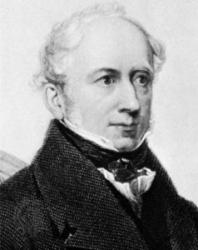
1771 - 1854 Topics: Ember Days and Ordination Author of "Lord, pour thy Spirit from on high" in The Hymnal of the Protestant Episcopal Church in the United States of America 1940 James Montgomery (b. Irvine, Ayrshire, Scotland, 1771; d. Sheffield, Yorkshire, England, 1854), the son of Moravian parents who died on a West Indies mission field while he was in boarding school, Montgomery inherited a strong religious bent, a passion for missions, and an independent mind. He was editor of the Sheffield Iris (1796-1827), a newspaper that sometimes espoused radical causes. Montgomery was imprisoned briefly when he printed a song that celebrated the fall of the Bastille and again when he described a riot in Sheffield that reflected unfavorably on a military commander. He also protested against slavery, the lot of boy chimney sweeps, and lotteries. Associated with Christians of various persuasions, Montgomery supported missions and the British Bible Society. He published eleven volumes of poetry, mainly his own, and at least four hundred hymns. Some critics judge his hymn texts to be equal in quality to those of Isaac Watts and Charles Wesley . Many were published in Thomas Cotterill's Selection of Psalms and Hymns (1819 edition) and in Montgomery's own Songs of Zion (1822), Christian Psalmist (1825), and Original Hymns (1853).
Bert Polman
========================
Montgomery, James, son of John Montgomery, a Moravian minister, was born at Irvine, Ayrshire, Nov. 4, 1771. In 1776 he removed with his parents to the Moravian Settlement at Gracehill, near Ballymena, county of Antrim. Two years after he was sent to the Fulneck Seminary, Yorkshire. He left Fulneck in 1787, and entered a retail shop at Mirfield, near Wakefield. Soon tiring of that he entered upon a similar situation at Wath, near Rotherham, only to find it quite as unsuitable to his taste as the former. A journey to London, with the hope of finding a publisher for his youthful poems ended in failure; and in 1792 he was glad to leave Wath for Shefield to join Mr. Gales, an auctioneer, bookseller, and printer of the Sheffield Register newspaper, as his assistant. In 1794 Mr. Gales left England to avoid a political prosecution. Montgomery took the Sheffield Register in hand, changed its name to The Sheffield Iris, and continued to edit it for thirty-one years. During the next two years he was imprisoned twice, first for reprinting therein a song in commemoration of "The Fall of the Bastille," and the second for giving an account of a riot in Sheffield. The editing of his paper, the composition and publication of his poems and hynms, the delivery of lectures on poetry in Sheffield and at the Royal Institution, London, and the earnest advocacy of Foreign Missions and the Bible Society in many parts of the country, gave great variety but very little of stirring incident to his life. In 1833 he received a Royal pension of £200 a year. He died in his sleep, at the Mount, Sheffield, April 30, 1854, and was honoured with a public funeral. A statue was erected to his memory in the Sheffield General Cemetery, and a stained glass window in the Parish Church. A Wesleyan chapel and a public hall are also named in his honour. Montgomery's principal poetical works, including those which he edited, were:—
(1) Prison Amusements, 1797; (2) The Wanderer of Switzerland, 1806; (3) The West Indies, 1807; (4) The World before the Flood, 1813; (5) Greenland and Other Poems, 1819; (6) Songs of Zion, 1822; (7) The Christian Psalmist, 1825; (8) The Christian Poet, 1825; (9) The Pelican Island, 1828; (10) The Poet’s Portfolio, 1835; (11) Original Hymns for Public, Private, and Social Devotion, 1853. He also published minor pieces at various times, and four editions of his Poetical Works, the first in 1828, the second in 1836, the third in 1841, and the fourth in 1854. Most of these works contained original hymns. He also contributed largely to Collyer's Collection, 1812, and other hymnbooks published during the next 40 years, amongst which the most noticeable was Cotterill's Selections of 1819, in which more than 50 of his compositions appeared. In his Christian Psalmist, 1825, there are 100 of his hymns, and in his Original Hymns, 1853, 355 and 5 doxologies. His Songs of Zion, 1822, number 56. Deducting those which are repeated in the Original Hymns, there remain about 400 original compositions.
Of Montgomery's 400 hymns (including his versions of the Psalms) more than 100 are still in common use. With the aid of Montgomery's MSS. we have given a detailed account of a large number. The rest are as follows:—
i. Appeared in Collyer's Collection, 1812.
1. Jesus, our best beloved Friend. Personal Dedication to Christ.
2. When on Sinai's top I see. Sinai, Tabor, and Calvary.
ii. Appeared in Cotterill's Selection, 1819.
3. Come to Calvary's holy mountain. The Open Fountain.
4. God in the high and holy place. God in Nature. The cento in Com. Praise, 1879, and others, "If God hath made this world so fair," is from this hymn.
5. Hear me, O Lord, in my distress. Ps. cxliii.
6. Heaven is a place of rest from sin. Preparation for Heaven.
7. I cried unto the Lord most just. Ps. cxlii.
8. Lord, let my prayer like incense rise. Ps. cxxxix.
9. O bless the Lord, my soul! His grace to thee proclaim. Ps. ciii.
10. Out of the depths of woe. Ps. cxxx. Sometimes "When from the depths of woe."
11. The world in condemnation lay. Redemption.
12. Where are the dead? In heaven or hell? The Living and the Dead.
iii. Appeared in his Songs of Zion, 1822.
13. Give glory to God in the highest. Ps. xxix.
14. Glad was my heart to hear. Ps. cxxii.
15. God be merciful to me. Ps. lxix.
16. God is my strong salvation. Ps. xxvii.
17. Hasten, Lord, to my release. Ps. lxx.
18. Have mercy on me, O my God. Ps. li.
19. Hearken, Lord, to my complaints. Ps. xlii.
20. Heralds of creation cry. Ps. cxlviii.
21. How beautiful the sight. Ps. cxxxiii.
22. How precious are Thy thoughts of peace. Ps. cxxxix.
23. I love the Lord, He lent an ear. Ps. cxvi.
24. In time of tribulation. Ps. lxxvii.
25. Jehovah is great, and great be His praise. Ps. xlviii. Sometimes, "0 great is Jehovah, and great is His Name."
26. Judge me, O Lord, in righteousness. Ps. xliii.
27. Lift up your heads, ye gates, and wide. Ps.xxiv.
28. Lord, let me know mine [my] end. Ps. xxxi.
29. Of old, 0 God, Thine own right hand. Ps. lxxx.
30. O God, Thou art [my] the God alone. Ps. lxiii.
31. 0 Lord, our King, how excellent. Ps. viii. Sometimes, "0 Lord, how excellent is Thy name."
32. O my soul, with all thy powers. Ps. ciii.
33. One thing with all my soul's desire. Ps. xxvii. From this, "Grant me within Thy courts a place."
34. Searcher of hearts, to Thee are known. Ps. cxxxix.
35. Thank and praise Jehovah's name. Ps. cvii.
36. Thee will I praise, O Lord in light. Ps. cxxxviii.
37. The Lord is King; upon His throne. Ps. xciii.
38. The Lord is my Shepherd, no want shall I know. Ps. xxiii.
39. The tempter to my soul hath said. Ps. iii.
40. Thrice happy he who shuns the way. Ps. i.
41. Thy glory, Lord, the heavens declare. Ps. xix.
42. Thy law is perfect, Lord of light. Ps. xix.
43. Who make the Lord of hosts their tower. Ps. cxxv.
44. Yea, I will extol Thee. Ps. xxx.
iv. Appeared in his Christian Psalmist. 1825.
45. Fall down, ye nations, and adore. Universal adoration of God desired.
46. Food, raiment, dwelling, health, and friends. The Family Altar.
47. Go where a foot hath never trod. Moses in the desert. Previously in the Leeds Congregational Collection, 1822.
48. Green pastures and clear streams. The Good Shepherd and His Flock.
49. Less than the least of all. Mercies acknowledged.
50. Not to the mount that burned with fire [flame]. Communion of Saints.
51. On the first Christian Sabbath eve. Easter Sunday Evening.
52. One prayer I have: all prayers in one. Resignation.
53. Our heavenly Father hear. The Lord's Prayer.
54. Return, my soul, unto thy rest. Rest in God.
55. Spirit of power and might, behold. The Spirit's renewing desired.
56. The Christian warrior, see him stand. The Christian Soldier. Sometimes, "Behold the Christian warrior stand."
57. The days and years of time are fled. Day of Judgment.
58. The glorious universe around. Unity.
59. The pure and peaceful mind. A Children's Prayer.
60. This is the day the Lord hath made (q. v.). Sunday.
61. Thy word, Almighty Lord. Close of Service.
62. What secret hand at morning light ? Morning.
63. While through this changing world we roam. Heaven.
64. Within these walls be peace. For Sunday Schools.
v. Appeared in his Original Hymns, 1853.
65. Behold yon bright array. Opening a Place of Worship.
66. Behold the book whose leaves display. Holy Scriptures.
67. Come ye that fear the Lord. Confirmation.
68. Home, kindred, friends, and country, these. Farewell to a Missionary.
69. Let me go, the day is breaking. Jacob wrestling.
70. Not in Jerusalem alone. Consecration of a Church.
71. Praise the high and holy One. God the Creator.
In common with most poets and hymnwriters, Montgomery strongly objected to any correction or rearrangement of his compositions. At the same time he did not hesitate to alter, rearrange, and amend the productions of others. The altered texts which appeared in Cotterill's Selections, 1819, and which in numerous instances are still retained in some of the best hymnbooks, as the "Rock of Ages," in its well-known form of three stanzas, and others of equal importance, were made principally by him for Cotterill's use. We have this confession under his own hand.
As a poet, Montgomery stands well to the front; and as a writer of hymns he ranks in popularity with Wesley, Watts, Doddridge, Newton, and Cowper. His best hymns were written in his earlier years. In his old age he wrote much that was unworthy of his reputation. His finest lyrics are "Angels from the realms of glory," "Go to dark Gethsemane," "Hail to the Lord's Anointed," and "Songs of praise the angels sang." His "Prayer is the soul's sincere desire," is an expanded definition of prayer of great beauty; and his "Forever with the Lord" is full of lyric fire and deep feeling. The secrets of his power as a writer of hymns were manifold. His poetic genius was of a high order, higher than most who stand with him in the front rank of Christian poets. His ear for rhythm was exceedingly accurate and refined. His knowledge of Holy Scripture was most extensive. His religious views were broad and charitable. His devotional spirit was of the holiest type. With the faith of a strong man he united the beauty and simplicity of a child. Richly poetic without exuberance, dogmatic without uncharitableness, tender without sentimentality, elaborate without diffusiveness, richly musical without apparent effort, he has bequeathed to the Church of Christ wealth which could onlv have come from a true genius and a sanctified! heart.
--John Julian, Dictionary of Hymnology (1907)
James Montgomery
Lowell Mason
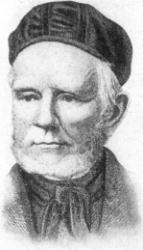
1792 - 1872 Topics: Ember Days and Ordination Arranger of "HAMBURG" in The Hymnal of the Protestant Episcopal Church in the United States of America 1940 Dr. Lowell Mason (the degree was conferred by the University of New York) is justly called the father of American church music; and by his labors were founded the germinating principles of national musical intelligence and knowledge, which afforded a soil upon which all higher musical culture has been founded. To him we owe some of our best ideas in religious church music, elementary musical education, music in the schools, the popularization of classical chorus singing, and the art of teaching music upon the Inductive or Pestalozzian plan. More than that, we owe him no small share of the respect which the profession of music enjoys at the present time as contrasted with the contempt in which it was held a century or more ago. In fact, the entire art of music, as now understood and practiced in America, has derived advantage from the work of this great man.
Lowell Mason was born in Medfield, Mass., January 8, 1792. From childhood he had manifested an intense love for music, and had devoted all his spare time and effort to improving himself according to such opportunities as were available to him. At the age of twenty he found himself filling a clerkship in a banking house in Savannah, Ga. Here he lost no opportunity of gratifying his passion for musical advancement, and was fortunate to meet for the first time a thoroughly qualified instructor, in the person of F. L. Abel. Applying his spare hours assiduously to the cultivation of the pursuit to which his passion inclined him, he soon acquired a proficiency that enabled him to enter the field of original composition, and his first work of this kind was embodied in the compilation of a collection of church music, which contained many of his own compositions. The manuscript was offered unavailingly to publishers in Philadelphia and in Boston. Fortunately for our musical advancement it finally secured the attention of the Boston Handel and Haydn Society, and by its committee was submitted to Dr. G. K. Jackson, the severest critic in Boston. Dr. Jackson approved most heartily of the work, and added a few of his own compositions to it. Thus enlarged, it was finally published in 1822 as The Handel and Haydn Society Collection of Church Music. Mason's name was omitted from the publication at his own request, which he thus explains, "I was then a bank officer in Savannah, and did not wish to be known as a musical man, as I had not the least thought of ever making music a profession." President Winchester, of the Handel and Haydn Society, sold the copyright for the young man. Mr. Mason went back to Savannah with probably $500 in his pocket as the preliminary result of his Boston visit.
The book soon sprang into universal popularity, being at once adopted by the singing schools of New England, and through this means entering into the church choirs, to whom it opened up a higher field of harmonic beauty. Its career of success ran through some seventeen editions. On realizing this success, Mason determined to accept an invitation to come to Boston and enter upon a musical career. This was in 1826. He was made an honorary member of the Handel and Haydn Society, but declined to accept this, and entered the ranks as an active member. He had been invited to come to Boston by President Winchester and other musical friends and was guaranteed an income of $2,000 a year. He was also appointed, by the influence of these friends, director of music at the Hanover, Green, and Park Street churches, to alternate six months with each congregation. Finally he made a permanent arrangement with the Bowdoin Street Church, and gave up the guarantee, but again friendly influence stepped in and procured for him the position of teller at the American Bank.
In 1827 Lowell Mason became president and conductor of the Handel and Haydn Society. It was the beginning of a career that was to win for him as has been already stated the title of "The Father of American Church Music." Although this may seem rather a bold claim it is not too much under the circumstances. Mr. Mason might have been in the average ranks of musicianship had he lived in Europe; in America he was well in advance of his surroundings. It was not too high praise (in spite of Mason's very simple style) when Dr. Jackson wrote of his song collection: "It is much the best book I have seen published in this country, and I do not hesitate to give it my most decided approbation," or that the great contrapuntist, Hauptmann, should say the harmonies of the tunes were dignified and churchlike and that the counterpoint was good, plain, singable and melodious.
Charles C. Perkins gives a few of the reasons why Lowell Mason was the very man to lead American music as it then existed. He says, "First and foremost, he was not so very much superior to the members as to be unreasonably impatient at their shortcomings. Second, he was a born teacher, who, by hard work, had fitted himself to give instruction in singing. Third, he was one of themselves, a plain, self-made man, who could understand them and be understood of them."
The personality of Dr. Mason was of great use to the art and appreciation of music in this country. He was of strong mind, dignified manners, sensitive, yet sweet and engaging.
Prof. Horace Mann, one of the great educators of that day, said he would walk fifty miles to see and hear Mr. Mason teach if he could not otherwise have that advantage.
Dr. Mason visited a number of the music schools in Europe, studied their methods, and incorporated the best things in his own work. He founded the Boston Academy of Music. The aim of this institution was to reach the masses and introduce music into the public schools. Dr. Mason resided in Boston from 1826 to 1851, when he removed to New York. Not only Boston benefited directly by this enthusiastic teacher's instruction, but he was constantly traveling to other societies in distant cities and helping their work. He had a notable class at North Reading, Mass., and he went in his later years as far as Rochester, where he trained a chorus of five hundred voices, many of them teachers, and some of them coming long distances to study under him. Before 1810 he had developed his idea of "Teachers' Conventions," and, as in these he had representatives from different states, he made musical missionaries for almost the entire country. He left behind him no less than fifty volumes of musical collections, instruction books, and manuals.
As a composer of solid, enduring church music. Dr. Mason was one of the most successful this country has introduced. He was a deeply pious man, and was a communicant of the Presbyterian Church. Dr. Mason in 1817 married Miss Abigail Gregory, of Leesborough, Mass. The family consisted of four sons, Daniel Gregory, Lowell, William and Henry. The two former founded the publishing house of Mason Bros., dissolved by the death of the former in 1869. Lowell and Henry were the founders of the great organ manufacturer of Mason & Hamlin. Dr. William Mason was one of the most eminent musicians that America has yet produced.
Dr. Lowell Mason died at "Silverspring," a beautiful residence on the side of Orange Mountain, New Jersey, August 11, 1872, bequeathing his great musical library, much of which had been collected abroad, to Yale College.
--Hall, J. H. (c1914). Biography of Gospel Song and Hymn Writers. New York: Fleming H. Revell Company.
Lowell Mason
Horatius Bonar
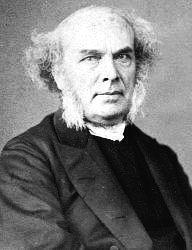
1808 - 1889 Topics: Ember Days and Ordination Author of "Go, labor on! spend and be spent!" in The Hymnal of the Protestant Episcopal Church in the United States of America 1940 Horatius Bonar was born at Edinburgh, in 1808. His education was obtained at the High School, and the University of his native city. He was ordained to the ministry, in 1837, and since then has been pastor at Kelso. In 1843, he joined the Free Church of Scotland. His reputation as a religious writer was first gained on the publication of the "Kelso Tracts," of which he was the author. He has also written many other prose works, some of which have had a very large circulation. Nor is he less favorably known as a religious poet and hymn-writer. The three series of "Hymns of Faith and Hope," have passed through several editions.
--Annotations of the Hymnal, Charles Hutchins, M.A. 1872
================================
Bonar, Horatius, D.D. Dr. Bonar's family has had representatives among the clergy of the Church of Scotland during two centuries and more. His father, James Bonar, second Solicitor of Excise in Edinburgh, was a man of intellectual power, varied learning, and deop piety.
Horatius Bonar was born in Edinburgh, Dec. 19th, 1808; and educated at the High School and the University of Edinburgh. After completing his studies, he was "licensed" to preach, and became assistant to the Rev. John Lewis, minister of St. James's, Leith. He was ordained minister of the North Parish, Kelso, on the 30th November, 1837, but left the Established Church at the "Disruption," in May, 1848, remaining in Kelso as a minister of the Free Church of Scotland. The University of Aberdeen conferred on him the doctorate of divinity in 1853. In 1866 he was translated to the Chalmers Memorial Church, the Grange, Edinburgh; and in 1883 he was chosen Moderator of the General Assembly of of the Free Church of Scotland.
Dr. Bonar's hymns and poems were, he tells us, composed amid a great variety of circumstances; in many cases he cannot himself recall these circumstances; they also appeared in several publications, but nearly all have boen published or republished in the following:— (i) Songs for the Wilderness, 1843-4. (2) The Bible Hymn Book, 1845. (3) Hymns, Original and Selected, 1846. (4) Hymns of Faith and Hope, First Series, 1857; Second Series, 1861; Third Series, 1866. (5) The Song of the New Creation, 1872. (6) My Old Letters, a long poem, 1877. (7) Hymns of the Nativity, 1879. (8) Communion Hymns, 1881. In addition to numerous prose works, he has also edited The New Jerusalem; a Hymn of the Olden Time, 1852, &c.
Dr. Bonar's poems—-including many beautiful lyrics, several psalm versions, and translations from the Greek and Latin, a large number of hymns, and a long meditative poem—-are very numerous, too numerous, perhaps, for their permanent fame as a whole.
Dr. Bonar's scholarship is thorough and extensive; and his poems display the grace of style and wealth of allusion which are the fruit of ripe culture. Affected very slightly by current literary moods, still less by the influence of other religious poetry, they reveal extreme susceptibility to the emotional power which the phases of natural and of spiritual life exercise; the phases of natural life being recognised chiefly as conveying and fashioning spiritual life, used chiefly for depicting spiritual life, and handled for this purpose with greater delicacy of touch than in the Olney Hymns, and with less conscious purpose than in the Christian Year. As a result of this susceptibility, and from habitual contemplation of the Second Advent as the era of this world's true bliss, his hymns and poems are distinguished by a tone of pensive reflection, which some might call pessimism. But they are more than the record of emotion; another element is supplied by his intellectual and personal grasp of Divine truth, these truths particularly:—The gift of a Substitute, our Blessed Saviour; Divine grace, righteous, yet free and universal in offer; the duty of immediate reliance upon the privilege of immediate assurance through that grace; communion with God, especially in the Lord's Supper, respecting which he insists on the privilege of cherishing the highest conceptions which Scripture warrants; and finally, the Second Advent of our Lord: by his vigorous celebration of these and other truths as the source and strength of spiritual life, his hymns are protected from the blight of unhealthy, sentimental introspection.
To sum up: Dr. Bonar's hymns satisfy the fastidious by their instinctive good taste; they mirror the life of Christ in the soul, partially, perhaps, but with vivid accuracy; they win the heart by their tone of tender sympathy; they sing the truth of God in ringing notes; and although, when taken as a whole, they are not perfect ; although, in reading them, we meet with feeble stanzas, halting rhythm, defective rhyme, meaningless Iteration; yet a singularly large number have been stamped with approval, both in literary circles and by the Church.
In Great Britain and America nearly 100 of Dr. Bonar's hymns are in common use. They are found in almost all modern hymnals from four in Hymns Ancient & Modern to more than twenty in the American Songs for the Sanctuary, N. Y., 1865-72. The most widely known are, "A few more years shall roll;" "Come, Lord, and tarry not;" "Here, O my Lord, I see Thee face to face;" "I heard the Voice of Jesus say;" "The Church has waited long;" and "Thy way, not mine, O Lord."
In addition to these and others which are annotated under their respective first lines, the following are also in common use:—
From Songs for the Wilderness, No. 1, 1843.
1. For Thee we long and pray. Sunday Morning.
2. Holy Father, hear my cry. A Child's Prayer.
3. I thought upon my sins and I was sad. Christ our Peace.
4. Peace to the world, our Lord is come. A Millennial Song.
5. Spirit of everlasting grace. The Vision of Dry Bones.
ii. From Songs for the Wilderness, No. 2,1844.
6. Ho, ye thirsty, parched and fainting. Invitation.
7. 0 'tis not what we fancied it. The world renounced.
8. Sing them, my children, sing them still. Children exhorted to Praise.
9. Time's sun is fast setting. Advent.
10. Weep, pilgrim, weep, yet 'tis not for the sorrow. Faith.
11. Yes, for me, for me He careth. Christ the Elder Brother .
iii. From The Bible Hymn Book, 1845.
12. Jesus, my sorrow lies too deep. Jesus, the Great High Priest.
13. There is a Morning Star, my soul. The Morning Star.
14. This is not my place of resting. Pressing towards heaven.
iv. From Hymns, Original and Selected, 1845.
15. Let there be light, Jehovah said. Creation.
v. From Hymns of Faith and Hope, 1st series, 1857.
16. Be brave, my brother. The Fight of Faith.
17. Blessed be God, our God. Good Friday.
18. Everlasting praises. Doxology.
19. Go up, go up, my heart. Heavenly aspirations desired.
20. I close my heavy eye. Evening. Sometimes given as "We close our heavy eyes."
21. I see the crowd in Pilate's hall. Good Friday.
22. Jesus, while this rongh desert soil. Strength by the Way.
23. Jesus, Whom angel-hosts adore. The Word made Flesh. From "The Son of God, in mighty love."
24. Make haste, 0 man, to live. Exhortation to lay hold of Life.
25. No seas again shall sever. Heaven.
26. Oppressed with noonday's scorching heat. Shadow of the Cross.
27. Rest for the toiling hand. Burial. From "Lie down, frail body, here."
28. Shall this life of mine be wasted? Exhortation to Duty.
29. These are the crowns that we shall wear. Heaven.
30. Thy works, not mine, O Christ [Lord]. The Sin-bearer.
31. Where the faded flower shall freshen. Heaven.
vi. From Hymns of Faith and Hope. 2nd series, 1861.
32. Be still, my soul, Jehovah loveth Thee. Rest in the Love of God.
33. Christ has done the mighty work. Good Friday.
34. Come, mighty Spirit, penetrate. Whitsuntide.
35. Deep down beneath the unresting surge. Burial at Sea.
36. Fear not the foe, thou flock of God [thou little flock]. Battle-Song of the Church.
37. For lack of love I languish. Lent.
38. From this bleak hill of storms. Eternal Rest desired.
39. He liveth long who liveth well. The True Life.
40. Here shall death's triumph end: the rock-barred door. Easter. From "The tomb is empty: wouldst thou have it full."
41. Jesus, Sun and Shield art Thou. Jesus the First and Last.
42. Jesus, the Christ of God. Praise to Christ.
43. Light of the world, for ever, ever shining. Christ the Light of the World. From "Why walk in darkness? Has the dear light vanished?"
44. Make use of me, my God. Duty desired.
45. Not what I am, 0 Lord, but what Thou art. The Love of God.
46. 0 Light of Light, shine in. Cry of the Weary.
47. 0 love of God, how strong and true. Love of God.
48. 0 love that casts out fear. Love of God.
49. 0 strong to save and bless. Lent.
50. 0 this soul, how dark and blind. Lent.
51. Safe across the waters. Thanksgiving at end of a journey.
52. Silent, like men in solemn haste. Pressing onwards.
53. Speak, lips of mine. Exhortation to Praise.
54. The Bridegroom comes. Advent.
vii. From Hymns of Faith and Hope. 3rd series, 1866.
55. Bear Thou my burden, Thou Who bar'st my sin. Lent or Passiontide.
56. Done is the work that saves. Easter.
57. Father, our children keep. Prayer on behalf of Children.
58. Fill Thou my life, 0 Lord my God. Life's Praise.
59. Finish Thy work, the time is short. Earnest labour to the end.
60. From the Cross the blood is falling. Good Friday.
61. He called them, and they left. Obedience.
62. Help me, my [0] God to speak. Truth desired.
63. Holy Father, Mighty God. Holy Trinity.
64. How are my troubles multiplied. Ps. iii.
65. How sweetly doth He show His face Flower Service.
66. Light hath arisen, we walk in its brightness. Sustaining power of Faith.
67. Lo, God, our God has come. Christmas.
68. Lord, give me light to do Thy work. Divine guidance desired.
69. No, not despairingly. Lent.
70. Not to ourselves again. Life in Christ, or, Living unto God.
71. Now in parting, Father, bless us. Post Communion.
72. Sounds the trumpet from afar. Battle-Song of the Church.
73. Thee in the loving bloom of morn. God in all.
74. Through good report and evil, Lord. Faithfulness.
75. To Jehovah, God of might. Praise to the Father.
76. To the name of God on high. Doxology.
77. Upward, where the stars are burning. Heavenward Aspirations.
78. We take the peace which He hath won. The Gift of Peace.
79. When the weary, seeking rest. Intercession for all Conditions of Men.
viii. From The Song of the New Creation,1872.
80. For the Bread and for the Wine. Holy Communion.
81. Light of life so softly shining. Light of Life.
82. Yet there is room. The Lamb's bright hall of song. Home Missions.
ix. From Hymns of the Nativity, 1879.
83. Great Ruler of the land and sea. Sailors' Liturgy. From Communion Hymns, 1881.
84. Beloved, let us love. Brotherly Love.
In several instances these hymns are given in an abbreviated form, and sometimes alterations are also introduced. In this latter respect however Dr. Bonar has suffered less than most modern hymn-writers. [Rev. James Mearns, M.A.]
-- John Julian, Dictionary of Hymnology (1907)
====================
Bonar, Horatius, p. 161, i. He died at Edinburgh, July 31, 1889. In 1890 his son published a posthumous volume of his poetical pieces as Until the Day Break and other Hymns and Poems left behind. The following additional hymns are in common use:—
1. Almighty Comforter and Friend. (1866.) Whitsuntide.
2. Father, make use of me. An altered form of No. 44, p. 162, ii.
3. I ask a perfect creed. (1861.) Creed not Opinions. From this is also taken "O True One, give me truth."
4. Long, long deferred, now come at last. Marriage of the Lamb. Part of "Ascend, Beloved, to the joy." (1861.)
5. Nay 'tis not what we fancied it. (1857.) Vanity of the World.
6. No blood, no altar now. (1861.) The Finished Sacrifice.
7. No shadows yonder. (1857.) Heaven Anticipated.
8. Not with the light and vain. (1857.) Godly Companionship.
9. O Love invisible, yet infinite. (1866.) Divine Love.
10. On the great love of God I lean. (1866.) Love of God our Resting-place.
11. On Thee, O Jesus, strongly leaning. (1866.) Fellowship with Christ.
12. Peace upon peace, like wave on wave. (1866.) Divine Peace.
13. Sower divine, sow the good seed in me. (1857.) Heavenly Sowing.
14. Speaketh the sinner's sin within my heart. (1866.) Ps. xxxvi.
15. Still one in life and one in death. (1857.) Communion of Saints. Part of "'Tis thus they press the hand and part."
16. Surely, yon heaven, where angels see God's face. (1857.) Heaven Anticipated.
17. That city with the jewelled crest. (1857.) Heaven. Part of "These are the crowns that we shall wear." Another cento from the same is "Yon city, with the jewelled crest."
18. That clime is not like this dull clime of ours. (1843.) Heaven.
19. The Free One makes you free: He breaks the rod. (1857.) Freedom in Christ. From "Of old they sang the song of liberty."
20. There is a Morning-star, my soul. (1357.) Christ the Morning Star.
21. This is the day of toil. (1866.) Pressing Onwards.
22. Thy thoughts are here, my God. (1866.) Holy Scripture.
23. Till the day dawn. (1857.) Life's Journey.
24. To Him Who spread the skies. (1866.) Creation's Song.
25. Trustingly, trustingly. (1866.) Trust.
26. Unto th' eternal hills. (1866.) Ps. cxxi.
The above dates are: 1843, Songs in the Wilderness; 1857, Hymns of Faith and Hope, 1st Series; 1861, same, 2nd Ser. (not 1864); 1866, same, 3rd Ser. (not 1867), The dates 1857, 1864,1867, were given by Dr. Bonar, but the British Museum copies are 1857, 1861, 1866 respectively.
--John Julian, Dictionary of Hymnology, Appendix, Part II (1907)
==============
Bonar, H., pp. 161, i.; 1554, i. The Rev. H. N. Bonar, Dr. Bonar's son, published in 1904, Hymns by Horatius Bonar, Selected and Arranged by his Son H. N. Bonar, With a brief History of some of the Hymns, &c. (London: H. Frowde). From this work we must correct the date of his Song of the New Creation to 1872. We have also enriched our pages by additional and expanded notes on several of Dr. Bonar's most widely used hymns. In his biographical notes, Mr. Bonar refers to Dr. Bonar's work as editor of the Quarterly Journal of Prophecy, begun in 1848, to which he contributed a hymn for each number. We find that the number of hymns contributed thereto is 101.
With Dr. Bonar's poetical productions great difficulty has been encountered by the historian and annotator because of his absolute indifference to dates and details. It was enough for him that he had written, and that the Church of Christ approved and gladly used what, out of the fulness of his heart, he had given her.
--Excerpt from John Julian, Dictionary of Hymnology, New Supplement (1907)
Horatius Bonar