You help make Hymnary.org possible. More than 10 million people from 200+ countries found hymns, liturgical resources and encouragement on Hymnary.org in 2025, including you. Every visit affirms the global impact of this ministry.

If Hymnary has been meaningful to you this year, would you take a moment today to help sustain it? A gift of any size—paired with a note of encouragement if you wish—directly supports the server costs, research work and curation that keep this resource freely available to the world.

Give securely online today, or mail a check to:
Hymnary.org
Calvin University
3201 Burton Street SE
Grand Rapids, MI 49546

Thank you for your partnership, and may the hope of Advent fill your heart.

Search Results

Topics:knowledge

Planning worship? Check out our sister site, ZeteoSearch.org, for 20+ additional resources related to your search.

Texts

text icon
Text authorities
TextPage scansFlexScoreFlexPresentAudio

I Know Whom I Have Believed

Author: Daniel W. Whittle, 1840-1901 Meter: 8.6.8.6 with refrain Appears in 308 hymnals Topics: Knowledge First Line: I know not why God's wondrous grace Refrain First Line: But "I know whom I have believed" Lyrics: 1 I know not why God's wondrous grace to me he has made known, nor why, unworthy, Christ in love redeemed me for his own. Refrain: But "I know whom I have believed, and am persuaded that he is able to keep that which I've committed unto him against that day." 2 I know not how this saving faith to me he did impart, nor how believing in his Word wrought peace within my heart. [Refrain] 3 I know not how the Spirit moves, convincing men of sin, revealing Jesus through the Word, creating faith in him. [Refrain] 4 I know not what of good or ill may be reserved for me, of weary ways or golden days, before his face I see. [Refrain] 5 I know not when my Lord may come, at night or noonday fair, nor if I'll walk the vale with him, or "meet him in the air." [Refrain] Scripture: 2 Timothy 1:12 Used With Tune: EL NATHAN
Page scans

O grant us light, that we may know

Author: Lawrence Tuttiett Meter: 8.8.8.8 Appears in 77 hymnals Topics: Knowledge Used With Tune: [QUEBEC]
TextPage scans

Teach me, O teach me, Lord, Thy way

Author: James Merrick Meter: 8.8.8.8 Appears in 48 hymnals Topics: The Christian Life Wisdom and Self-Knowledge Lyrics: 1 Teach me, O teach me, Lord, Thy way; That, to my life's remotest day, By thine unerring precepts led, My feet Thy heavenly paths may tread. 2 Informed by Thee, with sacred awe My heart shall meditate Thy law; And, with celestial wisdom filled, To Thee its full obedience yield. 3 Give me to know Thy will aright, Thy will, my glory and delight; That, raised above the world, my mind In Thee its highest good may find. 4 O turn from vanity my eye; To me Thy quickening strength supply; And with Thy promised mercy cheer A heart devoted to Thy fear. Scripture: Psalm 119 Used With Tune: GERMANY

Tunes

tune icon
Tune authorities
Page scansAudio

REDHEAD 76 (AJALON)

Meter: 7.7.7.7.7.7 Appears in 505 hymnals Composer and/or Arranger: Richard Redhead Topics: Knowledge Tune Key: E Flat Major Incipit: 11234 43112 32211 Used With Text: When This Passing World Is Done
Page scansFlexScoreAudio

EL NATHAN

Meter: 8.6.8.6 with refrain Appears in 243 hymnals Composer and/or Arranger: James McGranahan Topics: Knowledge Tune Key: D Major Incipit: 13343 21655 3556 Used With Text: I Know Whom I Have Believed
Page scansFlexScoreAudio

LAUDA ANIMA

Meter: 8.7.8.7.8.7 Appears in 292 hymnals Composer and/or Arranger: John Goss Topics: Knowledge Tune Key: D Major Incipit: 55551 76543 65342 Used With Text: God Is Known among His People

Instances

instance icon
Published text-tune combinations (hymns) from specific hymnals
TextPage scan

Knowledge at present imperfect

Author: Fawcett Hymnal: A Selection of Hymns #CCXLV (1792) Meter: 8.6.8.6 Topics: The Graces of the Holy Spirit Knowledge; Spiritual knowledge; Knowledge Imperfect at present First Line: Thy way, O God, is in the sea Lyrics: 1 Thy way, O God, is in the sea, Thy paths I cannot trace; Nor comprehend the mystery Of thy unbounded Grace. 2 Here the dark veils of flesh and sense, My captive soul surround; Mysterious deeps of providence My wandering thoughts confound. 3 When I behold thy awful hand My earthly hopes destroy; In deep astonishment I stand, And ask the reason, why? 4 As thro' a glass, I dimly see The wonders of thy love; How little do I know of thee, Or of the joys above! 5 'Tis but in part I know thy will, I bless thee for the sight; When will thy love the rest reveal, In glory's clearer light? 6 With raptures shall I then survey Thy providence, and grace; And spend an everlasting day In wonder, love, and praise. Languages: English
TextPage scan

The Inspired Word a System of Knowledge and Joy

Hymnal: The Hartford Selection of Hymns from the Most Approved Authors #XLVIII (1799) Meter: 8.6.8.6 Topics: Scriptures Of knowledge and joy; Scriptures Of knowledge and joy First Line: How precious is the book divine Lyrics: 1 How precious is the book Divine, By inspiration given! Bright as a lamp its doctrines shine To guide our souls to heaven. 2 It sweetly cheers our drooping hearts In this dark vale of tears; Life, light, and joy, it still imparts, And quells our rising fears. 3 This lamp, through all the tedious night Of life, shall guide our way, Till we behold the clearer light Of an eternal day. Scripture: Psalm 119:105 Languages: English
TextPage scan

The Inspired Word a System of Knowledge and Joy

Hymnal: The Hartford Selection of Hymns #XLVIII (1802) Meter: 8.6.8.6 Topics: Scriptures Of knowledge and joy; Scriptures Of knowledge and joy First Line: How precious is the book divine Lyrics: 1 How precious is the book Divine, By inspiration given! Bright as a lamp its doctrines shine To guide our souls to heaven. 2 It sweetly cheers our drooping hearts In this dark vale of tears; Life, light, and joy, it still imparts, And quells our rising fears. 3 This lamp, through all the tedious night Of life, shall guide our way, Till we behold the clearer light Of an eternal day. Scripture: Psalm 119:105 Languages: English

People

person icon
Authors, composers, editors, etc.

H. W. Baker

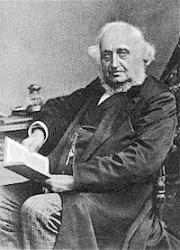
1821 - 1877 Person Name: Sir Herny W. Baker Topics: Knowledge Author of "Out of the deep I call" in Trinity Hymnal Baker, Sir Henry Williams, Bart., eldest son of Admiral Sir Henry Loraine Baker, born in London, May 27, 1821, and educated at Trinity College, Cambridge, where he graduated, B.A. 1844, M.A. 1847. Taking Holy Orders in 1844, he became, in 1851, Vicar of Monkland, Herefordshire. This benefice he held to his death, on Monday, Feb. 12, 1877. He succeeded to the Baronetcy in 1851. Sir Henry's name is intimately associated with hymnody. One of his earliest compositions was the very beautiful hymn, "Oh! what if we are Christ's," which he contributed to Murray's Hymnal for the Use of the English Church, 1852. His hymns, including metrical litanies and translations, number in the revised edition of Hymns Ancient & Modern, 33 in all. These were contributed at various times to Murray's Hymnal, Hymns Ancient & Modern and the London Mission Hymn Book, 1876-7. The last contains his three latest hymns. These are not included in Hymns Ancient & Modern. Of his hymns four only are in the highest strains of jubilation, another four are bright and cheerful, and the remainder are very tender, but exceedingly plaintive, sometimes even to sadness. Even those which at first seem bright and cheerful have an undertone of plaintiveness, and leave a dreamy sadness upon the spirit of the singer. Poetical figures, far-fetched illustrations, and difficult compound words, he entirely eschewed. In his simplicity of language, smoothness of rhythm, and earnestness of utterance, he reminds one forcibly of the saintly Lyte. In common with Lyte also, if a subject presented itself to his mind with striking contrasts of lights and shadows, he almost invariably sought shelter in the shadows. The last audible words which lingered on his dying lips were the third stanza of his exquisite rendering of the 23rd Psalm, "The King of Love, my Shepherd is:"— Perverse and foolish, oft I strayed, But yet in love He sought me, And on His Shoulder gently laid, And home, rejoicing, brought me." This tender sadness, brightened by a soft calm peace, was an epitome of his poetical life. Sir Henry's labours as the Editor of Hymns Ancient & Modern were very arduous. The trial copy was distributed amongst a few friends in 1859; first ed. published 1861, and the Appendix, in 1868; the trial copy of the revised ed. was issued in 1874, and the publication followed in 1875. In addition he edited Hymns for the London Mission, 1874, and Hymns for Mission Services, n.d., c. 1876-7. He also published Daily Prayers for those who work hard; a Daily Text Book, &c. In Hymns Ancient & Modern there are also four tunes (33, 211, 254, 472) the melodies of which are by Sir Henry, and the harmonies by Dr. Monk. He died Feb. 12, 1877. --John Julian, Dictionary of Hymnology (1907)

George J. Elvey

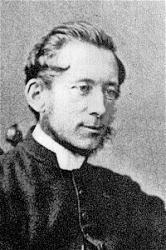
1816 - 1893 Person Name: George J. Elvey, 1816-1893 Topics: Knowledge Composer of "ST. CRISPIN" in The Hymnal George Job Elvey (b. Canterbury, England, 1816; d. Windlesham, Surrey, England, 1893) As a young boy, Elvey was a chorister in Canterbury Cathedral. Living and studying with his brother Stephen, he was educated at Oxford and at the Royal Academy of Music. At age nineteen Elvey became organist and master of the boys' choir at St. George Chapel, Windsor, where he remained until his retirement in 1882. He was frequently called upon to provide music for royal ceremonies such as Princess Louise's wedding in 1871 (after which he was knighted). Elvey also composed hymn tunes, anthems, oratorios, and service music. Bert Polman

John Bacchus Dykes

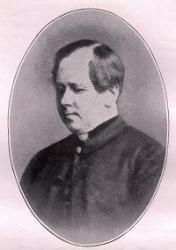
1823 - 1876 Person Name: Dr. J. B. Dykes, 1823-1876 Topics: Faith And Knowledge; Faith And Knowledge; Knowledge Composer of "RIVAULX" in Methodist Hymn and Tune Book As a young child John Bacchus Dykes (b. Kingston-upon-Hull' England, 1823; d. Ticehurst, Sussex, England, 1876) took violin and piano lessons. At the age of ten he became the organist of St. John's in Hull, where his grandfather was vicar. After receiving a classics degree from St. Catherine College, Cambridge, England, he was ordained in the Church of England in 1847. In 1849 he became the precentor and choir director at Durham Cathedral, where he introduced reforms in the choir by insisting on consistent attendance, increasing rehearsals, and initiating music festivals. He served the parish of St. Oswald in Durham from 1862 until the year of his death. To the chagrin of his bishop, Dykes favored the high church practices associated with the Oxford Movement (choir robes, incense, and the like). A number of his three hundred hymn tunes are still respected as durable examples of Victorian hymnody. Most of his tunes were first published in Chope's Congregational Hymn and Tune Book (1857) and in early editions of the famous British hymnal, Hymns Ancient and Modern. Bert Polman
It looks like you are using an ad-blocker. Ad revenue helps keep us running. Please consider white-listing Hymnary.org or getting Hymnary Pro to eliminate ads entirely and help support Hymnary.org.