You help make Hymnary.org possible. More than 10 million people from 200+ countries found hymns, liturgical resources and encouragement on Hymnary.org in 2025, including you. Every visit affirms the global impact of this ministry.

If Hymnary has been meaningful to you this year, would you take a moment today to help sustain it? A gift of any size—paired with a note of encouragement if you wish—directly supports the server costs, research work and curation that keep this resource freely available to the world.

Give securely online today, or mail a check to:
Hymnary.org
Calvin University
3201 Burton Street SE
Grand Rapids, MI 49546

Thank you for your partnership, and may the hope of Advent fill your heart.

Search Results

Tune Identifier:"^monkland_antes$"

Planning worship? Check out our sister site, ZeteoSearch.org, for 20+ additional resources related to your search.

Tunes

tune icon
Tune authorities
Page scansFlexScoreAudio

MONKLAND

Meter: 7.7.7.7 Appears in 256 hymnals Composer and/or Arranger: John B. Wilkes; John Antes Tune Key: B Flat Major Incipit: 13534 56713 32176 Used With Text: Let Us with a Gladsome Mind (Psalm 136)

Texts

text icon
Text authorities
TextFlexScoreFlexPresent

Let Us, with a Gladsome Mind

Author: John Milton Meter: 7.7.7.7 Appears in 563 hymnals Refrain First Line: For His mercies shall endure Lyrics: 1 Let us, with a gladsome mind, Praise the Lord, for He is kind: Refrain: For His mercies shall endure, Ever faithful, ever sure. 2 Let us sound His Name abroad, For of gods He is the God: (Refrain) 3 He with all commanding might Filled the new made world with light: (Refrain) 4 All things living He doth feed, His full hand supplies their need: (Refrain) 5 Let us then, with gladsome mind, Praise the Lord for He is kind: (Refrain) Amen. Topics: God the Father Care and Guidance; God the Father Faithfulness; Worship Scripture: Psalm 136 Used With Tune: MONKLAND
TextPage scans

Praise Him

Author: Sir Henry Baker Appears in 143 hymnals First Line: Praise, O praise our God and King! Lyrics: 1 Praise, O praise our God and King! Hymns of adoration sing; For his mercies still endure, Ever faithful, ever sure. 2 Praise him that he made the sun, Day by day his course to run, And the silver moon by night, Shining with her gentle light. 3 Praise him for our harvest store; He hath fill'd the garner floor; And for richer Food than this, Pledge of everlasting bliss. Topics: God Praise to God; God Praise to God; God Praise to God; God Praise to God; God Praise to God; God Praise to God; God Praise to God; God Praise to God; God Praise to God Used With Tune: MONKLAND

Songs of praise the angels sang

Author: James Montgomery, 1771-1854 Meter: 7.7.7.7 Appears in 550 hymnals Used With Tune: MONKLAND

Instances

instance icon
Published text-tune combinations (hymns) from specific hymnals
TextPage scan

Let us with a gladsome mind

Author: John Milton, 1608-74 Hymnal: The New English Hymnal #397 (1986) Meter: 7.7.7.7 Lyrics: 1 Let us, with a gladsome mind, Praise the Lord, for he is kind: For his mercies ay endure, Ever faithful, ever sure. 2 Let us blaze his name abroad, For of gods he is the God: For his mercies ay endure, Ever faithful, ever sure. 3 He with all-commanding might Filled the new-made world with light: For his mercies ay endure, Ever faithful, ever sure. 4 He the golden-tressèd sun Caused all day his course to run: For his mercies ay endure, Ever faithful, ever sure. 5 And the horned moon by night, Mid her spangled sisters bright: For his mercies ay endure, Ever faithful, ever sure. 6 All things living he doth feed, His full hand supplies their need: For his mercies ay endure, Ever faithful, ever sure. 7 Let us, with a gladsome mind, Praise the Lord, for he is kind: For his mercies ay endure, Ever faithful, ever sure. Topics: Harvest; God in Nature Scripture: Psalm 136 Languages: English Tune Title: MONKLAND
TextAudio

Glory Be to God on High (Wesley 1)

Author: Charles Wesley Hymnal: The Cyber Hymnal #1711 Meter: 7.7.7.7 First Line: Glory be to God on high Lyrics: 1. Glory be to God on high, God whose glory fills the skies; Peace on earth to man forgiv’n, Man, the well beloved of Heav’n. 2. Sovereign Father, heavenly King, Thee we now presume to sing; Glad, Thine attributes confess, Glorious all, and numberless. 3. Hail, by all Thy works adored! Hail, the everlasting Lord! Thee with thankful hearts we prove God of power, and God of love. 4. Christ our Lord and God we own, Christ, the Father’s only Son, Lamb of God for sinners slain, Savior of offending man. 5. Bow Thine ear, in mercy bow, Hear, the world’s atonement, Thou! Jesus, in Thy name we pray, Take, O take our sins away! 6. Powerful advocate with God, Justify us by Thy blood; Bow Thine ear, in mercy bow, Hear, the world’s atonement, Thou! 7. Hear, for Thou, O Christ, alone Art with God the Father One, One the Holy Ghost with Thee, One supreme, eternal Three. Languages: English Tune Title: MONKLAND
TextAudio

Let Us with a Gladsome Mind

Author: John Milton Hymnal: The Cyber Hymnal #3669 Meter: 7.7.7.7 First Line: Let us, with a gladsome mind Refrain First Line: For His mercies aye endure Lyrics: 1. Let us, with a gladsome mind, Praise the Lord, for He is kind. Refrain: For His mercies aye endure, Ever faithful, ever sure. 2. Let us blaze His name abroad, For of gods He is the God. [Refrain] 3. He with all commanding might Filled the new made world with light. [Refrain] 4. He hath, with a piteous eye, Looked upon our misery. [Refrain] 5. He the golden tressèd sun Caused all day his course to run. [Refrain] 6. Th’horned moon to shine by night; ’Mid her spangled sisters bright. [Refrain] 7. All things living He doth feed, His full hand supplies their need. [Refrain] 8. Let us, with a gladsome mind, Praise the Lord, for He is kind. [Refrain] Languages: English Tune Title: MONKLAND

People

person icon
Authors, composers, editors, etc.

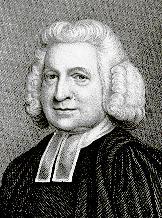
Charles Wesley

1707 - 1788 Author of "Glory Be to God on High (Wesley 1)" in The Cyber Hymnal Charles Wesley, M.A. was the great hymn-writer of the Wesley family, perhaps, taking quantity and quality into consideration, the great hymn-writer of all ages. Charles Wesley was the youngest son and 18th child of Samuel and Susanna Wesley, and was born at Epworth Rectory, Dec. 18, 1707. In 1716 he went to Westminster School, being provided with a home and board by his elder brother Samuel, then usher at the school, until 1721, when he was elected King's Scholar, and as such received his board and education free. In 1726 Charles Wesley was elected to a Westminster studentship at Christ Church, Oxford, where he took his degree in 1729, and became a college tutor. In the early part of the same year his religious impressions were much deepened, and he became one of the first band of "Oxford Methodists." In 1735 he went with his brother John to Georgia, as secretary to General Oglethorpe, having before he set out received Deacon's and Priest's Orders on two successive Sundays. His stay in Georgia was very short; he returned to England in 1736, and in 1737 came under the influence of Count Zinzendorf and the Moravians, especially of that remarkable man who had so large a share in moulding John Wesley's career, Peter Bonier, and also of a Mr. Bray, a brazier in Little Britain. On Whitsunday, 1737, [sic. 1738] he "found rest to his soul," and in 1738 he became curate to his friend, Mr. Stonehouse, Vicar of Islington, but the opposition of the churchwardens was so great that the Vicar consented that he "should preach in his church no more." Henceforth his work was identified with that of his brother John, and he became an indefatigable itinerant and field preacher. On April 8, 1749, he married Miss Sarah Gwynne. His marriage, unlike that of his brother John, was a most happy one; his wife was accustomed to accompany him on his evangelistic journeys, which were as frequent as ever until the year 1756," when he ceased to itinerate, and mainly devoted himself to the care of the Societies in London and Bristol. Bristol was his headquarters until 1771, when he removed with his family to London, and, besides attending to the Societies, devoted himself much, as he had done in his youth, to the spiritual care of prisoners in Newgate. He had long been troubled about the relations of Methodism to the Church of England, and strongly disapproved of his brother John's "ordinations." Wesley-like, he expressed his disapproval in the most outspoken fashion, but, as in the case of Samuel at an earlier period, the differences between the brothers never led to a breach of friendship. He died in London, March 29, 1788, and was buried in Marylebone churchyard. His brother John was deeply grieved because he would not consent to be interred in the burial-ground of the City Road Chapel, where he had prepared a grave for himself, but Charles said, "I have lived, and I die, in the Communion of the Church of England, and I will be buried in the yard of my parish church." Eight clergymen of the Church of England bore his pall. He had a large family, four of whom survived him; three sons, who all became distinguished in the musical world, and one daughter, who inherited some of her father's poetical genius. The widow and orphans were treated with the greatest kindness and generosity by John Wesley. As a hymn-writer Charles Wesley was unique. He is said to have written no less than 6500 hymns, and though, of course, in so vast a number some are of unequal merit, it is perfectly marvellous how many there are which rise to the highest degree of excellence. His feelings on every occasion of importance, whether private or public, found their best expression in a hymn. His own conversion, his own marriage, the earthquake panic, the rumours of an invasion from France, the defeat of Prince Charles Edward at Culloden, the Gordon riots, every Festival of the Christian Church, every doctrine of the Christian Faith, striking scenes in Scripture history, striking scenes which came within his own view, the deaths of friends as they passed away, one by one, before him, all furnished occasions for the exercise of his divine gift. Nor must we forget his hymns for little children, a branch of sacred poetry in which the mantle of Dr. Watts seems to have fallen upon him. It would be simply impossible within our space to enumerate even those of the hymns which have become really classical. The saying that a really good hymn is as rare an appearance as that of a comet is falsified by the work of Charles Wesley; for hymns, which are really good in every respect, flowed from his pen in quick succession, and death alone stopped the course of the perennial stream. It has been the common practice, however for a hundred years or more to ascribe all translations from the German to John Wesley, as he only of the two brothers knew that language; and to assign to Charles Wesley all the original hymns except such as are traceable to John Wesley through his Journals and other works. The list of 482 original hymns by John and Charles Wesley listed in this Dictionary of Hymnology have formed an important part of Methodist hymnody and show the enormous influence of the Wesleys on the English hymnody of the nineteenth century. -- Excerpts from John Julian, Dictionary of Hymnology (1907) ================== Charles Wesley, the son of Samuel Wesley, was born at Epworth, Dec. 18, 1707. He was educated at Westminster School and afterwards at Christ Church, Oxford, where he graduated M.A. In 1735, he took Orders and immediately proceeded with his brother John to Georgia, both being employed as missionaries of the S.P.G. He returned to England in 1736. For many years he engaged with his brother in preaching the Gospel. He died March 29, 1788. To Charles Wesley has been justly assigned the appellation of the "Bard of Methodism." His prominence in hymn writing may be judged from the fact that in the "Wesleyan Hymn Book," 623 of the 770 hymns were written by him; and he published more than thirty poetical works, written either by himself alone, or in conjunction with his brother. The number of his separate hymns is at least five thousand. --Annotations of the Hymnal, Charles Hutchins, M.A., 1872.

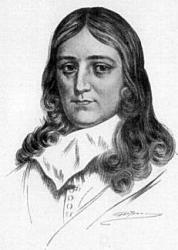
John Milton

1608 - 1674 Author of "Let Us with a Gladsome Mind" in The Cyber Hymnal Milton, John, was born in London, Dec. 9, 1608, and died there Nov. 8, 1674. His poetical excellences and his literary fame are matters apart from hymnology, and are fully dealt with in numerous memoirs. His influence on English hymn-writing has been very slight, his 19 versions of various Psalms having lain for the most part unused by hymnal compilers. The dates of his paraphrases are:— Ps. cxiv. and cxxxvi., 1623, when he was 15 years of ago. These were given in his Poems in English and Latin 1645. Ps. lxxx.-lxxxviii., written in 1648, and published as Nine Psalmes done into Metre, 1645. Ps. i., 1653; ii., “Done August 8, 1653;" iii., Aug. 9, 1653; iv. Aug. 10, 1653; v., Aug. 12, 1653; vi., Aug. 13, 1653; vii.Aug. 14, 1653; viii., Aug. 14, 1653. These 19 versions were all included in the 2nd ed. of his Poems in English and Latin, 1673. From these, mainly in the form of centos, the following have come into common use:— 1. Cause us to see Thy goodness, Lord. Ps. lxxxv. 2. Defend the poor and desolate. Ps. lxxxii. 3. God in the great assembly stands. Ps. lxxxii. 4. How lovely are Thy dwellings fair. Ps. lxxxiv. From this, "They pass refreshed the thirsty vale," is taken. 5. Let us with a gladsome [joyful] mind. Ps. cxxxvi. 6. O let us with a joyful mind. Ps. cxxxvi. 7. The Lord will come and not be slow. Ps. lxxxv. Of these centos Nos. 4 and 5 are in extensive use. The rest are mostly in Unitarian collections. There are also centos from his hymn on the Nativity, "This is the month, and this the happy morn" (q.v.). --John Julian, Dictionary of Hymnology (1907)

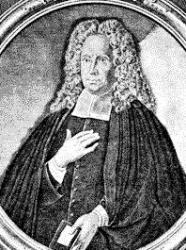
Johann Anastasius Freylinghausen

1670 - 1739 Person Name: J. A. Freylinghausen, 1670-1739 Composer of "MONKLAND" in The New English Hymnal Freylinghausen, Johann Anastasius, son of Dietrich Freylinghausen, merchant and burgomaster at Gandersheim, Brunswick, was born at Gandersheim, Dec. 2, 1670. He entered the University of Jena at Easter, 1689. Attracted by the preaching of A. H. Francke and J. J. Breithaupt, he removed to Erfurt in 1691, and at Easter, 1692, followed them to Halle. About the end of 1693 he returned to Gandersheim, and employed himself as a private tutor. In 1695 he went to Glaucha as assistant to Francke; and when Francke became pastor of St. Ulrich's, in Halle,1715, Freylinghausen became his colleague, and in the same year married his only daughter. In 1723 he became also sub-director of the Paedagogium and the Orphanage; and after Francke's death in 1727, succeeded him as pastor of St. Ulrich's and director of the Francke Institutions. Under his fostering care these Institutions attained their highest development. From a stroke of paralysis in 1728, and a second in 1730, he recovered in great measure, but a third in 1737 crippled his right side, while the last, in Nov., 1738, left him almost helpless. He died on Feb. 12, 1739, and was buried beside Francke (Koch, vi. 322-334; Allgemine Deutsche Biographie, vii. 370-71; Bode, pp. 69-70; Grote's Introduction, &c.) Almost all Freylinghausen's hymns appeared in his own hymnbook, which was the standard collection of the Halle school, uniting the best productions of Pietism with a good representation of the older "classical" hymns. This work, which greatly influenced later collections, and was the source from which many editors drew not only the hymns of Pietism, but also the current forms of the earlier hymns (as well as the new "Halle" melodies, a number of which are ascribed to Freylinghausen himself) appeared in two parts, viz.:— i. Geistreiches Gesang-Buch, den Kern alter und neuer Lieder...in sich haltend &c, Halle. Gedrucktund verlegt im Waysen-Hause, 1704 [Hamburg], with 683 hymns and 173 melodies. To the second edition, 1705 [Rostock University], an Appendix was added with Hymns 684-758, and 21 melodies. Editions 3-18 are practically the same so far as the hymns are concerned, save that in ed. 11, 1719 [Berlin], and later issues, four hymns, written by J. J. Rambach at Freylinghausen's request, replaced four of those in eds. 1-10. ii. Neues Geistreiches Gesangbuch,&c, Halle . . . 1714 [Berlin], with 815 hymns and 154 melodies. In the 2nd edition, 1719 [Rostock University], Hymns 816-818, with one melody, were added. In 1741 these two parts were combined by G. A. Francke, seven hymns being added, all but one taken from the first edition, 1718, of the so-called Auszug, which was compiled for congregational use mainly from the original two parts: and this reached a second, and last, edition in 1771. So far as the melodies are concerned, the edition of 1771 is the most complete, containing some 600 to 1582 hymns. (Further details of these editions in the Blätter für Hymnologie, 1883, pp. 44-46, 106-109; 1885, pp. 13-14.) A little volume of notes on the hymns and hymnwriters of the 1771 edition, compiled by J. H. Grischow and completed by J. G. Kirchner, and occasionally referred to in these pages, appeared as Kurzgefasste Nachricht von ältern und ncuern Liederverfassern at Halle, 1771. As a hymnwriter Freylinghausen ranks not only as the best of the Pietistic school, but as the first among his contemporaries. His finest productions are distinguished by a sound and robust piety, warmth of feeling depth of Christian experience, scripturalness, clearness and variety of style, which gained for them wide acceptance, and have kept them still in popular use. A complete edition of his 44 hymns, with a biographical introduction by Ludwig Grote, appeared as his Geistliche Lieder, at Halle, 1855. A number of them, including No. v., are said to have been written during severe attacks of toothache. Two (“Auf, auf, weil der Tag erschienen"; "Der Tag ist hin") are noted under their own first lines. i. Hymns in English common use: -- i. Monarche aller Ding. God's Majesty. 1714, as above, No. 139, in 11 stanzas of 6 lines, repeated in Grote, 1855, p. 88, and as No. 38 in the Berlin Geistliche Lieder, ed. 1863. A fine hymn of Praise, on the majesty and love of God. Translated as:— Monarch of all, with lowly fear, by J. Wesley, in Hymns & Sacred Poems, 1739 (P. Works, 1868-1872, vol. i. p. 104), in 8 stanzas of 4 lines, from st. i., ii., v.-vii., ix.-xi. Repeated in full in the Moravian Hymnbook, 1754, pt. i., No. 456 (1886, No. 176); and in J. A. Latrobe's Collection, 1841. The following forms of this translation are also in common use:-- (1) To Thee, 0 Lord, with humble fear, being Wesley's st. i., iii.-v., vii., viii. altered as No. 156 in Dr. Martineau's Hymns for Christian Church & Home, 1840, and repeated in Miss Courtauld's Psalms, Hymns & Anthems, 1860, and in America in the Cheshire Association Unitarian Collection, 1844. (2) Thou, Lord, of all the parent art, Wesley's, st. iii.-v., vii. altered in the College Hymnal, N. Y., 1876. (3) Thou, Lord, art Light; Thy native ray, Wesley's st. iv., v., vii., in Hymns of the Spirit, 1864. ii. 0 reines Wesen, lautre Quelle. Penitence. Founded on Psalm li. 12, 1714, as above, No. 321, in 7 stanzas of 8 lines, repeated in Grote, 1855, p. 41, and in Bunsen's Versuch, 1833, No. 777 (ed. 1881, No. 435). The only translation in common use is:— Pure Essence: Spotless Fount of Light. A good and full translation by Miss Winkworth in the first series of her Lyra Germanica, 1855, p. 43, and in her Chorale Book for England, 1863, No. 113. iii. Wer ist wohl wie du. Names and offices of Christ. One of his noblest and most beautiful hymns, a mirror of his inner life, and one of the finest of the German "Jesus Hymns." 1704, as above, No. 66, in 14 st. of 6 l., repeated in Grote, 1855, p. 33, and is No. 96 in the Berlin Geistliche Lieder, ed. 1863. The translations in common use are: 1. 0 Jesu, source of calm repose, by J. Wesley, being a free translation of st. i., iii., v., viii., xiii. First published in his Psalms & Hymns, Charlestown, 1737 (Poetical Works, 1868-1872, vol. i. p. 161). Repeated in full as No. 462 in pt. i. of the Moravian Hymnbook, 1754. In the 1826 and later editions (1886, No. 233) it begins, "Jesus, Thou source." The original form was included as No. 49 in the Wesley Hymns & Spiritual Songs , 1753, and, as No. 343, in the Wesley Hymnbook, 1780 (1875, No. 353). Varying centos under the original first line are found in Mercer's Church Psalter & Hymn Book, 1855-1864; Kennedy , 1863; Irish Church Hymnal, 1869-1873; J. L. Porter's Collection, 1876, &c. It has also furnished the following centos:— (1) Messiah! Lord! rejoicing still, being Wesley's st. iv.-vi. altered in Dr. Martineau's Collection of Hymns for Christian Worship, 1840. (2) Lord over all, sent to fulfil, Wesley's st. iv., iii., v., vi. in the American Methodist Episcopal Hymnbook, 1849. 2. Who is like Thee, Who? a translation of st. i., ii., v., vii., x., xiii., as No. 687, in pt. i. of the Moravian Hymnbook, 1754. Translations of st. xi., xiv. were added in 1789, and the first line altered in 1801(1886, No. 234), to "Jesus, who with Thee." The translations of st. i., ii., x., xiv., from the 1801, altered and beginning, "Jesus, who can be," are included in America in the Dutch Reformed Hymns of the Church, 1869; Hymns & Songs of Praise, N. Y., 1874; and Richards's Collection, N.Y., 1881. 3. Who is there like Thee, a good translation of st. i., ii., viii., xiv., by J. S. Stallybrass, as No. 234 in Curwen's Sabbath Hymnbook, 1859, repeated in the Irish Church Hymnal, 1873, and in W. F. Stevenson's Hymns for Church & Home, 1873. 4. Who is, Jesus blest, a translation of stanzas i., ii., v., vi., xii., xiv., by M. Loy, in the Ohio Lutheran Hymnal, 1880. 5. Who, as Thou, makes blest, a good translation, omitting st. vii., ix., x., contributed by Dr. F. W Gotch to the Baptist Magazine, 1857. Repeated in the 1880 Supplement to the Baptist Psalms & Hymns, 1858. The translations not in common use are: — (1) "Whither shall we flee," by Miss Dunn, 1857, p. 55. (2) "Who has worth like Thine," in the U. P. Juvenile Miss. Magazine, 1857, p. 217. (3) "Thou art First and Best," by Miss Winkworth, 1869, p. 267. ii. Hymns translated into English but not in common use:— iv. Herr und Gott der Tag und Nächte. Evening. 1705, as above, No. 755, in 6 stanzas, Grote, p. 105. Translated by H. J. Buckoll, 1842, p. 106, beginning with stanza. ii. v. Mein Herz, gieb dioh rufrieden. Cross and Consolation. First in the Halle Stadt Gesangbuch, 1711, No. 503, in 11 stanzas; repeated 1714, No. 450, and in Grote, p. 71. Translated by Dr. G. Walker, 1860, p. 86. vi. 0 Lamm, das keine Sünde je beflecket. Passiontide. 1714, No. 85, in 19 stanzas, Grote, p. 14. Translated as, (1) "Lamb, for Thy boundless love I praises offer," of st. xii. as stanza i. of No. 1023 in the Supplement of 1808 to the Moravian Hymn Book, 1801 (1849, No. 121). (2) "O Lamb, whom never spot of sin defiled," in the British Magazine, June, 1838, p. 625. vii. 0 Lamm, das meine Sündenlast getragen. Easter Eve. 1714, No. 95, in 8 stanzas; Grote, p. 23. Translated as "Christ Jesus is that precious grain," a translation of st. v. by F. W. Foster, as No. 71 in the Moravian Hymnbook, 1789 (1886, No. 921). viii. Zu dir, Herr Jesu, komme ich. Penitence. Founded on St. Matthew xi. 28-30. 1714, as above, No. 306, in 4 stanzas; Grote, p. 39. Translated by Dr. H. Mills, 1845 (1856, p. 80). [Rev. James Mearns, M.A.] --John Julian, Dictionary of Hymnology (1907)

Hymnals

hymnal icon
Published hymn books and other collections

Christian Classics Ethereal Hymnary

Publication Date: 2007 Publisher: Grand Rapids, MI: Christian Classics Ethereal Library

Small Church Music

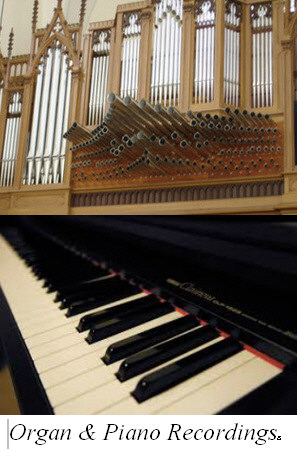
Editors: John Milton Description: History The SmallChurchMusic site was launched in 2006, growing out of the requests from those struggling to provide suitable music for their services and meetings. Rev. Clyde McLennan was ordained in mid 1960’s and was a pastor in many small Australian country areas, and therefore was acutely aware of this music problem. Having also been trained as a Pipe Organist, recordings on site (which are a subset of the smallchurchmusic.com site) are all actually played by Clyde, and also include piano and piano with organ versions. About the Recordings All recordings are in MP3 format. Churches all around the world use the recordings, with downloads averaging over 60,000 per month. The recordings normally have an introduction, several verses and a slowdown on the last verse. Users are encouraged to use software: Audacity (http://www.audacityteam.org) or Song Surgeon (http://songsurgeon.com) to adjust the MP3 number of verses, tempo and pitch to suit their local needs. Mobile App We have partnered with the developer of the popular NetTracks mobile app to offer the Small Church Music collection as a convenient mobile app. Experience the beloved Small Church Music collection through this iOS app featuring nearly 10,000 high-quality hymn recordings that can be organized into custom setlists and downloaded for offline use—ideal for worship services without musicians, congregational practice, and personal devotion. The app requires a small fee to cover maintenance costs. Please note: While Hymnary.org hosts this music collection, technical support for the app is provided exclusively by the app developer, not by Hymnary.org staff. LicensingCopyright notice: Rev. Clyde McLennan, performer in this collection, has assigned his performer rights in this collection to Hymnary.org. Non-commercial use of these recordings is permitted. For permission to use them for any other purposes, please contact manager@hymnary.org. Home/Music(smallchurchmusic.com) List SongsAlphabetically List Songsby Meter List Songs byTune Name About  
It looks like you are using an ad-blocker. Ad revenue helps keep us running. Please consider white-listing Hymnary.org or getting Hymnary Pro to eliminate ads entirely and help support Hymnary.org.