You help make Hymnary.org possible. More than 10 million people from 200+ countries found hymns, liturgical resources and encouragement on Hymnary.org in 2025, including you. Every visit affirms the global impact of this ministry.

If Hymnary has been meaningful to you this year, would you take a moment today to help sustain it? A gift of any size—paired with a note of encouragement if you wish—directly supports the server costs, research work and curation that keep this resource freely available to the world.

Give securely online today, or mail a check to:
Hymnary.org
Calvin University
3201 Burton Street SE
Grand Rapids, MI 49546

Thank you for your partnership, and may the hope of Advent fill your heart.

Person Results

Tune Identifier:"^wellington_fleming$"
In:person

Planning worship? Check out our sister site, ZeteoSearch.org, for 20+ additional resources related to your search.
Showing 1 - 4 of 4Results Per Page: 102050

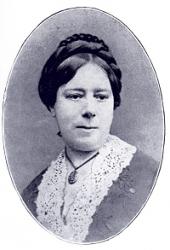
Catherine Winkworth

1827 - 1878 Person Name: Catherine Winkworth, 1827-1878 Translator of "Lift up your heads, you mighty gates" in Common Praise Catherine Winkworth (b. Holborn, London, England, 1827; d. Monnetier, Savoy, France, 1878) is well known for her English translations of German hymns; her translations were polished and yet remained close to the original. Educated initially by her mother, she lived with relatives in Dresden, Germany, in 1845, where she acquired her knowledge of German and interest in German hymnody. After residing near Manchester until 1862, she moved to Clifton, near Bristol. A pioneer in promoting women's rights, Winkworth put much of her energy into the encouragement of higher education for women. She translated a large number of German hymn texts from hymnals owned by a friend, Baron Bunsen. Though often altered, these translations continue to be used in many modern hymnals. Her work was published in two series of Lyra Germanica (1855, 1858) and in The Chorale Book for England (1863), which included the appropriate German tune with each text as provided by Sterndale Bennett and Otto Goldschmidt. Winkworth also translated biographies of German Christians who promoted ministries to the poor and sick and compiled a handbook of biographies of German hymn authors, Christian Singers of Germany (1869). Bert Polman ======================== Winkworth, Catherine, daughter of Henry Winkworth, of Alderley Edge, Cheshire, was born in London, Sep. 13, 1829. Most of her early life was spent in the neighbourhood of Manchester. Subsequently she removed with the family to Clifton, near Bristol. She died suddenly of heart disease, at Monnetier, in Savoy, in July, 1878. Miss Winkworth published:— Translations from the German of the Life of Pastor Fliedner, the Founder of the Sisterhood of Protestant Deaconesses at Kaiserworth, 1861; and of the Life of Amelia Sieveking, 1863. Her sympathy with practical efforts for the benefit of women, and with a pure devotional life, as seen in these translations, received from her the most practical illustration possible in the deep and active interest which she took in educational work in connection with the Clifton Association for the Higher Education of Women, and kindred societies there and elsewhere. Our interest, however, is mainly centred in her hymnological work as embodied in her:— (1) Lyra Germanica, 1st Ser., 1855. (2) Lyra Germanica, 2nd Ser., 1858. (3) The Chorale Book for England (containing translations from the German, together with music), 1863; and (4) her charming biographical work, the Christian Singers of Germany, 1869. In a sympathetic article on Miss Winkworth in the Inquirer of July 20, 1878, Dr. Martineau says:— "The translations contained in these volumes are invariably faithful, and for the most part both terse and delicate; and an admirable art is applied to the management of complex and difficult versification. They have not quite the fire of John Wesley's versions of Moravian hymns, or the wonderful fusion and reproduction of thought which may be found in Coleridge. But if less flowing they are more conscientious than either, and attain a result as poetical as severe exactitude admits, being only a little short of ‘native music'" Dr. Percival, then Principal of Clifton College, also wrote concerning her (in the Bristol Times and Mirror), in July, 1878:— "She was a person of remarkable intellectual and social gifts, and very unusual attainments; but what specially distinguished her was her combination of rare ability and great knowledge with a certain tender and sympathetic refinement which constitutes the special charm of the true womanly character." Dr. Martineau (as above) says her religious life afforded "a happy example of the piety which the Church of England discipline may implant.....The fast hold she retained of her discipleship of Christ was no example of ‘feminine simplicity,' carrying on the childish mind into maturer years, but the clear allegiance of a firm mind, familiar with the pretensions of non-Christian schools, well able to test them, and undiverted by them from her first love." Miss Winkworth, although not the earliest of modern translators from the German into English, is certainly the foremost in rank and popularity. Her translations are the most widely used of any from that language, and have had more to do with the modern revival of the English use of German hymns than the versions of any other writer. -- John Julian, Dictionary of Hymnology (1907) ============================ See also in: Hymn Writers of the Church

Georg Weissel

1590 - 1635 Person Name: Georg Weissel, 1590-1635 Author of "Lift up your heads, you mighty gates" in Common Praise Weissel, Georg, son of Johann Weissel, judge and afterwards burgomaster at Doranau, near Königsberg, was born at Domnau in 1590. He studied at the University of Königsberg, from 1608 to 1611, and thereafter, for short periods, at Wittenberg, Leipzig, Jena, Strassburg, Basel and Marburg In 1614 he was appointed rector of the school at Friedland near Domnau, but resigned this post after three years, and returned to Königsberg to resume his studies in theology. Finally, in 1623, he became pastor of the newly erected Altrossgart church at Königsberg, where he remained till his death, on August 1, 1635. Weissel was one of the most important of the earlier hymn-writers of Prussia. His hymns, about 20 in all, are good in style, moderate in length, and varied in metre. The earliest seem to have been written for use at the consecration of the Altrossgart church on the 2nd Sunday in Advent, 1623. The majority are for the greater festivals of the Christian year. The best are No. ii. below, and those for the dying. They appeared mostly in the Königsberg hymn-books, 1639-1650, and in the Preussische Fest-Lieder, pt. i., Elbing, 1642; pt. ii., Königsberg, 1644 [Berlin Library]. Those of Weissel's hymns which have passed into English are:— i. Im finstern Stall, o W under gross. Christmas. First published in B. Derschau's Ausserlesene geistliche Lieder, Königsberg, 1639, p. 7, in 5 stanzas of 5 lines In the Preussische Fest-Lieder, pt. i., 1642, No. 14, it is entitled "On the Birth of Christ, Lux in tenebris lucet.” The translation in common use is:— 0 miracle of love and might This is a somewhat free translation, omitting stanza v., by Dr. Kennedy, as No. 104 in his Hymnologia Christiana, 1863. ii. Macht hoch die Thür, das Thor macht weit. Advent. This is a Hymn of Triumph for the Entry of the King of Glory, founded on Ps. xxiv.; and is one of the finest German Advent hymns. First published in the Preussische Fest-Lieder, pt. i., 1642, No. 2, in 5 stanzas of 8 lines, marked as "On the 1st Sunday of Advent." The translations in common use are:— 1. Lift up your heads, ye mighty gates. This is a good and full translation by Miss Winkworth, in herLyra Germanica, 1st Ser., 1855, p. 10, and her Chorale Book for England, 1863, No. 25. In the Congregational Church Hymnal, 1887, the Evangelical Hymnal, N. Y., 1880, and others, the original form is followed. Other forms are:— (1) Behold One cometh from afar (i. alt.). This (partly from Mercer) is in the Supplement to the New Congregational Hymn Book, and the 1874 Appendix. to the Leeds Hymn Book. (2) Behold He cometh from afar. In J. L. Porter's Collection, 1876, altered from No. l. (3) Oh! hallowed is the land and blest (iii. lines 1, alt.). In the American Sabbath Hymn Book, 1858, &c. (4) 0 blest the souls, for ever blest (iii. lines1, alt.). In Hymns of the Spirit, Boston, U.S., 1864. (5) Fling wide the portals of your heart (iv.). In the American Unitarian Hymn Book, 1868. 2. The mighty gates of earth unbar. This is by W. Mercer, based on Miss Winkworth's translation, in his Church Psalm & Hymn Book, 1857, No. 14 (Ox. ed., 1864, No. 71), repeated in Kennedy, 1863. Another translation is: "Lift up, lift up your heads, ye gates," by G. Moultrie, in his Espousals of St. Dorothea, 1870. iii. Wo ist dein Stachel nun, o Tod? Easter. Founded on 1 Cor. xv., 55-58. First published as No. 3 in pt. ii., 1644, of the Preussische Fest-Lieder, in 5 stanzas of 8 lines, entitled "For the Easter festival." Thence in the Königsberg Gesang-Buch, 1650, p. 193, and others. The form which has passed into English is that in the Hannover Gesang-Buch, 1657, No. 74, in 10 stanzas. This, beginning "O Tod, wo ist dein Stachel nun," is entirely rewritten, probably by Justus Gesenius. Translated as:— O Death! where is thy cruel sting? This is a full and good version of the 1657 text, as No. 80 in the Ohio Lutheran Hymnal, 1880, marked as a compilation. [Rev. James Mearns, M.A.] -- Excerpts from John Julian, Dictionary of Hymnology (1907)

Michael Fleming

1928 - 2006 Person Name: Michael Fleming, b. 1928 Composer of "WELLINGTON" in Common Praise

David Fox

b. 1956 Person Name: David Fox (1956-2008) Author of "God with humanity made one" in Ancient and Modern

Export as CSV
It looks like you are using an ad-blocker. Ad revenue helps keep us running. Please consider white-listing Hymnary.org or getting Hymnary Pro to eliminate ads entirely and help support Hymnary.org.