You help make Hymnary.org possible. More than 10 million people from 200+ countries found hymns, liturgical resources and encouragement on Hymnary.org in 2025, including you. Every visit affirms the global impact of this ministry.

If Hymnary has been meaningful to you this year, would you take a moment today to help sustain it? A gift of any size—paired with a note of encouragement if you wish—directly supports the server costs, research work and curation that keep this resource freely available to the world.

Give securely online today, or mail a check to:
Hymnary.org
Calvin University
3201 Burton Street SE
Grand Rapids, MI 49546

Thank you for your partnership, and may the hope of Advent fill your heart.

Search Results

Tune Identifier:"^wigtown_scottish_psalter$"

Planning worship? Check out our sister site, ZeteoSearch.org, for 20+ additional resources related to your search.

Tunes

tune icon
Tune authorities
FlexScoreAudio

WIGTOWN

Meter: 8.6.8.6 Appears in 34 hymnals Tune Key: F Major Incipit: 33343 21213 32345 Used With Text: Prayer is the soul's sincere desire

Texts

text icon
Text authorities
FlexScoreFlexPresent

Prayer is the soul's sincere desire

Author: James Montgomery, 1771-1854 Meter: 8.6.8.6 Appears in 865 hymnals Topics: Christ, the Lord Jesus Teacher; Prayer Examples of Used With Tune: WIGTOWN
TextAudio

Hear What the Voice from Heav'n Proclaims

Author: Isaac Watts Meter: 8.6.8.6 Appears in 291 hymnals Lyrics: 1. Hear what the voice from Heav’n proclaims, For all the pious dead; Sweet is the savor of their names, And soft their sleeping bed. 2. They died in Jesus, and are blest; How kind their slumbers are! From sufferings and from sins released, And freed from every snare. 3. Far from this world of toil and strife, They’re present with the Lord; The labors of their mortal life End in a large reward. Used With Tune: WIGTOWN Text Sources: Hymns and Spiritual Songs, Book I, 1707, number 18
Text

Lord, It Is in Thy Tender Care

Author: Richard Baxter Meter: 8.6.8.6 Appears in 267 hymnals Lyrics: 1 Lord, it is in thy tender care whether I die or live; to love and serve thee is my share, and this thy grace must give. 2 If life be long, I will be glad that I may long obey; if short, yet why should I be sad to soar to endless day? 3 Christ leads me thro' no darker rooms than he went thro' before; all who into God's kingdom come must enter by this door. 4 Come, Lord, when grace hath made me meet thy blessed face to see; for if thy work on earth be sweet, what will thy glory be? 5 My knowledge of that life is small, the eye of faith is dim, but 'tis enough that Christ knows all, and I shall be with him. Scripture: Philippians 1:21 Used With Tune: WIGTON

Instances

instance icon
Published text-tune combinations (hymns) from specific hymnals
TextPage scan

O God, give ear unto my cry

Hymnal: Church Hymnary (4th ed.) #41b (2005) Meter: 8.6.8.6 Lyrics: 1 O God, give ear unto my cry, and to my prayer attend; from distant corners of the land my cry to you I'll send. 2 My plea is made with fainting heart and great perplexity; lead me in safety to the rock that higher is than I. 3 For you have long my refuge been, a shelter by your power; a tower of strength against my foes in every evil hour. 4 Within your dwelling, Lord my God, for ever I'll abide; and in the shadow of your wings with confidence I'll hide. Topics: God Protection of; Trust Scripture: Psalm 61:1-4 Languages: English Tune Title: WIGTOWN
TextPage scan

O God, give ear unto my cry

Hymnal: Hymns of Glory, Songs of Praise #41b (2008) Meter: 8.6.8.6 Lyrics: 1 O God, give ear unto my cry; and to my prayer attend. from distant corners of the land my cry to you I'll send. 2 My plea is made with fainting heart and great perplexity; lead me in safety to the rock that higher is than I. 3 For you have long my refuge been, a shelter by your power; a tower of strength against my foes in every evil hour. 4 Within your dwelling, Lord my God, for ever I'll abide; and in the shadow of your wings with confidence I'll hide. Topics: God Protection of; Trust Scripture: Psalm 61:1-4 Languages: English Tune Title: WIGTOWN

One who is all unfit to count

Author: Naryan Vaman Tilak 1862-1919; Nicol MacNicol; Johann Christoph Hampe; Violette Du Pasquier Hymnal: Cantate Domino #25 (1960) Topics: Jesus Christ; Jesus-Christ; Jesus Christus; Lent; Fastenzeit; Carême Languages: English; French; German Tune Title: WIGTOWN

People

person icon
Authors, composers, editors, etc.

Anne Steele

1717 - 1778 Author (verse 4) of "How precious is the book divine" in The Book of Common Praise Anne Steele was the daughter of Particular Baptist preacher and timber merchant William Steele. She spent her entire life in Broughton, Hampshire, near the southern coast of England, and devoted much of her time to writing. Some accounts of her life portray her as a lonely, melancholy invalid, but a revival of research in the last decade indicates that she had been more active and social than what was previously thought. She was theologically conversant with Dissenting ministers and "found herself at the centre of a literary circle that included family members from various generations, as well as local literati." She chose a life of singleness to focus on her craft. Before Christmas in 1742, she declined a marriage proposal from contemporary minister-hymnist Benjamin Beddome. All the same, some of Steele's sufferings were very real. She lost her mother at age 3, a potential suitor at age 20, her step mom at 43, and her sister-in-law at 45. She spent many years caring for her father until his death in 1769. For most of her life, she exhibited symptoms of malaria, including persistent pain, fever, headaches, and stomach aches. Caleb Evans, in his preface to Steele's posthumous Miscellaneous Pieces in Verse and Prose (1780), noted that she had been bed ridden for "some years" before her death: When the interesting hour came, she welcomed its arrival, and though her feeble body was excruciated with pain, her mind was perfectly serene. . . . She took the most affectionate leave of her weeping friends around her, and at length, the happy moment of her dismission arising, she closed her eyes, and with these animating words on her dying lips, "I know that my Redeemer liveth," gently fell asleep in Jesus. Historically, her most popular hymn has been "When I survey life's varied scene" (and its shortened form, "Father, whate'er of earthly bliss"), a hymn that turns earthly loss or denial into a spirit of thankfulness, published in over 800 North American hymnals since 1792. Not all of her work deals with personal agony. Her hymns span a wide doctrinal and ecclesiastical range, some crafted and used for her father's congregation. Her metrical psalms are among the finest of the genre. Steele's hymns and psalms were published in two volumes in 1760, Poems on Subjects Chiefly Devotional, under the pseudonym Theodosia, with an additional volume of material published after her death, in Miscellaneous Pieces in Verse and Prose, 1780. Another small collection, Verses for Children, was issued in 1788, with two other editions given in 1803 and 1806. Sixty-two of her hymns, including new material and some revisions by Steele, were published in a hymnal for Baptists in 1769, A Collection of Hymns Adapted to Public Worship, edited by Caleb Evans and John Ash. Forty seven were included in John Rippon's A Selection of Hymns from the Best Authors in 1787; the only author with larger representation was Philip Doddridge, with 101. These collections represent the earliest attempts to anthologize Baptist hymns and were vital for bringing Steele's hymns into wider public worship, where they have been a mainstay for over two hundred years. Chris Fenner adapted from The Towers (Southern Baptist Theological Seminary, August 2015) Recommended Bibliography: Cynthia Y. Aalders, To Express the Ineffable: The Hymns and Spirituality of Anne Steele (Milton Keynes, U.K.: Paternoster, 2008). Cynthia Y. Aalders, "In melting grief and ardent love: Anne Steele's contribution to eighteenth-century hymnody," The Hymn (summer 2009), 16-25. J.R. Broome, A Bruised Reed: The Life and Times of Anne Steele (Harpenden, U.K.: Gospel Standard Trust Publications, 2007). Joseph Carmichael, The Hymns of Anne Steele in John Rippon's Selection of Hymns: A Theological Analysis in the Context of the English Particular Baptist Revival (2012), dissertation, http://digital.library.sbts.edu/handle/10392/4112 Priscilla Wong, Anne Steele and Her Spiritual Vision (Grand Rapids: Reformation Heritage Books, 2012). Timothy Whelan & Julia B. Griffin, eds., Nonconformist Women Writers, 1720–1840, vols. 1 & 2 (London: Pickering & Chatto, 2011). ======================== Steele, Anne, born in 1716, was the daughter of Mr. Wm. Steele, a timber merchant, and pastor, without salary, of the Baptist Church at Broughton, in Hampshire. At an early age she showed a taste for literature, and would often entertain her friends by her poetical compositions. But it was not until 1760 that she could be prevailed upon to publish. In that year two volumes appeared under the title of Poems on Subjects chiefly Devotional, by Theodosia. After her death, which occurred in November, 1778, a new edition was published with an additional volume and a Preface by the Rev. Dr. Caleb Evans, of Bristol (Bristol, 1780). In the three volumes are 144 hymns, 34 Psalms in verse, and about 30 short poems. They have been reprinted in one vol. by D. Sedgwick, 1863…. Among Baptist hymnwriters Miss Steele stands at the head, if we regard either the number of her hymns which have found a place in the hymnals of the last 120 years, or the frequency with which they have been sung. Although few of them can be placed in the first rank of lyrical compositions, they are almost uniformly simple in language, natural and pleasing in imagery, and full of genuine Christian feeling. Miss Steele may not inappropriately be compared with Miss F. R. Havergal, our "Theodosia" of the 19th century. In both there is the same evangelic fervour, in both the same intense personal devotion to the Lord Jesus. But whilst Miss Steele seems to think of Him more frequently as her "bleeding, dying Lord "—dwelling on His sufferings in their physical aspect—Miss Havergal oftener refers to His living help and sympathy, recognizes with gladness His present claims as "Master" and "King," and anticipates almost with ecstasy His second coming. Looking at the whole of Miss Steele's hymns, we find in them a wider range of thought than in Miss Havergal's compositions. She treats of a greater variety of subjects. On the other hand, Miss Havergal, living in this age of missions and general philanthropy, has much more to say concerning Christian work and personal service for Christ and for humanity. Miss Steele suffered from delicacy of health and from a great sorrow, which befell her in the death of her betrothed under peculiarly painful circumstances. In other respects her life was uneventful, and occupied chiefly in the discharge of such domestic and social duties as usually fall to the lot of the eldest daughter of a village pastor. She was buried in Broughton churchyard. [Rev W. R. Stevenson, M.A.] A large number of Miss Steele's hymns are in common use, the larger proportion being in American hymnbooks. In addition to "Almighty Maker of my frame," “Far from these narrow scenes of night," "Father of mercies in Thy word," and others annotated under their respective first lines, there are also:— i. From her Poems on Subjects Chiefly Devotional, 1760, vols. i., ii. 1. Come, let our souls adore the Lord. Pleading for Mercy. One of two hymns "On the Fast, Feb. 11, 1757," the first being "While justice waves her vengeful hand." 2. Come, tune ye saints, your noblest strains. Christ Dying and Rising. 3. Deep are the wounds which sin has made. Christ, the Physician. 4. Enslaved by sin, and bound in chains. Redemption. 5. Eternal power, almighty God. Divine Condescension. 6. Eternal Source of joys divine. Divine Assurance desired. 7. Great God, to Thee my evening song. Evening. 8. Great Source of boundless power and grace. Desiring to Trust in God. 9. Hear, gracious [God] Lord, my humble moan [prayer] . The presence of God desired. 10. Hear, O my God, with pity hear. Ps. cxliii. 11. How long shall earth's alluring toys ? On Longing after unseen pleasures. 12. How lovely, how divinely sweet. Ps. lxxziv. 13. How oft, alas, this wretched heart. Pardoning Love. 14. In vain my roving thoughts would find. Lasting Happiness. 15. Jesus, the spring of joys divine. Christ the Way. 16. Lord, how mysterious are Thy ways. Providence. 17. Lord, Thou hast been Thy Children's God. Ps. xc. 18. Lord, we adore Thy boundless grace. Divine Bounty. 19. Lord, when my [our] raptured thought surveys. Creation and Providence. 20. Lord, when my thoughts delighted rove. Passiontide. 21. My God, 'tis to Thy mercy seat. Divine Mercy. 22. My God, to Thee I call. Lent. 23. O for a sweet, inspiring ray. The Ascended Saviour. 24. O Thou Whose tender mercy hears. Lent. 25. Permit me, Lord, to seek Thy face. Strength and Safety in God alone. 26. Should famine o'er the mourning field. During Scarcity. 27. So fades the lovely, blooming flower. Death of a Child. 28. Stretched on the Cross the Saviour dies. Good Friday. 29. The Lord, my Shepherd and my Guide. Ps.xxiii. 30. The Lord, the God of glory reigns. Ps. xciii. 31. The Saviour calls; let every ear. The Invitation. 32. There is a glorious world on high. True Honour. 33. Thou lovely [only] Source of true delight. Desiring to know Jesus. 34. Thou only Sovereign of my heart. Life in Christ alone. 35. To Jesus, our exalted Lord. Holy Communion. 36. To our Redeemer's glorious Name. Praise to the Redeemer. 37. To your Creator, God. A Rural Hymn. 38. When I survey life's varied scene. Resignation. 39. When sins and fears prevailing rise. Christ the Life of the Soul. 40. Where is my God? does He retire. Rreathing after God. 41. While my Redeemer's near. The Good Shepherd. 42. Why sinks my weak desponding mind? Hope in God. 43. Ye earthly vanities, depart. Love for Christ desired. 44. Ye glittering toys of earih adieu. The Pearl of great Price. 45. Ye humble souls, approach your God. Divine Goodness. ii. From the Bristol Baptist Collection of Ash & Evans, 1769. 46. Come ye that love the Saviour's Name. Jesus, the King of Saints. 47. How helpless guilty nature lies. Need of Receiving Grace. 48. Praise ye the Lord let praise employ. Praise. iii. Centos and Altered Texts, 49. How blest are those, how truly wise. True honour. From "There is a glorious world on high." 50. How far beyond our mortal view. Christ the Supreme Beauty. From "Should nature's charms to please the eye," 1760, st. iii. 51. In vain I trace creation o'er. True happiness. From "When fancy spreads her boldest wings," 1760, st. ii. 52. Jesus, and didst thou leave the sky? Praise to Jesus. From “Jesus, in Thy transporting name," 1760, st. iv. 53. Look up, my soul, with cheerful eye. Breathing after God. From No. 40, st. v. 54. Lord, in the temple of Thy grace. Christ His people's Joy. From "The wondering nations have beheld," 1760, st. iii. 55. My God, O could I make the claim. Part of No. 9 above. 56. My soul, to God, its source, aspires. God, the Soul's only Portion. From "In vain the world's alluring smile," st. iii. 57. O could our thoughts and wishes fly. Part of No. 11 above, st. iv. 58. O for the eye of faith divine. Death anticipated. From "When death appears before my sight," 1760, st. iii., vii., viii. altered, with opening stanzas from another source. 59. O Jesus, our exalted Head. Holy Communion. From "To Jesus, our exalted Lord." See No. 35. 60. O world of bliss, could mortal eyes. Heaven. From "Far from these narrow scenes of night." 61. See, Lord, Thy willing subjects bow. Praise to Christ. From "O dearer to my thankful heart," 1780, st. 5. 62. Stern winter throws his icy chains. Winter. From "Now faintly smile day's hasty hours," 1760, st. ii. 63. Sure, the blest Comforter is nigh. Whitsuntide. From "Dear Lord, and shall Thy Spirit rest," 1760, st. iii. 64. The God of my salvation lives. In Affliction. From, "Should famine, &c," No. 26, st. iv. 65. The Gospel, O what endless charms. The Gospel of Redeeming Love. From "Come, Heavenly Love, inspire my song." 66. The mind was formed lo mount sublime. The Fettered Mind. From "Ah! why should this immortal mind?" 1760, st. ii. 67. The once loved form now cold and dead. Death of a Child. From "Life is a span, a fleeting hour," 1760, st. iii. 68. Thy gracious presence, O my God. Consolation in Affliction. From "In vain, while dark affliction spreads," 1780, st. iv. 69. Thy kingdom, Lord, for ever stands. Ps. cxlv. From "My God, my King, to Thee I'll raise," 1760, st. xii. 70. Triumphant, Christ ascends on high. Ascension. From "Come, Heavenly Love, inspire my song," 1760, st. xxxii. 71. When blest with that transporting view. Christ the Redeemer. From "Almighty Father, gracious Lord," 1760, st. xi. 72. When death before my sight. Death Anticipated. From "When death appears before my sight," 1760. 73. When gloomy thoughts and boding fears. Com¬forts of Religion. From "O blest religion, heavenly fair," 1760, st. ii. 74. When weary souls with sin distrest. Invitation to Rest. From "Come, weary souls, with sin distressed," 1760. 75. Whene'er the angry passions rise. Example of Christ. From “And is the gospel peace and love?" 1760, st. ii. All the foregoing hymns are in D. Sedgwick's reprint of Miss Steele's Hymns, 1863. --Excerpts from John Julian, Dictionary of Hymnology (1907) ==================== Steele, Anne, p. 1089, i., Additional hymns in common use: 1. Amazing love that stoop'd so low. Thankfulness. From "O dearer to my thankful heart," 1780, iii. 2. Bright scenes of bliss, unclouded skies. Saved by Hope. Poems, 1760, i. p. 228. 3. Jesus demands this heart of mine. Pardon De¬sired. Poems, 1760, i. p. 120. 4. Jesus, Thou Source divine. Christ the Way. Poems, 1760, i. p. 53, altered. 5. Lord, how mysterious are Thy ways. Mysteries of Providence. Poems, 1760, i. p. 131. 6. Lord^in Thy great, Thy glorious Name. Ps. xxxi. Poems, 1760, ii. p. 158. --John Julian, Dictionary of Hymnology, Appendix, Part II (1907)

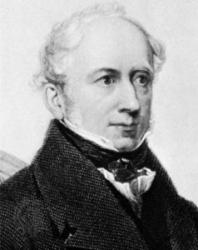
James Montgomery

1771 - 1854 Person Name: James Montgomery, 1771-1854 Author of "Prayer is the soul's sincere desire" in The Book of Praise James Montgomery (b. Irvine, Ayrshire, Scotland, 1771; d. Sheffield, Yorkshire, England, 1854), the son of Moravian parents who died on a West Indies mission field while he was in boarding school, Montgomery inherited a strong religious bent, a passion for missions, and an independent mind. He was editor of the Sheffield Iris (1796-1827), a newspaper that sometimes espoused radical causes. Montgomery was imprisoned briefly when he printed a song that celebrated the fall of the Bastille and again when he described a riot in Sheffield that reflected unfavorably on a military commander. He also protested against slavery, the lot of boy chimney sweeps, and lotteries. Associated with Christians of various persuasions, Montgomery supported missions and the British Bible Society. He published eleven volumes of poetry, mainly his own, and at least four hundred hymns. Some critics judge his hymn texts to be equal in quality to those of Isaac Watts and Charles Wesley . Many were published in Thomas Cotterill's Selection of Psalms and Hymns (1819 edition) and in Montgomery's own Songs of Zion (1822), Christian Psalmist (1825), and Original Hymns (1853). Bert Polman ======================== Montgomery, James, son of John Montgomery, a Moravian minister, was born at Irvine, Ayrshire, Nov. 4, 1771. In 1776 he removed with his parents to the Moravian Settlement at Gracehill, near Ballymena, county of Antrim. Two years after he was sent to the Fulneck Seminary, Yorkshire. He left Fulneck in 1787, and entered a retail shop at Mirfield, near Wakefield. Soon tiring of that he entered upon a similar situation at Wath, near Rotherham, only to find it quite as unsuitable to his taste as the former. A journey to London, with the hope of finding a publisher for his youthful poems ended in failure; and in 1792 he was glad to leave Wath for Shefield to join Mr. Gales, an auctioneer, bookseller, and printer of the Sheffield Register newspaper, as his assistant. In 1794 Mr. Gales left England to avoid a political prosecution. Montgomery took the Sheffield Register in hand, changed its name to The Sheffield Iris, and continued to edit it for thirty-one years. During the next two years he was imprisoned twice, first for reprinting therein a song in commemoration of "The Fall of the Bastille," and the second for giving an account of a riot in Sheffield. The editing of his paper, the composition and publication of his poems and hynms, the delivery of lectures on poetry in Sheffield and at the Royal Institution, London, and the earnest advocacy of Foreign Missions and the Bible Society in many parts of the country, gave great variety but very little of stirring incident to his life. In 1833 he received a Royal pension of £200 a year. He died in his sleep, at the Mount, Sheffield, April 30, 1854, and was honoured with a public funeral. A statue was erected to his memory in the Sheffield General Cemetery, and a stained glass window in the Parish Church. A Wesleyan chapel and a public hall are also named in his honour. Montgomery's principal poetical works, including those which he edited, were:— (1) Prison Amusements, 1797; (2) The Wanderer of Switzerland, 1806; (3) The West Indies, 1807; (4) The World before the Flood, 1813; (5) Greenland and Other Poems, 1819; (6) Songs of Zion, 1822; (7) The Christian Psalmist, 1825; (8) The Christian Poet, 1825; (9) The Pelican Island, 1828; (10) The Poet’s Portfolio, 1835; (11) Original Hymns for Public, Private, and Social Devotion, 1853. He also published minor pieces at various times, and four editions of his Poetical Works, the first in 1828, the second in 1836, the third in 1841, and the fourth in 1854. Most of these works contained original hymns. He also contributed largely to Collyer's Collection, 1812, and other hymnbooks published during the next 40 years, amongst which the most noticeable was Cotterill's Selections of 1819, in which more than 50 of his compositions appeared. In his Christian Psalmist, 1825, there are 100 of his hymns, and in his Original Hymns, 1853, 355 and 5 doxologies. His Songs of Zion, 1822, number 56. Deducting those which are repeated in the Original Hymns, there remain about 400 original compositions. Of Montgomery's 400 hymns (including his versions of the Psalms) more than 100 are still in common use. With the aid of Montgomery's MSS. we have given a detailed account of a large number. The rest are as follows:— i. Appeared in Collyer's Collection, 1812. 1. Jesus, our best beloved Friend. Personal Dedication to Christ. 2. When on Sinai's top I see. Sinai, Tabor, and Calvary. ii. Appeared in Cotterill's Selection, 1819. 3. Come to Calvary's holy mountain. The Open Fountain. 4. God in the high and holy place. God in Nature. The cento in Com. Praise, 1879, and others, "If God hath made this world so fair," is from this hymn. 5. Hear me, O Lord, in my distress. Ps. cxliii. 6. Heaven is a place of rest from sin. Preparation for Heaven. 7. I cried unto the Lord most just. Ps. cxlii. 8. Lord, let my prayer like incense rise. Ps. cxxxix. 9. O bless the Lord, my soul! His grace to thee proclaim. Ps. ciii. 10. Out of the depths of woe. Ps. cxxx. Sometimes "When from the depths of woe." 11. The world in condemnation lay. Redemption. 12. Where are the dead? In heaven or hell? The Living and the Dead. iii. Appeared in his Songs of Zion, 1822. 13. Give glory to God in the highest. Ps. xxix. 14. Glad was my heart to hear. Ps. cxxii. 15. God be merciful to me. Ps. lxix. 16. God is my strong salvation. Ps. xxvii. 17. Hasten, Lord, to my release. Ps. lxx. 18. Have mercy on me, O my God. Ps. li. 19. Hearken, Lord, to my complaints. Ps. xlii. 20. Heralds of creation cry. Ps. cxlviii. 21. How beautiful the sight. Ps. cxxxiii. 22. How precious are Thy thoughts of peace. Ps. cxxxix. 23. I love the Lord, He lent an ear. Ps. cxvi. 24. In time of tribulation. Ps. lxxvii. 25. Jehovah is great, and great be His praise. Ps. xlviii. Sometimes, "0 great is Jehovah, and great is His Name." 26. Judge me, O Lord, in righteousness. Ps. xliii. 27. Lift up your heads, ye gates, and wide. Ps.xxiv. 28. Lord, let me know mine [my] end. Ps. xxxi. 29. Of old, 0 God, Thine own right hand. Ps. lxxx. 30. O God, Thou art [my] the God alone. Ps. lxiii. 31. 0 Lord, our King, how excellent. Ps. viii. Sometimes, "0 Lord, how excellent is Thy name." 32. O my soul, with all thy powers. Ps. ciii. 33. One thing with all my soul's desire. Ps. xxvii. From this, "Grant me within Thy courts a place." 34. Searcher of hearts, to Thee are known. Ps. cxxxix. 35. Thank and praise Jehovah's name. Ps. cvii. 36. Thee will I praise, O Lord in light. Ps. cxxxviii. 37. The Lord is King; upon His throne. Ps. xciii. 38. The Lord is my Shepherd, no want shall I know. Ps. xxiii. 39. The tempter to my soul hath said. Ps. iii. 40. Thrice happy he who shuns the way. Ps. i. 41. Thy glory, Lord, the heavens declare. Ps. xix. 42. Thy law is perfect, Lord of light. Ps. xix. 43. Who make the Lord of hosts their tower. Ps. cxxv. 44. Yea, I will extol Thee. Ps. xxx. iv. Appeared in his Christian Psalmist. 1825. 45. Fall down, ye nations, and adore. Universal adoration of God desired. 46. Food, raiment, dwelling, health, and friends. The Family Altar. 47. Go where a foot hath never trod. Moses in the desert. Previously in the Leeds Congregational Collection, 1822. 48. Green pastures and clear streams. The Good Shepherd and His Flock. 49. Less than the least of all. Mercies acknowledged. 50. Not to the mount that burned with fire [flame]. Communion of Saints. 51. On the first Christian Sabbath eve. Easter Sunday Evening. 52. One prayer I have: all prayers in one. Resignation. 53. Our heavenly Father hear. The Lord's Prayer. 54. Return, my soul, unto thy rest. Rest in God. 55. Spirit of power and might, behold. The Spirit's renewing desired. 56. The Christian warrior, see him stand. The Christian Soldier. Sometimes, "Behold the Christian warrior stand." 57. The days and years of time are fled. Day of Judgment. 58. The glorious universe around. Unity. 59. The pure and peaceful mind. A Children's Prayer. 60. This is the day the Lord hath made (q. v.). Sunday. 61. Thy word, Almighty Lord. Close of Service. 62. What secret hand at morning light ? Morning. 63. While through this changing world we roam. Heaven. 64. Within these walls be peace. For Sunday Schools. v. Appeared in his Original Hymns, 1853. 65. Behold yon bright array. Opening a Place of Worship. 66. Behold the book whose leaves display. Holy Scriptures. 67. Come ye that fear the Lord. Confirmation. 68. Home, kindred, friends, and country, these. Farewell to a Missionary. 69. Let me go, the day is breaking. Jacob wrestling. 70. Not in Jerusalem alone. Consecration of a Church. 71. Praise the high and holy One. God the Creator. In common with most poets and hymnwriters, Montgomery strongly objected to any correction or rearrangement of his compositions. At the same time he did not hesitate to alter, rearrange, and amend the productions of others. The altered texts which appeared in Cotterill's Selections, 1819, and which in numerous instances are still retained in some of the best hymnbooks, as the "Rock of Ages," in its well-known form of three stanzas, and others of equal importance, were made principally by him for Cotterill's use. We have this confession under his own hand. As a poet, Montgomery stands well to the front; and as a writer of hymns he ranks in popularity with Wesley, Watts, Doddridge, Newton, and Cowper. His best hymns were written in his earlier years. In his old age he wrote much that was unworthy of his reputation. His finest lyrics are "Angels from the realms of glory," "Go to dark Gethsemane," "Hail to the Lord's Anointed," and "Songs of praise the angels sang." His "Prayer is the soul's sincere desire," is an expanded definition of prayer of great beauty; and his "Forever with the Lord" is full of lyric fire and deep feeling. The secrets of his power as a writer of hymns were manifold. His poetic genius was of a high order, higher than most who stand with him in the front rank of Christian poets. His ear for rhythm was exceedingly accurate and refined. His knowledge of Holy Scripture was most extensive. His religious views were broad and charitable. His devotional spirit was of the holiest type. With the faith of a strong man he united the beauty and simplicity of a child. Richly poetic without exuberance, dogmatic without uncharitableness, tender without sentimentality, elaborate without diffusiveness, richly musical without apparent effort, he has bequeathed to the Church of Christ wealth which could onlv have come from a true genius and a sanctified! heart. --John Julian, Dictionary of Hymnology (1907)

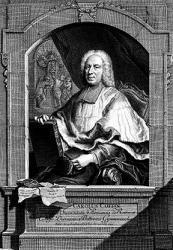
Charles Coffin

1676 - 1749 Person Name: C. Coffin, 1676-1749 Author of "As now the sun's declining rays" in Songs of Praise Coffin, Charles, born at Buzaney (Ardennes) in 1676, died 1749, was principal of the college at Beauvais, 1712 (succeeding the historian Rollin), and rector of the University of Paris, 1718. He published in 1727 some, of his Latin poems, for which he was already noted, and in 1736 the bulk of his hymns appeared in the Paris Breviary of that year. In the same year he published them as Hymni Sacri Auctore Carolo Coffin, and in 1755 a complete ed. of his Works was issued in 2 vols. To his Hymni Sacri is prefixed an interesting preface. The whole plan of his hymns, and of the Paris Breviary which he so largely influenced, comes out in his words. "In his porro scribendis Hymnis non tam poetico indulgendunv spiritui, quam nitoro et pietate consulendum esse existimavi. Pleraque igitur, argumentis convenientia e purissiinis Scripturae Sacrae fontibus deprompsi quac idoneis Ecclesiae cantui numeris alligarem." His hymns are described by a French critic as having less brilliancy than those of Santüil (q.v.), but more simplicity and unction. They number 100 in the edition of 1736. Translated into English by J. Chandler, I. Williams and others, are noted under their respective Latin first lines. [William T. Brooke] -- John Julian, Dictionary of Hymnology (1907)

Hymnals

hymnal icon
Published hymn books and other collections

Christian Classics Ethereal Hymnary

Publication Date: 2007 Publisher: Grand Rapids, MI: Christian Classics Ethereal Library

Small Church Music

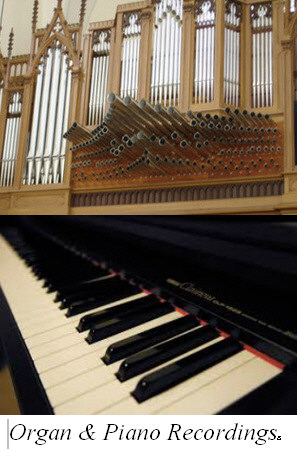
Editors: Isaac Watts Description: History The SmallChurchMusic site was launched in 2006, growing out of the requests from those struggling to provide suitable music for their services and meetings. Rev. Clyde McLennan was ordained in mid 1960’s and was a pastor in many small Australian country areas, and therefore was acutely aware of this music problem. Having also been trained as a Pipe Organist, recordings on site (which are a subset of the smallchurchmusic.com site) are all actually played by Clyde, and also include piano and piano with organ versions. About the Recordings All recordings are in MP3 format. Churches all around the world use the recordings, with downloads averaging over 60,000 per month. The recordings normally have an introduction, several verses and a slowdown on the last verse. Users are encouraged to use software: Audacity (http://www.audacityteam.org) or Song Surgeon (http://songsurgeon.com) to adjust the MP3 number of verses, tempo and pitch to suit their local needs. Mobile App We have partnered with the developer of the popular NetTracks mobile app to offer the Small Church Music collection as a convenient mobile app. Experience the beloved Small Church Music collection through this iOS app featuring nearly 10,000 high-quality hymn recordings that can be organized into custom setlists and downloaded for offline use—ideal for worship services without musicians, congregational practice, and personal devotion. The app requires a small fee to cover maintenance costs. Please note: While Hymnary.org hosts this music collection, technical support for the app is provided exclusively by the app developer, not by Hymnary.org staff. LicensingCopyright notice: Rev. Clyde McLennan, performer in this collection, has assigned his performer rights in this collection to Hymnary.org. Non-commercial use of these recordings is permitted. For permission to use them for any other purposes, please contact manager@hymnary.org. Home/Music(smallchurchmusic.com) List SongsAlphabetically List Songsby Meter List Songs byTune Name About  
It looks like you are using an ad-blocker. Ad revenue helps keep us running. Please consider white-listing Hymnary.org or getting Hymnary Pro to eliminate ads entirely and help support Hymnary.org.