You help make Hymnary.org possible.

In 2025, more than 10 million people from 200+ countries found hymns, liturgical resources, and encouragement here. If Hymnary has meant something to you this year, would you take a moment to help sustain it? A gift of any size — and a note of encouragement, if you'd like to share one — directly supports the server costs, research, and curation that keep this resource freely available to the world.

Give securely online today, or mail a check to:
Hymnary.org (c/o Calvin University)
3201 Burton Street SE
Grand Rapids, MI 49546

Thank you for being part of this important online ministry resource.

Ao Santo Espírito com fervor

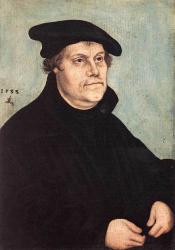
Author (st. 2-4): Martin Luther

Luther, Martin, born at Eisleben, Nov. 10, 1483; entered the University of Erfurt, 1501 (B.A. 1502, M.A.. 1503); became an Augustinian monk, 1505; ordained priest, 1507; appointed Professor at the University of Wittenberg, 1508, and in 1512 D.D.; published his 95 Theses, 1517; and burnt the Papal Bull which had condemned them, 1520; attended the Diet of Worms, 1521; translated the Bible into German, 1521-34; and died at Eisleben, Feb. 18, 1546. The details of his life and of his work as a reformer are accessible to English readers in a great variety of forms. Luther had a huge influence on German hymnody. i. Hymn Books. 1. Ellich cristlich lider Lobgesang un Psalm. Wittenberg, 1524. [Hamburg Library.] This contains 8 German h… Go to person page >

Translator: Martinho Lutero Hasse

(no biographical information available about Martinho Lutero Hasse.) Go to person page >

Text Information

First Line: Ao Santo Espírito com fervor
German Title: Nun bitten wir den heiligen Geist
Author (st. 2-4): Martin Luther (1524)
Translator: Martinho Lutero Hasse (alt.)
Source: séc. XIII (st. 1)
Language: Portuguese
Copyright: Dominio público; Tradução: © Copyright da Igreja Evangélica Luterana do Brasil (admin. Editora Concórdia), 1986

Instances in all hymnals

Instances (1 - 1 of 1)

Hinário Luterano #137

Suggestions or corrections? Contact us
It looks like you are using an ad-blocker. Ad revenue helps keep us running. Please consider white-listing Hymnary.org or getting Hymnary Pro to eliminate ads entirely and help support Hymnary.org.