

 My Starred Hymns
 My FlexScores
 My Hymnals
 My Purchased Files
Hinos e Cânticos #261
Display Title: QUÃO DOCE SOA First Line: Quão doce soa ao coração Tune Title: ORLINGTON Author: Henry Maxwell Wright (1849-1931); John Newton (1725-1807) Date: 1999
Hinos e Cânticos #261
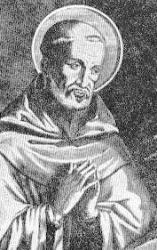 Bernard of Clairvaux, saint, abbot, and doctor, fills one of the most conspicuous positions in the history of the middle ages. His father, Tecelin, or Tesselin, a knight of great bravery, was the friend and vassal of the Duke of Burgundy. Bernard was born at his father's castle on the eminence of Les Fontaines, near Dijon, in Burgundy, in 1091. He was educated at Chatillon, where he was distinguished for his studious and meditative habits. The world, it would be thought, would have had overpowering attractions for a youth who, like Bernard, had all the advantages that high birth, great personal beauty, graceful manners, and irresistible influence could give, but, strengthened in the resolve by night visions of his mother (who had died in 1… Go to person page >
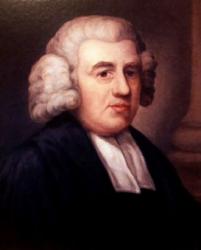 John Newton (b. London, England, 1725; d. London, 1807) was born into a Christian home, but his godly mother died when he was seven, and he joined his father at sea when he was eleven. His licentious and tumultuous sailing life included a flogging for attempted desertion from the Royal Navy and captivity by a slave trader in West Africa. After his escape he himself became the captain of a slave ship. Several factors contributed to Newton's conversion: a near-drowning in 1748, the piety of his friend Mary Catlett, (whom he married in 1750), and his reading of Thomas à Kempis' Imitation of Christ. In 1754 he gave up the slave trade and, in association with William Wilberforce, eventually became an ardent abolitionist. After becoming a tide… Go to person page >
 Born in Lisbon, 7 December 1849 to English parents who were Christians. He returned to England and worked in business. After helping Dwight Moody in evangelism campaigns in England in 1874 and 1875 he abandoned his business career and became an evangelist in England and Scotland. He returned to Portugal on several occasions for evangelism meetings and wrote many hymns in Portuguese.
[Source?] Go to person page >
Born in Lisbon, 7 December 1849 to English parents who were Christians. He returned to England and worked in business. After helping Dwight Moody in evangelism campaigns in England in 1874 and 1875 he abandoned his business career and became an evangelist in England and Scotland. He returned to Portugal on several occasions for evangelism meetings and wrote many hymns in Portuguese.
[Source?] Go to person page >




