
 My Starred Hymns
 My FlexScores
 My Hymnals
 My Purchased Files


A Choice Selection of Evangelical Hymns, from various authors #71
Display Title: O head, so full of bruises First Line: O head, so full of bruises Date: 1806
A Choice Selection of Evangelical Hymns, from various authors #71
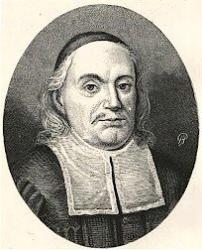 Paul Gerhardt (b. Gräfenheinichen, Saxony, Germany, 1607; d. Lubben, Germany, 1676), famous author of Lutheran evangelical hymns, studied theology and hymnody at the University of Wittenberg and then was a tutor in Berlin, where he became friends with Johann Crüger. He served the Lutheran parish of Mittenwalde near Berlin (1651-1657) and the great St. Nicholas' Church in Berlin (1657-1666). Friederich William, the Calvinist elector, had issued an edict that forbade the various Protestant groups to fight each other. Although Gerhardt did not want strife between the churches, he refused to comply with the edict because he thought it opposed the Lutheran "Formula of Concord," which condemned some Calvinist doctrines. Consequently, he was r… Go to person page >
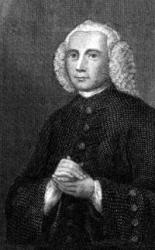 Gambold, John, M.A., was b. April 10, 1711, at Puncheston, Pembrokeshire, where his father was vicar. Educated at Christ Church, Oxford, where he graduated B.A. in 1730, M.A. in 1734. Taking Holy Orders, he became, about 1739, Vicar of Stanton Harcourt, Oxfordshire, but resigned his living in Oct. 1742, and joined the United Brethren [Moravians], by whom lie was chosen one of their bishops in 1754. He d. at Haverfordwest, Sept. 13, 1771. He published an edition of the Greek Testament; Maxims and Theological Ideas; Sermons, and a dramatic poem called Ignatius. About 26 translations and 18 original hymns in the Moravian Hymn Books are assigned to him. One or two of his hymns, which were published by the Wesleys, have been claimed for them, bu… Go to person page >
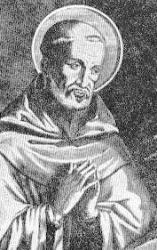 Bernard of Clairvaux, saint, abbot, and doctor, fills one of the most conspicuous positions in the history of the middle ages. His father, Tecelin, or Tesselin, a knight of great bravery, was the friend and vassal of the Duke of Burgundy. Bernard was born at his father's castle on the eminence of Les Fontaines, near Dijon, in Burgundy, in 1091. He was educated at Chatillon, where he was distinguished for his studious and meditative habits. The world, it would be thought, would have had overpowering attractions for a youth who, like Bernard, had all the advantages that high birth, great personal beauty, graceful manners, and irresistible influence could give, but, strengthened in the resolve by night visions of his mother (who had died in 1… Go to person page >