1 Sey mir tausendmal gegrüßet,
der mich je und je geliebt,
Jesu, der du selbst gebüßet
das, womit ich dich betrübt.
Ach! wie ist mir dann so wohl,
wenn ich knien und liegen soll
an dem Kreuze, da du stirbest,
und um meine Seele wirbest.
2 Ich umfange, herz und küsse
der gekränkten Wunden Zahl
und die purpurrothen Flüsse,
deine Füß- und Nägelmaal.
O wer kann doch, schönster-Fürst!
den so hoch nach uns gedürst,
deinen Durst und Liebsverlangen
völlig fassen und umfangen?
3 Heile mich, o Heil der Seelen,
wo ich krank und traurig bin;
nimm die Schmerzen, die mich quälen
und den ganzen Schaden hin,
den mir Adams Fall gebracht,
und ich selbsten mir gemacht:
wird, o Arzt, dein Blut mich netzen,
wird sich all mein Jammer setzen.
4 Schreibe deine blutgen Wunden
mir, Herr, in das Herz hinein,
daß sie mögen alle Stunden
bei mir unvergessen sein.
Du bist doch mein schönstes Gut,
da mein ganzes Herze ruht.
Laß mich hier zu deinen Füßen,
deiner Lieb und Gunst genießen.
5 Diese Füße will ich halten,
auf des best ich immer kann.
Schaue meiner Hände Falten,
und mich selber freundlich an,
von dem hohen Kreuzes Baum,
und gieb meiner Bitte Raum,
sprich: Laß all dein Trauren schwinden,
ich, ich tilg all deine Sünden.
Source: Evang.-Lutherisches Gesangbuch #148

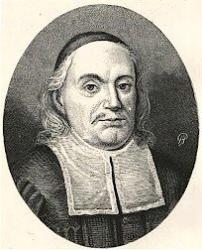
Paul Gerhardt (b. Gräfenheinichen, Saxony, Germany, 1607; d. Lubben, Germany, 1676), famous author of Lutheran evangelical hymns, studied theology and hymnody at the University of Wittenberg and then was a tutor in Berlin, where he became friends with Johann Crüger. He served the Lutheran parish of Mittenwalde near Berlin (1651-1657) and the great St. Nicholas' Church in Berlin (1657-1666). Friederich William, the Calvinist elector, had issued an edict that forbade the various Protestant groups to fight each other. Although Gerhardt did not want strife between the churches, he refused to comply with the edict because he thought it opposed the Lutheran "Formula of Concord," which condemned some Calvinist doctrines. Consequently, he was r… Go to person page >
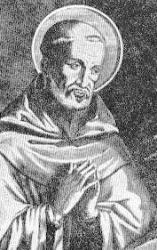
Bernard of Clairvaux, saint, abbot, and doctor, fills one of the most conspicuous positions in the history of the middle ages. His father, Tecelin, or Tesselin, a knight of great bravery, was the friend and vassal of the Duke of Burgundy. Bernard was born at his father's castle on the eminence of Les Fontaines, near Dijon, in Burgundy, in 1091. He was educated at Chatillon, where he was distinguished for his studious and meditative habits. The world, it would be thought, would have had overpowering attractions for a youth who, like Bernard, had all the advantages that high birth, great personal beauty, graceful manners, and irresistible influence could give, but, strengthened in the resolve by night visions of his mother (who had died in 1… Go to person page >| First Line: | Sei mir Tausendmal gegrüßet |
| Latin Title: | Salve mundi salutare |
| Author: | Bernard of Clairvaux |
| Translator: | Paul Gerhardt |
| Language: | German |
| Notes: | Polish translation: See "Tysiąckrotnie pozdrowiony" |
| Copyright: | Public Domain |
My Starred Hymns