Go Ad-Free
If you regularly use Hymnary.org, you will definitely enjoy all the perks of a Hymnary Pro subscription. Plus, your subscription supports our mission in a big way!
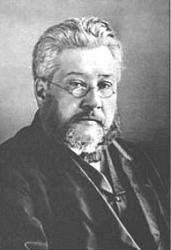 Spurgeon, Charles Haddon, the world-famous preacher, was born June 19, 1834, at Kelvedon, in Essex, where his father was Congregational minister. He was educated at Colchester, and at an Agricultural College at Maidstone, after which he was for a few years usher in schools at Newmarket and Cambridge. In 1851 he became minister of a small Baptist church at Waterbeach, near Cambridge, and soon attained great popularity. In 1854 he removed to New Park Street, London, the place where Drs. Gill and Rippon had formerly ministered, and ere long the thronging of people to hear him led, first, to the temporary occupation of Exeter Hall, and of the Surrey Music Hall, and then to the erection of the great Metropolitan Tabernacle, where he still minist… Go to person page >
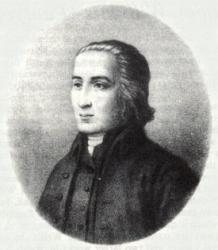 William Williams, called the "Watts of Wales," was born in 1717, at Cefn-y-coed, near Llandovery, Carmarthenshire. He originally studied medicine, but abandoned it for theology. He was ordained Deacon in the Church of England, but was refused Priest's Orders, and subsequently attached himself to the Calvinistic Methodists. For half a century he travelled in Wales, preaching the Gospel. He died in 1791. Williams composed his hymns chiefly in the Welsh language; they are still largely used by various religious bodies in the principality. Many of his hymns have appeared in English, and have been collected and published by Sedgwick. His two principal poetical works are "Hosannah to the Son of David," and "Gloria in Excelsis."
--Annotati… Go to person page >
William Williams, called the "Watts of Wales," was born in 1717, at Cefn-y-coed, near Llandovery, Carmarthenshire. He originally studied medicine, but abandoned it for theology. He was ordained Deacon in the Church of England, but was refused Priest's Orders, and subsequently attached himself to the Calvinistic Methodists. For half a century he travelled in Wales, preaching the Gospel. He died in 1791. Williams composed his hymns chiefly in the Welsh language; they are still largely used by various religious bodies in the principality. Many of his hymns have appeared in English, and have been collected and published by Sedgwick. His two principal poetical works are "Hosannah to the Son of David," and "Gloria in Excelsis."
--Annotati… Go to person page >







 My Starred Hymns
 My FlexScores
 My Hymnals
 My Purchased Files