

 My Starred Hymns
 My FlexScores
 My Hymnals
 My Purchased Files
Planning worship?
Check out our sister site, ZeteoSearch.org,
for 20+ additional resources related to your search.
- |
User Links
Person Results
‹ Return to hymnal

Export as CSV
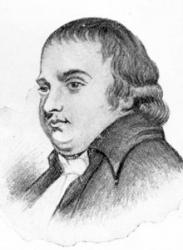
J. Hart
1712 - 1768 Person Name: Joseph Hart Hymnal Number: d1 Author of "A form of words, though e'er so sound" in Hymns and Spiritual Songs, Selected and Original. 7th ed. Hart, Joseph, was born in London in 1712. His early life is involved in obscurity. His education was fairly good; and from the testimony of his brother-in-law, and successor in the ministry in Jewin Street, the Rev. John Hughes, "his civil calling was" for some time "that of a teacher of the learned languages." His early life, according to his own Experience which he prefaced to his Hymns, was a curious mixture of loose conduct, serious conviction of sin, and endeavours after amendment of life, and not until Whitsuntide, 1757, did he realize a permanent change, which was brought about mainly through his attending divine service at the Moravian Chapel, in Fetter Lane, London, and hearing a sermon on Rev. iii. 10. During the next two years many of his most earnest and impassioned hymns were written. These appeared as:—
Hymns composed on Various Subjects, with the Author's Experience, London, 1759. During this year he became the Minister of the Independent Chapel, Jewin Street, London. In 1762 he added a Supplement to his Hymns; and in 1765 an Appendix. In modern editions of his Hymns these three are embodied in one volume as:— Hymns composed on Various Subjects: With the Author's Experience, The Supplement and Appendix. By the Rev. Joseph Hart, late Minister of the Gospel in Jewin Street, London. Allott & Co. [no date].
Hart died on May 24, 1768. At one time his hymns were widely used, especially by Calvinistic Nonconformists. Many of them are of merit, and are marked by great earnestness, and passionate love of the Redeemer. The best known are: “Come, Holy Spirit, come"; “Come, ye sinners, poor and wretched"; "This God is the God we adore"; and "Lord, look on all assembled here." Those which are more limited in their use include:—
i. From his Hymns, &c, 1759.
1. Descend from heaven, celestial Dove. Whitsuntide. No. 6, in 6 stanzas of 6 lines. In Snepp's Songs of Grace & Glory., 1872, No. 374, st. iv., v. are omitted. It is in extensive use in America.
2. Great High Priest, we view Thee stooping. High Priesthood of Christ. No. 56, pt. ii., in 3 stanzas of 8 lines. In Snepp's Songs of Grace & Glory, 1872, No. 236; Hatfield's Church Hymn Book, N. Y., 1872, No. 435, &c.
8. How wondrous are the works of God. Redeeming Love. No. 21, in 9 stanzas of 4 lines. In the Scottish Evangelical Union Hymnal, 1878, st. i.-iv. are given as No. 11.
4. If ever it could come to pass. Final Perseverance. No. 58, in 3 stanzas of 6 lines. Repeated in Snepp's Songs of Grace & Glory, 1872, No. 729.
6. Jesus is our God and Saviour . Faith and Repentance. No. 54, in 7 stanzas of 8 lines. In Snepp's Songs of Grace & Glory, 1872, No. 146, st. iv. is omitted. In the London Hymn Book (enlarged), 1879, st. iii. and v. are given as "Nothing but Thy blood, 0 Jesus."
6. Jesus, while He dwelt below. Gethsemane. No. 75, in 23 stanzas of 6 lines. In Snepp's Songs of Grace & Glory, 1872, No. 230, sixteen stanzas are broken up into three parts: (i.) "Jesus, while He dwelt below"; (ii.) "Full of love to man's lost race"; (iii.) "There my God bore all my guilt." A cento is also given in Hatfield's Church Hymn Book, N. Y., 1872, No. 441, as "Many woes had Christ [He] endured." It is composed of st. viii., ix., xiii., xx., xxiii., slightly altered. In the Scottish Evangelical Union Hymnal, 1878, No. 34, 8 stanzas are given in two parts: pt. i. as, "Jesus, while He dwelt below"; pt. ii. "Eden from each flowery bed."
7. Lamb of God, we fall before Thee. Christ All in All. No. 17 in 4 stanzas of 8 lines. It is in various collections, and as altered in Kennedy , 1863, No. 1171, is much improved.
8. Let us all with grateful praises. Christmas. No. 14 in 7 stanzas of 8 lines. In Spurgeon's 0ur Own Hymn Book, 1866, it is reduced to 4 stanzas of 4 lines.
9. Lord, look on all assembled here. For a Public Fast. No. 96, in 8 stanzas of 4 lines. It is in several of the older hymnbooks.
10. Lord, we lie before Thy feet. Lent. No. 74, in 6 stanzas of 6 lines, and based on 2 Chron. xx. 20. In Spurgeon's 0ur Own Hymn Book, 1866, stanza i., iii., vi. are given as No. 585.
11. Mercy is welcome news indeed. God's Mercy in pardoning Sin. No. 51, in 6 stanzas of 4 lines, on St. Luke vii. 42. In Spurgeon, 1866, No. 544.
12. Much we talk of Jesu's blood. Passiontide. No. 41, in 4 st. of 8 lines, on Lam. i. 12. In Spurgeon, 1866, it is abridged to 4 stanzas of 4 lines.
13. Bow from the garden to the cross. Good Friday. No. 63, in 9 stanzas of 4 lines, and entitled, "The Crucifixion." In Spurgeon, 1866, No. 274, st. ii.-v., vi.-ix. are given as "See how the patient Jesus stands."
14. The Fountain of Christ Assist me to sing. The Fountain. No. 86, in 8 stanzas of 8 lines on Zech. xiii. 1. In Spurgeon, 1866, st. i., v., vii., viii., are given as No. 375.
15. The moon and stars shall lose their light. Advent. No. 48, in 4 stanzas of 4 lines, on St. Matt. xxiv. 35. In Spurgeon, 1866.
16. The sinner that truly believes. Saving Faith. No. 88, in 5 stanzas of 4 lines, and entitled, "Saving Faith" In Spurgeon, 1866, No. 533, st. ii. is omitted, and the opening line is altered to "The moment a sinner believes."
ii. From his Supplement, 1762.
17. Behold what awful pomp. Advent. No. 52, in 8 stanzas of 4 lines. It is usually abridged as in the American Methodist Episcopal Hymns, 1849, No. 1107.
18. Christ is the Eternal Rock. The Offices of Christ. No. 27, in 6 stanzas of 8 lines. In Windle's Metrical Psalter & Hymnal, 1862, stanzas i., ii., v. are given as No. 53.
19. Christians, dismiss your fear. Easter. No. 33, in 4 stanzas of 8 lines into Dr. Alexander's Augustine Hymn Book, 1849, No. 79, in 7 stanzas of 4 lines.
20. Dismiss us with Thy blessing, Lord. Close of Service. No. 78, in 2 stanzas of 4 lines. In a few collections.
21. Gird thy loins up, Christian soldier. The Christian Armour . No. 29, in 5 stanzas of 8 lines, on Eph. vi. 11. Found in several of the older, and a few of the modern collections.
22. Glory to God on high, Our peace, &c. Holy Communion. No. 3, in 6 stanzas of 4 lines. In Hatfield's Church Hymn Book, 1872, No. 704, st. v., vi. are omitted.
23. Holy Ghost, inspire our praises. On behalf of Ministers. No. 77, in 5 stanzas of 8 lines. In the Scottish Evangelical Union Hymnal, 1878, No. 412, st. iii.-v. are given as, "Happy soul that hears and follows."
24. Jesus once for sinners slain. Holy Communion. No. 18, in 6 stanzas of 4 lines. In American use.
25. Lord, help us on Thy word to feed. Close of Service. No. 80, in 2 stanzas of 4 lines. In several modern hymnbooks.
26. O for a glance of heavenly day. Lent. No. 64, in 5 stanzas of 4 lines. In Hatfield's Church Hymn Book, 1872, and other American collections it is usually repeated in full. In Bickersteth's Christian Psalmody, 1833, it was given as, "Lord, shed a beam of heavenly day," and this is repeated in modern hymnbooks.
27. Once more before we part. Close of Service. No. 79, in 2 stanzas of 4 lines. Popular in Great Britain and America.
28. Once more we come before our God. Before a Sermon. No. 21, in 6 stanzas of 4 lines, into Hatfield, 1872, No. 111, and others.
29. Sons of God by bless'd adoption. Burial. No. 45, in 3 stanzas of 8 lines, into Snepp's Songs of Grace & Glory, 1872, No. 981, as "Sons of God by blest adoption."
30. Suffering Saviour, Lamb of God . Holy Communion. No. 14, in 8 stanzas of 4 lines. In W. F. Stevenson's Hymns for Church & Home, 1873, st. iii., vii. are omitted.
31. That doleful night before His death. Holy Communion. No. 17, in 2 stanzas of 8 lines. In the Scottish Evangelical Union Hymnal, 1878, st. i. 11. 4-8, and st. ii., are given as, "To keep Thy Feast, Lord, we are met."
iii. From his Appendix, 1765.
32. Christians, in your several stations. Christian Duty. No. 7, in 5 stanzas of 6 lines. It is slightly altered in Snepp's Songs of Grace & Glory, 1872, No. 742, and dated 1759 in error.
33. Prayer was [is] appointed to convey. Prayer. No. 12 in 6 stanzas of 4 lines into Snepp's Songs of Grace & Glory, 1872, No. 542, with alterations and the omission of st. ii., v. In some American collections it begins, "Prayer is to God, the soul's sure way."
--John Julian, Dictionary of Hymnology (1907)
=======================
Hart, Joseph, p. 492, ii. Other hymns in common use are—
1. The blest memorials of Thy grief (1762). Holy Communion.
2. To comprehend the great Three-One (1759). Holy Trinity.
3. Vain man, thy fond pursuits forbear (1759). Death.
4. When the blest day of Pentecost (1759). Whitsuntide.
--John Julian, Dictionary of Hymnology, Appendix, Part II (1907)
J. Hart
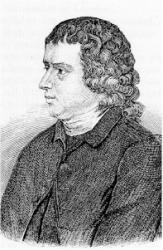
Joseph Swain
1761 - 1796 Hymnal Number: d50 Author of "Brethren, while we sojourn here" in Hymns and Spiritual Songs, Selected and Original. 7th ed. Swain, Joseph, was born at Birmingham in 1761, and after being apprenticed to an engraver, removed to London. After a time he became a decided Christian, and being of an emotional poetic temperament, began to give expression to his new thoughts and feelings in hymns. In 1783 he was baptized by the Rev. Dr. Rippon, and in 1791 became minister of a Baptist congregation in East Street, Walworth. After a short but popular and very useful ministry, he died April 16, 1796 Swain published the following:—
(1) A Collection of Poems on Several Occasions, London, 1781; (2) Redemption, a Poem in five Books, London, 1789; (3) Experimental Essays on Divine Subjects, London, 1791; (4) Walworth Hymns, by J. Swain, Pastor of the Baptist Church Meeting there, London, 1792, 129 hymns; with a Supplement, 1794, 192 hymns; (5) A Pocket Companion and Directory, London, 1794.
In addition to a limited number of Swain's hymns, annotated under their respective first lines, the following, from his Walworth Hymns1792, and the 2nd ed., 1796, are also in common use:—
1. Brethren, while we sojourn here. Mutual Encouragement.
2. Children of the King of grace. Holy Baptism.
3. Christ the Lord will come again. Second Advent.
4. Come, ye souls, by sin afflicted. The Yoke of Christ.
5. How sweet, how heavenly is the sight. Communion of Saints.
6. In expectation sweet. Second Advent.
7. Lift up your heads, ye gates. Ascension.
8. Love is the sweetest bud that blows. A Flower an Emblem of Christ.
9. 0 how the thought that I shall know. Heaven Anticipated. Sometimes it begins with st. ii., "For ever to behold Him shine".
10. On earth the song begins. Heaven Anticipated.
11. On the wings of faith upspringing. Passiontide.
12. Pilgrims we are to Canaan bound. Pilgrimage of Life.
13. Praise ye the Lord, the eternal King. Divinity of Christ.
14. Praise your Redeemer, praise His Name. Praise for Redemption.
15. 'Tis heaven begun below. Heaven Anticipated.
16. What is it for a saint to die? Death and Burial.
17. What must [will] it be to dwell above? Heaven Anticipated.
18. When firm I [we] stand on Zion's hill. Confidence. Sometimes as "I stand on Zion's mount," in American collections.
19. Who can forbear to sing? Praise of Jesus.
From his Redemption, a Poem in Five Books, 1791, the following hymns are also in common use:--
20. 0 Thou in whose presence my soul takes delight. In Affliction.
21. Ye daughters of Zion, declare, have you see? Comfort in Affliction.
Of these hymns the most widely known are Nos. 1, 5, 6, and 20. We may add that several of Swain's hymns appeared in The Theological Miscellany, 1784-1789. [Rev. W. R. Stevenson, M.A.]
-- John Julian, Dictionary of Hymnology (1907)
Joseph Swain
Robert Robinson
1735 - 1790 Hymnal Number: d93 Author of "Come thou fount of every blessing" in Hymns and Spiritual Songs, Selected and Original. 7th ed. Robert Robinson was born at Swaffham, Norfolk, in 1735. In 1749, he was apprenticed to a hairdresser, in Crutched Friars, London. Hearing a discourse preached by Whitefield on "The Wrath to Come," in 1752, he was deeply impressed, and after a period of much disquietude, he gave himself to a religious life. His own peculiar account of this change of life is as follows:--"Robertus Michaelis Marineque Robinson filius. Natus Swaffhami, comitatu Norfolciae, Saturni die Sept. 27, 1735. Renatus Sabbati die, Maii 24, 1752, per predicationem potentem Georgii Whitefield. Et gustatis doloribus renovationis duos annos mensesque septem, absolutionem plenam gratuitamque, per sanguinem pretiosum i secula seculorum. Amen." He soon after began to preach, and ministered for some time in connection with the Calvinistic Methodists. He subsequently joined the Independents, but after a short period preferred the Baptist connection. In 1761, he became pastor of a Baptist congregation at Cambridge. About the year 1780, he began to incline towards Unitarianism, and at length his people deemed it essential to procure his resignation. While arrangements for this purpose were in progress he died suddenly at Bingham, in June 1790. He wrote and published a good many works of ability.
--Annotations of the Hymnal, Charles Hutchins, M.A. 1872.
=============================
Robinson, Robert, the author of "Come, Thou fount of every blessing," and "Mighty God, while angels bless Thee," was born at Swaffham, in Norfolk, on Sept. 27, 1735 (usually misgiven, spite of his own authority, as Jan. 8), of lowly parentage. Whilst in his eighth year the family migrated to Scarning, in the same county. He lost his father a few years after this removal. His widowed mother was left in sore straits. The universal testimony is that she was a godly woman, and far above her circumstances. Her ambition was to see her son a clergyman of the Church of England, but poverty forbade, and the boy (in his 15th year) was indentured in 1749 to a barber and hairdresser in London. It was an uncongenial position for a bookish and thoughtful lad. His master found him more given to reading than to his profession. Still he appears to have nearly completed his apprenticeship when he was released from his indentures. In 1752 came an epoch-marking event. Out on a frolic one Sunday with like-minded companions, he joined with them in sportively rendering a fortune-telling old woman drunk and incapable, that they might hear and laugh at her predictions concerning them. The poor creature told Robinson that he would live to see his children and grandchildren. This set him a-thinking, and he resolved more than ever to "give himself to reading”. Coincidently he went to hear George Whitefield. The text was St. Matthew iii. 7, and the great evangelist's searching sermon on "the wrath to come" haunted him blessedly. He wrote to the preacher six years later penitently and pathetically. For well nigh three years he walked in darkness and fear, but in his 20th year found "peace by believing." Hidden away on a blank leaf of one of his books is the following record of his spiritual experience, the Latin doubtless having been used to hold it modestly private:—
"Robertus, Michaelis Mariseque Robinson filius. Natus Swaffhami, comitatu Norfolciae, Saturni die Sept. 27, 1735. Renatus Sabbati die, Maii 24,1752, per predicationem potentem Georgii Whitefield. Et gustatis doloribus renovationis duos annosque septem absolutionem plenam gratuitamque, per sanguinem pretiosum Jesu Christi, inveni (Tuesday, December 10, 1755) cui sit honor et gloria in secula seculorum. Amen."
Robinson remained in London until 1758, attending assiduously on the ministry of Gill, Wesley, and other evangelical preachers. Early in this year he was invited as a Calvinistic Methodist to the oversight of a chapel at Mildenhall, Norfolk. Thence he removed within the year to Norwich, where he was settled over an Independent congregation. In 1759, having been invited by a Baptist Church at Cambridge (afterwards made historically famous by Robert Hall, John Foster, and others) he accepted the call, and preached his first sermon there on Jan. 8, 1759, having been previously baptized by immersion. The "call" was simply "to supply the pulpit," but he soon won such regard and popularity that the congregation again and again requested him to accept the full pastoral charge. This he acceded to in 1761, alter persuading the people to "open communion." In 1770 he commenced his abundant authorship by publishing a translation from Saurin's sermons, afterwards completed. In 1774 appeared his masculine and unanswerable Arcana, or the Principles of the Late Petitioners to Parliament for Relief in the matter of Subscription. In 1776 was published A Plea for the Divinity of our Lord Jesus Christ in a Pastoral Letter to a Congregation of Protestant Dissenters at Cambridge. Dignitaries and divines of the Church of England united with Nonconformists in lauding this exceptionally able, scholarly, and pungently written book. In 1777 followed his History and Mystery of Good Friday. The former work brought him urgent invitations to enter the ministry of the Church of England, but he never faltered in his Nonconformity. In 1781 he was asked by the Baptists of London to prepare a history of their branch of the Christian Church. This resulted, in 1790, in his History of Baptism and Baptists, and in 1792, in his Ecclesiastical Researches. Other theological works are included in the several collective editions of his writings. He was prematurely worn out. He retired in 1790 to Birmingham, where he was somehow brought into contact with Dr. Priestley, and Unitarians have made much of this, on exceedingly slender grounds. He died June 9, 1790.
His Life has been fully written by Dyer and by William Robinson respectively, both with a bias against orthodoxy. His three changes of ecclesiastical relationship show that he was somewhat unstable and impulsive. His hymns are terse yet melodious, evangelical but not sentimental, and on the whole well wrought. His prose has all…that vehement and enthusiastic glow of passion that belongs to the orator. (Cf. Dyer and Robinson as above, and Gadsby's Memoirs of Hymn-Writers(3rd ed., 1861); Belcher's Historical Sketches of Hymns; Millers Singers and Songs of the Church; Flower's Robinson's Miscellaneous Works; Annual Review, 1805, p. 464; Eclectic Review, Sept. 1861. [Rev. A. B. Grosart, D.D., LL.D.]
--John Julian, Dictionary of Hymnology (1907)
Robert Robinson
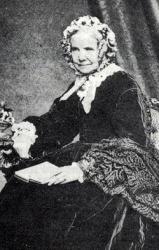
Charlotte Elliott
1789 - 1871 Hymnal Number: d443 Author of "Thou, who for sinners once was [wast] slain" in Hymns and Spiritual Songs, Selected and Original. 7th ed. Elliott, Charlotte, daughter of Charles Elliott, of Clapham and Brighton, and granddaughter of the Rev. H. Venn, of Huddersfield, was born March 18, 1789. The first 32 years of her life were spent mostly at Clapham. In 1823 she removed to Brighton, and died there Sept. 22, 1871. To her acquaintance with Dr. C. Malan, of Geneva, is attributed much of the deep spiritual-mindedness which is so prominent in her hymns. Though weak and feeble in body, she possessed a strong imagination, and a well-cultured and intellectual mind. Her love of poetry and music was great, and is reflected in her verse. Her hymns number about 150, a large percentage of which are in common use. The finest and most widely known of these are, "Just as I am” and "My God, my Father, while I stray." Her verse is characterized by tenderness of feeling, plaintive simplicity, deep devotion, and perfect rhythm. For those in sickness and sorrow she has sung as few others have done. Her hymns appeared in her brother's Psalms & Hymns and elsewhere as follows:—
(1) Psalms and Hymns for Public, Private, and Social Worship; selected by the Rev. H. V. Elliott, &c., 1835-48. In this Selection her signature is "C. E." (2) The Christian Remembrancer Pocket Book. This was originally edited by Miss Kiernan, of Dublin. Miss Elliott undertook the editorship in 1834. (3) The Invalid's Hymn Book. This was originally compiled by Miss Kiernan, but before publication was re-arranged by Miss Elliott, who also added 23 hymns in the first edition., 1834. These were increased in the following edition to the sixth in 1854, when her contributions amounted to 112. From that date no change was made in the work. (4) Hours of Sorrow Cheered and Comforted; or, Thoughts in Verse, 1836. (5) Morning and Evening Hymns for a Week, printed privately in 1839 for sale for a benevolent institution in Brighton, and published in 1842. (6) Thoughts in Verse on Sacred Subjects, 1869.
Miss Elliott's Poems were published, with a Memoir by her sister, Mrs. Babington, in 1873, and an additional volume of Leaves from her unpublished Journals and Poems, also appeared in 1870.
In addition to her more important hymns, which are annotated under their respective first lines, there are in common use:—
i. From The Invalid's Hymn-book, 1834-1841:—
1. Clouds and darkness round about thee. (1841.) Resignation.
2. Not willingly dost Thou afflict [reject]. (1841.) Divine Chastisement.
3. O God, may I look up to Thee. (1841.) Teach us to Pray.
4. This is enough; although 'twere sweet. (1834.) On being debarred from Divine Worship.
5. With tearful eyes I look around. (1841.) The Invitation "Come Unto Me."
ii. From H. V. Elliott's Psalms & Hymns, 1835-1839:—
6. Glorious was that primal light. Christmas.
7. Hail, holy day, most blest, most dear. Easter.
8. My only Saviour, when I feel. Jesus His people's Rest.
9. Now let our heavenly plants and flowers. Monday Morning.
10. The Sabbath-day has reached its close. Sunday Evening.
iii. From Miss Elliott's Hours of Sorrow, 1836:—
11. Father, when Thy child is dying. Prayer for a Departing Spirit.
12. Leaning on Thee, my Guide, my Friend. Death Anticipated.
13. My God, is any hour so sweet? The Hour of Prayer.
14. O faint and feeble-hearted. Resignation enforced.
15. There is a holy sacrifice. The Contrite Heart.
iv. From her Hymns for a Week, 1839:—
16. Guard well thy lips; none, none can know. Thursday Morning.
17. There is a spot of consecrated ground. Pt. i.
18. This is the mount where Christ's disciples see. Pt. ii. Monday Evening.
19. This is the day to tune with care. Saturday Morning.
v. From Thoughts in Verse on Sacred Subjects, 1869:—
20. As the new moons of old were given. On a Birthday.
21. I need no other plea. Pt. i.
22. I need no prayers to saints. Pt. ii. Christ, All in All.
23. Jesus, my Saviour, look on me. Christ, All in All.
Several of the earlier of these hymns were repeated in the later works, and are thus sometimes attributed to the wrong work. [Rev. James Davidson, B.A.]
-- John Julian, Dictionary of Hymnology (1907)
================
Elliott, Charlotte, p. 328, i. Other hymns are:—
1. O how I long to reach my home. Heaven desired. From the Invalid's Hymn Book, 1834.
2. The dawn approaches, golden streaks. Second Advent. From Thoughts in Verse, &c, 1869.
Of her hymns noted on p. 328, Nos. 6, 7, 8, 9, 10,11, and 13, all appeared in the 1st edition of Elliott's Psalms & Hymns, 1835.
--John Julian, Dictionary of Hymnology, Appendix, Part II (1907)
========================
Elliott, Charlotte, pp. 328, i.; 1561, ii. Further research enables us to give amended dates to some of her hymns as follows:—
1. With tearful eyes I look around (No. 5). This is in the 1835 Appendix to The Invalid's Hymn Book.
2. My only Saviour, when I feel (No. 8). Also in the 1835 Appendix.
3. Father, when Thy child is dying (No. 11). In the 1833 Appendix.
4. I want that adorning divine, p. 559, i. In the Christian Remembrancer 1848, p. 22.
--John Julian, Dictionary of Hymnology, New Supplement (1907)
Charlotte Elliott
Nahum Tate
1652 - 1715 Person Name: Nahum Tate, 1652-1715 Hymnal Number: d496 Author of "While shepherds watch [watched] their flocks by night" in Hymns and Spiritual Songs, Selected and Original. 7th ed. Nahum Tate was born in Dublin and graduated from Trinity College, Dublin, B.A. 1672. He lacked great talent but wrote much for the stage, adapting other men's work, really successful only in a version of King Lear. Although he collaborated with Dryden on several occasions, he was never fully in step with the intellectual life of his times, and spent most of his life in a futile pursuit of popular favor. Nonetheless, he was appointed poet laureate in 1692 and royal historiographer in 1702. He is now known only for the New Version of the Psalms of David, 1696, which he produced in collaboration with Nicholas Brady. Poverty stricken throughout much of his life, he died in the Mint at Southwark, where he had taken refuge from his creditors, on August 12, 1715.
--The Hymnal 1940 Companion
See also in:
Hymn Writers of the Church
Nahum Tate
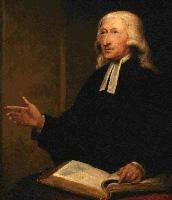
John Wesley
1703 - 1791 Hymnal Number: d245 Author of "Jesus, thy blood and righteousness" in Hymns and Spiritual Songs, Selected and Original. 7th ed. John Wesley, the son of Samuel, and brother of Charles Wesley, was born at Epworth, June 17, 1703. He was educated at the Charterhouse, London, and at Christ Church, Oxford. He became a Fellow of Lincoln College, Oxford, and graduated M.A. in 1726. At Oxford, he was one of the small band consisting of George Whitefield, Hames Hervey, Charles Wesley, and a few others, who were even then known for their piety; they were deridingly called "Methodists." After his ordination he went, in 1735, on a mission to Georgia. The mission was not successful, and he returned to England in 1738. From that time, his life was one of great labour, preaching the Gospel, and publishing his commentaries and other theological works. He died in London, in 1791, in his eighty-eighth year. His prose works are very numerous, but he did not write many useful hymns. It is to him, however, and not to his brother Charles, that we are indebted for the translations from the German.
--Annotations of the Hymnal, Charles Hutchins, M.A., 1872
======================
John Wesley, M.A., was born at Epworth Rectory in 1703, and, like the rest of the family, received his early education from his mother. He narrowly escaped perishing in the fire which destroyed the rectory house in 1709, and his deliverance made a life-long impression upon him. In 1714 he was nominated on the foundation of Charterhouse by his father's patron, the Duke of Buckingham, and remained at that school until 1720, when he went up, with a scholarship, from Charterhouse to Christ Church, Oxford. Having taken his degree, he received Holy Orders from the Bishop of Oxford (Dr. Potter) in 1725. In 1726 he was elected Fellow of Lincoln College, and remained at Oxford until 1727, when he returned into Lincolnshire to assist his father as curate at Epworth and Wroot. In 1729 he was summoned back to Oxford by his firm friend, Dr. Morley, Rector of Lincoln, to assist in the College tuition. There he found already established the little band of "Oxford Methodists" who immediately placed themselves under his direction. In 1735 he went, as a Missionary of the Society for the Propagation of the Gospel, to Georgia, where a new colony had been founded under the governorship of General Oglethorpe. On his voyage out he was deeply impressed with the piety and Christian courage of some German fellow travellers, Moravians. During his short ministry in Georgia he met with many discouragements, and returned home saddened and dissatisfied both with himself and his work; but in London he again fell in with the Moravians, especially with Peter Bohler; and one memorable night (May 24, 1738) he went to a meeting in Aldersgate Street, where some one was reading Luther's preface to the Epistle to the Romans. There, "About a quarter before nine, while he was describing the change which God works in the heart through faith in Christ, I felt my heart strangely warmed. I felt I did trust in Christ, Christ alone, for salvation; and an assurance was given me, that He had taken away my sins, even mine, and saved me from the law of sin and death." From that moment his future course was sealed; and for more than half a century he laboured, through evil report and good report, to spread what he believed to be the everlasting Gospel, travelling more miles, preaching more sermons, publishing more books of a practical sort, and making more converts than any man of his day, or perhaps of any day, and dying at last, March 2, 1791, in harness, at the patriarchal age of 88.
The popular conception of the division of labour between the two brothers in the Revival, is that John was the preacher, and Charles the hymnwriter. But this is not strictly accurate. On the one hand Charles was also a great preacher, second only to his brother and George Whitefield in the effects which he produced. On the other hand, John by no means relegated to Charles the exclusive task of supplying the people with their hymns. John Wesley was not the sort of man to depute any part of his work entirely to another: and this part was, in his opinion, one of vital importance. With that wonderful instinct for gauging the popular mind, which was one element in his success, he saw at once that hymns might be utilized, not only for raising the devotion, but also for instructing, and establishing the faith of his disciples. He intended the hymns to be not merely a constituent part of public worship, but also a kind of creed in verse. They were to be "a body of experimental and practical divinity." "In what other publication," he asks in his Preface to the Wesleyan Hymn Book, 1780 (Preface, Oct. 20,1779), "have you so distinct and full an account of Scriptural Christianity; such a declaration of the heights and depths of religion, speculative and practical; so strong cautions against the most plausible errors, particularly those now most prevalent; and so clear directions for making your calling and election sure; for perfecting holiness in the fear of God?" The part which he actually took in writing the hymns, it is not easy to ascertain; but it is certain that more than thirty translations from the German, French and Spanish (chiefly from the German) were exclusively his; and there are some original hymns, admittedly his composition, which are not unworthy to stand by the side of his brother's. His translations from the German especially have had a wide circulation. Although somewhat free as translations they embody the fire and energy of the originals.
It has been the common practice, however for a hundred years or more to ascribe all translations from the German to John Wesley, as he only of the two brothers knew that language; and to assign to Charles Wesley all the original hymns except such as are traceable to John Wesley through his Journals and other works.
The list of 482 original hymns by John and Charles Wesley listed in this Dictionary of Hymnology have formed an important part of Methodist hymnody and show the enormous influence of the Wesleys on the English hymnody of the nineteenth century.
-- Excerpts from John Julian, Dictionary of Hymnology (1907)
===================
See also in:
Hymn Writers of the Church
John Wesley
John Newton
1725 - 1807 Hymnal Number: d3 Author of "Afflictions, though they seem severe" in Hymns and Spiritual Songs, Selected and Original. 7th ed. John Newton (b. London, England, 1725; d. London, 1807) was born into a Christian home, but his godly mother died when he was seven, and he joined his father at sea when he was eleven. His licentious and tumultuous sailing life included a flogging for attempted desertion from the Royal Navy and captivity by a slave trader in West Africa. After his escape he himself became the captain of a slave ship. Several factors contributed to Newton's conversion: a near-drowning in 1748, the piety of his friend Mary Catlett, (whom he married in 1750), and his reading of Thomas à Kempis' Imitation of Christ. In 1754 he gave up the slave trade and, in association with William Wilberforce, eventually became an ardent abolitionist. After becoming a tide-surveyor in Liverpool, England, Newton came under the influence of George Whitefield and John and Charles Wesley and began to study for the ministry. He was ordained in the Church of England and served in Olney (1764-1780) and St. Mary Woolnoth, London (1780-1807). His legacy to the Christian church includes his hymns as well as his collaboration with William Cowper (PHH 434) in publishing Olney Hymns (1779), to which Newton contributed 280 hymns, including “Amazing Grace.”
Bert Polman
==================
Newton, John, who was born in London, July 24, 1725, and died there Dec. 21, 1807, occupied an unique position among the founders of the Evangelical School, due as much to the romance of his young life and the striking history of his conversion, as to his force of character. His mother, a pious Dissenter, stored his childish mind with Scripture, but died when he was seven years old. At the age of eleven, after two years' schooling, during which he learned the rudiments of Latin, he went to sea with his father. His life at sea teems with wonderful escapes, vivid dreams, and sailor recklessness. He grew into an abandoned and godless sailor. The religious fits of his boyhood changed into settled infidelity, through the study of Shaftesbury and the instruction of one of his comrades. Disappointing repeatedly the plans of his father, he was flogged as a deserter from the navy, and for fifteen months lived, half-starved and ill-treated, in abject degradation under a slave-dealer in Africa. The one restraining influence of his life was his faithful love for his future wife, Mary Catlett, formed when he was seventeen, and she only in her fourteenth year. A chance reading of Thomas à Kempis sowed the seed of his conversion; which quickened under the awful contemplations of a night spent in steering a water-logged vessel in the face of apparent death (1748). He was then twenty-three. The six following years, during which he commanded a slave ship, matured his Christian belief. Nine years more, spent chiefly at Liverpool, in intercourse with Whitefield, Wesley, and Nonconformists, in the study of Hebrew and Greek, in exercises of devotion and occasional preaching among the Dissenters, elapsed before his ordination to the curacy of Olney, Bucks (1764).
The Olney period was the most fruitful of his life. His zeal in pastoral visiting, preaching and prayer-meetings was unwearied. He formed his lifelong friendship with Cowper, and became the spiritual father of Scott the commentator. At Olney his best works—-Omicron's Letters (1774); Olney Hymns (1779); Cardiphonia, written from Olney, though published 1781—were composed. As rector of St. Mary Woolnoth, London, in the centre of the Evangelical movement (1780-1807) his zeal was as ardent as before. In 1805, when no longer able to read his text, his reply when pressed to discontinue preaching, was, "What, shall the old African blasphemer stop while he can speak!" The story of his sins and his conversion, published by himself, and the subject of lifelong allusion, was the base of his influence; but it would have been little but for the vigour of his mind (shown even in Africa by his reading Euclid drawing its figures on the sand), his warm heart, candour, tolerance, and piety. These qualities gained him the friendship of Hannah More, Cecil, Wilberforce, and others; and his renown as a guide in experimental religion made him the centre of a host of inquirers, with whom he maintained patient, loving, and generally judicious correspondence, of which a monument remains in the often beautiful letters of Cardiphonia. As a hymnwriter, Montgomery says that he was distanced by Cowper. But Lord Selborne's contrast of the "manliness" of Newton and the "tenderness" of Cowper is far juster. A comparison of the hymns of both in The Book of Praise will show no great inequality between them. Amid much that is bald, tame, and matter-of-fact, his rich acquaintance with Scripture, knowledge of the heart, directness and force, and a certain sailor imagination, tell strongly. The one splendid hymn of praise, "Glorious things of thee are spoken," in the Olney collection, is his. "One there is above all others" has a depth of realizing love, sustained excellence of expression, and ease of development. "How sweet the name of Jesus sounds" is in Scriptural richness superior, and in structure, cadence, and almost tenderness, equal to Cowper's "Oh! for a closer walk with God." The most characteristic hymns are those which depict in the language of intense humiliation his mourning for the abiding sins of his regenerate life, and the sense of the withdrawal of God's face, coincident with the never-failing conviction of acceptance in The Beloved. The feeling may be seen in the speeches, writings, and diaries of his whole life. [Rev. H. Leigh Bennett, M.A.]
A large number of Newton's hymns have some personal history connected with them, or were associated with circumstances of importance. These are annotated under their respective first lines. Of the rest, the known history of which is confined to the fact that they appeared in the Olney Hymns, 1779, the following are in common use:—
1. Be still, my heart, these anxious cares. Conflict.
2. Begone, unbelief, my Saviour is near. Trust.
3. By the poor widow's oil and meal. Providence.
4. Chief Shepherd of Thy chosen sheep. On behalf of Ministers.
5. Darkness overspreads us here. Hope.
6. Does the Gospel-word proclaim. Rest in Christ.
7. Fix my heart and eyes on Thine. True Happiness.
8. From Egypt lately freed. The Pilgrim's Song.
9. He Who on earth as man was Known. Christ the Rock.
10. How blest are they to whom the Lord. Gospel Privileges.
11. How blest the righteous are. Death of the Righteous.
12. How lost was my [our] condition. Christ the Physician.
13. How tedious and tasteless the hours. Fellowship with Christ.
14. How welcome to the saints [soul] when pressed. Sunday.
15. Hungry, and faint, and poor. Before Sermon.
16. In mercy, not in wrath, rebuke. Pleading for Mercy.
17. In themselves, as weak as worms. Power of Prayer.
18. Incarnate God, the soul that knows. The Believer's Safety.
19. Jesus, Who bought us with His blood. The God of Israel. "Teach us, 0 Lord, aright to plead," is from this hymn.
20. Joy is a [the] fruit that will not grow. Joy.
21. Let hearts and tongues unite. Close of the Year. From this "Now, through another year," is taken.
22. Let us adore the grace that seeks. New Year.
23. Mary to her [the] Saviour's tomb. Easter.
24. Mercy, 0 Thou Son of David. Blind Bartimeus.
25. My harp untun'd and laid aside. Hoping for a Revival. From this "While I to grief my soul gave way" is taken.
26. Nay, I cannot let thee go. Prayer. Sometimes, "Lord, I cannot let Thee go."
27. Now may He Who from the dead. After Sermon.
28. 0 happy they who know the Lord, With whom He deigns to dwell. Gospel Privilege.
29. O Lord, how vile am I. Lent.
30. On man in His own Image made. Adam.
31. 0 speak that gracious word again. Peace through Pardon.
32. Our Lord, Who knows full well. The Importunate Widow. Sometimes altered to "Jesus, Who knows full well," and again, "The Lord, Who truly knows."
33. Physician of my sin-sick soul. Lent.
34. Pleasing spring again is here. Spring.
35. Poor, weak, and worthless, though I am. Jesus the Friend.
36. Prepare a thankful song. Praise to Jesus.
37. Refreshed by the bread and wine. Holy Communion. Sometimes given as "Refreshed by sacred bread and wine."
38. Rejoice, believer, in the Lord. Sometimes “Let us rejoice in Christ the Lord." Perseverance.
39. Salvation, what a glorious plan. Salvation.
40. Saviour, shine and cheer my soul. Trust in Jesus. The cento "Once I thought my mountain strong," is from this hymn.
41. Saviour, visit Thy plantation. Prayer for the Church.
42. See another year [week] is gone. Uncertainty of Life.
43. See the corn again in ear. Harvest.
44. Sinner, art thou still secure? Preparation for the Future.
45. Sinners, hear the [thy] Saviour's call. Invitation.
46. Sovereign grace has power alone. The two Malefactors.
47. Stop, poor sinner, stop and think. Caution and Alarm.
48. Sweeter sounds than music knows. Christmas.
49. Sweet was the time when first I felt. Joy in Believing.
50. Ten thousand talents once I owed. Forgiveness and Peace.
51. The grass and flowers, which clothe the field. Hay-time.
52. The peace which God alone reveals. Close of Service.
53. Thy promise, Lord, and Thy command. Before Sermon.
54. Time, by moments, steals away. The New Year.
55. To Thee our wants are known. Close of Divine Service.
56. We seek a rest beyond the skies. Heaven anticipated.
57. When any turn from Zion's way. Jesus only.
58. When Israel, by divine command. God, the Guide and Sustainer of Life.
59. With Israel's God who can compare? After Sermon.
60. Yes, since God Himself has said it. Confidence.
61. Zion, the city of our God. Journeying Zionward.
-- John Julian, Dictionary of Hymnology (1907)
=================
Newton, J., p. 803, i. Another hymn in common use from the Olney Hymns, 1779, is "Let me dwell on Golgotha" (Holy Communion).
--John Julian, Dictionary of Hymnology, Appendix, Part II (1907)
-----
John Newton was born in London, July 24, 1725. His mother died when he was seven years old. In his eleventh year he accompanied his father, a sea captain, on a voyage. For several years his life was one of dissipation and crime. He was disgraced while in the navy. Afterwards he engaged in the slave trade. Returning to England in 1748, the vessel was nearly wrecked in a storm. This peril forced solemn reflection upon him, and from that time he was a changed man. It was six years, however, before he relinquished the slave trade, which was not then regarded as an unlawful occupation. But in 1754, he gave up sea-faring life, and holding some favourable civil position, began also religious work. In 1764, in his thirty-ninth year, he entered upon a regular ministry as the Curate of Olney. In this position he had intimate intercourse with Cowper, and with him produced the "Olney Hymns." In 1779, Newton became Rector of S. Mary Woolnoth, in London, in which position he became more widely known. It was here he died, Dec. 21, 1807, His published works are quite numerous, consisting of sermons, letters, devotional aids, and hymns. He calls his hymns "The fruit and expression of his own experience."
--Annotations of the Hymnal, Charles Hutchins, M.A. 1872
See also in:
Hymn Writers of the Church
=======================
John Newton
John Ryland
1753 - 1825 Hymnal Number: d211 Author of "In all my Lord's appointed ways" in Hymns and Spiritual Songs, Selected and Original. 7th ed. Ryland, John, D.D., son of Rev. John Collett Ryland, was born at Warwick, Jan. 29, 1753. At that time his father was Baptist minister at Warwick, but in 1759 removed to Northampton. "J. Ryland, junior," as for many years he was accustomed to subscribe himself, was in 1781 ordained co-pastor with his father at Northampton. In 1794 he accepted the presidency of the Baptist College and the pastorate of the church in Broadmead, Bristol, and these offices he retained until his death on June 25, 1825. Dr. Ryland was a man of considerable literary culture, and received the degree of D.D. from Brown University, Rhode Island. He was one of the founders of the Baptist Missionary Society, and for the three years following the death of Rev. A. Fuller, in 1815, acted as its secretary. His prose works were Memoirs of Rev. B. Hall, Arnsby (2nd ed., 1852); A candid statement of the reasons which induce Baptists to differ from their Christian brethren; and many Sermons and Charges. After his death appeared 2 vols. of Discourses, selected from his manuscripts, and entitled Pastoral Memorial. To these discourses are appended many of his hymns, with their dates. Dr. Ryland's hymns were composed at different times, from his sixteenth year to the year of his death. The earliest were published when he was 16, in his Serious Essays, 1771. These 36 hymns were never republished. Several appeared in the Gospel Magazine from 1771 to 1782, and the Protestant Magazine, 1782-83; others in Rippon's Baptist Selection, 1787; 2 in the Collection for the Monthly Prayer Meeting at Bristol, 1797 ; 2 in Andrew Fuller's Memoirs, 1831; and 25 in the Pastoral Memorials, 1825. His Hymns and Verses on Sacred Subjects, to the number of 99, were reprinted from his mss. by D. Sedgwick, and were published, with a Memoir, in 1862. The hymns are dated therein from the mss. [Rev. W. R. Stevenson, M.A.]
Those of Dr. Ryland's hymns now in common use include:—
1. For Zion's sake I'll not restrain. Missions. Dated 1798, and printed by D. Sedgwick from Ryland's manuscripts, 1862.
2. Had not the Lord, my soul may say [cry] . Ps. cxxiv. From his Serious Essays, 1771. It is No. 124 in Spurgeon's Our Own Hymn Book, 1866. Not in Sedgwick's reprint.
3. Holy, holy, holy Lord, self-existent Deity. Holy Trinity. Dated 1796. It was given in the tenth edition of Rippon's Baptist Selection, 1800, Pt. 2, No. 22; in the Pastoral Memorials, 1825; and Sedgwick's reprint, 1862, in 5 stanzas of 8 lines. It is in common use in Great Britain and America.
4. Look down, my soul, on hell's domain. Gratitude for escape. This is No. 881 in Spurgeon's Our Own Hymn Book. 1866, and dated 1777. We cannot trace it in any of Ryland's works or amongst his hymns.
5. Lord, teach a little child to pray. A Child's Prayer. Dated 1786. The note to this hymn by Dr. Ryland's son, in Sedgwick's reprint, 1862, p. 15, is:— "This and the following hymn ["God is very good to me “was composed at the request of Mrs. Fuller, wife of the Rev. Andrew Fuller, of Kettering, for the use of Miss Sarah Fuller, who died May 30th, 1789, aged six years and six months." It was published in Andrew Fuller's Memoirs, 1831, p. 442, andsin Sedgwick's reprint, 1862.
6. Now let the slumbering church awake. Activity in the Church desired. Dated "Feb. 20, 1798." Published in the Pastoral Memorials, 1825, and in Sedgwick's reprint, 1862. In Spurgeon's Our Own Hymn Book, 1866.
7. O Lord, I would delight in Thee. Delight in Christ. Dated "Dec. 3, 1777." Dr. Ryland added this note to the ms.:—-" I recollect deeper feelings of mind in composing this hymn, than perhaps I ever felt in making any other." It was published in Rippon's Selection 1798, No. 248; in the Pastoral Memorials, 1825; and in Sedgwick's reprint, 1862, in 7 st. of 41. It is in extensive use in its original, or an abbreviated form; or as "O Lord we would delight in Thee." In the American Methodist Episcopal Hymns, 1849; and their Hymn, 1878, st. i., ii., vi., vii. are rewritten in S. M. as "Lord, I delight in Thee."
8. Out of the depths of doubt and fear. Ps. cxxx. From the Serious Essays, 1771 (misdated in Spurgeon's Our Own Hymn Book 1775). It is not in the Pastoral Memorials, 1825, nor in Sedgwick's reprint, 1862.
9. Rejoice, the Saviour reigns. Missions. Dated "Jan. 19, 1792." In the 10th ed. of Rippon's Selection, 1800, 422 (2nd pt.) it is given in 6 st. of 6 1., as in the Ryland ms., and then after the word "Pause" two stanzas are added on, which are not in the ms. The 6 stanzas were repeated in the Pastoral Memorials, 1825; in Sedgwick's reprint, 1862; and in Spurgeon's Our Own Hymn Book, 1866 (abbreviated), and other modern hymnals.
10. Sovereign Ruler of the skies. Guidance, Peace, and Security in God. Dated "Aug. 1,1777." Included in Rippon's Selection, 1787, No. 545 ; the Pastoral Memorials, 1825 ; and Sedgwick's reprint, 1862, in 9 st. of 4 1.
11. Thou Son of God, and Son of Man. Praise to God, the Son. This is undated. It was given in the Pastoral Memorials, 1825; and Sedgwick's reprint, 1862.
12. When Abraham's servant to procure. Onward, Heavenward. Dr. Ryland's son, under the date of Nov. 4, 1861, informed D. Sedgwick that this hymn "was written with a slate pencil on a rusty iron blower by moonlight, past twelve o'clock, Dec. 30, 1773," and he gives these words as a quotation from his father's manuscript. It is almost needless to add that this account does not agree with the generally received history of the hymn, as set forth in Miller's Singers and Songs, 1869, p. 313. In the May number of the Gospel Magazine, 1775, p. 235, the hymn was given in 9 st. of 4 1., with the heading" Hinder me not-—Gen. xxiv. 56," and signed "Elachistoteros." It was repeated in Rippon's Selection, 1787, No. 447; and Sedgwick's reprint, 1862. In Rippon a note is added, "This hymn may begin with 6th verse." This direction has been followed in some modern collections, the result being the hymn commonly known as "In all my Lord's appointed ways."
13. When the Saviour dwelt below. Compassion of Christ. Dated 1806. Included in the Pastoral Memorials, 1825, and Sedgwick's reprint, 1862.
Dr. Ryland's hymns are plain and simple, but they lack poetry and passion, and are not likely to be largely drawn upon, for future hymnals.
--John Julian, Dictionary of Hymnology (1907)
John Ryland
George Askins
? - 1816 Person Name: George Atkin Hymnal Number: d231 Author of "Jesus grant us all a blessing" in Hymns and Spiritual Songs, Selected and Original. 7th ed. George Askins was born in Ireland. He immigrated to the United States as an adult. He was a Methodist and became an itinerant preacher for the Baltimore Conference in 1801. He was appointed to other circuits as well, mostly in Maryland, Virginia, and Kentucky. He died in Frederick, Maryland 28 February 1816.
Dianne Shapiro from The Makers of the Sacred Harp by David Warren Steel with Richard H. Hulan, University of Illinois Press, 2010
George Askins
Samson Occom
1723 - 1792 Person Name: Samson Occum Hymnal Number: d30 Author of "Awaked by Sinai's awful sound" in Hymns and Spiritual Songs, Selected and Original. 7th ed. Occom, Samson (sometimes given as Ockum, and again as Occum), a Mohican Indian, was born at Norwich, Connecticut, in 1723. He was converted from Paganism under G. Whitefield, in 1739-40, and educated by the Revs. E. Wheelock and Benjamin Pomeroy. In 1748 he removed to Long Island and laboured amongst a remnant of his people. In 1759 he received Presbyterian orders, visited England, 1766-67, where he preached often (once for J. Newton at Olney), and with acceptance, and raised about ten thousand pounds for Dartmouth College, and for Indian education. His later life was spent first among his own race on Long Island, and, from 1786, in Oneida County, N.Y. He died in July, 1792. Occom's Choice Collection of Hymns and Spiritual Songs was published at New London, Connecticut, in 1774 (2nd ed. 1785). He is credited as the author of several hymns, but none of those hymns are found in his own collection. They are:—
1. Now the shades of night are gone. Morning. The date of 1770 is given to this hymn, but on insufficient authority. No evidence connects it with Occom, though it has not, on the other hand, been claimed for another. It is first found in the Hartford Congregational Collection, 1799, and was brought into general use by the Prayer-Book Collection, 1826. It is in several modern hymn-books.
2. Awaked by Sinai's awful sound. Peace with God. By this hymn, from its extensive use, Occom is chiefly known. We are satisfied, however, that in this form it is not his. It is first found in the Connecticut Evangelical Magazine, July, 1802, p. 39, "communicated as original." It is however altered from "Waked by the gospel's powerful sound," which is No. 285 in Josiah Goddard's Collection, Walpole, N. H.,1801, and possibly earlier, This older text is probably Occom's own composition.
3. When shall we three meet again? Parting. This once popular hymn has been ascribed to Occom, but the claim is doubtful. We find it in no collection earlier than Leavitt's Christian Lyre, 1830, although it is known to have been sung at an earlier date. It is sometimes given as, "When shall we all meet again?" as in H. W. Beecher's Plymouth Collection, 1855. [Rev. F. M. Bird, M.A.]
--John Julian, Dictionary of Hymnology (1907)
Samson Occom
Pages