

 My Starred Hymns
 My FlexScores
 My Hymnals
 My Purchased Files
Planning worship?
Check out our sister site, ZeteoSearch.org,
for 20+ additional resources related to your search.
- |
User Links
Person Results
William R. Newell
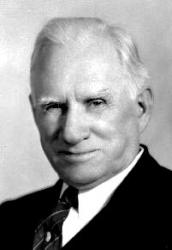
1868 - 1956 Topics: Cross of Christ; Cross of Christ Author of "At Calvary" in Hymns of Faith William Newell (1868-1956) was born in Savannah, OH. He earned degrees from Wooster College, Princeton and Oberlin Theological Seminary. He served as Assistant Superintendent of the Moody Bible Institute, Chicago. The words for his hymn "At Calvary" came to him on his way to teach a class at the Bible Institute. He slipped into an empty classroom and wrote them quickly on the back of an envelope. (see bio in 101 More Hymn Stories, Osbeck, Grand Rapids, MI: Kregel, 1985.)
Mary Louise VanDyke
William R. Newell
J. H. Gilmore

1834 - 1918 Person Name: J. Henry Gilmore Topics: The Christian Life Cross and Comfort Author of "He Leadeth Me: O Blessed Thought" in American Lutheran Hymnal Joseph H. Gilmore (b. Boston, MA, 1834; d. Rochester, NY, 1918) Educated at Brown University, Providence, Rhode Island, and Newton Theological Seminary, Newton, Massachusetts, Gilmore was ordained to the Baptist ministry in 1862. He served churches in Fisherville, New Hampshire, and Rochester, New York. In 1868 he was appointed to the English faculty at the University of Rochester, where he served until retirement in 1911. He published various literary works, including Outlines of English and American Literature (1905).
Bert Polman
============
Gilmore, Joseph Henry, M. A., Professor of Logic in Rochester University, New York, was born at Boston, April 29, 1834, and graduated in Arts at Brown University, and in Theology at Newton Theological Institution. In the latter he was Professor of Hebrew in 1861-2. For some time he held a Baptist ministerial charge at Fisherville, New Hampshire, and at Rochester. He was appointed Professor at Rochester in 1868. His hymn, "He leadeth me, O blessed thought" (Ps. xxiii.), is somewhat widely known. It was written at the close of a lecture in the First Baptist Church, Philadelphia, and is dated 1859. It is in the Baptist Hymnal [and Tune] Book, Philadelphia, 1871. [Rev. F. M. Bird, M. A.]
-- John Julian, Dictionary of Hymnology (1907)
J. H. Gilmore
Elvina M. Hall
1820 - 1889 Topics: Jesus Christ Cross; Jesus Christ Cross Author of "Jesus Paid It All" in Worship and Song Hall, Elvina Mable, was born at Alexandria, Virginia, in 1818; and was married, first to Mr. Richard Hall, and then, in 1885, to the Rev. Thomas Myers. Her hymn, "I hear the Saviour say" (Christ All and in All), in I. D. Sankey's Sacred Songs and Solos, 1878, is somewhat popular in Great Britain and America. It was "written on the fly-leaf of the New Lute of Zion, in the choir of the Methodist Episcopal Church, Baltimore, in the spring of 1865."
--John Julian, Dictionary of Hymnology, Appendix, Part II (1907)
Elvina M. Hall
Theodulf, Bishop of Orléans
750 - 821 Person Name: Theodulph of Orleans Topics: Cross of Christ; Cross of Christ Author of "All Glory, Laud, and Honor" in Psalter Hymnal (Gray) Theodulph of Orleans appears to have been a native of Italy. He was brought to France by Charles the Great, perhaps when Charles returned from Italy in 781. He became Bishop of Orleans about 785, and soon afterwards also Abbot of Fleury. After the death of Charles he continued for some time on friendly terms with the Emperor Louis, but, falling under suspicion of being concerned in the plot in favour of Bernard of Italy, was imprisoned in 818, at Angers, where he seems to have died in 821, apparently on Sep. 18. There is a full and interesting sketch of his life and works in the Dictionary of Chr. Biog., iii., pp. 983-989. See also Potthast's Biblical History, Medii Aevi, 1896, vol. ii., p. 1058. The best and most recent edition of his Carmina is in vol. i., Berlin, 1881, of the Poetae Latini Aevi Carolini, which includes his famous "Gloria, laus et honor," p. 426, i.
[Rev. James Mearns, M.A.]
--John Julian, Dictionary of Hymnology, New Supplement (1907)
Theodulf, Bishop of Orléans
Henry Hart Milman
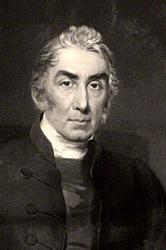
1791 - 1868 Person Name: Henry Hart Milman, 1791-1868 Topics: Cross; Cross Author of "Bound upon the Accursed Tree" in African Methodist Episcopal Church Hymnal Milman, Henry Hart, D.D., the youngest son of Sir Francis Milman (who received his Baronetage as an eminent Court physician), was born Feb. 10th, 1791, and educated at Dr. Burney's at Greenwich, and subsequently at Eton. His career at B. N. C. Oxford, was brilliant. He took a first class in classics, and carried off the Newdigate, Latin Verse, Latin Essay, and English Essay. His Newdigate on the Apollo Belvedere, 1812, is styled by Dean Stanley "the most perfect of Oxford prize poems." His literary career for several years promised to be poetical. His tragedy Fazio was played at Covent Garden, Miss O'Neill acting Bianca. Samor was written in the year of his appointment to St. Mary's, Reading (1817); The Fall of Jerusalem (1820); Belshazzar and The Martyr of Antioch (1822), and Anne Boleyn, gained a brilliant reception from the reviewers and the public. He was appointed Poetry Professor at Oxford in 1821, and was succeeded ten years after by Keble. It must have been before 1823, the date of Heber's consecration to Calcutta, that the 13 hymns he contributed to Heber's Hymns were composed. But his poetry was only the prelude to his larger work.
The Bampton Lectures (1827) mark his transition to theological study, and the future direction of it was permanently fixed by his History of the Jews (1829). This book raised a storm of obloquy. It was denounced from the University pulpit, and in the British Critic. "It was the first decisive inroad of German theology into England, the first palpable indication that the Bible could be studied like another book, that the characters and events of the sacred history could be treated at once critically and reverently" (Dean Stanley).
In 1835 he was presented by Sir Robert Peel to a Canonry at Westminster and the Rectory of St. Margaret's. In 1839 appeared his valuable edition of Gibbon's Decline and Fall; and in 1840 his History of Christianity to the Abolition of Paganism in the Roman Empire. Among his minor works in a different field were his Life of Keats and his edition and Life of Horace. It was not till 1854 that his greatest work—-for "vast and varied learning, indefatigable industry, calm impartiality, and subtle and acute criticism, among the most memorable in our language" (Quart Rev.)—-Latin Christianity—-appeared. He had been appointed Dean of St. Paul's in 1849. The great services under the dome originated in his tenure of the Deanery. His latest work, published after his death, Sept. 24, 1868, was The Annals of St. Paul’s. Though one of the most illustrious in the school of English liberal theology, he had no sympathy with the extreme speculations of Germany. The "criticism" of Tübingen "will rarely bear criticism." He "should like an Ewald to criticise Ewald." "Christianity will survive the criticism of Dr. Strauss," and the "bright flashing artillery" of Rénan. His historical style has been compared to Gibbon in its use of epigram and antithesis. His narrative is full of rapidity of movement. His long complex paragraphs have often a splendour of imagination as well as wealth of thought. All the varied powers of his mind found vent in his conversation; he was called, after his death, "the last of the great converters." The catalogue of his friends from the days of Heber, "his early friend," to those of Hallam, Macaulay, and Dean Stanley, was long and distinguished.
Milman's 13 hymns were published in Heber's posthumous Hymns in 1827, and subsequently in his own Selection of Psalms & Hymns, 1837. The fine hymn for The Burial of the Dead, in Thring's Collection, "Brother, thou art gone before us," is from The Martyr of Antioch (1822). Like Heber's, they aim at higher literary expression and lyric grace. He makes free use of refrains. The structure is often excellent. His style is less florid and fuller of burning, sometimes lurid force than Heber's. His hymn for the 16th Sunday after Trinity, "When our heads are bowed with woe," has no peer in its presentation of Christ's human sympathy; the hymn for the 2nd Sunday in Lent, “Oh! help us, Lord! each hour of need," is a piece of pure deep devotion. "Ride on, ride on in majesty," the hymn for Palm Sunday, is one of our best hymns. And the stanzas for Good Friday, "Bound upon the accursed tree," form one of the finest meditations on the Passion. All his hymns are still in common use. [Rev.H.Leigh Bennett, M.A.]
--John Julian, Dictionary of Hymnology (1907)
Henry Hart Milman
Christian Fürchtegott Gellert
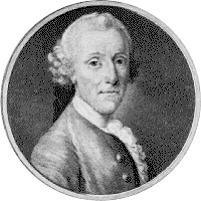
1715 - 1769 Person Name: Christian F. Gellert Topics: Cross of Believer Author of "Jesus Lives and So Shall I" in Sing Joyfully Gellert, Christian Fürchtegott, son of Christian Gellert, pastor at Hainichen in the Saxon Harz, near Freiberg, was born at Hainichen, July 4, 1715. In 1734 he entered the University of Leipzig as a student of theology, and after completing his course acted for some time as assistant to his father. But then, as now, sermons preached from manuscript were not tolerated in the Lutheran Church, and as his memory was treacherous, he found himself compelled to try some other profession. In 1739 he became domestic tutor to the sons of Herr von Lüttichau, near Dresden, and in 1741 returned to Leipzig to superintend the studies of a nephew at the University. He also resumed his own studies. He graduated M.A. 1744; became in 1745 private tutor or lecturer in the philosophical faculty; and was in 1751 appointed extraordinary professor of philosophy, lecturing on poetry and rhetoric, and then on moral philosophy. An ordinary professorship offered to him in 1761 he refused, as he did not feel strong enough to fulfil its duties, having been delicate from a child, and after 1752 suffering very greatly from hypochondria. He died at Leipzig, Dec. 13, 1769 (Koch, vi. 263-277; Allgemeine Deutsche Biographie, viii. 544-549, &c).
As a professor, Gellert was most popular, numbering Goethe and Lessing among his pupils, and won from his students extraordinary reverence and affection, due partly to the warm interest he took in their personal conduct and welfare. In his early life he was one of the contributors to the Bremer Beiträge; and was one of the leaders in the revolt against the domination of Gottsched and the writers of the French school. His Fables (1st Ser. 1746; 2nd 1748), by their charm of style, spirit, humour and point, may justly be characterised as epoch-making, won for him universal esteem and influence among his contemporaries of all classes, and still rank among the classics of German literature.
As a hymnwriter he also marks an epoch; and while in the revival of churchly feeling the hymns of the Rationalistic period of 1760 to 1820 have been ignored by many recent compilers, yet the greatest admirers of the old standard hymns have been fain to stretch their area of selection from Luther to Gellert. He prepared himself by prayer for their composition, and selected the moments when his mental horizon was most unclouded. He was distinguished by deep and sincere piety, blameless life, and regularity in attendance on the services of the Church. His hymns are the utterances of a sincere Christian morality, not very elevated or enthusiastic, but genuine expressions of his own feelings and experiences; and what in them he preached he also put in practice in his daily life. Many are too didactic in tone, reading like versifications of portions of his lectures on morals, and are only suited for private use. But in regard to his best hymns, it may safely be said that their rational piety and good taste, combined with a certain earnestness and pathos, entitle them to a place among the classics of German hymnody. They exactly met the requirements of the time, won universal admiration, and speedily passed into the hymnbooks in use over all Germany, Roman Catholic as well as Lutheran.
Two of Gellert's hymns are noted under their own first lines, viz., "Jesus lebt, mit ihm auch ich," and "Wie gross ist des All-mächtgen Güte." The following have also passed into English, almost all being taken from his Geistliche Oden und Lieder, a collection of 54 hymns first published at Leipzig, 1757, and which has passed through very numerous editions:—
I. Hymns in English common use:
i. An dir allein, an dir hab ich gesündigt. Lent. 1757, p. 102, in 6 stanzas of 4 lines, entitled "Hymn of Penitence." In Zollikofer's Gesange-Buch, 1766, and the Berlin Geistliche Lieder S., ed. 1863, No. 499. Translated as:—
Against Thee only have I sinn'd, I own it. A good and full version, by Miss Wink worth, as No. 42 in her Chorale Book for England, 1863.
Another translation is:— "Against Thee, Lord, Thee only my transgression," by N. L. Frothingham, 1870, p. 241.
ii. Dies ist der Tag, den Gott gemacht. Christmas. One of his best and most popular hymns. 1757, p. 72, in 11 stanzas of 4 lines, repeated in the Berlin Gesang-Buch, 1765, No. 55, and the Berlin Geistliche Lieder S. ed. 1863, No. 154. Translated as:—
This is the day the Lord hath made, O'er all the earth. A translation of stanzas i.-iii., x., by Miss Borthwick, as No. 22 in Dr. Pagenstecher's Collection, 1864, and included in Hymns from the Land of Luther, 1884, p. 256.
Other trs. are:—(1) "This is the day which God ordains," by Dr. G. Walker, 1860, p. 27. (2) "This day shall yet by God's command," in the Family Treasury, 1811, p. 278.
iii. Für alle Güte sei gepreist. Evening. 1757, p. 85, in 4 stanzas of 6 lines, included in Zollikofer's Gesang-Buch 1766, No. 78, and the Berlin Geistliche Lieder S., ed. 1863, No. 1160. Translated as:—
To Father, Son, and Spirit praise. A good and full translation by A. T. Russell, as No. 7 in his Psalms & Hymns, 1851.
Another translation is: — "For all Thy kindness laud I Thee," by H. J. Buckoll, 1842, p. 96.
iv. Gott ist mein Lied. Praise. On God's Might and Providence. 1757, p. 78, in 15 st. of 5 1. In the Berlin Geistliche Lieder S.., ed. 1863, No. 24. Translated as:—
God is my song, His praises I'll repeat, A free translation of stanzas i.-v., as No. 94 in Sir John Bowring's Hymns, 1825. Repeated, omitting stanza ii., as No. 114 in Dale's English Hymn Book, 1875.
Other translations are:— (1) “Of God I sing," by Dr. H. Mills, 1856, p. 11. (2) "God is my song, With sovereign," by N. L. Frothingham, 1870, p. 243.
v. Wenn ich, o Schöpfer, deine Macht. Praise. This fine hymn of Praise for Creation and Providence was first published 1757, p. 62, in 6 stanzas of 7 lines. In the Berlin Gesang-Buch, 1765, No. 25, and Berlin Geistliche Lieder S.ed. 1863, No. 72. Translated as:—-
Thou Great First Cause! when of Thy skill. In full in Dr. H. Mills's Horae Germanicae, 1845 (1856, p. 5). Stanzas ii., iii., v., vi., altered and beginning, "The earth, where'er I turn mine eye," are in the American Lutheran General Synod's Collection, 1852.
Other trs. are:— (1) "When, O my dearest Lord, I prove," by Miss Dunn, 1857, p. 80. (2) "Creator! when I see Thy might," in Madame de Pontes's Poets and Poetry of Germany, 1858, v. i. p. 472. (3) "When I, Creator, view Thy might," by Miss Manington, 1863.
vi. Wer Gottes Wort nicht halt, und spricht. Faith in Works. This didactic hymn on Faith proved by Works, was first published 1757, p. 49, in 5 stanzas of 6 lines. In Zollikofer's Gesang-Buch, 1766, and the Berlin Geistliche Lieder S. ed. 1863, No. 72. Translated as:—
Who keepeth not God's Word, yet saith. A good and full translation by Miss Winkworth, in her Lyra Germanica, 2nd Ser., 1858, p. 161. A greatly altered version of stanzas ii.—v., beginning, "True faith in holy life will shine," was included as No. 418 in Kennedy, 1863, and repeated in the Ibrox Hymnal 1871, J. L. Porter's Collection 1876, and others.
II. Hymns not in English common use:
vii. Auf Gott, und nicht auf meinen Rath. Trust in God's Providence. 1757, p. 134, in 6 stanzas. Translated as: (1) "Rule Thou my portion, Lord, my skill," by Dr. H. Mills, 1845 (1856, p. 164). (2) "On God and on no earthly trust," by J. D. Burns, in his Remains, 1869.
viii. Auf, schicke dich. Christmas. 1757, p. 109, in 1 stanza. Translated as, "Come, tune your heart," by Miss Cox, 1841, p. 17 (1864, p. 39).
ix. Dein Heil, o Christ! nicht zu verscherzen. Prayer. 1757, p. 6, in 14 stanzas of 8 lines. In J. A. Schlegel's Geistliche Gesänge, 3rd Ser., 1772, p. 193, recast as "Zu deinem Gotte beten," in 5 stanzas of 12 lines; and this in the Kaiserwerth Lieder-Buch für Kleinkinderschulen, 1842, No. 208, appears "Zu Gott im Himmel beten," in 8 stanzas of 4 lines. The 1842 was translated as, "O how sweet it is to pray," by Mrs. Bevan, 1859, p. 148.
x. Der Tag ist wieder hin, und diesen Theil des Lebens. Evening. 1757, p. 13, in 10 stanzas, as "Self-Examination at Eventide." Translated as,"Another day is ended," by Miss Warner, 1869 (1871, p. 9).
xi. Du klagst, und fühlest die Beschwerden. Contentment. 1757, p. 91, in 8 stanzas. Translated as "Thy wounded spirit feels its pain," by Dr. B. Maguire, 1883, p. 153.
xii. Erinnre dich, mein Geist, erfreut. Easter. 1757, p. 27, in 13 stanzas. Translated as, "Awake, my soul, and hail the day," in Dr. J. D. Lang's Aurora Australis, Sydney, 1826, p. 43.
xiii. Er ruft der Sonn, und schafft den Mond. New Year. 1757, p. 154, in 6 stanzas. In the Berlin Gesang-Buch, 1765, No. 233, as "Gott ruft." Translated as, “Lord, Thou that ever wast and art," in the British Magazine, Jan., 1838, p. 36.
xiv. Gott, deine Güte reicht so weit. Supplication. 1757, p. 1, in 4 stanzas, founded on 1 Kings iii. 5-14. The translations are: (1) "O God, Thy goodness doth extend, Far as," by Dr. J. D. Lang, 1826, p. 10. (2) "Behold! Thy goodness, oh my God," by Miss Fry, 1845, p. 78.
xv. Gott ist mein Hort. Holy Scripture. 1757, p. 70, in 8 stanzas. Translated as, "I trust the Lord, Upon His word," by Dr. H. Mills, 1845 (1856, p. 23).
xvi. Herr, der du mir das Leben. Evening. 1757, p. 121, in 5 stanzas. Translated as, "By Thee, Thou Lord of Heaven," by H. J. Buckoll, 1842, p. 97.
xvii. Herr, starke mich, dein Leiden su bedenken. Passiontide. 1757, p. 123, in 22 stanzas. Translated as, "Clothe me, oh Lord, with strength! that I may dwell” by Miss Fry, 1859, p. 153.
xviii. Ich hab in guten Stunden. For the Sick. 1757, p. 128, in 6 stanzas. [See the Story of a Hymn, in the Sunday at Home for Sept., 1865.] Translated as: (1) “I have had my days of blessing," by Mrs. Findlater, in Hymns from the Land of Luther, 1855, p. 60. (2) "Once, happy hours with blessings crowned," by A. B. H., in the Day of Rest, 1877, p. 405.
xix. Ich komme, Herr, und suche dich. Holy Communion. 1757, p. 89, in 5 stanzas. The translations are: (1) "I come, 0 Lord, and seek for Thee," by Miss Manington, 1863, p. 14. (2) “Weary and laden with my load, I come," by Dr. B. Maguire, 1872, p. 178.
xx. Ich komme vor dein Angesicht. Supplication. 1757, p. 140. in 13 stanzas. The translations are: (1) "Great God, I bow before Thy face," by Dr. J. D. Lang, 1826, p. 23. (2) “Now in Thy presence I appear," by Dr. H. Mills, 1845 (1856, p. 137).
xxi. Mein erst Gefühl sei Preis und Dank. Morning. 1757, p. 55, in 12 stanzas. Translated as, "I bless Thee, Lord, Thou God of might," beginning with st. vi., by H. J. Buckoll, 1842, p. 56.
xxii. Nach einer Prüfung kurzer Tage. Eternal Life. 1757, p. 158, in 12 stanzas, as "The Consolation of Eternal Life." Though hardly a hymn for congregational use and too individualised, it has been a very great favourite in Germany. In the Berlin Gesang-Buch, 1765, 132, and the Berlin Geistliche Liedersegen, ed. 1863, No. 1483. The translations are: (1) "A few short days of trial past," in Miss Knight's Prayers and Hymns from the German, 1812 (1832, p. 107). (2) "A few short hours of transient joy," by Dr. J. D. Lang, 1826, p. 123. (3) “When these brief trial-days are past," by J. Sheppard, 1857, p. 98. (4) “A few short days of trial here,” by Miss Burlingham, in the British Herald, July 1865, p. 98. (5) "Our few short years of trial o'er," by Dr. J. Guthrie, 1869, d. 124. (6) “When these brief trial-days are spent," by Miss Winkworth, 1869, p. 318. (7) "A few more days, a few more years," by Dr. R. Maguire, 1883, p. 165.
xxiii 0 Herr, mein Gott! durch den ich bin und lebe. Resignation to the will of God. 1757, p. 152. in 7 st. Translated as, "In Thee, my God, I live and move," by Dr. R. Maguire, 1883, p. 113.
xxiv. So hoff’ ich denn mit festem Muth . Assurance of the Grace of God. 1757, p. 115, in 4 stanzas. The translations are: (1) "Firm is my hope of future good," by Dr. H. Mills, 1845 (1856, p. 188). (2) “In Thee, O Lord, my hope hath stood," by Dr. R. Maguire, 1872.
zzv. Was ists dast ich mich quäle. Patience. 1757, p. 17, in 7 stanzas. The translations are: (1) "O foolish heart, be still," by Miss Warner, 1858 (1861, p. 452), repeated in Bishop Ryle's Collection, 1860, No. 181 (2) “What billows these that o'er thee roll," by Dr. R. Maguire, 1872.
xxvi. Wie sicher lebt der Mensch, der Staub. For the Dying. 1757, p. 149, in 14 stanzas. Translated as, "How heedless, how secure is man!" by Dr. H. Mills, 1845 (1856, p. 238).
One or two recasts from Gellert's Lehrgedichte und Erzählungen, Leipzig, 1754, came into German common use, and one has passed into English, viz.:—
xxvii. Mensch, der du Christus schmähst, was ist in ihrer Lehre. Love to Mankind. 1754, pp. 27-56, being a poem entitled “The Christian." A recast from portions of this made by J. S. Diterich, beginning "Gieb mir, O Gott, ein Herz," in 9 stanzas, appears as No. 219 in the Berlin Gesang-Buch, 1765; and has been translated as "Grant me, O God! a tender heart," by Miss Knight, 1812 (1832, p. 97). [Rev. James Mearns, M.A.]
-- John Julian, Dictionary of Hymnology (1907)
Christian Fürchtegott Gellert
Love H. Jameson
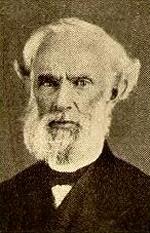
1811 - 1892 Person Name: Love H. Jameson, d. 1892 Topics: Cross Author of "Night With Ebon Pinion" in Great Songs of the Church (Revised) Born: April 17, 1811, Jefferson County, Indiana.
Died: April 12, 1892, Indianapolis, Indiana.
Buried: Crown Hill Cemetery, Indianapolis, Indiana.
Love Humphreys Jameson was born in Jefferson County in what was then the Territory of Indiana on May 17, 1811, the son of Thomas Jameson. Thomas had moved from Virginia to Kentucky around 1800 and later to the Indiana Territory in 1810 or early 1811. Thomas’s parents were members of the Calvinistic Kirk of Scotland and his wife’s parents held the views of the Church of England, but the family became Christians in 1816 with Love’s father and mother being baptized by John McClung, a young associate of Barton Warren Stone. Love, whose education was attended with all the difficulties associated with frontier life and was mostly under the tuition of his parents, was baptized in the fall of 1829 during a protracted meeting with Beverly Vawter and then preached his first sermon that same year on Dec. 25, following which he began preaching the gospel regularly.
From 1830 to 1834, Jameson taught school during the winters and made preaching trips in the summers. One of his mentors was Walter Scott, with whom he frequently travelled and worked. Moving to southern Ohio, in 1834, he, along with Scott, attended the famous debate of 1837 between Alexander Campbell and Bishop Purcell at Cincinnati, OH. In addition, he wrote frequently for Campbell’s paper, The Millennial Harbinger, in which Campbell spoke of him as the brother “whose praise is in all the churches in Indiana.” After preaching at various churches in Hamilton County, OH, Jameson worked with the church in Dayton from 1835 to 1837, when he married Elizabeth M. Clark. Also, in the closing years of B. W. Stone’s life, Jameson often accompanied the elderly preacher on his journeys. In 1840 he returned to Indiana and located at Madison, IN, the following year. His wife died of an apoplectic stroke suddenly soon afterwards, and he married Elizabeth R. Robinson in 1842, moving to Indianapolis, IN, which became his headquarters for the rest of his life.
In 1845, Jameson was asked, along with John O’Kane, to evangelize in the southwestern part of the state. Then after 1854, he made regular preaching trips into Ohio, Kentucky, Western Missouri, Illinois, New York, and even portions of New England. “There is a Habitation” was penned about 1860, with both words and original music by Jameson, but it never achieved any degree of popularity because of its slow, ponderous, torpid melody. The song as we know it was first published under the title, “O Sion, Sion,” in the New Christian Hymn and Tune Book, Part II, compiled at Cincinnati, OH, in 1882 by James Henry Fillmore. Jameson, who also provided the lyrics for “Night, With Ebon Pinion,” died ten years later, on May 1, 1892, in Indianapolis.
--hymnstudiesblog.wordpress.com
Love H. Jameson
Tom Colvin
1925 - 2000 Person Name: Tom Colvin, 1925-2000 Topics: Jesus Christ the Suffering Servant: The Passion and The Cross Adapter of "Jesu, Jesu, fill us with your love" in Singing the Faith Tom Colvin (b. 1925; d. 2000) was trained as an engineer and worked in that profession in Burma and Singapore from 1945 to 1948. After studying theology at Trinity College, Glasgow University, he was ordained in the Church of Scotland in 1954. He served as missionary in Nyasaland (now Malawi) from 1954 to 1958, in Ghana from 1958 to 1964, and again in Nyasaland from 1964 to 1974. His work there included preaching, education, and community development. After completing his missionary work, Colvin became a minister in the United Reformed Church of England and served an inner-city church in London. He returned to Africa in 1984 as a development consultant to the Zimbabwe Christian Council. Colvin's writings include Christ's Work in Free Africa (1964) and three collections of hymns, many written in collaboration with African Christians–Free to Serve (1966), Leap My Soul (1976), and Fill Us with Your Love (1983).
Bert Polman
Tom Colvin
Paul J. Christiansen
Topics: Jesus Christ Cross Harmonizer of "WONDROUS LOVE" in Voices United
Paul J. Christiansen
Michael Altenburg
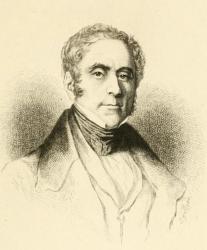
1584 - 1640 Person Name: J. M. Altenburg, 1584-1640 Topics: Cross and Comfort Author of "O Little Flock, Fear Not the Foe" in Evangelical Lutheran Hymnary Altenburg, Johann Michael, b. at Alach, near Erfurt, on Trinity Sunday, 1584. After completing his studies he was for some time teacher and precentor in Erfurt. In 1608 he was appointed pastor of Ilversgehofen and Marbach near Erfurt; in 1611, of Troch-telborn; and in 1621 of Gross-Sommern or Som-merda near Erfurt. In the troublous war times he was forced, in 1631, to flee to Erfurt, and there, on the news of the victory of Leipzig, Sept. 17, 1631, he composed his best known hymn. He remained in Erfurt without a charge till, in 1637, he was appointed diaconus of the Augustino Church, and, in 1638, pastor of St. Andrew's Church. He d. at Erfurt February 12, 1640 (Koch, iii. 115-117 ; Allg. Deutsche Biog., i. p. 363, and x. p. 766—the latter saying he did not go to Erfurt till 1637). He was a good musician, and seems to have been the composer of the melodies rather than of the words of some of the hymns ascribed to him. Two of his hymns have been tr. into English, viz. :—1. Aus Jakob's Staxnm ein Stern sehr klar. [Christmas.] Included as No. 3 of his Christ-liche liebliche und anddchtige newe Kirchen- und Hauss-Gestinge, pt. i., Erfurt, 1G20, in 3 st. of 5 1. According to Wetzel's A. H., vol. i., pt. v. p. 41, it was first pub. in J. Forster's Jlohen Festtags-Schreinlein, 1611. In the Unv. L. S., 1851, No. 24. It has been tr. as " From Jacob's root, a star so clear," by Miss Manington, 1864, p. 13.2. Verzage nicht du Hauflein klein. [In Trouble.] Concerning the authorship of this hymn there are three main theories—i. that it is by Gustavus Adolphus; ii. that the ideas are his and the diction that of his chaplain, Dr. Jacob Fabricius; and iii. that it is by Altenburg. In tracing out the hymn we find that:—The oldest accessible form is in two pamphlets published shortly after the death of Gustavus Adolphus, viz., the Epicedion, Leipzig, n.d. but probably in the end of 1632 [Royal Library, Berlin]: and Arnold Mengering's Blutige Siegs-Crone, Leipzig, 1633 [Town Library, Hamburg]. In the Epicedion the hymn is entitled, " Konig-licher Schwanengesang So ihre Majest. vor dem Ltltzen-schen Treffen inniglichen zu Gott gesungen "; and in the Siegs-Crone, p. 13, "Der S. Kon. Mayt. zu Schweden Lied, welches Sie vor der Schlacht gesungen." In both cases there are 3 sts. :—i. Verzage nicht, du Hiiuffiein klein. ii. Triistedich dess, dass deine Sach. iii. So wahr Gott Gott ist, und sein Wort.The next form is that in J. Clauder's Psalmodiae Novae Pars Tertia, Leipzig, 1636, No. 17, in 5 st. of 6 lines, st. i.-iii. as above, and—iv. Ach Gott gieb in des deine Gnad v. Hilff dass wir auch nach deinem Wort. No author's name is given. In the Bayreuth G. B., 1668, p. 266, st. iv., v., are marked as an addition by Dr. Samuel Zehner; and by J. C. Olearius in his Lieder-Schatz, 1705, p. 141, as written in 1638 (1633 ?), when the Croats had partially burnt Schleusiugen, where Zehner was then superintendent.The third form of importance is that given in Jcremias Weber's Leipzig G. B., 1638, p. 651, where it is entitled " A soul-rejoicing hymn of Consolation upon the watchword—God with us—used by the Evangelical army in the battle of Leipzig, 7th Sept., 1631, composed by M. Johann Altenburg, pastor at Gross Soinmern in Dtiringen," [i.e. Sommerda in Thuringia]. It is in 5 sts., of which sts. i.-iii. are the same as the 1633, and are marked as by Altenburg. St. iv., v., beginning— iv. Drilmb sey getrost du kleines Heer v. Amen, das hilff Ilerr Jesu Christ, are marked as " Additamentum Ignoti." This is the form in C. U. as in the Berlin G. L. S., ed. 1863, No. 1242.In favour of Altenburg there is the explicit declaration of the Leipzig G. B., 1638, followed by most subsequent writers. The idea that the hymn was by Gustavus Adolphus seems to have no other foundation than that in many of the old hymn-books it was called Gustavus Adolphus's Battle Hymn. The theory that the ideas were communicated by the King to his chaplain, Dr. Fabricius, after the battle of Leipzig, and by Fabricius versified, is maintained by Mohnike in his Hymnologische Forschungen, 1832, pt. ii. pp. 55-98, but rests on very slender evidence. In Koch, viii. 138-141, there is the following striking word-picture:—If, then, we must deny to the hymn Albert Knapp's characterisation of it as " a little feather from the eagle wing of Gustavus Adolphus," so much the more its original title as his "Swan Song" remains true. It was on the morning of the 6 Nov., 1632, that the Catholic army under Wallenstein and the Evangelical under Gustavus Adolphus stood over against each other at Lutzen ready to strike. As the morning dawned Gustavus Adolphus summoned his Court preacher Fabricius, and commanded him, as also the army chaplains of all the other regiments, to hold a service of prayer. During this service the whole host sung the pious king's battle hymn—" Verzage nicht, du Hauflein klein."He himself was on his knees and prayed fervently. Meantime a thick mist had descended, which hid the fatal field so that nothing could be distinguished. When the host had now been set in battle array he gave them as watchword for the fight the saying, "God with us," mounted his horse, drew his sword, and rode along the lines of the army to encourage the soldiers for the battle. First, however, he commanded the tunes Ein feste Burg and Es wollt tins Gott genadig sein to be played by the kettledrums and trumpets, and the soldiers joined as with one voice. The mist now began to disappear, and the sun shone through. Then, after a short prayer, he cried out: " Now will we set to, please God," and immediately after, very loud, " Jesu, Jesu, Jesu, help me today to fight for the honour of Thy Holy Name." Then he attacked the enemy at full speed, defended only by a leathern gorget. " God is my harness," he had said to the servant who wished to put on his armour. The conflict was hot and bloody. About 11 o'clock in the forenoon the fatal bullet struck him, and he sank, dying, from his horse, with the words, “My God, my God!" Till twilight came on the fight raged, and was doubtful. But at length the Evangelical host obtained the victory, as it had prophetically sung at dawn."This hymn has ever been a favourite in Germany, was sung in the house of P. J. Spener every Sunday afternoon, and of late years has been greatly used at meetings of the Gustavus Adolphus Union—an association for the help of Protestant Churches in Roman Catholic countries. In translations it has passed into many English and American collections.
Translations in C. U.:—
Fear not, 0 little flock, the foe. A good tr. from the text of 1638, omitting st. iv., by Miss Winkworth, in her Lyra Ger., 1855, p. 17. Included, in England in Kennedy, 1863, Snepp's S. of G. and G., 1871, Free Church H. Bk., 1882, and others; and in America in the Sabbath H. Book., 1858, Pennsylvania Luth. Ch. Bk., 1868, Hys. of the Church, 1869, Bapt. H. Bk., 1871, H. and Songs of Praise, 1874, and many others.
Be not dismay'd, thou little flock. A good tr. of st. i.-iii. of the 1638 text in Mrs. Charles's V. of Christian Life in Song, 1858, p. 248. She tr. from the Swedish, which, in the Swensha Psalm Boken, Carlstadt, N.D. (1866), is given as No. 378, "Forfaras ej, du lilla hop !" and marked Gustaf II. Adolf. Her version is No. 204 in Wilson's Service of Praise, 1865.
Thou little flock, be not afraid. A tr. of st. i.-iii. from the 1638 text, by M. Loy, in the Ohio Luth. Hymnal, 1880, No. 197.
Other trs. are all from the text of 1638.(1.) " Be not dishearten'd, little flock," by Dr. II. Mills, 1856, p. 121. (2.) " Despond not, little band, although," by Dr. G. Walker, 1860, p. 41. (3.) "Be not dismay'd, thou little flock, Nor," by E. Massie, 1866, p. 143. (4.) " 0 little flock, be not afraid," in J. D. Burns's Memoir and Remains, 1869. p. 226.
–John Julian, Dictionary of Hymnology (1907)
Michael Altenburg
Pages