

 My Starred Hymns
 My FlexScores
 My Hymnals
 My Purchased Files
Planning worship?
Check out our sister site, ZeteoSearch.org,
for 20+ additional resources related to your search.
- |
User Links
Person Results

Ralph Vaughan Williams
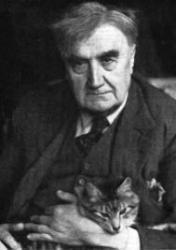
1872 - 1958 Harmonizer of "KINGSFOLD" in Hymns to the Living God Through his composing, conducting, collecting, editing, and teaching, Ralph Vaughan Williams (b. Down Ampney, Gloucestershire, England, October 12, 1872; d. Westminster, London, England, August 26, 1958) became the chief figure in the realm of English music and church music in the first half of the twentieth century. His education included instruction at the Royal College of Music in London and Trinity College, Cambridge, as well as additional studies in Berlin and Paris. During World War I he served in the army medical corps in France. Vaughan Williams taught music at the Royal College of Music (1920-1940), conducted the Bach Choir in London (1920-1927), and directed the Leith Hill Music Festival in Dorking (1905-1953). A major influence in his life was the English folk song. A knowledgeable collector of folk songs, he was also a member of the Folksong Society and a supporter of the English Folk Dance Society. Vaughan Williams wrote various articles and books, including National Music (1935), and composed numerous arrangements of folk songs; many of his compositions show the impact of folk rhythms and melodic modes. His original compositions cover nearly all musical genres, from orchestral symphonies and concertos to choral works, from songs to operas, and from chamber music to music for films. Vaughan Williams's church music includes anthems; choral-orchestral works, such as Magnificat (1932), Dona Nobis Pacem (1936), and Hodie (1953); and hymn tune settings for organ. But most important to the history of hymnody, he was music editor of the most influential British hymnal at the beginning of the twentieth century, The English Hymnal (1906), and coeditor (with Martin Shaw) of Songs of Praise (1925, 1931) and the Oxford Book of Carols (1928).
Bert Polman
Ralph Vaughan Williams
Hugh Wilson
1766 - 1824 Composer of "AVON" in The Baptist Standard Hymnal Hugh Wilson (b. Fenwick, Ayrshire, Scotland, c. 1766; d. Duntocher, Scotland, 1824) learned the shoemaker trade from his father. He also studied music and mathematics and became proficient enough in various subjects to become a part-time teacher to the villagers. Around 1800, he moved to Pollokshaws to work in the cotton mills and later moved to Duntocher, where he became a draftsman in the local mill. He also made sundials and composed hymn tunes as a hobby. Wilson was a member of the Secession Church, which had separated from the Church of Scotland. He served as a manager and precentor in the church in Duntocher and helped found its first Sunday school. It is thought that he composed and adapted a number of psalm tunes, but only two have survived because he gave instructions shortly before his death that all his music manuscripts were to be destroyed.
Bert Polman
Hugh Wilson
Lowell Mason
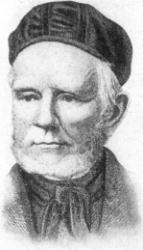
1792 - 1872 Person Name: Lowell Mason (1792-1872) Arranger of "BALERMA" in Songs of Praise Dr. Lowell Mason (the degree was conferred by the University of New York) is justly called the father of American church music; and by his labors were founded the germinating principles of national musical intelligence and knowledge, which afforded a soil upon which all higher musical culture has been founded. To him we owe some of our best ideas in religious church music, elementary musical education, music in the schools, the popularization of classical chorus singing, and the art of teaching music upon the Inductive or Pestalozzian plan. More than that, we owe him no small share of the respect which the profession of music enjoys at the present time as contrasted with the contempt in which it was held a century or more ago. In fact, the entire art of music, as now understood and practiced in America, has derived advantage from the work of this great man.
Lowell Mason was born in Medfield, Mass., January 8, 1792. From childhood he had manifested an intense love for music, and had devoted all his spare time and effort to improving himself according to such opportunities as were available to him. At the age of twenty he found himself filling a clerkship in a banking house in Savannah, Ga. Here he lost no opportunity of gratifying his passion for musical advancement, and was fortunate to meet for the first time a thoroughly qualified instructor, in the person of F. L. Abel. Applying his spare hours assiduously to the cultivation of the pursuit to which his passion inclined him, he soon acquired a proficiency that enabled him to enter the field of original composition, and his first work of this kind was embodied in the compilation of a collection of church music, which contained many of his own compositions. The manuscript was offered unavailingly to publishers in Philadelphia and in Boston. Fortunately for our musical advancement it finally secured the attention of the Boston Handel and Haydn Society, and by its committee was submitted to Dr. G. K. Jackson, the severest critic in Boston. Dr. Jackson approved most heartily of the work, and added a few of his own compositions to it. Thus enlarged, it was finally published in 1822 as The Handel and Haydn Society Collection of Church Music. Mason's name was omitted from the publication at his own request, which he thus explains, "I was then a bank officer in Savannah, and did not wish to be known as a musical man, as I had not the least thought of ever making music a profession." President Winchester, of the Handel and Haydn Society, sold the copyright for the young man. Mr. Mason went back to Savannah with probably $500 in his pocket as the preliminary result of his Boston visit.
The book soon sprang into universal popularity, being at once adopted by the singing schools of New England, and through this means entering into the church choirs, to whom it opened up a higher field of harmonic beauty. Its career of success ran through some seventeen editions. On realizing this success, Mason determined to accept an invitation to come to Boston and enter upon a musical career. This was in 1826. He was made an honorary member of the Handel and Haydn Society, but declined to accept this, and entered the ranks as an active member. He had been invited to come to Boston by President Winchester and other musical friends and was guaranteed an income of $2,000 a year. He was also appointed, by the influence of these friends, director of music at the Hanover, Green, and Park Street churches, to alternate six months with each congregation. Finally he made a permanent arrangement with the Bowdoin Street Church, and gave up the guarantee, but again friendly influence stepped in and procured for him the position of teller at the American Bank.
In 1827 Lowell Mason became president and conductor of the Handel and Haydn Society. It was the beginning of a career that was to win for him as has been already stated the title of "The Father of American Church Music." Although this may seem rather a bold claim it is not too much under the circumstances. Mr. Mason might have been in the average ranks of musicianship had he lived in Europe; in America he was well in advance of his surroundings. It was not too high praise (in spite of Mason's very simple style) when Dr. Jackson wrote of his song collection: "It is much the best book I have seen published in this country, and I do not hesitate to give it my most decided approbation," or that the great contrapuntist, Hauptmann, should say the harmonies of the tunes were dignified and churchlike and that the counterpoint was good, plain, singable and melodious.
Charles C. Perkins gives a few of the reasons why Lowell Mason was the very man to lead American music as it then existed. He says, "First and foremost, he was not so very much superior to the members as to be unreasonably impatient at their shortcomings. Second, he was a born teacher, who, by hard work, had fitted himself to give instruction in singing. Third, he was one of themselves, a plain, self-made man, who could understand them and be understood of them."
The personality of Dr. Mason was of great use to the art and appreciation of music in this country. He was of strong mind, dignified manners, sensitive, yet sweet and engaging.
Prof. Horace Mann, one of the great educators of that day, said he would walk fifty miles to see and hear Mr. Mason teach if he could not otherwise have that advantage.
Dr. Mason visited a number of the music schools in Europe, studied their methods, and incorporated the best things in his own work. He founded the Boston Academy of Music. The aim of this institution was to reach the masses and introduce music into the public schools. Dr. Mason resided in Boston from 1826 to 1851, when he removed to New York. Not only Boston benefited directly by this enthusiastic teacher's instruction, but he was constantly traveling to other societies in distant cities and helping their work. He had a notable class at North Reading, Mass., and he went in his later years as far as Rochester, where he trained a chorus of five hundred voices, many of them teachers, and some of them coming long distances to study under him. Before 1810 he had developed his idea of "Teachers' Conventions," and, as in these he had representatives from different states, he made musical missionaries for almost the entire country. He left behind him no less than fifty volumes of musical collections, instruction books, and manuals.
As a composer of solid, enduring church music. Dr. Mason was one of the most successful this country has introduced. He was a deeply pious man, and was a communicant of the Presbyterian Church. Dr. Mason in 1817 married Miss Abigail Gregory, of Leesborough, Mass. The family consisted of four sons, Daniel Gregory, Lowell, William and Henry. The two former founded the publishing house of Mason Bros., dissolved by the death of the former in 1869. Lowell and Henry were the founders of the great organ manufacturer of Mason & Hamlin. Dr. William Mason was one of the most eminent musicians that America has yet produced.
Dr. Lowell Mason died at "Silverspring," a beautiful residence on the side of Orange Mountain, New Jersey, August 11, 1872, bequeathing his great musical library, much of which had been collected abroad, to Yale College.
--Hall, J. H. (c1914). Biography of Gospel Song and Hymn Writers. New York: Fleming H. Revell Company.
Lowell Mason
Saint Francis Xavier
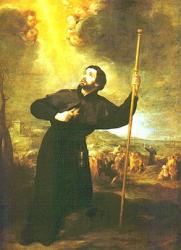
1506 - 1552 Person Name: Francis Xavier Author (attributed to) of "My God, I love Thee: not because" in The Hymnal St. Francis Xavier, the great missionary saint of the Roman Catholic Church, was the son of Don John Giasso and Donna Maria d'Azpilqueta y Xavier; he was born at the castle Xavier, near Pampeluna, Spain, on April 7, 1506, and is known to history by his mother's name. At the age of eighteen he entered the University of Paris, where in due course he graduated, and then devoted himself to teaching. It was here that he became acquainted with Ignatius Loyola the founder of the Jesuits, who was then planning the colossal work which he afterwards accomplished. Xavier became one of the first nine of Loyola's converts, and the most enthusiastic of the little band. The date of the formation of the Order of the Jesuits is given as Aug. 15, 1534, and the place as Montmartre near Paris. We find Xavier at Venice with Loyola in 1537, where the visitation of a hospital for incurables was assigned to him. Here in the discharge of his duties he gave early evidence of his enthusiasm and self-devotion.
He subsequently visited Rome, where with Loyola and others of the Order he was brought, through the influence of the Rector of the University of Paris, who was then at Rome, to the notice of John III. of Portugal, who desired some of them for mission work in India. Circumstances led to the selection of Xavier for the work. He left Rome in March 1540, and set sail on April 7, 1541, for Goa, the chief city of the Portuguese possessions, where he arrived on May 6, 1542. From that time to the day of his death at Sancian, near Canton, on Dec. 22, 1552, he devoted himself to his work in a most heroic and devoted manner, visiting Travancore, Ceylon, Malacca, Japan, and other heathen lands with Cross in hand, and a burning zeal in his heart. Xavier's life has been written by many hands. The roll of deeds which he is said to have done, and the miracles he is said to have wrought, even to the raising of the dead, is long, but many of the alleged facts are open to the gravest doubt, and others are beyond belief. The hymns which are associated with Xavier's name are, "O Deus ego amo Te, Nam prior Tu amasti me," and "O Deus ego amo Te, Nee amo Te ut salves me.” That the first was written by him is most improbable, the evidence in his favour being absolutely nil. The second may possibly be his (see as above), it breathes his abnegation of self in every word, his spirit in every line. See Murray's Magazine for Oct. 1890, for an interesting account of Goa and its Cathedral, where Xavier lies buried.
--John Julian, Dictionary of Hymnology (1907)
==============
See also in:
Hymn Writers of the Church
Saint Francis Xavier
H. W. Greatorex
1813 - 1858 Person Name: Henry W. Greatorex Composer of "GEER" in The Voice of Thanksgiving No. 3 Henry Wellington Greatorex United Kingdom 1813-1858. Born at Burton upon Trent, England, he received a thorough musical education from his father, Thomas Greatorex, who was for many years organist of Westminster Abbey, and conductor of the London concerts of ancient music. Henry became a composer, author, compiler, editor, and arranger of music. He emigrated to the U.S. In 1839. In 1849 he married artist Eliza Pratt, and they had four children: Elizabeth, Kathleen, Thomas, and Francis Henry. Prior to settling in New York City as a music teacher and organist at Calvary Church, he played at churches in Hartford, CT, including Center Church and St Johns Episcopal Church in West Hartford, CT. He frequently sang in oratorios and concerts. For some years he was also organist and conductor of the choir at St. Paul's Chapel. In 1853 he was an organist at St. Philip's Episcopal Church in Charleston, SC. He did much to advance the standard of sacred music in the U.S. In days when country singing school teachers imposed more rudimentary melodies on hymn books. He published a collection of “Psalm & hymn tunes, chants, anthems & sentences” (Boston 1851). He died of yellow fever in Charleston, SC.
John Perry
H. W. Greatorex
Richard Farrant
1525 - 1580 Person Name: R. Farrant Composer of "FARRANT" in The Church and School Hymnal Like many composers of his day, the early years of Richard Farrant’s (c.1525- November 30, 1580) life are not well documented. The first acknowledgment of him is in a list of the Gentleman of the Chapel Royal in 1552. It is assumed from that list that his birth was around 1525. Although, that cannot be accurately determined. During his life he was able to establish himself as a successful composer, develop the English drama considerably, founded the first Blackfriar Theatre, and be the first to write verse-anthems. He married Anne Bower, daughter of Richard Bower who was Master of the Chapel Royal choristers at the time. With Anne he conceived ten children, one of whom was also named, Richard.
As a member of the Gentleman of the Chapel Royal, Farrant was active in ceremonies surrounding the royal family. He began his work with the Chapel Royal around 1550 under the reign of Edward VI. Fortunately, for Farrant, this is a time that saw huge developments in Latin Church Music. Composers like William Byrd and Christopher Tye were busy expanding and elaborating on the Church Music of the day. In Farrant's twelve years with the Chapel Royal, he was able to participate in funerals for Edward VI and Mary I, and coronations for Mary I and Elizabeth I. After his work there, he took up a post as organist at St. George’s Chapel at Windsor.
For Farrant, the post at at Windsor became a permanent one that he retained for the rest of his life. Along with this, he also acquired the position of Master of the Chapel Royal choristers in November of 1569. Having the choirs of both of these institutions at his disposal gave him an outlet to showcase all of his compositions and plays. In fact, every winter he was able to produce a play for the Queen herself. These positions also allowed him to move back to London in 1576 and begin a public theater of sorts where he rehearsed some of his choir music openly. It was soon after, in 1580, that he passed away, having left his house to his wife.
Unlike many composers of his day that stuck to only music composition, Farrant also wrote many plays. One of his most important contributions to drama in England is of course the creation of the first Blackfriars Theatre. This eventually became one of the most important places in London for drama to develop during the Renaissance. Farrant is also one of the earliest and most well known composers that began to mix the two mediums of music and drama. It was this uncommon mixture that allowed him to begin to develop the composition style of 'verse.' This becomes prominent in a lot of his pieces including the anthems "When as we sat in Babylon" and "Call to remembrance" and "Hide not thou thy face."
--en.wikipedia.org/wiki/
Richard Farrant
Thomas Tallis
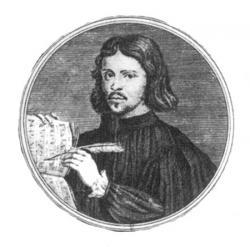
1505 - 1585 Composer of "FIRST MODE MELODY" in The Book of Common Praise Thomas Tallis (b. Leicestershire [?], England, c. 1505; d. Greenwich, Kent, England 1585) was one of the few Tudor musicians who served during the reigns of Henry VIII: Edward VI, Mary, and Elizabeth I and managed to remain in the good favor of both Catholic and Protestant monarchs. He was court organist and composer from 1543 until his death, composing music for Roman Catholic masses and Anglican liturgies (depending on the monarch). With William Byrd, Tallis also enjoyed a long-term monopoly on music printing. Prior to his court connections Tallis had served at Waltham Abbey and Canterbury Cathedral. He composed mostly church music, including Latin motets, English anthems, settings of the liturgy, magnificats, and two sets of lamentations. His most extensive contrapuntal work was the choral composition, "Spem in alium," a work in forty parts for eight five-voice choirs. He also provided nine modal psalm tunes for Matthew Parker's Psalter (c. 1561).
Bert Polman
Thomas Tallis
George William Warren

1828 - 1902 Person Name: Geo. Wm. Warren, Mus. Doc. Composer of "[My God, I love Thee: not because]" in The Hymnal, Revised and Enlarged, as adopted by the General Convention of the Protestant Episcopal Church in the United States of America in the year of our Lord 1892 George W. Warren (b. Albany, NY, 1828; d. New York, 1902) received his general education at Racine College in Wisconsin, but as a musician he was largely self-trained. An organist in a number of Episcopal churches, he played the organ for thirty years (1870-1900) at St. Thomas Church in New York City. Warren composed anthems and liturgical service music; his hymn tunes were collected in Warren's Hymns and Tunes as Sung in St. Thomas Church (1888).
Bert Polman
George William Warren
Melchior Vulpius
1570 - 1615 Composer of "VULPIUS" in The Harvard University Hymn Book Born into a poor family named Fuchs, Melchior Vulpius (b. Wasungen, Henneberg, Germany, c. 1570; d. Weimar, Germany, 1615) had only limited educational opportunities and did not attend the university. He taught Latin in the school in Schleusingen, where he Latinized his surname, and from 1596 until his death served as a Lutheran cantor and teacher in Weimar. A distinguished composer, Vulpius wrote a St. Matthew Passion (1613), nearly two hundred motets in German and Latin, and over four hundred hymn tunes, many of which became popular in Lutheran churches, and some of which introduced the lively Italian balletto rhythms into the German hymn tunes. His music was published in Cantiones Sacrae (1602, 1604), Kirchengesangund Geistliche Lieder (1604, enlarged as Ein schon geistlich Gesanglmch, 1609), and posthumously in Cantionale Sacrum (1646).
Bert Polman
Melchior Vulpius
Pages