

 My Starred Hymns
 My FlexScores
 My Hymnals
 My Purchased Files
Planning worship?
Check out our sister site, ZeteoSearch.org,
for 20+ additional resources related to your search.
- |
User Links
Person Results
Keith Getty
b. 1974 Meter: 7.7.7.7.7.7 Composer of "THIS PASSING WORLD" in The Sing! Hymnal Keith Getty (b. December 16, 1974) is a world-renowned modern hymn writer. Keith developed a passion for writing good songs for the church in his twenties, and began writing for his small Baptist church. He writes and performs with his wife, Kristyn and they regularly tour the United States and the United Kingdom. (Also known as Julian Keith Getty)
Laura de Jong
Keith Getty
Hans G. Nägeli
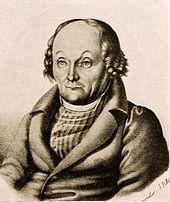
1773 - 1836 Meter: 7.7.7.7.7.7 Composer of "SWITZERLAND (Nageli)" Johann G. Nageli (b. Wetzikon, near Zurich, Switzerland, 1773; d. Wetzikon, 1836) was an influential music educator who lectured throughout Germany and France. Influenced by Johann Pestalozzi, he published his theories of music education in Gangbildungslehre (1810), a book that made a strong impact on Lowell Mason. Nageli composed mainly" choral works, including settings of Goethe's poetry. He received his early instruction from his father, then in Zurich, where he concentrated on the music of. S. Bach. In Zurich, he also established a lending library and a publishing house, which published first editions of Beethoven’s piano sonatas and music by Bach, Handel, and Frescobaldi.
Bert Polman
Hans G. Nägeli
William Bengo Collyer
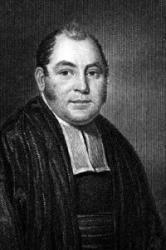
1782 - 1854 Meter: 7.7.7.7.7.7 Author of "Deign this union to approve" William Bengo Collyer was born at Blackheath Hill, in 1782, and studied at Homerton College. Before completing his twentieth year he became pastor of a Congregational society at Peckham, continuing in that position through his life. He died in 1854. He received the degree of D.D. from the University of Edinburgh in 1808. For many years he was one of the most popular Dissenting ministers in London. He published many hymns and some works on theology.
--Annotations of the Hymnal, Charles Hutchins, M.A. 1872.
===================
Collyer, William Bengo, D.D., born at Blackheath, April 14, 1782, educated at Homerton College, where, when 16 years old, he was enrolled as a student for the ministry. At 20 he began his ministry at Peckham on Dec. 17, 1801 ordained pastor of a small church consisting of ten communicants. From 1814 to 1826 he was also pastor of a Church meeting in Salters' Hall. On June 17, 1817, a new chapel was opened for him at Peckham. There, from the time of his settlement in 1801, he laboured with great success and honour until Dec. 11, 1853, on which clay he preached for the last time. He died Jan. 8, 1854.
Dr. Collyer was eminent in his day as an eloquent Evangelical preacher, when formalism in worship, and Arianism in doctrine, prevailed. He was a man of amiable disposition, polished manners, and Christian courtesy; popular with rich and poor alike. He was the author of a series of lectures on Divine Revelation, in seven volumes: Scripture Facts, Prophecies, Miracles, Parables, Doctrines, Duties, Comparisons. Dr. Collyer compiled a hymn-book with the title, Hymns partly collected and partly original, designed as a supplement to Dr. Watts's Psalms and Hymns, 1812. It was intended at first for the use of his own congregation only, and was to include many hymns composed by himself, to be sung after sermons which he had preached to them, but he was led to alter the plan. It comprises 979 hymns, 6 choruses, and 4 doxologics, arranged in groups according to their authors, and not subjects. Of this number 57 were written by Dr. Collyer, and are for the most part short descriptive or didactic poems, religious or moral essays in verse, and not hymns addressed to the Creator and Redeemer. Some of them are devoid of Christian truth, and are poems of nature or of sentiment. Some of them were written during the hard and sorrowful times of the wars of Bonaparte, and relate to famine and national calamity. Several were prepared for the public meetings of missionary and benevolent societies, which had their origin in his time. He also published Services suited to the Solemnization of Matrimony, Baptism, &c, 1837, which contained 89 of his hymns, &c.; Hymns for Israel, a Tribute of Love for God's Ancient People, 1848 (41 hymns). In Dr. Leifchild's Original Hymns, 1843, there are also 39 of his compositions. Many of his pieces appeared in the Evangelical Magazine, and were also appended to his numerous published Sermons. A few of his hymns are still in common use, including. "Another fleeting day is gone"; "Assembled at Thy great command"; "O Jesu, in this solemn hour"; "O Thou, the helpless orphan's hope"; "Return, O wanderer, return," and the fine cento, "Great God, what do I see and hear."
[Rev. F. J. Faulding, D.D.]
--John Julian, Dictionary of Hymnology (1907)
======================
Collyer, William Bengo, p. 243, ii. The following hymns by Dr. Collyer are also in common use:—
1. Another fleeting day is gone. Evening. (1812.)
2. 0 Jesus, in this solemn hour. Reception of Church Officers. (1842.)
3. O Thou, the helpless orphan's hope. On Behalf of Orphans. In the Evangelical Magazine, 1808, p. 48.
4. See the clouds upon the mountain. Sunday Morning. (1842.)
5. Soft be the gently breathing notes. Praise to the Redeemer. (1812.)
6. Softly the shade of evening falls. Evening. (1812.) From this, “Soon shall a darker night descend" is taken.
7. Thou Prince of glory slain for me. Good Friday. (1812.)
The date 1812 is that of his Collection, and 1842 of Leifchild's Original Hymns.
--John Julian, Dictionary of Hymnology, Appendix, Part II (1907)
William Bengo Collyer
J. Sebastian B. Hodges
1830 - 1915 Meter: 7.7.7.7.7.7 Composer of "MEMORIAL (Hodges)" Born: 1830, Bristol, Gloucestershire, England.
Died: May 1, 1915, Baltimore, Maryland.
Buried: Allegheny Cemetery, Pittsburgh, Pennsylvania.
Son of composer Edward Hodges, John emigrated to America in 1845, and attended Columbia University and the General Theological Seminary in New York City. Ordained an Episcopal minister in 1854, he served at the Grace/Second Episcopal Church, Newark, New Jersey (1860-70), and was Rector of St. Paul’s, Baltimore, Maryland, for 35 years. His works include:
The Book of Common Praise, 1869
The revised edition of Hymn Tunes, 1903
--www.hymntime.com/tch
J. Sebastian B. Hodges
W. Wrangham
Person Name: William Wrangham, 1784-1832 Meter: 7.7.7.7.7.7 Author of "Praise The Lord—His Power Confess" in The Cyber Hymnal Wrangham, W., p. 930. ii., 223. From his New Metrical Version of the Psalms, 1829, the following are in common use in America:— (1) "Eternal God, celestial King," Psalms Ivii; (2) "Praise the Lord, His power confess," Psalms cl.; (3) “To Thee, my righteous King and Lord," Psalms ciii.
--John Julian, Dictionary of Hymnology, Appendix, Part II (1907)
W. Wrangham
F. A. Gore Ouseley
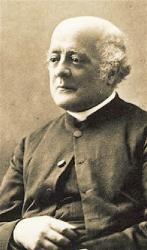
1825 - 1889 Person Name: Frederick Arthur Gore Ouseley Meter: 7.7.7.7.7.7 Composer of "GETHSEMANE" in The Cyber Hymnal Born: August 12, 1825, London, England.
Died: April 6, 1889, Hereford, England.
Buried: Church of St. Michael and All Angels, Tenbury Wells, Hereford and Worcester, England.
Gore-Ouseley was educated at Oxford University (BA 1846, MA 1849, DMus 1854), and was ordained in 1849. In 1855, he was appointed Oxford Professor of Music, succeeding Henry Bishop. At that time, Oxford music degrees were easy to obtain, as there were no conditions of residence. Candidates only had to submit a musical composition, (e.g., for choir or orchestra). This was then approved by the examiner, rehearsed and performed to a small, select audience at Oxford. As far as Ouseley was concerned, this only meant two or three trips to Oxford each year, usually for two or three days each time, as there was no music "taught" in the university and very little in Oxford itself at the time.
Also in 1855, Ouseley was appointed Precentor of Hereford Cathedral, a post he held for the next 30 years, before becoming a Canon there. Although theoretically in charge of the cathedral choir, Ouseley only had to be in residence at the cathedral two months each year, and he arranged these to take place during the summer vacation, when he was not required to be at his College, although such was his commitment that he did make regular visits to the cathedral, which was only 18 miles from his College at St. Michael’s.
His College of St. Michael’s, Tenbury, a "model" choir school, opened in 1856, mostly at his own expense. He founded the College and was its first Warden, which was the greater part of his work for the next 33 years.
Ouseley’s compositions covered a wide range: operas, songs, chamber music and organ pieces. His works include the following treatises:
Harmony (London: 1868)
Counterpoint (London: 1869)
Canon and Fugue (London: 1869)
Form and General Composition (London: 1875)
--www.hymntime.com/tch/
F. A. Gore Ouseley
Richard G. Jones
b. 1926 Meter: 7.7.7.7.7.7 Author of "God Of Concrete, God Of Steel" in Favourite Hymns of the Church
Richard G. Jones
Frederick James
1858 - 1922 Person Name: F. James, 1858-1922 Meter: 7.7.7.7.7.7 Composer of "NORICUM" in The Methodist Hymn-Book with Tunes
Frederick James
Charles Edward Pollock
1853 - 1928 Meter: 7.7.7.7.7.7 Composer of "[Jesus, Savior, pilot me] (Pollock)" Charles Edward Pollock USA 1853-1928. Born at Newcastle, PA, he moved to Jefferson City, MO, when age 17. He was a cane maker for C W Allen. He also worked 20 years for the MO Pacific Railroad, as a depot clerk and later as Assistant Roadmaster. He was a musician and prolific songwriter, composing 5000+ songs, mostly used in Sunday school settings and church settings. He took little remuneration for his compositions, preferring they be freely used. He produced three songbooks: “Praises”, “Beauty of praise”, and “Waves of melody”. In 1886 he married Martha (Mattie) Jane Harris, and they had three children: Robert, Edward, and a daughter. He died in Merriam, KS.
John Perry
=================
Pollock, Charles Edward. (Jefferson City, Missouri, 1853-1924). Records of Jefferson City indicate the following:
1897 clerk at depot; residence at 106 Broadway (with Mildred Pollock)
1904-1905 cane maker for C. W. Allen
1908-1909 musician; residence at 106 Broadway (with wife Matty)
1912-1913 residence at St. Louis Road, east city limits
--Wilmer Swope, DNAH Archives
Note: not to be confused with Charles Edward Pollock (c.1871-1924).
Charles Edward Pollock
Carl Døving
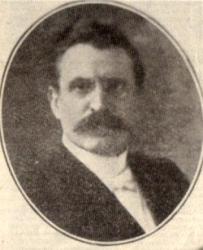
1867 - 1937 Meter: 7.7.7.7.7.7 Translator of "Ever Is A Peril Near Me" Born: March 21, 1867, Norddalen, Norway.
Died: October 2, 1937, Chicago, Illinois.
Buried: Decorah, Iowa.
Carl Døving
Pages