You help make Hymnary.org possible. More than 10 million people from 200+ countries found hymns, liturgical resources and encouragement on Hymnary.org in 2025, including you. Every visit affirms the global impact of this ministry.

If Hymnary has been meaningful to you this year, would you take a moment today to help sustain it? A gift of any size—paired with a note of encouragement if you wish—directly supports the server costs, research work and curation that keep this resource freely available to the world.

Give securely online today, or mail a check to:
Hymnary.org
Calvin University
3201 Burton Street SE
Grand Rapids, MI 49546

Thank you for your partnership, and may the hope of Advent fill your heart.

Person Results

Text Identifier:"^o_father_all_creating_whose_wisdom_love$"
In:people

Planning worship? Check out our sister site, ZeteoSearch.org, for 20+ additional resources related to your search.
Showing 11 - 20 of 21Results Per Page: 102050

John Stainer

1840 - 1901 Person Name: John Stainer, 1840—1901 Composer of "[O Father all creating]" in The Lutheran Hymnary

John Hullah

1812 - 1884 Person Name: J. Hullah Composer of "BENTLEY" in The Church Hymnal Born: June 27, 1812, Worcester, England. Died: February 21, 1884, London, England.

John Evans

1791 - 1809 Person Name: J. E. Author of "O Father, all-creating" in Mawl a chân = praise and song John Evans, of Amlwch.

J. W. Elliott

1833 - 1915 Person Name: J. W. Elliott, 1833-1915 Composer of "DAY OF REST" in The Methodist Hymn-Book with Tunes J.W. Elliott was a popular composer of the Victorian period, and is best known for his nursery rhyme music and for his work on hymnals in the 1870s. He was born James William Elliott, in Warwick, England, on February 13, 1833. As a child, he sang as a chorister in the Leamington Parish Church. In those days, choristers were given lessons in all facets of church music, including organ lessons, counterpoint studies, and more in exchange for providing an extraordinary level of service to their parish church (services throughout the week, all holidays, extra services, etc.). The result is that most choristers who completed their studies received an excellent music education, and James was no exception. After starting his career as an organist and choirmaster for a countryside church, his talent became obvious. He moved to London, where he assisted Sir Arthur Sullivan (of Gilbert and Sullivan fame) in editing Church Hymns. In addition, James worked for a music publisher. His compositions include two operettas, numerous anthems, service music, works for instruments including the very popular harmonium, and most particularly for Nursery Rhymes and Nursery Songs, his children’s music score that sets many of the Nursery Rhymes to delightful music. Several of his hymn tunes are still in use today in many hymnals, most notably his hymn tune “Day of Rest.” He was heavily involved in the preparation of the musical edition of Church Hymns in 1874, the Choral Service Book of 1892, and transcriptions of hymn tunes using harmonies different than the traditional ones found in hymnals. He died in St. Marylebone, London, on February 5, 1915. --www.nursery-songs.com/

John Baptiste Calkin

1827 - 1905 Composer of "SAVOY CHAPEL" in Trinity Hymnal (Rev. ed.) John Baptiste Calkin United Kingdom 1827-1905. Born in London, he was reared in a musical atmosphere. Studying music under his father, and with three brothers, he became a composer, organist, and music teacher. At 19, he was appointed organist, precenter, and choirmaster at St. Columbia's College, Dublin, Ireland, 1846 to 1853. From 1853 to 1863 we was organist and choirmaster at Woburn Chapel, London. From 1863 to 1868, he was organist of Camden Road Chapel. From 1870 to 1884 he was organist at St. Thomas's Church, Camden Town. In 1883 he became professor at Guildhall School of Music and concentrated on teaching and composing. He was also a professor of music and on the council of Trinity College, London, and a member of the Philharmonic Society (1862). In 1893 he was a fellow of the College of Organists. John and wife, Victoire, had four sons, each following a musical carer. He wrote much music for organ and scored string arrangements, sonatas, duos, etc. He died at Hornsey Rise Gardens. John Perry

George C. Martin

1844 - 1916 Person Name: G. C. Martin Composer of "EASTBURG" in The Church Hymnary

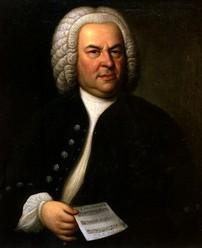
Johann Sebastian Bach

1685 - 1750 Person Name: J. S. Bach (1685-1750) Arranger of "DANK SEI GOTT IN DER HÖHE" in Magnify the Lord Johann Sebastian Bach was born at Eisenach into a musical family and in a town steeped in Reformation history, he received early musical training from his father and older brother, and elementary education in the classical school Luther had earlier attended. Throughout his life he made extraordinary efforts to learn from other musicians. At 15 he walked to Lüneburg to work as a chorister and study at the convent school of St. Michael. From there he walked 30 miles to Hamburg to hear Johann Reinken, and 60 miles to Celle to become familiar with French composition and performance traditions. Once he obtained a month's leave from his job to hear Buxtehude, but stayed nearly four months. He arranged compositions from Vivaldi and other Italian masters. His own compositions spanned almost every musical form then known (Opera was the notable exception). In his own time, Bach was highly regarded as organist and teacher, his compositions being circulated as models of contrapuntal technique. Four of his children achieved careers as composers; Haydn, Mozart, Beethoven, Mendelssohn, Schumann, Brahms, and Chopin are only a few of the best known of the musicians that confessed a major debt to Bach's work in their own musical development. Mendelssohn began re-introducing Bach's music into the concert repertoire, where it has come to attract admiration and even veneration for its own sake. After 20 years of successful work in several posts, Bach became cantor of the Thomas-schule in Leipzig, and remained there for the remaining 27 years of his life, concentrating on church music for the Lutheran service: over 200 cantatas, four passion settings, a Mass, and hundreds of chorale settings, harmonizations, preludes, and arrangements. He edited the tunes for Schemelli's Musicalisches Gesangbuch, contributing 16 original tunes. His choral harmonizations remain a staple for studies of composition and harmony. Additional melodies from his works have been adapted as hymn tunes. --John Julian, Dictionary of Hymnology (1907)

A. Ewing

1830 - 1895 Person Name: Alexander Ewing Composer of "EWING" in Redemption Hymnal Alexander C (Rex) Ewing United Kingdom 1830-1895. Born at Aberdeen,Scotland, he studied music and German at Heidelberg University and law in Aberdeen. However, he did not qualify as a lawyer. A member of the Aberdeen Harmonic Choir and the Hadyn Society of Aberdeen, he was regarded as the most talented young musician in the city. He became an author, musician, editor, composer, and translator. He married Juliana Horatia Gatty in 1867. She died in 1885, and he remarried Elizabeth Margaret Cumby in 1886. He was a career officer in the British Army's Commissariat Department and subsequently the Army Pay Corps. He served at Constantinople during the Crimean War, thereafter in China for six years, then in Ireland during the Fenian Uprising. He was then in New Brunswick just after England created the British North American Act, creating the Dominion of Canada. He then went to Fredericton, where he played the organ and sang at Christ Church Cathedral. He was transferred to Aldershot. In 1879 he went to Malta, then served in Ceylon before returning to England. He reached the rank of Lt. Col. He translated several works by other authors. He retired and spent the last six years of his life in Taunton, England, where he died. John Perry

Charles H. Purday

1799 - 1885 Person Name: C. H. Purday Composer of "ST. RULE" in The Home and School Hymnal Charles H. Purday (1799-1885) A publisher, composer, lecturer, and writer, Purday had a special interest in church music. He published Crown Court Psalmody (1854), Church and Home Metrical Psalter and Hymnal (1860), which included SANDON, and, with Frances Havergal, Songs of Peace and Joy (1879). A precentor in the Scottish Church in Crown Court, London, Purday sang at the coronation of Queen Victoria. In the publishing field he is known as a strong proponent of better copyright laws to protect the works of authors and publishers. Bert Polman

Edmund Hart Turpin

1835 - 1907 Person Name: E. H. Turpin Composer of "EYNSHAM" in The Scottish Hymnal Turpin, Edmund Hart, organist; b. Nottingham on 4 May 1835; m. 1st Sarah Anne Watson in 1857; m. 2nd Sarah Hobbs in 1905; d. in London, on 25 Oct. 1907)

Pages


Export as CSV
It looks like you are using an ad-blocker. Ad revenue helps keep us running. Please consider white-listing Hymnary.org or getting Hymnary Pro to eliminate ads entirely and help support Hymnary.org.