You help make Hymnary.org possible. More than 10 million people from 200+ countries found hymns, liturgical resources and encouragement on Hymnary.org in 2025, including you. Every visit affirms the global impact of this ministry.

If Hymnary has been meaningful to you this year, would you take a moment today to help sustain it? A gift of any size—paired with a note of encouragement if you wish—directly supports the server costs, research work and curation that keep this resource freely available to the world.

Give securely online today, or mail a check to:
Hymnary.org
Calvin University
3201 Burton Street SE
Grand Rapids, MI 49546

Thank you for your partnership, and may the hope of Advent fill your heart.

Person Results

Topics:creation and the environment
In:people

Planning worship? Check out our sister site, ZeteoSearch.org, for 20+ additional resources related to your search.
Showing 11 - 20 of 72Results Per Page: 102050

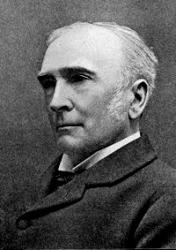
William Henry Draper

1855 - 1933 Person Name: William Henry Draper (1855-1933) Topics: Creation and the Environment Author of "All creatures of our God and King" in Ancient and Modern Draper, William Henry, M.A., son of Henry and Lucy Mary Draper, was born at Kenilworth, Dec. 19, 1855, and educated at Keble College, Oxford; B.A. in honours, M.A. 1880. Ordained in 1880, he was Curate of St. Mary's, Shrewsbury; Vicar of Alfreton; of the Abbey Church, Shrewsbury; and since 1899 Rector of Adel, Leeds. Mr. Draper's hymns in common use include the following:— 1. Come forth, ye sick and poor. [Harvest.] Written in 1001 and printed in the Guardian, Sept. 18, 1901. In 1905 it was given, somewhat altered, in The Council School Hymn Book, No. 132. It was also published by Novello & Co., with Music by J. H. Maunder. 2. From homes of quiet peace. [In Time of War.] Published by Novello & Co. in their series of Hymns in Time of War, 1900, and repeated in The Public School Hymn Book 1903, The Council School Hymn Book, 1905, and others. 3. How blest the land where God is known. (National Hymn.] Written for Novello's Eight Hymns, with Tunes , for use in services held in connection with the Coronation of King Edward VII., in 1902. It was included in The Council School Hymn Book, 1905, No. 91. 4. How fair was the land of God's people of old. [National Hymn.] Written for use in Day Schools, and rir»t published in The Council School Hymn Book, 1905, No. 121. 5. In our day of thanksgiving one psalm let us offer. [Dedication of a Church.] Written for use at the service at the reopening of the Abbey Church, Shrewsbury, after restoration, in 1894. It was also used at the Shrewsbury Church Congress, 1896; and elsewhere on other occasions. In 1904 it was included in the new edition of Hymns Ancient & Modern. 6. Lord, through this Holy Week of our Salvation. [Holy Week.] First published in Hymns for Holy Week, 1898, and included in Hymns Ancient & Modern 1904, No. 109. 7. Man shall not live by bread alone. [Divine Providence.] First published in The Church Monthly, and again in The Council School Hymn Book, 1905, No. 103. 8. Rejoice, ye angels in the sky. [Whitsuntide.] Written for the Leeds Whitsuntide Hymns, 1902 (to Gounod's tune for "O come, O come, Emmanuel"), and included in The Council School Hymn Book, 1905. 9. We love God's acre round the Church. [Burial.] Printed in the Guardian, Aug. 1, 1900, with the title, "Hymn for those who die far from home and country"; later by Novello, with music by Dr. V. Roberts; and again, with slight alterations, in Brookes's Additional Hymns, 1903. 10. What can I do for England. [National Hymn.] Written in 1905 for The Council School Hymn Book, and included therein in the same year. 11. Ye sons of God, arise. [Processional. Choral Festivals.) Written for a Choral Festival in Gloucester Cathedral, June 8th, 1893; reprinted for the Leeds Whitsuntide Hymns, 1901; and again for the Choir Festival in Chester Cathedral, 1905. In addition to these hymns which have come into common use. Mr. Draper has written many others of merit which are worthy of attention. They include:— 1. Hymns for Holy Week, being translations from Hymns of the Greek Church, with Six Originals, &c. . . . London: H. Frowde, 1898 (see No. 6 above). This contains 13 original and translated hymns. 2. The Victoria Book of Hymns, 1897. 3. A Memorial Service for them that are Fallen Asleep in Christ. London: H. Frowde, 1898, 4 hymns (including No. 9 above). 4. The Way of the Cross (Oxford: A. R. Mowbray & Co.), n.d., with music by Dr. Sweeting. Mr. Draper's hymns are so scattered in the Guardian, Church Monthly, and sundry magazines that it is a matter of some difficulty to trace them out. They exceed sixty in all, and are worthy, taken as a whole, to be published as a volume of sacred verse. --John Julian, Dictionary of Hymnology, New Supplement (1907)

John Darwall

1732 - 1789 Person Name: John Darwall (1731-1789) Topics: Creation and the Environment Composer of "DARWALL'S 148TH" in Ancient and Modern John Darwall (b. Haughton, Staffordshire, England, 1731; d. Walsall, Staffordshire, England, 1789) The son of a pastor, he attended Manchester Grammar School and Brasenose College, Oxford, England (1752-1756). He became the curate and later the vicar of St. Matthew's Parish Church in Walsall, where he remained until his death. Darwall was a poet and amateur musician. He composed a soprano tune and bass line for each of the 150 psalm versifications in the Tate and Brady New Version of the Psalms of David (l696). In an organ dedication speech in 1773 Darwall advocated singing the "Psalm tunes in quicker time than common [in order that] six verses might be sung in the same space of time that four generally are." Bert Polman

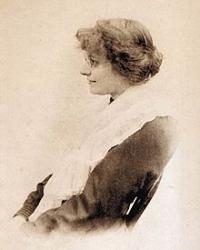
Eleanor Farjeon

1881 - 1965 Person Name: Eleanor Farjeon (1881-1965) Topics: Creation and the Environment Author of "Morning has broken, like the first morning" in Ancient and Modern Eleanor Farjeon, (born Feb. 13, 1881, London--died June 5, 1965, Hampstead, London), English writer for children whose magical but unsentimental tales, which often mock the behaviour of adults, earned her a revered place in many British nurseries. The daughter of a British novelist and granddaughter of a U.S. actor, Eleanor Farjeon grew up in the bohemian literary and dramatic circles of London. Attending opera and theatre at 4 and writing on her father’s typewriter at 7, Farjeon came to public attention at 16 as the librettist of an opera, with music by her brother Harry, which was produced by the Royal Academy of Music. Her success with Nursery Rhymes of London Town (1916), simple tunes originally for adults but adapted and sung in junior schools throughout England, spurred her writing. In addition to such favourites as Martin Pippin in the Apple Orchard (1921) and The Little Bookroom (1955), which won the Carnegie Medal and the first Hans Christian Anderson Award, Farjeon’s prolific writings include children’s educational books, among them Kings and Queens (1932; with Herbert Farjeon); adult books; and memoirs, notably A Nursery in the Nineties (1935; rev. ed. 1960). --www.britannica.com/EBchecked/topic/201881/Eleanor-Farjeon

Geoffrey T. Shaw

1879 - 1943 Person Name: Geoffrey Turton Shaw (1879-1943) Topics: Creation and the Environment Adapter of "ENGLANDS LANE" in Ancient and Modern

Marty Haugen

b. 1950 Person Name: Marty Haugen (b. 1950) Topics: Creation and the Environment Author of "Alleluia! Alleluia!" in Ancient and Modern Marty Haugen (b. 1950), is a prolific liturgical composer with many songs included in hymnals across the liturgical spectrum of North American hymnals and beyond, with many songs translated into different languages. He was raised in the American Lutheran Church, received a BA in psychology from Luther College, yet found his first position as a church musician in a Roman Catholic parish at a time when the Roman Catholic Church was undergoing profound liturgical and musical changes after Vatican II. Finding a vocation in that parish to provide accessible songs for worship, he continued to compose and to study, receiving an MA in pastoral studies at the University of St. Thomas in St. Paul Minnesota. A number of liturgical settings were prepared for the Evangelical Lutheran Church in America and more than 400 of his compositions are available from several publishers, especially GIA Publications, who also produced some 30 recordings of his songs. He is composer-in-residence at Mayflower Community Congregational Church in Minneapolis and continues to compose and travel to speak and teach at worship events around the world. Emily Brink

John Barnard

b. 1948 Person Name: John Barnard (b. 1948) Topics: Creation and the Environment Arranger (last stanza) of "REGENT SQUARE" in Ancient and Modern

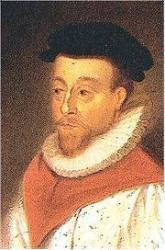
Orlando Gibbons

1583 - 1625 Person Name: Orlando Gibbons (1583-1625) Topics: Creation and the Environment Composer (melody and bass) of "SONG 13" in Ancient and Modern Orlando Gibbons (baptised 25 December 1583 – 5 June 1625) was an English composer, virginalist and organist of the late Tudor and early Jacobean periods. He was a leading composer in the England of his day. Gibbons was born in Cambridge and christened at Oxford the same year – thus appearing in Oxford church records. Between 1596 and 1598 he sang in the Choir of King's College, Cambridge, where his brother Edward Gibbons (1568–1650), eldest of the four sons of William Gibbons, was master of the choristers. The second brother Ellis Gibbons (1573–1603) was also a promising composer, but died young. Orlando entered the university in 1598 and achieved the degree of Bachelor of Music in 1606. James I appointed him a Gentleman of the Chapel Royal, where he served as an organist from at least 1615 until his death. In 1623 he became senior organist at the Chapel Royal, with Thomas Tomkins as junior organist. He also held positions as keyboard player in the privy chamber of the court of Prince Charles (later King Charles I), and organist at Westminster Abbey. He died at age 41 in Canterbury of apoplexy, and a monument to him was built in Canterbury Cathedral. A suspicion immediately arose that Gibbons had died of the plague, which was rife in England that year. Two physicians who had been present at his death were ordered to make a report, and performed an autopsy, the account of which survives in The National Archives: We whose names are here underwritten: having been called to give our counsels to Mr. Orlando Gibbons; in the time of his late and sudden sickness, which we found in the beginning lethargical, or a profound sleep; out of which, we could never recover him, neither by inward nor outward medicines, & then instantly he fell in most strong, & sharp convulsions; which did wring his mouth up to his ears, & his eyes were distorted, as though they would have been thrust out of his head & then suddenly he lost both speech, sight and hearing, & so grew apoplectical & lost the whole motion of every part of his body, & so died. Then here upon (his death being so sudden) rumours were cast out that he did die of the plague, whereupon we . . . caused his body to be searched by certain women that were sworn to deliver the truth, who did affirm that they never saw a fairer corpse. Yet notwithstanding we to give full satisfaction to all did cause the skull to be opened in our presence & we carefully viewed the body, which we found also to be very clean without any show or spot of any contagious matter. In the brain we found the whole & sole cause of his sickness namely a great admirable blackness & syderation in the outside of the brain. Within the brain (being opened) there did issue out abundance of water intermixed with blood & this we affirm to be the only cause of his sudden death. His death was a shock to peers and the suddenness of his passing drew comment more for the haste of his burial – and of its location at Canterbury rather than the body being returned to London. His wife, Elizabeth, died a little over a year later, aged in her mid-30s, leaving Orlando's eldest brother, Edward, to care for the children left orphans by this event. Of these children only the eldest son, Christopher Gibbons, went on to become a musician. One of the most versatile English composers of his time, Gibbons wrote a quantity of keyboard works, around thirty fantasias for viols, a number of madrigals (the best-known being "The Silver Swan"), and many popular verse anthems. His choral music is distinguished by his complete mastery of counterpoint, combined with his wonderful gift for melody. Perhaps his most well known verse anthem is This is the record of John, which sets an Advent text for solo countertenor or tenor, alternating with full chorus. The soloist is required to demonstrate considerable technical facility at points, and the work at once expresses the rhetorical force of the text, whilst never being demonstrative or bombastic. He also produced two major settings of Evensong, the Short Service and the Second Service. The former includes a beautifully expressive Nunc dimittis, while the latter is an extended composition, combining verse and full sections. Gibbons's full anthems include the expressive O Lord, in thy wrath, and the Ascension Day anthem O clap your hands together for eight voices. He contributed six pieces to the first printed collection of keyboard music in England, Parthenia (to which he was by far the youngest of the three contributors), published in about 1611. Gibbons's surviving keyboard output comprises some 45 pieces. The polyphonic fantasia and dance forms are the best represented genres. Gibbons's writing exhibits full mastery of three- and four-part counterpoint. Most of the fantasias are complex, multisectional pieces, treating multiple subjects imitatively. Gibbons's approach to melody in both fantasias and dances features a capability for almost limitless development of simple musical ideas, on display in works such as Pavane in D minor and Lord Salisbury's Pavan and Galliard. In the 20th century, the Canadian pianist Glenn Gould championed Gibbons's music, and named him as his favorite composer. Gould wrote of Gibbons's hymns and anthems: "ever since my teen-age years this music ... has moved me more deeply than any other sound experience I can think of." In one interview, Gould compared Gibbons to Beethoven and Webern: ...despite the requisite quota of scales and shakes in such half-hearted virtuoso vehicles as the Salisbury Galliard, one is never quite able to counter the impression of music of supreme beauty that lacks its ideal means of reproduction. Like Beethoven in his last quartets, or Webern at almost any time, Gibbons is an artist of such intractable commitment that, in the keyboard field, at least, his works work better in one's memory, or on paper, than they ever can through the intercession of a sounding-board. To this day, Gibbons's obit service is commemorated every year in King's College Chapel, Cambridge. --wikipedia.org

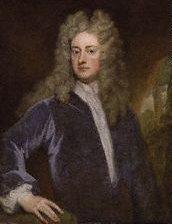
Joseph Addison

1672 - 1719 Person Name: Joseph Addison (1672-1719) Topics: Creation and the Environment Author of "The spacious firmament on high" in Ancient and Modern Addison, Joseph, born at Milston, near Amesbury, Wiltshire, May 1, 1672, was the son of the Rev. Lancelot Addison, sometime Dean of Lichfield, and author of Devotional Poems, &c, 1699. Addison was educated at the Charterhouse, and at Magdalen College, Oxford, graduating B.A. 1691 and M.A. 1693. Although intended for the Church, he gave himself to the study of law and politics, and soon attained, through powerful influence, to some important posts. He was successively a Commissioner of Appeals, an Under Secretary of State, Secretary to the Lord Lieutenant of Ireland, and Chief Secretary for Ireland. He married, in 1716, the Dowager Countess of Warwick, and died at Holland House, Kensington, June 17, 1719. Addison is most widely known through his contributions to The Spectator, The Toiler, The Guardian, and The Freeholder. To the first of these he contributed his hymns. His Cato, a tragedy, is well known and highly esteemed. Addison's claims to the authorship of the hymns usually ascribed to him, or to certain of them, have been called in question on two occasions. The first was the publication, by Captain Thompson, of certain of those hymns in his edition of the Works of Andrew Marvell, 1776, as the undoubted compositions of Marvell; and the second, a claim in the Athenaeum, July 10th, 1880, on behalf of the Rev. Richard Richmond. Fully to elucidate the subject it will be necessary, therefore, to give a chronological history of the hymns as they appeared in the Spectator from time to time. i. The History of the Hymns in The Spectator. This, as furnished in successive numbers of the Spectator is :— 1. The first of these hymns appeared in the Spectator of Saturday, July 26, 1712, No. 441, in 4 stanzas of 6 lines. The article in which it appeared was on Divine Providence, signed “C." The hymn itself, "The Lord my pasture shall prepare," was introduced with these words:— "David has very beautifully represented this steady reliance on God Almighty in his twenty-third psalm, which is a kind of pastoral hymn, and filled with those allusions which are usual in that kind of writing As the poetry is very exquisite, I shall present my readers with the following translation of it." (Orig. Broadsheet, Brit. Mus.) 2. The second hymn appeared in the Spectator on Saturday, Aug. 9, 1712, No. 453, in 13 st. of 4 1., and forms the conclusion of an essay on " Gratitude." It is also signed " C," and is thus introduced:— “I have already obliged the public with some pieces of divine poetry which have fallen into my hands, and as they have met with the reception which they deserve, I shall, from time to time, communicate any work of the same nature which has not appeared in print, and may be acceptable to my readers." (Orig. Broadsheet, British Museum) Then follows the hymn:—"When all Thy mercies, 0 my God." 3. The number of the Spectator for Tuesday, Aug. 19, 1712, No. 461, is composed of three parts. The first is an introductory paragraph by Addison, the second, an unsigned letter from Isaac Watts, together with a rendering by him of Ps. 114th; and the third, a letter from Steele. It is with the first two we have to deal. The opening paragraph by Addison is:— “For want of time to substitute something else in the Boom of them, I am at present obliged to publish Compliments above my Desert in the following Letters. It is no small Satisfaction, to have given Occasion to ingenious Men to employ their Thoughts upon sacred Subjects from the Approbation of such Pieces of Poetry as they have seen in my Saturday's papers. I shall never publish Verse on that Day but what is written by the same Hand; yet shall I not accompany those Writings with Eulogiums, but leave them to speak for themselves." (Orig. Broadsheet, British Museum

John L. Bell

b. 1949 Person Name: John L. Bell (b. 1949) Topics: Creation and the Environment Arranger of "LIFE OF THE WORLD" in Ancient and Modern John Bell (b. 1949) was born in the Scottish town of Kilmarnock in Ayrshire, intending to be a music teacher when he felt the call to the ministry. But in frustration with his classes, he did volunteer work in a deprived neighborhood in London for a time and also served for two years as an associate pastor at the English Reformed Church in Amsterdam. After graduating he worked for five years as a youth pastor for the Church of Scotland, serving a large region that included about 500 churches. He then took a similar position with the Iona Community, and with his colleague Graham Maule, began to broaden the youth ministry to focus on renewal of the church’s worship. His approach soon turned to composing songs within the identifiable traditions of hymnody that began to address concerns missing from the current Scottish hymnal: "I discovered that seldom did our hymns represent the plight of poor people to God. There was nothing that dealt with unemployment, nothing that dealt with living in a multicultural society and feeling disenfranchised. There was nothing about child abuse…,that reflected concern for the developing world, nothing that helped see ourselves as brothers and sisters to those who are suffering from poverty or persecution." [from an interview in Reformed Worship (March 1993)] That concern not only led to writing many songs, but increasingly to introducing them internationally in many conferences, while also gathering songs from around the world. He was convener for the fourth edition of the Church of Scotland’s Church Hymnary (2005), a very different collection from the previous 1973 edition. His books, The Singing Thing and The Singing Thing Too, as well as the many collections of songs and worship resources produced by John Bell—some together with other members of the Iona Community’s “Wild Goose Resource Group,” —are available in North America from GIA Publications. Emily Brink

J. W. Elliott

1833 - 1915 Person Name: James William Elliott (1833-1915) Topics: Creation and the Environment Composer of "CHURCH TRIUMPHANT" in Ancient and Modern J.W. Elliott was a popular composer of the Victorian period, and is best known for his nursery rhyme music and for his work on hymnals in the 1870s. He was born James William Elliott, in Warwick, England, on February 13, 1833. As a child, he sang as a chorister in the Leamington Parish Church. In those days, choristers were given lessons in all facets of church music, including organ lessons, counterpoint studies, and more in exchange for providing an extraordinary level of service to their parish church (services throughout the week, all holidays, extra services, etc.). The result is that most choristers who completed their studies received an excellent music education, and James was no exception. After starting his career as an organist and choirmaster for a countryside church, his talent became obvious. He moved to London, where he assisted Sir Arthur Sullivan (of Gilbert and Sullivan fame) in editing Church Hymns. In addition, James worked for a music publisher. His compositions include two operettas, numerous anthems, service music, works for instruments including the very popular harmonium, and most particularly for Nursery Rhymes and Nursery Songs, his children’s music score that sets many of the Nursery Rhymes to delightful music. Several of his hymn tunes are still in use today in many hymnals, most notably his hymn tune “Day of Rest.” He was heavily involved in the preparation of the musical edition of Church Hymns in 1874, the Choral Service Book of 1892, and transcriptions of hymn tunes using harmonies different than the traditional ones found in hymnals. He died in St. Marylebone, London, on February 5, 1915. --www.nursery-songs.com/

Pages


Export as CSV
It looks like you are using an ad-blocker. Ad revenue helps keep us running. Please consider white-listing Hymnary.org or getting Hymnary Pro to eliminate ads entirely and help support Hymnary.org.