You help make Hymnary.org possible. More than 10 million people from 200+ countries found hymns, liturgical resources and encouragement on Hymnary.org in 2025, including you. Every visit affirms the global impact of this ministry.

If Hymnary has been meaningful to you this year, would you take a moment today to help sustain it? A gift of any size—paired with a note of encouragement if you wish—directly supports the server costs, research work and curation that keep this resource freely available to the world.

Give securely online today, or mail a check to:
Hymnary.org
Calvin University
3201 Burton Street SE
Grand Rapids, MI 49546

Thank you for your partnership, and may the hope of Advent fill your heart.

Person Results

Topics:accepted time
In:person

Planning worship? Check out our sister site, ZeteoSearch.org, for 20+ additional resources related to your search.
Showing 11 - 20 of 47Results Per Page: 102050

Samuel Webbe

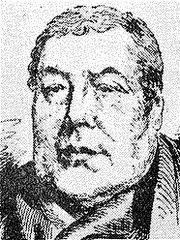
1740 - 1816 Topics: Accepted Time Composer of "ALMA" in Book of Worship with Hymns and Tunes Samuel Webbe (the elder; b. London, England, 1740; d. London, 1816) Webbe's father died soon after Samuel was born without providing financial security for the family. Thus Webbe received little education and was apprenticed to a cabinet­maker at the age of eleven. However, he was determined to study and taught himself Latin, Greek, Hebrew, French, German, and Italian while working on his apprentice­ship. He also worked as a music copyist and received musical training from Carl Barbant, organist at the Bavarian Embassy. Restricted at this time in England, Roman Catholic worship was freely permitted in the foreign embassies. Because Webbe was Roman Catholic, he became organist at the Portuguese Chapel and later at the Sardinian and Spanish chapels in their respective embassies. He wrote much music for Roman Catholic services and composed hymn tunes, motets, and madrigals. Webbe is considered an outstanding composer of glees and catches, as is evident in his nine published collections of these smaller choral works. He also published A Collection of Sacred Music (c. 1790), A Collection of Masses for Small Choirs (1792), and, with his son Samuel (the younger), Antiphons in Six Books of Anthems (1818). Bert Polman

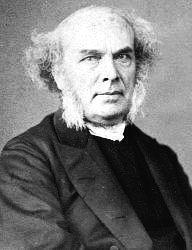
Horatius Bonar

1808 - 1889 Topics: Accepted Time; Accepted Time Author of ""Yet there is room!"" in Laudes Domini Horatius Bonar was born at Edinburgh, in 1808. His education was obtained at the High School, and the University of his native city. He was ordained to the ministry, in 1837, and since then has been pastor at Kelso. In 1843, he joined the Free Church of Scotland. His reputation as a religious writer was first gained on the publication of the "Kelso Tracts," of which he was the author. He has also written many other prose works, some of which have had a very large circulation. Nor is he less favorably known as a religious poet and hymn-writer. The three series of "Hymns of Faith and Hope," have passed through several editions. --Annotations of the Hymnal, Charles Hutchins, M.A. 1872 ================================ Bonar, Horatius, D.D. Dr. Bonar's family has had representatives among the clergy of the Church of Scotland during two centuries and more. His father, James Bonar, second Solicitor of Excise in Edinburgh, was a man of intellectual power, varied learning, and deop piety. Horatius Bonar was born in Edinburgh, Dec. 19th, 1808; and educated at the High School and the University of Edinburgh. After completing his studies, he was "licensed" to preach, and became assistant to the Rev. John Lewis, minister of St. James's, Leith. He was ordained minister of the North Parish, Kelso, on the 30th November, 1837, but left the Established Church at the "Disruption," in May, 1848, remaining in Kelso as a minister of the Free Church of Scotland. The University of Aberdeen conferred on him the doctorate of divinity in 1853. In 1866 he was translated to the Chalmers Memorial Church, the Grange, Edinburgh; and in 1883 he was chosen Moderator of the General Assembly of of the Free Church of Scotland. Dr. Bonar's hymns and poems were, he tells us, composed amid a great variety of circumstances; in many cases he cannot himself recall these circumstances; they also appeared in several publications, but nearly all have boen published or republished in the following:— (i) Songs for the Wilderness, 1843-4. (2) The Bible Hymn Book, 1845. (3) Hymns, Original and Selected, 1846. (4) Hymns of Faith and Hope, First Series, 1857; Second Series, 1861; Third Series, 1866. (5) The Song of the New Creation, 1872. (6) My Old Letters, a long poem, 1877. (7) Hymns of the Nativity, 1879. (8) Communion Hymns, 1881. In addition to numerous prose works, he has also edited The New Jerusalem; a Hymn of the Olden Time, 1852, &c. Dr. Bonar's poems—-including many beautiful lyrics, several psalm versions, and translations from the Greek and Latin, a large number of hymns, and a long meditative poem—-are very numerous, too numerous, perhaps, for their permanent fame as a whole. Dr. Bonar's scholarship is thorough and extensive; and his poems display the grace of style and wealth of allusion which are the fruit of ripe culture. Affected very slightly by current literary moods, still less by the influence of other religious poetry, they reveal extreme susceptibility to the emotional power which the phases of natural and of spiritual life exercise; the phases of natural life being recognised chiefly as conveying and fashioning spiritual life, used chiefly for depicting spiritual life, and handled for this purpose with greater delicacy of touch than in the Olney Hymns, and with less conscious purpose than in the Christian Year. As a result of this susceptibility, and from habitual contemplation of the Second Advent as the era of this world's true bliss, his hymns and poems are distinguished by a tone of pensive reflection, which some might call pessimism. But they are more than the record of emotion; another element is supplied by his intellectual and personal grasp of Divine truth, these truths particularly:—The gift of a Substitute, our Blessed Saviour; Divine grace, righteous, yet free and universal in offer; the duty of immediate reliance upon the privilege of immediate assurance through that grace; communion with God, especially in the Lord's Supper, respecting which he insists on the privilege of cherishing the highest conceptions which Scripture warrants; and finally, the Second Advent of our Lord: by his vigorous celebration of these and other truths as the source and strength of spiritual life, his hymns are protected from the blight of unhealthy, sentimental introspection. To sum up: Dr. Bonar's hymns satisfy the fastidious by their instinctive good taste; they mirror the life of Christ in the soul, partially, perhaps, but with vivid accuracy; they win the heart by their tone of tender sympathy; they sing the truth of God in ringing notes; and although, when taken as a whole, they are not perfect ; although, in reading them, we meet with feeble stanzas, halting rhythm, defective rhyme, meaningless Iteration; yet a singularly large number have been stamped with approval, both in literary circles and by the Church. In Great Britain and America nearly 100 of Dr. Bonar's hymns are in common use. They are found in almost all modern hymnals from four in Hymns Ancient & Modern to more than twenty in the American Songs for the Sanctuary, N. Y., 1865-72. The most widely known are, "A few more years shall roll;" "Come, Lord, and tarry not;" "Here, O my Lord, I see Thee face to face;" "I heard the Voice of Jesus say;" "The Church has waited long;" and "Thy way, not mine, O Lord." In addition to these and others which are annotated under their respective first lines, the following are also in common use:— From Songs for the Wilderness, No. 1, 1843. 1. For Thee we long and pray. Sunday Morning. 2. Holy Father, hear my cry. A Child's Prayer. 3. I thought upon my sins and I was sad. Christ our Peace. 4. Peace to the world, our Lord is come. A Millennial Song. 5. Spirit of everlasting grace. The Vision of Dry Bones. ii. From Songs for the Wilderness, No. 2,1844. 6. Ho, ye thirsty, parched and fainting. Invitation. 7. 0 'tis not what we fancied it. The world renounced. 8. Sing them, my children, sing them still. Children exhorted to Praise. 9. Time's sun is fast setting. Advent. 10. Weep, pilgrim, weep, yet 'tis not for the sorrow. Faith. 11. Yes, for me, for me He careth. Christ the Elder Brother . iii. From The Bible Hymn Book, 1845. 12. Jesus, my sorrow lies too deep. Jesus, the Great High Priest. 13. There is a Morning Star, my soul. The Morning Star. 14. This is not my place of resting. Pressing towards heaven. iv. From Hymns, Original and Selected, 1845. 15. Let there be light, Jehovah said. Creation. v. From Hymns of Faith and Hope, 1st series, 1857. 16. Be brave, my brother. The Fight of Faith. 17. Blessed be God, our God. Good Friday. 18. Everlasting praises. Doxology. 19. Go up, go up, my heart. Heavenly aspirations desired. 20. I close my heavy eye. Evening. Sometimes given as "We close our heavy eyes." 21. I see the crowd in Pilate's hall. Good Friday. 22. Jesus, while this rongh desert soil. Strength by the Way. 23. Jesus, Whom angel-hosts adore. The Word made Flesh. From "The Son of God, in mighty love." 24. Make haste, 0 man, to live. Exhortation to lay hold of Life. 25. No seas again shall sever. Heaven. 26. Oppressed with noonday's scorching heat. Shadow of the Cross. 27. Rest for the toiling hand. Burial. From "Lie down, frail body, here." 28. Shall this life of mine be wasted? Exhortation to Duty. 29. These are the crowns that we shall wear. Heaven. 30. Thy works, not mine, O Christ [Lord]. The Sin-bearer. 31. Where the faded flower shall freshen. Heaven. vi. From Hymns of Faith and Hope. 2nd series, 1861. 32. Be still, my soul, Jehovah loveth Thee. Rest in the Love of God. 33. Christ has done the mighty work. Good Friday. 34. Come, mighty Spirit, penetrate. Whitsuntide. 35. Deep down beneath the unresting surge. Burial at Sea. 36. Fear not the foe, thou flock of God [thou little flock]. Battle-Song of the Church. 37. For lack of love I languish. Lent. 38. From this bleak hill of storms. Eternal Rest desired. 39. He liveth long who liveth well. The True Life. 40. Here shall death's triumph end: the rock-barred door. Easter. From "The tomb is empty: wouldst thou have it full." 41. Jesus, Sun and Shield art Thou. Jesus the First and Last. 42. Jesus, the Christ of God. Praise to Christ. 43. Light of the world, for ever, ever shining. Christ the Light of the World. From "Why walk in darkness? Has the dear light vanished?" 44. Make use of me, my God. Duty desired. 45. Not what I am, 0 Lord, but what Thou art. The Love of God. 46. 0 Light of Light, shine in. Cry of the Weary. 47. 0 love of God, how strong and true. Love of God. 48. 0 love that casts out fear. Love of God. 49. 0 strong to save and bless. Lent. 50. 0 this soul, how dark and blind. Lent. 51. Safe across the waters. Thanksgiving at end of a journey. 52. Silent, like men in solemn haste. Pressing onwards. 53. Speak, lips of mine. Exhortation to Praise. 54. The Bridegroom comes. Advent. vii. From Hymns of Faith and Hope. 3rd series, 1866. 55. Bear Thou my burden, Thou Who bar'st my sin. Lent or Passiontide. 56. Done is the work that saves. Easter. 57. Father, our children keep. Prayer on behalf of Children. 58. Fill Thou my life, 0 Lord my God. Life's Praise. 59. Finish Thy work, the time is short. Earnest labour to the end. 60. From the Cross the blood is falling. Good Friday. 61. He called them, and they left. Obedience. 62. Help me, my [0] God to speak. Truth desired. 63. Holy Father, Mighty God. Holy Trinity. 64. How are my troubles multiplied. Ps. iii. 65. How sweetly doth He show His face Flower Service. 66. Light hath arisen, we walk in its brightness. Sustaining power of Faith. 67. Lo, God, our God has come. Christmas. 68. Lord, give me light to do Thy work. Divine guidance desired. 69. No, not despairingly. Lent. 70. Not to ourselves again. Life in Christ, or, Living unto God. 71. Now in parting, Father, bless us. Post Communion. 72. Sounds the trumpet from afar. Battle-Song of the Church. 73. Thee in the loving bloom of morn. God in all. 74. Through good report and evil, Lord. Faithfulness. 75. To Jehovah, God of might. Praise to the Father. 76. To the name of God on high. Doxology. 77. Upward, where the stars are burning. Heavenward Aspirations. 78. We take the peace which He hath won. The Gift of Peace. 79. When the weary, seeking rest. Intercession for all Conditions of Men. viii. From The Song of the New Creation,1872. 80. For the Bread and for the Wine. Holy Communion. 81. Light of life so softly shining. Light of Life. 82. Yet there is room. The Lamb's bright hall of song. Home Missions. ix. From Hymns of the Nativity, 1879. 83. Great Ruler of the land and sea. Sailors' Liturgy. From Communion Hymns, 1881. 84. Beloved, let us love. Brotherly Love. In several instances these hymns are given in an abbreviated form, and sometimes alterations are also introduced. In this latter respect however Dr. Bonar has suffered less than most modern hymn-writers. [Rev. James Mearns, M.A.] -- John Julian, Dictionary of Hymnology (1907) ==================== Bonar, Horatius, p. 161, i. He died at Edinburgh, July 31, 1889. In 1890 his son published a posthumous volume of his poetical pieces as Until the Day Break and other Hymns and Poems left behind. The following additional hymns are in common use:— 1. Almighty Comforter and Friend. (1866.) Whitsuntide. 2. Father, make use of me. An altered form of No. 44, p. 162, ii. 3. I ask a perfect creed. (1861.) Creed not Opinions. From this is also taken "O True One, give me truth." 4. Long, long deferred, now come at last. Marriage of the Lamb. Part of "Ascend, Beloved, to the joy." (1861.) 5. Nay 'tis not what we fancied it. (1857.) Vanity of the World. 6. No blood, no altar now. (1861.) The Finished Sacrifice. 7. No shadows yonder. (1857.) Heaven Anticipated. 8. Not with the light and vain. (1857.) Godly Companionship. 9. O Love invisible, yet infinite. (1866.) Divine Love. 10. On the great love of God I lean. (1866.) Love of God our Resting-place. 11. On Thee, O Jesus, strongly leaning. (1866.) Fellowship with Christ. 12. Peace upon peace, like wave on wave. (1866.) Divine Peace. 13. Sower divine, sow the good seed in me. (1857.) Heavenly Sowing. 14. Speaketh the sinner's sin within my heart. (1866.) Ps. xxxvi. 15. Still one in life and one in death. (1857.) Communion of Saints. Part of "'Tis thus they press the hand and part." 16. Surely, yon heaven, where angels see God's face. (1857.) Heaven Anticipated. 17. That city with the jewelled crest. (1857.) Heaven. Part of "These are the crowns that we shall wear." Another cento from the same is "Yon city, with the jewelled crest." 18. That clime is not like this dull clime of ours. (1843.) Heaven. 19. The Free One makes you free: He breaks the rod. (1857.) Freedom in Christ. From "Of old they sang the song of liberty." 20. There is a Morning-star, my soul. (1357.) Christ the Morning Star. 21. This is the day of toil. (1866.) Pressing Onwards. 22. Thy thoughts are here, my God. (1866.) Holy Scripture. 23. Till the day dawn. (1857.) Life's Journey. 24. To Him Who spread the skies. (1866.) Creation's Song. 25. Trustingly, trustingly. (1866.) Trust. 26. Unto th' eternal hills. (1866.) Ps. cxxi. The above dates are: 1843, Songs in the Wilderness; 1857, Hymns of Faith and Hope, 1st Series; 1861, same, 2nd Ser. (not 1864); 1866, same, 3rd Ser. (not 1867), The dates 1857, 1864,1867, were given by Dr. Bonar, but the British Museum copies are 1857, 1861, 1866 respectively. --John Julian, Dictionary of Hymnology, Appendix, Part II (1907) ============== Bonar, H., pp. 161, i.; 1554, i. The Rev. H. N. Bonar, Dr. Bonar's son, published in 1904, Hymns by Horatius Bonar, Selected and Arranged by his Son H. N. Bonar, With a brief History of some of the Hymns, &c. (London: H. Frowde). From this work we must correct the date of his Song of the New Creation to 1872. We have also enriched our pages by additional and expanded notes on several of Dr. Bonar's most widely used hymns. In his biographical notes, Mr. Bonar refers to Dr. Bonar's work as editor of the Quarterly Journal of Prophecy, begun in 1848, to which he contributed a hymn for each number. We find that the number of hymns contributed thereto is 101. With Dr. Bonar's poetical productions great difficulty has been encountered by the historian and annotator because of his absolute indifference to dates and details. It was enough for him that he had written, and that the Church of Christ approved and gladly used what, out of the fulness of his heart, he had given her. --Excerpt from John Julian, Dictionary of Hymnology, New Supplement (1907)

J. B. Herbert

1852 - 1927 Topics: Gospel Time of Acceptance; Salvation Accepted Time of Composer of "[Today if you will hear his voice]" in Bible Songs

Ira David Sankey

1840 - 1908 Person Name: Ira D. Sankey Topics: Accepted Time; Accepted Time Composer of "YET ROOM" in Laudes Domini Sankey, Ira David, was born in Edinburgh, Pennsylvania, in 1840, of Methodist parents. About 1856 he removed with his parents to New Castle, Pennsylvania, where he became a member of the Methodist Episcopal Church. Four years afterwards he became the Superintendent of a large Sunday School in which he commenced his career of singing sacred songs and solos. Mr. Moody met with him and heard him sing at the International Convention of the Young Men's Christian Association, at Indianapolis, and through Mr. Moody's persuasion he joined him in his work at Chicago. After some two or three years' work in Chicago, they sailed for England on June 7, 1872, and held their first meeting at York a short time afterwards, only eight persons being present. Their subsequent work in Great Britain and America is well known. Mr. Sankey's special duty was the singing of sacred songs and solos at religious gatherings, a practice which was in use in America for some time before he adopted it. His volume of Sacred Songs and Solos is a compilation from various sources, mainly American and mostly in use before. Although known as Sankey and Moody’s Songs, only one song, "Home at last, thy labour done" is by Mr. Sankey, and not one is by Mr. Moody. Mr. Sankey supplied several of the melodies. The English edition of the Sacred Songs & Solos has had an enormous sale; and the work as a whole is very popular for Home Mission services. The Songs have been translated into several languages. --John Julian, Dictionary of Hymnology (1907) Pseudonymns: Harry S. Low­er Rian A. Dykes ==================== Sankey, I. D., p. 994, i. During the past fifteen years Mr. Sankey's Sacred Songs and Solos have had a very large sale, which has justified him in increasing the number of songs and hymns, including " New Hymns and Solos," to 1200. In 1906 he published My Life and Sacred Songs (London : Morgan & Scott). In addition to the "Story of his Own Life," the work contains an account of the most popular of his solos, with interesting reminiscences of the spiritual awakening of many who were influenced through his singing of them in public. In this respect it corresponds in some measure with G. J. Stevenson's Methodist Hymn Book, &c, 1883 (p. 1094, i.). It is an addition to the Sacred Songs and Solos, which will be held in esteem by many. In addition to his hymn, noted on p. 994, ii., Mr. Sankey gives details of the following:— 1. Out of the shadow-land into the sunshine. [Heaven Anticipated.] Mr. Sankey's account of this hymn is:— "I wrote this hymn specially for the memorial service held for Mr. Moody in Carnegie Hall, where 1 also sang it as a solo. It is the last sacred song of which I wrote both the words and music. The idea was suggested by Mr. Moody's last words, 'Earth recedes; heaven opens before me . . . God is calling me, and I must go.' On account of its peculiar association with my fellow-labourer in the Gospel for so many years, the words are here given in full." The hymn follows on p. 185, in 3 stanzas of 4 lines and a chorus. 2. Rejoice! Rejoice! our King is coming, [Advent.] Mr. Sankey writes concerning this hymn:— "During one of my trips to Great Britain on the SS. City of Rome a storm raged on the sea. The wind was howling through the rigging, and waves like mountains of foam were breaking over the bow of the vessel. A great fear had fallen upon the passengers. When the storm was at its worst, we all thought we might soon go to the bottom of the sea. The conviction came to me that the Lord would be with us iu the trying hour, and sitting down in the reading room, I composed this hymn. Before reaching England the tune had formed itself in my mind, and on arriving in London I wrote it out, and had it published in Sacred Songs and Solos, where it is No. 524 in the edition. of 1888. From Mr. Sankey's autobiographical sketch we gather that he was born at Edinburgh, in Western Pennsylvania, Aug. 28, 1840, joined Mr. Moody in 1871, and visited England for the first time in 1873. The original of the Sacred Songs, &c, of 23 pieces only, was offered as a gift to the London publishers of P. Phillips's Hallowed Song, and declined by them. It was subsequently accepted by Mr. K. O. Morgan, of Morgan & Scott, and is now a volume of 1200 hymns. From a return kindly sent us by Messrs. Morgan & Scott, we find that the various issues of the Sacred Songs and Solos were:— In 1873, 24 pp.; 1874, 72 pp. ; 1876, 153 hymns; 1877, 271 hymns; 1881, 441 hymns; 1888, 750 hymns; 1903, 1200 hymns. In addition, The Christian Choir, which is generally associated with the Sacred Songs and Solos, was issued in 1884 with 75 hymns, and in 1896 with 281. The New Hymns & Solos, by the same firm, were published in 1888. --John Julian, Dictionary of Hymnology, New Supplement (1907)

Lewis Edson

1748 - 1820 Topics: Accepted Time Composer of "LENOX" in Book of Worship with Hymns and Tunes Lewis EdsonBorn in Massachusetts,he began working as a blacksmith and farmer. After marrying, he became a singing teacher, notable in his day. He taught singing in MA NY and CN, moving to NY in 1817. He was also an author. His 35 works consist of tunebooks, anthems, Psalm music, music scores and chants for choir use. John Perry

William B. Bradbury

1816 - 1868 Topics: Accepted Time Composer of "[ZEPHYR]" in The Hymnal William Batchelder Bradbury USA 1816-1868. Born at York, ME, he was raised on his father's farm, with rainy days spent in a shoe-shop, the custom in those days. He loved music and spent spare hours practicing any music he could find. In 1830 the family moved to Boston, where he first saw and heard an organ and piano, and other instruments. He became an organist at 15. He attended Dr. Lowell Mason's singing classes, and later sang in the Bowdoin Street church choir. Dr. Mason became a good friend. He made $100/yr playing the organ, and was still in Dr. Mason's choir. Dr. Mason gave him a chance to teach singing in Machias, ME, which he accepted. He returned to Boston the following year to marry Adra Esther Fessenden in 1838, then relocated to Saint John, New Brunswick. Where his efforts were not much appreciated, so he returned to Boston. He was offered charge of music and organ at the First Baptist Church of Brooklyn. That led to similar work at the Baptist Tabernacle, New York City, where he also started a singing class. That started singing schools in various parts of the city, and eventually resulted in music festivals, held at the Broadway Tabernacle, a prominent city event. He conducted a 1000 children choir there, which resulted in music being taught as regular study in public schools of the city. He began writing music and publishing it. In 1847 he went with his wife to Europe to study with some of the music masters in London and also Germany. He attended Mendelssohn funeral while there. He went to Switzerland before returning to the states, and upon returning, commenced teaching, conducting conventions, composing, and editing music books. In 1851, with his brother, Edward, he began manufacturring Bradbury pianos, which became popular. Also, he had a small office in one of his warehouses in New York and often went there to spend time in private devotions. As a professor, he edited 59 books of sacred and secular music, much of which he wrote. He attended the Presbyterian church in Bloomfield, NJ, for many years later in life. He contracted tuberculosis the last two years of his life. John Perry

Hans G. Nägeli

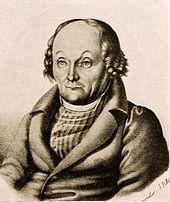
1773 - 1836 Topics: Salvation Accepted Time of Composer of "NAOMI" in The Psalter Johann G. Nageli (b. Wetzikon, near Zurich, Switzerland, 1773; d. Wetzikon, 1836) was an influential music educator who lectured throughout Germany and France. Influenced by Johann Pestalozzi, he published his theories of music education in Gangbildungslehre (1810), a book that made a strong impact on Lowell Mason. Nageli composed mainly" choral works, including settings of Goethe's poetry. He received his early instruction from his father, then in Zurich, where he concentrated on the music of. S. Bach. In Zurich, he also established a lending library and a publishing house, which published first editions of Beethoven’s piano sonatas and music by Bach, Handel, and Frescobaldi. Bert Polman

J. Grigg

1720 - 1768 Person Name: Joseph Grigg Topics: Accepted Time Author of "Behold! a stranger's at the door" in The Hymnal Grigg, Joseph, was born in 1728, according to the D. Sedgwick’s Manuscript," but this date seems to be some six or eight years too late. He was the son of poor parents and was brought up to mechanical pursuits. In 1743 he forsook his trade and became assistant minister to the Rev. Thomas Bures, of the Presbyterian Church, Silver Street, London. On the death of Mr. Bures in 1747, he retired from the ministry, and, marrying a lady of property, look up his residence at St. Albans. He died at Walthamstow, Essex, Oct. 29, 1768. As a hymnwriter Grigg is chiefly known by two of his hymns, "Behold a stranger at the door"; and "Jesus, and can it ever be?" His hymnwriting began, it is said, at ten years of age. His published works of various kinds number over 40. Those in which his hymns are found are:— (1) Miscellanies on Moral and Religious Subjects, &c, London, Elizabeth Harrison, 1756. (2) The Voice of Danger, the Voice of God. A Sermon Preached at St. Albans, and at Box-Lane, Chiefly with a View to the apprehended Invasion. By J. Grigg. London, J. Buckland, 1756. To this is appended his hymn, "Shake, Britain, like an aspen shake." (3) Four Hymns on Divine Subjects wherein the Patience and Love of Our Divine Saviour is displayed, London, 1765. (4) Hymns by the late Rev. Joseph Grigg, Stourbridge, 1806. (5) During 1765 and 1766 he also contributed 12 hymns to The Christians Magazine. In 1861 D. Sedgwick collected his hymns and poems, and published them with a memoir as: Hymns on Divine Subjects, * * * * London, 1861. This volume contains 40 "Hymns," and 17 "Serious Poems." In the “S. MSS." Sedgwick notes that in 1861 he omitted three hymns by Grigg, which were then unknown to him, viz.:—l) On "The National Fast," appended to a sermon preached at Northampton, Feb. 13, 1761, by W. Warburton, and published in London, 1761. (2) "A Harvest Hymn by the late Rev. Joseph Grigg," in 6 stanzas, in the Evangelical Magazine, July, 1822; and (3) On the Parable of Dives and Lazarus, dated "Feb. 15, 1767." -- John Julian, Dictionary of Hymnology (1907)

A. L. Peace

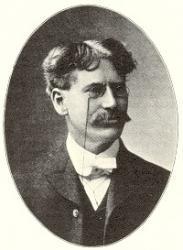
1844 - 1912 Person Name: Albert L. Peace Topics: Salvation Accepted Time of Composer of "ST. MARGARET" in The Psalter Albert Lister Peace DMus United Kingdom 1844-1912. Born at Huddersfield, Yorkshire, England, son of a warehouseman and woolstapler, he was extremely gifted as a musician, largely self-taught, playing the organ at Holmfirth Parish Church near Huddersfield at age nine. He married Margaret Martin Steel Gilchrist, and they had three children: Lister, Archibald, and Margaret. In 1865 he was appointed organist of Trinity Congregational Church in Glasgow, Scotland. He obtained his doctorate degree from the University of Oxford in 1875. He became organist at Glasgow Cathedral in 1879. In 1897 he succeeded William Best as organist at St George’s Hall, Liverpool. In later years he was in much demand to play the organ in recitals. He did so at Canterbury Cathedral (1886), Victoria Hall, Hanley, Stoke-on-Trent (1888), and Newcastle Cathedral (1891). He composed orchestrations, sonatas, cantatas, and concert and church service anthems. He was an arranger, author, and editor. He died at Blundelsands, Liverpool, England. John Perry

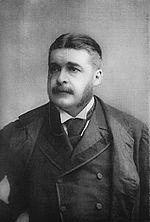
Arthur Sullivan

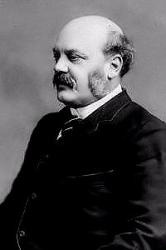
1842 - 1900 Person Name: Arthur S. Sullivan Topics: Salvation Accepted Time of Composer of "SAMUEL" in The Psalter Arthur Seymour Sullivan (b Lambeth, London. England. 1842; d. Westminster, London, 1900) was born of an Italian mother and an Irish father who was an army band­master and a professor of music. Sullivan entered the Chapel Royal as a chorister in 1854. He was elected as the first Mendelssohn scholar in 1856, when he began his studies at the Royal Academy of Music in London. He also studied at the Leipzig Conservatory (1858-1861) and in 1866 was appointed professor of composition at the Royal Academy of Music. Early in his career Sullivan composed oratorios and music for some Shakespeare plays. However, he is best known for writing the music for lyrics by William S. Gilbert, which produced popular operettas such as H.M.S. Pinafore (1878), The Pirates of Penzance (1879), The Mikado (1884), and Yeomen of the Guard (1888). These operettas satirized the court and everyday life in Victorian times. Although he com­posed some anthems, in the area of church music Sullivan is best remembered for his hymn tunes, written between 1867 and 1874 and published in The Hymnary (1872) and Church Hymns (1874), both of which he edited. He contributed hymns to A Hymnal Chiefly from The Book of Praise (1867) and to the Presbyterian collection Psalms and Hymns for Divine Worship (1867). A complete collection of his hymns and arrangements was published posthumously as Hymn Tunes by Arthur Sullivan (1902). Sullivan steadfastly refused to grant permission to those who wished to make hymn tunes from the popular melodies in his operettas. Bert Polman

Pages


Export as CSV
It looks like you are using an ad-blocker. Ad revenue helps keep us running. Please consider white-listing Hymnary.org or getting Hymnary Pro to eliminate ads entirely and help support Hymnary.org.