You help make Hymnary.org possible. More than 10 million people from 200+ countries found hymns, liturgical resources and encouragement on Hymnary.org in 2025, including you. Every visit affirms the global impact of this ministry.

If Hymnary has been meaningful to you this year, would you take a moment today to help sustain it? A gift of any size—paired with a note of encouragement if you wish—directly supports the server costs, research work and curation that keep this resource freely available to the world.

Give securely online today, or mail a check to:
Hymnary.org
Calvin University
3201 Burton Street SE
Grand Rapids, MI 49546

Thank you for your partnership, and may the hope of Advent fill your heart.

Person Results

Tune Identifier:"^dundee_ravenscroft$"
In:people

Planning worship? Check out our sister site, ZeteoSearch.org, for 20+ additional resources related to your search.
Showing 11 - 20 of 145Results Per Page: 102050

Anonymous

Author of "O God, we praise thee; and confess" in The Hymnal In some hymnals, the editors noted that a hymn's author is unknown to them, and so this artificial "person" entry is used to reflect that fact. Obviously, the hymns attributed to "Author Unknown" "Unknown" or "Anonymous" could have been written by many people over a span of many centuries.

Samuel Stennett

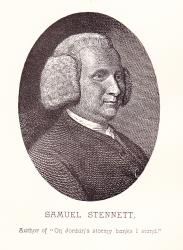
1727 - 1795 Person Name: Samuel Stennett, 1727-1785 Author of "Here at Thy Table, Lord, we Meet" in Hymnal and Order of Service Samuel Stennett was born at Exeter, in 1727. His father was pastor of a Baptist congregation in that city; afterwards of the Baptist Chapel, Little Wild Street, London. In this latter pastorate the son succeeded the father in 1758. He died in 1795. Dr. Stennett was the author of several doctrinal works, and a few hymns. --Annotations of the Hymnal, Charles Hutchins, M.A. 1872. ====================== Stennett, Samuel, D.D., grandson of Joseph Stennett, named above, and son of the Rev. Joseph Stennett, D.D., was born most pro;bably in 1727, at Exeter, where his father was at that time a Baptist minister. When quite young he removed to London, his father having become pastor of the Baptist Church in Little Wild Street, Lincoln's Inn Fields. In 1748, Samuel Stennett became assistant to his father in the ministry, and in 1758 succeeded him in the pastoral office at Little Wild Street. From that time until his death, on Aug. 24, 1795, he held a very prominent position among the Dissenting ministers of London. He was much respected by some of the statesmen of the time, and used his influence with them in support of the principles of religious freedom. The celebrated John Howard was a member of his congregation and an attached friend. In 1763, the University of Aberdeen conferred on him the degree of D.D. Dr. S. Stennett's prose publications consist of volumes of sermons, and pamphlets on Baptism and on Nonconformist Disabilities. He wrote one or two short poems, and contributed 38 hymns to the collection of his friend, Dr. Rippon (1787). His poetical genius was not of the highest order, and his best hymns have neither the originality nor the vigour of some of his grandfather's. The following, however, are pleasing in sentiment and expression, and are in common use more especially in Baptist congregations:— 1. And have I, Christ, no love for Thee? Love for Christ desired. 2. And will the offended God again? The Body the Temple of the Holy Ghost. 3. As on the Cross the Saviour hung. The Thief on the Cross. 4. Behold the leprous Jew. The healing of the Leper. 5. Come, every pious heart. Praise to Christ. 6. Father, at Thy call, I come. Lent. 7. Great God, amid the darksome night. God, a Sun. 8. Great God, what hosts of angels stand. Ministry of Angels. 9. Here at Thy Table, Lord, we meet. Holy Communion. 10. How charming is the place. Public Worship. 11. How shall the sons of men appear? Acceptance through Christ alone. 12. How soft the words my [the] Saviour speaks. Early Piety. 13. How various and how new. Divine Providence. 14. Not all the nobles of the earth. Christians as Sons of God. 15. On Jordan's stormy banks I stand. Heaven anticipated. 16. Prostrate, dear Jesus, at thy feet. Lent. Sometimes, "Dear Saviour, prostrate at Thy feet." 17. Should bounteous nature kindly pour. The greatest of these is Love. From this, "Had I the gift of tongues," st. iii., is taken. 18. Thy counsels of redeeming grace. Holy Scripture. From "Let avarice, from shore to shore." 19. Thy life 1 read, my dearest Lord. Death in Infancy. From this "'Tis Jesus speaks, I fold, says He." 20. 'Tis finished! so the Saviour cried. Good Friday. 21. To Christ, the Lord, let every tongue. Praise of Christ. From this,"Majestic sweetness sits enthroned," st. iii., is taken. 22. To God, my Saviour, and my King. Renewing Grace. 23. To God, the universal King. Praise to God. 24. What wisdom, majesty, and grace. The Gospel. Sometimes, “What majesty and grace." 25. Where two or three with sweet accord. Before the Sermon. 26. Why should a living man complain? Affliction. From this, "Lord, see what floods of sorrow rise," st. iii., is taken. 27. With tears of anguish I lament. Lent. 28. Yonder amazing sight I see. Good Friday. All these hymns, with others by Stennett, were given in Rippon's Baptist Selection, 1787, a few having previously appeared in A Collection of Hymns for the use of Christians of all Denominations, London. Printed for the Booksellers, 1782; and No. 16, in the 1778 Supplement to the 3rd edition of the Bristol Baptist Selection of Ash and Evans. The whole of Stennett's poetical pieces and hymns were included in vol. ii. of his Works, together with a Memoir, by W. J. Jones. 4 vols., 1824. [Rev. W. R. Stevenson, M.A.] --John Julian, Dictionary of Hymnology (1907)

Catesby Paget

Person Name: Catesby Paget 1868-1930 Author of "A mind at perfect peace with God" in Praise! psalms hymns and songs for Christian worship Possible Catesby Paget, 1814-1899

James C. Wallace

1793 - 1841 Author of "There's Not A Place In Earth's Vast Round" in The Cyber Hymnal Wallace, James Cowden, was born at Dudley, circa 1793. He was brother of the Rev. Robert Wallace (1791-1880), Professor of Theology in Manchester New College, and author of Antitrinitarian Biography. J. C. Wallace was Unitarian minister at Totnes, 1824, and afterwards at Brighton and Wareham. He died at Wareham in 1841. He was a prolific hymnwriter, and contributed various other poetical pieces to the Monthly Repository. In a Selection of Hymns for Unitarian Worship, by R. Wallace, Chesterfield, 1822, there are 13 of his hymns, and in the 2nd edition of the same, 1826, there are 29 more. There are also 10 of his hymns in the Dukinfield Selection of Psalms & Hymns for Christian Worship, 1822 (still in use), and 64 in Beard's Collection of Hymns, 1837. Of these hymns the following are still in common use:— 1. Is there no balm to soften grief? The Efficacy of Prayer (1837). 2. It is not rank, or power, or state. The Universality of the Gospel. 3. There's not a place in earth's vast round. God seen in Everything. 4. Through every clime God's care extends. Divine Care of All. 5. There is an eye that never sleeps. The Divine Helper in Need. [Rev. Valentine D. Davis, B.A.] -- John Julian, Dictionary of Hymnology (1907) ===================== Wallace, James Cowdan, 1793 (?>-184l. Minister at various places in the south of England, finally at Wareham, author of a considerable number of hymns, to be found in his brother Robert's Selection of Hymns for Unitarian Worship, Chesterfield, 1822, enlarged ed., 1826, and in Beard's Collection, 1837. In the Baptist Hymnal is, "There is an eye that never sleeps” (The Divine watchfulness). See "There's not a star whose trembling light.” --John Julian, Dictionary of Hymnology (1907)

Jessie Seymour Irvine

1836 - 1887 Person Name: Jessie S. Irvine Composer of "DUNDEE" in The Concordia Hymnal Jessie Seymour Irvine United Kingdom 1836-1887. Born at Dunnottar, Kincardineshire, Scotland, the daughter of a parish minister of the Church of Scotland who served at Dunottar, Peterhead, and Crimond in Aberdeenshire, she became an organist, in training at the town of Banff. In 1871, while living in Crimond, she composed a tune for the metrical version of Psalm 23 as an exercise for a composition class. It was first performed at evening worship at Auchterless Parish Church. Not satisfied with her own work, she asked for help to reharmonize it from musician, David Grant, from Aberdeen. At the time, Grant was collaborating with associates compiling hymns and metrical Psalms from across north Scotland intending to publish them in a new hymnal. “The Northern Psalter” was published in 1872, became popular, and over 70,000 copies were sold. For years the hymn tune was credited to Grant, but Jessie’s sister wrote a letter to the hymnal editors claiming her sister wrote the tune, harmonized by Grant. She is now credited by most as the original composer. She died in Aberdeen, Scotland. She is commemorated by a set of four etched glass panels installed inside Crimond Parish Church in 2002. The hymn was played at Princess Elizabeth’s wedding (later Queen Elizabeth) to Philip Mountbatten in 1947. John Perry

James Martineau

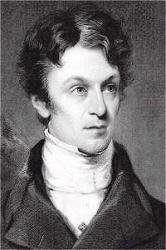
1805 - 1900 Author of "Thy way is in the deep, O Lord" in Services for Congregational Worship. The New Hymn and Tune Book Martineau, James, LL.D., D.D., born at Norwich, April 21, 1805, the son of a manufacturer and wine merchant of Huguenot descent. After four years at the Norwich grammar school, and two as a pupil of Dr. Lant Carpenter, at Bristol, and a short experience in the shops of a mechanical engineer at Derby, he entered as a Divinity student in Manchester College, York. His first ministry was at Eustace St. Chapel, Dublin [1828-32], as assistant to his cousin, the Rev. Philip Taylor. From 1832 to 1857 he was in Liverpool, as minister of the congregation meeting in Paradise St. Chapel, and from 1849 in the new Hope St. Church. In 1840 he was appointed professor of Mental and Moral Philosophy and Political Economy in Manchester New College and in 1857 followed the college to London, becoming its Principal in 1869 and resigning in 1885. On settling in London he became also minister of Little Portland St. Chapel, first in conjunction with the Rev. J. J. Taylor, and afterwards alone till his resignation in 1872. He received the degree of D.C.L. from Oxford in 1888. Died Jan. 11, 1900. The chief of Dr. Martineau's works hitherto published are four volumes of sermons, Endeavours after the Christian Life, 2 vols., 1843 and 1847; Hours of Thought on Sacred Things, 2 vols., 1876 and 1879; Studies of Christianity, 1858; Essays Philosophical and Theological 2 vols., 1866 and 1868, collected from various Reviews; A Study of Spinoza, 1882; and Types of Ethical Theories, 2 vols., 1885, 2nd ed. 1886. These contain the substance of his teaching as a Christian minister and an expounder of a spiritual philosophy of religion. By early training and matured conviction a Unitarian of the Catholic and spiritual type, Dr. Martineau has served not only the little group of churches with which he is immediately connected, but the Church Universal by his gifts of sympathy and insight into the deepest questions of human life. He has strengthened the foundations of faith in the light of modern knowledge, and added treasures, the worth of which have yet to be fully measured, to the rich store of the devout literature of the Church. The Catholic spirit and deeply Christian temper impressed upon all Dr. Martineau's literary work give their distinctive character to the three hymn-books which he has edited, viz.:— (1) A Collection of Hymns for Christian Worship. Dublin: Printed for the Congregation of Eustace Street 1831. This collection of 273 hymns already clearly indicates the principles of selection afterwards to be more fully worked out. It was made for the use of a society, "whose worship is paid solely to the God and Father of our Lord and Saviour Jesus Christ," and in adopting the hymns of Dr. Watts and others, such changes are made as are required by theological consistency; but the preface pleads for a wider latitude of choice than had been usual in older selections, "bringing all the resources of lyric poetry (the poetry of the affections) into the service of religion." There are 18 hymns by Bishop Heber introduced, and special mention is made of his merit in ”first liberalizing the style of poetry designed for our churches." During his ministry in Liverpool Dr. Martineau published:— (2) Hymns for the Christian Church and Home. Collected and edited by James Martineau. London, 1840. This with his own congregation took the place of the old Paradise St. collection of 1815, and was quickly recognised as pre-eminent among the books in use among the non-subscribing churches. Dr. Martineau's last collection was:— (3) Hymns of Praise and Prayer, collected and edited by James Martineau, LL.D., D.D. “Vatum suspiria solatium Ecclesiae." London, 1873. Dr. Martineau's own hymns:— 1. A Voice upon the mid-night air. Good Friday 2. Thy way is in [on] the deep, 0 Lord. Trust. 3. "Where is your God?" Inward witness of God. They have been hitherto published anonymously, but the authorship is now acknowledged. Nos. 1, 2, appeared first in his Hymns, &c, 1840, and 3 in his Hymns, &c.,1873. They are also found in other collections in Great Britain and America. [Rev. Valentine D. Davis, B.A.] -- John Julian, Dictionary of Hymnology (1907)

Thomas M. Westrup

1837 - 1909 Person Name: Thomas M. Westrup, 1837-1909 Author of "Refugio de este pecador" in Culto Cristiano Thomas Martin Westrup moved with his family from London to Mexico when he was fifteen years old. He translated hundreds of hymns and, along with his son, Enrique, published a three-volume hymnal Incienso Christiano. Dianne Shapiro from Celebremos su Gloria (Colombia/Illinois: Libros Alianza/Celebration), 1992

Richard Baxter

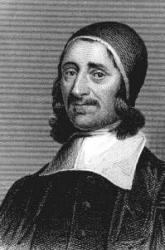
1615 - 1691 Author of "Lord, it belongs not to my care" in Evangelical Lutheran hymnal Baxter, Richard. Only s. of Richard Baxter, yeoman, Eaton Constantine, Shropshire, b. at Rowton, Shropshire, Nov. 12,1615. He was educated at Wroxeter School, and for a time held the Mastership of the Dudley Grammar School. On taking Holy Orders, he became, in 1640, Ourate of Kidderminster. Subsequently he was for some time chaplain to one of Cromwell's regiments. Through weakness he had to take an enforced rest, during which he wrote his Saints’ Everlasting Rest. On regaining his health he returned to Kidderminster, where he remained until 1660, when he removed to London. At the Restoration he became chaplain to Charles II and was offered the bishopric of Hereford, which he refused. On the passing of the Act of Uniformity, he retired from active duty as a Minister of the Church of England. In or about 1673 he took out a licence as a Nonconformist Minister and commenced lecturing in London. He d. Dec. 8, 1691. His prose works are very numerous. His poetical are :— (1) Poetical Fragments: Heart Imployment with God and Itself; The Concordant Discord of a Broken-healed Heart, tendon, Printed by T. Snowdon for B. Simmons, at the 3 Golden Cocks, &c, 1681 (2nd ed. 1689; 3rd ed. 1699). It consists of accounts of his religious experiences in verse, and is dated "London, at the Door of Eternity; Rich. Baxter, Aug. 1, 1681." (2) Additions to the Poetical Fragments of Rich. Baxter, written for himself, and Communicated to such as are more for serious Verse than smooth, London, Printed for B. Simmons at the Three Golden Cocks at the Westend of St. Pauls, 1683. (3) A Paraphrase on the Psalms, With other Hymns Left fitted for the Press, pub. the year following his death (1692). [Early English Hymnody, x., and English Psalters, 6 xii.] The Poetical Fragments were republished by Pickering, Lond., 1821. From this work his well-known hymn, " Now [Lord] it belongs not to my care," is taken (see "My whole, though broken, heart, O Lord.") -John Julian, Dictionary of Hymnology (1907) See also in: Hymn Writers of the Church

Margaret Cropper

1886 - 1980 Person Name: Margaret B. Cropper Author of "The Glory of our KIng" in Sing for Joy

Timothy Dwight

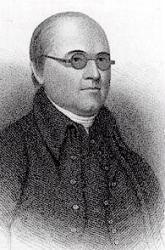
1752 - 1817 Author of "Let not despair, nor fell revenge" in The New Harp of Columbia Timothy Dwight (b. Northampton, MA, 1752; d. Philadelphia, PA, 1817) was a grandson of Jonathan Edwards who became a Congregationalist pastor, a Revolutionary War army chaplain, a tutor and professor at Yale College, and president of Yale from 1795 to 1817. As president he continued to teach and serve as chaplain and was instrumental in improving both the academic and the spiritual life of the college. Bert Polman =============== Dwight, Timothy, D.D. This is the most important name in early American hymnology, as it is also one of the most illustrious in American literature and education. He was born at Northampton, Massachusetts, May 14, 1752, and graduated at Yale College, 1769; was a tutor there from 1771 to 1777. He then became for a short time a chaplain in the United States Army, but passed on in 1783 to Fairfield, Connecticut, where he held a pastorate, and taught in an Academy, till his appointment, in 1795, as President of Yale College. His works are well known, and need no enumeration. He died at New Haven, Jan. 11, 1817. In 1797 the General Association of Connecticut, being dissatisfied with Joel Barlow's 1785 revision of Watts, requested Dwight to do the work de novo. This he did liberally, furnishing in some instances several paraphrases of the same psalm, and adding a selection of hymns, mainly from Watts. The book appeared as— "The Psalms of David, &c.... By I. Watts, D.D. A New Edition in which the Psalms omitted by Dr. Watts are versified, local passages are altered, and a number of Psalms are versified anew in proper metres. By Timothy Dwight, D.D., &c….To the Psalms is added a Selection of Hymns," 1800. Dwight's lyrics are all professedly psalms, but they are by no means literal versions. His original compositions number 33. Of these many are still in common use, the most important being:— 1. Blest be the Lord, Who heard my prayer. Psalm xxviii. This is the second part of Psalm xxviii., in 5 stanzas of 4 lines. It is in the English New Congregational Hymn Book, 1859. 2. I Love Thy kingdom, Lord. Psalm cxxxvii. This is version three of Ps. 137, in 8 stanzas of 4 lines, and is in extensive use at the present time throughout the States. It is also included in many English, Irish, and Scottish collections, sometimes in the original form, as in Alford's Year of Praise, 1867; again as, "I love Thy Church, 0 God," which opens with the second stanza, as in the Scottish Evangelical Union Hymnal, 1878, in 3 stanzas, and "We love Thy kingdom, Lord," in the Irish Church Hymnal, 1873. In Cleveland's Lyra Sacra Americana six stanzas only are given from the original. Next to this in popularity are his 2nd and 3rd renderings of Psalm lxxxviii.:— 3. Shall man, 0 God of life and light. (3rd stanza) 4. While life prolongs its precious light. (2nd stanza) Both of which are in extensive use. From his 4th version of the same Psalm (88), the following hymns have been compiled, each opening with the stanza indicated:— 5. Just o'er the grave I hung. Stanza ii. 6. I saw beyond the tomb. Stanza iv. 7. Ye sinners, fear the Lord. Stanza xii. This last is found in Spurgeon's 0ur Own Hymnbook. The original version consists of 13 stanzas. 8. 0 Thou Whose sceptre earth and seas obey. Psalm lxxii. This is his second version of this Psalm, and was given in the Comprehensive Rippon, 1844. The following, most of which are of a more jubilant character, are well known:— 9. How pleasing is Thy voice. Psalm lxv. 10. In Zion's sacred gates. Psalm cl. 11. Lord of all worlds, incline Thy gracious [bounteous] ear. Psalm llii. 12. Now to Thy sacred house. Psalm xliii., st. 3. 13. Sing to the Lord most high. Psalm c. 14. In barren wilds shall living waters spring. Psalm liii. 15. Lord, in these dark and dismal days. Psalm cxxxvii. No. 9 is found in Lyra Sacra Americana, pp. 101-2, the seven stanzas of the original being abbreviated to five. In addition to the Psalms, Dr. Dwight published three poems, "The Conquest of Canaan," 1785; "Greenfield Hill," 1794; "Triumph of Infidelity," 1788. [Rev. F. M. Bird, M.A.] - John Julian, Dictionary of Hymnology (1907)

Pages


Export as CSV
It looks like you are using an ad-blocker. Ad revenue helps keep us running. Please consider white-listing Hymnary.org or getting Hymnary Pro to eliminate ads entirely and help support Hymnary.org.