You help make Hymnary.org possible. More than 10 million people from 200+ countries found hymns, liturgical resources and encouragement on Hymnary.org in 2025, including you. Every visit affirms the global impact of this ministry.

If Hymnary has been meaningful to you this year, would you take a moment today to help sustain it? A gift of any size—paired with a note of encouragement if you wish—directly supports the server costs, research work and curation that keep this resource freely available to the world.

Give securely online today, or mail a check to:
Hymnary.org
Calvin University
3201 Burton Street SE
Grand Rapids, MI 49546

Thank you for your partnership, and may the hope of Advent fill your heart.

Person Results

Tune Identifier:"^rosefield_malan$"
In:people

Planning worship? Check out our sister site, ZeteoSearch.org, for 20+ additional resources related to your search.
Showing 11 - 20 of 27Results Per Page: 102050

Folliott Sandford Pierpoint

1835 - 1917 Person Name: Folliott S. Pierpoint Author of "For the Beauty of the Earth" in The Bible Songs Hymnal In the spring of 1863, Folliott S. Pierpoint (b. Bath, Somerset, England, 1835; d. Newport, Monmouthshire, England, 1917) sat on a hilltop outside his native city of Bath, England, admiring the country view and the winding Avon River. Inspired by the view to think about God's gifts in creation and in the church, Pierpont wrote this text. Pierpont was educated at Queen's College, Cambridge, England, and periodically taught classics at Somersetshire College. But because he had received an inheritance, he did not need a regular teaching position and could afford the leisure of personal study and writing. His three volumes of poetry were collected in 1878; he contributed hymns to The Hymnal Noted (1852) and Lyra Eucharistica (1864). "For the Beauty of the Earth" is the only Pierpont hymn still sung today. Bert Polman ================== Pierpoint, Folliott Sandford, M.A., son of William Home Pierpoint of Bath, was born at Spa Villa, Bath, Oct. 7, 1835, and educated at Queen's College, Cambridge, graduating in classical honours in 1871. He has published The Chalice of Nature and Other Poems, Bath, N.D. This was republished in 1878 as Songs of Love, The Chalice of Nature, and Lyra Jesu. He also contributed hymns to the Churchman's Companion (London Masters), the Lyra Eucharistica, &c. His hymn on the Cross, "0 Cross, O Cross of shame," appeared in both these works. He is most widely known through:— "For the beauty of the earth." Holy Communion, or Flower Service. This was contributed to the 2nd edition of Orby Shipley's Lyra Eucharistica, 1864, in 8 stanzas of 6 lines, as a hymn to be sung at the celebration of Holy Communion. In this form it is not usually found, but in 4, or sometimes in 5, stanzas, it is extensively used for Flower Services and as a Children's hymn. --John Julian, Dictionary of Hymnology (1907)

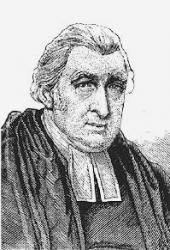
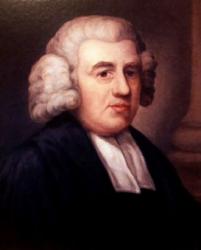
John Newton

1725 - 1807 Person Name: Rev. John Newton (1725-1807) Author of "Quite, Lord, my froward heart" in Hymnal Amore Dei John Newton (b. London, England, 1725; d. London, 1807) was born into a Christian home, but his godly mother died when he was seven, and he joined his father at sea when he was eleven. His licentious and tumul­tuous sailing life included a flogging for attempted desertion from the Royal Navy and captivity by a slave trader in West Africa. After his escape he himself became the captain of a slave ship. Several factors contributed to Newton's conversion: a near-drowning in 1748, the piety of his friend Mary Catlett, (whom he married in 1750), and his reading of Thomas à Kempis' Imitation of Christ. In 1754 he gave up the slave trade and, in association with William Wilberforce, eventually became an ardent abolitionist. After becoming a tide-surveyor in Liverpool, England, Newton came under the influence of George Whitefield and John and Charles Wesley and began to study for the ministry. He was ordained in the Church of England and served in Olney (1764-1780) and St. Mary Woolnoth, London (1780-1807). His legacy to the Christian church includes his hymns as well as his collaboration with William Cowper (PHH 434) in publishing Olney Hymns (1779), to which Newton contributed 280 hymns, including “Amazing Grace.” Bert Polman ================== Newton, John, who was born in London, July 24, 1725, and died there Dec. 21, 1807, occupied an unique position among the founders of the Evangelical School, due as much to the romance of his young life and the striking history of his conversion, as to his force of character. His mother, a pious Dissenter, stored his childish mind with Scripture, but died when he was seven years old. At the age of eleven, after two years' schooling, during which he learned the rudiments of Latin, he went to sea with his father. His life at sea teems with wonderful escapes, vivid dreams, and sailor recklessness. He grew into an abandoned and godless sailor. The religious fits of his boyhood changed into settled infidelity, through the study of Shaftesbury and the instruction of one of his comrades. Disappointing repeatedly the plans of his father, he was flogged as a deserter from the navy, and for fifteen months lived, half-starved and ill-treated, in abject degradation under a slave-dealer in Africa. The one restraining influence of his life was his faithful love for his future wife, Mary Catlett, formed when he was seventeen, and she only in her fourteenth year. A chance reading of Thomas à Kempis sowed the seed of his conversion; which quickened under the awful contemplations of a night spent in steering a water-logged vessel in the face of apparent death (1748). He was then twenty-three. The six following years, during which he commanded a slave ship, matured his Christian belief. Nine years more, spent chiefly at Liverpool, in intercourse with Whitefield, Wesley, and Nonconformists, in the study of Hebrew and Greek, in exercises of devotion and occasional preaching among the Dissenters, elapsed before his ordination to the curacy of Olney, Bucks (1764). The Olney period was the most fruitful of his life. His zeal in pastoral visiting, preaching and prayer-meetings was unwearied. He formed his lifelong friendship with Cowper, and became the spiritual father of Scott the commentator. At Olney his best works—-Omicron's Letters (1774); Olney Hymns (1779); Cardiphonia, written from Olney, though published 1781—were composed. As rector of St. Mary Woolnoth, London, in the centre of the Evangelical movement (1780-1807) his zeal was as ardent as before. In 1805, when no longer able to read his text, his reply when pressed to discontinue preaching, was, "What, shall the old African blasphemer stop while he can speak!" The story of his sins and his conversion, published by himself, and the subject of lifelong allusion, was the base of his influence; but it would have been little but for the vigour of his mind (shown even in Africa by his reading Euclid drawing its figures on the sand), his warm heart, candour, tolerance, and piety. These qualities gained him the friendship of Hannah More, Cecil, Wilberforce, and others; and his renown as a guide in experimental religion made him the centre of a host of inquirers, with whom he maintained patient, loving, and generally judicious correspondence, of which a monument remains in the often beautiful letters of Cardiphonia. As a hymnwriter, Montgomery says that he was distanced by Cowper. But Lord Selborne's contrast of the "manliness" of Newton and the "tenderness" of Cowper is far juster. A comparison of the hymns of both in The Book of Praise will show no great inequality between them. Amid much that is bald, tame, and matter-of-fact, his rich acquaintance with Scripture, knowledge of the heart, directness and force, and a certain sailor imagination, tell strongly. The one splendid hymn of praise, "Glorious things of thee are spoken," in the Olney collection, is his. "One there is above all others" has a depth of realizing love, sustained excellence of expression, and ease of development. "How sweet the name of Jesus sounds" is in Scriptural richness superior, and in structure, cadence, and almost tenderness, equal to Cowper's "Oh! for a closer walk with God." The most characteristic hymns are those which depict in the language of intense humiliation his mourning for the abiding sins of his regenerate life, and the sense of the withdrawal of God's face, coincident with the never-failing conviction of acceptance in The Beloved. The feeling may be seen in the speeches, writings, and diaries of his whole life. [Rev. H. Leigh Bennett, M.A.] A large number of Newton's hymns have some personal history connected with them, or were associated with circumstances of importance. These are annotated under their respective first lines. Of the rest, the known history of which is confined to the fact that they appeared in the Olney Hymns, 1779, the following are in common use:— 1. Be still, my heart, these anxious cares. Conflict. 2. Begone, unbelief, my Saviour is near. Trust. 3. By the poor widow's oil and meal. Providence. 4. Chief Shepherd of Thy chosen sheep. On behalf of Ministers. 5. Darkness overspreads us here. Hope. 6. Does the Gospel-word proclaim. Rest in Christ. 7. Fix my heart and eyes on Thine. True Happiness. 8. From Egypt lately freed. The Pilgrim's Song. 9. He Who on earth as man was Known. Christ the Rock. 10. How blest are they to whom the Lord. Gospel Privileges. 11. How blest the righteous are. Death of the Righteous. 12. How lost was my [our] condition. Christ the Physician. 13. How tedious and tasteless the hours. Fellowship with Christ. 14. How welcome to the saints [soul] when pressed. Sunday. 15. Hungry, and faint, and poor. Before Sermon. 16. In mercy, not in wrath, rebuke. Pleading for Mercy. 17. In themselves, as weak as worms. Power of Prayer. 18. Incarnate God, the soul that knows. The Believer's Safety. 19. Jesus, Who bought us with His blood. The God of Israel. "Teach us, 0 Lord, aright to plead," is from this hymn. 20. Joy is a [the] fruit that will not grow. Joy. 21. Let hearts and tongues unite. Close of the Year. From this "Now, through another year," is taken. 22. Let us adore the grace that seeks. New Year. 23. Mary to her [the] Saviour's tomb. Easter. 24. Mercy, 0 Thou Son of David. Blind Bartimeus. 25. My harp untun'd and laid aside. Hoping for a Revival. From this "While I to grief my soul gave way" is taken. 26. Nay, I cannot let thee go. Prayer. Sometimes, "Lord, I cannot let Thee go." 27. Now may He Who from the dead. After Sermon. 28. 0 happy they who know the Lord, With whom He deigns to dwell. Gospel Privilege. 29. O Lord, how vile am I. Lent. 30. On man in His own Image made. Adam. 31. 0 speak that gracious word again. Peace through Pardon. 32. Our Lord, Who knows full well. The Importunate Widow. Sometimes altered to "Jesus, Who knows full well," and again, "The Lord, Who truly knows." 33. Physician of my sin-sick soul. Lent. 34. Pleasing spring again is here. Spring. 35. Poor, weak, and worthless, though I am. Jesus the Friend. 36. Prepare a thankful song. Praise to Jesus. 37. Refreshed by the bread and wine. Holy Communion. Sometimes given as "Refreshed by sacred bread and wine." 38. Rejoice, believer, in the Lord. Sometimes “Let us rejoice in Christ the Lord." Perseverance. 39. Salvation, what a glorious plan. Salvation. 40. Saviour, shine and cheer my soul. Trust in Jesus. The cento "Once I thought my mountain strong," is from this hymn. 41. Saviour, visit Thy plantation. Prayer for the Church. 42. See another year [week] is gone. Uncertainty of Life. 43. See the corn again in ear. Harvest. 44. Sinner, art thou still secure? Preparation for the Future. 45. Sinners, hear the [thy] Saviour's call. Invitation. 46. Sovereign grace has power alone. The two Malefactors. 47. Stop, poor sinner, stop and think. Caution and Alarm. 48. Sweeter sounds than music knows. Christmas. 49. Sweet was the time when first I felt. Joy in Believing. 50. Ten thousand talents once I owed. Forgiveness and Peace. 51. The grass and flowers, which clothe the field. Hay-time. 52. The peace which God alone reveals. Close of Service. 53. Thy promise, Lord, and Thy command. Before Sermon. 54. Time, by moments, steals away. The New Year. 55. To Thee our wants are known. Close of Divine Service. 56. We seek a rest beyond the skies. Heaven anticipated. 57. When any turn from Zion's way. Jesus only. 58. When Israel, by divine command. God, the Guide and Sustainer of Life. 59. With Israel's God who can compare? After Sermon. 60. Yes, since God Himself has said it. Confidence. 61. Zion, the city of our God. Journeying Zionward. -- John Julian, Dictionary of Hymnology (1907) ================= Newton, J., p. 803, i. Another hymn in common use from the Olney Hymns, 1779, is "Let me dwell on Golgotha" (Holy Communion). --John Julian, Dictionary of Hymnology, Appendix, Part II (1907) ----- John Newton was born in London, July 24, 1725. His mother died when he was seven years old. In his eleventh year he accompanied his father, a sea captain, on a voyage. For several years his life was one of dissipation and crime. He was disgraced while in the navy. Afterwards he engaged in the slave trade. Returning to England in 1748, the vessel was nearly wrecked in a storm. This peril forced solemn reflection upon him, and from that time he was a changed man. It was six years, however, before he relinquished the slave trade, which was not then regarded as an unlawful occupation. But in 1754, he gave up sea-faring life, and holding some favourable civil position, began also religious work. In 1764, in his thirty-ninth year, he entered upon a regular ministry as the Curate of Olney. In this position he had intimate intercourse with Cowper, and with him produced the "Olney Hymns." In 1779, Newton became Rector of S. Mary Woolnoth, in London, in which position he became more widely known. It was here he died, Dec. 21, 1807, His published works are quite numerous, consisting of sermons, letters, devotional aids, and hymns. He calls his hymns "The fruit and expression of his own experience." --Annotations of the Hymnal, Charles Hutchins, M.A. 1872 See also in: Hymn Writers of the Church =======================

George Duffield

1818 - 1888 Person Name: Duffield Author of "Once again beside the cross" in New Manual of Praise Duffield, George, Jr., D.D., son of the Rev. Dr. Duffield, a Presbyterian Minister, was born at Carlisle, Pennsylvania, Sept. 12, 1818, and graduated at Yale College, and at the Union Theological Seminary, New York. From 1840 to 1847 he was a Presbyterian Pastor at Brooklyn; 1847 to 1852, at Bloomfield, New Jersey; 1852 to 1861, at Philadelphia; 1861 to 1865, at Adrian, Michigan; 1865 to 1869, at Galesburg, Illinois; 1869, at Saginaw City, Michigan; and from 1869 at Ann Arbor and Lansing, Michigan. His hymns include;— 1. Blessed Saviour, Thee I love. Jesus only. One of four hymns contributed by him to Darius E. Jones's Temple Melodies, 1851. It is in 6 stanzas of 6 lines. In Dr. Hatfield's Church Hymnbook it is given in 3 stanzas. The remaining three hymns of the same date are:— 2. Parted for some anxious days. Family Hymn. 3. Praise to our heavenly Father, God. Family Union. 4. Slowly in sadness and in tears. Burial. 5. Stand up, stand up for Jesus. Soldiers of the Cross. The origin of this hymn is given in Lyra Sac. Americana, 1868, p. 298, as follows:— "I caught its inspiration from the dying words of that noble young clergyman, Rev. Dudley Atkins Tyng, rector of the Epiphany Church, Philadelphia, who died about 1854. His last words were, ‘Tell them to stand up for Jesus: now let us sing a hymn.' As he had been much persecuted in those pro-slavery days for his persistent course in pleading the cause of the oppressed, it was thought that these words had a peculiar significance in his mind; as if he had said, ‘Stand up for Jesus in the person of the downtrodden slave.' (Luke v. 18.)" Dr. Duffield gave it, in 1858, in manuscript to his Sunday School Superintendent, who published it on a small handbill for the children. In 1858 it was included in The Psalmist, in 6 stanzas of 8 lines. It was repeated in several collections and in Lyra Sac. Amer., 1868, from whence it passed, sometimes in an abbreviated form, into many English collections. [Rev. F. M. Bird, M.A.] - John Julian, Dictionary of Hymnology (1907) See also in: Hymn Writers of the Church

Rowland Hill

1744 - 1833 Person Name: R. Hill Author of "Ye Who in These Courts Are Found" in Gloria Deo Hill, Rowland, M.A., son of Sir Rowland Hill, Bart., was born at Hawkstone, near Shrewsbury, Aug. 23,1744, and educated at Shrewsbury Grammar School, Eton, and St. John's College, Cambridge (B.A. 1769). Taking Holy Orders, he was for a time curate of Kingston, near Taunton. Leaving his curacy, but without renouncing his Orders or his connection with the Church of England, he itinerated for some twelve years, preaching mostly in Wilts, Gloucestershire, Somersetshire, and London. At Wotton-under-Edge he built a Chapel, where he often preached, and also opened the well-known Surrey Chapel, London, in 1783. At the latter place he ministered for nearly fifty years. He took great interest in Evangelical and Mission work, was one of the founders of the London Missionary Society, and a member of the first committee of the Religious Tract Society. He died April 11, 1833, He was the author of several prose works; he also compiled the following hymnbooks:— (1) A Collection of Psalms and Hymns for the Use of the Poor, 1774. (2) A Collection of Psalms and Hymns, chiefly intended for Public Worship, 1783. This was enlarged in 1787, and a Supplement was added in 1796. Other revisions followed, the last being in 1830. (3) Divine Hymns attempted in easy language for the Use of Children, 1790 (2nd ed. 1794; later editions 1808 & 1819). The hymns in this work, he tells us, are, with the exception of Nos. 24 and 37, his own, revised and corrected by some one he is not permitted to name (Preface iv.-viii.). (4) A Collection of Hymns for Children, 1808. (5) Hymns for Schools, 1832. In these collections no authors' names are given, and his own contributions, except in the case of the children's Hymns, 1790, are difficult to determine. By common consent the following, including some from the 1790 Hymns, are attributed to him:— 1. Come, Holy Ghost, the Comforter. Whitsuntide. No. 30 of his Divine Hymns for Children, 1790, in 5 st. of 4 1. and headed "A Child's Prayer to God the Holy Spirit." It was repeated in the later editions of the Divine Hymns, and is found in modern hymn books. 2. Dear Friend of friendless sinners, hear. A Prayer for Rest in God. In his Psalms & Hymns &c, 1783, No. 89, in 4 st. of 6 1., and headed "A Prayer for the promised Rest." In modern hymnbooks its use is limited. 3. Happy the children who betimes. Godly Education. No. 8 in his Divine Hymns, 1790, in 5 st. of 4 1., and headed " The Blessings of a godly Education." It was repeated in later editions, and, sometimes with the omission of st. v. in modern collections for children. 4. Lord, we raise our feeble voices. Praise to Jesus . Major, in his Book of Praise for Home & School, dates this hymn 1800. It is found in several collections for children. 5. My parents gave me, Lord. A Child's Dedication to God. No. 13 in his Divine Hymns, 1790, in 6 stanzas of 6 lines, and headed "A Child's Hymn on easy Dedication to God in Holy Baptism." It is in a few modern collections. 6. We sing His love Who once was slain. The Resurrection. Appeared in the 1796 Supplement to his Psalms & Hymns It is in American common use. 7. When Jesus first at heaven's Command. The Kingdom, of Christ exalted. Composed for the London Missionary Society, and printed in the Evangelical Magazine, 1797, vol. v. p. 263. It is appended to the author's sermon to the volunteers preached at Surrey Chapel, 1803, and was also included in the 1810 ed. of his Psalms & Hymns, No. 302, in 6 stanzas of 4 lines with the chorus, "Hail Immanuel," &c. 8. With heavenly power, 0 Lord defend. Departure of Ministers. Published in his Psalms & Hymns, 1783, No. 234, in 4 stanzas of 4 l,ines and headed "For Ministers at their Departure." In modern hymn books it is generally given in 2 stanzas. 9. Ye that in these [His] courts are found. Public Worship. This is usually attributed to R. Hill. It appeared, however, in Lady Huntingdon's Hymn Book, 1765, p. 404 (ed. 1773, p. 256), and can scarcely be his. In his Psalms & Hymns 1783. It is usually given as "Ye that in His courts," in modern collections. The person referred to as having revised the Divine Hymns, 1790, was the poet Cowper. The best known of R. Hill's hymns, "Cast thy burden on the Lord," and "Gently, my Saviour, let me down," are annotated under their respective first lines. His Life, by the Rev. E. Sidney, M.A., was published in 1834. --John Julian, Dictionary of Hymnology (1907)

Harriet Auber

1773 - 1862 Author of "On Thy Church, O Power divine!" in Life-Time Hymns Auber, Harriet, daughter of Mr. James Auber, b. in London, Oct. 4, 1773. During the greater part of her quiet and secluded life she resided at Broxbourne and Hoddesdon, Herts, and died at the latter place on the 20th Jan., 1862. Miss Auber wrote devotional and other poetry, but only a portion of the former was published in her Spirit of the Psalms, in 1829. This collection is mainly her work, and from it some useful versions of the Psalms have been taken and included in modern hymn-books, about 20 appearing in Spurgeon's Our Own Hymn Book, 1866. Miss Auber's name is widely known, but it is principally through her exquisite lyric, "Our blest Redeemer, ere He breathed," and the Epiphany hymn, "Bright was the guiding star that led." (For criticism of her work, see English Psalters, §. 17.) In addition to these and other hymns by Miss Auber, which are annotated under their respective first lines, the following are also in C. V., but principally in America:— 1.  Arise, ye people, and adore.   Easter. 2.  As Thy chosen people, Lord.   Ps. lxciii. 3.  Can guilty man indeed believe?   Ps. xciv. 4.  Delightful is the task to sing.   Ps. cxlvii. 5.  Father of Spirits, Nature's God.   Ps. cxxxi. 6.  Hail, gracious Source of every good.   Ps. Ixv. 7.  Hasten, Lord, the glorious time.   Ps. lxxii. 8.  Jehovah reigns, O earth, rejoice.   Ps. xccii. 9.  Join, all ye servants of the Lord.   H. Scriptures. 10.  Jesus, Lord, to Thee we sing.   Ps. cx. 11.  O all ye lands, rejoice in God.   Ps. lxvi. 12.  O God our Strength, to Thee the song.   Ps. lIxxxi. 13.  O praise our great and gracious Lord.   Ps. lxxviii. 14.  On thy church, O power divine.   Ps. lxvii. 15.  Sweet is the work, O Lord.   Sunday. 16.  That Thou, O Lord, art ever nigh.   Ps. lxxv. 17.  The Lord, Who hath redeemed our souls.   Ps. xxxi. 18.  When all bespeaks a Father's love.   Ps. set. 19.  When dangers press and fears invade.   Ps. lxii. 20.  Who, O Lord, when life is o'er.   Ps. xv. 21.  Whom have we   Lord,  in  heaven, but Thee.   Ps. lxxiii. 22.  Wide, ye heavenly gates, unfold.   Ascension. 23.  With hearts in love abounding.   Ps. xlv. 24.  With joy we hail the sacred day.   Sunday. 25.  Vainly through the night the ranger.   Ps. cxvii. All these psalm-versions and hymns are from her Spirit of the Psalms,   London, 1829. - John Julian, Dictionary of Hymnology (1907) ========================= Auber, Harriet, p. 90, ii. The following versions of psalms from her Spirit of the Psalms, 1829, are also in common use:- 1. Great God, wert Thou extreme to mark. Ps. cxxx. "Thy servants in the temple watched," begins with stanza ii. of this. 2. How blest are they who daily prove. Ps. xli. 3. How blest the children of the Lord. Altered from Ps. cxii. 4. Jehovah, great and awful name. Part of Ps. Ixxviii. 5. 0 Thou Whom heaven's bright host revere. Ps. Ixxxiv. 6. Praise the Lord, our mighty King. Ps. cxxxv. 7. Spirit of peace, Who as a [celestial] Dove. Ps. cxxxiii. 8. Thou by Whose strength the mountains stand. Ps. Ixv. 9. To heaven our longing eyes we raise. Ps. cxxi. 10. Vainly through night's weary hours. Ps. cxxvii. Sometimes "Vainly through the night the ranger." 11. While all the golden harps above. Easter. --John Julian, Dictionary of Hymnology, Appendix, Part II (1907) See also in:Hymn Writers of the Church

Joseph Humphreys

b. 1720 Author of "Blessed Are the Sons of God" in Trinity Hymnal (Rev. ed.) Humphreys, Joseph, son of Asher Humphreys, minister at Burford, Oxfordshire, was born at Burford, Oct. 28, 1720, and educated at a grammar school at Fairford, and at an academy for the training of young men for the ministry in London. From the latter he was expelled, Dec. 25, 1739, because of his attachment to Whitefield. For a short time he associated with the Wesleys, but eventually joined G. Whitefield, and subsequently preached at Bristol, London, and Deptford. He died in London (date unknown), and was buried in the Moravian Cemetery at Chelsea. He was a contributor to Whitefield's Christian History (1741-1748), 1742, &c, and published, 1742, An Account of Joseph Humphreys's Experiences, &c. As a hymnwriter he is not widely known. His hymns were contributed to J. Cennick'e Sacred Hymns for the Use of Religious Societies (Bristol), 1743, pt. ii., and are thus introduced: "These were done by Mr. Joseph Humphreys." Of these hymns, two only are in common use:— 1. Blessed are the sons of God. Adoption. 2. Come, guilty souls, and flee away. Invitation. These are given in Spurgeon's Our Own Hymn Book, 1866, and other collections. No. 1 is the more popular of the two. It is sometimes abbreviated, and has the concluding lines of st. viii. added as a refrain to each stanza. --John Julian, Dictionary of Hymnology (1907) ================= Born: October 28, 1720, Burford, Oxfordshire, England. Died: London, England. Buried: Moravian Cemetery, Chelsea, England. Joseph was the son of Asher Humphreys, Rector of Barton, Hertfordshire, and subsequently Burford, Oxfordshire. At age 10, Joseph was sent to a grammar school at Fairfield, Gloucestershire. His father died in 1732, and Joseph was sent, at age 12, to a theological school in London. In 1738, having been converted to the doctrines of the Wesleys, he began to preach at the Foundry, London, in Bristol, and elsewhere. He attached himself particularly to John Cennick, and accompanied him frequently on his evangelistic tours. Hatfield reports, "For his irregularities in these respects, he was expelled, December 25, 1739, from the school." Following Cennick’s example, Humphreys separated from the Wesleys in April 1741 and became associated with Whitefield. The same year, he preached for the Moravians at Deptford, West Greenwich. He was also one of the four principal contributors to The Weekly History, just then established, in the interest of the new religious movement. Several of his "Letters to John Wesley," opposing his views, appeared in this journal. Humphreys frequently preached at the Bowling Green, Bristol, and the Tabernacle, London. In January 1743, he united with several clergymen and lay preachers in organizing, near Cardiff, Wales, the first Calvinistic Methodist Society. In 1790, according to John Wesley’s journal, Humphreys left Whitefield and was ordained a Presbyterian minister. He later received an Episcopal ordination. Humphreys’ works include: A Letter to the Religious Societies, in Testimony Against the Errors of Universal Redemption and Sinless Perfection (Bristol, England: 1741) An Account of Joseph Humphreys’ Experience at the Work of Grace upon His Heart (Bristol, England: 1742) --www.hymntime.com/tch

Henry Downton

1818 - 1885 Person Name: H. Downton Author of "For Thy Mercy And Thy Grace" in American Lutheran Hymnal Downton, Henry, M.A, son of Mr. John Downton, Sub-Librarian of Trinity College, Cambridge, was born at Pulverbatch, Shropshire, Feb. 12, 1818, and educated at Trinity College, Cambridge, where he graduated B.A. 1840, and M.A. 1843. Taking Holy Orders in 1843, he became Curate of Bembridge, Isle of Wight, 1843, and of Holy Trinity, Cambridge, 1847. In 1849 he was preferred to the Incumbency of St. John's, Chatham. He went to Geneva as English Chaplain in 1857; and was appointed Rector of Hopton in 1873. He was also for some time Domestic Chaplain to the late Lord Monson. He died at Hopton, June 8, 1885. Mr. Downton published a translation of Professor Ernest Naville's Lectures on Modern Atheism, 1865; and Holy Scripture and the Temperance Question, 1878. His hymns were chiefly contributed to the Church of England Magazine; A. T. Russell's Psalms & Hymns, 1851; Barry's Psalms & Hymns, 1862; and the Sunday Magazine. In 1873 he collected these and published them as Hymns and Verses. His translations from the French of Alexandre Vinet are also in the volume. His best known hymns are "Another year, another year" (given anonymously in the Harrow School Hymns, 1855); "For Thy mercy, and Thy grace"; and " Harp awake, tell out the story." These have attained to great popularity, and are in extensive use. - John Julian, Dictionary of Hymnology (1907)

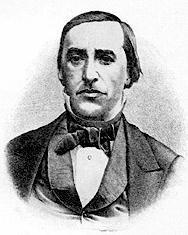
Henri A. C. Malan

Person Name: H. A. C. Malan Composer of "ROSEFIELD" in Redeeming Love See Malan, César, 1787-1864

Benjamin Williams

1725 - 1795 Author of "Holy, holy, holy Lord!" in Luther League Hymnal Williams, Benjamin, 1725-1795. Presbyterian minister at Salisbury, who in addition to a volume of Sermons, 1770, and the Salisbury Hymn Book, 1778, published The Book of Psalms as translated, paraphrased or imitated by some of the most eminent English poets, &c. Salisbury, 1781. His best known hymn, "Holy, holy, holy Lord," in celebration of the Divine Goodness, is in his own Collection, Kippis, Martineau’s Hymns for the Christian Church and Home, Martineau’s Hymns of Praise and Prayer, and Belfast Collection. --John Julian, Dictionary of Hymnology (1907)

William Dalrymple Maclagan

1826 - 1910 Person Name: William D. Maclagan Author of "Holy Spirit, Lord of love" in Hymns of the Church Maclagan, William Dalrymple , D.D., son of David Maclagan, M.D., was born in Edinburgh, June 18, 1826. In early life he entered the army, and served for some time in India. Retiring with the rank of lieutenant, he entered St. Peter's College, Cambridge, where he graduated B.A. 1856 and M.A. in 1860. Taking Holy Orders, he was curate of St. Saviour's, Paddington, 1856-58, and St. Stephen's, Marylebone, 1858-60. He then became Secretary to the London Diocesan Church Building Society, from 1860 to 1865; curate of Enfield, 1865-69; Rector of Newington, 1869-75; and Vicar of Kensington, 1875-78. He was also Hon. Chaplain to the Queen, and Prebendary of Reculverland in St. Paul's Cathedral, London. In 1878 he was consecrated Bishop of Lichfield. Bishop Maclagan's work has been mainly of a practical character, and his publications are few. The few hymns which he has written have been received with great favour, and create a desire for more of the same kind and quality. The following are in common use.:— 1. Again the trumpet sounds. Missions. Written about 1870. Appeared in the Hymns Ancient & Modern Hymns Ancient & Modern series of Hymns for Mission Services. 1871. 2. Be still, my soul, for God is near. Holy Communion. Part ii. is “O Body, broken for my sake." Written about 1873 for St. Mary's, Newington. In Thring's Collection, 1882. 3. Holy Spirit, Lord of love. Confirmation. Written about 1873, and published in Mrs. C. Brock's Children's Hymn Book, 1884. 4. It is finished, blessed Jesus [Saviour]. Good Friday. Written for Hymns Ancient & Modern, 1875. In several collections. 5. Lord, when Thy Kingdom comes, remember me. Good Friday. Written for the 1875 ed. of Hymns Ancient & Modern. Sometimes given in two parts: Pt. ii. Beginning, “Lord, when with dying lips my prayer is said." 6. The Saints of God their conflict past. All Saints. First published in Church Bells, 1870; and again in the Society for Promoting Christian Knowledge Church Hymns, 1871. 7. What thanks and praise to Thee we owe. St. Luke. Written for the 1875 edition of Hymns Ancient & Modern These hymns are of more than usual merit, being characterized by great simplicity, tenderness, and fervour. The special season or purpose is clearly indicated, and its lessons earnestly enforced. -- John Julian, Dictionary of Hymnology (1907) ============= Maclagan, Abp. W. D., pp. 709, i.; 1578, ii. At the present time all Abp. Maclagan's hymns are in common use, and most of his tunes likewise. With regard to the latter, it is exceptional to find so many tunes by the author of popular hymns sharing the same popularity in the principal hymnals. In Church Hymnal, 1903, and Hymns Ancient & Modern, 1904, combined, there are eight of his tunes, whilst the hymns are six in all. --John Julian, Dictionary of Hymnology, New Supplement (1907)

Pages


Export as CSV
It looks like you are using an ad-blocker. Ad revenue helps keep us running. Please consider white-listing Hymnary.org or getting Hymnary Pro to eliminate ads entirely and help support Hymnary.org.