

 My Starred Hymns
 My FlexScores
 My Hymnals
 My Purchased Files
Planning worship?
Check out our sister site, ZeteoSearch.org,
for 20+ additional resources related to your search.
- |
User Links
Person Results
L. G. Hayne
1836 - 1883 Person Name: Rev. Leighton G. Hayne Topics: The Kingdom of God on Earth World Friendship and Peace Composer of "ST. CECILIA" in The Hymnal Born: February 28, 1836, St. David’s Hall, Exeter, England.
Died: March 3, 1883, Bradfield, Essex, England.
Son of Richard Hayne, Rector of Mistley, Leighton graduated from Eton and Queen’s College, Oxford (BMus 1856, DMus 1860); at school, he was Eton College’s organist and conducted the Oxford University chorus. He also served as chaplain of Queen’s College; Vicar of Helston, Cornwall (1866-67); Succentor of Eton (1867-71); and Rector of Mistley, Essex (1871-83), and was well known as an organ builder.
Music:
BUCKLAND
CHALVEY
ST. CECILIA
ST. LAWRENCE
--www.hymntime.com/tch/
L. G. Hayne
Aleksēi Federovich L'vov
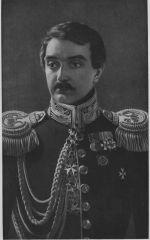
1798 - 1870 Person Name: Alexis Lwoff Topics: The Kingdom of God on Earth The Nation Composer of "RUSSIAN HYMN" in The Hymnal Alexis Federovich L’vov Estonia 1798-1870. Born at Reval, Estonia, son of the St. Petersburg imperial court chapel director, he learned violin as a child and gave regular concerts in his home at age 9. Studying under a number of teachers until age 19, he then studied independently and developed his own personal style of playing. He entered the Russian army in 1818, became a civil engineer there eventually a General in 1828, when he was appointed Aide-de-camp to Tsar Nicholas I. He married Praskovya Aggeyevna, and they had a son and two daughters. He eventually took over his father’s post after he died in 1837 and stayed at that position for 24 years. He formed a string quartet in St. Petersburg and held weekly concerts at his private residence, which were attended by members of high society, including Franz Liszt, Robert and Clara Schumann, and Berlioz. In charge of the Russian chapel choir, it was described by Berlioz as of exceptional quality, expressing regret that Europeans were unable to hear the extraordinary sounds of the chapel choir (80 singers). L’vov took his quartet on several European tours where he could play to public audiences. He met Mendelssohn, Meyerbeer, and Spontini, who became personal friends. L’vov codified the Russian liturgical musical style ‘Obikhod’, the standard repertory of most Russian Orthodox churches in the world. L’vov was a member of the Russian musical establishment. Two of his friends who attained musical fame were Glinka and Berlioz, both impressed with L’vov’s superb violin playing and composing abilities. He composed violin music, operas and various religious pieces. His opera “Undine” (1846) became famous. In 1850 he founded the Russian Concert Society. His musical style was eclectic, combining traditions of Russian culture with Italian and German influences. He retired in 1867 due to deafness. He died near Kovno, Lithuania.
John Perry
Aleksēi Federovich L'vov
Walter Russell Bowie
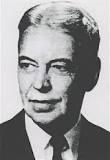
1882 - 1969 Topics: Kingdom of God on Earth, The City, The Author of "O Holy City, Seen of John" in The Hymnbook Walter Russell Bowie (October 8, 1882–April 23, 1969), was a priest, author, editor, educator, hymn writer, and lecturer in the Episcopal Church (United States).
See also in:
Wikipedia
Walter Russell Bowie
Henry F. Chorley
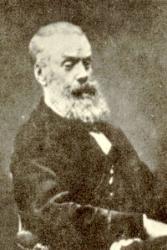
1808 - 1872 Topics: The Kingdom of God on Earth The Nation Author of "God, the Omnipotent! King, who ordainest" in The Hymnal Chorley, Henry Fothergill, was born at Blackleyhurst, Lancashire, Dec. 15, 1808, and educated at the Royal Institution, Liverpool. In 1834 he was engaged as a member of the staff of the London Athenaeum. This connection he retained for 35 years. He died Feb. 15, 1872. He published some novels and a large number of songs.
--John Julian, Dictionary of Hymnology, Appendix, Part II (1907)
============
Born: December 15, 1808, Blackley Hurst, near Billinge, Lancashire, England.
Pseudonym: Paul Dell.
Died: February 16, 1872, London, England.
Buried: Brompton Cemetery, London, England.
Son of an iron worker and lock maker, Chorley moved with his family to Liverpool after his father’s death in 1816. He was educated by private tutors in Liverpool and at the school of the Royal Institution. His youth was shaped partly by time spent in the household of the wealthy and intellectual Mrs. Benson Rathbone of Green Bank, and he became a close friend of her son Benson, who died in an accident in 1834.
Chorley began writing for the London Athenæum in 1830, and was the paper’s music critic and literary reviewer until 1868. He also became music critic for the London Times and wrote, for these and other journals, reviews and musical gossip columns, discussing composers and performers in Britain and on the European continent. He was quite conservative, and was a persistent opponent of innovation, but was a lively chronicler of London life. In the Athenæum and elsewhere, Chorley often criticized the music of Schumann and Wagner for what he called "decadence." In 1850 and 1851, Chorley edited the Ladies’ Companion, which covered fashion and domestic women’s issues.
Chorley was also a journalist, novelist, playwright, and poet, and opera librettist. One of his best known pieces was his obituary of Turgenev, mistakenly written while the Russian was still very much alive. Turgenev was not offended by the error nearly as much as he was by the critical opinions of his work Chorley gave in the obituary.
Chorley was considered eccentric and abrasive, but was respected for his integrity and kindness. He enthusiastically gave and attended dinner parties, and cultivated friendships with Elizabeth Barrett, Felix Mendelssohn, Charles Dickens, Arthur Sullivan and Charles Santley. After the death of his brother, John Rutter Chorley (1806–1867), Henry inherited enough money to retire from the Athenæum, though he continued to contribute articles for that paper and for The Orchestra.
In spite of Chorley’s efforts to promote the music of Charles Gounod in England, the composer disliked Chorley intensely. When Gounod lived in England in the early 1870’s, he wrote a satirical piano piece intended to be a parody of Chorley’s personality. It greatly amused Gounod’s English patron, Georgina Weldon, who described Chorley as having a "thin, sour, high-pitched sopranish voice" and moving like a "stuffed red-haired monkey." Gounod intended to publish the piece with a dedication to Chorley, but died before this was possible. Weldon then invented a new program for the piece, which was re-titled Funeral March of a Marionette. It became popular as a concert piece, and in the 1950s, its opening phrases became well known as the theme music for the television program Alfred Hitchcock Presents.
Chorley’s works include:
Music and Manners in France and Germany, 1841
Pomfret, 1845
Roccabella, 1859
The Prodigy, 1866
--www.hymntime.com/tch/
Henry F. Chorley
Somerset Corry Lowry
1855 - 1932 Topics: The Kingdom of God on Earth Stewardship Author of "Son of God, eternal Saviour" in The Hymnal Lowry, Somerset Corry, M.A., son of James Corry Lowry, Q.C., of Rockdale, Dungannon, Ireland, b. in 1855, and educated at Repton and Trin. Hall, Camb., B.A. 1877, M.A. 1880. Ordained in 1879 to the Curacy of Doncaster. Subsequently Vicar of North Holmwood, Surrey, 1891-1900, and of St. Augustin's, Bournemouth, from 1900. He has published The Work of the Holy Spirit, 1894; Convalescence, 1897; Lessons from the Passion, 1899, &c. His hymns include:—
1. Behold, Lord! how the nations rage, [In Time of War.] Written "For Use during the War between Russia and Japan," in 1904, and printed as a leaflet by Jarvis & Co., Bournemouth.
2. Lord, while afar our brothers fight. [In Time of War.] Written at Holmwood, Surrey, in 1899, after the reverse of Colenso, and extensively used during the S. African War. Given in the 1904 ed. of Hymns Ancient & Modern.
3. 0 Saviour, once again the ebbing year. [For a Memorial Service.] Written at Holmwood, in 1898, for Queen Victoria's annual Service in memory of the Prince Consort. Included in Hymns of the Christ. Centuries, 1903.
4. 0 Son of God, enthroned above. [Advent] Written at Holmwood, in 1892, and given in M. Woodward's Children's Service Book, 1897.
5. Pressing forward. [Processional.] Also in Woodward's Children's Service Book, 1897. Written at Bournemouth, in 1888.
6. Son of God, Eternal Saviour. [For Unity.] Written at Holmwood, in 1893 ; printed in Goodwill, Feb. 1894, and included in the 1904 ed. of Hymns Ancient & Modern.
7. We meet as we have never met before. [Burial.] Written for use after a Child's Funeral, Holmwood, 1892, and given in Woodward's Children's Service Book, 1897.
--John Julian, Dictionary of Hymnology, New Supplement (1907)
Somerset Corry Lowry
John Reynell Wreford
1800 - 1891 Person Name: John R. Wreford, 1800-1881 Topics: The Kingdom of God on Earth The Nation, Peace Author of "Lord, while for all mankind we pray" in The Hymnal Wreford, John Reynell, an English Unitarian minister, was born December 12, 1800, at Barnstaple; educated at Manchester College, and in 1826 became pastor of a Church in Birmingham. In 1831, on account of the failure of his voice, he withdrew from the active work of the ministry and, in conjunction with Rev. Hugh Hutton, established a school at Edgbaston. He wrote a History of Presbyterian Nonconformity in Birmingham, 1832, and Lays of Loyalty, 1837. He contributed fifty-five hymns to Rev. J. R. Beard's Collection, 1837. His most popular and valuable hymn is the one given in this book. The last years of his life were spent in retirement at Bristol, where he died in 1891.
—Hymn Writers of the Church by Charles Nutter
=================
Wreford, John Keynell, D.D., born Dec. 12, 1800, educated at Manchester College, York, and in 1826 succeeded the Rev. James Yates as co-pastor to the Rev. John Kentish at the New Meeting, Birmingham. In 1830 he published a translation of Cellerier's Discourse on the Authenticity and Divine Origin of the Old Testament. In the following year, in consequence of failure of voice, he withdrew from the Ministry, and in conjunction with the Rev. Hugh Hutton, Minister of the Old Meeting, opened a school at Edgbaston. In 1832 he published a Sketch of the History of Presbyterian Nonconformity in Birmingham; and in 1837, Lays of Loyalty, in celebration of the Queen's accession. He also contributed, in 1837, to the Rev. J. R. Beard's Collection of Hymns for Public and Private Worship 55 hymns, of which the following are still in common use:—
1. God of the ocean, earth, and sky. God seen in His Works. In various collections, including those by Page Hopps, G. Dawson, and others.
2. Lord, I believe; Thy power I own. For increase of Faith. In Martineau's Hymns, &c, 1840.
3. Lord, while for all mankind we pray. National Hymn. This is in a large number of collections of various denominations, and is by far the most popular of his hymns. Sometimes it begins with stanza iii., "O! guard our shores from every foe."
4. When my love to Christ[God]grows weak. Passiontide. In Longfellow and Johnson's Unitarian Hymns of the Spirit, Boston, U. S. A., 1864, "When my love to God grows weak." This is repeated in Martineau's Hymns, &c, 1873.
Dr. Wreford was also the author of several volumes of verse, chiefly devotional. The latter years of his life he spent in retirement at Bristol, and died there in 1881.
[Rev. Valentine D. Davis, B.A.]
-- John Julian, Dictionary of Hymnology (1907)
John Reynell Wreford
Colin Sterne
Person Name: "Colin Sterne" Topics: Kingdom of God on Earth, The Missions Author of "We've a Story to Tell to the Nations" in The Hymnbook Pseudonym, See also Nichol, H. Ernest, 1862-1928
Colin Sterne
Siegfried A. Mahlmann
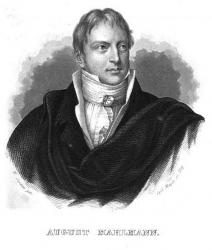
1771 - 1826 Topics: The Kingdom of God on Earth The Nation Author (Stanzas 1 and 2) of "God bless our native land" in The Hymnal Siegfried August Mahlmann Germany 1771-1826. Born at Leipzig, Germany, he studied law at the University of Leipzig. He tutored a young nobleman and traveled with him around Europe. In 1799 he became a bookseller, writer, and editor. He bought the Junius bookshop in Leipzig in 1802. From 1806-16 he edited the journal Zeitung fur die elegante Welt (a fashionable publication), and from 1810-18 wrote for the Lipziger Zeitung newspaper. He was briefly imprisoned in 1813 by the French during the Napoleonic Wars in the fortress at Erfurt. He wrote a novel, short stories, poetry (published in 1825 and popular in his day), and a number of songs, still popular with German children. In his spare time he was a playright. His collected poems have been published several times. He later studied natural sciences and economics. He was appointed director of the Leipzig Economic Society. He also served as private counsellor to the King of Saxony and Knight of the Order of Saint Vladimir. He died at Leipzig. He wrote chamber and art music, scores, and academic theses. He was an author, librettist, lyricist, contributor, composer, correspondent, collector, and creator.
John Perry
Siegfried A. Mahlmann
Robert Murray
1832 - 1910 Person Name: Rev. Robert Murray Topics: The Kingdom of God on Earth Missions Author of "From ocean unto ocean" in The Hymnal Murray, Robert, Minister of the Presbyterian Church in Canada, born Dec. 25, 1832, is the author of "From ocean unto ocean" (National Hymn), and "Lord, Thou lov'st the cheerful giver" (Almsgiving), in the Scotch Church Hymnary, 1898. [Rev. James Bonar M.A.]
--John Julian, Dictionary of Hymnology, New Supplement (1907)
======================
Murray, Robert. (Earltown, Nova Scotia, December 25, 1832--December 12, 1910, Halifax, N.S.). Presbyterian. Study at Halifax's Free Church College yielded him a licence to preach, but instead of seeking ordination he edited (1855-1910) his denomination's principal periodical in the Maritimes, Presbyterian Witness. In its pages, and from pulpits, he strongly supported controversial causes like temperance, Sunday observance, and the Confederation of 1867 (which in Halifax was greeting with a day of public mourning). These interests are reflected in his four hymns included in Canadian Presbyterians' first Hymnal (1880)--though, as the sole native-born contributor, he attached to them only the initial "M." to avoid giving the impression of claiming equality with poets of the homeland.
--Hugh D. McKellar, DNAH Archives
Robert Murray
Charles E. Oakley
1832 - 1865 Topics: Kingdom of God on Earth, The Brotherhood Author of "Hills of the North, Rejoice" in The Hymnbook Oakley, Charles Edward, M.A., born in 1832, and educated at Oxford (B.A. 1855). Entering Holy Orders in 1855, he became Rector of Wickwar in 1856, and later Rector of St. Paul's, Covent Garden. He died Sep. 15, 1865. His fine Missionary hymn, "Hills of the north, rejoice," appeared in Bp. T. V. French's Hymns adapted to the Christian Seasons, and the Hymnal Companion in 1870.
--John Julian, Dictionary of Hymnology, Appendix, Part II (1907)
Charles E. Oakley
Pages