

 My Starred Hymns
 My FlexScores
 My Hymnals
 My Purchased Files
Planning worship?
Check out our sister site, ZeteoSearch.org,
for 20+ additional resources related to your search.
- |
User Links
Person Results
William Henry Monk
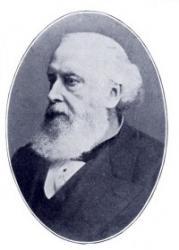
1823 - 1889 Person Name: W. H. Monk Topics: Church Ordinances of; Ordinances; Church Ordinances of; Ordinances Arranger of "HURSLEY" in Laudes Domini William H. Monk (b. Brompton, London, England, 1823; d. London, 1889) is best known for his music editing of Hymns Ancient and Modern (1861, 1868; 1875, and 1889 editions). He also adapted music from plainsong and added accompaniments for Introits for Use Throughout the Year, a book issued with that famous hymnal. Beginning in his teenage years, Monk held a number of musical positions. He became choirmaster at King's College in London in 1847 and was organist and choirmaster at St. Matthias, Stoke Newington, from 1852 to 1889, where he was influenced by the Oxford Movement. At St. Matthias, Monk also began daily choral services with the choir leading the congregation in music chosen according to the church year, including psalms chanted to plainsong. He composed over fifty hymn tunes and edited The Scottish Hymnal (1872 edition) and Wordsworth's Hymns for the Holy Year (1862) as well as the periodical Parish Choir (1840-1851).
Bert Polman
William Henry Monk
Fred Pratt Green
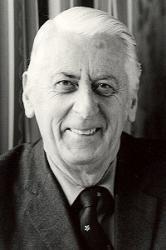
1903 - 2000 Person Name: Fred Pratt Green, 1903- Topics: Sacraments and Ordinances Funeral Paraphraser of "How blest are they who trust in Christ" in The Book of Praise The name of the Rev. F. Pratt Green is one of the best-known of the contemporary school of hymnwriters in the British Isles. His name and writings appear in practically every new hymnal and "hymn supplement" wherever English is spoken and sung. And now they are appearing in American hymnals, poetry magazines, and anthologies.
Mr. Green was born in Liverpool, England, in 1903. Ordained in the British Methodist ministry, he has been pastor and district superintendent in Brighton and York, and now served in Norwich. There he continued to write new hymns "that fill the gap between the hymns of the first part of this century and the 'far-out' compositions that have crowded into some churches in the last decade or more."
--Seven New Hymns of Hope , 1971. Used by permission.
Fred Pratt Green
John S. B. Monsell
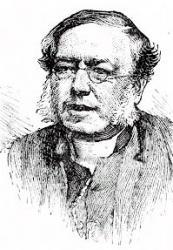
1811 - 1875 Person Name: J. S. B. Monsell Topics: Ordinations; Processionals Ordinations Author of "Lord of the living harvest" in The Church Hymnal John Samuel Bewley Monsell (b. St. Colomb's, Londonderry, Ireland, 1811; d. Guilford, Surrey, England, 1875) was educated at Trinity College in Dublin and served as a chaplain and rector of several churches in Ireland after his ordination in 1835. Transferred to England in 1853, he became rector of Egham in Surrey and was rector of St. Nicholas Church in Guilford from 1870 until his death (caused by a construction accident at his church). A prolific poet, Monsell published his verse in eleven volumes. His three hundred hymns, many celebrating the seasons of the church year, were issued in collections such as Hymns and Miscellaneous Poems (1837), Spiritual Songs (1857), Hymns of Love and Praise (1863), and The Parish Hymnal (1873).
Bert Polman
===============================
Monsell, John Samuel Bewley, L.L.D., son of Thomas Bewley Monsell, Archdeacon of Londonderry, was born at St. Columb's, Londonderry, March 2,1811, and educated at Trinity College, Dublin (B.A. 1832, LL.D. 1856). Taking Holy Orders in 1834, "he was successively Chaplain to Bishop Mant, Chancellor of the diocese of Connor, Rector of Ramoan, Vicar of Egham, diocese Worcester, and Rector of St. Nicholas's, Guildford. He died in consequence of a fall from the roof of his church, which was in the course of rebuilding, April 9, 1875. His prose works include Our New Vicar, 1867; The Winton Church Catechist, &c. His poetical works are:—
(1) Hymns and Miscellaneous Poems, Dublin, W. Curry, Jun., & Co., 1837; (2) Parish Musings, or Devotional Poems, 1850; (3) Spiritual Songs for the Sundays and Holy Days throughout the Year. 1857 (People's Ed., 1875); (4) His Presence, not His Memory, 1855, 1858; (5) Hymns of Love and Praise for the Church's Year, 1863 (2nd ed. 1866); (6) The Passing Bell; Ode to The Nightingales, and Other Poems, 1867; (7) Litany Hymns, 1869; (8) The Parish Hymnal after the Order of The Book of Common Prayer, 1873; (9)Watches by the Cross, 1874; (10) Simon the Cyrenian; and Other Poems; (11) Nursery Carols.
In these works several hymns which appeared in the earlier books are repeated in the later, and thus at first sight his compositions seem to be more in number than they really are. The total amounts to nearly 300, and of these about one-fourth are in common use. The most popular of these are, "God is love; that anthem olden"; "God of that glorious gift of grace"; "Holy offerings, rich and rare"; “Lord of the living harvest"; "Mighty Father, Blessed Son"; and "Sing to the Lord a joyful song." In addition to those which are annotated under their respective first lines, the following are in common use:—
i. Appeared in his Hymns and Miscellaneous Poems, Dublin, 1837.
1. Birds have their quiet nests. Humility of Christ.
2. Dark and dim the day-light rose. Good Friday.
3. Friend of the friendless and the lone. Jesus, the Friend.
4. My God, what wondrous love was Thine. Whitsuntide.
5. O for a heart more fervent. Holiness desired.
6. O for the time when on the world. Missions.
7. The springtide hour brings leaf and flower. Spring.
8. This day the Lord is risen. Easter.
9. When cold our hearts and far from Thee. Teach us to Pray.
10. Why restless, why so weary? Providence.
11. Yes, I do feel, my God, that I am Thine. Assurance.
ii. Appeared in his Parish Musings, 1850.
12. In Thee, my [O] God, will we rejoice. Trust in God.
13. Lord, dependent on Thy promise. Holy Baptism.
14. Members of Christ, Children of God. Confirmation.
15. So teach me, Lord, to number. The Old and New Year.
16. Soon [soon] and for ever. Death anticipated.
17. The broken, contrite heart oppress'd. Promises of God.
18. Thou art near, yes, Lord, I feel it. Divine Support.
19. Would'st thou learn the depths of sin? Passiontide.
iii. Appeared in his Spiritual Songs, 1857.
20. A few bright leaders of her host. All Saints.
21. A happy, happy [merry, merry] Christmas. New Year's Day.
22. Blessed hope, that we the fallen [sinful]. Hope.
23. Heart in heart, and hand in hand. SS. Simon and Jude.
24. Jesus, my loving Lord! I know. Resignation.
25. Last Sunday of the work-day year. Sunday after Christmas Day.
26. Loved by God the Father. Holy Baptism.
27. Mercy, mercy, God the Father. Lent.
28. My head is low, my heart is sad. Confirmation. (Penitential.)
29. Oft doth the Christian's heart inquire. Christian Duty.
30. 0 God, most mighty, listen now. Charities. From "When languid frame or throbbing pulse."
31. 0 holy Sabbath day. Sunday.
32. 0 Lord, what records of Thy love. St. Barnabas. Sometimes, “Lord God, what records of Thy love."
33. 0 love, divine and golden. Holy Matrimony. From this, "Love divine and tender" is taken.
34. One lesson more the Church must learn. Waiting on God. From this, “One lesson Christ His own would teach" is taken.
35. Proudly in his [the] hall of judgment. Tuesday before Easter.
36. Sinful, sighing to be blest. Lent.
37. The Church of God, with equal care. St. James.
38. The journey done; The rest begun. Burial.
39. The simple trust that can confide. Trust.
40. Weary and sad, a wanderer from Thee. Lent.
iv. Appeared, in his Hymns of Love and Praise, 1863, and 2nd ed., 1866.
41. Bounteous blesser of the seedtime. Sexagesima. Seed Time.
42. Brightly hopeful for the future. God's mercy through life.
43. Christ is risen! Alleluia! Easter.
44. Come and deck the grave with flowers. Easter Eve.
45. Fight the good fight with all thy might. Fight of Faith.
46. Holy Spirit, long expected. Whitsuntide.
47. Hours and days and months and years. The Circumcision.
48. I have no comfort but Thy love. The Comfort of Love.
49. I knew Thee in the land of drought. A Song of Love.
60. I think of Thee, my God by night. Evening.
61. Jesu, gentle Sufferer, say. Good Friday.
52. Labouring and heavy-laden. Lent.
53. Light of the world, we hail Thee. Missions.
54. Lord, to whom except to Thee? Holy Communion.
55. My sins, my sins, my Saviour. Ash Wednesday.
56. O'er the distant mountains breaking. Second Advent.
57. Other Name than our dear Lord's. Jesus All and in All.
58. Pity on us, heavenly Father. Litany Hymn for Lent.
59. Praise the Lord, rejoice, ye Gentiles. Advent, or Missions.
60. Rest of the weary, joy of the sad. Jesus, the Saviour and Friend.
61. Shadow of a mighty Rock. Jesus, the Rock of Ages.
62. Sing, 0 heaven; 0 earth rejoice. Ascension.
63. Sweet is the gentle voice of spring. Seed Time.
64. Sweet is Thy mercy, Lord. Divine Mercy.
65. Teach me to do the thing that pleaseth Thee. Divine Teaching.
66. The good old times, how glorious. Advent.
67. The world may in its wealth delight. Rejoicing in the Lord. An altered form of "Let others in their wealth delight."
68. Though Thou slay me, I will trust. Faith.
69. To Christ the Lord! The Incarnate Word. Christmas.
70. When I had wandered from His fold. The Love of God.
v. Appeared in his Litany Hymns, 1869.
71. Lay the precious body, In the quiet grave. Burial.
72. My sins have taken such a hold on me. Litany of Repentance.
vi. Appeared in his Parish Hymnal, 1873.
73. I hunger and I thirst. Septuagesima.
Dr. Monsell’s hymns are as a whole bright, joyous, and musical; but they lack massiveness, concentration of thought, and strong emotion. A few only are of enduring excellence.
--John Julian, Dictionary of Hymnology 1907
=====================
Monsell, J, S. B., p. 762, ii. Additional hymns in common use include:—
1. Blessed Lord, Who, till the morning. Holy Scriptures. From his Spiritual Songs, 1857.
2. Christ incarnate in His poor. Christ in His Poor. From his Hymns of Love and Praise, 1863.
3. We ask for life, and mean thereby. Life and Work. From his Hymns of Love and Praise, 1863.
--John Julian, Dictionary of Hymnology, Appendix, Part II (1907)
====================
Monsell, J. S. B. Since the article on pp. 762-3 was written, copies of the original editions of Dr. Monsell's works have come into our hands, and from them we have to make the following corrections, the numbers following being those given to the first lines of the hymns on pp. 762-3:—
15. So teach me, &c. Hymns and Misc. Poems, 1837, p. 30.
17. The broken, &c. Hymns and Misc. Poems, 1837, p. 49.
18. Thou art near, &c. Hymns and Misc. Poems, 1837, p. 21.
19. Would'st thou, &c. Hymns and Misc. Poems, 1837, p. 14.
26. Loved by God, &c. Parish Hymnal, 1873, No. 181.
27. Mercy, mercy, &c. Prayers and Litanies, 1861,
p. 119.
28. My head is low, &c. Hymns of Love and Praise, 1866,
p. 125.
33. O Love divine, &c. Hymns of Love and Praise, p. 131.
38. The journey done, &c. Hymns of Love and Praise, p. 134.
40. Weary and sad, &c. Parish Hymnal, 1873, No. 209.
41-50. Hymns of Love and Praise, 1863.
51. See "Day of loss," &c, p. 282, i.
52. Labouring, &c. Prayers and Litanies, 1861, p. 116. 53-57. Hymns of Love and Praise, 1863.
58. Pity on us, &c. Prayers and Litanies, 1861, p. 125.
59. Praise the Lord, &c. Hymns of Love and Praise, 1863,
p. 13.
60. 61, 62, 64, 65. Prayers and Litanies, 1861.
63, 66-70. Hymns of Love and Praise, 1863.
72. My sins, &c. Hymns of Love and Praise, 1866, p. 34.
73. I hunger, &c. Hymns of Love and Praise, 1866, p. 128.
It will be seen from this list of additions and corrections that Dr. Monsell multiplied his works by giving much the same material under new titles, and that his Prayers and Litanies of 1861 were unknown to us when the original article was written. "We can sincerely add that few hymn writers are so perplexing to the annotator as Dr. Monsell. [Rev. James Mearns, M.A.]
--John Julian, Dictionary of Hymnology, New Supplement (1907)
John S. B. Monsell
Anonymous
Person Name: Anon. Topics: Church Ordinances of; Ordinances Author of "This child we dedicate" in Psalms and Hymns and Spiritual Songs In some hymnals, the editors noted that a hymn's author is unknown to them, and so this artificial "person" entry is used to reflect that fact. Obviously, the hymns attributed to "Author Unknown" "Unknown" or "Anonymous" could have been written by many people over a span of many centuries.
Anonymous
Dorothy A. Thrupp
1779 - 1847 Person Name: Miss Thrupp. Topics: Church Ordinances of; Ordinances Author of "Lambs of the Fold" in Psalms and Hymns and Spiritual Songs Dorothy Ann Thrupp was born in London, June 10, 1779. She contributed some hymns, under the pseudonym of "Iota," to W. Carus Wilson's Friendly Visitor and his Children's Friend. Other hymns by her, signed "D.A.T.," appeared in Mrs. Herbert Mayo's Selection of Hymns and Poetry for the Use of Infant Schools and Nurseries, 1838. She was also the editor of Hymns for the Young, c. 1830, in which all the hymns were given anonymously. She died in London on December 15, 1847.
--The Hymnal 1940 Companion
================================
Thrupp, Dorothy Ann, daughter of Joseph Thrupp, of Paddington Green, was born at London, June 20, 1779 and died there on Dec. 14, 1847. Her hymns, a few of which have come into extensive use, were contributed to the Rev. W. Carus Wilson's Friendly Visitor and his Children's Friend, under the nom de plume of Iota; to Mrs. Herbert Mayo's Selection of Hymns and Poetry for the use of Infant Schools and Nurseries, 1838 (3rd ed. 1846, with change of title to A Sel. . . . of Infant and Juvenile Schools and Families), in which her signature is "D.A.T."; and also to the Hymns for the Young, which she herself edited for the Religious Tract Society circa 1830, 4th ed., 1836. In 1836 and 1837 she also published Thoughts for the Day (2nd series), in which she embodied many hymns which previously appeared in the Friendly Visitor. In addition to her hymns, which are annotated under their respective first lines there are also in common use:—
1. Come, Holy Spirit, come, 0 hear an infant's prayer. Child's Prayer. Appeared in Mrs. Mayo's Selection of Hymns and Poetry, 1838, No. 14, and signed "D.A.T."
2. God loves the little child that prays. God's love for Children. Given in Miss Thrupp's Hymns for the Young, 4th ed., 1836; and again in Mrs. Mayo's Selection of Hymns and Poetry&c, 2nd ed., 1840, and signed " D.A.T." It is sometimes given as "God loves the child that humbly prays."
3. Have you read the wondrous story? Life and Death of Jesus. This appeared anonymously in Miss Thrupp's Hymns for the Young, R. T. S., 1830, No. 12, in 5 stanzas of 4 lines. In Miss Thrupp's later publications this hymn is omitted, a fact which suggests that it was not her composition, but possibly that of a friend. It is in theLeeds Sunday School Union Hymn Book, 1833-78.
4. Let us sing with one accord. Praise of Jesus. This hymn is usually associated with Miss Thrupp's name, but on insufficient evidence. We find it in the 4th edition of her Hymns for the Young, 1836, and again in the 3rd ed. of Mrs. H. Mayo's Selection of Hymns and Poetry for the Use of Infant and Juvenile Schools, &c, 1846, and in both instances without signature. We know of no evidence which justifies us in ascribing the authorship with certainty to Miss Thrupp. The hymn is in the Leeds S. S. Union Hymn Book, 1833-78, and several others.
5. Poor and needy though I be. Divine Providence. Appeared in Miss Thrupp's Hymns for the Young, 4th ed., 1836, No. 22; and again in Mrs. Mayo's Selection of Hymns and Poetry>, &c, 2nd ed., 1840, and signed "D.A.T."
6. See, my child, the mighty ocean. Love of God compared to the Sea. Given in the R. T. S.'s Hymns for the Young, 4th ed., 1836, No. 26, and in Mrs. Mayo's Selection of Hymns and Poetry, &c, 1st ed., 1838, and signed "D.A. T." In Kennedy, 1863, it begins "Have you seen the mighty ocean."
7. Thou Guardian of my earliest days. Jesus the Children's Friend. This hymn we have traced to her Hymns for the Young, 4th ed., 1836. It is sometimes given as “Thou Guardian of our earliest days."
8. What a strange and wondrous story. Life and Death of Jesus. This hymn is found without signature in her Hymns for the Young, 4th ed., 1836, and again in Mrs. H. Mayo's Selection of Hys. and Poetry, 1838, No. 173, in 4 st. of 4 1, We have found no authority for ascribing it to Miss Thrupp.
9. What led the Son of God? Love of God in Christ. This appeared anonymously in her Hymns for the Young, 1830, and again in the Leeds S. S. Union Hymn Book, 1833. In modern collections it is attributed to Miss Thrupp, on the ground that it is found in the Hys. for the Young, which she edited.
10. Who are they in heaven who stand? All Saints. Published in Mrs. Mayo's Selection of Hys. and Poetry, 3rd ed., 1846, No. 64, in 5 stanzas of 4 lines, and signed A. D.T." It is in the Prim. Methodist Sunday School Hymn Book, 1879, and others.
Several additional hymns to those named above have also been attributed to Miss Thrupp on insufficient authority. This has probably arisen out of the fact that all the hymns in the Hymns for the Young, including her own, were given anonymously.
-- Excerpts from John Julian, Dictionary of Hymnology (1907)
Dorothy A. Thrupp
Robert Robinson
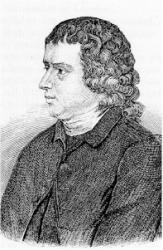
1735 - 1790 Person Name: R. Robinson Topics: Church Ordinances of; Ordinances Author of "Ebenezer" in Psalms and Hymns and Spiritual Songs Robert Robinson was born at Swaffham, Norfolk, in 1735. In 1749, he was apprenticed to a hairdresser, in Crutched Friars, London. Hearing a discourse preached by Whitefield on "The Wrath to Come," in 1752, he was deeply impressed, and after a period of much disquietude, he gave himself to a religious life. His own peculiar account of this change of life is as follows:--"Robertus Michaelis Marineque Robinson filius. Natus Swaffhami, comitatu Norfolciae, Saturni die Sept. 27, 1735. Renatus Sabbati die, Maii 24, 1752, per predicationem potentem Georgii Whitefield. Et gustatis doloribus renovationis duos annos mensesque septem, absolutionem plenam gratuitamque, per sanguinem pretiosum i secula seculorum. Amen." He soon after began to preach, and ministered for some time in connection with the Calvinistic Methodists. He subsequently joined the Independents, but after a short period preferred the Baptist connection. In 1761, he became pastor of a Baptist congregation at Cambridge. About the year 1780, he began to incline towards Unitarianism, and at length his people deemed it essential to procure his resignation. While arrangements for this purpose were in progress he died suddenly at Bingham, in June 1790. He wrote and published a good many works of ability.
--Annotations of the Hymnal, Charles Hutchins, M.A. 1872.
=============================
Robinson, Robert, the author of "Come, Thou fount of every blessing," and "Mighty God, while angels bless Thee," was born at Swaffham, in Norfolk, on Sept. 27, 1735 (usually misgiven, spite of his own authority, as Jan. 8), of lowly parentage. Whilst in his eighth year the family migrated to Scarning, in the same county. He lost his father a few years after this removal. His widowed mother was left in sore straits. The universal testimony is that she was a godly woman, and far above her circumstances. Her ambition was to see her son a clergyman of the Church of England, but poverty forbade, and the boy (in his 15th year) was indentured in 1749 to a barber and hairdresser in London. It was an uncongenial position for a bookish and thoughtful lad. His master found him more given to reading than to his profession. Still he appears to have nearly completed his apprenticeship when he was released from his indentures. In 1752 came an epoch-marking event. Out on a frolic one Sunday with like-minded companions, he joined with them in sportively rendering a fortune-telling old woman drunk and incapable, that they might hear and laugh at her predictions concerning them. The poor creature told Robinson that he would live to see his children and grandchildren. This set him a-thinking, and he resolved more than ever to "give himself to reading”. Coincidently he went to hear George Whitefield. The text was St. Matthew iii. 7, and the great evangelist's searching sermon on "the wrath to come" haunted him blessedly. He wrote to the preacher six years later penitently and pathetically. For well nigh three years he walked in darkness and fear, but in his 20th year found "peace by believing." Hidden away on a blank leaf of one of his books is the following record of his spiritual experience, the Latin doubtless having been used to hold it modestly private:—
"Robertus, Michaelis Mariseque Robinson filius. Natus Swaffhami, comitatu Norfolciae, Saturni die Sept. 27, 1735. Renatus Sabbati die, Maii 24,1752, per predicationem potentem Georgii Whitefield. Et gustatis doloribus renovationis duos annosque septem absolutionem plenam gratuitamque, per sanguinem pretiosum Jesu Christi, inveni (Tuesday, December 10, 1755) cui sit honor et gloria in secula seculorum. Amen."
Robinson remained in London until 1758, attending assiduously on the ministry of Gill, Wesley, and other evangelical preachers. Early in this year he was invited as a Calvinistic Methodist to the oversight of a chapel at Mildenhall, Norfolk. Thence he removed within the year to Norwich, where he was settled over an Independent congregation. In 1759, having been invited by a Baptist Church at Cambridge (afterwards made historically famous by Robert Hall, John Foster, and others) he accepted the call, and preached his first sermon there on Jan. 8, 1759, having been previously baptized by immersion. The "call" was simply "to supply the pulpit," but he soon won such regard and popularity that the congregation again and again requested him to accept the full pastoral charge. This he acceded to in 1761, alter persuading the people to "open communion." In 1770 he commenced his abundant authorship by publishing a translation from Saurin's sermons, afterwards completed. In 1774 appeared his masculine and unanswerable Arcana, or the Principles of the Late Petitioners to Parliament for Relief in the matter of Subscription. In 1776 was published A Plea for the Divinity of our Lord Jesus Christ in a Pastoral Letter to a Congregation of Protestant Dissenters at Cambridge. Dignitaries and divines of the Church of England united with Nonconformists in lauding this exceptionally able, scholarly, and pungently written book. In 1777 followed his History and Mystery of Good Friday. The former work brought him urgent invitations to enter the ministry of the Church of England, but he never faltered in his Nonconformity. In 1781 he was asked by the Baptists of London to prepare a history of their branch of the Christian Church. This resulted, in 1790, in his History of Baptism and Baptists, and in 1792, in his Ecclesiastical Researches. Other theological works are included in the several collective editions of his writings. He was prematurely worn out. He retired in 1790 to Birmingham, where he was somehow brought into contact with Dr. Priestley, and Unitarians have made much of this, on exceedingly slender grounds. He died June 9, 1790.
His Life has been fully written by Dyer and by William Robinson respectively, both with a bias against orthodoxy. His three changes of ecclesiastical relationship show that he was somewhat unstable and impulsive. His hymns are terse yet melodious, evangelical but not sentimental, and on the whole well wrought. His prose has all…that vehement and enthusiastic glow of passion that belongs to the orator. (Cf. Dyer and Robinson as above, and Gadsby's Memoirs of Hymn-Writers(3rd ed., 1861); Belcher's Historical Sketches of Hymns; Millers Singers and Songs of the Church; Flower's Robinson's Miscellaneous Works; Annual Review, 1805, p. 464; Eclectic Review, Sept. 1861. [Rev. A. B. Grosart, D.D., LL.D.]
--John Julian, Dictionary of Hymnology (1907)
Robert Robinson
Josiah Conder
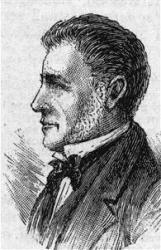
1789 - 1855 Person Name: Conder Topics: Church Ordinances of; Ordinances Author of "This is my Body" in Psalms and Hymns and Spiritual Songs Josiah Conder was born in London, in 1789. He became a publisher, and in 1814 became proprietor of "The Eclectic Review." Subsequently to 1824, he composed a series of descriptive works, called the "Modern Traveller," which appeared in thirty volumes. He also published several volumes of poems and hymns. He was the author of the first "Congregational Hymn Book" (1836). He died in 1855.
--Annotations of the Hymnal, Charles Hutchins, M.A. 1872.
==========================
Conder, Josiah, fourth son of Thomas Conder, engraver and bookseller, and grandson of the Rev. John Conder, D.D., first Theological Tutor of Homerton College, was born in Falcon Street (City); London, Sept. 17, 1789, and died Dec. 27, 1855. As author, editor and publisher he was widely known. For some years he was the proprietor and editor of the Eclectic Review, and also editor of the Patriot newspaper. His prose works were numerous, and include:—
The Modern Traveller, 1830; Italy, 1831; Dictionary of Ancient and Modern Geography, 1834; Life of Bunyan, 1835; Protestant Nonconformity, 1818-19; The Law of the Sabbath, 1830; Epistle to the Hebrews (a translation), 1834; Literary History of the New Testament, 1845, Harmony of History with Prophecy, 1849, and others.
His poetical works are:—
(1) The Withered Oak,1805; this appeared in the Athenceum. (2) The Reverie, 1811. (3) Star in the East, 1824. (4) Sacred Poems, Domestic Poems, and Miscellaneous Poems, 1824. (5) The Choir and the Oratory; or, Praise and Prayer, 1837. Preface dated Nov. 8, 1836. (6) Hymns of Praise, Prayer, and Devout Meditation, 1856. This last work was in the press at the time of his death, and was revised and published by his son, the Rev. E. R. Conder, M.A. He also contributed many pieces to the magazines and to the Associated Minstrels, 1810, under the signature of " C." In 1838, selections from The Choir and Oratory were published with music by Edgar Sanderson, as Harmonia Sacra. A second volume was added in 1839. To Dr. Collyer’s (q.v.) Hymns, &c, he contributed 3 pieces signed "C"; and to Dr. Leifchild's Original Hymns, 1843, 8 hymns.
As a hymn-book editor he was also well known. In 1836 he edited The Congregational Hymn Book: a Supplement to Dr. Watts’s Psalms and Hymns (2nd ed. 1844). To this collection he contributed fifty-six of his own hymns, some of which had previously appeared in The Star in the East, &c. He also published in 1851 a revised edition of Dr. Watts's Psalms and Hymns, and in the game year a special paper on Dr. Watte as The Poet of the Sanctuary, which was read before the Congregational Union at Southampton. The value of his work as Editor of the Congregational Hymn Book is seen in the fact that eight out of every ten of the hymns in that collection are still in use either in Great Britain or America.
As a hymn writer Conder ranks with some of the best of the first half of the present century. His finest hymns are marked by much elevation of thought expressed in language combining both force and beauty. They generally excel in unity, and in some the gradual unfolding of the leading idea is masterly. The outcome of a deeply spiritual mind, they deal chiefly with the enduring elements of religion. Their variety in metre, in style, and in treatment saves them from the monotonous mannerism which mars the work of many hymn writers. Their theology, though decidedly Evangelical, is yet of a broad and liberal kind. Doubtless Conder's intercourse with many phases of theological thought as Editor of the Eclectic Review did much to produce this catholicity, which was strikingly shewn by his embodying many of the collects of the Book of Common Prayer, rendered into verse, in his Choir and Oratory. Of his versions of the Psalms the most popular are "How honoured, how dear" (84th), and "O be joyful in the Lord" (100th). His hymns in most extensive use are," Bread of heaven, on Thee I feed; " “Beyond, beyond that boundless sea;" "The Lord is King, lift up thy voice" (this last is one of his best); "Day by day the manna fell;" "How shall I follow him I serve;" "Heavenly Father, to whose eye" (all good specimens of his subdued and pathetic style); and "O shew me not my Saviour dying." This last is full of lyric feeling, and expresses the too often forgotten fact that the Church has a living though once crucified Lord. The popularity of Conder's hymns may be gathered from the fact that at the present time more of them are in common use in Great Britain and America than those of any other writer of the Congregational body, Watts and Doddridge alone excepted. [Rev. W. Garrett Horder]
In addition to the hymns named above and others which are annotated under their respective first lines, the following, including two already named (4,16), are also in common use:—
i. From Dr. Collyer's Hymns, &c, 1812.
1. When in the hours of lonely woe. Lent.
ii. From The Star in the East, &c, 1824.
2. Be merciful, O God of grace. Ps. lxvii.
3. For ever will I bless the Lord. Ps. xxxiv.
4. How honoured, how dear. Ps. lxxxiv.
5. Now with angels round the throne. Doxology.
6. O Thou God, Who hearest prayer. Lent. Dated Sept. 1820. Usually abbreviated.
iii. From The Congregational Hymn Book, 1836.
7. Blessed be God, He is not strict. Longsuffering of God.
8. Followers of Christ of every name. Communion of Saints.
9. Grant me, heavenly Lord, to feel. Zeal in Missions desired.
10. Grant, 0 Saviour, to our prayers. Collect 5th S. after Trinity.
11. Head of the Church, our risen Lord. Church Meetings.
12. Holy, holy, holy Lord, in the highest heaven, &c. Praise to the Father.
13. Jehovah's praise sublime. Praise.
14. Leave us not comfortless. Holy Communion.
15. Lord, for Thv Name's sake! such the plea. In National Danger.
16. O be joyful in the Lord. Ps. c.
17. 0 breathe upon this languid frame. Baptism of Holy Spirit desired.
18. 0 give thanks to Him Who made. Thanksgiving for Daily Mercies.
19. 0 God, Protector of the lowly. New Year.
20. 0 God, to whom the happy dead. Burial.
21. 0 God, Who didst an equal mate. Holy Matrimony.
22. 0 God, Who didst Thy will unfold. Holy Scriptures.
23. 0 God, Who dost Thy sovereign might. Prayer Meetings.
24. 0 how shall feeble flesh and blood. Salvation through Christ.
25. 0 how should those be clean who bear. Purity desired for God's Ministers.
26. 0 say not, think not in thy heart. Pressing Onward.
27. 0 Thou divine High Priest. Holy Communion.
28. 0 Thou Who givest all their food. Harvest.
29. 0 Thou Whose covenant is sure. Holy Baptism.
30. Praise on Thee, in Zion-gates. Sunday.
31. Praise the God of all creation. Doxology
32. See the ransomed millions stand. Praise to Christ.
33. The heavens declare His glory. Ps. xix.
34. Thou art the Everlasting Word. Praise to Christ.
35. Thy hands have made and fashioned me. Thanks for Daily Mercies.
36. To all Thy faithful people, Lord. For Pardon.
37. To His own world He came. Ascension.
38. To our God loud praises give. Ps. cxxxvi.
39. Upon a world of guilt and night. Purification of B.V.M.
40. Welcome, welcome, sinner, hear. Invitation to Christ.
41. Wheresoever two or three. Continued Presence of Christ desired.
iv. From The Choir and the Oratory, 1837.
42. Baptised into our Saviour's death. Holy Baptism.
43. In the day of my [thy] distress. Ps. xx.
44. 0 comfort to the dreary. Christ the Comforter.
v. From Leifchild's Original Hymns, 1843.
45. I am Thy workmanship, 0 Lord. God the Maker and Guardian.
46. 0 Lord, hadst Thou been here! But when. The Resurrection of Lazarus.
47. 'Tis not that I did choose Thee. Chosen of God. This is altered in the Church Praise Book, N. Y., 1882, to “Lord, 'tis not that I did choose Thee," thereby changing the metre from 7.6 to 8.5.
vi. From Hymns of Praise, Prayer, &c, 1856.
48. Comrades of the heavenly calling. The Christian race.
When to these 48 hymns those annotated under their respective first lines are added, Conder’s hymns in common use number about 60 in all.
--John Julian, Dictionary of Hymnology (1907)
===================
Conder, Josiah, p. 256, i. Other hymns are:—
1. O love beyond the reach of thought. The love of God.
2. O Thou, our Head, enthroned on high. Missions.
3. Son of David, throned in light. Divine Enlightenment desired.
4. Thou Lamb of God for sinners slain. Christ the Head of the Church. From "Substantial Truth, 0 Christ, Thou art."
These hymns are all from his Hymns of Praise, &c, 1856.
--John Julian, Dictionary of Hymnology, Appendix, Part II (1907)
Josiah Conder
John Bowring
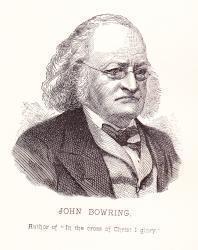
1792 - 1872 Person Name: Bowring Topics: Church Ordinances of; Ordinances Author of "Glorying in the Cross" in Psalms and Hymns and Spiritual Songs James Bowring was born at Exeter, in 1792. He possessed at an early age a remarkable power of attaining languages, and acquired some reputation by his metrical translations of foreign poems. He became editor of "The Westminster Review" in 1825, and was elected to Parliament in 1835. In 1849, he was appointed Consul at Canton, and in 1854, was made Governor of Hong Kong, and received the honour of knighthood. He is the author of some important works on politics and travel, and is the recipient of several testimonials from foreign governments and societies. His poems and hymns have also added to his reputation. His "Matins and Vespers" have passed through many editions. In religion he is a Unitarian.
--Annotations of the Hymnal, Charles Hutchins, M.A., 1872
=======================================
Bowring, Sir John, LL.D., a distinguished man of letters, was born at Exeter, Oct. 17, 1792. His studies extended to philology, poetry, politics, and other branches of learning, whilst as editor of the Westminster Review for some years (he received the appointment in 1825) he did considerable work as a reviewer. He held several official appointments under the Government as Commissioner to France on commercial matters (1831-5); British Consul at Hong Kong (1849); and Governor of Hong Kong (1854). He was twice Member of Parliament, and was knighted in 1854. He died Nov. 23rd, 1872. His published works are very numerous, and display an astonishing acquaintance with various languages. Those specially bearing on poetry include:—
(1) Russian Anthology, with Biographical and Critical notices of the Poets of Russia, 1821; (2) Specimens of the Russian Poets, 1823; (3) Ancient Poetry and Romance of Spain, 1824; (4) Batavian Anthology, or Specimens of Dutch Poets, 1824; (5) Servian Popular Poetry, 1821; (6) Specimens of Polish Poets, 1827; (1) Poetry of the Magyars, 1830; (8) History of the Poetical Literature of Bohemia, 1832, &c.
In addition to these works, which are mainly translations, Sir John Bowring wrote original verse. This was published interspersed with a few translations, as follows:—
(1) Matins and Vespers with Hymns and Occasional Devotional Pieces, Lond., 1823; 2nd edition, enlarged, 1824; 3rd edition, again enlarged, 1841; and the 4th, still further enlarged, in 1851. (2) Hymns: as a Sequel to the Matins, 1825. In addition he contributed to a few Unitarian hymnals, especially that of the Rev. J. R. Beard of Manchester, 1837. In that Collection many of the hymns added to the 3rd edition of Matins, &c, 1841, were first published A selection from these, together with a biographical sketch, was published by Lady Bowring in 1873, as a Memorial Volume of Sacred Poetry. This work contains hymns from the Matins and Vespers, together with others from Periodicals, and from his manuscripts.
Of his hymns a very large percentage have come into common use. A few have been adopted by almost all denominations, as, "God is love, His mercy brightens;" "How sweetly flow'd the gospel sound;" "In the Cross of Christ I glory;" "Watchman, tell us of the night;"; and others, but the greater portion are confined to the Unitarian collections of Great Britain and America, of which denomination he was a member. In addition to the more important, which are annotated under their first lines, there are also the following in common use:—-
1. Clay to clay, and dust to dust. Burial. From his Hymns, 1825, into the Hymn & Tune Book, Boston, U.S., 1868, &c.
2. Come the rich, and come the poor. Divine Worship. Contributed to Beard's Collection, 1837, No. 290, and repeated in Bowring's Matins, &c., 3rd edition, 1841. It is in a few American collections.
3. Drop the limpid waters now. Holy Baptism. From Matins and Vespers, 3rd edition, 1841, into Kennedy, 1863.
4. Earth's transitory things decay. The Memory of the Just. From his Hymns, 1825, into Beard, 1837; the American Plymouth Collection, 1855; and the Songs for the Sanctuary, N.Y., 1865, &c.
5. Father, glorify Thy name. The Father glorified. Also from Hymns, 1825, into Beard, 1837; the Hymns of the Spirit, Boston, U.S., 1864, &c.
6. Father and Friend, Thy light, Thy love. Omnipresence. From Matins and Vespers, 2nd edition, 1824, into several collections, and sometimes in an abbreviated form.
7. Father of Spirits, humbly bent before Thee. Also in Hymns, 1825, and Dr. Martineau's Hymns of Praise & Prayer, 1873. In Longfellow and Johnson's Hymns of the Spirit, Boston, U.S., 1864, it is given as, "Father of Spirits, gathered now before Thee."
8. From all evil, all temptation. Preservation implored. Contributed to Beard's Collection, 1837.
9. From the recesses of a lowly spirit. Prayer of trust. From Matins and Vespers, 1st edition, 1823, into several American collections.
10. Gather up, 0 earth, thy dead. Published in his Matins & Vespers, 3rd ed., 1841, in 3 stanzas of 8 lines and repeated, slightly altered, in Kennedy, 1863, No. 753.
11. Gently the shades of night descends Evening. A cento from his poem on "Sunday Evening," in the Matins, &c, 1st edition, 1823, p. 6. It is given in the Boston Hymns of the Spirit, 1864; the Boston Hymn & Tune Book, 1868, and other collections.
12. How dark, how desolate. Hope. 1st published in his Matins, &c, 1823, p. 246. In Dr. Martineau's Hymns of Praise & Prayer, 1873, it is No. 515.
13. How shall we praise Thee, Lord of Light! Evening. A cento from the same poem as No. 7 above. It is given in the Hymns of the Spirit, 1864, and other American collections.
14. Lead us with Thy gentle sway. Divine Guidance desired. Hymns, 1825, into Hymns of the Spirit, 1864, and others.
15. Lord, in heaven, Thy dwelling-place. Praise. Contributed to Beard's Collection, 1837, No. 70, repeated in the author's Matins, &c, 3rd edition 1841, p. 235, and given in a few American collections. In the Hymns of the Spirit, 1864, it is altered to "Lord of every time and place."
16. 0 let my [thy] trembling soul be still. Resignation. From the 1st edition of the Matins, &c, 1823, p. 251, in 3 stanzas of 6 lines, into Beard's Collection, 1837; the Hymns of the Spirit, 1864, and others. It is sometimes given as, "0 let thy," &c.
17. 0, sweet it is to feel and know. Monday Morning. A poem in 16 stanzas of 4 lines, given in his Matins, &c, 1823, p. 60. In 1837 stanzas i.-iii. were given in Beard's Collection as No. 448, and entitled "God near in sorrow." In the 3rd edition of the Matins, &c, 1841, this cento was repeated (p. 245), with the same title, notwithstanding the full poem was in the same book.
18. On the dust I'm doomed to sleep. Resurrection. Appeared in his Matins, &c, 1st edition, 1823, p. 252, in 2 stanzas of 8 lines. In the 2nd edition, 1824, p. 232, it was altered to "In the dust," &c. This was repeated in 1841. In some hymnals it reads:—
19. The heavenly spheres to Thee, 0 God. Evening. This "Hymn to the Deity" appeared in the 2nd edition of his Matins, &c, 1824, pp. 235-6, in 4 stanzas of 4 double lines. It is also in the 3rd edition, 1841; the Boston Hymns of the Spirit, 1864 and other American collections.
20. When before Thy throne we kneel. Divine Worship. From his Hymns, 1825, into Beard's Collection, 1837, No. 93; the Boston Hymn & Tune Book, 1868, No. 21, and others.
21. Where is thy sting, 0 death! Death. Also from the Hymns, 1825, into the same collections as No. 20 above.
It will be noted that Beard's Collection, 1837, is frequently named above. The full title of that hymnal is—
A Collection of Hymns for Public and Private Worship. Compiled by John R. Board, Lond., John Green, 1837.
The Rev. John Relly Beard was an Unitarian Minister in Manchester, and the collection is dedicated "To the Manchester Meeting of Ministers." It contained a large number of original hymns. Bowring contributed 82, of which 33 were published therein for the first time. Some of his hymns are of great merit, and most of them are characterised by great earnestness and deep devotion.
-- John Julian, Dictionary of Hymnology (1907)
==================
Bowring, Sir John, p. 166, i. In the article on Bowring the hymns numbered therein as 4 and 20 are stated to have appeared in his Hymns, 1825, but in error. The earliest date to which we can positively trace them is Beard's Collection, 1837. From the Hymns, 1825, we find, however, that the following are in modern hymnals:—
1. Our God is nigh. Divine Presence.
2. 'Tis not the gift; but 'tis the spirit. Outward and Inward Virtue.
3. When the storms of sorrow gather. God our Guide.
From the various editions of his Matins and Vespers additional hymns arc also in modern use:—
4. If all our hopes and all our fears. Heaven Anticipated. (1823.)
5. In Thy courts let peace be found. Public Worship. (1841.)
6. The offerings to Thy throne which rise. Heart Worship. (1824.)
7. Who shall roll away the stone? Easter. In Beard's Collection, 1837, and Matins & Vespers, 1841.
--John Julian, Dictionary of Hymnology, Appendix, Part II (1907)
John Bowring
Mary E. Byrne
1880 - 1931 Person Name: Mary Elizabeth Byrne Topics: Ordination; Ordination Translator of "Be Thou My Vision" in Voices Together Mary Elizabeth Byrne, M.A. (July 2, 1880 – January 19, 1931) was born in Ireland.
She translated the Old Irish Hymn, "Bí Thusa 'mo Shúile," into English as "Be Thou My Vision" in Ériu (the journal of the School of Irish Learning), in 1905.
See also in:
Wikipedia
Mary E. Byrne
Wolfgang Amadeus Mozart
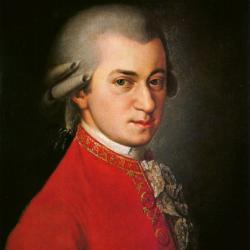
1756 - 1791 Person Name: W. A. Mozart, 1756-1791 Topics: Ministry Ordination of ; Ministry Ordination of Arranger of "MOZART" in Methodist Hymn and Tune Book Wolfgang Amadeus Mozart Austria 1756-1791. Born at Salzburg, Austria, the son of Leopold Mozart, a minor composer and violinist, and youngest of seven children, he showed amazing ability on violin and keyboard from earliest childhood, even starting to compose music at age four when his father would play a piece and Mozart would play it exactly as did his father. At five, he composed some of his own music, which he played to his father, who wrote it down. When Mozart was eight, he wrote his first symphony, probably transcribed by his father. In his early years his father was his only teacher, teaching his children languages and academic subjects, as well as fundamentals of their strict Catholic faith. Some of his early compositions came as a surprise to his father, who eventually gave up composing himself when he realized how talented his son was. His family made several European journeys and he and his sister, Nanneri, performed as child prodigies, at the court of Prince-elector Maximillian II of Bavaria in Munich, and at the Imperial Courts in Vienna and Prague. A long concert tour followed, for 3.5 years, taking the family to courts in Munich, Mannheim, Paris, London, Dover, The Hague, Amsterdam, Utrecht, Mechelen, and again to Paris, and back home via Zurich, Donaueschingen, and Munich. During these trips Mozart met many musicians, acquainting himself with the works of other composers. He met Johann Christian Bach in London in 1764. Family trips were challenging, and travel conditions were primitive. They had to wait for invitations and reimbursements from nobility, and they endured long, near-fatal illnesses far from home. First Leopold (1764) got sick, then both children (1765). They traveled again to Vienna in 1767 and stayed there over a year. After a year back in Salzburg, Leopold and Wolfgang went to Italy (1769-1771), Leopold wished to display his son’s abilities as a performer and maturing composer. In Bologna, Italy, Wolfgang was accepted as a member of the famous Academia Filamonica. In Rome he heard Gregorio Allegri’s Miserere twice in performance. Back in the Sistine Chapel, Mozart wrote the whole performance out from memory, thus producing the first unauthorized copy of this closely guarded property of the Vatican. In the next few years Mozart wrote several operas performed with success in Italy, but his father’s hopes of securing a professional appointment for his son were not realized. At age 17 he was engaged as a musician at the Salzburg court, but grew restless and traveled in search of a better position. After returning to Salzburg, Mozart was employed as a court musician by the ruler of Salzburg, Prince Archbishop Hieronymus Colloredo. This gave Mozart ample opportunity to develop relationships with other musicians and his admirers, resulting in his development of new symphonies, sonatas, string quartets, masses, serenades, and some minor operas. In 1775 he wrote his only violin concertos, five in all. Again, he was discontent with work in Salzburg and traveled to find more opportunity to write operas. He and his father again visited Munich and Vienna, but neither visit was successful with the exception of his opera ‘La finta giardiniera’ in Munich. In 1777 he resigned his Salzburg position and went to Augsburg, Mannheim, Paris, and Munich again. In Mannheim he met and fell in love with Aloysia Weber, one of four daughters of a musical family. He could find no real employment there and left for Paris in 1778. He might have had a position as organist at Versailles, but he was not interested in that. He fell into debt and started pawning valuables. During these events his mother died. Meanwhile his father was still trying to find him a position in Salzburg. After checking out several other European cities and Munich, he again encountered Aloysia, but she was no longer interested in him, so he returned to Salzburg, having written another symphony, concerto, and piano sonata, and took the new appointment his father had found. However, he was still in discontent. Visiting Vienna in 1781, he was dismissed from his Salzburg position. He wrote another opera, ‘Idomeneo’, in 1781, that was successful in Munich. Two months later he was summoned to Vienna, where his employer, Archbishop Colloredo, wanted him around due to his notoriety. Mozart wished to meet the emperor and perform for him, and finally got that opportunity. It resulted in a part-time position and substantial commissions. Colloredo became a nemesis to Mozart’s career, finally releasing Mozart from his employ with a literal kick in the pants, much against his father’s wishes. However, he was now independent. Mozart then decided to settle in Vienna as a free lance performer and composer. He lived with the Fridolin Weber family, who had moved from Mannheim to Vienna. Fridolin, the father, had died, and they were taking in lodgers to make ends meet. His career there went well, and he performed as a pianist before the Emperor, establishing himself as the finest keyboard player in Vienna. He wrote another opera in 1782, again achieving success. Mozart had now become a prolific and influential composer of the Classical period and was known throughout Europe. Aloysia was now married to actor, Joseph Lange, and Mozart’s interest shifted to her sister, Constanze. In 1782 he married Constanze Weber Mozart Nissen. The marriage started out with a brief separation, and there was a problem getting Mozart’s father’s permission, which finally came. They had six children, but only two survived infancy: Carl and Franz. He lived in Vienna and achieved some notoriety, composing many of his best-known symphonies, concertos, and operas. In 1782-83 he became intimately acquainted with Johann Sebastian Bach and George Friederic Handel, as his friend, Gottfried van Swieten, owned many manuscripts of the Baroque masters, which Mozart studied intently. He altered his style of composition as a result. That year Mozart and his wife visited his father and sister, and he composed a liturgical piece, a Mass, with a singing part for his wife. He also met Joseph Hadyn in Vienna in 1784 and they became friends. They even played together in a string quartet from time to time. Mozart wrote six quartets dedicated to Hadyn. In 1785 Hadyn told Leopold Mozart, “Your son is the greatest composer known to me by person and repute, he has taste, and what is more, the greatest skill in composition”. Over the next several years Mozart booked several piano concertos in various places as a sole performer to delighted audiences, making substantial remuneration for his work. He and his wife then adopted a more luxurious lifestyle. They moved to an expensive apartment and he bought a fine fortepiano and billiard table. They sent their son, Karl, to an expensive boarding school and also kept servants. In 1784 Mozart became a Freemason and even composed Masonic music. Over the next several years he did little operatic writing and focused on his career as a piano soloist and writer of concertos. He again began operatic collaboration in 1785, creating ‘The marriage of Figaro’, then ‘Don Giovanni’ in 1787. That year his father died. Also that year he obtained a steady post under Emperor Joseph II as his chamber composer. This was part-time employment that was important when hard times arrived. However, Joseph aimed at keeping Mozart from leaving Vienna for better work. The Austrio-Turkish War made life difficult for musicians, and his aristocracy support had declined. He moved to save on expenses, but that did not help much, and he was reduced to borrowing funds from his friends, and pleading for loans. During this period he produced his last three symphonies. In 1789 he then set up on a journey to Leipzig, Dresden, and Berlin hoping to improve his fortunes. In 1790 he was highly productive, producing concertos, an opera, ‘The magic flute’, a series of string quintets, a motet, and an (unfinished) Requiem. Finances began to improve and he begin paying back his debts. Public reaction to his works also brought him great satisfaction. In 1791, while in Prague for the premiere of his opera, ‘La clemenza di Tito’, he fell ill. He continued professional functions for a short time, but had to go home and be nursed by his wife over the next couple of months. He died at Vienna, Austria, at the age of 35, a small thin man with undistinguishing characteristics. He was buried in a modest grave, having had a small funeral. Beethoven composed his early works in the shadow of Mozart, and Joseph Hadyn wrote “posterity will not see such a talent (as Mozart) again in 100 years”. 600+ works. Side note: Mozart enjoyed billiards, dancing, and had a pet canary, a starling, a dog, and a horse for recreational riding. He liked off-color humor. He wore elegant clothing when performing and had a modest tenor voice.
John Perry
Wolfgang Amadeus Mozart
Pages