

 My Starred Hymns
 My FlexScores
 My Hymnals
 My Purchased Files
Planning worship?
Check out our sister site, ZeteoSearch.org,
for 20+ additional resources related to your search.
- |
User Links
Person Results
‹ Return to hymnal
Export as CSV
Robert II, King of France
970 - 1031 Person Name: Robert II,, King of France Hymnal Number: 155 Author of "Come, Holy Ghost, in love" in The Seventh-Day Adventist Hymn and Tune Book Robert the Second, King of France, surnamed "Le Page" and "Le Devot," born circa 970, was the son of Hugh Capet, the first of the line of kings that succeeded the Carlovingian monarchs on the French throne. After having been associated with his father in the government of the kingdom, in 988 he became king in his own right. The story of his life, rather than of his reign, is a sad one; troubles both in his family and without so multiplying upon him that it needed all the consolation that he sought and found in religion to enable him to bear up against them. Having in 995 or 996 espoused Bertha, the widow of Eades, Count of Chartres, and daughter of Conrad the Pacific, his cousin in the fourth degree (a marriage at that time strictly forbidden by the Roman Catholic Church), he was commanded by a decree of Pope Gregory V. to put her away. He was tenderly attached to her, and refused, whereupon he was excommunicated. This sentence caused the unhappy couple to be abandoned by all their courtiers, and even their servants, with the exception of two of the latter. After living together for a while in a state of sore privation, nay, almost absolute destitution, Bertha was delivered of a still-born infant, which was represented to Robert to have been a monster with “a head and neck like a goose." On hearing this (for the fond husband was but a weak and credulous man), Robert repudiated his wife, who thereupon retired into a nunnery.
Subsequently, probably about 1002, he married Constance, a daughter of the Count of Aries, by whom he had four sons and two daughters. Much of the misery of his later life resulted from this marriage; for in addition to the antagonism which existed in their tastes and pursuits, Constance endeavoured to secure the kingdom for her youngest son Robert, to the exclusion of the third son Henry (Hugh, the eldest, haying died, and Eudes, the second, being an idiot), and this led to constant domestic broils which embittered the gentle king's existence. In 1024 he refused (and wisely) the Imperial Crown of the House of Saxony, when the Italians offered it to him on the death of Henry II., the last of the Saxon Emperors. Robert spent much of his time in the society of monks, assisting in the services of the Church, and engaging on pious pilgrimages. It was upon his return from one of the latter to some of the principal sanctuaries of France that he was attacked by a fever, to which he succumbed at Thelun in 1031, in the 60th year of his age and the 34th of his reign more deeply lamented by his people, to whom he had attached himself by the sweetness and simplicity of his character, than any other king, probably, who ever reigned in France. Robert had a great love for, and skill in, church music, and it is not improbable that compobitions of his are even at this day in use in the services of his Church. [Rev. Digby S. Wrangham, M.A.]
It has been the custom to speak of King Robert as a hymn-writer. But when the different authorities come to specify the pieces which he is said to have composed, their statements are hopelessly at variance. For the purposes of this article we shall take four ancient authorities:—
(a) and (b) In the Recueil des Historiens des Gaules et de la France, vol. x., Paris, 1760, pp. 297-300, there are extracts "ex chronico Sithiensi" (a); and also "ex chronico Alberici ad annum 997 " (b).
(c) In the Junius manuscript, 121, in the Bodleian there is a list of authors of sequences, written about 1300.
(d) William Durandus (d. 1296) in his Rationale, Bk. iv., has a section "De prosa seu sequentia." This occurs in two manuscripts of the 14th century in the British Museum [Add. 18304, f. 20 b; Reg. 7 E., ix. f. 53. An earlier and finer manuscript than either (Add. 31032) has unfortunately lost the leaf containing this section].
By these four authorities the following hymns and sequences are ascribed to King Robert :—
1. Chorus novae Hierusalem.
2. Rex omnipotens die hodierna.
3. Sancti Spiritus adsit nobis gratia.
4. Veni Sancte Spiritus.
5. Victiniae Paschali.
But of these a only ascribes to him No. 3, and does not mention Nos. 1,2, 4 or 5, while b ascribes to him Nos. 2 and 3, and does Dot mention Nos. 1, 4 or 5. On the other hand c ascribes to him No. 5, while No. 3 it ascribes to Hermannus Contract us, and Nos. 1, 2, 4 it does not mention at all. Lastly d ascribes to him Nos. 1 and 4, but ascribes Nos. 2 and 3 to Hermannus Contractus, and does not mention No. 5. Taking these in detail, we find No. 1 is only ascribed to King Robert by d, and seems more probably to be by Fulbert of Chartres (see p, 224, i.). No. $. seems without doubt to be by Notker Balbulus (see note on "Sancti Spiritus adsit"). For No. 5 see note on "Victimae Paschali." No. 2 is noted at p. 958, ii, and, according to the common opinion, is there ascribed to Hermannus Contractus; but this ascription is very doubtful, seeing that he d. in 1054, and was only b. in 1013, while the Bodleian manuscript 775 was written in England about 1000, so that the ascription of b deserves attention. As to No. 4 the subject of authorship is treated more fully under "Veni Sancte Spiritus," but here it may be said that Durandus and those who followed him are alone in ascribing it to King Robert, for the French tradition was clearly against this, e.g. neither a nor b ascribe it to him, and Clichtovaeus in his Elucidatorium, Paris, 1516, and the Augustinian Missal, printed at Paris, 1529, which may be taken to represent the later French tradition, while agreeing in ascribing No. 3 to King Robert, agree also in treating No. 4 as of un¬known authorship. To sum up then it seems to us that No. 2 is possibly by King Robert; that Nos. 3 and 4 are clearly not by him; and that his claim to Nos. 1 and 5 is exceedingly doubtful.
The French chronicles a and b as above also ascribe to King Robert other liturgical pieces, viz.:—(1) "O Constantia martyrum," (2) "Judaea (O Juda) et Hierusalem," (3) "Eripe me," (4) " Ounctipotens genitor"(5) "Cornelius centurio," (6) "Pro fidei meritis," (7) “Concede nobis quaesumus." These appear to be Responsories and Antiphons, but whether rightly or wrongly ascribed to Robert the present writer cannot say. No. 7 is also ascribed to him by c as above. [Rev. James Mearns, M.A.]
--John Julian, Dictionary of Hymnology (1907)
Robert II, King of France
Johann Joseph Winckler
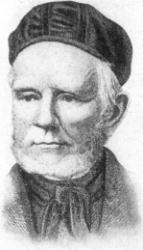
1670 - 1722 Person Name: Johann J. Winkler Hymnal Number: 1034 Author of "Saviour of men, thy searching eye" in The Seventh-Day Adventist Hymn and Tune Book Winckler, John Joseph, a German Pietist, was born at Luckau, in Saxony, December 23, 1670. He was at first a pastor at Magdeburg, then a chaplain in the Protestant army, accompanying the troops to Holland and Italy, and at length returned to Magdeburg and became chief minister of the cathedral. He was no less eminent for his mental culture than for his piety. He was a preacher and writer who had the courage of his convictions, and this quality is notably manifest in the hymn by him found in this collection. He died August 11, 1722.
Shall I, for fear of feeble man 225
Hymn Writers of the Church Nutter
==================================================================
Winckler, Johann Joseph, son of Gottfried Winckler, town clerk of Lucka, Sachse-Altenburg, was born at Lucka, Dec. 23, 1670. He became a student of Theology at the University of Leipzig, during the time when A. H. Francke and J. C. Schade were holding their Bible readings, and his sympathies henceforth were with the Pietistic movement. In 1692 he was appointed preacher to the St. George's Hospital at Magdeburg, and afternoon preacher at St. Peter's Church there. He became chaplain to the Prince Christian Ludwig regiment in 1695, and went with it to Holland and Italy. After the Peace of Ryswijk (Oct. 30, 1697) he made a tour in Holland and England. Returning to Magdeburg, he was appointed, in 1698, diaconus of the Cathedral, and in 1703 also inspector of the so-called Holzkreis. Finally, in 1714, he became chief preacher at the Cathedral, and in 1716, also Consistorialrath. He died at Magdeburg, Aug. 11, 1722 (Wetzel, iii. 437; Grischow-Kirchner Nachricht to Freylinghausen, p. 53; Koch, iv. 383; Blätter fur Hymnologie, 1888, p. 170, &c).
Winckler was a man who had the courage of his opinions, and his hymn No. iv. below is a picture of the stand he was willing to make when conscience bade him. Not that he was fond of controversy, but rather the reverse. Twice however he raised considerable feeling against himself in Magdeburg, first by the position he took up against theatre going, and afterwards by his well-meant attempts to bring about a closer union between the Lutheran and Reformed churches in Prussia. But the opposition he encountered he bore patiently, and in the spirit of his hymn No. i. below. His hymns, some 27 in all appeared mostly in the Appendix to the 2nd edition. 1703 of H. G. Neuss’s Heb-Opfer, in Porst’s Gesang-Buch, Berlin, 1708,and in Freylinghausens Neues geistreiches Gesang-Buch, 1714. They rank among the better productions of the earlier Pietistic writers, and are distinguished by firm faith, earnestness, and picturesqueness; but are somewhat lengthy and frequently in unusual metres.
Those of Winckler's hymns which have passed into English are:—
i. Meine Seele senket sich. Resignation. First published in the 1703 edition of Neuss's Heb-Opfer, p. 248, in 6 stanzas of 6 lines, entitled "Ps. 62 v. 1. My soul is still towards God." Repeated in Freylinghause, 1714, No. 511, and in the Unverfälschter Liedersegen, 1851, No. 714. It is a fine hymn on patient waiting upon God's will. Translated as:—
Yea, my spirit fain would sink. In full, by Miss Winkworth in her Lyra Germanica, 1st Ser., 1855, p. i98. In her Chorale Book for England, 1863, No. 138, it is greatly altered, beginning "In Thy heart and hands, my God"; and this form is No. 419 in the Ohio Lutheran Hymnal, 1880.
Another translation is: "Wearily my spirit sinketh," by Mrs. Sevan, 1858, p. 65.
ii. 0 süsser Stand, o selig Leben . Christian Simplicity. In Porst's Gesang-Buch, 1708, p. 519 (1711, No. 642), in 8 stanzas of 8 lines, repeated inFreylinghausen, 1714, No. 322, and in the Unverfälschter Liedersegen, 1851, No. 331. The translations are:—
1. 0 sweet condition, happy Living. This, omitting st. iii., is No. 658 in pt. i. of the Moravian Hymn Book, 1754.
2. 0 blest condition, happy living. This is a translation of st. i., ii., vi., viii., based on the 1754 version, as No. 441 in theMoravian Hymn Book, 1789 (1886, No. 584).
iii. Ringe recht, wenn Gottes Gnade. Christian Warfare. A thoughtful and powerful hymn, included as No. 359 in Unverfälschter Liedersegen , 1851, No. 336. Wetzel, iii. 437, says it was written as a hymn on the three favourite Scripture passages of Ursula Maria Zorn, of Berlin, and was first published at the end of her funeral sermon by Johann Lysius, pastor of St. George's Church, Berlin. Thus stanzas i.-v. are founded on St. Luke xiii. 24; vi.-xv. on Philipp. ii. 12; and xvi.-xxiii. on Gen. xix. 15-22. The translations in common use are:
1. Strive, when thou art call'd of God. This is a good translation of st. i., iii.-vii., xii., xiii., xv., xvi. by Miss Winkworth, in her Lyra Germanica, 1st Ser., 1855, p. 46. Repeated, abridged, in Kennedy, 1863; the Harrow School Hymn Book, 1866, and Rugby School Hymn Book, 1876.
2. Strive aright when God doth call thee. This is a translation of st. i., iii., iv., xii., xiii., xv., xvi. by Miss Winkworth, founded on her Lyra Germanica version, as No. 128 in her Chorale Book for England, 1863. Repeated in the Marlborough College Hymn Book, 1869.
3. Thou must wrestle, when God's mercy. This is a tr. of st. i., ii., x., xxii., signed E. T. L., as No. 230, in Dr. Pagenstecher's Collection, 1864.
Another translation is: “Wrestle on! for God is pleading," by Miss Burlingham in the British Herald, Sept., 1865, p. 137.
iv. Sollt ich aus Furcht vor Menschenkindern. Adherence to Christ. A hymn on Constancy, and against cowardice and time-serving. In Porst's Gesang-Buch, 1708, p. 1133 (1711, No. 701), in 17 stanzas of 4 lines. Repeated in Freylinghausen, 1714, No. 541 (entitled "For a Preacher"), in the Unverfälschter Liedersegen 1851, No. 658, &c. The translation in common use is:—
Shall I for fear of feeble man. This is a vigorous translation in 10 stanzas (representing st. i.-iii., xii.-xv., xvii.; st. iv. being freely from vi., vii., and st. v. from viii., xi.), by J. Wesley in the Hymns & Sacred Poems, 1739 (Poetical Works, 1868-72, vol. i. p. 177). Included in full in the Moravian Hymn Book, 1754 (1849, No. 875 abridged). In the Wesleyan Hymn Book, 1780, stanzas i.—vii. were included as No. 270; stanzas viii.-x. being added in the edition of 1800 (1875, No. 279). The full form is in the Methodist New Congrational Hymn Book., 1863, and in Mercer's Church Psalter & Hymn Book 91857, and abridged in Mercer's Oxford edition, 1864; Spurgeon's Our Own Hymn Book,1866, and others. It is also found in the following forms:—
(1) Awed by a mortal's frown, shall I (Wesley's st. ii.). In W. Carus Wilson's Gen. Psalter 1842.
(2) Saviour of men, Thy searching eye (Wesley's at. vi.). In J. A. Latrobe's Psalms & Hymns, 1841, and various American collections.
(3) Our Lives, our Blood, we here present (Wesley's st. ix. alt.). In M. Madan's Psalms & Hymns, 1760. [Rev. James Mearns, M.A.]
-- John Julian, Dictionary of Hymnology (1907)
===========================
See also in:
Hymn Writers of the Church
Johann Joseph Winckler
Mary D. James
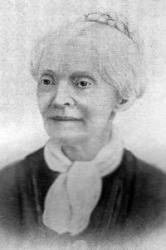
1810 - 1883 Person Name: Mrs. Mary D. James Hymnal Number: 1276 Author of "Crowded is your heart with cares" in The Seventh-Day Adventist Hymn and Tune Book Mary Dagworthy Yard James USA 1810-1883. Born at Trenton, NJ, she began teaching Sunday school at age 13 in the Methodist Episcopal Church. She married Henry B James, and they had four children: Joseph, Mary, Ann, and Charles.. She became a prominent figure in the Wesleyan Holiness movement of the early 1800s, assisting Phoebe Palmer (also a hymnist) and often leading meetings at Ocean Grove, NJ, and elsewhere. She wrote articles that appeared in the “Guide to holiness”, “The New York Christian advocate”, “The contributor”, “The Christian witness:, “The Christian woman”, “The Christian standard”, and the “Ocean Grove record”. She wrote a biography of Edmund J Yard entitled, “The soul winner” (1883). She strived to live a life as close to Christ as possible. She died in New York City.
John Perry
Mary D. James
William Hammond
1719 - 1783 Hymnal Number: 15 Author of "Lord, we come before thee now" in The Seventh-Day Adventist Hymn and Tune Book Hammond, William, B.A, born at Battle, Sussex, Jan. 6, 1719, and educated at St. John's College, Cambridge. In 1743 he joined the Calvinistic Methodists; and in 1745, the Moravian Brethren. He died in London, Aug. 19, 1783, and was buried in the Moravian burial-ground, Sloane Street, Chelsea. He left an Autobiography in Greek, which remains unpublished. His original hymns, together with his translations from the Latin, were published in his:—
Psalms, Hymns, and Spiritual Songs. To which is prefix'd A Preface, giving some Account of a Weak Faith, and a Full Assurance of Faith; and briefly stating the Doctrine of Sanctification; and shewing a Christian's Completeness, Perfection, and Happiness in Christ. By William Hammond, A.B., late of St. John's College, Cambridge. London: Printed by W. Strahan; and sold by J. Oswald, at the Rose and Crown in the Poultry, mdccxlv.
A few of his original hymns from scriptural fidelity and earnestness have attained to a foremost position amongst English hymns. These include, "Awake, and sing the song," and "Lord, we come before Thee now." His translations of Latin hymns were amongst the earliest published after those contained in the Primers and other devotional works of 16th and 17th centuries. They are of merit, and worthy of attention. Greater use might also be made of his original compositions. In addition to those named above, the following are also in common use:—
1. Brightness of the Father's Face. God the Son.
2. How great the Christian's portion is. Possession of All in Christ.
3. If Jesus is yours. God's unchangeable Love.
4. In Thine own appointed way. Divine Worship.
5. Jesus, Who died the [a] world to save. Easter.
6. Lord, if on earth the thought of Thee. Heaven anticipated.
1. Now with joint consent we sing. Divine Worship.
8. O Lord, how little do we know. Quinquagesima.
9. Would you win a soul to God ? The Gospel Message.
--John Julian, Dictionary of Hymnology (1907)
William Hammond
Lowell Mason
1792 - 1872 Hymnal Number: 58 Composer of "UXBRIDGE" in The Seventh-Day Adventist Hymn and Tune Book Dr. Lowell Mason (the degree was conferred by the University of New York) is justly called the father of American church music; and by his labors were founded the germinating principles of national musical intelligence and knowledge, which afforded a soil upon which all higher musical culture has been founded. To him we owe some of our best ideas in religious church music, elementary musical education, music in the schools, the popularization of classical chorus singing, and the art of teaching music upon the Inductive or Pestalozzian plan. More than that, we owe him no small share of the respect which the profession of music enjoys at the present time as contrasted with the contempt in which it was held a century or more ago. In fact, the entire art of music, as now understood and practiced in America, has derived advantage from the work of this great man.
Lowell Mason was born in Medfield, Mass., January 8, 1792. From childhood he had manifested an intense love for music, and had devoted all his spare time and effort to improving himself according to such opportunities as were available to him. At the age of twenty he found himself filling a clerkship in a banking house in Savannah, Ga. Here he lost no opportunity of gratifying his passion for musical advancement, and was fortunate to meet for the first time a thoroughly qualified instructor, in the person of F. L. Abel. Applying his spare hours assiduously to the cultivation of the pursuit to which his passion inclined him, he soon acquired a proficiency that enabled him to enter the field of original composition, and his first work of this kind was embodied in the compilation of a collection of church music, which contained many of his own compositions. The manuscript was offered unavailingly to publishers in Philadelphia and in Boston. Fortunately for our musical advancement it finally secured the attention of the Boston Handel and Haydn Society, and by its committee was submitted to Dr. G. K. Jackson, the severest critic in Boston. Dr. Jackson approved most heartily of the work, and added a few of his own compositions to it. Thus enlarged, it was finally published in 1822 as The Handel and Haydn Society Collection of Church Music. Mason's name was omitted from the publication at his own request, which he thus explains, "I was then a bank officer in Savannah, and did not wish to be known as a musical man, as I had not the least thought of ever making music a profession." President Winchester, of the Handel and Haydn Society, sold the copyright for the young man. Mr. Mason went back to Savannah with probably $500 in his pocket as the preliminary result of his Boston visit.
The book soon sprang into universal popularity, being at once adopted by the singing schools of New England, and through this means entering into the church choirs, to whom it opened up a higher field of harmonic beauty. Its career of success ran through some seventeen editions. On realizing this success, Mason determined to accept an invitation to come to Boston and enter upon a musical career. This was in 1826. He was made an honorary member of the Handel and Haydn Society, but declined to accept this, and entered the ranks as an active member. He had been invited to come to Boston by President Winchester and other musical friends and was guaranteed an income of $2,000 a year. He was also appointed, by the influence of these friends, director of music at the Hanover, Green, and Park Street churches, to alternate six months with each congregation. Finally he made a permanent arrangement with the Bowdoin Street Church, and gave up the guarantee, but again friendly influence stepped in and procured for him the position of teller at the American Bank.
In 1827 Lowell Mason became president and conductor of the Handel and Haydn Society. It was the beginning of a career that was to win for him as has been already stated the title of "The Father of American Church Music." Although this may seem rather a bold claim it is not too much under the circumstances. Mr. Mason might have been in the average ranks of musicianship had he lived in Europe; in America he was well in advance of his surroundings. It was not too high praise (in spite of Mason's very simple style) when Dr. Jackson wrote of his song collection: "It is much the best book I have seen published in this country, and I do not hesitate to give it my most decided approbation," or that the great contrapuntist, Hauptmann, should say the harmonies of the tunes were dignified and churchlike and that the counterpoint was good, plain, singable and melodious.
Charles C. Perkins gives a few of the reasons why Lowell Mason was the very man to lead American music as it then existed. He says, "First and foremost, he was not so very much superior to the members as to be unreasonably impatient at their shortcomings. Second, he was a born teacher, who, by hard work, had fitted himself to give instruction in singing. Third, he was one of themselves, a plain, self-made man, who could understand them and be understood of them."
The personality of Dr. Mason was of great use to the art and appreciation of music in this country. He was of strong mind, dignified manners, sensitive, yet sweet and engaging.
Prof. Horace Mann, one of the great educators of that day, said he would walk fifty miles to see and hear Mr. Mason teach if he could not otherwise have that advantage.
Dr. Mason visited a number of the music schools in Europe, studied their methods, and incorporated the best things in his own work. He founded the Boston Academy of Music. The aim of this institution was to reach the masses and introduce music into the public schools. Dr. Mason resided in Boston from 1826 to 1851, when he removed to New York. Not only Boston benefited directly by this enthusiastic teacher's instruction, but he was constantly traveling to other societies in distant cities and helping their work. He had a notable class at North Reading, Mass., and he went in his later years as far as Rochester, where he trained a chorus of five hundred voices, many of them teachers, and some of them coming long distances to study under him. Before 1810 he had developed his idea of "Teachers' Conventions," and, as in these he had representatives from different states, he made musical missionaries for almost the entire country. He left behind him no less than fifty volumes of musical collections, instruction books, and manuals.
As a composer of solid, enduring church music. Dr. Mason was one of the most successful this country has introduced. He was a deeply pious man, and was a communicant of the Presbyterian Church. Dr. Mason in 1817 married Miss Abigail Gregory, of Leesborough, Mass. The family consisted of four sons, Daniel Gregory, Lowell, William and Henry. The two former founded the publishing house of Mason Bros., dissolved by the death of the former in 1869. Lowell and Henry were the founders of the great organ manufacturer of Mason & Hamlin. Dr. William Mason was one of the most eminent musicians that America has yet produced.
Dr. Lowell Mason died at "Silverspring," a beautiful residence on the side of Orange Mountain, New Jersey, August 11, 1872, bequeathing his great musical library, much of which had been collected abroad, to Yale College.
--Hall, J. H. (c1914). Biography of Gospel Song and Hymn Writers. New York: Fleming H. Revell Company.
Lowell Mason
John Stocker
Hymnal Number: 159 Author of "Gracious Spirit, love divine" in The Seventh-Day Adventist Hymn and Tune Book John Stocker, of Honitan, Devonshire. Contributed during 1776 and 1777 nine hymns to "Gospel Magazine"
Evangelical Lutheran Hymnal, 1908
John Stocker
George Heath
1745 - 1822 Hymnal Number: 601 Author of "My soul, be on thy guard!" in The Seventh-Day Adventist Hymn and Tune Book Rv George Heath DD United Kingdom 1745-1822. Born at Exeter, Devon, England, he was educated at the Dissenting Academy and King’s College, Cambridge. He married Mary Ann Kean, and they had 4 children: Louisa, John, Charles, and Benjamin (also a minister). He served as pastor of the Honiton, Devonshire, Presbyterian Church, but proved unworthy and was dismissed for cause. He later became a Unitarian minister. In 1781 he published “Hymns & poetic essays sacred to the worship of the Deity”. He also authored a “History of Bristol”. He became Headmaster of Eton College (1792-1802). He joined the Anglican Church and became Canon of Windsor (1800-1822), Rector of Monks Risborough, Vicar of Sturminster Marshall, Dorset, Vicar of Piddletown, Vicar of East Beachsworth (1805-1814), and Fellow of the Royal Society (1795-1822). He was appointed to the 4th stall in St. George’s Chapel in 1800, Windsor Castle, and died at his residence in the Cloisters, Windsor Castle.
John Perry
=======================
Heath, George, became pastor of a Presbyterian Church at Honiton, Devon, in 1770, and died in 1822. He published a History of Bristol, 1797. Also Hymns and Poetic Essays Sacred to the Public and Private Worship of the Deity, &c, Bristol, 1781, from which "My soul, be on thy guard" (Steadfastness), is taken.
--John Julian, Dictionary of Hymnology, Appendix, Part II (1907)
George Heath
Friedrich Filitz
1804 - 1876 Person Name: Filitz Hymnal Number: 615 Composer of "CAPETOWN" in The Seventh-Day Adventist Hymn and Tune Book Friedrich Filitz PhD Germany 1804-1876. Born at Arnstadt. Thuringia, he was a German composer and musicologist. He collected church music. He also studied philosophy. In 1833 he worked in Berlin as a music critic and at other employment. He was also a music historian. With Ludwig Erck, he published a collection of 15th & 17th Century chorales in 1845. He moved to Munich and published a chorale book in 1847. His legacy of vauable church music was donated to the Bavarian State Library, where it has made many forgotten works available once again. He died in Bonn, Germany.
John Perry
Friedrich Filitz
Helen Maria Williams
1762 - 1827 Person Name: Helen M. Williams Hymnal Number: 81 Author of "While thee I seek, protecting Power" in The Seventh-Day Adventist Hymn and Tune Book Miss Helen Maria Williams was born in the north of England, in 1762. At the age of eighteen, she went to London, and soon after took position in the literary world, publishing several poems. Subsequently she resided in Paris, where she published works in prose and poetry. She died in 1827. The eminent French preacher, Athanase Coquerel was her nephew, and received from her his early training.
--Annotations of the Hymnal, Charles Hutchins, M.A., 1872.
==================
Williams, Helen Maria, daughter of Charles Williams, an officer in the Army, was born in the North of England in 1762. Through the influence of Dr. A. Kippis whose help she sought in London, her first poem, Edwin and Eltruda, a legendary tale, was published in 1782. This was followed by An Ode on the Peace, 1783, and Pern, a Poem. These were all included in her Poems, 2 vols., 1786, 2nd edition 1791. Being connected by her sister's marriage with a French Protestant family, she resided in Paris during the period of the Revolution and the reign of Terror. There she became well known as a political writer of strong republican sympa-thies, but her too independent expressions of opinion led to her temporary imprisonment by Robespierre. Her Letters from France, 1790, were published in England and America, and in a French translation, in France. She also published Letters containing a Sketch of the Politics of France from the 31st May, 1793, till the 28th of July, 1794, 2 vols., 1795, and other works of a like kind; some additional Poems, and a translation of Humboldt's Personal Narratives of his Travels, 1815. The closing years of her life were spent at Amsterdam, in the house of her nephew, Athanase Coquerel, a pastor of the Reformed Church there. Miss Williams died in 1827. From her Poems, 1786, the following hymns have come into common use:—
1, My God, all nature owns Thy sway. Nature speaks of God. In Martineau's Hymns, 1840.
2. While Thee I seek, protecting Power. Safety in God. This hymn was in Dr. Priestley's Birmingham Collection, 1790; in Kippis's Collection, 1795; the Exeter Collection, 1801; and almost every other Unitarian collection to the present time. In the New Congregational Hymn Book , 1859, it begins "While Thee I seek, Almighty Power;" and in several collections a cento beginning "Father, in all our [my] comforts here," is given as in Stowell's Psalms & Hymns, 1831 and 1877, and several others. [Rev. Valentine D. Davis, B.A.]
-- John Julian, Dictionary of Hymnology (1907)
==================
Williams, Helen Maria, was born in the North of England in 1762. She published a volume of poems when only twenty-one years old, and in 1786 her Poems appeared in two small volumes. She visited Paris in 1788, and lived there for some years with a sister who had married a French Protestant. This was during the period of the Revolution and the Reign of Terror. She was an outspoken republican in her sympathies, 448 and was imprisoned by Robespierre because of some of her utterances in advocacy of the Girondist cause, being released from prison only after his death, in 1794. Her Letters from France (1790 and 1795) were published in England, America, and France. They dealt with political, religious, and literary questions, and showed her to be a woman of more than ordinary intellectual strength. She published many volumes between 1786 and 1823, when her last volume appeared, titled Poems on Various Occasions, being a collection of all her previously published poems. She lived partly in England, but mostly in France, though the closing years of her life were spent in Holland in the home of a nephew who lived at Amsterdam and was pastor of the reformed Church there. Her death occurred at Paris December 14, 1827.
Hymn Writers of the Church Wilbur F. Tillett and Charles S. Nutter, 1915
Helen Maria Williams
William Vincent Wallace
1812 - 1865 Person Name: William V. Wallace Hymnal Number: 312 Composer of "INVITATION" in The Seventh-Day Adventist Hymn and Tune Book
William Vincent Wallace
Pages