You help make Hymnary.org possible. More than 10 million people from 200+ countries found hymns, liturgical resources and encouragement on Hymnary.org in 2025, including you. Every visit affirms the global impact of this ministry.

If Hymnary has been meaningful to you this year, would you take a moment today to help sustain it? A gift of any size—paired with a note of encouragement if you wish—directly supports the server costs, research work and curation that keep this resource freely available to the world.

Give securely online today, or mail a check to:
Hymnary.org
Calvin University
3201 Burton Street SE
Grand Rapids, MI 49546

Thank you for your partnership, and may the hope of Advent fill your heart.

Person Results

Tune Identifier:"^ernan_mason$"
In:people

Planning worship? Check out our sister site, ZeteoSearch.org, for 20+ additional resources related to your search.
Showing 21 - 30 of 75Results Per Page: 102050

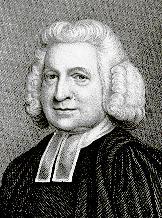
Charles Wesley

1707 - 1788 Author of "O Thou who camest from above" in The Presbyterian Book of Praise Charles Wesley, M.A. was the great hymn-writer of the Wesley family, perhaps, taking quantity and quality into consideration, the great hymn-writer of all ages. Charles Wesley was the youngest son and 18th child of Samuel and Susanna Wesley, and was born at Epworth Rectory, Dec. 18, 1707. In 1716 he went to Westminster School, being provided with a home and board by his elder brother Samuel, then usher at the school, until 1721, when he was elected King's Scholar, and as such received his board and education free. In 1726 Charles Wesley was elected to a Westminster studentship at Christ Church, Oxford, where he took his degree in 1729, and became a college tutor. In the early part of the same year his religious impressions were much deepened, and he became one of the first band of "Oxford Methodists." In 1735 he went with his brother John to Georgia, as secretary to General Oglethorpe, having before he set out received Deacon's and Priest's Orders on two successive Sundays. His stay in Georgia was very short; he returned to England in 1736, and in 1737 came under the influence of Count Zinzendorf and the Moravians, especially of that remarkable man who had so large a share in moulding John Wesley's career, Peter Bonier, and also of a Mr. Bray, a brazier in Little Britain. On Whitsunday, 1737, [sic. 1738] he "found rest to his soul," and in 1738 he became curate to his friend, Mr. Stonehouse, Vicar of Islington, but the opposition of the churchwardens was so great that the Vicar consented that he "should preach in his church no more." Henceforth his work was identified with that of his brother John, and he became an indefatigable itinerant and field preacher. On April 8, 1749, he married Miss Sarah Gwynne. His marriage, unlike that of his brother John, was a most happy one; his wife was accustomed to accompany him on his evangelistic journeys, which were as frequent as ever until the year 1756," when he ceased to itinerate, and mainly devoted himself to the care of the Societies in London and Bristol. Bristol was his headquarters until 1771, when he removed with his family to London, and, besides attending to the Societies, devoted himself much, as he had done in his youth, to the spiritual care of prisoners in Newgate. He had long been troubled about the relations of Methodism to the Church of England, and strongly disapproved of his brother John's "ordinations." Wesley-like, he expressed his disapproval in the most outspoken fashion, but, as in the case of Samuel at an earlier period, the differences between the brothers never led to a breach of friendship. He died in London, March 29, 1788, and was buried in Marylebone churchyard. His brother John was deeply grieved because he would not consent to be interred in the burial-ground of the City Road Chapel, where he had prepared a grave for himself, but Charles said, "I have lived, and I die, in the Communion of the Church of England, and I will be buried in the yard of my parish church." Eight clergymen of the Church of England bore his pall. He had a large family, four of whom survived him; three sons, who all became distinguished in the musical world, and one daughter, who inherited some of her father's poetical genius. The widow and orphans were treated with the greatest kindness and generosity by John Wesley. As a hymn-writer Charles Wesley was unique. He is said to have written no less than 6500 hymns, and though, of course, in so vast a number some are of unequal merit, it is perfectly marvellous how many there are which rise to the highest degree of excellence. His feelings on every occasion of importance, whether private or public, found their best expression in a hymn. His own conversion, his own marriage, the earthquake panic, the rumours of an invasion from France, the defeat of Prince Charles Edward at Culloden, the Gordon riots, every Festival of the Christian Church, every doctrine of the Christian Faith, striking scenes in Scripture history, striking scenes which came within his own view, the deaths of friends as they passed away, one by one, before him, all furnished occasions for the exercise of his divine gift. Nor must we forget his hymns for little children, a branch of sacred poetry in which the mantle of Dr. Watts seems to have fallen upon him. It would be simply impossible within our space to enumerate even those of the hymns which have become really classical. The saying that a really good hymn is as rare an appearance as that of a comet is falsified by the work of Charles Wesley; for hymns, which are really good in every respect, flowed from his pen in quick succession, and death alone stopped the course of the perennial stream. It has been the common practice, however for a hundred years or more to ascribe all translations from the German to John Wesley, as he only of the two brothers knew that language; and to assign to Charles Wesley all the original hymns except such as are traceable to John Wesley through his Journals and other works. The list of 482 original hymns by John and Charles Wesley listed in this Dictionary of Hymnology have formed an important part of Methodist hymnody and show the enormous influence of the Wesleys on the English hymnody of the nineteenth century. -- Excerpts from John Julian, Dictionary of Hymnology (1907) ================== Charles Wesley, the son of Samuel Wesley, was born at Epworth, Dec. 18, 1707. He was educated at Westminster School and afterwards at Christ Church, Oxford, where he graduated M.A. In 1735, he took Orders and immediately proceeded with his brother John to Georgia, both being employed as missionaries of the S.P.G. He returned to England in 1736. For many years he engaged with his brother in preaching the Gospel. He died March 29, 1788. To Charles Wesley has been justly assigned the appellation of the "Bard of Methodism." His prominence in hymn writing may be judged from the fact that in the "Wesleyan Hymn Book," 623 of the 770 hymns were written by him; and he published more than thirty poetical works, written either by himself alone, or in conjunction with his brother. The number of his separate hymns is at least five thousand. --Annotations of the Hymnal, Charles Hutchins, M.A., 1872.

Maria V. G. Havergal

1821 - 1887 Author of "Life's Orient Morn Hath Passed Away" in The Cyber Hymnal

Samuel Wesley

1691 - 1739 Person Name: Samuel Wesley, Jr. Author of "The morning flowers display their sweets" in The Epworth Hymnal Samuel Wesley, M.A., the younger, was the eldest child of Samuel and Susanna Wesley, and was born in or near London in 1691. He received his early education from his mother, who always took a special interest in him as her firstborn. In 1704 he went to Westminster School, where he was elected King's Scholar in 1707. Westminster had, under the mastership of Dr. Busby for 55 years, attained the highest reputation for scholarship, and Samuel Wesley, as a classical scholar, was not unworthy of his school. In 1709, Dr. Spratt, Bishop of Rochester, patronised the young scholar, and frequently invited him to Bromley. In 1711 he went with a Westminster studentship to Christ Church, Oxford, and having taken his degree, returned to Westminster as an Usher. He then received Holy Orders and became an intimate friend of Bishop Atterbury, who was then Dean of Westminster. His intimacy with this prelate was a bar to his advancement, and he was bitterly disappointed at not being appointed undermaster at Westminster when that post was vacant. But he was faithful to his friend in his adversity, and the banished prelate warmly appreciated his attachment. In 1732 he was invited, without solicitation, to accept the headmastership of the Free School at Tiverton, and here he spent the remainder of his life. He strongly disapproved of John and Charles Wesley's proceedings; but though the brothers expressed their opinions to one another with characteristic frankness, the disagreement did not cause any interruption in the friendly relations between them. Samuel Wesley was universally acknowledged to be an honest, conscientious and deeply religious man. He was a most uncompromising High Churchman both in the political and the theological sense of that term; and there is no doubt that he was the mainstay of the Wesley family at Epworth. His kindness to his father and mother was unbounded, and he acted like a father to his younger brothers and sisters. He also took a great interest in works of charity, and was one of the first promoters of the Westminster Infirmary. He died at Tiverton in the 49th year of his age, Nov. 6, 1739. His epitaph in Tiverton Churchyard does not exaggerate his merits, when it describes him as— "a man for his uncommon wit and learning, For the benevolence of his temper, and simplicity of manner, Deservedly loved and esteemed by all: An excellent Preacher; But whose best sermon Was the constant example of an edifying life: So continually and zealously employed In acts of beneficence and charity, That he truly followed His blessed Master's example In going about doing good; Of such scrupulous integrity, That he declined occasions of advancement in the world, Through fear of being involved in dangerous compliances; And avoided the usual ways to preferment As studiously as many others seek them." Samuel Wesley published in 1736 A Collection of Poems on several occasions, some of which are full of a rather coarse humour, but all of a good moral and religious tendency. This work was reprinted in 1743, and again by W. Nichols in 1862. Dr. Adam Clarke specifies eight hymns of S. Wesley's composition which were in use among the Methodists of that time (1823). The Wesleyan Hymn Book of the present day contains five, the best-known of which is "The Lord of Sabbath let us praise." Six of his hymns are in common use, and are annotated as follows:— 1. From whence these dire portents around. 2. Hail, Father, Whose creating call. 3. Hail, God the Son in glory crowned. 4. Hail, Holy Ghost, Jehovah, Third. 5. The Lord of Sabbath, let ns praise. 6. The morning flowers display their sweets. -- Excerpts from John Julian, Dictionary of Hymnology (1907)

William Brickey

Author of "In imitation, Lord, of thee" in The Seventh-Day Adventist Hymn and Tune Book

William H. Burleigh

1812 - 1871 Person Name: William Henry Burleigh Author of "Lead Us, O Father!" in Gloria Deo Burleigh, William Henry, an active reformer and member of the Unitarian body, was born at Woodstock, Connecticut, Feb. 12, 1812, and brought up on a farm at Stainfield in the same state. In 1837 he went to Pittsburg, Pennsylvania, where, having been previously apprenticed to the printing trade, he published the Christian Witness and Temperance Banner. In 1843 he undertook the duties of editor of the Christian Freeman, at Hartford. From 1849 to 1855 he was agent of the New York State Temperance Society; and from 1855 to 1870 Harbour Master at New York. Died at Brooklyn, March 18, 1871. His poetical pieces and hymns were contributed to various periodicals and journals. Many of these were collected and published as Poems, Phila. in 1841. This volume was enlarged by additional pieces, and republished by his widow, in 1871. The dates of these hymns and poems are most difficult to determine. Where possible they are given in detail. It is somewhat curious that Burleigh's hymns are generally more extensively used in England than at home. The introduction of some of his best compositions into the English collections is due to the Lyra Sacra Americana, whence they were mostly taken by the compilers. Those in use in Great Britain and America are:— 1. Fades from the west the farewell nigh. Night . This poem, entitled “A Psalm of Night," is given in his Poems, N. Y., 1871, pp. 275-6. Although not in the 1st edition of his Poems, 1841, it was in common use as early as 1844. It is in 5 stanzas of 8 lines. From it the following centos have come into common use:— (1) “Day unto day uttereth speech." This is composed of stanzas iii.-v., and was given in the Christian Hymns of the Cheshire Pastoral Association (Amer. Unitarian), 1844, as an "Evening Hymn." (2) "O Holy Father, mid the calm." This cento In Longfellow and Johnson's Book of Hymns, 1846, and their Hymns of the Spirit, 1864, &c, is composed of stanzas iv.-v. (3) "Not only doth the voiceful day," No. 324 in Longfellow and Johnson's Hymns of the Spirit, 1864, is composed of st. ii.-iii. Another arrangement beginning with the same stanza is in the Lyra Sacra Americana, p. 41. (4) “The brightening dawn and voiceful day." In the Hymnary (Lond.), 1872, is, altered from the Lyra Sacra Americana as above, with the addition of a doxology. In and through these various forms, the use of this hymn is very extensive. 2. Father, beneath Thy sheltering wing. Trust and Peace. Appeared in Longfellow and Johnson's Hymns of the Spirit, 1864, No. 471, in 4 stanzas of 4 lines. It is given in many American collections, and in the Baptist Hymnal, 1879, Horder's Cong. Hymns , 1884, and others in Great Britain. Orig. text in Lyra Sacra Americana, p. 39, with "that" for "which” in st. ii. line 4. 3. For the dear love that kept us through the night. Morning. From Poems, 1871, into Horder's Congregational Hymns, 1884. 4. From profoundest depths of tribulation. Lent. This appeared in the Supplement to Hedge and Huntington's Hymns, &c. (Unitarian), 1853, No 843. 5. Lead us, 0 Father, in the paths of peace. Divine Guidance. No. 32 of the Lyra Sacra Americana, in 4 stanzas of 4 lines, being "A Prayer for Guidance." With English compilers this hymn ranks amongst Burleigh’s productions next in popularity to No. 8, and is found in most of the collections there named. 6. Not in vain I poured my supplication . Lent. This is a continuation of the same thought as No. 4 preceding, and follows it in the same Supplement. 7. O deem not that earth's crowning bliss. Mourning. This, passed from the Lyra Sacra Americana, 1868, into the Eng. Bap. Hymnal , 1879; Horder's Congregational Hymns, 1884, and others. It is in his Poems, 1i871, p. 258. The hymn, "From lips divine, like healing balm," in the Methodist Episcopal Hymnal, N. Y., 1878, is a cento from this hymn. 8. Still will we trust though earth seems dark and dreary. Faith. Appeared in the Lyra Sac. Amer., 1868, pp. 43-44, in 5 stanzas of 4 lines. This is the most widely adopted of this author's hymns by the English compilers. It is given in some of the best collections, as the New Congregational Hymn Book, Thring, Horder, the Baptist Hymnal, Allon, &c. 9. There is a beautiful land by the spoiler untrod. Heaven. Dr. Cleveland Lyra Sac. Americana, 1868, p. 298) says, "This piece was first published in the Independent, Jan. 18, 1866." 10. They who have kept their spirit's virgin whiteness. Purity. In Lyra Sacra Americana, 1868, p. 46. 11. Thou Who look'st with pitying eye. Lent. In Lyra Sacra Americana, 1868, p. 47. 12. Through the changes of the day. Evening. From his Poems, 1841. It is given in the Lyra Sac. Amer., p. 50, the Society for Promoting Christian Knowledge Psalms. and Hymns, 1852, Thring's Collection, and others. 13. We ask not that our path be always bright. Trust in God. From the Lyra Sac. Amer, 1868, into Horder's Congregational Hymns, 1884. 14. When gladness gilds our prosperous day. Good in all. Also from Lyra Sacra Americana into Horder's Cong. Hymns, 1884. It has been already noted that Burleigh's hymns have a more extended use in Great Britain, than in his own country. The foregoing notes will also show that his productions are more widely known and used outside of his own denomination than by his own people. Concerning the hymns included in the Lyra Sac. Amer., Dr. Cleveland, the editor, says, "Most of these beautiful hymns of Mr. Burleigh's were given to me in manuscript by the author," but he does not indicate what was new and what was old. -- John Julian, Dictionary of Hymnology (1907)

Ḥabīb Guirguis

1876 - 1951 Person Name: حبيب جرجس Author of "لا تضطرب قلوبكم" in كتاب الترانيم الروحية للكنائس الإنجيلية Habeeb Guirguis, an Egyptian-born religion reformer for the Egyptian Orthodox (Coptic) church. حبيب جرجس ، بك مصلح دينى مصرى و واحد من اشهر الوعاظ فى الكنيسه القبطيه الارتودوكسيه ، انصب اهتمامه على التعليم و خصوصيه المسيحيه المصريه فأسس الكليه الأكليريكيه -مدرسة الاسكندريه اللاهوتيه- فى العصر الحديث

Charles Rochedieu

1857 - 1928 Person Name: Charles Rochedieu, 1857-1928 Author of "Un regard sur ta croix sanglante" in Sélections d'Hymnes Chrétiens

Lucy Larcom

1824 - 1893 Author of "The Ocean of Thy Peace" in Song-Hymnal of Praise and Joy Larcom, Lucy, was born at Beverley Farm, Massachusetts, in 1826. Her Poems were published in 1864. Her hymn, "When for me the silent oar" [Death Anticipated), was published in 1868. She died in 1893. --John Julian, Dictionary of Hymnology, Appendix, Part II (1907) =============== Larcom, Lucy, p. 1576, ii. The extended use of this writer's hymns justifies a more detailed account of her life and work than is given on p. 1576. She was born in 1824, and worked from 1837-45 in the mills of Lawrence, Mass., then engaged in elementary teaching 1846-49, became a student at Monticello Female Seminary, Alton, Ill., 1849-52, and then entered upon advanced teaching in higher-class schools, and literary work. She edited with J. G. Whittier, Child Life in Poetry, 1871; Child Life in Prose, 1873; Songs of Three Centuries, 1875, &c. Her own works are Poems, 1869; Childhood Songs, 1875; Wild Roses of Cape Ann, 1881; Poetical Works, 1885; At the Beautiful Gate; And Other Songs of Faith, 1892. Her autobiography was published as A New England Girlhood. She died in 1893. In addition to "When for me the silent oar," of her hymns the following are in common use:— i. From her Poems, 1869. 1. Hand in hand with angels. Angelic companion¬ship. 2. If the world seems cold to you. 3. When for me the silent oar. Death ii. From her Wild Roses of Cape Ann, 1881. 4. In Christ I feel the heart of God. 5. O Spirit, "Whose name is the Saviour.” in. From her Poetical Works, 1885. 6. Breaks the joyful Easter dawn, master. 7. Heavenly Helper, Friend Divine. Christ the Friend. iv. From her At the Beautiful Gate, &c, 1892. 8. Draw Thou, my soul, O Christ. Looking to Jesus. 9. O God, Thy world is sweet with prayer. Prayer. 10. Open your hearts as a flower to the light. 11. King, happy bells of Easter time. Easter. The above notes are from the British Museum copies of Miss Larcom's works. --John Julian, Dictionary of Hymnology, New Supplement (1907)

Edward Henry Bickersteth

1825 - 1906 Person Name: Edward H. Bickersteth Author of "Not Worthy, Lord" in The New Christian Hymnal Bickersteth, Edward Henry, D.D., son of Edward Bickersteth, Sr. born at Islington, Jan. 1825, and educated at Trinity College, Cambridge (B.A. with honours, 1847; M.A., 1850). On taking Holy Orders in 1848, he became curate of Banningham, Norfolk, and then of Christ Church, Tunbridge Wells. His preferment to the Rectory of Hinton-Martell, in 1852, was followed by that of the Vicarage of Christ Church, Hampstead, 1855. In 1885 he became Dean of Gloucester, and the same year Bishop of Exeter. Bishop Bickersteth's works, chiefly poetical, are:— (l) Poems, 1849; (2) Water from the Well-spring, 1852; (3) The Rock of Ages, 1858 ; (4) Commentary on the New Testament, 1864; (5) Yesterday, To-day, and For Ever, 1867; (6) The Spirit of Life, 1868; (7) The Two Brothers and other Poems, 1871; (8) The Master's Home Call, 1872 ; (9) The Shadowed Home and the Light Beyond, 1874; (10) The Beef and other Parables, 1873; (11) Songs in the House of Pilgrimage, N.D.; (12) From Year to Year, 1883. As an editor of hymnals, Bp. Bickersteth has also been most successful. His collections are:— (1) Psalms & Hymns, 1858, based on his father's Christian Psalmody, which passed through several editions; (2) The Hymnal Companion, 1870; (3) The Hymnal Companion revised and enlarged, 1876. Nos. 2 and 3, which are two editions of the same collection, have attained to an extensive circulation.   [Ch. of England Hymnody.] About 30 of Bp. Bickersteths hymns are in common use. Of these the best and most widely known are:—" Almighty Father, hear our cry"; "Come ye yourselves apart and rest awhile"; "Father of heaven above"; "My God, my Father, dost Thou call"; "O Jesu, Saviour of the lost"; "Peace, perfect peace"; "Rest in the Lord"; "Stand, Soldier of the Cross"; " Thine, Thine, for ever"; and "Till He come.” As a poet Bp. Bickersteth is well known. His reputation as a hymn-writer has also extended far and wide. Joined with a strong grasp of his subject, true poetic feeling, a pure rhythm, there is a soothing plaintiveness and individuality in his hymns which give them a distinct character of their own. His thoughts are usually with the individual, and not with the mass: with the single soul and his God, and not with a vast multitude bowed in adoration before the Almighty. Hence, although many of his hymns are eminently suited to congregational purposes, and have attained to a wide popularity, yet his finest productions are those which are best suited for private use. -John Julian, Dictionary of Hymnology (1907) ================= Bickersteth, Edward Henry, p. 141, ii. Bishop Bickersteth's 1890 edition of his Hymnal Companion is noted on p. 1312, i., and several of his own hymns and translations, which appear therein for the first time, are annotated in this Appendix. One of these, "All-merciful, Almighty Lord," for the Conv. of St. Paul, was written for the 1890 edition of Hymnal Companion. --John Julian, Dictionary of Hymnology, Appendix, Part II (1907) ================== Bickersteth, B. H., p. 141, ii. Bp. Bickersteth died in London, May 16, 1906. --John Julian, Dictionary of Hymnology, New Supplement (1907)

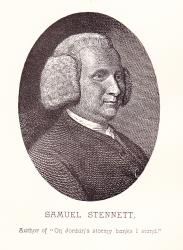
Samuel Stennett

1727 - 1795 Author of "Where Two or Three, with Sweet Accord" in The Cyber Hymnal Samuel Stennett was born at Exeter, in 1727. His father was pastor of a Baptist congregation in that city; afterwards of the Baptist Chapel, Little Wild Street, London. In this latter pastorate the son succeeded the father in 1758. He died in 1795. Dr. Stennett was the author of several doctrinal works, and a few hymns. --Annotations of the Hymnal, Charles Hutchins, M.A. 1872. ====================== Stennett, Samuel, D.D., grandson of Joseph Stennett, named above, and son of the Rev. Joseph Stennett, D.D., was born most pro;bably in 1727, at Exeter, where his father was at that time a Baptist minister. When quite young he removed to London, his father having become pastor of the Baptist Church in Little Wild Street, Lincoln's Inn Fields. In 1748, Samuel Stennett became assistant to his father in the ministry, and in 1758 succeeded him in the pastoral office at Little Wild Street. From that time until his death, on Aug. 24, 1795, he held a very prominent position among the Dissenting ministers of London. He was much respected by some of the statesmen of the time, and used his influence with them in support of the principles of religious freedom. The celebrated John Howard was a member of his congregation and an attached friend. In 1763, the University of Aberdeen conferred on him the degree of D.D. Dr. S. Stennett's prose publications consist of volumes of sermons, and pamphlets on Baptism and on Nonconformist Disabilities. He wrote one or two short poems, and contributed 38 hymns to the collection of his friend, Dr. Rippon (1787). His poetical genius was not of the highest order, and his best hymns have neither the originality nor the vigour of some of his grandfather's. The following, however, are pleasing in sentiment and expression, and are in common use more especially in Baptist congregations:— 1. And have I, Christ, no love for Thee? Love for Christ desired. 2. And will the offended God again? The Body the Temple of the Holy Ghost. 3. As on the Cross the Saviour hung. The Thief on the Cross. 4. Behold the leprous Jew. The healing of the Leper. 5. Come, every pious heart. Praise to Christ. 6. Father, at Thy call, I come. Lent. 7. Great God, amid the darksome night. God, a Sun. 8. Great God, what hosts of angels stand. Ministry of Angels. 9. Here at Thy Table, Lord, we meet. Holy Communion. 10. How charming is the place. Public Worship. 11. How shall the sons of men appear? Acceptance through Christ alone. 12. How soft the words my [the] Saviour speaks. Early Piety. 13. How various and how new. Divine Providence. 14. Not all the nobles of the earth. Christians as Sons of God. 15. On Jordan's stormy banks I stand. Heaven anticipated. 16. Prostrate, dear Jesus, at thy feet. Lent. Sometimes, "Dear Saviour, prostrate at Thy feet." 17. Should bounteous nature kindly pour. The greatest of these is Love. From this, "Had I the gift of tongues," st. iii., is taken. 18. Thy counsels of redeeming grace. Holy Scripture. From "Let avarice, from shore to shore." 19. Thy life 1 read, my dearest Lord. Death in Infancy. From this "'Tis Jesus speaks, I fold, says He." 20. 'Tis finished! so the Saviour cried. Good Friday. 21. To Christ, the Lord, let every tongue. Praise of Christ. From this,"Majestic sweetness sits enthroned," st. iii., is taken. 22. To God, my Saviour, and my King. Renewing Grace. 23. To God, the universal King. Praise to God. 24. What wisdom, majesty, and grace. The Gospel. Sometimes, “What majesty and grace." 25. Where two or three with sweet accord. Before the Sermon. 26. Why should a living man complain? Affliction. From this, "Lord, see what floods of sorrow rise," st. iii., is taken. 27. With tears of anguish I lament. Lent. 28. Yonder amazing sight I see. Good Friday. All these hymns, with others by Stennett, were given in Rippon's Baptist Selection, 1787, a few having previously appeared in A Collection of Hymns for the use of Christians of all Denominations, London. Printed for the Booksellers, 1782; and No. 16, in the 1778 Supplement to the 3rd edition of the Bristol Baptist Selection of Ash and Evans. The whole of Stennett's poetical pieces and hymns were included in vol. ii. of his Works, together with a Memoir, by W. J. Jones. 4 vols., 1824. [Rev. W. R. Stevenson, M.A.] --John Julian, Dictionary of Hymnology (1907)

Pages


Export as CSV
It looks like you are using an ad-blocker. Ad revenue helps keep us running. Please consider white-listing Hymnary.org or getting Hymnary Pro to eliminate ads entirely and help support Hymnary.org.