You help make Hymnary.org possible. More than 10 million people from 200+ countries found hymns, liturgical resources and encouragement on Hymnary.org in 2025, including you. Every visit affirms the global impact of this ministry.

If Hymnary has been meaningful to you this year, would you take a moment today to help sustain it? A gift of any size—paired with a note of encouragement if you wish—directly supports the server costs, research work and curation that keep this resource freely available to the world.

Give securely online today, or mail a check to:
Hymnary.org
Calvin University
3201 Burton Street SE
Grand Rapids, MI 49546

Thank you for your partnership, and may the hope of Advent fill your heart.

Person Results

Text Identifier:"^there_is_a_name_i_love_to_hear_i_love$"
In:person

Planning worship? Check out our sister site, ZeteoSearch.org, for 20+ additional resources related to your search.
Showing 21 - 30 of 54Results Per Page: 102050

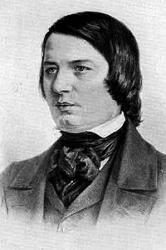
Robert Schumann

1810 - 1856 Person Name: R. Schumann Composer of "[There is a name I love to hear]" in Stamps-Baxter Chorus Book Robert Alexander Schumann DM Germany 1810-1856. Born at Swickau, Saxony, Germany, the last child of a novelist, bookseller, and publisher, he began composing music at age seven. He received general music instruction at the local high school and worked to create his own compositions. Some of his works were considered admirable for his age. He even composed music congruent to the personalities of friends, who took note of the anomaly. He studied famous poets and philosophers and was impressed with the works of other famous composers of the time. After his father’s death in 1826, he went to Leipzig to study law (to meet the terms of his inheritance). In 1829 he continued law studies in Heidelberg, where he became a lifelong member of Corps Saxo-Borussia Heidelberg. In 1830 he left the study of law to return to music, intending to pursue a career as a virtuoso pianist. His teacher, Friedrich Wieck, assured him he could become the finest pianist in Europe, but an injury to his right hand (from a practicing method) ended that dream. He then focused his energies on composition, and studied under Heinrich Dorn, a German composer and conductor of the Leipzig opera. Schumann visited relatives in Zwickau and Schneeberg and performed at a concert given by Clara Wieck, age 13 at the time. In 1834 he published ‘A new journal for music’, praising some past composers and deriding others. He met Felix Mendelssohn at Wieck’s house in Leigzig and lauded the greatness of his compositions, along with those of Johannes Brahms. He also wrote a work, hoping to use proceeds from its sale towards a monument for Beethoven, whom he highly admired. He composed symphonies, operas, orchestral and chamber works, and also wrote biographies. Until 1840 he wrote strictly for piano, but then began composing for orchestra and voice. That year he composed 168 songs. He also receive a Doctorate degree from the University of Jena that year. An aesthete and influential music critic, he was one of the most regarded composers of the Romantic era. He published his works in the ‘New journal for music’, which he co-founded. In 1840, against the wishes of his father, he married Clara Wieck, daughter of his former teacher, and they had four children: Marie, Julie, Eugenie, and Felix. Clara also composed music and had a considerable concert career, the earnings from which formed a substantial part of her father’s fortune. In 1841 he wrote 2 of his 4 symphonies. In 1843 he was awarded a professorship in the Conservatory of Music, which Mendelssohn had founded in Leipzig that same year, When he and Clara went to Russia for her performances, he was questioned as to whether he also was a musician. He harbored resentment for her success as a pianist, which exceeded his ability as a pianist and reputation as a composer. From 1844-1853 he was engaged in setting Goethe’s Faust to music, but he began having persistent nervous prostration and developed neurasthenia (nervous fears of things, like metal objects and drugs). In 1846 he felt he had recovered and began traveling to Vienna, Prague, and Berlin, where he was received with enthusiasm. His only opera was written in 1848, and an orchestral work in 1849. In 1850 he succeeded Ferdinand Hiller as musical director at Dusseldorf, but was a poor conductor and soon aroused the opposition of the musicians, claiming he was impossible on the platform. From 1850-1854 he composed a wide variety of genres, but critics have considered his works during this period inferior to earlier works. In 1851 he visited Switzerland, Belgium, and returned to Leipzig. That year he finished his fourth symphony. He then went to Dusseldorf and began editing his complete works and making an anthology on the subject of music. He again was plagued with imaginary voices (angels, ghosts or demons) and in 1854 jumped off a bridge into the Rhine River, but was rescued by boatmen and taken home. For the last two years of his life, after the attempted suicide, Schumann was confined to a sanitarium in Endenich near Bonn, at his own request, and his wife was not allowed to see him. She finally saw him two days before he died, but he was unable to speak. He was diagnosed with psychotic melancholia, but died of pneumonia without recovering from the mental illness. Speculations as to the cause of his late term maladies was that he may have suffered from syphilis, contracted early in life, and treated with mercury, unknown as a neurological poison at the time. A report on his autopsy said he had a tumor at the base of the brain. It is also surmised he may have had bipolar disorder, accounting for mood swings and changes in his productivity. From the time of his death Clara devoted herself to the performance and interpretation of her husband’s works. John Perry

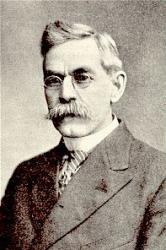
Charles Edward Pollock

1853 - 1928 Person Name: Chas. Edw. Pollock Composer of "CHRISTIE" in The Christian Church Hymnal Charles Edward Pollock USA 1853-1928. Born at Newcastle, PA, he moved to Jefferson City, MO, when age 17. He was a cane maker for C W Allen. He also worked 20 years for the MO Pacific Railroad, as a depot clerk and later as Assistant Roadmaster. He was a musician and prolific songwriter, composing 5000+ songs, mostly used in Sunday school settings and church settings. He took little remuneration for his compositions, preferring they be freely used. He produced three songbooks: “Praises”, “Beauty of praise”, and “Waves of melody”. In 1886 he married Martha (Mattie) Jane Harris, and they had three children: Robert, Edward, and a daughter. He died in Merriam, KS. John Perry ================= Pollock, Charles Edward. (Jefferson City, Missouri, 1853-1924). Records of Jefferson City indicate the following: 1897 clerk at depot; residence at 106 Broadway (with Mildred Pollock) 1904-1905 cane maker for C. W. Allen 1908-1909 musician; residence at 106 Broadway (with wife Matty) 1912-1913 residence at St. Louis Road, east city limits --Wilmer Swope, DNAH Archives Note: not to be confused with Charles Edward Pollock (c.1871-1924).

Charles C. Converse

1832 - 1918 Person Name: C. C. Converse Composer of "[There is a name I love to hear]" in Songs of the Covenant Pseudonyms: Clare, Lester Vesé, Nevers, Karl Re­den, Revons ================================= Charles Crozat Converse LLD USA 1832-1918. Born in Warren, MA, he went to Leipzig, Germany to study law and philosophy, as well as music theory and composition under Moritz Hauptmann, Friedrich Richter, and Louis Plaidy at the Leipzig Conservatory. He also met Franz Liszt and Louis Spohr. He became an author, composer, arranger and editor. He returned to the states in 1859 and graduated from the Albany, NY, Law School two years later. He married Lida Lewis. From 1875 he practiced law in Erie, PA, and also was put in charge of the Burdetta Organ Company. He composed hymn tunes and other works. He was offered a DM degree for his Psalm 126 cantata, but he declined the offer. In 1895 Rutherford College honored him with a LLD degree. He spent his last years in Highwood, NJ, where he died. He published “New method for the guitar”, “Musical bouquet”, “The 126th Psalm”, “Sweet singer”, “Church singer”, “Sayings of Sages” between 1855 and 1863. he also wrote the “Turkish battle polka” and “Rock beside the sea” ballad, and “The anthem book of the Episcopal Methodist Church”. John Perry

Jack P. Scholfield

1882 - 1972 Person Name: J. P. Scholfield Composer of "JESUS IS THE NAME" in The New Christian Hymnal

John H. Gower

1855 - 1922 Person Name: Gower Composer of "MEDITATION" in An Evening Service Book

Guillaume Franc

1500 - 1570 Person Name: Guil. France Composer of "DUNDEE" in Gospel Songs and Hymns No. 1

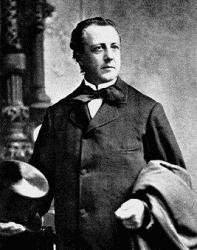
Fred A. Fillmore

1856 - 1925 Composer of "[There is a name I love to hear]" in Songs of Rejoicing Born: May 15, 1856, Par­is, Ill­i­nois. Died: No­vem­ber 15, 1925, Ter­race Park, Ohio. Buried: Mil­ford, Ohio. Frederick Augustus Fillmore, who was born on May 15, 1856, in Paris, IL, one of seven children, five sons and two daughters, born to Augustus Damon and Hannah Lockwood Fillmore. His father was a preacher in the Christian Church, as well as a composer, songbook compiler, and hymn publisher who developed his own system of musical notation using numbers on the staff in place of note heads. Augustus eventually settled in Cincinnati, OH, and established a music publishing business there. Until 1906, there was no official distinction between "Christian Churches" and "Churches of Christ." The names were used pretty much interchangeably, and many older churches of Christ which are faithful today were once known as "Christian Churches." Fred and his older brother James took over their father's publishing business following the death of Augustus in 1870 and established the Fillmore Brothers Music House. This became a successful Cincinnati music form, publishing church hymnals and later band and orchestral music. For many years the firm issued a monthly periodical, The Music Messenger. The brothers edited many hymnbooks and produced many songs which became popular. Beginning with the songbook Songs of Glory in 1874, there appeared many Fillmore publications which became widely used through churches, especially in the midwest. For these collections, Fred provided a great deal of hymn tunes. --launch.groups.yahoo.com/group/hymnoftheday

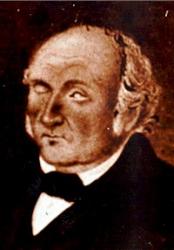
Neil Dougall

1776 - 1862 Person Name: N. Dougall Composer of "KILMARNOCK" in The New Laudes Domini Born: De­cem­ber 9, 1776, Green­ock, Ren­frew­shire, Scot­land. Died: Oc­to­ber 1, 1862, Green­ock, Scot­land. Buried: Green­ock, Scot­land. Neil’s fa­ther, wheel­wright Neill Dou­gall, was draft­ed in­to the ar­my, and died in Cey­lon (now Sri Lanka) when his son was on­ly four years old. At age 15, Neil be­came an ap­pren­tice on the ship Bri­tan­nia. In 1795, while he was load­ing a gun to fire the se­cond vol­ley of a sa­lute to com­mem­o­rate Lord Howe’s vic­to­ry over the French, an ex­plo­sion blind­ed him and took his arm. Af­ter re­cov­er­ing, he be­gan his mu­sic­al ca­reer. In 1798, he at­tend­ed a sing­ing class un­der Ro­bert Dun­can, and in the fall of the next year opened his own class, which he ran un­til 1844. He gave an­nu­al con­certs in Green­ock from 1800 [sic, Frost] to 1860. --www.hymntime.com/tch

Gioacchino A. Rossini

1792 - 1868 Person Name: Rossini Composer of "MANOAH" in Hymns of Grace and Truth Gioacchino A. Rossini; b. 1792, Pesaro; d. 1868, Ruelle near Parise Evangelical Lutheran Hymnal, 1908

Aaron Chapin

b. 1768 Composer of "CHELMSFORD" in Popular Hymns, revised

Pages


Export as CSV
It looks like you are using an ad-blocker. Ad revenue helps keep us running. Please consider white-listing Hymnary.org or getting Hymnary Pro to eliminate ads entirely and help support Hymnary.org.