

 My Starred Hymns
 My FlexScores
 My Hymnals
 My Purchased Files
Planning worship?
Check out our sister site, ZeteoSearch.org,
for 20+ additional resources related to your search.
- |
User Links
Person Results
Joseph Medlicott Scriven
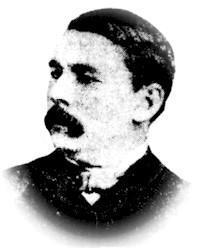
1819 - 1886 Topics: The Church in the World Commitment: Trust; Assurance; Christian Experience; Comfort/Consolation; Commitment; Conflict and Struggle; Courage; Discouragement; Friendship; God Deliverance; God Faithfulness; Grief; Jesus Christ Faithfulness; Jesus Christ Love of; Jesus Christ Person; Jesus Christ Presence; Jesus Christ Refuge; Jesus Christ Saviour; Jesus Christ Strength and Refuge; Need for God/Christ; Pain; Peace (Inner, Calmness, Serenity; Prayer; Service Music Invitation to Prayer; Trials; Trust; Proper 9 Year A; Proper 23 Year A; Proper 21 Year B; Advent 3 Year C; Proper 12 Year C; Proper 24 Year C; Proper 26 Year C Author of "What a Friend We Have in Jesus" in Voices United Joseph M. Scriven (b. Seapatrick, County Down, Ireland, 1819; d. Bewdley, Rice Lake, ON, Canada, 1886), an Irish immigrant to Canada, wrote this text near Port Hope, Ontario, in 1855. Because his life was filled with grief and trials, Scriven often needed the solace of the Lord as described in his famous hymn.
Educated at Trinity College, Dublin, Ireland, he enrolled in a military college to prepare for an army career. However, poor health forced him to give up that ambition. Soon after came a second blow—his fiancée died in a drowning accident on the eve of their wedding in 1844. Later that year he moved to Ontario, where he taught school in Woodstock and Brantford. His plans for marriage were dashed again when his new bride-to-be died after a short illness in 1855. Following this calamity Scriven seldom had a regular income, and he was forced to live in the homes of others. He also experienced mistrust from neighbors who did not appreciate his eccentricities or his work with the underprivileged. A member of the Plymouth Brethren, he tried to live according to the Sermon on the Mount as literally as possible, giving and sharing all he had and often doing menial tasks for the poor and physically disabled. Because Scriven suffered from depression, no one knew if his death by drowning in Rice Lake was suicide or an accident.
Bert Polman
================
Scriven, Joseph. Mr. Sankey, in his My Life and Sacred Songs, 1906, p. 279, says that Scriven was b. in Dublin in 1820, was a graduate of Trinity College, Dublin, and went to Canada when he was 25, and died there at Port Hope, on Lake Ontario, in 1886. His hymn:—
What a Friend we have in Jesus. [Jesus our Friend] was, according to Mr. Sankey, discovered to be his in the following manner: "A neighbour, sitting up with him in his illness, happened upon a manuscript of 'What a Friend we have in Jesus.' Reading it with great delight, and questioning Mr. Scriven about it, he said he had composed it for his mother, to comfort her in a time of special sorrow, not intending any one else should see it." We find the hymn in H. 1... Hastings's Social Hymns, Original and Selected, 1865, No. 242; and his Song of Pilgrimage, 1886, No. 1291, where it is attributed to "Joseph Scriven, cir. 1855." It is found in many modern collections.
--John Julian, Dictionary of Hymnology, New Supplement (1907)
Joseph Medlicott Scriven
H. W. Baker
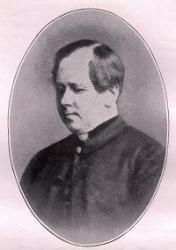
1821 - 1877 Person Name: Henry Williams Baker, 1821-1877 Topics: Christ, the Lord Jesus His Coming in Power; Christ, the Lord Jesus Shepherd; Family Worship; God Faithfulness of; God Goodness of; God: His Being, Word and Works God the Father Almighty: The Divine Attributes; Post Communion Author of "The King of love my Shepherd is" in The Book of Praise Baker, Sir Henry Williams, Bart., eldest son of Admiral Sir Henry Loraine Baker, born in London, May 27, 1821, and educated at Trinity College, Cambridge, where he graduated, B.A. 1844, M.A. 1847. Taking Holy Orders in 1844, he became, in 1851, Vicar of Monkland, Herefordshire. This benefice he held to his death, on Monday, Feb. 12, 1877. He succeeded to the Baronetcy in 1851. Sir Henry's name is intimately associated with hymnody. One of his earliest compositions was the very beautiful hymn, "Oh! what if we are Christ's," which he contributed to Murray's Hymnal for the Use of the English Church, 1852. His hymns, including metrical litanies and translations, number in the revised edition of Hymns Ancient & Modern, 33 in all. These were contributed at various times to Murray's Hymnal, Hymns Ancient & Modern and the London Mission Hymn Book, 1876-7. The last contains his three latest hymns. These are not included in Hymns Ancient & Modern. Of his hymns four only are in the highest strains of jubilation, another four are bright and cheerful, and the remainder are very tender, but exceedingly plaintive, sometimes even to sadness. Even those which at first seem bright and cheerful have an undertone of plaintiveness, and leave a dreamy sadness upon the spirit of the singer. Poetical figures, far-fetched illustrations, and difficult compound words, he entirely eschewed. In his simplicity of language, smoothness of rhythm, and earnestness of utterance, he reminds one forcibly of the saintly Lyte. In common with Lyte also, if a subject presented itself to his mind with striking contrasts of lights and shadows, he almost invariably sought shelter in the shadows. The last audible words which lingered on his dying lips were the third stanza of his exquisite rendering of the 23rd Psalm, "The King of Love, my Shepherd is:"—
Perverse and foolish, oft I strayed,
But yet in love He sought me,
And on His Shoulder gently laid,
And home, rejoicing, brought me."
This tender sadness, brightened by a soft calm peace, was an epitome of his poetical life.
Sir Henry's labours as the Editor of Hymns Ancient & Modern were very arduous. The trial copy was distributed amongst a few friends in 1859; first ed. published 1861, and the Appendix, in 1868; the trial copy of the revised ed. was issued in 1874, and the publication followed in 1875. In addition he edited Hymns for the London Mission, 1874, and Hymns for Mission Services, n.d., c. 1876-7. He also published Daily Prayers for those who work hard; a Daily Text Book, &c. In Hymns Ancient & Modern there are also four tunes (33, 211, 254, 472) the melodies of which are by Sir Henry, and the harmonies by Dr. Monk. He died Feb. 12, 1877.
--John Julian, Dictionary of Hymnology (1907)
H. W. Baker
Ernest Warburton Shurtleff
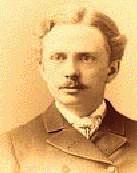
1862 - 1917 Person Name: Ernest Warburton Shurtleff, 1862-1917 Topics: Church Covenant People of God; Commitment; Jesus Christ Kingship / Reign; One Life in Christ Peace; Patience / Perseverance; Prayer / Prayers / Poems; Profession of Faith; Struggle Author of "Lead on, eternal Sovereign" in The Book of Praise Before studying at Andover, Ernest W. Shurtleff (Boston, MA, 1862; d. Paris, France, 1917) attended Harvard University. He served Congregational churches in Ventura, California; Old Plymouth, Massachusetts; and Minneapolis, Minnesota, before moving to Europe. In 1905 he established the American Church in Frankfurt, and in 1906 he moved to Paris, where he was involved in student ministry at the Academy Vitti. During World War I he and his wife were active in refugee relief work in Paris. Shurtleff wrote a number of books, including Poems (1883), Easter Gleams (1885), Song of Hope (1886), and Song on the Waters (1913).
Bert Polman
===============
Shurtleff, Ernest Warburton, b. at Boston, Mass., April 4, 1862, and educated at Boston Latin School, Harvard University, and Andover Theo. Seminary (1887). Entering the Congregational Ministry, he was Pastor at Palmer and Plymouth, Mass., and is now (1905) Minister of First Church, Minneapolis, Minn. His works include Poems, 1883, Easter Gleams, 1883, and others. His hymn, "Lead on, O King Eternal" (Christian Warfare), was written as a parting hymn to his class of fellow students at Andover, and was included in Hymns of the Faith, Boston, 1887. It has since appeared in several collections. [M. C. Hazard, Ph.D].
--John Julian, Dictionary of Hymnology, New Supplement (1907)
Ernest Warburton Shurtleff
George C. Hugg
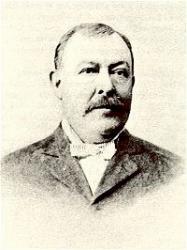
1848 - 1907 Person Name: George C. Hugg, 1848-1907 Topics: Faith in Jesus Christ Composer of "HARPER MEMORIAL" in Lead Me, Guide Me (2nd ed.) George Crawford Hugg USA 1848-1907. Born near Haddonfield, NJ, he became choirmaster at the Berlin, NJ, Presbyterian Church at age 12. At age 14 he published his first song, “Walk in the light”, which became very popular. He married Anne E Ketchum, and they had a daughter, Evangeline. He served as choirmaster of the Tabernacle Presbyterian Church in Philadelphia, and also the Broad Street and Arch Street Methodist Episcopal Churches there. He was also closely associated with the Harper Memorial Presbyterian Church there. He was a prolific composer with over 2000 works, publishing 18 books of revival and Sunday school music, and 90 songs for special occasions (Christmas, Easter, etc.). He died in Philadelphia, PA.
John Perry
George C. Hugg
Frederic Henry Hedge
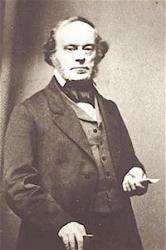
1805 - 1890 Person Name: Frederick H. Hedge Topics: God Nature of God; Assurance; Change; Christian Year Reformation Day; Confidence; Conflict and Struggle; Courage; Empowerment; Evil; Faith; Funerals and Memorial Services; God Creator; God Guardian/Help; God Images; God Kingdom, Majesty, Realm; God Nature; God Power/Might; God Presence; God Protection; God Reign; God Sovereignty; God Strength and Refuge; God Truth; Heritage; Holy Spirit Gifts; Jesus Christ name; Jesus Christ Strength and Refuge; Joy; Kingdom of God; Pilgrimage and Conflict; Praise; Processionals (Opening of Worship); Providence; Psalter/Psalm Paraphrases; Risk; Satan/Demonic Forces/Devil; Security; Sin; Struggle and Conflict; Trust; Truth; Victory; Word of God; Worship; Proper 6 Year A; Proper 16 Year A; Lent 1 Year B; Lent 5 Year B; Proper 16 Year B; Proper 17 Year B; Proper 26 Year B; Epiphany 3 Year C; Epiphany 4 Year C; Lent 1 Year C; Proper 16 Year C; Proper 20 Year C; Proper 24 Year C; Reign of Christ Year C; Tuesday in Holy Week Year ABC Translator of "A Mighty Fortress Is Our God" in Voices United Hedge, Frederick Henry, D.D., son of Professor Hedge of Harvard College, was born at Cambridge, Massachusetts, 1805, and educated in Germany and at Harvard. In 1829 he became pastor of the Unitarian Church, West Cambridge. In 1835 he removed to Bangor, Maine; in 1850 to Providence, and in 1856 to Brookline, Mass. He was appointed in 1857, Professor of Ecclesiastical History at Cambridge (U.S.), and in 1872, Professor of German Literature at Harvard. Dr. Hedge is one of the editors of the Christian Examiner, and the author of The Prose Writers of Germany, and other works. In 1853 he edited, with Dr. F. D. Huntington, the Unitarian Hymns for the Church of Christ, Boston Crosby, Nichols & Co. To that collection and the supplement (1853) he contributed the following translations from the German:—
1. A mighty fortress is our God. (Ein feste Burg.)
2. Christ hath arisen! joy to, &c. (Goethe's Faust.)
3. The sun is still for ever sounding. (Goethe's Faust.)
There is also in the Unitarian Hymn [& Tune] Book for The Church & Home, Boston, 1868, a translation from the Latin.
4. Holy Spirit, Fire divine. (“Veni Sancte Spiritus.")
Dr. Hedge's original hymns, given in the Hymns for the Church, 1853, are:—
5. Beneath Thine hammer, Lord, I lie. Resignation.
6. Sovereign and transforming grace. Ordination. Written for the Ordination of H. D. Barlow at Lynn, Mass., Dec. 9, 1829. It is given in several collections.
7. 'Twas in the East, the mystic East. Christmas.
8. 'Twas the day when God's anointed. Good Friday. Written originally for a Confirmation at Bangor, Maine, held on Good Friday, 1843. The hymn "It is finished, Man of Sorrows! From Thy cross, &c," in a few collections, including Martineau's Hymns, &c, 1873, is composed of st. iv.-vi. of this hymn. [Rev. F. M. Bird, M.A.]
--John Julian, Dictionary of Hymnology (1907)
Frederic Henry Hedge
Julie von Hausmann
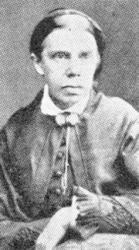
1825 - 1901 Person Name: J. v. Haussmann Topics: Faith in Jesus Author of "Take Thou my hand, O Father" in Wartburg Hymnal Julie Katharina von Hausmann (born 7 March [O.S. 19 March] 1826 in Riga; died 2 August [O.S. 15 August] 1901 in Võsu, Estonia) was a Baltic German poet, known for the hymn Lord, Take My Hand and Lead Me (German: So nimm denn meine Hände) with a melody by Friedrich Silcher. Earlier translations had been made by Herman Brueckner as "O take my hand, dear Father" and Elmer Leon Jorgenson as "Take Thou My Hand, and Lead Me." The hymn has also been translated by Martha D. Lange, whose version appears in the Great Songs of the Church Revised (1986).
Julie Hausmann was the daughter of a teacher. She worked for a while as a governess, but due to her ill health she lived with and cared for her father, who had gone blind. After his death in 1864, she lived with her sisters in Germany, Southern France and St. Petersburg, Russia. She died during a summer vacation in Estonia.
A legend circulates that Hausmann wrote her most famous poem "So nimm denn meine Hände" after journeying to see her fiancé at a mission and, on arriving, finding that he had just died. Various explorations of her biography have yet to confirm or deny the rumor. She never married.
Her poetry was published by others, including Gustav Knak without mentioning her name, at her request.
Maiblumen. Lieder einer Stillen im Lande.(May flowers) 2 volumes, 1862 (6th edition around 1880: Front cover Vol. 1)
Bilder aus dem Leben der Nacht im Lichte des Evangeliums. 1868
Hausbrot. Schlichte Morgen- und Abend-Andachten. 1899
Blumen aus Gottes Garten. Lieder und Gedichte. 1902 (posthumous collection)
--en.wikipedia.org/wiki/
Julie von Hausmann
Stuart K. Hine
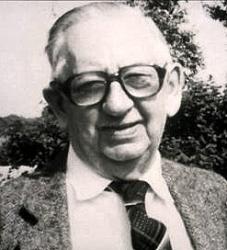
1899 - 1989 Topics: Atonement; God Faithfulness of; God Power of; God Works of; Jesus Christ Death of; Jesus Christ Second Coming of; Praise; Reign of Christ; Unity in Diversity Author of "O Lord My God / How Great Thou Art" in Voices Together Stuart K. Hine was born in 1899 in Great Britain. In much of Stuart’s earlier years he and his wife were missionaries in the Western Ukraine of Russia, where they evangelized as Christian workers and singers. In 1931, Stuart K. Hine and his wife returned to Britain and conducted gospel campaigns throughout Great Britain. During those years, Stuart published many song books and wrote many of his beloved gospel songs. Stuart retired from the active ministry but continued to publish his song books and his music and contributed the majority of his income to various missionary endeavors around the world…Stuart K. Hine’s most popular composition is “How Great Thou Art,” which is recognized in many polls as the number one Hymn in America. Among his other compositions are “Can There Be One,” “O Savior Mine?”, “Faith Is The Bridge,” and “What Can Cleanse My heart?” Mr. Hine died in 1989.
--www.gmahalloffame.org/site/stuart-k-hine/
Stuart K. Hine
George Frideric Handel
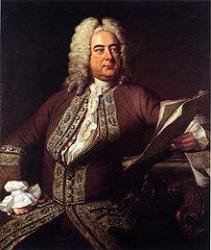
1685 - 1759 Person Name: George Frederick Handel Topics: Celebration of Faith; Consummation in Christ; Doubt; Eternal Life; Fear; Festal Joy; Funerals; Jesus Christ Resurrection; Proclamation: Witness; Resurrection; Saints Days and Holy Days St Mary Magdalene; Saints Days and Holy Days St Thomas Composer of "MACCABAEUS" in Together in Song George Frideric Handel (b. Halle, Germany, 1685; d. London, England, 1759) became a musician and composer despite objections from his father, who wanted him to become a lawyer. Handel studied music with Zachau, organist at the Halle Cathedral, and became an accomplished violinist and keyboard performer. He traveled and studied in Italy for some time and then settled permanently in England in 1713. Although he wrote a large number of instrumental works, he is known mainly for his Italian operas, oratorios (including Messiah, 1741), various anthems for church and royal festivities, and organ concertos, which he interpolated into his oratorio performances. He composed only three hymn tunes, one of which (GOPSAL) still appears in some modern hymnals. A number of hymnal editors, including Lowell Mason, took themes from some of Handel's oratorios and turned them into hymn tunes; ANTIOCH is one example, long associated with “Joy to the World.”
Bert Polman
George Frideric Handel
Betty Pulkingham
1928 - 2019 Person Name: Betty Pulkingham, 1928- Topics: Celebration of Faith; Eucharist; Jesus Christ Resurrection; Mission/Sending; New Life in Christ; Renewal; Resurrection; Worship Gathering Arranger of "ALLELUIA, ALLELUIA" in Together in Song Betty Carr Pulkingham was born in 1928 in Burlington, North Carolina. She received a B.S. in Music in 1949 from the University of North Carolina, Greensboro and she did graduate studies at the Eastman School of Music. She was Instructor of Music Theory at the University of Texas. In 1951, she married a seminarian Graham Pulkingham. They ministered together in various places in the U.S., England and Scotland; they were founding members of the Community of Celebration, an Anglican religious order. She travelled widely with "The Fisherfolk," an outreach music ministry connected with the Community of Celebration. Betty Pulkingham was a well known composer and arranger. She co-edited and published a number of songbooks and books on worship; and served on the Episcopal Church's Standing Commission on Church Music from 1988-1994. She and her husband returned to Burlington and then she later moved to Austin, Texas to live with family. She died in Austin, May 9, 2019 at the age of 90.
Dianne Shapiro, from Obituary (https://www.richandthompson.com/tributes/Betty-Pulkingham) (accessed 6-21-2019)
Betty Pulkingham
Sylvia G. Dunstan
1955 - 1993 Person Name: Sylvia G. Dunstan, 1955-1993 Topics: Faith in Jesus Christ Author of "You, Lord, Are Both Lamb and Shepherd" in Lead Me, Guide Me (2nd ed.) After a brief, arduous battle with liver cancer, Canadian Sylvia Dunstan died in 1993 at the age of 38. For thirteen years, Dunstan had served the United Church of Canada as a parish minister and prison chaplain. She is remembered by those who knew her for her passion for those in need, her gift of writing, and her love of liturgy.
Sing! A New Creation
Sylvia G. Dunstan
Pages