

 My Starred Hymns
 My FlexScores
 My Hymnals
 My Purchased Files
Planning worship?
Check out our sister site, ZeteoSearch.org,
for 20+ additional resources related to your search.
- |
User Links
Person Results
Johann Hermann Schein
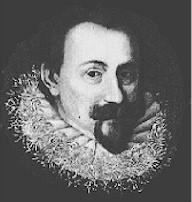
1586 - 1630 Person Name: J. H. Schein (1586-1630) Topics: Pentecost 5 The Church's Mission to All Composer of "EISENACH" in Hymns for Today's Church (2nd ed.) Schein, Johann Hermann, son of Hieronymus Schein, pastor at Griinhain, near Annaberg, in Saxony, was born at Grünhain, Jan. 20,1586. He matriculated at the University of Leipzig in 1607, and studied there for four years. Thereafter he acted for some time as a private tutor, including two years with a family at Weissenfels. On May 21, 1615, he was appointed Capellmeister, at the court of Duke Johann Ernst, of Sachse-Weimar; and in 1616 he became cantor of I3t. Thomas's Church, and music director at Leipzig, in succession to Seth Calvisius (d. Nov. 24, 1615). This post he held till his death, at Leipzig, Nov. 19, 1630.
Schein was one of the most distinguished musicians of his time, both as an original composer, and as a harmoniser of the works of others. As a hymnwriter he was not so prolific, or so noteworthy. Most of his hymns were written on the deaths of his children or friends, e.g. on seven of his children, and on his first wife. They appeared mostly in broadsheet form, and were included, along with his original melodies, in his Cantional oder Gesang-Buch Augspurgischer Confession, Leipzig, 1627; 2nd ed., 1645. [Both in Wernigerode Library.]
Those of Schein's hymns which have passed into English are:—
i. Machs mit mir, Gott, nach deiner Güt. For the Dying. First published, as a broadsheet, at Leipzig, 1628, as a Trost-Liedlein á 5 (i.e. for 5 voices), &c. [Berlin Library.] The words, the melody, and the five-part setting, are all by Schein. It was written for, and first used at, the funeral, on Dec. 15, 1628, of Margarita, wife of Caspar Werner, a builder and town councillor at Leipzig, and a churchwarden of St. Thomas's. It is in 6 stanzas of 6 lines; the initial letters of 11. 1, 3, in st. i.-iv., forming the name Margarita; and the W of st. v. 1. 1 standing for Werner. In Schein's Cantional, 1645, No. 303 (marked as Trost-Liedlein, Joh. Herm. Scheins, á 5), and later hymn-books, as e.g. the Unverfäschter Liedersegen, 1851, No. 830, st. vi. was omitted. It is Schein's finest production, and one of the best German hymns for the sick and dying. Translated as:—
Deal with me, God, in mercy now. This is a good and full translation by Miss Winkworth, in her Chorale Book for England, 1863, No. 191, set to Schein's melody of 1628.
ii. Mein Gott und Herr, ach sei nicht fern. For the Dying. First published, with his name, in his Cantional, 1627, No. 262, in 9 stanzas of 6 lines. The initial letters of the stanzas give the name Margarita, probably one of the daughters who predeceased him. It is included, in 5 st., in the 164-8, and later eds., of Crüger's Praxis. The translation in common use is:—
My Lord and God, go not away. A good tr. of st. i., ii., iv., v., vii., by A. T. Russell, as No. 254, in his Psalms & Hymns, 1851. [Rev. James Mearns, M.A.]
--Excerpts from John Julian, Dictionary of Hymnology (1907)
Johann Hermann Schein
Ralph Vaughan Williams
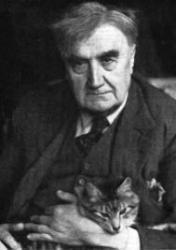
1872 - 1958 Person Name: R. Vaughan Williams (1872-1958) Topics: Pentecost 5 The Church's Mission to All Arranger of "ORIENTIS PARTIBUS(ii)" in Hymns for Today's Church (2nd ed.) Through his composing, conducting, collecting, editing, and teaching, Ralph Vaughan Williams (b. Down Ampney, Gloucestershire, England, October 12, 1872; d. Westminster, London, England, August 26, 1958) became the chief figure in the realm of English music and church music in the first half of the twentieth century. His education included instruction at the Royal College of Music in London and Trinity College, Cambridge, as well as additional studies in Berlin and Paris. During World War I he served in the army medical corps in France. Vaughan Williams taught music at the Royal College of Music (1920-1940), conducted the Bach Choir in London (1920-1927), and directed the Leith Hill Music Festival in Dorking (1905-1953). A major influence in his life was the English folk song. A knowledgeable collector of folk songs, he was also a member of the Folksong Society and a supporter of the English Folk Dance Society. Vaughan Williams wrote various articles and books, including National Music (1935), and composed numerous arrangements of folk songs; many of his compositions show the impact of folk rhythms and melodic modes. His original compositions cover nearly all musical genres, from orchestral symphonies and concertos to choral works, from songs to operas, and from chamber music to music for films. Vaughan Williams's church music includes anthems; choral-orchestral works, such as Magnificat (1932), Dona Nobis Pacem (1936), and Hodie (1953); and hymn tune settings for organ. But most important to the history of hymnody, he was music editor of the most influential British hymnal at the beginning of the twentieth century, The English Hymnal (1906), and coeditor (with Martin Shaw) of Songs of Praise (1925, 1931) and the Oxford Book of Carols (1928).
Bert Polman
Ralph Vaughan Williams
George Herbert
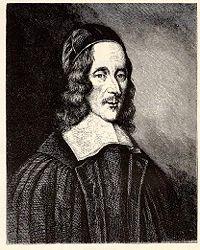
1593 - 1633 Person Name: G. Herbert (1593-1632) Topics: Pentecost 5 The Church's Mission to All Author of "Let all the world in every corner sing" in Hymns for Today's Church (2nd ed.) Herbert, George, M.A., the fifth son of Richard Herbert and Magdalen, the daughter of Sir Richard Newport, was born at his father's seat, Montgomery Castle, April 3, 1593. He was educated at Westminster School, and at Trinity College, Cambridge, graduating B.A. in 1611. On March 15, 1615, he became Major Fellow of the College, M.A. the same year, and in 1619 Orator for the University. Favoured by James I., intimate with Lord Bacon, Bishop Andrewes, and other men of influence, and encouraged in other ways, his hopes of Court preferment were somewhat bright until they were dispelled by the deaths of the Duke of Richmond, the Marquis of Hamilton, and then of King James himself. Retiring into Kent, he formed the resolution of taking Holy Orders. He was appointed by the Bishop of Lincoln to the Prebend of Lcighton Ecclesia and to the living of Leighton Bromswold, Hunts, July 15, 1626. He remained until 1629, when an attack of ague obliged him to remove to his brother's, house at Woodford, Essex. Not improving in health at Woodford, he removed to Dantsey, in Wiltshire, and then as Rector to Bemerton, to which he was inducted, April 26, 1630, where he died Feb. 1632. The entry in the register of Bemerton is "Mr. George Herbert, Esq., Parson of Foughleston and Bemerton, was buried 3 day of March 1632."
His life, by Izaak Walton, is well known; another Memoir, by Barnabas Oley, is forgotten. Herbert's prose work, Priest to the Temple, appeared several years after his death: but The Temple, by which he is best known, he delivered to Nicholas Ferrar (q.v.), about three weeks before his death, and authorized him to publish it if he thought fit. This was done iu 1633. The work became popular, and the 13th edition was issued in 1709. It is meditative rather than hymnic in character, and was never intended for use in public worship. In 1697 a selection from The Temple appeared under the title Select Hymns Taken out of Mr. Herbert's Temple & turned into the Common Metre To Be Sung In The Tunes Ordinarily us'd in Churches. London, Parkhurst, 1697. In 1739, J. & C. Wesley made a much more successful attempt to introduce his hymns into public worship by inserting over 40 in a much-altered form in their Hymns & Sacred Poems. As some few of these came into their collection of Psalms & Hymns, 1741, revised 1743, they were long sung by the Methodists, but do not now form part of the Wesleyan Hymn Book. No further attempt seems to have been made to use the Temple poems as hymns until 1853, when some altered and revised by G. Rawson were given in the Leeds Hymn Book of that year. From that time onward more attention was paid to Herbert alike by Churchmen and Nonconformists, and some of his hymns are now widely accepted. Many editions of his works have been published, the most popular being that of the Rev. Robert Aris Wilmott, Lond., Geo. Routledge & Son, 1857; but Dr. Grosart's privately printed edition issued in his Fuller Worthies Library in 1874, in three volumes, is not only the most complete and correct, but included also his psalms not before reprinted, and several poems from a ms. in the Williams Library, and not before published. The Temple has also been pub¬lished in facsimile by Elliott Stock, 1876, with preface by Dr. Grosart; and in ordinary type, 1882, by Wells Gardner, with preface by J. A. Shorthouse.
The quaintness of Herbert's lyrics and the peculiarity of several of their metres have been against their adoption for congregational purposes. The best known are: "Let all the world in every corner sing"; "My stock lies dead, and no increase"; "Throw away Thy rod"; "Sweet day, so cool, so calm"; and "Teach me, my God, and King." [William T. Brooke]
--John Julian, Dictionary of Hymnology (1907)
George Herbert
Arthur Sullivan
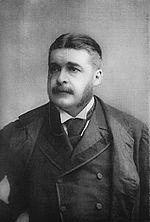
1842 - 1900 Person Name: A. Sullivan (1842-1900) Topics: Pentecost 5 The Church's Mission to All Composer of "LUX EOI" in Hymns for Today's Church (2nd ed.) Arthur Seymour Sullivan (b Lambeth, London. England. 1842; d. Westminster, London, 1900) was born of an Italian mother and an Irish father who was an army bandmaster and a professor of music. Sullivan entered the Chapel Royal as a chorister in 1854. He was elected as the first Mendelssohn scholar in 1856, when he began his studies at the Royal Academy of Music in London. He also studied at the Leipzig Conservatory (1858-1861) and in 1866 was appointed professor of composition at the Royal Academy of Music. Early in his career Sullivan composed oratorios and music for some Shakespeare plays. However, he is best known for writing the music for lyrics by William S. Gilbert, which produced popular operettas such as H.M.S. Pinafore (1878), The Pirates of Penzance (1879), The Mikado (1884), and Yeomen of the Guard (1888). These operettas satirized the court and everyday life in Victorian times. Although he composed some anthems, in the area of church music Sullivan is best remembered for his hymn tunes, written between 1867 and 1874 and published in The Hymnary (1872) and Church Hymns (1874), both of which he edited. He contributed hymns to A Hymnal Chiefly from The Book of Praise (1867) and to the Presbyterian collection Psalms and Hymns for Divine Worship (1867). A complete collection of his hymns and arrangements was published posthumously as Hymn Tunes by Arthur Sullivan (1902). Sullivan steadfastly refused to grant permission to those who wished to make hymn tunes from the popular melodies in his operettas.
Bert Polman
Arthur Sullivan
H. T. Burleigh
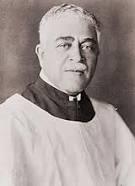
1866 - 1949 Person Name: H. T. Burleigh (1866-1949) Topics: Pentecost 5 The Church's Mission to All Arranger of "McKEE" in Hymns for Today's Church (2nd ed.) Harry T. Burleigh (b. Erie, PA, 1866; d. Stamford, CT, 1949) began his musical career as a choirboy in St. Paul's Cathedral, Erie, Pennsylvania. He also studied at the National Conservatory of Music, New York City, where he was befriended by Antonín Dvořák and, according to tradition, provided Dvořák with some African American musical themes that became part of Dvořák's New World Symphony. Burleigh composed at least two hundred works but is most remembered for his vocal solo arrangements of African American spirituals. In 1944 Burleigh was honored as a Fellow of the Hymn Society in the United States and Canada.
Bert Polman
H. T. Burleigh
Andrew Reed
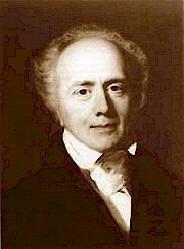
1787 - 1862 Topics: Holy Spirit Praise and Invocation; Christian Year Pentecost; God House, Home; Holy Spirit; Holy Spirit Illumination; Holy Spirit Presence; Holy Spirit Work; Light; Petition; Prayer; Sacrifice; Lent 5 Year A; Pentecost Year A; Epiphany 2 Year B; Epiphany 7 Year B; Pentecost Year B; Proper 15 Year B; Proper 21 Year B; Pentecost Year C Author of "Spirit Divine, Attend Our Prayers" in Voices United Reed, Andrew, D.D., son of Andrew Reed, was born in London on Nov. 27, 1787, and educated for the Congregational Ministry at Hackney College, London. He was first the pastor of the New Road Chapel, St. George's-in-the-East, and then of the Wycliffe Chapel, which was built through his exertions in 1830. His degree was conferred by Yule College, America. He died Feb. 25, 1862. As the founder of "The London Orphan Asylum," "The Asylum for Fatherless Children," “The Asylum for Idiots” "The Infant Orphan Asylum," and "The Hospital for Incurables," Dr. Reed is more fully known, and will be longer remembered than by his literary publications. His Hymn Book was the growth of years. The preparation began in 1817, when he published a Supplement to Watts, in which were a few originals. This was enlarged in 1825; and entirely superseded by his collection The Hymn Book, prepared from Dr. Watts's Psalms & Hymns and Other Authors, with some Originals, in 1842 (Preface). His hymns, mostly of a plain and practical character, numbering 21, were contributed to these various editions, and were republished with those of his wife in the Wycliffe Supplement, 1872. The best known are "Ah Jesus, let me hear Thy voice” and ”Spirit Divine, attend our prayer." All Dr. and Mrs. Reed's hymns are anonymous in The Hymn Book, 1842, but are given with their names in the Wyclife Supplement, 1872. His hymns now in common use include, in addition to those annotated under their respective first lines :—
1. Come, let us strike our harps afresh. Praise.
2. Come, my Redeemer, come. Desiring Christ's Presence.
3. Gentle Saviour, look on me. Christ's protection Desired.
4. Gracious Lord, as Thou hast taught us. Public Worship.
5. Hark, hark, the notes of joy. Missions.
6. Holy Ghost, with light divine (1817). Prayer to the Holy Spirit. Sometimes given as "Holy Ghost, Thou light divine;" and again as "Holy Spirit, Light divine."
7. Listen, sinner, mercy hails you. Invitation. Generally given as "Hear, O Sinner, mercy hails you."
8. Rich are the joys of solitude. Retirement. Some-times given as "How deep and tranquil is the joy."
9. There [comes] is an hour when I must part. Death anticipated.
10. Ye saints your music bring. Praise of the Cross.
--John Julian, Dictionary of Hymnology (1907)
Andrew Reed
John Wesley
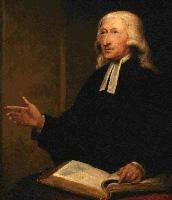
1703 - 1791 Person Name: John Wesley, 1703-1791 Topics: Year B, Ordinary Time after Pentecost, October 30-November 5; Year C, Ordinary Time after Pentecost, June 5-11 (if after Trinity Sunday) Author of "I'll Praise My Maker While I've Breath" in Psalms for All Seasons John Wesley, the son of Samuel, and brother of Charles Wesley, was born at Epworth, June 17, 1703. He was educated at the Charterhouse, London, and at Christ Church, Oxford. He became a Fellow of Lincoln College, Oxford, and graduated M.A. in 1726. At Oxford, he was one of the small band consisting of George Whitefield, Hames Hervey, Charles Wesley, and a few others, who were even then known for their piety; they were deridingly called "Methodists." After his ordination he went, in 1735, on a mission to Georgia. The mission was not successful, and he returned to England in 1738. From that time, his life was one of great labour, preaching the Gospel, and publishing his commentaries and other theological works. He died in London, in 1791, in his eighty-eighth year. His prose works are very numerous, but he did not write many useful hymns. It is to him, however, and not to his brother Charles, that we are indebted for the translations from the German.
--Annotations of the Hymnal, Charles Hutchins, M.A., 1872
======================
John Wesley, M.A., was born at Epworth Rectory in 1703, and, like the rest of the family, received his early education from his mother. He narrowly escaped perishing in the fire which destroyed the rectory house in 1709, and his deliverance made a life-long impression upon him. In 1714 he was nominated on the foundation of Charterhouse by his father's patron, the Duke of Buckingham, and remained at that school until 1720, when he went up, with a scholarship, from Charterhouse to Christ Church, Oxford. Having taken his degree, he received Holy Orders from the Bishop of Oxford (Dr. Potter) in 1725. In 1726 he was elected Fellow of Lincoln College, and remained at Oxford until 1727, when he returned into Lincolnshire to assist his father as curate at Epworth and Wroot. In 1729 he was summoned back to Oxford by his firm friend, Dr. Morley, Rector of Lincoln, to assist in the College tuition. There he found already established the little band of "Oxford Methodists" who immediately placed themselves under his direction. In 1735 he went, as a Missionary of the Society for the Propagation of the Gospel, to Georgia, where a new colony had been founded under the governorship of General Oglethorpe. On his voyage out he was deeply impressed with the piety and Christian courage of some German fellow travellers, Moravians. During his short ministry in Georgia he met with many discouragements, and returned home saddened and dissatisfied both with himself and his work; but in London he again fell in with the Moravians, especially with Peter Bohler; and one memorable night (May 24, 1738) he went to a meeting in Aldersgate Street, where some one was reading Luther's preface to the Epistle to the Romans. There, "About a quarter before nine, while he was describing the change which God works in the heart through faith in Christ, I felt my heart strangely warmed. I felt I did trust in Christ, Christ alone, for salvation; and an assurance was given me, that He had taken away my sins, even mine, and saved me from the law of sin and death." From that moment his future course was sealed; and for more than half a century he laboured, through evil report and good report, to spread what he believed to be the everlasting Gospel, travelling more miles, preaching more sermons, publishing more books of a practical sort, and making more converts than any man of his day, or perhaps of any day, and dying at last, March 2, 1791, in harness, at the patriarchal age of 88.
The popular conception of the division of labour between the two brothers in the Revival, is that John was the preacher, and Charles the hymnwriter. But this is not strictly accurate. On the one hand Charles was also a great preacher, second only to his brother and George Whitefield in the effects which he produced. On the other hand, John by no means relegated to Charles the exclusive task of supplying the people with their hymns. John Wesley was not the sort of man to depute any part of his work entirely to another: and this part was, in his opinion, one of vital importance. With that wonderful instinct for gauging the popular mind, which was one element in his success, he saw at once that hymns might be utilized, not only for raising the devotion, but also for instructing, and establishing the faith of his disciples. He intended the hymns to be not merely a constituent part of public worship, but also a kind of creed in verse. They were to be "a body of experimental and practical divinity." "In what other publication," he asks in his Preface to the Wesleyan Hymn Book, 1780 (Preface, Oct. 20,1779), "have you so distinct and full an account of Scriptural Christianity; such a declaration of the heights and depths of religion, speculative and practical; so strong cautions against the most plausible errors, particularly those now most prevalent; and so clear directions for making your calling and election sure; for perfecting holiness in the fear of God?" The part which he actually took in writing the hymns, it is not easy to ascertain; but it is certain that more than thirty translations from the German, French and Spanish (chiefly from the German) were exclusively his; and there are some original hymns, admittedly his composition, which are not unworthy to stand by the side of his brother's. His translations from the German especially have had a wide circulation. Although somewhat free as translations they embody the fire and energy of the originals.
It has been the common practice, however for a hundred years or more to ascribe all translations from the German to John Wesley, as he only of the two brothers knew that language; and to assign to Charles Wesley all the original hymns except such as are traceable to John Wesley through his Journals and other works.
The list of 482 original hymns by John and Charles Wesley listed in this Dictionary of Hymnology have formed an important part of Methodist hymnody and show the enormous influence of the Wesleys on the English hymnody of the nineteenth century.
-- Excerpts from John Julian, Dictionary of Hymnology (1907)
===================
See also in:
Hymn Writers of the Church
John Wesley
Francis Pott
1832 - 1909 Person Name: Francis Pott, 1832-1909 Topics: Evening; Harvest Festival; Joy, Praise and Thanksgiving; Offertory Hymn; Opening Hymn; The Communion of Saints; Year A Pentecost; Year B Christ the King; Year B Christmas 1; Year B Pentecost; Year B Second Sunday Before Lent; Year C Christmas 1; Year C Dedication Festival; Year C Easter 3; Year C Easter 5; Year C Pentecost; Years A, B, and C Ascension Day Author of "Angel-voices ever singing" in Complete Anglican Hymns Old and New Francis Pott studied at Brasenose College, Oxford, where he graduated B.A. in 1854, and M.A. in 1857. He was ordained Deacon in 1856, and Priest in 1857. He was Curate of Bishopsworth, Bristol, 1856; of Ardingley, Sussex, 1858; was appointed to Ticehurst in 1861; and is now incumbent of Northill, Bedfordshire. Mr. Pott has made many acceptable translations, and has edited "Hymns Fitted to the Order of Common Prayer, etc.;" a compilation of real merit.
--Annotations of the Hymnal, Charles Hutchins, M.A., 1872
============
Pott, Francis, M.A., was born Dec. 29, 1832, and educated at Brasenose, College, Oxford, B.A. 1854; M.A. 1857. Taking Holy Orders in 1856 he was curate of Bishopsworth, Gloucestershire, 1856-8; Ardingly, Berks, 1858-61; Ticehurst, Sussex, 1861-66; and Rector of Norhill, Ely, 1866. His
Hymns fitted to the Order of Common Prayer, and Administration of the Sacraments, and other Rites and Ceremonies of the Church, According to the Use of the Church of England, To which are added Hymns for Certain Local Festivals,
was published in 1861, and reprinted from time to time with a few additions. Mr. Pott contributed translations from the Latin and Syriac, and original hymns, including “Angel voices ever singing" (p. 68, ii.), and "Lift up your heads, eternal gates" (Ascension). These original hymns, together with his translations, have been received with much favour and are widely used. In several.…works, several translations from the Latin, and other hymnological work, are attributed to Archdeacon Alfred Pott. We are authorized to state that this ascription of authorship is an error.
--John Julian, Dictionary of Hymnology (1907)
Francis Pott
Johann Crüger
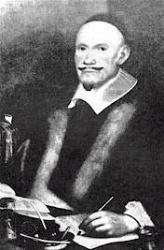
1598 - 1662 Topics: Holy Spirit Praise and Invocation; Christian Year Pentecost; God House, Home; Holy Spirit; Holy Spirit Illumination; Holy Spirit Presence; Holy Spirit Work; Light; Petition; Prayer; Sacrifice; Lent 5 Year A; Pentecost Year A; Epiphany 2 Year B; Epiphany 7 Year B; Pentecost Year B; Proper 15 Year B; Proper 21 Year B; Pentecost Year C Composer of "GRÄFENBURG" in Voices United Johann Crüger (b. Grossbriesen, near Guben, Prussia, Germany, 1598; d. Berlin, Germany, 1662) Crüger attended the Jesuit College at Olmutz and the Poets' School in Regensburg, and later studied theology at the University of Wittenberg. He moved to Berlin in 1615, where he published music for the rest of his life. In 1622 he became the Lutheran cantor at the St. Nicholas Church and a teacher for the Gray Cloister. He wrote music instruction manuals, the best known of which is Synopsis musica (1630), and tirelessly promoted congregational singing. With his tunes he often included elaborate accompaniment for various instruments. Crüger's hymn collection, Neues vollkomliches Gesangbuch (1640), was one of the first hymnals to include figured bass accompaniment (musical shorthand) with the chorale melody rather than full harmonization written out. It included eighteen of Crüger's tunes. His next publication, Praxis Pietatis Melica (1644), is considered one of the most important collections of German hymnody in the seventeenth century. It was reprinted forty-four times in the following hundred years. Another of his publications, Geistliche Kirchen Melodien (1649), is a collection arranged for four voices, two descanting instruments, and keyboard and bass accompaniment. Crüger also published a complete psalter, Psalmodia sacra (1657), which included the Lobwasser translation set to all the Genevan tunes.
Bert Polman
===============================
Crüger, Johann, was born April 9, 1598, at Gross-Breese, near Guben, Brandenburg. After passing through the schools at Guben, Sorau and Breslau, the Jesuit College at Olmütz, and the Poets' school at Regensburg, he made a tour in Austria, and, in 1615, settled at Berlin. There, save for a short residence at the University of Wittenberg, in 1620, he employed himself as a private tutor till 1622. In 1622 he was appointed Cantor of St. Nicholas's Church at Berlin, and also one of the masters of the Greyfriars Gymnasium. He died at Berlin Feb. 23, 1662. Crüger wrote no hymns, although in some American hymnals he appears as "Johann Krüger, 1610,” as the author of the supposed original of C. Wesley's "Hearts of stone relent, relent" (q.v.). He was one of the most distinguished musicians of his time. Of his hymn tunes, which are generally noble and simple in style, some 20 are still in use, the best known probably being that to "Nun danket alle Gott" (q.v.), which is set to No. 379 in Hymns Ancient & Modern, ed. 1875. His claim to notice in this work is as editor and contributor to several of the most important German hymnological works of the 16th century, and these are most conveniently treated of under his name. (The principal authorities on his works are Dr. J. F. Bachmann's Zur Geschichte der Berliner Gesangbücher 1857; his Vortrag on P. Gerhard, 1863; and his edition of Gerhardt's Geistliche Lieder, 1866. Besides these there are the notices in Bode, and in R. Eitner's Monatshefte für Musik-Geschichte, 1873 and 1880). These works are:—
1. Newes vollkömmliches Gesangbuch, Augspur-gischer Confession, &c, Berlin, 1640 [Library of St. Nicholas's Church, Berlin], with 248 hymns, very few being published for the first time.
2. Praxis pietatis melica. Das ist: Ubung der Gottseligkeit in Christlichen und trostreichen Gesängen. The history of this, the most important work of the century, is still obscure. The 1st edition has been variously dated 1640 and 1644, while Crüger, in the preface to No. 3, says that the 3rd edition appeared in 1648. A considerable correspondence with German collectors and librarians has failed to bring to light any of the editions which Koch, iv. 102, 103, quotes as 1644, 1647, 1649, 1650, 1651, 1652, 1653. The imperfect edition noted below as probably that of 1648 is the earliest Berlin edition we have been able to find. The imperfect edition, probably ix. of 1659, formerly in the hands of Dr. Schneider of Schleswig [see Mützell, 1858, No. 264] was inaccessible. The earliest perfect Berlin edition we have found is 1653.
The edition printed at Frankfurt in 1656 by Caspar Röteln was probably a reprint of a Berlin edition, c. 1656. The editions printed at Frankfurt-am-Main by B. C. Wust (of which the 1666 is in the preface described as the 3rd) are in considerable measure independent works.
In the forty-five Berlin and over a dozen Frankfurt editions of this work many of the hymns of P. Gerhardt, J. Franck, P. J. Spener, and others, appear for the first time, and therein also appear many of the best melodies of the period.
3. Geistliche Kirchen-Melodien, &c, Leipzig, 1649 [Library of St. Katherine's Church, Brandenburg]. This contains the first stanzas only of 161 hymns, with music in four vocal and two instrumental parts. It is the earliest source of the first stanzas of various hymns by Gerhardt, Franck, &c.
4. D. M. Luther's und anderer vornehmen geisU reichen und gelehrten Manner Geistliche Lieder und Psalmen, &c, Berlin, 1653 [Hamburg Town Library], with 375 hymns. This was edited by C. Runge, the publisher, and to it Crüger contributed some 37 melodies. It was prepared at the request of Luise Henriette (q.v.), as a book for the joint use of the Lutherans and the Re¬formed, and is the earliest source of the hymns ascribed to her, and of the complete versions of many hymns by Gerhardt and Franck.
5. Psalmodia Sacra, &c, Berlin, 1658 [Royal Library, Berlin]. The first section of this work is in an ed. of A. Lobwasser's German Psalter; the second, with a similar title to No. 4, and the date 1657, is practically a recast of No. 4,146 of those in 1653 being omitted, and the rest of the 319 hymns principally taken from the Praxis of 1656 and the hymn-books of the Bohemian Brethren. New eds. appeared in 1676, 1700, 1704, 1711, and 1736.
[Rev. James Mearns, M.A.]
-- Excerpt from John Julian, Dictionary of Hymnology (1907)
=======================
Crüger, Johann, p. 271, ii. Dr. J. Zahn, now of Neuendettelsau, in Bavaria, has recently acquired a copy of the 5th ed., Berlin, 1653, of the Praxis.
--John Julian, Dictionary of Hymnology, Appendix, Part II (1907)
Johann Crüger
Jacques Berthier
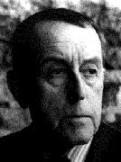
1923 - 1994 Person Name: Jacques Berthier, 1923-1994 Topics: Year B, Ordinary Time after Pentecost, October 30-November 5; Year C, Ordinary Time after Pentecost, June 5-11 (if after Trinity Sunday) Composer of "[Alleluia, alleluia, alleluia]" in Psalms for All Seasons Jacques Berthier (b. Auxerre, Burgundy, June 27, 1923; d. June 27, 1994) A son of musical parents, Berthier studied music at the Ecole Cesar Franck in Paris. From 1961 until his death he served as organist at St. Ignace Church, Paris. Although his published works include numerous compositions for organ, voice, and instruments, Berthier is best known as the composer of service music for the Taizé community near Cluny, Burgundy. Influenced by the French liturgist and church musician Joseph Gelineau, Berthier began writing songs for equal voices in 1955 for the services of the then nascent community of twenty brothers at Taizé. As the Taizé community grew, Berthier continued to compose most of the mini-hymns, canons, and various associated instrumental arrangements, which are now universally known as the Taizé repertoire. In the past two decades this repertoire has become widely used in North American church music in both Roman Catholic and Protestant traditions.
Bert Polman
Jacques Berthier
Pages




