You help make Hymnary.org possible. More than 10 million people from 200+ countries found hymns, liturgical resources and encouragement on Hymnary.org in 2025, including you. Every visit affirms the global impact of this ministry.

If Hymnary has been meaningful to you this year, would you take a moment today to help sustain it? A gift of any size—paired with a note of encouragement if you wish—directly supports the server costs, research work and curation that keep this resource freely available to the world.

Give securely online today, or mail a check to:
Hymnary.org
Calvin University
3201 Burton Street SE
Grand Rapids, MI 49546

Thank you for your partnership, and may the hope of Advent fill your heart.

Person Results

Tune Identifier:"^adeste_fideles_wade$"
In:person

Planning worship? Check out our sister site, ZeteoSearch.org, for 20+ additional resources related to your search.
Showing 21 - 30 of 120Results Per Page: 102050

Robert Keen

Person Name: R. Keene Author of "How Firm a Foundation" in Concordia Robert Keen (or Keene) was the leader of music and the Carter Lane Baptist Church in London when John Rippon was the pastor. It was during this time that Rippon collected and published his Selections in 1787. He is the likely author of "How Firm a Foundation."

Fred Bock

1939 - 1998 Composer of Descant of "ADESTE FIDELES" in Hymns for the Family of God Fred Bock was born in Great Neck, New York. He played the piano at age six and organ at age twelve. He attended Ithaca College, receiving his B.A. in Music Education. He earned his Masters and did Doctoral work in Church Music at the University of Southern California. Fred Bock was one of the most recognized and respected leaders in the world of church music. He was an accomplished composer, arranger, clinician, studio musician, organist, pianist, choral director and music publisher. He was the founder and director of publications for the music publishing division of Word, Inc. and later started Gentry Publication and other publishers of church music. He was also minister of music at Hollywood Presbyterian Church, where he served for 18 years. Before that, he served as minister of music at Bel Air Presbyterian Church in Los Angeles for 14 years. Bock has over 600 compositions and arrangements in print. N.N., Hymnary. More information at https://www.songsandhymns.org/people/detail/fred-bock

George W. Bethune

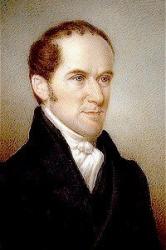
1805 - 1862 Author of "O Thou, who in Jordan didst bow Thy meek head" in Hymni Ecclesiae Bethune, George Washington, D.D. A very eminent divine of the Reformed Dutch body, born in New York, 1805, graduated at Dickinson Coll., Carlisle, [PA], 1822, and studied theology at Princeton. In 1827 he was appointed Pastor of the Reformed Dutch Church, Rinebeck, New York. In 1830 passed to Utica, in 1834 to Philadelphia, and in 1850 to the Brooklyn Heights, New York. In 1861 he visited Florence, Italy, for his health, and died in that city, almost suddenly after preaching, April 27, 1862. His Life and Letters were edited by A. R. Van Nest, 1867. He was offered the Chancellorship of New York University, and the Provostship of the University of Pennsylvania, both of which he declined. His works include The Fruits of the Spirit, 1839; Sermons, 1847; Lays of Love & Faith, 1847; The British Female Poets, 1848, and others. Of his hymns, some of which liave attained to some repute, we have:— 1. Tossed upon life's raging billow. Sailor's Hymn. Appeared in the Christian Lyre, 1830; in the Seamen's Devotional Assistant the same year, and in Dr. Bethune's Lays, 1847, p. 168, in 3 stanzas of 8 lines. It "is said to have been the Author's first and favourite hymn, having been written when he was on a voyage to the West Indies, for the benefit of his health, in the year 1825" (Lyra Sac. Amer. p. 297). It is a "Sailor's Hymn;" as such it was given in Lyra Sac. Amer., and thence passed into The Hymnary, 1872, and other English collections. 2. O for the happy hour. Whitsuntide. "A Prayer for the Spirit," contributed to the Parish Hymns, Phila., 1843, and republished in the Lays, &c, 1847, p. 158, in 6 stanzas of 4 lines. It is found in many modern collections. 3. It is not death to die. A translation of Caesar Malan's "Non, ce n'est pas mourir," (q.v.) from his Lays, 1847, p. 141, in 5 stanzas of 4 lines. As stated above, Dr. Bethune died at Florence. His remains were taken to New York, and buried in Greenwood Cemetery. This hymn, in compliance with a request made by him before his death, was sung at his funeral. It is found in several English hymnals. 4. Light of the Immortal Father's glory. Evening. A translation of a Greek hymn. (q.v.). It appeared in his Lays, &c, 1847, p. 137, in 2 stanzas of 8 lines, and is in common use. 5. Farewell to thee, brother. Parting. "The departing Missionary," published in his Lays, &c, 1847, p. 170, in 5 stanzas of 4 lines, and included in Lyra Sac. Amer., 1868, and thence into English collections. It is not in common use in America. 6. O Jesus, when I think of Thee. Easter. This is said to bear the date of 1847. It was 1st pub. in his Life, &c, 1867. Included in Lyra Sac. Americana (where it is stated to have been found in MS. amongst the author's papers), and from the Lyra into English collections. It is an Easter hymn of no special merit. 7. Come, let us sing of Jesus. S. Schools. Published in 1850, suited to Sunday schools, and is found in Snepp's Songs of Grace and Glory and others. 8. O Thou Who in Jordan didst bow Thy meek head. Adult Baptism. Written for and much used by the Baptists. It is dated 1857. 9. There is no Name so sweet on earth. Name of Jesus. Said by Mr. H. P. Main to be by Dr. Bethune. It has been wrongly ascribed to E. Roberts, a musician. 10. When time seems short and death is near. Death anticipated. This was found in the author's portfolio, and was written on Saturday, April 27th, 1862, the day before his death at Florence (Life, &c, p. 409). It was included in the Lyra Sac. Amer., 1808, and from thence passed into one or two English hymnals. In his Lays, &c, 1847, Dr. Bethune included the following "Christmas Carols for Sunday School Children”: 1. The Almighty Spirit to a poor, &c. 2. Joy and gladness, joy and gladness. 3. Full many a year has sped. 4. We come, we come, with loud acclaim. In the same work there are also metrical renderings of Psalms ix., xix., xxiii., cxxvi., and cxxvii. In the Lyra Sacra Americana, 14 pieces by Dr. Bethune are given, including many of the above. -John Julian, Dictionary of Hymnology (1907) ==================== Bethune, George Washington, p. 138, ii. Other hymns from his Lays of Love and Faith, 1847, are in common use:- 1. 'Tis He, 'tis He, I know Him now. Easter. 2. Upon the well by Sychar's gate. Resignation. 3. Yes, boar them to their rest. Evening. "Hymn to Night, suggested by the Bas-relief of Thorwaldsen." --John Julian, Dictionary of Hymnology, Appendix, Part II (1907)

Henry Ware

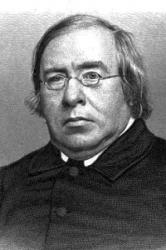
1794 - 1843 Person Name: Henry Ware, Jr. Author of "We rear not a temple, like Judah's of old" in The Evangelical Hymnal Ware, Henry, D.D., son of Dr. H. Ware, pastor of the Unitarian congregation at Hingham, Massachusetts, and afterward Hollis Professor of Divinity at Cambridge, U.S.A., was born at Hingham, April 21, 1794. Before going to Harvard College, in 1808, he was under the care of Dr. Allyn, at Duxbury, and then of Judge Ware, at Cambridge. He graduated at Harvard in high honours, in 1812; and was then for two years an assistant teacher in Exeter Academy. He was licensed to preach by the Boston Unitarian Association, July 31, 1815; and ordained pastor of the Second Church of that city, Jan. 1, 1817. In 1829, in consequence of his ill health, he received the assistance of a co-pastor in the person of Ralph Waldo Emerson. In the same year Ware was appointed Professor of Pulpit Eloquence and Pastoral Care in the Cambridge Theological School. He entered upon his duties in 1830, and resigned in 1842. He removed to Framingham, and died there, Sept. 25, 1843. His D.D. degree was conferred upon Memoir, published by his brother John Ware, M.D., were numerous and on a variety of topics. He edited the Christian Disciple, which was established in 1813, and altered in title to the Christian Examiner in 1824, for some years before the change of title, and gave it his assistance subsequently. The Rev. Chandler Robbins collected his works and published them in four volumes, in 1847. His hymns, many of which are of more than usual excellence, are given in vol. i. Of these the following are in common use: 1. All nature's works His praise declare. Opening of an Organ. Dated Nov. 9, 1822. It is in Horder's English Congregational Hymns, 1884. 2. Around the throne of God The host angelic throngs. Universal Praise. Dated 1823, and printed in the Christian Disciple, vol. v., and in Putnam, 1874. A fine hymn of praise. 3. Father of earth and heaven, Whose arm upholds creation. Thanksgiving for Divine Mercies. Appeared in Cheever's American Common Place Book, 1831; and in Lyra Sacra Americana, 1868. 4. Father, Thy gentle chastisement. In Sickness. Dated March, 1836; and in Lyra Sacra Americana, 1868. 5. Great God, the followers of Thy Son. Ordination. Written for the Ordination of Jared Sparks, the historian, as pastor of the Unitarian Church, Baltimore, 1819. Given in Lyra Sacra Americana, 1868, and Putnam, 1874. 6. In this glad hour when children meet. Family Gatherings. Dated Aug. 20, 1835. In Lyra Sac. Americana, 1868, and Putnam, 1874. 7. Lift your glad voices in triumph on high. Easter. Dated 1817, and was published in the Christian Disciple of that year, in 2 stanzas of 8 lines. It is in Lyra Sac. Americana, 1868; Putnam, 1874, and numerous hymnbooks. Sometimes stanza ii. is given separately as, "Glory to God, in full anthems of joy." 8. Like Israel's hosts to exile driven. American National Hymn. Written for the Centennial Celebration of the Boston Thursday Lecture, Oct. 17,1833, and given in Lyra Sac. Americana, 1868, and Putnam, 1874. It is a quasi American National Hymn in praise of the Pilgrim Fathers. 9. 0 Thou in Whom alone is found. Laying Foundation Stone of a Place of Worship. In Lyra Sacra Americana, 1868, and Thring's English Collection, 1882. 10. 0 Thou Who on Thy chosen Son. Ordination. Written for an Ordination, March, 1829. In Putnam, 1874, and Dale's English Hymn Book, 1874. 11. Oppression shall not always reign. Against Slavery. "This was Mr. Ware's last composition in verse. It bears date March 15, 1843. In its original form it is longer than as presented here [in 3 stanzas of 8 lines], and is unsuited to a church-book. The following stanzas, taken from one of the Collections [stanzas i., ii. are in Longfellow and Johnson's Book of Hymns, 1848] are a part of the original, altered and transposed, and thus adapted to sacred worship." 12. To prayer, to prayer; for the morning breaks. Prayer. This poem of 10 stanzas of 6 lines is dated 1826, and is given in Lyra Sac. Americana, 1868, and Putnam, 1874. Two centos therefrom are in common use The first begins with stanza i., adapting it for Morning, and the second with stanza ii., "To prayer, for the glorious sun is gone," for Evening. 13. We rear not a temple, like Judah of old. Dedication of a Place of Worship. This is dated 1839, and is given in Putnam, 1874. 14. With praise and prayer our gifts we bring. Opening of a Place of Worship. In Dale's English Hymn Book. 1874. With American Unitarians Dr. Ware ranks very high, and by them his hymns are widely used. [Rev. F. M. Bird, M.A.] -- John Julian, Dictionary of Hymnology (1907) ================== Ware, H., p. 1233, i. Another of his hymns in common use is "Great King of all, our nation's God" (National Humiliation). His hymn "To prayer, to prayer," is in Cheever's American Common-Place Book of Poetry, 1831. --John Julian, Dictionary of Hymnology, Appendix, Part II (1907) ================== Henry Ware was born in Hingham, Massachusetts, in 1793. His father was a Unitarian minister; afterwards a Professor in Harvard College. Young Ware graduated at Harvard, studied theology, and became minister of the Second Unitarian Society, in Boston, in 1817. After a ministry of twelve years, he made a foreign tour, and on his return was elected "Parkman Professor of Pulpit Eloquence and Pastoral Theology" in Harvard College. In this position he obtained eminence. He died in September, 1843. His collected works in four volumes, were edited after his death, by the Rev. Chandler Robbins. --Annotations of the Hymnal, Charles Hutchins, M.A., 1872

John Byrom

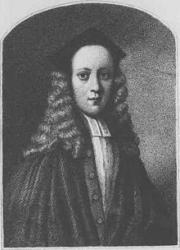
1692 - 1763 Person Name: Byrom Author of "The Lord is our Shepherd, our Guardian and Guide" in Christian Life Songs John Byrom was born in 1691, at Manchester, where his father was a linen-draper. He entered Trinity College, Cambridge, 1708; became a Fellow of the College in 1714; took his M.A. in 1716, and then proceeded to Montpelier, where he studied medicine. He afterwards abandoned medicine, settled in London, and obtained his living by teaching a system of shorthand, which he had projected. He was elected a member of the Royal Society in 1724. He died Sept. 28, 1763. The first edition of Byrom's poems appeared in 1773, in two volumes. A more complete edition was published in 1814. Byrom did not seek publicity as an author, but wrote verses only for recreation. --Annotations of the Hymnal, Charles Hutchins, M.A., 1872 ====================== Byrom, John, M.A., F.R.S., born at Manchester, Feb. 29,1691-2, baptized the same day, and educated at Merchant Taylors' School, and Trinity College, Cambridge, where he graduated B.A. 1712 ; M.A. 1715. He was elected a Fellow of his College in 1714. After studying medicine for a time at Montpellier, he returned to London, and earned his livelihood by teaching shorthand. Elected F.R.S. in 1724, and succeeded to the family estates about the same time. He died Sept. 28, 1763. His Poems were first published in 1773, in two volumes. In 1814 a more complete edition was issued by Nichols, of Leeds. From these Poems less than half a dozen hymns have come into common use. One of these, however, has a repu¬tation which has extended to all English-speaking countries. We refer to his "Christians, awake!" (q.v.). His hymn, "My spirit longeth for Thee," is also worthy of attention. -- John Julian, Dictionary of Hymnology (1907)

Alan Gray

1855 - 1935 Arranger of "ADESTE FIDELES" in The United Methodist Hymnal Music Supplement Born: December 23, 1855, York, England. Died: September 27, 1935, Cambridge, England. Buried: Trinity College, Cambridge, England. Alan Gray (23 December 1855, York – 27 September 1935, Cambridge) was a British organist and composer. Born in York, he attended St Peter's School in York and Trinity College, Cambridge. From 1883 until 1893 he was Director of Music at Wellington College. In 1893 he returned to Cambridge to be organist at Trinity College, and remained organist there until 1930. Among his compositions are liturgical music for Morning and Evening Prayer and the Office of Holy Communion for use in the Church of England according to the Book of Common Prayer, including an Evening Service in f minor, a setting of Holy Communion in G, several anthems, including 'What are these that glow from afar?', and a collection of descants to various hymn tunes, several of which are still in use today (Common Praise (2000) includes four). He also composed a number of items for organ, for violin solo, and for voice and orchestra to religious and secular texts. --en.wikipedia.org/wiki/

W. T. Dale

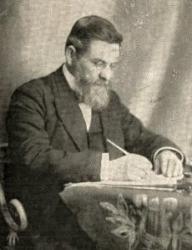
1845 - 1924 Person Name: Rev. W. T. Dale Author of "When bowed with affliction and woe here below" in The Songs of Zion

Herbert Stanley Oakeley

1830 - 1903 Person Name: Oakeley Translator of "O come, let us adore him" in Hymns of the Faith with Psalms

William Mercer

1811 - 1873 Translator of "O Come, All Ye Faithful" in Voices Together Mercer, William, M.A., born at Barnard Castle, Durham, 1811, and educated at Trinity College, Cambridge (B.A., 1835). In 1840 he was appointed Incumbent of St. George's, Sheffield. He died at Leavy Greave, Sheffield, Aug. 21, 1873. His principal work was:—- The Church Psalter and Hymn Book, comprising The Psalter, or Psalms of David, together with the Canticles, Pointed for Chanting; Four Hundred Metrical Hymns and Six Responses to the Commandments; the whole united to appropriate Chants and Tunes, for the use of Congregations and Families, by the Rev. William Mercer, M.A. . .. Assisted by John Goss, Esq…., 1854; enlarged 1856; issued without music, 1857; quarto edition 1860; rearranged edition (Oxford edition) 1864; Appendix 1872. For many years this collection was at the head of all the hymn-books in the Church of England, both in circulation and influence. Its large admixture of Wesleyan hymns, and of translations from the German gave it a distinct character of its own, and its grave and solemn music was at one time exceedingly popular. To it Mercer contributed several translations and paraphrases from the Latin and German, the latter mainly from the Moravian hymn-books; but his hymn-writing was far less successful than his editing, and has done nothing to increase his reputation. -- John Julian, Dictionary of Hymnology (1907)

St. Bonaventure

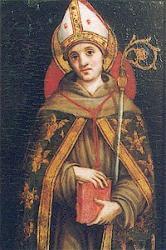
1217 - 1274 Person Name: Bonaventura Author of "O come, let us adore Him" in Songs of the Christian Life Bonaventura, Saint and Cardinal, commonly called "Doctor Seraphicus," was born of pious and well-to-do parents at Bagnera, in Tuscany, 1221. His father's name was John, of Fidenza, and he was baptized in his father's name of John. It is said that his mother, when her boy of four years old was "sick unto death," made a vow that, if he recovered, he should become a member of the Order of St. Francis, and that, his recovery taking place immediately thereupon, she exclaimed, "O Bonaventura!" (“O what good luck") the name adopted by the son when he entered the Franciscan Order in 1242. He was sent by his Order as a student to the University of Paris probably in or about A.D. 1242, and became a Professor of Theology there in 1245. In 1256, at the age of thirty-five years, and thirteen years after his profession as a monk, he was, in his absence, unanimously elected General of his Order by a Chapter held at Rome in the presence of the then Pope, Alexander IV. His election proved a happy one for the Franciscans, whose Order was in a critical condition, threatened with a schism, and tainted with heresy. In 1267 he was offered the Archbishopric of York by Pope Clement IV., but declined it, on the ground that any further addition to the long list of Italian dignitaries, who were being forced upon the Church of England at that time against its will, would cause fresh strife, and end in his expulsion. Upon the death of Clement in the following year, it is said (with what amount of truth authorities differ) that he declined the Papacy itself, though strongly urged to accept it, in order to put an end to the dissension between the French and Italian Cardinals, which kept the chair of St. Peter vacant for more than two years. When at last the College of Cardinals had delegated to six of their number the power of filling up the vacancy, and these delegates, possibly by Bonaventura's advice, had elected Theobald, Archdeacon of Liege, under the title of Gregory X., the new Pope very soon after his election made Bonaventura a Cardinal, so sorely against the will of the latter, that he fled to Paris in order to escape from the fresh responsibilities that such a position involved, and was only induced to return for investiture by the positive orders of the Pope to that effect. When he reached Rome, having received his cardinal's hat on the way, he was (1273) consecrated Bishop of Alba, one of the six suffragans of Rome. He did not long enjoy his new honours. In 1274 Gregory X. assembled a great (Ecumenical Council at Lyons, at which 500 bishops, 70 abbots, and at least 1000 dignified clergy were present. The two leading churchmen of the age, Thomas Aquinas and Bonaventura, were summoned to attend, the former to die on his road thither, the latter before its proceedings closed, in which he had taken part. Bonaventura was taken ill on July 6th, and died on July 14th, 1274. He was buried in the Convent of the Minorites at Lyons in the presence of the Pope and all the Council. When we turn from the facts of Bonaventura's life to discuss his literary qualities and achievements, the same remark forces itself upon us, that has to be made about so many of the great mediaeval writers, whose compositions consist both of prose and poetry, viz., that the former very far outweigh the latter in quantity, as well as in importance. His contributions to Latin hymnology are few and far between; and, though generally good, are scarcely, with one exception, in the front rank of such compositions. Of his style, as a hymn-writer, Archbishop Trench, who is not given" to exaggerated praise, says, "His Latin poetry is good, but does not call for any especial criticism" (Sacred Latin Poetry, p. 145); while Dean Milman places his "Hymn to the Cross" as only inferior in melody to the "Stabat Mater" of Jacopone da Todi, and the "Dies Irae" of Thomas of Celano. But, indeed, beyond the beautiful "Recordare sanctae crucis," it is more than doubtful what hymns can be certainly attributed to Bonaventura. Trench gives us in his Sacred Latin Poetry two others, very beauti¬ful in their very different styles, “Quara despectus, quam dejectus," and "Quantum hamum caritas tibi praesentavit," both of which he extracts from what is the best edition of our author's collected works, Bonaventurae Opp., Lugduni, 1668. It is, however, by no means certain that either was really his work. Daniel gives us only the "Recordare Sanctae Crucis" as cer¬tainly written by Bonaventura, besides a hymn to the Virgin, founded on the “Te Deum," ii. 293, com-mencing " Te Matrem Dei Laudamus." Mone attributes to him also the "In passione Domini, qua datur salus homini" (q.v.), and gives a "Planctus Bonaventurae de Christo," beginning "0 Crux, frutex salvificus," which, however, he says is not included in the poems of Bonaventura as given in his collected works (i. 152); a version of a hymn by him on the “Crown of Mary" (ii. 172), an "Officium Compassionis" on the Blessed Virgin (ii. 139), and a long "Psalter of the Virgin " (ii. 233), which, however, Trench doubts his having written. An edition published by a Dominican editor in the 15th century, of St. Bernard's "Oratio ad Christum in crucem pendentem," according to Mone, attributes part of it, “Salve, salve, Jesu pie," to Bonaventura and not to Bernard, and calls it " Orationes Bonaventurae," &c. This "statement of the editor," Mone adds, "is not to be overlooked." Several of his hymns were in use in public worship, and the continual copying of them by different hands, which this involved, has rendered it very difficult, if not impossible, to ascertain always their correct texts. Very few have been translated into English. [Rev. Digby S. Wrangham, M.A.] -- John Julian, Dictionary of Hymnology (1907) =============== Bonaventura, St., p. 162, ii. In Canon Oakeley's Devotions Commemorative of The Most Adorable Passion of Our Lord Jesus Christ, &c, 1812, there are several translations of hymns from St. Bonaventura's published works. --John Julian, Dictionary of Hymnology, Appendix, Part II (1907)

Pages


Export as CSV
It looks like you are using an ad-blocker. Ad revenue helps keep us running. Please consider white-listing Hymnary.org or getting Hymnary Pro to eliminate ads entirely and help support Hymnary.org.