You help make Hymnary.org possible. More than 10 million people from 200+ countries found hymns, liturgical resources and encouragement on Hymnary.org in 2025, including you. Every visit affirms the global impact of this ministry.

If Hymnary has been meaningful to you this year, would you take a moment today to help sustain it? A gift of any size—paired with a note of encouragement if you wish—directly supports the server costs, research work and curation that keep this resource freely available to the world.

Give securely online today, or mail a check to:
Hymnary.org
Calvin University
3201 Burton Street SE
Grand Rapids, MI 49546

Thank you for your partnership, and may the hope of Advent fill your heart.

Person Results

Tune Identifier:"^st_paul_chalmers_collection$"
In:people

Planning worship? Check out our sister site, ZeteoSearch.org, for 20+ additional resources related to your search.
Showing 21 - 30 of 43Results Per Page: 102050

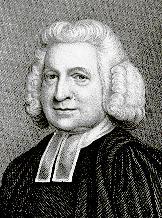
Charles Wesley

1707 - 1788 Author of "Jesus, the Rising Lord of All" in The Cyber Hymnal Charles Wesley, M.A. was the great hymn-writer of the Wesley family, perhaps, taking quantity and quality into consideration, the great hymn-writer of all ages. Charles Wesley was the youngest son and 18th child of Samuel and Susanna Wesley, and was born at Epworth Rectory, Dec. 18, 1707. In 1716 he went to Westminster School, being provided with a home and board by his elder brother Samuel, then usher at the school, until 1721, when he was elected King's Scholar, and as such received his board and education free. In 1726 Charles Wesley was elected to a Westminster studentship at Christ Church, Oxford, where he took his degree in 1729, and became a college tutor. In the early part of the same year his religious impressions were much deepened, and he became one of the first band of "Oxford Methodists." In 1735 he went with his brother John to Georgia, as secretary to General Oglethorpe, having before he set out received Deacon's and Priest's Orders on two successive Sundays. His stay in Georgia was very short; he returned to England in 1736, and in 1737 came under the influence of Count Zinzendorf and the Moravians, especially of that remarkable man who had so large a share in moulding John Wesley's career, Peter Bonier, and also of a Mr. Bray, a brazier in Little Britain. On Whitsunday, 1737, [sic. 1738] he "found rest to his soul," and in 1738 he became curate to his friend, Mr. Stonehouse, Vicar of Islington, but the opposition of the churchwardens was so great that the Vicar consented that he "should preach in his church no more." Henceforth his work was identified with that of his brother John, and he became an indefatigable itinerant and field preacher. On April 8, 1749, he married Miss Sarah Gwynne. His marriage, unlike that of his brother John, was a most happy one; his wife was accustomed to accompany him on his evangelistic journeys, which were as frequent as ever until the year 1756," when he ceased to itinerate, and mainly devoted himself to the care of the Societies in London and Bristol. Bristol was his headquarters until 1771, when he removed with his family to London, and, besides attending to the Societies, devoted himself much, as he had done in his youth, to the spiritual care of prisoners in Newgate. He had long been troubled about the relations of Methodism to the Church of England, and strongly disapproved of his brother John's "ordinations." Wesley-like, he expressed his disapproval in the most outspoken fashion, but, as in the case of Samuel at an earlier period, the differences between the brothers never led to a breach of friendship. He died in London, March 29, 1788, and was buried in Marylebone churchyard. His brother John was deeply grieved because he would not consent to be interred in the burial-ground of the City Road Chapel, where he had prepared a grave for himself, but Charles said, "I have lived, and I die, in the Communion of the Church of England, and I will be buried in the yard of my parish church." Eight clergymen of the Church of England bore his pall. He had a large family, four of whom survived him; three sons, who all became distinguished in the musical world, and one daughter, who inherited some of her father's poetical genius. The widow and orphans were treated with the greatest kindness and generosity by John Wesley. As a hymn-writer Charles Wesley was unique. He is said to have written no less than 6500 hymns, and though, of course, in so vast a number some are of unequal merit, it is perfectly marvellous how many there are which rise to the highest degree of excellence. His feelings on every occasion of importance, whether private or public, found their best expression in a hymn. His own conversion, his own marriage, the earthquake panic, the rumours of an invasion from France, the defeat of Prince Charles Edward at Culloden, the Gordon riots, every Festival of the Christian Church, every doctrine of the Christian Faith, striking scenes in Scripture history, striking scenes which came within his own view, the deaths of friends as they passed away, one by one, before him, all furnished occasions for the exercise of his divine gift. Nor must we forget his hymns for little children, a branch of sacred poetry in which the mantle of Dr. Watts seems to have fallen upon him. It would be simply impossible within our space to enumerate even those of the hymns which have become really classical. The saying that a really good hymn is as rare an appearance as that of a comet is falsified by the work of Charles Wesley; for hymns, which are really good in every respect, flowed from his pen in quick succession, and death alone stopped the course of the perennial stream. It has been the common practice, however for a hundred years or more to ascribe all translations from the German to John Wesley, as he only of the two brothers knew that language; and to assign to Charles Wesley all the original hymns except such as are traceable to John Wesley through his Journals and other works. The list of 482 original hymns by John and Charles Wesley listed in this Dictionary of Hymnology have formed an important part of Methodist hymnody and show the enormous influence of the Wesleys on the English hymnody of the nineteenth century. -- Excerpts from John Julian, Dictionary of Hymnology (1907) ================== Charles Wesley, the son of Samuel Wesley, was born at Epworth, Dec. 18, 1707. He was educated at Westminster School and afterwards at Christ Church, Oxford, where he graduated M.A. In 1735, he took Orders and immediately proceeded with his brother John to Georgia, both being employed as missionaries of the S.P.G. He returned to England in 1736. For many years he engaged with his brother in preaching the Gospel. He died March 29, 1788. To Charles Wesley has been justly assigned the appellation of the "Bard of Methodism." His prominence in hymn writing may be judged from the fact that in the "Wesleyan Hymn Book," 623 of the 770 hymns were written by him; and he published more than thirty poetical works, written either by himself alone, or in conjunction with his brother. The number of his separate hymns is at least five thousand. --Annotations of the Hymnal, Charles Hutchins, M.A., 1872.

W. G. Tarrant

1853 - 1928 Person Name: William George Tarrant Author of "Come, let us join with faithful souls" in Hymns of the Spirit for Use in the Free Churches of America Tarrant, William George, B.A., b. 1853. Since 1883 Minister of the Wandsworth Unitarian Christian Church. Editor of The Inquirer, 1888-97. One of the editors of the Essex Hall Hymnal. 1890, and of the Revised ed., 1902. 1. Come, let us Join with faithful souls. The Faithful. 2. Draw nigh to God; He will draw nigh to you. The Divine Helper. 3. Long ago the lilies faded. The Constant Presence. 4. The Light along the ages. Easter. 5. With happy voices ringing. Children's Praise. --John Julian, Dictionary of Hymnology, New Supplement (1907)

John Reynell Wreford

1800 - 1891 Person Name: John Wreford, 1800-81 Author of "Lord, while for all mankind we pray" in The New English Hymnal Wreford, John Reynell, an English Unitarian minister, was born December 12, 1800, at Barnstaple; educated at Manchester College, and in 1826 became pastor of a Church in Birmingham. In 1831, on account of the failure of his voice, he withdrew from the active work of the ministry and, in conjunction with Rev. Hugh Hutton, established a school at Edgbaston. He wrote a History of Presbyterian Nonconformity in Birmingham, 1832, and Lays of Loyalty, 1837. He contributed fifty-five hymns to Rev. J. R. Beard's Collection, 1837. His most popular and valuable hymn is the one given in this book. The last years of his life were spent in retirement at Bristol, where he died in 1891. —Hymn Writers of the Church by Charles Nutter ================= Wreford, John Keynell, D.D., born Dec. 12, 1800, educated at Manchester College, York, and in 1826 succeeded the Rev. James Yates as co-pastor to the Rev. John Kentish at the New Meeting, Birmingham. In 1830 he published a translation of Cellerier's Discourse on the Authenticity and Divine Origin of the Old Testament. In the following year, in consequence of failure of voice, he withdrew from the Ministry, and in conjunction with the Rev. Hugh Hutton, Minister of the Old Meeting, opened a school at Edgbaston. In 1832 he published a Sketch of the History of Presbyterian Nonconformity in Birmingham; and in 1837, Lays of Loyalty, in celebration of the Queen's accession. He also contributed, in 1837, to the Rev. J. R. Beard's Collection of Hymns for Public and Private Worship 55 hymns, of which the following are still in common use:— 1. God of the ocean, earth, and sky. God seen in His Works. In various collections, including those by Page Hopps, G. Dawson, and others. 2. Lord, I believe; Thy power I own. For increase of Faith. In Martineau's Hymns, &c, 1840. 3. Lord, while for all mankind we pray. National Hymn. This is in a large number of collections of various denominations, and is by far the most popular of his hymns. Sometimes it begins with stanza iii., "O! guard our shores from every foe." 4. When my love to Christ[God]grows weak. Passiontide. In Longfellow and Johnson's Unitarian Hymns of the Spirit, Boston, U. S. A., 1864, "When my love to God grows weak." This is repeated in Martineau's Hymns, &c, 1873. Dr. Wreford was also the author of several volumes of verse, chiefly devotional. The latter years of his life he spent in retirement at Bristol, and died there in 1881. [Rev. Valentine D. Davis, B.A.] -- John Julian, Dictionary of Hymnology (1907)

Andrew Tait

1710 - 1778 Composer (attributed to) of "ST PAUL (ABERDEEN)" in The Irish Presbyterian Hymnbook

William Cameron

1751 - 1811 Person Name: William Cameron, 1751-1811 Author of "Father of peace, and God of love" in The Hymnary of the United Church of Canada William Cameron was born in 1751. He studied at Marischal College, Aberdeen, and in 1785 was ordained minister of Kirknewton, in Mid Lothian. He died in 1811. He was the author of several works. --Annotations of the Hymnal, Charles Hutchins, M.A. 1872. ================ Cameron, William, M.A., seems to have been born in 1751, at or near Pananich, a hamlet near Ballater, Aberdeenshire, his father, a son of Cameron of Glen Nevis, being apparently then a farmer in the parish of Glenmuick. He studied at the University of Aberdeen (Marischal College), where he graduated M.A. in 1770, was ordained parish minister of Kirk-newton, Midlothian, in 1786, and died at Kirk-newton, Nov. 17,1811. Though not a member of the Committee appointed by the General Assembly of 1775, to revise the Scottish Translations and Paraphrases of 1745-51, yet the burden of revision seems to have fallen upon him (probably through the influence of Dr. Hugh Blair), as to him are ascribed the changes made in 1775-1781 in no less than 34 of that collection, which in the 1781 are numbered thus:—Nos. 1, 3, 4, 6, 7.22, 24, 26, 32, 34, 36, 39-43, 45-47, 49-52, 54-57, 59-61, 63, 65-67. He is also said to be the author of Nos. 14 and 17, in the 1781 collection, and to have altered Nos. 5, 12 of those first included there. His published works are:— (1) Poems on Various Subjects (Edin., Gordon & Murray). 1780, containing 8 poems, 3 fables, and 20 lyric odes, two of which are called hymns. (2) Poems on Several Occasions (Edin., A. Constable & Co.), 1813; with 2 poems (1 from 1780), 2 fables (from 1780), and 23 lyric odes. Of the lyric odes 6 are so-called hymns (2 from 1780), and 5 are Psalm versions. Of the remaining twelve, 7 are from his 1780 volume, and 6— including a continuation of Dr. Beattie's Minstrel, in two books—printed for the first time. But neither volume contains any of the original hymns or recasts he is said to have contributed to the Translations and Paraphrases of 1781. The ascriptions above are taken from the markings by Cameron's eldest daughter in a copy of the Psalms and Paraphrases kindly lent by her son, Mr. R. G. Sillar, of Bexley, Kent. Another son, Mr. W. C. Sillar, of Blackheath, London, possesses a us. volume of poems by his grandfather, which, however, like the printed volumes, contains none of the Paraphrases of 1781. To Cameron, No. 12 of the 1781, and the changes made, in 1781, on Nos. 13,15, and Hymn iv. have been sometimes ascribed, but they are not assigned to him in his daughter's markings. These markings thus apportion the remainder of the Scottish contributions:—to Logan, Nos. 8-11,27, 31, 63,58, and Hymn v., besides No. 48, which he merely altered, and No. 59, in which he probably had no share: to Logan and Morison, No. 28; to Morison, Nos. 19, 21, 29,30,35, besides No. 38, which more probably owes its form in 1781 to Bruce or Logan: to Blair Nos. 4,33, 34, 44 (a cento): to Robertson, Nos. 25, 26,42, 43: to Blacklock, No. 16: to Randall, No. 49: and to Ogilvie, No. 62. They also give Logan as alterer of Nos. 2, 18, 23, 25, from the 1745-51; and of No. 30 of those added in 1781. Bruce's name is never mentioned. Nos. 6,12,18,23,52, are ascribed to Watts—so far as we can see without shadow of proof—while the recast from Watts, No. 50 in 1781, is ascribed to Randall. A list by the late Principal Lee of Edinburgh (now, as revised by the late Dr. David Laing, in the possession of Mr. William Bonar, Kensington, London), professedly based on a list in the possession of Cameron, differs in ascribing No. 12 of the 1781 to Cameron, and the alterations on Nos. 13,15; while not ascribing to him the alterations on Nos. 5, 32,56. It marks as anonymous from the 1745, Nos. 23, 26, 30 (!), 52, 59. The recast from the 1745, No. 38, it ascribes to Logan, and the recast No. 50, from Watts, is given as anonymous from the 1745. [Rev. James Mearns, M.A.] --John Julian, Dictionary of Hymnology (1907)

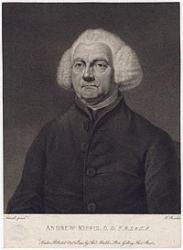
Andrew Kippis

1725 - 1795 Person Name: Andrew Kippis, 1725-1795 Author of "On Thee, Each Morning, O My God" in The Cyber Hymnal Kippis, Andrew, D.D., was born at Nottingham, March 28,1725, and educated for the ministry under Dr. Doddridge at Northampton, 1741-46. After a short residence with congregations at Boston and Dorking, he settled in London in 1753, as minister of the Princes Street Chapel, Westminster. There lie remained till his death in 1795, holding rank as the leading Presbyterian minister in the metropolis. For many years he was classical tutor at the Hoxton Academy, and afterwards at the Hackney College. He contributed largely to the Gentleman's Magazine and the Monthly Review, and edited five volumes of a new edition of the Biographia Britannica, a work commenced in 1778, and interrupted by his death on Oct. 8, 1795. His Life of Captain Cook was also published separately, and to his edition of Lardner's Works (1788) a Memoir was prefixed. His degree of D.D. was con¬ferred by the University of Edinburgh in 1767. He was joint editor of A Collection of Hymns and Psalms for Public and Private Worship, selected and prepared by Andrew Kippis, D.D., &c. ; Abraham Rees, D.D., &c.; Rev. Thomas Jervis, and Rev. Thomas Mor¬gan, LL.D., London, 1795. This collection, commonly known as Kippis's, but sometimes as Kees's, passed through many editions, a Supplement being added in 1807, and was very generally used during the early decades of this century by congregations of Presbyterians and others, then become Unitarian in London and throughout the country [Unitarian Hymnody, § 9]. It contained 690 hymns. The aim of the editors in their selection was to avoid “everything of a doubtful or disputable kind," and they adopt the language of Dr. Watts in the preface to his Hymns, "The contentious and distinguishing word of sects and parties are excluded." The alterations and omissions to adapt various hymns to the standard of the editors are considerable, though very little compared to what was done by others before and after them. The tone of the collection is somewhat colourless, and it gradually gave place among Unitarians to others which contained fuller and more varied expression of distinctively Christian feeling. Two hymns by Kippis appear in this Collection. 1. Great God, in vain man's narrow view, The Incomprehensibility of God, which was generally adopted in later Unitarian books, and appears in Martineau's Hymns, 1840 and 1873. 2. How rich thy gifts, Almighty King, National Thanksgiving, which is four stanzas of the hymn, "Say, should we search the globe around," written for the thanksgiving appointed Nov. 29,1759, and appended to his Sermon on that occasion. It was given in full in Pope's Collection, 1760; and the Liverpool Octagon Collection, 1763. In Lindsey's Collection, 1774, five stanzas are given; in other early books only four, as in Kippis. The last two stanzas, somewhat altered, appear anonymously as: "With grateful hearts, with joyful tongues," in the Congregational Hymn Book, 1836, and the New Congregational Hymn Book, 1859. [Rev. Valentine. D. David, M.A.] --John Julian, Dictionary of Hymnology (1907)

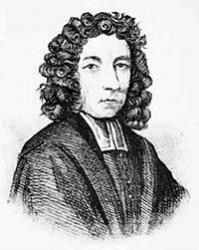
Benjamin Keach

1640 - 1704 Author of "O Lord, 'Tis Matter of High Praise" in The Cyber Hymnal Keach, Benjamin, was born at Stoke-Hammond, Bucks, Feb. 29, 1640. Early in life he joined a Baptist Church, and at 18 began to preach. For the next 10 years he laboured as an evangelist in the towns and villages of his native county, suffering at times much persecution for his principles as a Baptist and Nonconformist. In 1661, he published a small book entitled The Child's Instructor; or, a New and Easy Primer. For this he was tried before Lord Chief Justice Hyde, and condemned to a fine, imprisonment and the pillory. In 1668 he removed to London, and became pastor of a Particular Baptist Church which met, first in private houses, and afterwards in Horselydown, Southward. There a large congregation gathered round him, to which he ministered with great acceptance and usefulness until his death in 1704. Keach deserves special mention for the part he took in introducing singing into Baptist congregations, having been the first who did so. He wrote many hymns, the earliest appearing in his War with the Powers of Darkness, 4th ed., 1676. Nearly 300 by him were pub. in 1691 as Spiritual Melody, their subjects being the Metaphors of Holy Scripture. This subject had been previously expounded by him in his Tropologia, a Key to open Scripture Metaphors, 2 vols. folio, 1682. His Distressed Sion Relieved, or The Garment of Praise for the Spirit of Heaviness, was published in London, 1689. It is mainly in blank verse, is dedicated to William and Mary, and is written in praise of Protestantism against Romanism. In 1691 he also published God's Worship; or Singing of Psalms, Hymns & Spiritual Songs proved to be a Holy Ordinance The Breach Repaired in of Jesus Christ, &c. (London, J. Hancock): and also Spiritual Melody the same year. His latest poetical work appeared in 1696: A Feast of Fat Things: containing several Scripture Songs and Hymns. Keach was a voluminous writer, forty-two works being published by him, in addition to prefaces and introductions to the books of others. His hymns have passed out of common use. [Rev. W. R. Stevenson] --John Julian, Dictionary of Hymnology (1907)

Edward Arthur Dayman

1807 - 1890 Person Name: Edward Arthur Dayman, 1807-1890 Author of "O Lord, be with us when we sail" in The Book of Praise Dayman, Edward Arthur, B.D., 3rd son of John Dayman, of Mambury, N. Devon, born at Padstow in Cornwall, 11th July, 1807, and educated at Blundell's School, Tiverton, Devon, and Exeter College Oxon. 1st Class in Lit. Hum. 1829, B.A. 1830, M.A. 1831, B.D. 1841. He was for some time Fellow and Tutor of his College, and Pro-Proctor, 1835. Taking Holy Orders in 1835, he became successively examiner for University Scholarship for Latin, 1838; in Lit. Hum., 1838-1839, and 1841-1842, Sen. Proctor of the University 1840, Rector of Shilling-Okeford or Shillingstone, Dorset, 1842; Rural Dean, 1849; Proctor in Convocation, 1852; and Hon. Canon of Bitton in Sarum Cathedral, 1862. His works include Modern Infidelity, 1861, and Essay on Inspiration, 1864. He was joint editor with Lord Nelson and Canon (afterwards Bishop) Woodford of the Sarum Hymnal, 1868; which contains translations from the Latin, and original hymns by him; and with Canon Rich-Jones, of Statula et Comuetudines Ecclesiae Cathedralis Sarisburiensis, 1883. He also contributed several translations from the Latin to The Hymnary, 1872. He has been for many years engaged in compiling an English Dictionary of Mediaeval Latin founded on Du Cange. The original hymns contributed by him to the Sarum Hymnal,1868, are, with the dates of their composition, as follows: 1.  Almighty Father, heaven and earth, q.v.  (1867) Offertory. 2.  O Lord, be with us when we sail.  (1865)  For use at Sea. 3.  O Man of Sorrows, Thy prophetic eye.   (1865) Tuesday before Easter. 4.  Sleep thy last sleep.  (1868)  Burial. 5.  Upon the solitary mountain's height.  (1866) Transfiguration. 6.  When the messengers of wrath. (1867)   During Pestilence and Famine. 7. Who is this with garments dyed? (1866) Monday before Easter.                                             -- John Julian, Dictionary of Hymnology (1907) =============== Dayman, E. A., p. 28S, ii. He died at Shillingstone, Oct. 30, 1890. --John Julian, Dictionary of Hymnology, Appendix, Part II (1907)

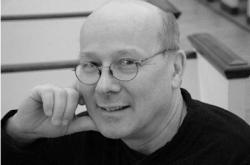
Andrew Donaldson

b. 1951 Person Name: Andrew Donaldson, 1951- Paraphraser of "I love the Lord" in The Book of Praise Andrew Donaldson, a composer and church musician, grew up in northern Ontario, Canada. He attended Glendon College, York University in Toronto, receiving a Bachelor of Arts degree in 1974. He went on to study classical guitar performance at the Royal Conservatory of Music in Toronto, receiving its ARCT (Associate of Royal Conservatory Teachers) degree in 1979. Since then he has worked as a composer and performer in many contexts, in both French and English. Andrew co-edited the Book of Praise (1997), Presbyterian Church in Canada, with Donald Anderson. Their company, Binary Editions, continues to administer copyright for the PCC. In 2007 he was made a Doctor of Divinity, honoris causa, by Knox College of the University of Toronto, for his body of work in congregational song in the Presbyterian Church in Canada. In 2011 Andrew and his wife, Wendy, moved to Geneva, Switzerland where Andrew works as a worship consultant to the World Council of Churches. --Submitted by Andrew and Wendy Donaldson, 13 August 2013

Benjamin H. Kennedy

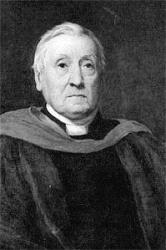
1804 - 1889 Author of ""There Is No God," So Saith The Fool" in The Cyber Hymnal Kennedy, Benjamin Hall, D.D., son of the Rev. Raun Kennedy, sometime Incumbent of St. Paul's, Birmingham, and editor of A Church of England Psalm-Book, &c, 1821 (12th ed. 1848), was born at Summer Hill, near Birmingham, Nov. 6, 1804, and educated at King Edward's School, Birmingham; Shrewsbury School; and St. John's College, Cambridge. He graduated B.A. in 1827 (First Class Classical Tripos and First Chancellor's Medallist). He was Fellow of his College 1828-36; Head Master of Shrewsbury School, 1836-66; and Regius Professor of Greek in the University of Cambridge and Canon of Ely , 1867. Dr. Kennedy took Holy Orders in 1829, and was for some time Prebendaiy in Lichfield Cathedral and Rector of West Felton, Salop. He was elected Hon. Fellow of St. John's College, Cambridge, in 1880. Besides his Public School Latin Grammar, Palaestra Latina, Palaestra Stili Latini, &c, his editions of some of the Classics, and University Sermons, Dr. Kennedy published the following:— (1) The Psalter, or the Psalms of David, in English Verse. By a Member of the University of Cambridge, 1860; (2) Hymnologia Christiana, or Psalms & Hymns Selected and Arranged in the Order of the Christian Seasons (quoted in this Dictionary as Kennedy), 1863. i. From these two works many psalms and hymns have passed into other collections. The following versions of the Psalms first appeared in The Psalter, 1860, and again in the Hymnologia Christiana 1863. In many instances they have undergone considerable alteration in the latter work, and those of great length are broken into parts:— 1. All ye people, come and clap, &c. Ps. xlvii. 2. Arise, 0 Lord, with healing rod. Ps. x. 3. As pants the hind for cooling streams. Ps. xlii. 4. As Thy mercy lasts for ever. Ps. cix. 5. Be merciful to me, 0 God. Ps. lvii. 6. Be Thou my Judge, and I will strive. Ps. xvii. 7. Bless ye the Lord, His solemn praise record. Ps. cxxxiv. 8. Bow down Thine ear, and hear my cry. Ps. lxxxvi. 9. Come, ye children, list to me. Ps. xxxiv. 10. Ever, O my God and King. Ps. cxlv. 11. Ever will I bless the Lord. Ps. xxxiv. 12. Every king shall bow before Him. Ps. lxxii. 13. Full oft my chafing thoughts, &c. Ps. lxxiii. 14. God, avert the deadly blow. Ps. lix. 15. God, in Judah's homes is known. Ps. lxxvi. 16. God of my righteousness. Ps. iv. 17. Hear Thou my prayer, O Lord. Ps. cxliii. 18. Help us, O Lord, the good decay. Ps. xii. 19. How blest are they who flee, &c. Ps. cxix. 20. How blest the man, who fears to stray. Ps. i. 21. How blest the man whose errors, &c. Ps. xxxii. 22. How good it is to praise the Lord. Ps. xcii. 23. How long art silent, Lord? how long. Ps. xxxv. 24. How long forgotten, Lord, by Thee. Ps. xiii. 25. How long wilt Thou conceal Thy face. Ps. lxxxix. 26. I lift mine eyes unto the hills. Ps. cxxi. 27. I love the Lord, for He is nigh. Ps. cxvi. 28. I muse upon Thine ancient praise. Ps. lxxvii. 29. I praise Thee, Lord, who o'er my foes. Ps. xxx. 30. I trod the path of life, my strength. Ps. cii. 31. In trouble to the Lord I prayed. Ps. cxx. 32. Jehovah reigns, arrayed in light. Ps. xciii. 33. Judge me, O God; maintain my cause. Ps. xliii. 34. Lord, hear my prayer, and let my cry. Ps. cii. 35. Lord, I am not lofty-minded. Ps. cxxxi. 36. Lord, I lift my soul to Thee. Ps. xxv. 37. Lord, my Rock. I cry to Thee. Ps. xxviii. 38. Lord, save me from the foeman's wrath. Ps. cxl. 39. Lord, Thou wilt guard with faithful love. Ps. xxxvii. 40. Lord, Thy love and truth I praise. Ps. ci. 41. My God, my God, to Thee I cry, Ah! why hast Thou, &c. Ps. xxii. 42. My heart is fain, O God, my heart. Ps. cviii. 43. My portion is the living Lord. Ps. cxix. 44. My Saviour is the living Lord. Ps. xi. 45. My Shepherd is the Lord, no care. Ps. xxiii. 46. My trust is in Thy holy Name. Ps. lxxi. 47. My voice to God ascends on high. Ps. lxxvii. 48. Not in envy, not in anger. Ps. xxxvii. 49. Not in Thy fury, Lord, reprove. Ps. xxxviii. 50. O grant us, God of love. Ps. lxvii. 51. O God, be merciful to me. Ps. li. 52. 0 God of hosts, a vine. Ps. lxxx. 53. 0 God, subdue the power of sin. Ps. vii. 54. O Lord, in Thine accepted day. Ps. lxix. 55. 0 Lord our King, how bright Thy fame. Ps. viii. 56. O Lord, the God of my salvation. Ps. lxxxviii. 57. 0 praise ye the Lord, Praise Him in His shrine. Ps. cl. 58. O rejoice, ye righteous, in the Lord. Ps. xxxiii. 59. Oft, as to scatter kings. Ps. lxviii. 60. Out of the depths to Thee I cry. Ps. cxxx. 61. Praise, O my soul, the Lord and all. Ps. ciii. 62. Praise, 0 my soul, the Lord; how great. Ps. civ. 63. Praise the Lord, for good is He. Ps. cxxxvi. 64. Praise the Lord, for it is wise. Ps. cxlvii. 65. Praise the Lord from heaven on high. Ps. cxlviii. 66. Praise the Lord, His people; raise. Ps. cxlvi. 67. Praise ye the Lord, all nations. Ps. cxvii. 68. Praise ye the Lord, for good is He. Ps. cxviii. 69. Praise ye the Lord, for very good. Ps. cvii. 70. Praised be the Lord, my Rock of might. Ps. cxliv. 71. Save me, O God, the dangerous, &c. Ps. lxix. 72. Save me through Thy name, 0 God. Ps. liv. 73. Seek we Jehovah's house, they said. Ps. cxxii. 74. Sing a new song unto the Lord. Ps. xcvi. 75. Sing the Lord, ye sons of heaven. Ps. xxix. 76. Sing unto the Lord with mirth. Ps. c. 77. Take note, O Lord, of all my fears. Ps. lvi. 78. The heavens declare Thy wondrous fame. Ps. lxxxix. 79. The heavens, O God, Thy glory tell. Ps. xxx. 80. The king, 0 Lord, with hymns of praise. Ps. xxi. 81. The life of man is like the grass. Ps. ciii. 82. The Lord in thy distressful day. Ps. xx. 83. The Lord is King; glad earth, and ye. Ps. xcvii. 84. There is no God, so saith the fool. Ps. xiv. 85. Thou searchest all my secret ways. Ps. cxxxix. 86. To Thee I call. O Lord, be swift. Ps. cxli. 87. 'Twas dream-like, when the Lord's decree. Ps. cxxvi. 88. Unless the Lord with us had wrought. Ps. cxxiv. 89. Unto my feet a lantern shines Thy word. Ps. cxix. 90. Unto the Lord I make my moan. Ps. cxlii. 91. We sat and wept by Babel's stream. Ps. cxxxvii. 92. When Israel came from Egypt's strand. Ps. cxiv. 93. When through the dismal waste. Ps. lxviii. 94. Who rules his life by God's behest. Ps. cxxviii. 95. Whoe'er his secret home has made. Ps. xci. 96. With weary care brought low. Ps. lxix. 97. With my whole heart I will praise Thee. Ps. cxxxviii. 98. Within Thy tabernacle, Lord. Ps. xv. 99. Ye Judges of the earth, be still. Ps. lxxxii. ii. The following also appeared in The Psalter, 1860, and again in Hymnologia Christiana 1863, mostly altered, and based upon the corresponding Psalms by George Sandys (q.v.), published in his Paraphrase upon the Psalms of David, 1636:— 100. Blest he whose timely mercies heed. Ps. xli. 101. Hide not, 0 Lord, Thy cheering face. Ps. xl. 102. I waited for a gentle word. Ps. xl. 103. Israel of God, be Christ your Guide. Ps. cxv. 104. Who in the Lord securely lay. Ps. cxxv. iii. To the Rev. A. T. Russell's Psalms & Hymns, 1851, Dr. Kennedy was indebted to a limited extent in preparing his Psalter, 1860. In his Preface he says, p. viii.," Mr. Russell's metres, and occasionally his words, have been adopted in the following Psalms: 2, 24, 39, 45, 46, 50, 84, 85, 90, 110, 111, 113." Of these the following, sometimes with alterations of the 1860 text, were given in the

Pages


Export as CSV
It looks like you are using an ad-blocker. Ad revenue helps keep us running. Please consider white-listing Hymnary.org or getting Hymnary Pro to eliminate ads entirely and help support Hymnary.org.