You help make Hymnary.org possible. More than 10 million people from 200+ countries found hymns, liturgical resources and encouragement on Hymnary.org in 2025, including you. Every visit affirms the global impact of this ministry.

If Hymnary has been meaningful to you this year, would you take a moment today to help sustain it? A gift of any size—paired with a note of encouragement if you wish—directly supports the server costs, research work and curation that keep this resource freely available to the world.

Give securely online today, or mail a check to:
Hymnary.org
Calvin University
3201 Burton Street SE
Grand Rapids, MI 49546

Thank you for your partnership, and may the hope of Advent fill your heart.

Person Results

Text Identifier:"^god_moves_in_a_mysterious_way$"
In:people

Planning worship? Check out our sister site, ZeteoSearch.org, for 20+ additional resources related to your search.
Showing 31 - 40 of 63Results Per Page: 102050

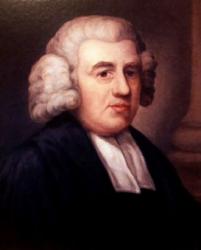
John Newton

1725 - 1807 Person Name: Newton Author of "God moves in a mysterious way" in A Selection of Sacred Poetry John Newton (b. London, England, 1725; d. London, 1807) was born into a Christian home, but his godly mother died when he was seven, and he joined his father at sea when he was eleven. His licentious and tumul­tuous sailing life included a flogging for attempted desertion from the Royal Navy and captivity by a slave trader in West Africa. After his escape he himself became the captain of a slave ship. Several factors contributed to Newton's conversion: a near-drowning in 1748, the piety of his friend Mary Catlett, (whom he married in 1750), and his reading of Thomas à Kempis' Imitation of Christ. In 1754 he gave up the slave trade and, in association with William Wilberforce, eventually became an ardent abolitionist. After becoming a tide-surveyor in Liverpool, England, Newton came under the influence of George Whitefield and John and Charles Wesley and began to study for the ministry. He was ordained in the Church of England and served in Olney (1764-1780) and St. Mary Woolnoth, London (1780-1807). His legacy to the Christian church includes his hymns as well as his collaboration with William Cowper (PHH 434) in publishing Olney Hymns (1779), to which Newton contributed 280 hymns, including “Amazing Grace.” Bert Polman ================== Newton, John, who was born in London, July 24, 1725, and died there Dec. 21, 1807, occupied an unique position among the founders of the Evangelical School, due as much to the romance of his young life and the striking history of his conversion, as to his force of character. His mother, a pious Dissenter, stored his childish mind with Scripture, but died when he was seven years old. At the age of eleven, after two years' schooling, during which he learned the rudiments of Latin, he went to sea with his father. His life at sea teems with wonderful escapes, vivid dreams, and sailor recklessness. He grew into an abandoned and godless sailor. The religious fits of his boyhood changed into settled infidelity, through the study of Shaftesbury and the instruction of one of his comrades. Disappointing repeatedly the plans of his father, he was flogged as a deserter from the navy, and for fifteen months lived, half-starved and ill-treated, in abject degradation under a slave-dealer in Africa. The one restraining influence of his life was his faithful love for his future wife, Mary Catlett, formed when he was seventeen, and she only in her fourteenth year. A chance reading of Thomas à Kempis sowed the seed of his conversion; which quickened under the awful contemplations of a night spent in steering a water-logged vessel in the face of apparent death (1748). He was then twenty-three. The six following years, during which he commanded a slave ship, matured his Christian belief. Nine years more, spent chiefly at Liverpool, in intercourse with Whitefield, Wesley, and Nonconformists, in the study of Hebrew and Greek, in exercises of devotion and occasional preaching among the Dissenters, elapsed before his ordination to the curacy of Olney, Bucks (1764). The Olney period was the most fruitful of his life. His zeal in pastoral visiting, preaching and prayer-meetings was unwearied. He formed his lifelong friendship with Cowper, and became the spiritual father of Scott the commentator. At Olney his best works—-Omicron's Letters (1774); Olney Hymns (1779); Cardiphonia, written from Olney, though published 1781—were composed. As rector of St. Mary Woolnoth, London, in the centre of the Evangelical movement (1780-1807) his zeal was as ardent as before. In 1805, when no longer able to read his text, his reply when pressed to discontinue preaching, was, "What, shall the old African blasphemer stop while he can speak!" The story of his sins and his conversion, published by himself, and the subject of lifelong allusion, was the base of his influence; but it would have been little but for the vigour of his mind (shown even in Africa by his reading Euclid drawing its figures on the sand), his warm heart, candour, tolerance, and piety. These qualities gained him the friendship of Hannah More, Cecil, Wilberforce, and others; and his renown as a guide in experimental religion made him the centre of a host of inquirers, with whom he maintained patient, loving, and generally judicious correspondence, of which a monument remains in the often beautiful letters of Cardiphonia. As a hymnwriter, Montgomery says that he was distanced by Cowper. But Lord Selborne's contrast of the "manliness" of Newton and the "tenderness" of Cowper is far juster. A comparison of the hymns of both in The Book of Praise will show no great inequality between them. Amid much that is bald, tame, and matter-of-fact, his rich acquaintance with Scripture, knowledge of the heart, directness and force, and a certain sailor imagination, tell strongly. The one splendid hymn of praise, "Glorious things of thee are spoken," in the Olney collection, is his. "One there is above all others" has a depth of realizing love, sustained excellence of expression, and ease of development. "How sweet the name of Jesus sounds" is in Scriptural richness superior, and in structure, cadence, and almost tenderness, equal to Cowper's "Oh! for a closer walk with God." The most characteristic hymns are those which depict in the language of intense humiliation his mourning for the abiding sins of his regenerate life, and the sense of the withdrawal of God's face, coincident with the never-failing conviction of acceptance in The Beloved. The feeling may be seen in the speeches, writings, and diaries of his whole life. [Rev. H. Leigh Bennett, M.A.] A large number of Newton's hymns have some personal history connected with them, or were associated with circumstances of importance. These are annotated under their respective first lines. Of the rest, the known history of which is confined to the fact that they appeared in the Olney Hymns, 1779, the following are in common use:— 1. Be still, my heart, these anxious cares. Conflict. 2. Begone, unbelief, my Saviour is near. Trust. 3. By the poor widow's oil and meal. Providence. 4. Chief Shepherd of Thy chosen sheep. On behalf of Ministers. 5. Darkness overspreads us here. Hope. 6. Does the Gospel-word proclaim. Rest in Christ. 7. Fix my heart and eyes on Thine. True Happiness. 8. From Egypt lately freed. The Pilgrim's Song. 9. He Who on earth as man was Known. Christ the Rock. 10. How blest are they to whom the Lord. Gospel Privileges. 11. How blest the righteous are. Death of the Righteous. 12. How lost was my [our] condition. Christ the Physician. 13. How tedious and tasteless the hours. Fellowship with Christ. 14. How welcome to the saints [soul] when pressed. Sunday. 15. Hungry, and faint, and poor. Before Sermon. 16. In mercy, not in wrath, rebuke. Pleading for Mercy. 17. In themselves, as weak as worms. Power of Prayer. 18. Incarnate God, the soul that knows. The Believer's Safety. 19. Jesus, Who bought us with His blood. The God of Israel. "Teach us, 0 Lord, aright to plead," is from this hymn. 20. Joy is a [the] fruit that will not grow. Joy. 21. Let hearts and tongues unite. Close of the Year. From this "Now, through another year," is taken. 22. Let us adore the grace that seeks. New Year. 23. Mary to her [the] Saviour's tomb. Easter. 24. Mercy, 0 Thou Son of David. Blind Bartimeus. 25. My harp untun'd and laid aside. Hoping for a Revival. From this "While I to grief my soul gave way" is taken. 26. Nay, I cannot let thee go. Prayer. Sometimes, "Lord, I cannot let Thee go." 27. Now may He Who from the dead. After Sermon. 28. 0 happy they who know the Lord, With whom He deigns to dwell. Gospel Privilege. 29. O Lord, how vile am I. Lent. 30. On man in His own Image made. Adam. 31. 0 speak that gracious word again. Peace through Pardon. 32. Our Lord, Who knows full well. The Importunate Widow. Sometimes altered to "Jesus, Who knows full well," and again, "The Lord, Who truly knows." 33. Physician of my sin-sick soul. Lent. 34. Pleasing spring again is here. Spring. 35. Poor, weak, and worthless, though I am. Jesus the Friend. 36. Prepare a thankful song. Praise to Jesus. 37. Refreshed by the bread and wine. Holy Communion. Sometimes given as "Refreshed by sacred bread and wine." 38. Rejoice, believer, in the Lord. Sometimes “Let us rejoice in Christ the Lord." Perseverance. 39. Salvation, what a glorious plan. Salvation. 40. Saviour, shine and cheer my soul. Trust in Jesus. The cento "Once I thought my mountain strong," is from this hymn. 41. Saviour, visit Thy plantation. Prayer for the Church. 42. See another year [week] is gone. Uncertainty of Life. 43. See the corn again in ear. Harvest. 44. Sinner, art thou still secure? Preparation for the Future. 45. Sinners, hear the [thy] Saviour's call. Invitation. 46. Sovereign grace has power alone. The two Malefactors. 47. Stop, poor sinner, stop and think. Caution and Alarm. 48. Sweeter sounds than music knows. Christmas. 49. Sweet was the time when first I felt. Joy in Believing. 50. Ten thousand talents once I owed. Forgiveness and Peace. 51. The grass and flowers, which clothe the field. Hay-time. 52. The peace which God alone reveals. Close of Service. 53. Thy promise, Lord, and Thy command. Before Sermon. 54. Time, by moments, steals away. The New Year. 55. To Thee our wants are known. Close of Divine Service. 56. We seek a rest beyond the skies. Heaven anticipated. 57. When any turn from Zion's way. Jesus only. 58. When Israel, by divine command. God, the Guide and Sustainer of Life. 59. With Israel's God who can compare? After Sermon. 60. Yes, since God Himself has said it. Confidence. 61. Zion, the city of our God. Journeying Zionward. -- John Julian, Dictionary of Hymnology (1907) ================= Newton, J., p. 803, i. Another hymn in common use from the Olney Hymns, 1779, is "Let me dwell on Golgotha" (Holy Communion). --John Julian, Dictionary of Hymnology, Appendix, Part II (1907) ----- John Newton was born in London, July 24, 1725. His mother died when he was seven years old. In his eleventh year he accompanied his father, a sea captain, on a voyage. For several years his life was one of dissipation and crime. He was disgraced while in the navy. Afterwards he engaged in the slave trade. Returning to England in 1748, the vessel was nearly wrecked in a storm. This peril forced solemn reflection upon him, and from that time he was a changed man. It was six years, however, before he relinquished the slave trade, which was not then regarded as an unlawful occupation. But in 1754, he gave up sea-faring life, and holding some favourable civil position, began also religious work. In 1764, in his thirty-ninth year, he entered upon a regular ministry as the Curate of Olney. In this position he had intimate intercourse with Cowper, and with him produced the "Olney Hymns." In 1779, Newton became Rector of S. Mary Woolnoth, in London, in which position he became more widely known. It was here he died, Dec. 21, 1807, His published works are quite numerous, consisting of sermons, letters, devotional aids, and hymns. He calls his hymns "The fruit and expression of his own experience." --Annotations of the Hymnal, Charles Hutchins, M.A. 1872 See also in: Hymn Writers of the Church =======================

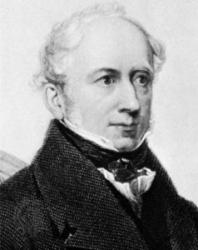
James Montgomery

1771 - 1854 Person Name: J. Montgomery Author of "God moves in a mysterious way" in Devotional hymns James Montgomery (b. Irvine, Ayrshire, Scotland, 1771; d. Sheffield, Yorkshire, England, 1854), the son of Moravian parents who died on a West Indies mission field while he was in boarding school, Montgomery inherited a strong religious bent, a passion for missions, and an independent mind. He was editor of the Sheffield Iris (1796-1827), a newspaper that sometimes espoused radical causes. Montgomery was imprisoned briefly when he printed a song that celebrated the fall of the Bastille and again when he described a riot in Sheffield that reflected unfavorably on a military commander. He also protested against slavery, the lot of boy chimney sweeps, and lotteries. Associated with Christians of various persuasions, Montgomery supported missions and the British Bible Society. He published eleven volumes of poetry, mainly his own, and at least four hundred hymns. Some critics judge his hymn texts to be equal in quality to those of Isaac Watts and Charles Wesley . Many were published in Thomas Cotterill's Selection of Psalms and Hymns (1819 edition) and in Montgomery's own Songs of Zion (1822), Christian Psalmist (1825), and Original Hymns (1853). Bert Polman ======================== Montgomery, James, son of John Montgomery, a Moravian minister, was born at Irvine, Ayrshire, Nov. 4, 1771. In 1776 he removed with his parents to the Moravian Settlement at Gracehill, near Ballymena, county of Antrim. Two years after he was sent to the Fulneck Seminary, Yorkshire. He left Fulneck in 1787, and entered a retail shop at Mirfield, near Wakefield. Soon tiring of that he entered upon a similar situation at Wath, near Rotherham, only to find it quite as unsuitable to his taste as the former. A journey to London, with the hope of finding a publisher for his youthful poems ended in failure; and in 1792 he was glad to leave Wath for Shefield to join Mr. Gales, an auctioneer, bookseller, and printer of the Sheffield Register newspaper, as his assistant. In 1794 Mr. Gales left England to avoid a political prosecution. Montgomery took the Sheffield Register in hand, changed its name to The Sheffield Iris, and continued to edit it for thirty-one years. During the next two years he was imprisoned twice, first for reprinting therein a song in commemoration of "The Fall of the Bastille," and the second for giving an account of a riot in Sheffield. The editing of his paper, the composition and publication of his poems and hynms, the delivery of lectures on poetry in Sheffield and at the Royal Institution, London, and the earnest advocacy of Foreign Missions and the Bible Society in many parts of the country, gave great variety but very little of stirring incident to his life. In 1833 he received a Royal pension of £200 a year. He died in his sleep, at the Mount, Sheffield, April 30, 1854, and was honoured with a public funeral. A statue was erected to his memory in the Sheffield General Cemetery, and a stained glass window in the Parish Church. A Wesleyan chapel and a public hall are also named in his honour. Montgomery's principal poetical works, including those which he edited, were:— (1) Prison Amusements, 1797; (2) The Wanderer of Switzerland, 1806; (3) The West Indies, 1807; (4) The World before the Flood, 1813; (5) Greenland and Other Poems, 1819; (6) Songs of Zion, 1822; (7) The Christian Psalmist, 1825; (8) The Christian Poet, 1825; (9) The Pelican Island, 1828; (10) The Poet’s Portfolio, 1835; (11) Original Hymns for Public, Private, and Social Devotion, 1853. He also published minor pieces at various times, and four editions of his Poetical Works, the first in 1828, the second in 1836, the third in 1841, and the fourth in 1854. Most of these works contained original hymns. He also contributed largely to Collyer's Collection, 1812, and other hymnbooks published during the next 40 years, amongst which the most noticeable was Cotterill's Selections of 1819, in which more than 50 of his compositions appeared. In his Christian Psalmist, 1825, there are 100 of his hymns, and in his Original Hymns, 1853, 355 and 5 doxologies. His Songs of Zion, 1822, number 56. Deducting those which are repeated in the Original Hymns, there remain about 400 original compositions. Of Montgomery's 400 hymns (including his versions of the Psalms) more than 100 are still in common use. With the aid of Montgomery's MSS. we have given a detailed account of a large number. The rest are as follows:— i. Appeared in Collyer's Collection, 1812. 1. Jesus, our best beloved Friend. Personal Dedication to Christ. 2. When on Sinai's top I see. Sinai, Tabor, and Calvary. ii. Appeared in Cotterill's Selection, 1819. 3. Come to Calvary's holy mountain. The Open Fountain. 4. God in the high and holy place. God in Nature. The cento in Com. Praise, 1879, and others, "If God hath made this world so fair," is from this hymn. 5. Hear me, O Lord, in my distress. Ps. cxliii. 6. Heaven is a place of rest from sin. Preparation for Heaven. 7. I cried unto the Lord most just. Ps. cxlii. 8. Lord, let my prayer like incense rise. Ps. cxxxix. 9. O bless the Lord, my soul! His grace to thee proclaim. Ps. ciii. 10. Out of the depths of woe. Ps. cxxx. Sometimes "When from the depths of woe." 11. The world in condemnation lay. Redemption. 12. Where are the dead? In heaven or hell? The Living and the Dead. iii. Appeared in his Songs of Zion, 1822. 13. Give glory to God in the highest. Ps. xxix. 14. Glad was my heart to hear. Ps. cxxii. 15. God be merciful to me. Ps. lxix. 16. God is my strong salvation. Ps. xxvii. 17. Hasten, Lord, to my release. Ps. lxx. 18. Have mercy on me, O my God. Ps. li. 19. Hearken, Lord, to my complaints. Ps. xlii. 20. Heralds of creation cry. Ps. cxlviii. 21. How beautiful the sight. Ps. cxxxiii. 22. How precious are Thy thoughts of peace. Ps. cxxxix. 23. I love the Lord, He lent an ear. Ps. cxvi. 24. In time of tribulation. Ps. lxxvii. 25. Jehovah is great, and great be His praise. Ps. xlviii. Sometimes, "0 great is Jehovah, and great is His Name." 26. Judge me, O Lord, in righteousness. Ps. xliii. 27. Lift up your heads, ye gates, and wide. Ps.xxiv. 28. Lord, let me know mine [my] end. Ps. xxxi. 29. Of old, 0 God, Thine own right hand. Ps. lxxx. 30. O God, Thou art [my] the God alone. Ps. lxiii. 31. 0 Lord, our King, how excellent. Ps. viii. Sometimes, "0 Lord, how excellent is Thy name." 32. O my soul, with all thy powers. Ps. ciii. 33. One thing with all my soul's desire. Ps. xxvii. From this, "Grant me within Thy courts a place." 34. Searcher of hearts, to Thee are known. Ps. cxxxix. 35. Thank and praise Jehovah's name. Ps. cvii. 36. Thee will I praise, O Lord in light. Ps. cxxxviii. 37. The Lord is King; upon His throne. Ps. xciii. 38. The Lord is my Shepherd, no want shall I know. Ps. xxiii. 39. The tempter to my soul hath said. Ps. iii. 40. Thrice happy he who shuns the way. Ps. i. 41. Thy glory, Lord, the heavens declare. Ps. xix. 42. Thy law is perfect, Lord of light. Ps. xix. 43. Who make the Lord of hosts their tower. Ps. cxxv. 44. Yea, I will extol Thee. Ps. xxx. iv. Appeared in his Christian Psalmist. 1825. 45. Fall down, ye nations, and adore. Universal adoration of God desired. 46. Food, raiment, dwelling, health, and friends. The Family Altar. 47. Go where a foot hath never trod. Moses in the desert. Previously in the Leeds Congregational Collection, 1822. 48. Green pastures and clear streams. The Good Shepherd and His Flock. 49. Less than the least of all. Mercies acknowledged. 50. Not to the mount that burned with fire [flame]. Communion of Saints. 51. On the first Christian Sabbath eve. Easter Sunday Evening. 52. One prayer I have: all prayers in one. Resignation. 53. Our heavenly Father hear. The Lord's Prayer. 54. Return, my soul, unto thy rest. Rest in God. 55. Spirit of power and might, behold. The Spirit's renewing desired. 56. The Christian warrior, see him stand. The Christian Soldier. Sometimes, "Behold the Christian warrior stand." 57. The days and years of time are fled. Day of Judgment. 58. The glorious universe around. Unity. 59. The pure and peaceful mind. A Children's Prayer. 60. This is the day the Lord hath made (q. v.). Sunday. 61. Thy word, Almighty Lord. Close of Service. 62. What secret hand at morning light ? Morning. 63. While through this changing world we roam. Heaven. 64. Within these walls be peace. For Sunday Schools. v. Appeared in his Original Hymns, 1853. 65. Behold yon bright array. Opening a Place of Worship. 66. Behold the book whose leaves display. Holy Scriptures. 67. Come ye that fear the Lord. Confirmation. 68. Home, kindred, friends, and country, these. Farewell to a Missionary. 69. Let me go, the day is breaking. Jacob wrestling. 70. Not in Jerusalem alone. Consecration of a Church. 71. Praise the high and holy One. God the Creator. In common with most poets and hymnwriters, Montgomery strongly objected to any correction or rearrangement of his compositions. At the same time he did not hesitate to alter, rearrange, and amend the productions of others. The altered texts which appeared in Cotterill's Selections, 1819, and which in numerous instances are still retained in some of the best hymnbooks, as the "Rock of Ages," in its well-known form of three stanzas, and others of equal importance, were made principally by him for Cotterill's use. We have this confession under his own hand. As a poet, Montgomery stands well to the front; and as a writer of hymns he ranks in popularity with Wesley, Watts, Doddridge, Newton, and Cowper. His best hymns were written in his earlier years. In his old age he wrote much that was unworthy of his reputation. His finest lyrics are "Angels from the realms of glory," "Go to dark Gethsemane," "Hail to the Lord's Anointed," and "Songs of praise the angels sang." His "Prayer is the soul's sincere desire," is an expanded definition of prayer of great beauty; and his "Forever with the Lord" is full of lyric fire and deep feeling. The secrets of his power as a writer of hymns were manifold. His poetic genius was of a high order, higher than most who stand with him in the front rank of Christian poets. His ear for rhythm was exceedingly accurate and refined. His knowledge of Holy Scripture was most extensive. His religious views were broad and charitable. His devotional spirit was of the holiest type. With the faith of a strong man he united the beauty and simplicity of a child. Richly poetic without exuberance, dogmatic without uncharitableness, tender without sentimentality, elaborate without diffusiveness, richly musical without apparent effort, he has bequeathed to the Church of Christ wealth which could onlv have come from a true genius and a sanctified! heart. --John Julian, Dictionary of Hymnology (1907)

Richard Farrant

1525 - 1580 Person Name: R. Farrant Composer of "FARRANT" in Gloria Deo Like many composers of his day, the early years of Richard Farrant’s (c.1525- November 30, 1580) life are not well documented. The first acknowledgment of him is in a list of the Gentleman of the Chapel Royal in 1552. It is assumed from that list that his birth was around 1525. Although, that cannot be accurately determined. During his life he was able to establish himself as a successful composer, develop the English drama considerably, founded the first Blackfriar Theatre, and be the first to write verse-anthems. He married Anne Bower, daughter of Richard Bower who was Master of the Chapel Royal choristers at the time. With Anne he conceived ten children, one of whom was also named, Richard. As a member of the Gentleman of the Chapel Royal, Farrant was active in ceremonies surrounding the royal family. He began his work with the Chapel Royal around 1550 under the reign of Edward VI. Fortunately, for Farrant, this is a time that saw huge developments in Latin Church Music. Composers like William Byrd and Christopher Tye were busy expanding and elaborating on the Church Music of the day. In Farrant's twelve years with the Chapel Royal, he was able to participate in funerals for Edward VI and Mary I, and coronations for Mary I and Elizabeth I. After his work there, he took up a post as organist at St. George’s Chapel at Windsor. For Farrant, the post at at Windsor became a permanent one that he retained for the rest of his life. Along with this, he also acquired the position of Master of the Chapel Royal choristers in November of 1569. Having the choirs of both of these institutions at his disposal gave him an outlet to showcase all of his compositions and plays. In fact, every winter he was able to produce a play for the Queen herself. These positions also allowed him to move back to London in 1576 and begin a public theater of sorts where he rehearsed some of his choir music openly. It was soon after, in 1580, that he passed away, having left his house to his wife. Unlike many composers of his day that stuck to only music composition, Farrant also wrote many plays. One of his most important contributions to drama in England is of course the creation of the first Blackfriars Theatre. This eventually became one of the most important places in London for drama to develop during the Renaissance. Farrant is also one of the earliest and most well known composers that began to mix the two mediums of music and drama. It was this uncommon mixture that allowed him to begin to develop the composition style of 'verse.' This becomes prominent in a lot of his pieces including the anthems "When as we sat in Babylon" and "Call to remembrance" and "Hide not thou thy face." --en.wikipedia.org/wiki/

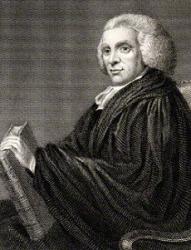
William Jones

1726 - 1800 Composer of "ST. STEPHEN" in Common Service Book of the Lutheran Church Born: Ju­ly 30, 1726, Lo­wick, North­amp­ton­shire, Eng­land. Died: Jan­u­ary 6, 1800, Hol­ling­bourne, Kent, Eng­land. Pseudonym: Jones of Nay­land. Jones was ed­u­cat­ed at Char­ter­house and Un­i­ver­si­ty Coll­ege, Ox­ford. He be­came Vi­car of Beth­ers­den, Kent (1764); Pluck­ley, Kent; and Pas­ton, North­amp­ton­shire; per­pe­tu­al Cur­ate of Nay­land, Suf­folk (1777); and Rec­tor of Hol­ling­bourne, Kent (1798). He be­came a Fel­low of the Roy­al So­ci­e­ty in 1775. His works in­clude: The Ca­tho­lic Doc­trine of the Trin­i­ty, 1756 Fairchild Dis­cours­es, 1775 Physiological Dis­qui­si­tions, 1781 A Treatise on the Art of Mu­sic, 1784 Church Piec­es for the Or­gan with Four An­thems in Score, 1789 Jones was a de­scend­ant of the Col. J. Jones, who was one of the sig­na­tor­ies to the death war­rant of King Charles I of Eng­land. He used to reg­u­lar­ly ob­serve Jan­u­a­ry 30 as a day of fast­ing and hu­mil­i­a­tion for his an­ces­tor’s sin. Music: ST. STEPHEN --www.hymntime.com/tch/

Guillaume Franc

1500 - 1570 Composer of "DUNDEE" in New Christian Hymn and Tune Book

Charles Zeuner

1795 - 1857 Composer of "HUMMEL" in Jubilate Deo Also: Zeuner, Heinrich Christoph, 1795-1857 Zeuner, Heinrich Christopher, 1795-1857

Christopher Tye

1497 - 1572 Composer of "DUNDEE (Tye)" in Psalter Hymnal (Blue) Tye, Christopher, MUS. D., born at Westminster in the reign of Henry VIII. He was celebrated as a musician, and was granted the degree of MUS. D. at Cambridge in 1545. He was musical tutor to King Edward VI., and organist of the Chapel Royal under Queen Elizabeth. Besides composing numerous anthems, he rendered the first fourteen chapters of the Acts of the Apostles into metre, which were set to music by him and sung in Edward 6th's Chapel, and published in 1553. He died circa 1580. -- John Julian, Dictionary of Hymnology (1907)

Robert Simpson

1790 - 1832 Person Name: R. Simpson Composer of "BALERMA" in The Brethren Hymnody Robert Simpson, of Scotland; b. 1790; d. 1832 Evangelical Lutheran Hymnal, 1908

Herbert Stephen Irons

1834 - 1905 Person Name: H. S. Irons Composer of "SOUTHWELL" in The Fellowship Hymn Book Born: January 19, 1834, Canterbury, Kent, England. Died: June 29, 1905, Nottingham, England. Irons was a nephew of the brothers Stephen & George Elvey. He became a chorister at Canterbury Cathedral under T. E. Jones. After studying music under Stephen Elvey at Oxford, he was appointed organist at St. Columba’s College, a large public school at Rathfarnham, near Dublin, Ireland. He stayed there only a few months before being offered the position of organist at Southwell Minister. From Southwell, he went to Chester as assistant organist to Frederic Gunton. Three years later, he accepted an appointment at St. Andrew’s Church, Nottingham, where he remained until his death. --www.hymntime.com/tch

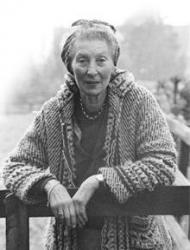
Elizabeth Poston

1905 - 1987 Person Name: E. P. Descant and faux-bourdon of "LONDON NEW" in The Cambridge Hymnal Elizabeth Poston (24 October 1905 – 18 March 1987) was an English composer, pianist, and writer. See more in: Wikipedia

Pages


Export as CSV
It looks like you are using an ad-blocker. Ad revenue helps keep us running. Please consider white-listing Hymnary.org or getting Hymnary Pro to eliminate ads entirely and help support Hymnary.org.