You help make Hymnary.org possible. More than 10 million people from 200+ countries found hymns, liturgical resources and encouragement on Hymnary.org in 2025, including you. Every visit affirms the global impact of this ministry.

If Hymnary has been meaningful to you this year, would you take a moment today to help sustain it? A gift of any size—paired with a note of encouragement if you wish—directly supports the server costs, research work and curation that keep this resource freely available to the world.

Give securely online today, or mail a check to:
Hymnary.org
Calvin University
3201 Burton Street SE
Grand Rapids, MI 49546

Thank you for your partnership, and may the hope of Advent fill your heart.

Person Results

Topics:out of doors
In:people

Planning worship? Check out our sister site, ZeteoSearch.org, for 20+ additional resources related to your search.
Showing 31 - 40 of 63Results Per Page: 102050

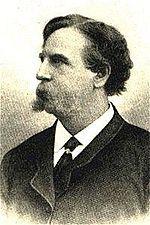
Richard Storrs Willis

1819 - 1900 Person Name: R. S. Willis Topics: The Child out of Doors In Spring Arranger of "[Fair are the meadows, Fairer still the woodlands]" in A First Book in Hymns and Worship Richard Storrs Willis (February 10, 1819 – May 10, 1900) was an American composer, notably of hymn music. One of his hymns is "It Came Upon the Midnight Clear" (1850), with lyrics by Edmund Sears. He was also a music critic and journal editor. Willis, whose siblings included Nathaniel Parker Willis and Fanny Fern, was born on February 10, 1819, in Boston, Massachusetts. He attended Chauncey Hall, the Boston Latin School, and Yale College where he was a member of Skull and Bones in 1841. Willis then went to Germany, where he studied six years under Xavier Schnyder and Moritz Hauptmann. While there, he became a personal friend of Felix Mendelssohn. After returning to America, Willis served as music critic for the New York Tribune, The Albion, and The Musical Times, for which he served as editor for a time. He joined the New-York American-Music Association, an organization which promoted the work native of naturalized American composers. He reviewed the organization's first concert for their second season, held December 30, 1856, in the Musical World, as a "creditable affair, all things considered". Willis began his own journal, Once a Month: A Paper of Society, Belles-Lettres and Art, and published its first issue in January 1862. Willis died on May 7, 1900. His interment was located at Woodlawn Cemetery. His works and music compilations include: Church Chorals and Choir Studies (1850) Our Church Music (1856) Waif of Song (1876) Pen and Lute (1883) --en.wikipedia.org

Anonymous

Topics: The Child out of Doors In Summer Author of "The Beautiful Bright Sunshine" in A First Book in Hymns and Worship In some hymnals, the editors noted that a hymn's author is unknown to them, and so this artificial "person" entry is used to reflect that fact. Obviously, the hymns attributed to "Author Unknown" "Unknown" or "Anonymous" could have been written by many people over a span of many centuries.

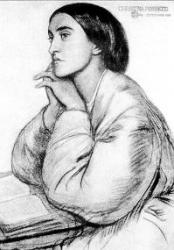
Christina Georgina Rossetti

1830 - 1894 Person Name: Christina G. Rossetti Topics: The Child out of Doors Flowers and Trees Author of "The Rainbow" in A First Book in Hymns and Worship Rossetti, Christina Georgina, daughter of Gabriel, and sister of Dante Gabriel and William Michael Rossetti, was born in London, Dec. 5, 1830, and received her education at home. Her published works include:— (1) Goblin Market, and Other Poems, 1862; (2) The Prince's Progress, and Other Poems, 1866 ; (3) Poems, mainly a reprint of Nos. 1 and 2, 1875; (4) A Pageant, and Other Poems, 1881, &c. In addition, Miss Rossetti has published several prose works, as:— Annus Domini (a book of prayers for every day in the year), 1874; Letter and Spirit of the Decalogue, 1883, and others. She has written very few hymns avowedly for church worship, but several centos have been compiled from her poems, and have passed into several hymn-books. These include:— 1. Dead is thy daughter, trouble not the Master. The raising of Jairus's daughter. From her Goblin Market, &c, 1862, into Lyra Mystica, 1865. 2. God the Father, give us grace. Invocation of the Holy Trinity. From Lyra Mystica into the Savoy Hymnary, for use in the Chapel Koyai, Savoy (see No. 8 below). 3. I bore with thee long weary days and nights. The Love of Christ. From her Goblin Market, &c, 1862, into Lyra Messianica, 1864. 4. I would have gone, God bade me stay. Resignation. From her Poems, Hymns, 1884, &c. 1875, into Horder's Congregational Hymns. 5. Once I thought to sit so high. A Body hast Thou prepared Me, or Passiontide. Contributed to Lyra Eucharistica, 1863. 6. The Advent moon shines cold and clear. Advent. From her Goblin Market, &c, 1862. 7 The flowers that bloom in sun and shade. The Eternity of God. In Mrs. C. Brock's Children's Hymn Book, 1881. 8. What are these that glow from afar? Martyrs. Part of the poem "We meet in joy though we part in sorrow," which appeared in Lyra Mystica, 1865, and then in Miss Rossetti's Prince's Progress, &c, 1866. It is the most widely used of her hymns. No. 2 above is also from the same poem. Miss Rossetti's verses are profoundly suggestive and lyrical, and deserve a larger place than they occupy in the hymnody of the church. Her sonnets are amongst the finest in the English language. [Rev.W. Garrett Horder] --John Julian, Dictionary of Hymnology (1907) ============== Rossetti, Christina G., p. 978, i. The following hymns by Miss Rossetti have recently come into common use:— 1. A burdened heart that bleeds and bears. [Lent.] In her Time Flies: A Reading Diary, ed. 1897, p. 59, for March 26; and her Verses, &c., ed. 1898, p. 113. Included in Church Hymns, 1903. 2. Give me the lowest place, not that I dare. [Humility.] From her Prince's Progress, 1866, p. 216. 3. In the bleak midwinter. [Christmas.] In her Poetical Works, 1904, p. 246, as "Before 1872"; repeated in The English Hymnal, 1906. 4. None other Lamb, none other Name. [Jesus, All, and in All] From her The Face of the Deep, &c, 1892 (3rd ed. 1895, p. 176); and her Verses, &c, 1898, p. 36. It is the second of two poetical meditations on Rev. v. 6. In Church Hymns, 1903. 5. The shepherds had an angel. [Christmas.] In her Poetical Works, 1904, p. 187, this is entitled "A Christmas Carol. For my Godchildren," and dated 6 October, 1856. Repeated in the Sunday School Hymnary, 1905. 6. We know not a voice of that River. [The River of the Eternal City.] In The Face of the Deep, &c, 1892 (3rd ed. 1895, p. 523), as a poetical meditation on Rev, xxii. Also in her Verses, &c., 1898, p. 81. Additional works by Miss Rossetti to those named on p. 978, i., include Time Flies A Reading Diary, 1885; Called to be Saints, 1881; Seek and Find, 1879; The Face of the Deep, A Devotional Commentary on the Apocalypse, 1892; and Verses ... reprinted fromCalled to be Saints, Time Flies, The Face of the Deep, 1893. It must be noted that (1) the hymn attributed to her, "Dead is thy daughter; trouble not the Master," is not by her, but by Mrs. C. F. Alexander, with whose name it appeared in Lyra Mystica, 1865; and (2) her “I would be gone; God bade me stay," is from her Prince's Progress, 1866, p. 204. Miss Rossetti d. Dec. 29, 1891. --John Julian, Dictionary of Hymnology, New Supplement (1907)

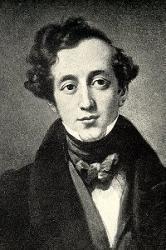
Felix Mendelssohn-Bartholdy

1809 - 1847 Person Name: Mendelssohn Topics: The Child out of Doors Stars and Clouds Composer of "[Look up people to the sky]" in A First Book in Hymns and Worship Felix Mendelssohn-Bartholdy (b. Hamburg, Germany, 1809; d. Leipzig, Germany, 1847) was the son of banker Abraham Mendelssohn and the grandson of philosopher Moses Mendelssohn. His Jewish family became Christian and took the Bartholdy name (name of the estate of Mendelssohn's uncle) when baptized into the Lutheran church. The children all received an excellent musical education. Mendelssohn had his first public performance at the age of nine and by the age of sixteen had written several symphonies. Profoundly influenced by J. S. Bach's music, he conducted a performance of the St. Matthew Passion in 1829 (at age 20!) – the first performance since Bach's death, thus reintroducing Bach to the world. Mendelssohn organized the Domchor in Berlin and founded the Leipzig Conservatory of Music in 1843. Traveling widely, he not only became familiar with various styles of music but also became well known himself in countries other than Germany, especially in England. He left a rich treasury of music: organ and piano works, overtures and incidental music, oratorios (including St. Paul or Elijah and choral works, and symphonies. He harmonized a number of hymn tunes himself, but hymnbook editors also arranged some of his other tunes into hymn tunes. Bert Polman

Wolfgang Amadeus Mozart

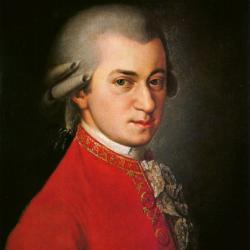
1756 - 1791 Person Name: W. A. Mozart Topics: The Child out of Doors In Spring Composer of "[I'm very glad the spring has come]" in A First Book in Hymns and Worship Wolfgang Amadeus Mozart Austria 1756-1791. Born at Salzburg, Austria, the son of Leopold Mozart, a minor composer and violinist, and youngest of seven children, he showed amazing ability on violin and keyboard from earliest childhood, even starting to compose music at age four when his father would play a piece and Mozart would play it exactly as did his father. At five, he composed some of his own music, which he played to his father, who wrote it down. When Mozart was eight, he wrote his first symphony, probably transcribed by his father. In his early years his father was his only teacher, teaching his children languages and academic subjects, as well as fundamentals of their strict Catholic faith. Some of his early compositions came as a surprise to his father, who eventually gave up composing himself when he realized how talented his son was. His family made several European journeys and he and his sister, Nanneri, performed as child prodigies, at the court of Prince-elector Maximillian II of Bavaria in Munich, and at the Imperial Courts in Vienna and Prague. A long concert tour followed, for 3.5 years, taking the family to courts in Munich, Mannheim, Paris, London, Dover, The Hague, Amsterdam, Utrecht, Mechelen, and again to Paris, and back home via Zurich, Donaueschingen, and Munich. During these trips Mozart met many musicians, acquainting himself with the works of other composers. He met Johann Christian Bach in London in 1764. Family trips were challenging, and travel conditions were primitive. They had to wait for invitations and reimbursements from nobility, and they endured long, near-fatal illnesses far from home. First Leopold (1764) got sick, then both children (1765). They traveled again to Vienna in 1767 and stayed there over a year. After a year back in Salzburg, Leopold and Wolfgang went to Italy (1769-1771), Leopold wished to display his son’s abilities as a performer and maturing composer. In Bologna, Italy, Wolfgang was accepted as a member of the famous Academia Filamonica. In Rome he heard Gregorio Allegri’s Miserere twice in performance. Back in the Sistine Chapel, Mozart wrote the whole performance out from memory, thus producing the first unauthorized copy of this closely guarded property of the Vatican. In the next few years Mozart wrote several operas performed with success in Italy, but his father’s hopes of securing a professional appointment for his son were not realized. At age 17 he was engaged as a musician at the Salzburg court, but grew restless and traveled in search of a better position. After returning to Salzburg, Mozart was employed as a court musician by the ruler of Salzburg, Prince Archbishop Hieronymus Colloredo. This gave Mozart ample opportunity to develop relationships with other musicians and his admirers, resulting in his development of new symphonies, sonatas, string quartets, masses, serenades, and some minor operas. In 1775 he wrote his only violin concertos, five in all. Again, he was discontent with work in Salzburg and traveled to find more opportunity to write operas. He and his father again visited Munich and Vienna, but neither visit was successful with the exception of his opera ‘La finta giardiniera’ in Munich. In 1777 he resigned his Salzburg position and went to Augsburg, Mannheim, Paris, and Munich again. In Mannheim he met and fell in love with Aloysia Weber, one of four daughters of a musical family. He could find no real employment there and left for Paris in 1778. He might have had a position as organist at Versailles, but he was not interested in that. He fell into debt and started pawning valuables. During these events his mother died. Meanwhile his father was still trying to find him a position in Salzburg. After checking out several other European cities and Munich, he again encountered Aloysia, but she was no longer interested in him, so he returned to Salzburg, having written another symphony, concerto, and piano sonata, and took the new appointment his father had found. However, he was still in discontent. Visiting Vienna in 1781, he was dismissed from his Salzburg position. He wrote another opera, ‘Idomeneo’, in 1781, that was successful in Munich. Two months later he was summoned to Vienna, where his employer, Archbishop Colloredo, wanted him around due to his notoriety. Mozart wished to meet the emperor and perform for him, and finally got that opportunity. It resulted in a part-time position and substantial commissions. Colloredo became a nemesis to Mozart’s career, finally releasing Mozart from his employ with a literal kick in the pants, much against his father’s wishes. However, he was now independent. Mozart then decided to settle in Vienna as a free lance performer and composer. He lived with the Fridolin Weber family, who had moved from Mannheim to Vienna. Fridolin, the father, had died, and they were taking in lodgers to make ends meet. His career there went well, and he performed as a pianist before the Emperor, establishing himself as the finest keyboard player in Vienna. He wrote another opera in 1782, again achieving success. Mozart had now become a prolific and influential composer of the Classical period and was known throughout Europe. Aloysia was now married to actor, Joseph Lange, and Mozart’s interest shifted to her sister, Constanze. In 1782 he married Constanze Weber Mozart Nissen. The marriage started out with a brief separation, and there was a problem getting Mozart’s father’s permission, which finally came. They had six children, but only two survived infancy: Carl and Franz. He lived in Vienna and achieved some notoriety, composing many of his best-known symphonies, concertos, and operas. In 1782-83 he became intimately acquainted with Johann Sebastian Bach and George Friederic Handel, as his friend, Gottfried van Swieten, owned many manuscripts of the Baroque masters, which Mozart studied intently. He altered his style of composition as a result. That year Mozart and his wife visited his father and sister, and he composed a liturgical piece, a Mass, with a singing part for his wife. He also met Joseph Hadyn in Vienna in 1784 and they became friends. They even played together in a string quartet from time to time. Mozart wrote six quartets dedicated to Hadyn. In 1785 Hadyn told Leopold Mozart, “Your son is the greatest composer known to me by person and repute, he has taste, and what is more, the greatest skill in composition”. Over the next several years Mozart booked several piano concertos in various places as a sole performer to delighted audiences, making substantial remuneration for his work. He and his wife then adopted a more luxurious lifestyle. They moved to an expensive apartment and he bought a fine fortepiano and billiard table. They sent their son, Karl, to an expensive boarding school and also kept servants. In 1784 Mozart became a Freemason and even composed Masonic music. Over the next several years he did little operatic writing and focused on his career as a piano soloist and writer of concertos. He again began operatic collaboration in 1785, creating ‘The marriage of Figaro’, then ‘Don Giovanni’ in 1787. That year his father died. Also that year he obtained a steady post under Emperor Joseph II as his chamber composer. This was part-time employment that was important when hard times arrived. However, Joseph aimed at keeping Mozart from leaving Vienna for better work. The Austrio-Turkish War made life difficult for musicians, and his aristocracy support had declined. He moved to save on expenses, but that did not help much, and he was reduced to borrowing funds from his friends, and pleading for loans. During this period he produced his last three symphonies. In 1789 he then set up on a journey to Leipzig, Dresden, and Berlin hoping to improve his fortunes. In 1790 he was highly productive, producing concertos, an opera, ‘The magic flute’, a series of string quintets, a motet, and an (unfinished) Requiem. Finances began to improve and he begin paying back his debts. Public reaction to his works also brought him great satisfaction. In 1791, while in Prague for the premiere of his opera, ‘La clemenza di Tito’, he fell ill. He continued professional functions for a short time, but had to go home and be nursed by his wife over the next couple of months. He died at Vienna, Austria, at the age of 35, a small thin man with undistinguishing characteristics. He was buried in a modest grave, having had a small funeral. Beethoven composed his early works in the shadow of Mozart, and Joseph Hadyn wrote “posterity will not see such a talent (as Mozart) again in 100 years”. 600+ works. Side note: Mozart enjoyed billiards, dancing, and had a pet canary, a starling, a dog, and a horse for recreational riding. He liked off-color humor. He wore elegant clothing when performing and had a modest tenor voice. John Perry

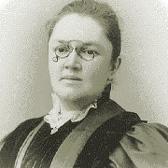
Katharine Lee Bates

1859 - 1929 Person Name: Katherine Lee Bates Topics: Out-of-Doors Author of "Dear God, Our Father, at Thy Knee Confessing" in Christian Youth Hymnal Katharine Lee Bates was born in Falmouth, Mass., August 12, 1859. Her father was a pastor in the Congregational Church; he died when she was an infant. Her mother moved the family to Wellesley. She received a B.A. (1880) and M.A. (1891) from Wellesley College. She taught high school from 1880-1885 and then was a professor of English literature at Wellesley. She wrote poetry, children's stories, textbooks and travel books. In the summer if 1893 when she was lecturing at Colorado College she went to the top of Pike's Peak. Inspired by the beauty of the view she wrote all four verses of "America the Beautiful" which was an instant hit when it was published. She had an intimate relationship with Katharine Coman, dean of Wellesley, who she lived with for 25 years, until Coman's death. "Yellow Clover: A Book of Remembrance" celebrates their love and partnership.She enjoyed traveling, the out of doors, reading and friends, Dianne Shapiro from Woman's Who's who in America, 1914-1915 by John William Leonard, New York: The American Commonwealth Company and Harvard Square Library, Digital Library of Unitarian Universalist Biographies, History, Books and Media (http://harvardsquarelibrary.org/cambridge-harvard/katharine-lee-bates/) (accessed 7-4-2018

John Stainer

1840 - 1901 Topics: The Child out of Doors In Winter Composer of "VENI" in A First Book in Hymns and Worship

Virgil Corydon Taylor

1817 - 1891 Person Name: Virgil C. Taylor Topics: Out-of-Doors Composer of "LOUVAN" in Christian Youth Hymnal

T. R. Birks

1810 - 1883 Person Name: Thomas R. Birks Topics: Out-of-Doors Author of "The Heavens Declare Thy Glory" in Christian Youth Hymnal Birks, Thomas Rawson, M.A., b. Sept. 1810, and educated at Trinity College, Cambridge (B.A. 1834, M.A. 1837), of which he subsequently became a Fellow. Having taken Holy Orders in 1837, he became Rector of Kelshall, Herts, 1844; Vicar of Holy Trinity, Cambridge, 1866; Hon. Canon of Ely Cathedral, 1871; and Professor of Moral Philosophy, Cambridge, 1872. He d. at Cambridge, July 21, 1883. His works, to the number of 25, include Biblical, Astronomical, Scientific, Prophetic, and other subjects. He also wrote the Memoirs of the Rev. E Bickersteth (his father-in-law), 2 vols., 1851. His hymns appeared in Bickersteth's Christian Psalmody; 1833; and, together with Versions of the Psalms, in his Companion Psalter, 1874. They number upwards of 100. [Eng. Psalters, § xx.] Very few are in common use in Great Britain, but in America their use is extending. They include:— 1. Except the Lord do build the house. Ps. cxxvii. 2. O come, let us sing to the Lord. Ps. xcv. 3. O King of Mercy, from Thy throne on high. Ps. lxxx. 4. O taste and see that He is good. Ps. xxxiv. 5. O when from all the ends of earth. Psj xiv. 6. The heavens declare Thy glory. Ps. xix. 7. The Lord Himself my Portion is. Ps. liii. 8. The mighty God, the Lord hath spoken. Ps. l. 9. Thou art gone up on high, O Christ, &c. Ps. xlvii. 10. Whom have I [we] Lord in heaven, but Thee. Ps. lxxiii. Of these versions of the Psalms, all of which date from 1874, the most popular is No. 3. Mr. Birks' compositions are worthy of greater attention than they have hitherto received. --John Julian, Dictionary of Hymnology (1907)

John H. Willcox

1827 - 1875 Person Name: J. H. Willcox Topics: Out-of-Doors Composer of "FABEN" in Christian Youth Hymnal

Pages


Export as CSV
It looks like you are using an ad-blocker. Ad revenue helps keep us running. Please consider white-listing Hymnary.org or getting Hymnary Pro to eliminate ads entirely and help support Hymnary.org.