You help make Hymnary.org possible. More than 10 million people from 200+ countries found hymns, liturgical resources and encouragement on Hymnary.org in 2025, including you. Every visit affirms the global impact of this ministry.

If Hymnary has been meaningful to you this year, would you take a moment today to help sustain it? A gift of any size—paired with a note of encouragement if you wish—directly supports the server costs, research work and curation that keep this resource freely available to the world.

Give securely online today, or mail a check to:
Hymnary.org
Calvin University
3201 Burton Street SE
Grand Rapids, MI 49546

Thank you for your partnership, and may the hope of Advent fill your heart.

Person Results

Topics:consecration and service
In:people

Planning worship? Check out our sister site, ZeteoSearch.org, for 20+ additional resources related to your search.
Showing 31 - 40 of 363Results Per Page: 102050

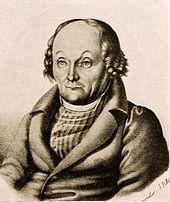
Hans G. Nägeli

1773 - 1836 Person Name: Hans G. Naegeli, 1773-1836 Topics: Consecration and Service Composer of "NAOMI" in Christian Worship Johann G. Nageli (b. Wetzikon, near Zurich, Switzerland, 1773; d. Wetzikon, 1836) was an influential music educator who lectured throughout Germany and France. Influenced by Johann Pestalozzi, he published his theories of music education in Gangbildungslehre (1810), a book that made a strong impact on Lowell Mason. Nageli composed mainly" choral works, including settings of Goethe's poetry. He received his early instruction from his father, then in Zurich, where he concentrated on the music of. S. Bach. In Zurich, he also established a lending library and a publishing house, which published first editions of Beethoven’s piano sonatas and music by Bach, Handel, and Frescobaldi. Bert Polman

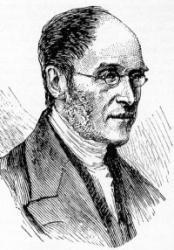
Henry Francis Lyte

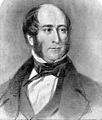
1793 - 1847 Person Name: Rev. Henry F. Lyte Topics: Consecration and Service Author of "Jesus, I my cross have taken" in The Westminster Hymnal for congregational and social use and for the Sunday School Lyte, Henry Francis, M.A., son of Captain Thomas Lyte, was born at Ednam, near Kelso, June 1, 1793, and educated at Portora (the Royal School of Enniskillen), and at Trinity College, Dublin, of which he was a Scholar, and where he graduated in 1814. During his University course he distinguished himself by gaining the English prize poem on three occasions. At one time he had intended studying Medicine; but this he abandoned for Theology, and took Holy Orders in 1815, his first curacy being in the neighbourhood of Wexford. In 1817, he removed to Marazion, in Cornwall. There, in 1818, he underwent a great spiritual change, which shaped and influenced the whole of his after life, the immediate cause being the illness and death of a brother clergyman. Lyte says of him:— "He died happy under the belief that though he had deeply erred, there was One whose death and sufferings would atone for his delinquencies, and be accepted for all that he had incurred;" and concerning himself he adds:— "I was greatly affected by the whole matter, and brought to look at life and its issue with a different eye than before; and I began to study my Bible, and preach in another manner than I had previously done." From Marazion he removed, in 1819, to Lymington, where he composed his Tales on the Lord's Prayer in verse (pub. in 1826); and in 1823 he was appointed Perpetual Curate of Lower Brixham, Devon. That appointment he held until his death, on Nov. 20, 1847. His Poems of Henry Vaughan, with a Memoir, were published in 1846. His own Poetical works were:— (1) Poems chiefly Religious 1833; 2nd ed. enlarged, 1845. (2) The Spirit of the Psalms, 1834, written in the first instance for use in his own Church at Lower Brixham, and enlarged in 1836; (3) Miscellaneous Poems (posthumously) in 1868. This last is a reprint of the 1845 ed. of his Poems, with "Abide with me" added. (4) Remains, 1850. Lyte's Poems have been somewhat freely drawn upon by hymnal compilers; but by far the larger portion of his hymns found in modern collections are from his Spirit of the Psalms. In America his hymns are very popular. In many instances, however, through mistaking Miss Auber's (q. v.) Spirit of the Psalms, 1829, for his, he is credited with more than is his due. The Andover Sabbath Hymn Book, 1858, is specially at fault in this respect. The best known and most widely used of his compositions are "Abide with me, fast falls the eventide;” “Far from my heavenly home;" "God of mercy, God of grace;" "Pleasant are Thy courts above;" "Praise, my soul, the King of heaven;" and "There is a safe and secret place." These and several others are annotated under their respective first lines: the rest in common use are:— i. From his Poems chiefly Religious, 1833 and 1845. 1. Above me hangs the silent sky. For Use at Sea. 2. Again, 0 Lord, I ope mine eyes. Morning. 3. Hail to another Year. New Year. 4. How good, how faithful, Lord, art Thou. Divine care of Men. 5. In tears and trials we must sow (1845). Sorrow followed by Joy. 6. My [our] rest is in heaven, my [our] rest is not here. Heaven our Home. 7. 0 Lord, how infinite Thy love. The Love of God in Christ. 8. Omniscient God, Thine eye divine. The Holy Ghost Omniscient. 9. The leaves around me falling. Autumn. 10. The Lord hath builded for Himself. The Universe the Temple of God. 11. Vain were all our toil and labour. Success is of God. 12. When at Thy footstool, Lord, I bend. Lent. 13. When earthly joys glide swift away. Ps. cii. 14. Wilt Thou return to me, O Lord. Lent. 15. With joy we hail the sacred day. Sunday. ii. From his Spirit of the Psalms, 1834. 16. Be merciful to us, O God. Ps. lvii. 17. Blest is the man who knows the Lord. Ps. cxii. 18. Blest is the man whose spirit shares. Ps. xli. 19. From depths of woe to God I cry. Ps. cxxxx. 20. Gently, gently lay Thy rod. Ps. vi. 21. Glorious Shepherd of the sheep. Ps. xxiii. 22. Glory and praise to Jehovah on high. Ps. xxix. 23. God in His Church is known. Ps. lxxvi. 24. God is our Refuge, tried and proved. Ps. xlvi. 25. Great Source of my being. Ps. lxxiii. 26. Hear, O Lord, our supplication. Ps. lxiv. 27. How blest the man who fears the Lord. Ps.cxxviii. 28. Humble, Lord, my haughty spirit. Ps. cxxxi. 29. In this wide, weary world of care. Ps. cxxxii. 30. In vain the powers of darkness try. Ps.lii. 31. Jehovah speaks, let man be awed. Ps. xlix. 32. Judge me, O Lord, and try my heart. Ps. xxvi. 33. Judge me, O Lord, to Thee I fly. Ps. xliii. 34. Lord, I have sinned, but O forgive. Ps. xli. 35. Lord, my God, in Thee I trust. Ps. vii. 36. Lord of the realms above, Our Prophet, &c. Ps.xlv. 37. Lone amidst the dead and dying. Ps. lxii. 38. Lord God of my salvation. Ps. lxxxviii. 39. Lord, I look to Thee for all. Ps. xxxi. 40. Lord, I would stand with thoughtful eye. Ps. lxix. 41. Lord, my God, in Thee I trust. Ps. vii. 42. My God, my King, Thy praise I sing. Ps. cviii. 43. My God, what monuments I see. Ps. xxxvi. 44. My spirit on [to] Thy care. Ps. xxxi. 45. My trust is in the Lord. Ps. xi. 46. Not unto us, Almighty Lord [God]. Ps. cxv. 47. O God of glory, God of grace. Ps. xc. 48. O God of love, how blest are they. Ps. xxxvii. 49. O God of love, my God Thou art. Ps. lxiii. 50. O God of truth and grace. Ps. xviii. 51. O had I, my Saviour, the wings of a dove. Ps. lv. 52. O how blest the congregation. Ps. lxxxix. 53. O how safe and [how] happy he. Ps. xci. 54. O plead my cause, my Saviour plead. Ps. xxxv. 55. O praise the Lord, 'tis sweet to raise. Ps. cxlvii. 56. O praise the Lord; ye nations, pour. Ps. cxvii. 57. O praise ye the Lord With heart, &c. Ps. cxlix. 58. O that the Lord's salvation. Ps. xiv. 59. O Thou Whom thoughtless men condemn. Ps. xxxvi. 60. Of every earthly stay bereft. Ps. lxxiv. 61. Our hearts shall praise Thee, God of love. Ps. cxxxviii. 62. Pilgrims here on earth and strangers. Ps. xvi. 63. Praise for Thee, Lord, in Zion waits. Ps. lxv. 64. Praise to God on high be given. Ps. cxxxiv. 65. Praise ye the Lord, His servants, raise. Ps. cxiii. 66. Redeem'd from guilt, redeem'd from fears. Ps. cxvi. 67. Save me by Thy glorious name. Ps. liv. 68. Shout, ye people, clap your hands. Ps. xlvii. 69. Sing to the Lord our might. Ps. lxxxi. 70. Strangers and pilgrims here below. Ps. cix. 71. Sweet is the solemn voice that calls. Ps. cxxii. 72. The Church of God below. Ps. lxxxvii. 73. The Lord is King, let earth be glad. Ps. xcvii. 74. The Lord is on His throne. Ps. xciii. 75. The Lord is our Refuge, the Lord is our Guide. Ps. xlvii. 76. The mercies of my God and King. Ps. lxxxix. 77. The Lord Who died on earth for men. Ps. xxi. 78. Tis a pleasant thing to fee. Ps. cxxxiii. 79. Thy promise, Lord, is perfect peace. Ps. iii. 80. Unto Thee I lift mine [my] eyes. Ps. cxxiii. 81. Whom shall [should] we love like Thee? Ps. xviii. Lyte's versions of the Psalms are criticised where their sadness, tenderness and beauty are set forth. His hymns in the Poems are characterized by the same features, and rarely swell out into joy and gladness. --John Julian, Dictionary of Hymnology (1907) ================== Lyte, Henry Francis, p. 706, i. Additional versions of Psalms are in common use:-- 1. Lord, a thousand foes surround us. Psalms lix. 2. Praise, Lord, for Thee in Zion waits. Psalms lxv. 3. The Christian like his Lord of old. Psalms cxl. 4. The Lord of all my Shepherd is. Psalms xxiii. 5. The Lord of heaven to earth is come. Psalms xcviii. 6. Thy mercy, Lord, the sinner's hope. Psalms xxxvi. 7. To Thee, O Lord, in deep distress. Psalms cxlii. Sometimes given as "To God I turned in wild distress." 8. Uphold me, Lord, too prone to stray. Psalms i. 9. When Jesus to our [my] rescue came. Psalms cxxvi. These versions appeared in the 1st edition of Lyte's Spirit of the Psalms, 1834. It must be noted that the texts of the 1834, the 1836, and the 3rd ed., 1858, vary considerably, but Lyte was not responsible for the alterations and omissions in the last, which was edited by another hand for use at St. Mark's, Torquay. Lyte's version of Psalms xxix., "Glory and praise to Jehovah on high" (p. 706, ii., 22), first appeared in his Poems, 1st ed., 1833, p. 25. Read also No. 39 as "Lord, I look for all to Thee." --John Julian, Dictionary of Hymnology, Appendix, Part II (1907)

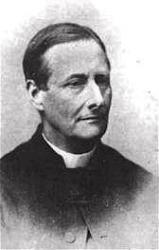
Henry Percy Smith

1825 - 1898 Person Name: H. Percy Smith, 1825-1898 Topics: Consecration and Service Composer of "MARYTON" in Christian Worship Henry Percy Smith (b. Malta, 1825; d. Bournemouth, Hampshire, England, 1898) was educated at Balliol College, Oxford, England, and ordained a priest in the Church of England in 1850. He served five churches, including St. Michael's York Town in Farnborough (1851-1868), Great Barton in Suffolk (1868-1882), Christ Church in Cannes, France (1882-1892), and the Cathedral in Gibraltar (1892-1898). MARYTON is his only tune found in contemporary hymnals and is thought to be the only tune he published. Bert Polman

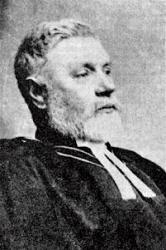
S. Baring-Gould

1834 - 1924 Person Name: Rev. Sabine Baring-Gould Topics: Consecration and Service Author of "Onward, Christian soldiers" in The Westminster Hymnal for congregational and social use and for the Sunday School Baring-Gould, Sabine, M.A., eldest son of Mr. Edward Baring-Gould, of Lew Trenchard, Devon, b. at Exeter, Jan. 28, 1834, and educated at Clare College, Cambridge, B.A. 1857, M.A. 1860. Taking Holy Orders in 1864, he held the curacy of Horbury, near Wakefield, until 1867, when he was preferred to the incumbency of Dalton, Yorks. In 1871 he became rector of East Mersea, Essex, and in 1881 rector of Lew Trenchard, Devon. His works are numerous, the most important of which are, Lives of the Saints, 15 vols., 1872-77; Curious Myths of the Middle Ages, 2 series, 1866-68; The Origin and Development of Religious Belief, 2 vols., 1869-1870; and various volumes of sermons. His hymns, original and translated, appeared in the Church Times; Hymns Ancient & Modern, 1868 and 1875; The People's Hymnal, 1867, and other collections, the most popular being "Onward, Christian soldiers," "Daily, daily sing the praises," the translation "Through the night of doubt and sorrow," and the exquisite Easter hymn, "On the Resurrection Morning." His latest effort in hymnology is the publication of original Church Songs, 1884, of which two series have been already issued. In the Sacristy for Nov. 1871, he also contributed nine carols to an article on "The Noels and Carols of French Flanders.” These have been partially transferred to Chope's and Staniforth's Carol Books, and also to his Church Songs. --John Julian, Dictionary of Hymnology (1907) ================== Baring-Gould, S., p. 114, i. Other hymns in common use are:— 1. Forward! said the Prophet. Processional. Appeared in the New Mitre Hymnal, 1874. 2. My Lord, in glory reigning. Christ in Glory. In Mrs. Brock's Children's Hymn Book, 1881. 3. Now severed is Jordan. Processional. Appeared in the S. Mary, Aberdeen, Hymnal, 1866, the People's Hymnal, 1867, &c. --John Julian, Dictionary of Hymnology, Appendix, Part II (1907)

John Greenleaf Whittier

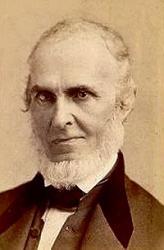
1807 - 1892 Topics: Church in the World Renewal: Healing; Calling and Response; Calmness and Serenity; Consecration; Discipleship and Service; Forgiveness; Forgiveness from God; Healing; Jesus Christ Call of; Peace (Inner, Calmness, Serenity; Prayer; Renewal; Repentance; Rest; Reverence/Wonder Before God; Service; Service Music Invitation to Prayer; Surrender; Trust; Epiphany 3 Year A; Proper 13 Year A; Proper 14 Year A; Epiphany 3 Year B; Proper 12 Year B; Epiphany 5 Year C; Proper 7 Year C; Proper 11 Year C; Proper 19 Year C; Proper 20 Year C Author of "Dear God, Who Loves All Humankind" in Voices United Whittier, John Greenleaf, the American Quaker poet, was born at Haverhill, Massachusetts, Dec. 17, 1807. He began life as a farm-boy and shoemaker, and subsequently became a successful journalist, editor and poet. In 1828 he became editor of the American Manufacturer (Boston), in 1830 of the New England Review, and an 1836 (on becoming Secretary to the American Anti-Slavery Society) of the Pennsylvania Freeman. He was also for some time, beginning with 1847, the corresponding editor of the National Era. In 1840 he removed to Amesbury, Massachusetts, where most of his later works have been written. At the present time [1890] he lives alternately at Amesbury and Boston. His first poetical piece was printed in the Newburyport Free Press in 1824. Since then his publications have been numerous, including:— Voices of Freedom, 1833; Songs of Labour, and other Poems, 1850; Ballads and other Poems, London, 1844; The Panorama, and other Poems, 1856; In War Time, 1863; Occasional Poems, 1865; Poetical Works, 1869; Complete Poetical Works, 1876; The Bay of the Seven Islands, and other Poems, 1883, &c. From his numerous poems the following hymns have been compiled, and have come into common use, more especially amongst the American Unitarians:— 1. All as God wills, Who wisely heeds. Trust. This begins with stanza xi. of Whittier's poem, "My Psalm." in his workThe Panorama, and other Poems, 1856 (Complete Poetical Works, Boston, 1876, p. 179), and is given in Lyra Sacra Americana , 1868; Border's Congregational Hymns, 1884, &c. 2. All things are Thine: no gift have we. Opening of a Place of Worship. Written for the Opening of Plymouth Church, Minnesota, 1872 ( Complete Poetical Works , p. 281). In Horder's Congregational Hymns, 1884. 3. Another hand is beckoning us. Bereavement. From his poem " Gone," written in 1845 (Complete Poetical Works, p. 106). In Horder's Congregational Hymns, 1884. 4. Dear Lord and Father of mankind. Calmness in God desired. From his poem “The Brewing of Soma," beginning with stanza xii. (Complete Poetical Works p. 266). In Horder's Congregational Hymns, 1884. 5. God giveth quietness at last. Death and Burial. This begins with stanza xvii. of his poem, “The Singer," written in 1871 (Author's MS.), and included in the Complete Poetical Works, 1876, p. 265. In Martineau's Hymns, 1875. 6. Hast thou, 'midst life's empty noises. The Purpose of Life. Written in 1842. It is in Longfellow and Johnson's Unitarian Book of Hymns, Boston, 1846, and several other later American collections. Also in Lyra Sacra Americana, 1864. 7. I ask not now for gold to gild. Resignation. From his poem "The Wish of To-Day." Written in 1848 (Author's MS.). In Hedge and Huntingdon's Unitarian Hymns for the Church of Christ, Boston, 1853; the Laudes Domini, 1884, and other collections. 8. Immortal love, for ever full. The Love of Jesus. This poem, entitled “Our Master," appeared in Whittier's work, The Panorama, and other Poems, 1856, in 35 stanzas of 4 lines; in Schaff’s Christ in Song, 1869-70, p. 117; and in the Complete Poetical Works, 1876, p. 231, and others. From this poem the following centos have come into common use:— (1) Immortal love for ever full. In the 1890 edition of the Hymnal Companion and others. (2) 0 Lord and Master of us all. Begins with stanza xvi. (3) 0 Love! O Life! our faith and sight. Begins with stanza xxiv. In several American hymnals, including the Unitarian Hymn [and Tune Book ], Boston, 1868, and others. (4) Our Friend, our Brother, and our Lord. Begins with stanza xxxiv. In Horder's Congregational Hymns, 1884, &c. (5) We faintly hear, we dimly see. Begins with stanza xxvi. In Barrett's Congregational Church Hymnal, 1887. (6) We may not climb the heavenly steeps. Begins with stanza v. In Laudes Domini, 1884; the Primitive Methodist Hymnal, 1887, &c. The use of these centos shows that the hymnic element in the original poem is of a high and enduring order. 9. It may not be our lot to wield. Duty and its Reward. This begins with stanza iv. of his poem "Seedtime and Harvest." Written circa 1850 (Author's MS.). Given in his Complete Poetical Works, p. 114. The hymn is in Laudes Domini, 1884, and other American collections. 10. May freedom speed onward, wherever the blood. Freedom. In the 1848 Supplement to the Boston Book of Hymns, Boston, No. 582, Hymns of the Spirit, 1864, and other collections. In Whittier's Poetical Works, Boston, 1869, p. 68, it is given as, “Right onward, O speed it! Wherever the blood”. 11. Now is the seed-time; God alone. Self-Sacrifice. In the Boston Hymns of the Spirit, 1864, No. 683. 12. 0 backward-looking son of time. New and Old. This begins with stanza xix. of his poem "The Reformer," and is given in this form in the Boston Hymns for the Church of Christ, Boston, 1853, No. 835, and again in later collections. In full in the Complete Poetical Works, p. 78. 13. 0 beauty, old yet ever new. The Law of Love. This in the Boston Hymns of the Spirit, 1864, begins with stanza xxi. of his poem on “The Shadow and the Light,” given in full in the Complete Poetical Works , p. 173. 14. 0 fairest-born of love and light. American National Hymn. This is from his poem "Democracy," which is dated "Election Day, 1843," and is in his Ballads and other Poems, London, 1844, p. 214, and his Complete Poetical Works, p. 82. 15. 0, he whom Jesus loves has truly spoken. True Worship. This in the 1848 Supplement to the Boston Book of Hymns, 1848, No. 578, begins with stanza xi. of his poem on “Worship," given in full in his Complete Poetical Works, p. 96. The poem is dated by the Author, 1848 (Author's MS.). 16. 0 holy Father, just and true. Freedom. "Lines written for the Celebration of the third Anniversary of British Emancipation at the Broadway Tabernacle, N. Y., First of August, 1837." (Complete Poetical Works, p. 47.) It was included in the Unitarian Christian Hymns, Boston, 1844, and has been repeated in later collections. 17. 0 Maker of the Fruits and Flowers. Flower Services. This begins with stanza iv. of his "Lines for the Agricultural and Horticultural Exhibition at Amesbury and Salisbury, Sep. 28, 1858," as given in his Complete Poetical Works , p. 183. It is in the Boston Hymns of the Spirit, 1864, and as "O Painter of the fruits and flowers," in Horder's Congregational Hymns, 1884. 18. O not alone with outward sign. Divine Invitation. This begins with stanza ii. of his poem, "The Call of the Christian," given in his Ballads and other Poems, London, 1844, p. 185, and his Complete Poetical Works, p. 73. The hymn appeared in the Boston Book of Hymns, 1846, and again in later collections. 19. O pure Reformers, not in vain. Freedom. This begins with stanza xii. of his poem "To the Reformers of England," as given in his Complete Poetical Works, p. 77. The hymn was included in the Boston Book of Hymns, 1846, and has been repeated in later collections. 20. O sometimes gleams upon our sight. Old and New. This is taken from his poem "The Chapel of the Hermits," 1852 (in 94 stanzas of 4 lines), and begins with stanza xi. (Comp. Poetical Works, p. 115.) The cento was given in the Boston Hymns of the Spirit, 1864, and repeated in later collections. 21. O Thou, at Whose rebuke the grave. Mercy. This was given in the Boston Book of Hymns, 1848, No. 44l. 22. O [God] Thou, Whose presence went before. National Hymn. This hymn is dated by the author 1834 (Author's MS.), and was written for the Anti-slavery Meeting at Chatham Street Chapel, New York, "on the 4th of the 7th month, 1831." It is No. 750 in the Unitarian Christian Hymns, 1844. It is sometimes given as “0 God, whose presence went before." 23. 0, what though our feet may not tread where Christ trod. Presence of Christ's Spirit. The author dates this 1837 (Author's MS.). It is No. 150 in the Boston Book of Hymns, 1846. In their Hymns of the Spirit, 1864, No. 652, it begins: "0, wherefore the dream of the earthly abode." Both centos are from his poem “Poledom." 24. Shall we grow weary in our watch? Patience, or Resignation. This begins with stanza x. of his poem "The Cypress-Tree of Ceylon." (Complete Poetical Works, p. 84.) This form of the text was given in the Boston Book of Hymns, 1846, No. 278, in 7 stanzas of 4 lines, and again in Horder's Congregational Hymns, 1884, in 3 stanzas. 25. Sport of the changeful multitude. Persecution. This begins with line 6 of stanza x. of his poem "Ezekiel," and was given in the Boston Hymns of the Spirit, 1864, No. 65lines In full in Complete Poetical Works, p. 67. 26. The green earth sends its incense up. Worship of Nature. The author dates this 1845 (Author's MS.). It is from his poem “The Worship of Nature," and was given in this form in the Boston Hymns for the Church of Christ, 1853, No. 193. The cento "The harp at Nature's advent strung," in the Unitarian Hymn [and Tune] Book, Boston, 1868, No. 195, is from the same poem. The cento No. 321 in the Boston Hymns of the Spirit, 1864, is also (altered) from this poem. 27. The path of life we walk today. The Shadowing Rock. This in the Boston Hys. of the Spirit, 1864, begins with stanza i. of his poem on "The Rock in El Gh'or," which the author dates 1859 (Author's MS.). In full in Complete Poetical Works, p. 180. 28. Thine are all the gifts, 0 God. Children's Missions, or Ragged Schools. Written for the Anniversary of the Children's Mission, Boston, 1878. It is given in Horder's Congregational Hymns, 1884. 29. Thou hast fallen in thine armour. Death. From his poem "To the memory of Charles B. Storrs, late President of Western Reserve College," published in his Ballads and other Poems, London, 1844, p. 84. Dated by the author 1835 (Author's MS.). Abridged form in the Hymns of the Spirit, 1864. 30. To-day, beneath Thy chastening eye. Seeking Rest. This begins with stanza iv. of his poem, "The Wish of To-Day," dated by the author 1847 (Author's MS.), and given in full in his Complete Poetical Works, p. 114. The cento is in Martineau's Hymns, 1873, and others. 31. We see not, know not; all our way. Resignation. "Written at the opening of the Civil War, 1861" (Author's MS.), and included in his In War Time, 1863, and his Complete Poetical Works, p. 190. In full in the Prim. Methodist Hymnal, 1887. 32. When on my day of life the night is falling. Old Age. Written in 1882 (Author's MS.), and included in his work The Bay of the Seven Islands, and other Poems, 1883. In Horder's Congregational Hymns, 1884. 33. With silence only as their benediction. Death. 1845. "Written on the death of Sophia Sturge, sister of Joseph Sturge, of Birmingham, England" (Author's MS.). It is in several collections, including Martineau's Hymns, &c, 1873; Horder's Congregational Hymns, 1884, and others. Notwithstanding this extensive use of portions of Mr. Whittier's poems as hymns for congregational use, he modestly says concerning himself: "I am really not a hymn-writer, for the good reason that I know nothing of music. Only a very few of my pieces were written for singing. A good hymn is the best use to which poetry can be devoted, but I do not claim that I have succeeded in composing one." (Author's MS.) We must add, however, that these pieces are characterized by rich poetic beauty, sweet tenderness, and deep sympathy with human kind. -- John Julian, Dictionary of Hymnology (1907) ======================== Whittier, J. G, p. 1277, i. In addition to the large number of this author's hymns already annotated from his own manuscript, the following have also come into use, mainly in the form of centos from his poems, during the past ten years:— i. From Poems, 1850:— 1. O brother man! Fold to thy heart thy brother. [Brotherly Love.] From his poem, “Worship." Written in 1848, and published in Poems, 1850. ii. From Songs of Labour, and Other Poems, 1850;— 2. Bowed down in lowliness of min. [Resignation.] From the poem “The Wish of To-day." iii. From The Chapel of the Hermits, and Other Poems, 1853:— 3. O, sometimes glimpses on our sight. [Light in Darkness.] First published in The National Era, 1851, and again as above, 1853. In The Pilgrim Hymnal, N.Y. 1904, it begins " 0 sometimes gleams upon our sight," and in Hymns of the Ages, 1904, "Yet sometimes glimpses on my sight"; see p. 1277, ii. 20. iv. From The Panorama, and Other Poems, 1856:— 4. Thou, 0 most compassionate. [Divine Compassion.] This cento is from the poem "My Dream," and is dated 1855. v. From Home Ballads and Poems, 1860:— 5. I mourn no more my vanished years. [Life's Review.] A cento from "My Psalm," dated 1859, opening with st. i. 6. No longer forward nor behind. This begins with st. iii. of "My Psalm." 7. O hearts of love, O souls that turn. [Life from, Christ.] A cento from the poem, "The Overheart." 8. O Love Divine, Whose constant beam. [Divine Love Universal.] From the poem, "The Shadow and the Light." The form in which it is given in The Pilgrim Hymnal, 1904, first appeared in The Independent, Nov. 1860. 9. Once more the liberal year laughs out. [Autumn.] From his "For an Autumn Festival," 1859. vi. From In War Time, and Other Poems, 1864:— 10. I can only urge the plea. [Cry for Mercy.] A cento from “Andrew Rykman’s Prayer,” dated 1863. 11. What Thou wilt, O Father, give. Also from “Andrew Kykman's Prayer." vii. From The Tent on the Beach, and Other Poems, 1867:— 12. I bow my forehead to [in] the dust. St. ix., &c. 13. I know not what the future hath. St. xvi., &c. 14. I long for household voices gone. St. xv., &c. 15. I see the wrong that round me lies. St. x., &c. 16. Who fathoms the Eternal Thought. St. iv., &c. 17. Yet, in the maddening maze of things. St. xi., &c. These centos are taken from the poem, "The Eternal Goodness," which is dated 1865. viii. From Among the Hills, and Other Poems, 1869:— 18. For ever round the mercy-seat. [God's Love and Man's Unfaithfulness.] From the poem, “The Answer." ix. From The Pennsylvania Pilgrim, and Other Poems, 1873:— 19. Best for the weary hands is good. [Daily Renewal.] This is from "My Birthday," which appeared in the Atlantic Monthly, 1871, and again as above, 1873. x. From Hazel Blossoms, 1875:— 20. All things [gifts] are Thine, p. 1277, i. 2. The church for which this was written, in 1873, was Plymouth Church, St. Paul, Minn. The hymn was included in Hazel Blossoms, 1875. 21. We need love's tender lessons taught. [Love.] From Child-Songs," in Hazel Blossoms, opening with st. ix. xi. From The Bay of the Seven Islands, 1883:— 22. As from the lighted hearths behind me. [Anticipation of the Future.] This begins with st. iii. of the poem, "What the Traveller said at Sunset." xii. Additional Notes:— 23. Lord, for the things we see. [Public Gatherings.] This hymn is from "Poledom," 1837. 24. Not always as the whirlwind's rush. [Call to the Ministry.] Published in The Poetical Writings, 1857, Vol. i., p. 254, and again in the Oxford edition of his Poetical Works, 1904, p. 455. It is dated 1833. 25. Sound over all waters, [The Coming Kingdom.) This, in Horder's Worship Song, 1905, is from Whittier's Complete Poetical Works, Boston, 1876, p. 280, where it is dated 1873. 26. Take courage, Temperance workers. [Temperance.] Mr. Pickard, Whittier's literary executor, cannot trace this hymn in any of the author's writings, and we also are at fault. 27. The harp at Nature's advent strung. [Nature's acknowledgement of God.] Dr. Charles L. Noyes, one of the editors of The Pilgrim Hymnal, 1904, writes us concerning this hymn: "It was first published in its present form [as in the American hymn-books] in 1867 in The Tent on the Beach." But a hymn almost identical was written when Whittier was in his teens, and published in the Haverhill Gazette, October 5, 1827. The same poem appeared in The Palladium, 1829. It was revised for The Tent on the Beach, 1867 (p. 1278, i. 26). 28. We see not, know not; all our way, p. 1278, i. 31. This hymn, written in 1861, first appeared in the Atlantic Monthly, 1862, vol. 10, p. 235. 29. Wherever through the ages rise. [Love is universal.] Opens with line 1 of a section in the poem "Miriam," in Miriam, and Other Poems, 1871, p. 13. 30. Who calls Thy glorious service hard? [Duty.] This begins with st. iii. of his poem "Seedtime and Harvest," noted on p. 1277, ii. 9. 31. O Lord and Father of mankind. This is a slightly altered form of "Dear Lord and Father of mankind." p. 1277, i. 4. The poem, “Our Master," stated on p. 1277, i., No. 8, as having appeared in The Panorama, 1856, in error, was given in The Tent on the Beach, and Other Poems, Boston, 1867, pp. 143-152. In compiling the foregoing, we have been materially assisted by Mr. Pickard, the poet's literary executor, and the Rev. Dr. Charles L. Noyes, of Somerville, Mass. Whittier died at Hampton Falls, New Hampshire, Sep. 7, 1892. --John Julian, Dictionary of Hymnology, New Supplement (1907) ======================= See also in: Hymn Writers of the Church

George Matheson

1842 - 1906 Person Name: Rev. George Matheson (1842-1906) Topics: The Life in Christ Dedication and Consecration; Consecration; Courage and Loyalty; Dedication of Life; Discipleship and Service; God Will, Doing His; Loyalty and Courage; School and College Author of "Make me a captive, Lord" in The Hymnal Matheson, George, D.D., was born at Glasgow, March 27, 1842, and although deprived of his eyesight in youth he passed a brilliant course at the University of Edinburgh, where he graduated M.A. in 1862. In 1868 he became the parish minister at Innellan; and subsequently of St. Bernard's, Edinburgh. He was the Baird Lecturer in 1881, and St. Giles Lecturer in 1882. He has published several important prose works. His poetical pieces were collected and published in 1890 as Sacred Songs, Edinburgh: W. Blackwood. In addition to his hymn "O Love that wilt not let me go" (q. v.), four others from his Sacred Songs are in Dr. A. C. Murphey's Book of Common Song, Belfast, 1890. --John Julian, Dictionary of Hymnology, Appendix, Part II (1907) ======================= Matheson, G., p. 1579, i. In addition to Dr. Matheson's hymn, "O Love, that wilt not let me go," p. 1583, i,, the following from his Sacred Songs, 1890, have come into common use since 1892:— 1. Come, let us raise a common song. Brotherhood. 2. Father divine, I come to Thee. Strength for Life. This, in Horder's Worship Song, 1905, is altered to”Saviour divine, I come to Thee." 3. Gather us in, Thou Love that fillest all. One in Christ. 4. Jesus, Fountain of my days. Christian's Polestar. 5. Lend me, O Lord, Thy softening cloud. The Fire and the Cloud. In the Sunday Magazine, 1875. 6. Lord, Thou hast all my frailty made. Strength for the Day. 7. Make me a captive, Lord. Christian Freedom. 8. There are coming changes great. The Glad New Time. 9. Three doors there are in the temple. Prayer. Dr. Matheson informed us that these hymns, together with the rest of his Sacred Songs, 1890, were written at Bow, Dumbartonshire, in 1890. The 3rd ed. of the Sacred Songs was published in 1904. He died suddenly at Avenelle, North Berwick, Aug. 28, 1906. --John Julian, Dictionary of Hymnology, New Supplement (1907)

Godfrey Thring

1823 - 1903 Topics: Church Year Trinity Season; Trinity, Thirteenth Sunday; Inner Missions; Christian Conduct and Service; Consecration; Missions Home; Missions Inner Author of "O God of Mercy, God of Might" in The Hymnal and Order of Service Godfrey Thring (b. Alford, Somersetshire, England, 1823; d. Shamley Green, Guilford, Surrey, England, 1903) was born in the parsonage of Alford, where his father was rector. Educated at Balliol College, Oxford, England, he was ordained a priest in the Church of England in 1847. After serving in several other parishes, Thring re­turned to Alford and Hornblotten in 1858 to succeed his father as rector, a position he retained until his own retirement in 1893. He was also associated with Wells Cathedral (1867-1893). After 1861 Thring wrote many hymns and published several hymnals, including Hymns Congregational (1866), Hymns and Sacred Lyrics (1874), and the respect­ed A Church of England Hymn Book Adapted to the Daily Services of the Church Throughout the Year (1880), which was enlarged as The Church of England Hymn Book (1882). Bert Polman ================ Thring, Godfrey, B.A., son of the Rev. J. G. D. Thring, of Alford, Somerset, was born at Alford, March 25, 1823, and educated at Shrewsbury School, and at Balliol College, Oxford, B.A. in 1845. On taking Holy Orders he was curate of Stratfield-Turgis, 1846-50; of Strathfieldsaye, 1850-53; and of other parishes to 1858, when he became rector of Alford-with-Hornblotton, Somerset. R.D. 1867-76. In 1876 he was preferred as prebend of East Harptree in Wells cathedral. Prebendary Thring's poetical works are:— Hymns Congregational and Others, 1866; Hymns and Verses, 1866; and Hymns and Sacred Lyrics, 1874. In 1880 he published A Church of England Hymnbook Adapted to the Daily Services of the Church throughout the Year; and in 1882, a revised and much improved edition of the same as The Church of England Hymn Book, &c. A great many of Prebendary Thring's hymns are annotated under their respective first lines; the rest in common use include:— 1. Beneath the Church's hallowed shade. Consecration of a Burial Ground. Written in 1870. This is one of four hymns set to music by Dr. Dykes, and first published by Novello & Co., 1873. It was also included (but without music) in the author's Hymns & Sacred Lyrics, 1874, p. 170, and in his Collection, 1882. 2. Blessed Saviour, Thou hast taught us. Quinquagesima. Written in 1866, and first published in the author's Hymns Congregational and Others, 1866. It was republished in his Hymns & Sacred Lyrics, 1874; and his Collection, 1882. It is based upon the Epistle for Quinquagesima. 3. Blot out our sins of old. Lent. Written in 1862, and first published in Hymns Congregational and Others

Frederick William Faber

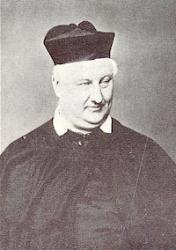
1814 - 1863 Person Name: Frederick W. Faber Topics: Brotherhood and Service; Consecration; Courage, Faith, Loyalty Author of "Faith of Our Fathers, Living Still" in Hymns for Creative Living Raised in the Church of England, Frederick W. Faber (b. Calverly, Yorkshire, England, 1814; d. Kensington, London, England, 1863) came from a Huguenot and strict Calvinistic family background. He was educated at Balliol College, Oxford, and ordained in the Church of England in 1839. Influenced by the teaching of John Henry Newman, Faber followed Newman into the Roman Catholic Church in 1845 and served under Newman's supervision in the Oratory of St. Philip Neri. Because he believed that Roman Catholics should sing hymns like those written by John Newton, Charles Wesley, and William Cowpe, Faber wrote 150 hymns himself. One of his best known, "Faith of Our Fathers," originally had these words in its third stanza: "Faith of Our Fathers! Mary's prayers/Shall win our country back to thee." He published his hymns in various volumes and finally collected all of them in Hymns (1862). Bert Polman ================= Faber, Frederick William, D.D., son of Mr. T. H. Faber, was born at Calverley Vicarage, Yorkshire, June 28, 1814, and educated at Balliol College, Oxford, graduating B.A. in 1836. He was for some time a Fellow of University College, in the same University. Taking Holy Orders in 1837, he became Rector of Elton, Huntingdonshire, in 1843, but in 1846 he seceded to the Church of Rome. After residing for some time at St. Wilfrid's, Staffordshire, he went to London in 1849, and established the London "Oratorians," or, "Priests of the Congregation of St. Philip Neri," in King William Street, Strand. In 1854 the Oratory was removed to Brompton. Dr. Faber died Sept. 26, 1863. Before his secession he published several prose works, some of which were in defence of the Church of England; and afterwards several followed as Spiritual Conferences, All for Jesus, &c. Although he published his Cherwell Waterlily and Other Poems, 1840; The Styrian Lake, and Other Poems, 1842; Sir Lancelot, 1844; and The Rosary and Other Poems, 1845; and his Lives of the Saints, in verse, before he joined the Church of Rome, all his hymns were published after he joined that communion. They were included in his:— (1) A small book of eleven Hymns1849, for the School at St. Wilfrid's, Staffordshire. (2) Jesus and Mary: or, Catholic Hymns for Singing and Reading, London 1849. In 1852 the 2nd edition was published with an addition of 20 new hymns. (3) Oratory Hymns, 1854; and (4) Hymns, 1862, being a collected edition of what he had written and published from time to time. Dr. Faber's account of the origin of his hymn-writing is given in his Preface to Jesus & Mary. After dwelling on the influence, respectively, of St. Theresa, of St. Ignatius, and of St. Philip Neri, on Catholicism; and of the last that "sanctity in the world, perfection at home, high attainments in common earthly callings…was the principal end of his apostolate," he says:— “It was natural then that an English son of St. Philip should feel the want of a collection of English Catholic hymns fitted for singing. The few in the Garden of the Soul were all that were at hand, and of course they were not numerous enough to furnish the requisite variety. As to translations they do not express Saxon thought and feelings, and consequently the poor do not seem to take to them. The domestic wants of the Oratory, too, keep alive the feeling that something of the sort was needed: though at the same time the author's ignorance of music appeared in some measure to disqualify him for the work of supplying the defect. Eleven, however, of the hymns were written, most of them, for particular tunes and on particular occasions, and became very popular with a country congregation. They were afterwards printed for the Schools at St. Wilfrid's, and the very numerous applications to the printer for them seemed to show that, in spite of very glaring literary defects, such as careless grammar and slipshod metre, people were anxious to have Catholic hymns of any sort. The manuscript of the present volume was submitted to a musical friend, who replied that certain verses of all or nearly all of the hymns would do for singing; and this encouragement has led to the publication of the volume." In the same Preface he clearly points to the Olney Hymns and those of the Wesleys as being the models which for simplicity and intense fervour he would endeavour to emulate. From the small book of eleven hymns printed for the schools at St. Wilfrid's, his hymn-writing resulted in a total of 150 pieces, all of which are in his Hymns, 1862, and many of them in various Roman Catholic collections for missions and schools. Few hymns are more popular than his "My God, how wonderful Thou art," "O come and mourn with me awhile," and "Sweet Saviour, bless us ere we go." They excel in directness, simplicity, and pathos. "Hark, hark, my soul, angelic songs are swelling," and "O Paradise, O Paradise," are also widely known. These possess, however, an element of unreality which is against their permanent popularity. Many of Faber's hymns are annotated under their respective first lines; the rest in common use include:— i. From his Jesus and Mary, 1849 and 1852. 1. Fountain of love, Thyself true God. The Holy Ghost. 2. How shalt thou bear the Cross, that now. The Eternal Years. 3. I come to Thee, once more, O God. Returning to God. 4. Joy, joy, the Mother comes. The Purification. 5. My soul, what hast thou done for God? Self-Examination 6. O how the thought of God attract. Holiness Desired. 7. O soul of Jesus, sick to death. Passiontide. Sometimes this is divided into two parts, Pt. ii. beginning, “My God, my God, and can it be." ii. From his Oratory Hymns, 1854. 8. Christians, to the war! Gather from afar. The Christian Warfare. 9. O come to the merciful Saviour that calls you. Divine Invitation. In many collections. 10. O God, Thy power is wonderful. Power and Eternity of God. 11. O it is sweet to think, Of those that are departed. Memory of the Dead. 12. O what are the wages of sin? The Wages of Sin. 13. O what is this splendour that beams on me now? Heaven. 14. Saint of the Sacred Heart. St. John the Evangelist. iii. From his Hymns, 1862. 15. Father, the sweetest, dearest Name. The Eternal Father. 16. Full of glory, full of wonders, Majesty Divine. Holy Trinity. 17. Hark ! the sound of the fight. Processions. 18. How pleasant are thy paths, 0 death. Death Contemplated. 19. O God, Whose thoughts are brightest light. Thinking no Evil. 20. O why art thou sorrowful, servant of God? Trust in God. 21. Souls of men, why will ye scatter? The Divine Call. 22. The land beyond the sea. Heaven Contemplated. 23. The thought of God, the thought of thee. Thoughts of God. 24. We come to Thee, sweet Saviour. Jesus, our Rest. In addition to these there are also several hymns in common use in Roman Catholic hymn-books which are confined to those collections. In the Hymns for the Year, by Dr. Rawes, Nos. 77, 110, 112, 117, 120, 121, 122, 125, 127, 128, 131, 140, 152, 154,169, 170, 174, 179, 180, 192, 222, 226, 230, 271, 272, are also by Faber, and relate principally to the Blessed Virgin Mary. Several of these are repeated in other Roman Catholic collections. --John Julian, Dictionary of Hymnology (1907 ================== Faber, Frederick William, p. 361, i. To this article the following additions have to be made:— 1. Blood is the price of heaven. Good Friday. (1862.) 2. Exceeding sorrowful to death. Gethsemane. This in the Scottish Ibrox Hymnal, 1871, is a cento from "O soul of Jesus, sick to death," p. 362, i., 7. 3. From pain to pain, from woe to woe. Good Friday. (1854.) 4. I wish to have no wishes left. Wishes about death. (1862.) 5. Why is thy face so lit with smiles? Ascension. (1849.) The dates here given are those of Faber's works in which the hymns appeared. In addition to these hymns there are also the following in common use:— 6. Dear God of orphans, hear our prayer. On behalf of Orphans. This appeared in a miscellaneous collection entitled A May Garland, John Philip, n.d. [1863], No. 1, in 7 stanzas of 4 lines. In the Roman Catholic Parochial Hymn Book, 1880, it begins, "O God of orphans, hear our prayer." 7. Sleep, sleep my beautiful babe. Christmas Carol. This carol we have failed to trace. 8. By the Archangel's word of love. Pt. i. Life of our Lord. This, and Pt. ii., “By the blood that flowed from Thee"; Pt. iii., "By the first bright Easter day"; also, "By the word to Mary given"; "By the name which Thou didst take"; in The Crown Hymn Book and other Roman Catholic collections, we have seen ascribed to Dr. Faber, but in the Rev. H. Formby's Catholic Hymns, 1853, they are all signed "C. M. C," i.e. Cecilia M. Caddell (p. 200, i.). --John Julian, Dictionary of Hymnology, Appendix, Part II (1907) ====================== Faber, F. W., pp. 361, i.; 1562, ii. We are informed by members of Dr. Faber's family that his father was Mr. Thomas Henry Faber, sometime Lay Secretary of the Bishop of Durham. In addition to his hymns already noted in this Dictionary, the following are found in various Roman Catholic collections, viz.:— i. From St. Wilfrid's Hymns, 1849:— 1. Dear Father Philip, holy Sire. S. Philip Neri. 2. Hail, holy Joseph, hail. S. Joseph. 3. Mother of Mercy, day by day. Blessed Virgin Mary. ii. Jesus and Mary, 1849:— 4. Ah ! dearest Lord! I cannot pray. Prayer. 5. Dear Husband of Mary. S. Joseph. 6. Dear Little One, how sweet Thou art. Christmas. 7. Father and God! my endless doom. Predestination. 8. Hail, holy Wilfrid, hail. S. Wilfrid. 9. O Jesus, if in days gone by. Love of the World. 10. O turn to Jesus, Mother, turn. B. V. M. 11. Sing, sing, ye angel bands. Assum. B. V. M. iii. Jesus and Mary, 1852:— 12. All ye who love the ways of sin. S. Philip Neri. 13. Day set on Rome! its golden morn. S. Philip Neri. 14. Hail, bright Archangel! Prince of heaven. S. Michael. 15. Hail, Gabriel, hail. S. Gabriel. 16. O Flower of Grace, divinest Flower. B. V. M. 17. Saint Philip! 1 have never known. S. Philip Neri. 18. Sweet Saint Philip, thou hast won us. S. Philip Neri. Previously in the Rambler, May, 1850, p. 425. iv. Oratory Hymns, 1854:— 19. Day breaks on temple roofs and towers. Expect. of B. V. M. 20. How gently flow the silent years. S. Martin and S. Philip. 21. How the light of Heaven is stealing. Grace. 22. Like the dawning of the morning. Expect. of B. V. M. 23. Mother Mary ! at thine altar. For Orphans. 24. My God! Who art nothing but mercy and kindness. Repentance. 25. O blessed Father! sent by God. S. Vincent of Paul. 26. O do you hear that voice from heaven? Forgiveness. 27. The chains that have bound me. Absolution. 28. The day, the happy day, is dawning. B. V. M. 29. The moon is in the heavens above. B. V. M. 30. Why art thou sorrowful, servant of God? Mercy. v. Hymns, 1862:— 31. At last Thou art come, little Saviour. Christmas. 32. By the spring of God's compassions. S. Raphael. 33. Fair are the portals of the day. B. V. M. 34. Father of many children. S. Benedict. 35. From the highest heights of glory. S. Mary Magdalene. 36. Like the voiceless starlight falling. B. V. M. 37. Mary! dearest mother. B. V. M. 38. Mother of God, we hail thy heart. B. V. M. 39. O Anne! thou hadst lived through those long dreary years. S. Anne. Previously in Holy Family Hymns, 1860. 40. O balmy and bright as moonlit night. B. V. M. 41. O Blessed Trinity! Thy children. Holy Trinity. 42. O dear Saint Martha, busy saint. S. Martha 43. O Mother, will it always be. B. V. M. 44. O vision bright. B. V. M. 45. Summer suns for ever shining. B. V. M. 46. There are many saints above. S. Joseph. Previously in Holy Family Hymns, 1860. vi. Centos and altered forms:— 47. Confraternity men to the fight. From "Hark the sound of the fight," p. 362, i. 48. Hail, sainted Mungo, hail. From No. 8. 49. I bow to Thee, sweet will of God. From "I worship Thee," p. 559, ii. 50. They whom we loved on earth. From "0 it is sweet to think," p. 362, i. 51. Vincent! like Mother Mary, thou. From No. 25. When Dr. Faber's hymns which are in common use are enumerated, the total falls little short of one hundred. In this respect he outnumbers most of his contemporaries. [Rev. James Mearns] --John Julian, Dictionary of Hymnology, New Supplement (1907) -------------- See also in: Hymn Writers of the Church

E. A. Hoffman

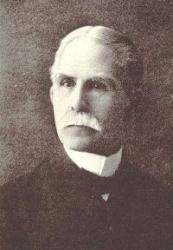
1839 - 1929 Person Name: Elisha A. Hoffman Topics: The Christian Life Aspiration and Consecration; Contentment; Service Author of "Is Your All on the Alter" in The New Church Hymnal Elisha Hoffman (1839-1929) after graduating from Union Seminary in Pennsylvania was ordained in 1868. As a minister he was appointed to the circuit in Napoleon, Ohio in 1872. He worked with the Evangelical Association's publishing arm in Cleveland for eleven years. He served in many chapels and churches in Cleveland and in Grafton in the 1880s, among them Bethel Home for Sailors and Seamen, Chestnut Ridge Union Chapel, Grace Congregational Church and Rockport Congregational Church. In his lifetime he wrote more than 2,000 gospel songs including"Leaning on the everlasting arms" (1894). The fifty song books he edited include Pentecostal Hymns No. 1 and The Evergreen, 1873. Mary Louise VanDyke ============ Hoffman, Elisha Albright, author of "Have you been to Jesus for the cleansing power?" (Holiness desired), in I. D. Sankey's Sacred Songs and Solos, 1881, was born in Pennsylvania, May 7, 1839. --John Julian, Dictionary of Hymnology, Appendix, Part II (1907) ==============

Samuel Sebastian Wesley

1810 - 1876 Person Name: Samuel Sebastian Wesley, 1810-1876 Topics: The Church of God Missions; The Life in Christ Consecration and Discipleship; The Life in Christ Fellowship and Service Composer of "WINSCOTT" in The Hymnary of the United Church of Canada Samuel Sebastian Wesley (b. London, England, 1810; d. Gloucester, England, 1876) was an English organist and composer. The grandson of Charles Wesley, he was born in London, and sang in the choir of the Chapel Royal as a boy. He learned composition and organ from his father, Samuel, completed a doctorate in music at Oxford, and composed for piano, organ, and choir. He was organist at Hereford Cathedral (1832-1835), Exeter Cathedral (1835-1842), Leeds Parish Church (1842­-1849), Winchester Cathedral (1849-1865), and Gloucester Cathedral (1865-1876). Wesley strove to improve the standards of church music and the status of church musicians; his observations and plans for reform were published as A Few Words on Cathedral Music and the Music System of the Church (1849). He was the musical editor of Charles Kemble's A Selection of Psalms and Hymns (1864) and of the Wellburn Appendix of Original Hymns and Tunes (1875) but is best known as the compiler of The European Psalmist (1872), in which some 130 of the 733 hymn tunes were written by him. Bert Polman

Pages


Export as CSV
It looks like you are using an ad-blocker. Ad revenue helps keep us running. Please consider white-listing Hymnary.org or getting Hymnary Pro to eliminate ads entirely and help support Hymnary.org.