You help make Hymnary.org possible. More than 10 million people from 200+ countries found hymns, liturgical resources and encouragement on Hymnary.org in 2025, including you. Every visit affirms the global impact of this ministry.

If Hymnary has been meaningful to you this year, would you take a moment today to help sustain it? A gift of any size—paired with a note of encouragement if you wish—directly supports the server costs, research work and curation that keep this resource freely available to the world.

Give securely online today, or mail a check to:
Hymnary.org
Calvin University
3201 Burton Street SE
Grand Rapids, MI 49546

Thank you for your partnership, and may the hope of Advent fill your heart.

Person Results

Tune Identifier:"^tallis_canon$"
In:person

Planning worship? Check out our sister site, ZeteoSearch.org, for 20+ additional resources related to your search.
Showing 31 - 40 of 100Results Per Page: 102050

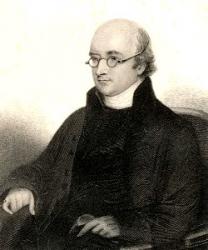
Richard Mant

1776 - 1848 Person Name: Richard Mant, 1776-1848 Translator of "Let All on Earth Their Voices Raise" in Catholic Book of Worship III Mant, Richard D.D., son of the Rev. Richard Mant, Master of the Grammar School, Southampton, was born at Southampton, Feb. 12, 1776. He was educated at Winchester and Trinity, Oxford (B.A. 1797, M.A., 1799). At Oxford he won the Chancellor's prize for an English essay: was a Fellow of Oriel, and for some time College Tutor. On taking Holy Orders he was successively curate to his father, then of one or two other places, Vicar of Coggeshall, Essex, 1810; Domestic Chaplain to the Archbishop of Canterbury, 1813, Rector of St. Botolph, Bishopsgate, London. 1816, and East Horsley, 1818, Bishop of Killaloe, 1820, of Down and Connor, 1823, and of Dromore, 1842. He was also Bampton Lecturer in 1811. He died Nov. 2, 1848. His prose works were numerous, and although now somewhat obsolete, they were useful and popular in their day. His poetical works, and other works which contain poetical pieces, are:— (1) The Country Curate, 1804; (2) Poems in three Parts, 1806; (3) The Slave, 1807; (4) The Book of Psalms in an English Metrical Version, &c, 1824; (5) The Holydays of the Church; or Scripture Narratives of Our Blessed Lord's Life and Ministry, and Biographical Notices of the Apostles, Evangelists, and Other Saints, with Reflections, Collects, and Metrical Sketches, vol. i., 1828; vol. ii., 1831; (6) The Gospel Miracles in a series of Poetical Sketches, &c., 1832; (7) The British Months, 2 vols., 1836; (8) Ancient Hymns from the Roman Breviary, for Domestick Use. . . .To which are added Original Hymns, principally of Commemoration and Thanksgiving for Christ's Holy Ordinances, 1837: new ed., 1871. (9) The Happiness of the Blessed Dead, 1847. Bishop Mant is known chiefly through his translations from the Latin. He was one of the earliest of the later translators, I. Williams and J. Chandler being his contemporaries. Concerning his translations, Mr. Ellerton, in his Notes on Church Hymns, 1881, p. xlviii. (folio ed.), says justly that:— "Mant had little knowledge of hymns, and merely took those of the existing Roman Breviary as he found them: consequently he had to omit many, and so to alter others that they have in fact become different hymns: nor was he always happy in his manipulation of them. But his book has much good taste and devout feeling, and has fallen into undeserved neglect." His metrical version of the Psalms has yielded very few pieces to the hymnals, the larger portion of his original compositions being from his work of 1837. The most popular of these is "Come Holy Ghost, my soul inspire, Spirit of," &c, and its altered forms; "Bright the vision that delighted," and its altered form of "Round the Lord in glory seated;" and "For all Thy saints, O Lord." His hymns in common use which are not annotated under their respective first lines are:— i. From his Metrical Version of the Psalms, 1824. 1. God, my King, Thy might confessing. Ps. cxlv. 2. Lord, to Thee I make my vows. Ps. xxvii. 3. Blessed be the Lord most High. Ps. xxviii. Pt. ii. 4. My trust is in the highest Name. Ps. xi. 5. Reign, Jehovah, King supreme. Ps. xcix. 6. Thy listening ear, O Lord, incline. Ps. Ixxxvi. 7. To God my earnest voice I raise. Ps. cxlii. 8. To Jehovah hymn the lay. Ps. cxviii. Two centos in Spurgeon's Our Own Hymn Book, 1866. (1) st. i., ii., v.; and (2) "Thee, Jehovah, will I bless" from st. vii.-x. ii. From his Holydays of the Church, &c, 1828-31. 9. Lo, the day the Lord hath made. Easter. 10. There is a dwelling place above. All Saints. iii. From his Ancient Hymns, &c, 1837. 11. Before Thy mercy's throne. Lent. 12. Father of all, from Whom we trace. Unity. 13. For these who first proclaimed Thy word. Apostles. 14. No! when He bids me seek His face. Holy Communion. 15. Oft as in God's own house we sit. Divine Worship. 16. Put off thy shoes, 'tis holy ground. The House of God . 17. Saviour of men, our Hope [Life] and Rest. The Greater Festivals. 18. Thy House each day of hallowed rest. Holy Communion. 19. We bless Thee for Thy Church, 0 Lord. Thanksgiving for the Church. 26. We deem and own it, Lord, a proof. Divine Grace. When all Bishop Mant's translations of original hymns, and versions of the Psalms in common use are taken into account, it is found that he is somewhat strongly represented in modern hymnody. -- John Julian, Dictionary of Hymnology (1907) ==================== http://en.wikipedia.org/wiki/Richard_Mant

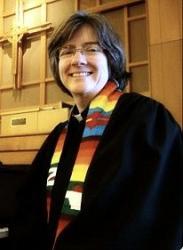
Ruth C. Duck

1947 - 2024 Person Name: Ruth Duck, b. 1947 Author of "Diverse in Culture, Nation, Race" in Gather Comprehensive

Bland Tucker

1895 - 1984 Person Name: F. Bland Tucker, 20th C. Translator of "O Gracious Light, Lord Jesus Christ" in The Worshiping Church Francis Bland Tucker (born Norfolk, Virginia, January 6, 1895). The son of a bishop and brother of a Presiding bishop of the Episcopal Church, he was educated at the University of Virginia, B.A., 1914, and at Virginia Theological Seminary, B.D., 1920; D.D., 1944. He was ordained deacon in 1918, priest in 1920, after having served as a private in Evacuation Hospital No.15 of the American Expeditionary Forces in France during World War I. His first charge was as a rector of Grammer Parish, Brunswick County, in southern Virginia. From 1925 to 1945, he was rector of historic St. John's Church, Georgetown, Washington, D.C. Then until retirement in 1967 he was rector of John Wesley's parish in Georgia, old Christ Church, Savannah. In "Reflections of a Hymn Writer" (The Hymn 30.2, April 1979, pp.115–116), he speaks of never having a thought of writing a hymn until he was named a member of the Joint Commission on the Revision of the Hymnal in 1937 which prepared the Hymnal 1940

Carolyn Winfrey Gillette

b. 1961 Author of "When Hands Reach Out" in Songs of Grace Carolyn Winfrey Gillette has been a pastor in rural, small town, suburban, and city churches; she has also served as a hospice chaplain, a hospital chaplain, and a school bus aide helping children with special needs. She and her husband Bruce are pastors of the First Presbyterian Union Church in Owego, NY. Carolyn is a gifted hymn writer who has written over 400 hymns. These hymns have been sung by congregations throughout the United States and around the world — from the Washington National Cathedral to St. Giles' Cathedral in Edinburgh, Scotland to St. George's Cathedral in Cape Town, South Africa to small town churches and small household congregations; they have also been sung at national church and international ecumenical meetings. She has written four books: "I Sing to My Savior: New Hymns from the Stories in Luke's Gospel", "God's World is Changing: New Hymns for Advent and Christmas", "Gifts of Love: New Hymns for Today's Worship" (Geneva Press) and "Songs of Grace: New Hymns for God and Neighbo"r (Upper Room Books). Her hymns have been published in over 20 books. Two of her hymns have been published by the Choristers Guild as anthems. Carolyn was commissioned to write the lead article for the special issue on "Singing Our Lives" for Baylor University's "Christian Reflectio"n journal. Her hymns have also been in "Call to Worship" journal, "The Chorister" (cover story), "Reformed Worship," "The Presbyterian Outlook" and posted on thousands of web sites. All of her hymns can be found on her website with indices to scriptural references, topics, tunes, and the three-year cycle of the Revised Common Lectionary: http://www.carolynshymns.com The World Council of Churches, National Council of Churches, Church World Service and Churches Uniting in Christ have asked her to write hymns. Habitat for Humanity International used a hymn by Carolyn for their 30th anniversary celebration. Family Promise (Interfaith Hospitality Network) did a music video of her hymn for their ministry with homeless families. The Humane Society of the United States did a music video contest of her hymn for their Blessing of the Animals service. The Presbyterian Church (USA) 216th General Assembly presented her with the "Ecumenical and Interreligious Service Recognition." Sojourners did a short video about her hymn writing. A Canadian scholar wrote her biography for the "Cambridge Dictionary for Hymnology." Feature stories about Carolyn's hymns addressing concerns facing the Church, nation and world, were done by The New Yorker, The Christian Century, America, National Public Radio, national PBS-TV, and newspapers (Philadelphia Inquirer, Washington Post, New Jersey Courier Post, Delaware News Journal, and others). Carolyn is a graduate of Lebanon Valley College and Princeton Theological Seminary. She finds joy in parish ministry, hymn writing, and most of all in her family as a wife, mother (and foster mother), grandmother, sister, and human parent to a rescue dog, "Annie." Carolyn sees her hymn writing as a partnership and is very grateful for prayers for her hymn writing, suggestions for hymns, gifts for hymn use and commissions, and invitations to speak at conferences, workshops, and church gatherings (in person and online). She hopes her hymns nurture people in their discipleship and support churches in their worship and service in the world. Sing to the Lord a new song! Copied from "About the Author" in "I Sing to My Savior: New Hymns from the Stories in Luke's Gospel." Email from Bruce Gillette

Mary Lundie Duncan

1814 - 1840 Person Name: Mary L. Duncan Author of "Lo! round the throne, a glorious band" in African Methodist Episcopal hymn and tune book Duncan, Mary, née Lundie, daughter of the Rev. Robert Lundie, Parish Minister of Kelso, and Mary Grey Lundie Duncan, was born at Kelso, April 26, 1814. On July 11, 1836, she was married to the William Wallace Duncan, the son of Rev. Henry Duncan, D.D., founder of the Savings Bank movement and minister in Ruthwell, Dumfriesshire, Scotland. In the end of December, 1839, she took a chill, which resulted in a fever and died on Jan. 5, 1840. Her hymns, mostly written for her children between July and December, 1839, appeared, in 1841, in her Memoir, by her mother, and were issued separately, in 1842, as Rhymes for my Children, to the number of 23. The best known are, "Jesus, tender Shepherd, hear me," and "My Saviour, be Thou near me." Dianne Shapiro, from John Julian "Dictionary of Hymnology" and email from Prof. Charles W. Munn (biographer of Henry Duncan)

John Chandler

1806 - 1876 Translator of "Come, holy Sun of heavenly love" in Isles of Shoals Hymn Book and Candle Light Service John Chandler, one of the most successful translators of hymns, was born at Witley in Surrey, June 16, 1806. He was educated at Corpus Christi College, Oxford, B.A. 1827, M.A. 1830. Ordained deacon in 1831 and priest in 1832, he succeeded his father as the patron and vicar of Whitley, in 1837. His first volume, entitled The Hymns of the Primitive Church, now first Collected, Translated and Arranged, 1837, contained 100 hymns, for the most part ancient, with a few additions from the Paris Breviary of 1736. Four years later, he republished this volume under the title of hymns of the Church, mostly primitive, collected, translated and arranged for public use, 1841. Other publications include a Life of William of Wykeham, 1842, and Horae sacrae: prayers and meditations from the writings of the divines of the Anglican Church, 1854, as well as numerous sermons and tracts. Chandler died at Putney on July 1, 1876. --The Hymnal 1940 Companion =============== Chandler, John, M.A.,one of the earliest and most successful of modern translators of Latin hymns, son of the Rev. John F. Chandler, was born at Witley, Godalming, Surrey, June 16, 1806, and educated at Corpus Christi College, Oxford, where he graduated in 1827. He took Holy Orders in 1831, and became Vicar of Witley in 1837. He died at Putney, July 1, 1876. Besides numerous Sermons and Tracts, his prose works include Life of William of Wykeham, 1842; and Horae Sacrae; Prayers and Meditations from the writings of the Divines of the Anglican Church, with an Introduction, 1844. His translations, he says, arose out of his desire to see the ancient prayers of the Anglican Liturgy accompanied by hymns of a corresponding date of composition, and his inability to find these hymns until he says, "My attention was a short time ago directed to some translations [by Isaac Williams] which appeared from time to time in the British Magazine, very beautifully executed, of some hymns extracted from the Parisian Breviary,with originals annexed. Some, indeed, of the Sapphic and Alcaic and other Horatian metres, seem to be of little value; but the rest, of the peculiar hymn-metre, Dimeter Iambics, appear ancient, simple, striking, and devotional—in a word in every way likely to answer our purpose. So I got a copy of the Parisian Breviary [1736], and one or two other old books of Latin Hymns, especially one compiled by Georgius Cassander, printed at Cologne, in the year 1556, and regularly applied myself to the work of selection and translation. The result is the collection I now lay before the public." Preface, Hymns of the Primitive Church, viii., ix. This collection is:— (1) The Hymns of the Primitive Church, now first Collected, Translated, and Arranged, by the Rev. J. Chandler. London, John W. Parker, 1837. These translations were accompanied by the Latin texts. The trsanslations rearranged, with additional translations, original hymns by Chandler and a few taken from other sources, were republished as (2) The Hymns of the Church, mostly Primitive, Collected, Translated, and Arranged/or Public Use, by the Rev. J. Chandler, M.A. London, John W. Parker, 1841. From these works from 30 to 40 translations have come gradually into common use, some of which hold a foremost place in modern hymnals, "Alleluia, best and sweetest;" "Christ is our Corner Stone;" "On Jordan's bank the Baptist's cry;" "Jesus, our Hope, our hearts' Desire;" "Now, my soul, thy voice upraising;" "Once more the solemn season calls;" and, "O Jesu, Lord of heavenly grace;" being those which are most widely used. Although Chandler's translations are somewhat free, and, in a few instances, doctrinal difficulties are either evaded or softened down, yet their popularity is unquestionably greater than the translations of several others whose renderings are more massive in style and more literal in execution. --John Julian, Dictionary of Hymnology (1907)

Jeffery W. Rowthorn

1934 - 2025 Person Name: Jeffery Rowthorn Author of "Creating God, Your Fingers Trace" in Chalice Hymnal

Brian A. Wren

b. 1936 Person Name: Brian Wren, 1936- Author of "Go Now in Peace" in Worship and Rejoice Brian Wren (b. Romford, Essex, England, 1936) is a major British figure in the revival of contemporary hymn writing. He studied French literature at New College and theology at Mansfield College in Oxford, England. Ordained in 1965, he was pastor of the Congregational Church (now United Reformed) in Hockley and Hawkwell, Essex, from 1965 to 1970. He worked for the British Council of Churches and several other organizations involved in fighting poverty and promoting peace and justice. This work resulted in his writing of Education for Justice (1977) and Patriotism and Peace (1983). With a ministry throughout the English-speaking world, Wren now resides in the United States where he is active as a freelance lecturer, preacher, and full-time hymn writer. His hymn texts are published in Faith Looking Forward (1983), Praising a Mystery (1986), Bring Many Names (1989), New Beginnings (1993), and Faith Renewed: 33 Hymns Reissued and Revised (1995), as well as in many modern hymnals. He has also produced What Language Shall I Borrow? (1989), a discussion guide to inclusive language in Christian worship. Bert Polman

J. Grigg

1720 - 1768 Person Name: Joseph Grigg Author of "Jesus, and shall it ever be" in Songs for the Lord's House Grigg, Joseph, was born in 1728, according to the D. Sedgwick’s Manuscript," but this date seems to be some six or eight years too late. He was the son of poor parents and was brought up to mechanical pursuits. In 1743 he forsook his trade and became assistant minister to the Rev. Thomas Bures, of the Presbyterian Church, Silver Street, London. On the death of Mr. Bures in 1747, he retired from the ministry, and, marrying a lady of property, look up his residence at St. Albans. He died at Walthamstow, Essex, Oct. 29, 1768. As a hymnwriter Grigg is chiefly known by two of his hymns, "Behold a stranger at the door"; and "Jesus, and can it ever be?" His hymnwriting began, it is said, at ten years of age. His published works of various kinds number over 40. Those in which his hymns are found are:— (1) Miscellanies on Moral and Religious Subjects, &c, London, Elizabeth Harrison, 1756. (2) The Voice of Danger, the Voice of God. A Sermon Preached at St. Albans, and at Box-Lane, Chiefly with a View to the apprehended Invasion. By J. Grigg. London, J. Buckland, 1756. To this is appended his hymn, "Shake, Britain, like an aspen shake." (3) Four Hymns on Divine Subjects wherein the Patience and Love of Our Divine Saviour is displayed, London, 1765. (4) Hymns by the late Rev. Joseph Grigg, Stourbridge, 1806. (5) During 1765 and 1766 he also contributed 12 hymns to The Christians Magazine. In 1861 D. Sedgwick collected his hymns and poems, and published them with a memoir as: Hymns on Divine Subjects, * * * * London, 1861. This volume contains 40 "Hymns," and 17 "Serious Poems." In the “S. MSS." Sedgwick notes that in 1861 he omitted three hymns by Grigg, which were then unknown to him, viz.:—l) On "The National Fast," appended to a sermon preached at Northampton, Feb. 13, 1761, by W. Warburton, and published in London, 1761. (2) "A Harvest Hymn by the late Rev. Joseph Grigg," in 6 stanzas, in the Evangelical Magazine, July, 1822; and (3) On the Parable of Dives and Lazarus, dated "Feb. 15, 1767." -- John Julian, Dictionary of Hymnology (1907)

G. W. Briggs

1875 - 1959 Person Name: George Wallace Briggs Author of "Lord, in the hollow of thy hand" in Hymns for Worship George Wallace Briggs is a Canon of Worcester Cathedral and one of the most distinguished British hymn writers and hymnologists of today. Six of his hymns appear in the Episcopal Hymnal of 1940 (American). Another hymn on the Bible entitled "Word of the living God" was written for the 25th Anniversary of the British Bible Reading Fellowship and was sung in Westminster Abbey on June 5, 1947. It has been widely used since that time. Canon Briggs is a leading member of the Hymn Society of Great Britain and Ireland. He is also the composer of several hymn times, six of which have appeared in British hymnals. In addition to his work as a clergy man of the Church of England and an hymnologist, he has interest himself actively in the field of religious education, being largely responsible for two books with wide circulation in Britain, "Prayers and Hymns for used in Schools" and "The Daily Service." These books have had great influence on the worship practices of British schools, public and private. It is of historic interest that he is the author of one of the prayers used at the time of the famous meeting of Churchill and Roosevelt on H.M.S. Prince of Wales in 1941 when the Atlantic Charter was framed. --Ten New Hymns on the Bible, 1952. Used by permission.

Pages


Export as CSV
It looks like you are using an ad-blocker. Ad revenue helps keep us running. Please consider white-listing Hymnary.org or getting Hymnary Pro to eliminate ads entirely and help support Hymnary.org.