

 My Starred Hymns
 My FlexScores
 My Hymnals
 My Purchased Files
Planning worship?
Check out our sister site, ZeteoSearch.org,
for 20+ additional resources related to your search.
- |
User Links
Person Results
Gregory Murray
1905 - 1992 Person Name: A. Gregory Murray, OSB Topics: Lent; Lent; Lent 5 Year A Composer (psalm tone) of "[I place all my trust in you, my God]" in RitualSong
Gregory Murray
Friedrich Filitz
1804 - 1876 Person Name: Friedrich Filitz, 1804-1876 Topics: Lent; Lent 5; Lent Composer of "WEM IN LEIDENSTAGEN" in Lutheran Book of Worship Friedrich Filitz PhD Germany 1804-1876. Born at Arnstadt. Thuringia, he was a German composer and musicologist. He collected church music. He also studied philosophy. In 1833 he worked in Berlin as a music critic and at other employment. He was also a music historian. With Ludwig Erck, he published a collection of 15th & 17th Century chorales in 1845. He moved to Munich and published a chorale book in 1847. His legacy of vauable church music was donated to the Bavarian State Library, where it has made many forgotten works available once again. He died in Bonn, Germany.
John Perry
Friedrich Filitz
Frederick C. Maker
1844 - 1927 Person Name: Frederick C. Maker, 1844-1927 Topics: Lent; Lent Composer of "ST. CHRISTOPHER" in Evangelical Lutheran Worship Frederick C. Maker (b. Bristol, England, August 6, 1844; d. January 1, 1927) received his early musical training as a chorister at Bristol Cathedral, England. He pursued a career as organist and choirmaster—most of it spent in Methodist and Congregational churches in Bristol. His longest tenure was at Redland Park Congregational Church, where he was organist from 1882-1910. Maker also conducted the Bristol Free Church Choir Association and was a long-time visiting professor of music at Clifton College. He wrote hymn tunes, anthems, and a cantata, Moses in the Bulrushes.
Bert Polman
Frederick C. Maker
Ithamar Conkey
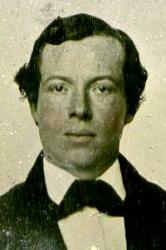
1815 - 1867 Person Name: Ithamar Conkey, 1815-1867 Topics: Lent; Lent 3; Lent Composer of "RATHBUN" in Lutheran Book of Worship Ithamar D. Conkey USA 1815-1867. Born of Scottish ancestry in Shutesbury, MA, he became a wool merchant. He married Elizabeth Billings, and they had a daughter and two sons. He was organist at Central Baptist Church,Norwich, CN. After that, he went to NewYork City and served as bass soloist at Calvary Episcopal church and Grace Church. Later, he served as bass soloist and choir director of Madison Avenue Baptist Church. His famous hymn was written in 1849. Two years later, William Howard Doane was baptized in the same church.
John Perry
Ithamar Conkey
Elizabeth Cecilia Clephane
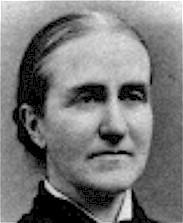
1830 - 1869 Person Name: Elizabeth C. Clephane, 1830-1869 Topics: Lent; Lent Author of "Beneath the Cross of Jesus" in Evangelical Lutheran Worship Clephane, Elizabeth Cecilia, third daughter of Andrew Clephane, Sheriff of Fife, was born at Edinburgh, June 18, 1830, and died at Bridgend House, near Melrose, Feb. 19, 1869. Her hymns appeared, almost all for the first time, in the Family Treasury, under the general title of Breathings on the Border. In publishing the first of these in the Treasury, the late Rev. W. Arnot, of Edinburgh, then editor, thus introduced them:—
"These lines express the experiences, the hopes, and the longings of a young Christian lately released. Written on the very edge of this life, with the better land fully, in the view of faith, they seem to us footsteps printed on the sands of Time, where these sands touch the ocean of Eternity. These footprints of one whom the Good Shepherd led through the wilderness into rest, may, with God's blessing, contribute to comfort and direct succeeding pilgrims."
The hymns, together with their dates,are:—
1. Beneath the cross of Jesus. Family Treasury, 1872, p. 398,
2. Mine eyes for ever closed. Family Treasury, 1872, p. 398.
3. Who climbeth up too nigh. Family Treasury, 1872, p. 552.
4. Into His summer garden. Family Treasury, 1873, p. 245.
5. From my dwelling midst the dead. Family Treasury, 1873, p. 365.
6. The day is drawing nearly done. Family Treasury, 1873, p. 389.
7. Life-light waneth to an end. Family Treasury, 1874, p. 595.
8. There were ninety and nine that safely lay. Family Treasury, 1874, p. 595.
Of these Nos. 1 and 8 are in common use. [Rev. James Mearns, M.A.]
--John Julian, Dictionary of Hymnology (1907)
Elizabeth Cecilia Clephane
George Washington Doane
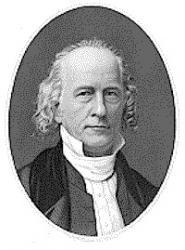
1799 - 1859 Person Name: George W. Doane Topics: Sundays in Lent; Lent, Fourth Sunday Author of "Thou art the Way: to Thee alone" in Church Book Doane, George Washington, D.D. Bishop Doane was born at Trenton, New Jersey, May 27, 1799, and graduated at Union College, Schenectady, New York. Ordained in 1821, he was Assistant Minister at Trinity Church, New York, till 1824. In 1824 he became a Professor at Trinity College, Hartford, Conn.; in 1828 Rector of Trinity Church, Boston; and, in 1832, Bishop of New Jersey. He founded St. Mary's Hall, Burlington, 1837, and Burlington College, Burlington, 1846. Died April 27, 1859. Bishop Doane's exceptional talents, learning, and force of character, made him one of the great prelates of his time. His warmth of heart secured devoted friends, who still cherish his memory with revering affection. He passed through many and severe troubles, which left their mark upon his later verse. He was no mean poet, and a few of his lyrics are among our best. His Works, in 4 volumes with Memoir by his son, were published in 1860. He issued in 1824 Songs by the Way, a small volume of great merit and interest. This edition is now rare. A second edition, much enlarged, appeared after his death, in 1859, and a third, in small 4to, in 1875. These include much matter of a private nature, such as he would not himself have given to the world, and by no means equal to his graver and more careful lyrics, on which alone his poetic fame must rest.The edition of 1824 contains several important hymns, some of which have often circulated without his name. Two of these are universally known as his, having been adopted by the American Prayer Book Collection, 1826:--
1. Softly now the light of day. Evening. This, in addition to its use in American hymnals, is also found in the English Collections, including Snepp's Songs of Grace & Glory. Written in 1824.
2. Thou art the way, to Thee alone. Christ the Way. This, in the judgment of many, is the first of American hymns, and one of the most admirable and useful in the English language. In the United States its use is most extensive, and since its introduction into the English Collections by Bickersteth in 1833, Hall in his Mitre, in 1836, and others, it has grown in favour until it ranks with the most popular of the great English hymns. Near in merit to the foregoing stands a companion piece in the same work, which deserves to be better known :—
3. Lord, should we leave Thy hallowed feet.
The next three have been overlooked at home, but have obtained considerable circulation in English Collections.
4. Father of mercies hear, Thy pardon we implore. Ash Wednesday or Lent. A translation of "Audi, benigne Conditor" q.v.), published in his Songs by the Way, 1824, together with several other translations, thus anticipating by twelve years the great English movement in that direction. Original translation in his Songs by the Way, 1875Miller (S. & S., p. 12) attributes this translation to Dr. Neale in error.
5. Return and come to God. Invitation. In his Songs, &c, 1824. It is found in Hall’s Mitre, 1836; the Baptist Hymnal, 1879, and several others.
6. To thee, 0 Lord, with dawning light. Morning. This hymn is attributed to Heber by Miller (S. & S. , p. 381) in error. It is included in the Society for Promoting Christian Knowledge Hymns, 1852; in Windle and others. It is from the Songs, &c, 1824.
His later hymns, the dates of which are generally preserved in the last edition of his Songs by the Way, include the following, which are more or less in use :—
7. Beloved, it is well. All well in Christ. This is entitled "To my wife"; is dated Mar. 12, 1833, and was written in a copy of Dr. Bedell's "It is well." It is given in Kennedy, 1863.
8. Broken-hearted, weep no more. Assurance of Peace. The date of this hymn is not preserved. It is found as early as 1829, when it appeared in the 2nd edition of Cleland's (Baptist) Hymns.
9. Fling out the banner, let it float. Missions, Home & Foreign. This hymn, sometimes dated 1824 in error, was written at Riverside, 2nd Sunday in Advent, 1848, and is one of the author's latest effusions. It is in extensive use both in Great Britain and America.
10. He came not with His heavenly crown. The two Advents. In his Songs by the Way, edition 1875, this poem is dated Dec. 1827. In Dale's English Hymnbook, 1879, it is given with the omission of stanza iii., and in the American Protestant Episcopal Hymnal, 1871, it begins with stanza iv., "Once more, O Lord, Thy sign shall be." Full text in Lyra Sac. Amer., p. 92.
11. Lift not thou the wailing voice. Burial. A funeral hymn, adopted by the Anglican Hymnbook, but dated 1826 in error, for 1830.
12. What is that, mother? The lark, my child. This is not a hymn, but a familiar and long popular song.
13. "When darkness erst [once] at God's command. Israel in Egypt. In Kennedy, 1863, No. 722.
14. Young and happy while thou art. Youth for Christ. A favourite piece in many juvenile collections. It is dated Sept., 1827, and is given in Songs by the Way, 1875.
The Lyra Sacra Americana also contains the following:—
15. Brightness of the Father's glory. Morning. A tr. of "Consors Paterni luminis " (q.v.). It is from the Songs, &c, 1824.
16. Child that kneelest meekly there. Child at Prayer. Suggested by a cast from a piece of sculpture by Greenough representing a child at prayer.
17. Grant me, Lord, Thy graces three. Faith, Hope, and Charity desired.
18. Perfect through suffering may it be. Uses of suffering. Dated in Songs by the Way, "The Breakers, June 1, 1853."
19. Yes, it is a faithful saying. Redemption. In his Songs, &c, 1824. [Rev. F. M. Bird, M.A.]
-- John Julian, Dictionary of Hymnology (1907)
George Washington Doane
Thomas John Williams
1869 - 1944 Person Name: Thomas J. Williams, 1869-1944 Topics: Lent; Lent I A; Lent I C Composer of "EBENEZER" in Worship (4th ed.) Although his primary vocation was in the insurance business, Thomas John Williams (b. Ynysmeudwy, Glamorganshire, Wales, 1869; d. Llanelly, Carmarthenshire, Wales, 1944) studied with David Evans at Cardiff and later was organist and choirmaster at Zion Chapel (1903-1913) and Calfaria Chapel (1913-1931), both in Llanelly. He composed a number of hymn tunes and a few anthems.
Bert Polman
Thomas John Williams
Johann Heermann
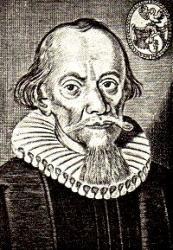
1585 - 1647 Topics: Church Year Lent; Lent, Third Sunday; Lent, Fourth Sunday Author of "Lord, Thy Death and Passion Give" in The Hymnal and Order of Service Johann Heermann's (b. Raudten, Silesia, Austria, 1585; d. Lissa, Posen [now Poland], 1647) own suffering and family tragedy led him to meditate on Christ's undeserved suffering. The only surviving child of a poor furrier and his wife, Heermann fulfilled his mother's vow at his birth that, if he lived, he would become a pastor. Initially a teacher, Heermann became a minister in the Lutheran Church in Koben in 1611 but had to stop preaching in 1634 due to a severe throat infection. He retired in 1638. Much of his ministry took place during the Thirty Years' War. At times he had to flee for his life and on several occasions lost all his possessions. Although Heermann wrote many of his hymns and poems during these devastating times, his personal faith and trust in God continued to be reflected in his lyrics. He is judged to be the finest hymn writer in the era between Martin Luther and Paul Gerhardt, one whose work marks a transition from the objective hymns of the Reformation to the more subjective hymns of the seventeenth century. His hymn texts were published in collections such as Devoti Musica Cordis, Hauss- und Hertz-Musica (1630, expanded in 1636, 1644), and Sontags- und Fest-evangelia (1636).
Bert Polman
===================
Heermann, Johann, son of Johannes Heermann, furrier at Baudten, near Wohlau, Silesia, was born at Baudten, Oct. 11, 1585. He was the fifth but only surviving child of his parents, and during a severe illness in his childhood his mother vowed that if he recovered she would educate him for the ministry, even though she had to beg the necessary money. He passed through the schools at Wohlau; at Fraustadt (where he lived in the house of Valerius Herberger, q. v., who took a great interest in him); the St. Elizabeth gymnasium at Breslau; and the gymnasium at Brieg. At Easter, 1609, he accompanied two young noblemen (sons of Baron Wenzel von Rothkirch), to whom he had been tutor at Brieg, to the University of Strassburg; but an affection of the eyes caused him to return to Baudten in 1610. At the recommendation of Baron Wenzel he was appointed diaconus of Koben, a small town on the Oder, not far from Baudten, and entered on his duties on Ascension Day, 1611, and on St. Martin's Day, 1611, was promoted to the pastorate there. After 1623 he suffered much from an affection of the throat, which compelled him to cease preaching in 1634, his place being supplied by assistants. In October, 1638, he retired to Lissa in Posen, and died there on Septuagesima Sunday (Feb. 17), 1647. (Koch, iii. 16-36; Allgemeine Deutsche Biographie, xi. 247-249, &c.)
Much of Heermann's manhood was spent amid the distressing scenes of the Thirty Years' War; and by his own ill health and his domestic trials he was trained to write his beautiful hymns of “Cross and Consolation." Between 1629 and 1634, Koben was plundered four times by the Lichtenstein dragoons and the rough hordes under Wallenstein sent into Silesia by the King of Austria in order to bring about the Counter-Reformation and restore the Roman Catholic faith and practice; while in 1616 the town was devastated by fire, and in 1631 by pestilence. In these troublous years Heermann several times lost all his moveables; once he had to keep away from Koben for seventeen weeks; twice he was nearly sabred; and once, while crossing the Oder in a frail boat loaded almost to sinking, he heard the bullets of the pursuing soldiers whistle just over his head. He bore all with courage and patience, and he and his were wonderfully preserved from death and dishonour. He was thus well grounded in the school of affliction, and in his House and Heart Music some of his finest hymns are in the section entitled "Songs of Tears. In the time of the persecution and distress of pious Christians."
As a hymnwriter Heermann ranks with the beat of his century, some indeed regarding him as second only to Gerhardt. He had begun writing Latin poems about 1605, and was crowned as a poet at Brieg on Oct. 8, 1608. He marks the transition from the objective standpoint of the hymnwriters of the Reformation period to the more subjective and experimental school that followed him. His hymns are distinguished by depth and tenderness of feeling; by firm faith and confidence in face of trial; by deep love to Christ, and humble submission to the will of God. Many of them became at once popular, passed into the hymnbooks, and still hold their place among the classics of German hymnody. They appeared principally in—
(1) Devoti Musica Cordis. Hauss-und Hertz-Musica &c. Leipzig and Breslau, 1630, with 49 hymns (2nd edition 1636, with 64; 3rd edition 1644, with 69). The first section is entitled "Hymns of Penitence and Consolation from the words of the Ancient Fathers of the Church." Seven of these, however, have no mention in their individual titles of the sources from which they are derived; and the remainder are mostly based not on Latin hymns, but on the prose meditations in Martin Moller's Meditationes sanctorum patrum, or on the mediaeval compilations known as the Meditationes and the Manuale of St. Augustine. (2) Sontags-und Fest-Evangelia. Leipzig and Breslau, 1636, being hymns on the Gospels for Sundays and festivals. (3) Poetische Erquickstunden, Nürnberg, 1656; and its Fernere Fortsetzung, also Nürnberg, 1656 [both in Wernigerode], are poems rather than hymns. The hymns of the Hauss-und Hertz-Musica, with a representative selection from Heermann's other poetical works, were edited by C. E. P. Wackernagel, prefaced by a long biographical and critical introduction, and published at Stuttgart, 1855.
Six of the most important of Heermann's hymns are annotated under their respective first lines. The other hymns by Heermann which have passed into English are :—
I. Hymns in English common use:--
i. 0 Jesu, du mein Bräutigam. Holy Communion. In his Devoti Musica Cordis, Breslau, 1630, p. 78, in 12 stanzas of 4 lines. Thence in Mützell, 1858, No. 34, in Wackernagel's ed. of his Geistliche Lieder, No. 22, and the Unverfälschter Liedersegen, 1851, No. 283. Seems to be founded on Meditation xi. in the mediaeval compilation known as St. Augustine's Manuale. Translated as:—
0 Jesu, Lord, who once for me, a good translation of stanzas i., ii., iv., v., viii., by A. T. Russell, as No. 158 in his Psalms & Hymns, 1851.
Other translations are: (l) 0 Jesu! Bridegroom of my Soul," by J. C. Jacobi, 1722, p. 44 (1732, p. 73). (2) "Dear Saviour, who for me hast borne," by Miss Dunn, 1857.
ii. Rett, 0 Herr Jesu, rett dein Ehr. In Time of Trouble. A prayer for deliverance and peace for the Church. In his Devoti Musica Cordis, 1630, p. 119, in 5 stanzas of 4 lines, among the "Songs of Tears." Thence in Mützell, 1858, No. 48, in Wackernagel’s ed., No. 36, and the Unverfälschter Liedersegen, 1851, No. 245. Translated as:—
Thine honour rescue, righteous Lord, in full, by Dr. M. Loy, in the Ohio Lutheran Hymnal, 1880.
iii. Treuer Wächter Israel. In Time of War. 1630, p. 115, in 13 stanzas of 7 lines, among the "Songs of Tears." In Mützell, 1858, No. 47; in Wackernagel's edition, No. 35, and the Unverfälschter Liedersegen, 1851, No. 594. Lauxmann, in Koch, viii. 549, says of it:—
"It is a powerful hymn filled with that prevailing prayer that takes heaven by force," and relates of st. vii.,11. v-7, "Eine Mauer um uns bau," that on Jan. 6, 1814, the Allied Forces were about to enter Schleswig. A poor widow with her daughter and grandson lived in a little house near the entrance of the town. The grandson was reading in his hymnbook those in time of war, and when he came to this said, “It would be a good thing, grandmother, if our Lord God would build a wall around us." Next day all through the town cries of distress were heard, but all was still before their door. On the following morning they had courage to open the door, and lo a snowdrift concealed them from the view of the enemy. On this incident Clemens Brentano composed a beautiful poem "Draus vor Schleswig."
It is translated as:—
Jesu! as a Saviour, aid. A good tr. of st; vii., viii., xiii., by A. T. Russell, as No. 138 in his Psalms & Hymns, 1851.
iv. Zionklagt mit Angst und Schmerzen. Church of Christ. First published in his Devoti Musica Cordis, 2nd ed., 1636 (1644, p. 196), in 6 stanzas of 8 lines, entitled, "From the beautiful golden saying of Isaiah, Chapter xlix." In Mützell, 1858, No. 101, in Wackernagel’s ed., No. 53, and the Unverfälschter Liedersegen, 1851, No. 256. Translated as:—
Sion bow'd with anguish weepeth A good translation of stanzas i., iii., v., by A. T. Russell, as No. 141 in his Psalms & Hymns, 1851.
Another translation is: "Zion mourns in fear and anguish," by Miss Winkworth, 1869, p. 198.
II. Hymns not in English common use:--
v. Ach Jesu! dessen Treu. Love to Christ. 1630, p. 144, in 33 stanzas. One of his finest hymns, full of deep love to Christ, but from its great length very little used in Germany. Translated as, "Ah! Jesus! Lord! whose faithfulness," by Miss Burlingham, in the British Herald, May, 1867, p. 72.
vi. Der Tod klopft bei mir an. For the Dying. 1656, p. 22, in 121. Translated as, "That Death is at my door," by Miss Winkworth, 1869, p. 201.
vii. Du weinest für Jerusalem. Christ weeping over Jerusalem. 1630, p. 81, in 6 stanzas, entitled, "On the Tears of Christ." Founded on St. Luke xix. 41-44, part of the Gospel for the 10 Sundays after Trinity. The translations are: (1) "With tears o'er lost Jerusalem," by Miss Cox, 1841, p. 159. (2) "Our Lord wept o'er Jerusalem," by Dr. H. Mills, 1845 (1856, p. 295). (3) "Thou weepest o'er Jerusalem," by Miss Winkworth, 1855,p. 70.
viii. Herr Jesu Christe mein getreuer Hirte. Holy Communion. 1630, p. 74, in 9 stanzas, founded on M. Moller's Meditationes sanctorum patrum, pt. i. c. 11, and pt. v. c. 2. The translations are: (1) "Dear Saviour, Thou my faithful Shepherd, come” by Miss Dunn, 1857, p. 111. (2) "Lord Jesus Christ, my faithful Shepherd, hear," by Miss Winkworth, 1858, p. 93, repeated in Lyra Eucharistica, 1863-64.
ix. Herr unser Gott, lass nicht zu Schanden werden. Christ's Church. 1630, p. 114, as one of the "Songs of Tears," in 5 stanzas. Translated as, "Ah! Lord our God, let them not be confounded," by Miss Winkworth, 1869, p. 197.
x. Hilf mir, mein Oott, hilf dass nach dir. Christian Conduct. 1630, p. 32, in 7 stanzas, entitled, "For a better life. From the words of Augustine." Founded on No. i. of the Meditationes current under the name of St. Augustine. This meditation is apparently by St. Anselm of Canterbury. Translated as, "Lord, raise in me a constant Flame," by J. C. Jacobi, 1725, p. 27 (1732, p. 105).
xi. Jesu, der du tausend Schmerzen. In Sickness. 1656, in the Fernere Fortsetzung, p. 79, in 12 lines, entitled, "In great bodily pain." Translated as, “Jesu, who didst stoop to prove," by Miss Winkworth, 1869, p. 200.
xii. Jesu Tilger meiner Sünden. Lent. 1656, in the Fernere Fortsetzung, p. 1, in 10 lines, entitled, "For Victory in Temptation." Translated as, "Jesu, Victor over sin," by Miss Winkworth, 1869, p. 201.
xiii. 0 Jesu, Jesu, Gottes Sohn. Love to Christ, 1630, p. 83, in 7 stanzas, entitled, “Of the Love, which a Christian heart bears to Christ, and will still bear." A beautiful expansion of his motto "Mihi omnia Jesus." The translations are: (1) "What causes me to mourn is this," a translation of stanza ii. by P. H. Molther, as No. 371, in the Moravian Hymn Book, 1789 (1886, No. 461). (2) "O Jesus, Jesus, Son of God," by Miss Burlingham, in the British Herald, Oct. 1865, p. 153, and in Reid's Praise Book, 1872.
xiv. Treuer Gott ich muss dir klagen. In Trouble. 1630, p. 103, in 12 stanzas, entitled, "Hymn of a sorrowful heart for increase of faith." Translated as, "Faithful God! I lay before Thee," by J. C. Jacobi, 1720, p. 9(1722, p. 70; 1732, p. 117), and as No. 538 in pt. i. of the Moravian Hymn Book, 1754.
xv. Wollt ihr euch nicht, o ihr frommen Christen. Second Advent. 1636, p. 210, in 9 stanzas, entitled, "On the day of the Holy Bishop Nicolaus. Gospel of Luke, 12 Chapter." Translated as: (l) "0 dear Christians, as 'tis needful, wou'd ye," as No. 153 in pt. i. of the Moravian Hymn Book, 1754. (2) “Help us, 0 Christ, to watch and pray," a tr. of st. ix. as st. iii. of No. 868 in the Moravian Hymn Book, 1789 (1849, No. 1221).
xvi. Wo soll ich fliehen hin. Lent. 1630, p. 20, in 11 stanzas, entitled, "A hymn of consolation in which a troubled heart lays all its sins in true faith upon Christ. From Tauler." Based on M. Moller's Meditationes, vol. i. pt. i., No. 10. Translated as, "0 whither shall I fly," as No. 447 in pt. i. of the Moravian Hymn Book, 1754. In 1886, No. 279, it begins with "0 Jesus, source of Grace" (stanza ii.). [Rev. James Mearns, M.A.]
--John Julian, Dictionary of Hymnology (1907)
Johann Heermann
William Henry Monk
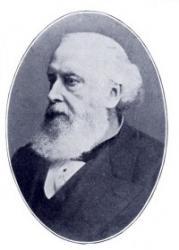
1823 - 1889 Person Name: William Henry Monk (1823-1889) Topics: Lent (first Sunday); Lent (season) Harmonizer of "HEINLEIN" in Common Praise (1998) William H. Monk (b. Brompton, London, England, 1823; d. London, 1889) is best known for his music editing of Hymns Ancient and Modern (1861, 1868; 1875, and 1889 editions). He also adapted music from plainsong and added accompaniments for Introits for Use Throughout the Year, a book issued with that famous hymnal. Beginning in his teenage years, Monk held a number of musical positions. He became choirmaster at King's College in London in 1847 and was organist and choirmaster at St. Matthias, Stoke Newington, from 1852 to 1889, where he was influenced by the Oxford Movement. At St. Matthias, Monk also began daily choral services with the choir leading the congregation in music chosen according to the church year, including psalms chanted to plainsong. He composed over fifty hymn tunes and edited The Scottish Hymnal (1872 edition) and Wordsworth's Hymns for the Holy Year (1862) as well as the periodical Parish Choir (1840-1851).
Bert Polman
William Henry Monk
St. Bernard of Clairvaux
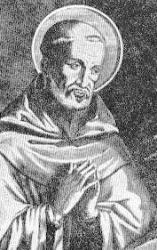
1090 - 1153 Person Name: Bernard of Clairvaux, 1091-1153 Topics: Lent; Lent Author (attributed to) of "O Sacred Head, Now Wounded" in Christian Worship (1993) Bernard of Clairvaux, saint, abbot, and doctor, fills one of the most conspicuous positions in the history of the middle ages. His father, Tecelin, or Tesselin, a knight of great bravery, was the friend and vassal of the Duke of Burgundy. Bernard was born at his father's castle on the eminence of Les Fontaines, near Dijon, in Burgundy, in 1091. He was educated at Chatillon, where he was distinguished for his studious and meditative habits. The world, it would be thought, would have had overpowering attractions for a youth who, like Bernard, had all the advantages that high birth, great personal beauty, graceful manners, and irresistible influence could give, but, strengthened in the resolve by night visions of his mother (who had died in 1105), he chose a life of asceticism, and became a monk. In company with an uncle and two of his brothers, who had been won over by his entreaties, he entered the monastery of Citeaux, the first Cistercian foundation, in 1113. Two years later he was sent forth, at the head of twelve monks, from the rapidly increasing and overcrowded abbey, to found a daughter institution, which in spite of difficulties and privations which would have daunted less determined men, they succeeded in doing, in the Valley of Wormwood, about four miles from the Abbey of La Ferté—itself an earlier swarm from the same parent hive—on the Aube. On the death of Pope Honorius II., in 1130, the Sacred College was rent by factions, one of which elected Gregory of St. Angelo, who took the title of Innocent II., while another elected Peter Leonis, under that of Anacletua II. Innocent fled to France, and the question as to whom the allegiance of the King, Louie VI., and the French bishops was due was left by them for Bernard to decide. At a council held at Etampes, Bernard gave judgment in favour of Innocent. Throwing himself into the question with all the ardour of a vehement partisan, he won over both Henry I., the English king, and Lothair, the German emperor, to support the same cause, and then, in 1133, accompanied Innocent II., who was supported by Lothair and his army, to Italy and to Rome. When Lothair withdrew, Innocent retired to Pisa, and Bernard for awhile to his abbey of Clairvaux. It was not until after the death of Anacletus, the antipope, in January, 1138, and the resignation of his successor, the cardinal-priest Gregory, Victor II., that Innocent II., who had returned to Rome with Bernard, was universally acknowledged Pope, a result to which no one had so greatly contributed as the Abbot of Clairvaux. The influence of the latter now became paramount in the Church, as was proved at the Lateran Council of 1139, the largest council ever collected together, where the decrees in every line displayed the work of his master-hand. After having devoted four years to the service of the Pope, Bernard, early in 1135, returned to Clairvaux. In 1137 he was again at Rome, impetuous and determined as ever, denouncing the election of a Cluniac instead of a Clairvaux monk to the see of Langres in France, and in high controversy in consequence with Peter, the gentle Abbot of Cluny, and the Archbishop of Lyons. The question was settled by the deposition by the Pope of the Cluniac and the elevation of a Clairvaux monk (Godfrey, a kinsman of St. Bernard) into his place. In 1143, Bernard raised an almost similar question as to the election of St. William to the see of York, which was settled much after the same fashion, the deposition, after a time, if only for a time, of William, and the intrusion of another Clairvaux monk, Henry Murdac, or Murduch, into the archiepiccopal see. Meantime between these two dates—in 1140—the condemnation of Peter Abilaid and his tenets, in which matter Bernard appeared personally as prosecutor, took place at a council held at Sens. Abelard, condemned at Sens, appealed to Rome, and, resting awhile on his way thither, at Cluny, where Peter still presided as Abbot, died there in 1142. St. Bernard was next called upon to exercise his unrivalled powers of persuasion in a very different cause. Controversy over, he preached a crusade. The summer of 1146 was spent by him in traversing France to rouse the people to engage in the second crusade; the autumn with a like object in Germany. In both countries the effect of his appearance and eloquence was marvellous, almost miraculous. The population seemed to rise en masse, and take up the cross. In 1147 the expedition started, a vast horde, of which probably not a tenth ever reached Palestine. It proved a complete failure, and a miserable remnant shared the flight of their leaders, the Emperor Conrad, and Louis, King of France, and returned home, defeated and disgraced. The blame was thrown upon Bernard, and his apology for his part in the matter is extant. He was not, however, for long to bear up against reproach; he died in the 63rd year of his age, in 1153, weary of the world and glad to be at rest.
With the works of St. Bernard, the best ed. of which was pub. by Mabillon at Paris in the early part of the 18th cent. (1719), we are not concerned here, except as regards his contributions, few and far between as they are, to the stores of Latin hymnology. There has been so much doubt thrown upon the authorship of the hymns which usually go by his name,—notably by his editor, Mabillon himself,—that it is impossible to claim any of them as having been certainly written by him; but Archbishop Trench, than whom we have no greater modern authority on such a point, is satisfied that the attribution of them all, except the "Cur mundus militat," to St. Bernard is correct. "If he did not write," the Archbishop says, "it is not easy to guess who could have written them; and indeed they bear profoundly the stamp of his mind, being only inferior in beauty to his prose."
The hymns by which St. Bernard is best known as a writer of sacred poetry are: (1.) "Jesu duicis memoria," a long poem on the " Name of Jesus"—known as the "Jubilus of St. Bernard," and among mediaeval writers as the " Rosy Hymn." It is, perhaps, the best specimen of what Neale describes as the "subjective loveliness " of its author's compositions. (2.) "Salve mundi Salutore," an address to the various limbs of Christ on the cross. It consists of 350 lines, 50 lines being addressed to each. (3.) "Laetabundus, exultet fidelis chorus: Alleluia." This sequence was in use all over Europe. (4.) "Cum sit omnis homo foenum." (5.) " Ut jucundas cervus undas." A poem of 68 lines, and well known, is claimed for St. Bernard by Hommey in his Supplementum Patrum, Paris, 1686, p. 165, but on what Archbishop Trench, who quotes it at length, (Sac. Lat. Poetry, p. 242,) deems " grounds entirely insufficient." (6.) " Eheu, Eheu, mundi vita," or " Heu, Heu, mala mundi vita." A poem of nearly 400 lines, is sometimes claimed for St. Bernard, but according to Trench, “on no authority whatever." (7.) “O miranda vanitas." This is included in Mabillon's ed. of St. Bernard's Works. It is also attributed to him by Rambach, vol. i. p. 279. Many other hymns and sequences are attributed to St. Bernard. Trench speaks of a " general ascription to him of any poems of merit belonging to that period whereof the authorship was uncertain." Hymns, translated from, or founded on, St. Bernard's, will be found in almost every hymnal of the day, details of which, together with many others not in common use, will be found under the foregoing Latin first lines.
-John Julian, Dictionary of Hymnology (1907)
See also in:
Hymn Writers of the Church
St. Bernard of Clairvaux
Pages