You help make Hymnary.org possible. More than 10 million people from 200+ countries found hymns, liturgical resources and encouragement on Hymnary.org in 2025, including you. Every visit affirms the global impact of this ministry.

If Hymnary has been meaningful to you this year, would you take a moment today to help sustain it? A gift of any size—paired with a note of encouragement if you wish—directly supports the server costs, research work and curation that keep this resource freely available to the world.

Give securely online today, or mail a check to:
Hymnary.org
Calvin University
3201 Burton Street SE
Grand Rapids, MI 49546

Thank you for your partnership, and may the hope of Advent fill your heart.

Person Results

Topics:conventions
In:people

Planning worship? Check out our sister site, ZeteoSearch.org, for 20+ additional resources related to your search.
Showing 41 - 50 of 127Results Per Page: 102050

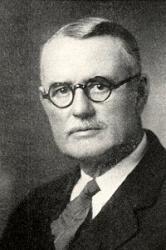
John R. Clements

1868 - 1946 Person Name: Jno. R. Clements Topics: Conventions Author of "Rejoice in the Light" in Consecrated Hymns John R. Clements was born in County Armagh, Ireland 28 November 1868 and was brought to the United States at the age of two years. He worked at the age of thirteen as a retail grocery clerk and had a successful wholesale grocery business. He began writing poetry when he was young. Dianne Shapiro, from "The Singers and Their Songs: sketches of living gospel hymn writers" by Charles Hutchinson Gabriel (Chicago: The Rodeheaver Company, 1916)

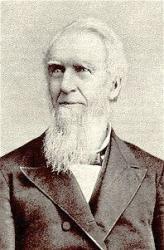
Thomas Kelly

1769 - 1855 Person Name: Kelly Topics: Conventions Author of "Truth Spreading" in The Gospel Psalmist Kelly, Thomas, B.A., son of Thomas Kelly, a Judge of the Irish Court of Common Pleas, was born in Dublin, July 13, 1769, and educated at Trinity College, Dublin. He was designed for the Bar, and entered the Temple, London, with that intention; but having undergone a very marked spiritual change he took Holy Orders in 1792. His earnest evangelical preaching in Dublin led Archbishop Fowler to inhibit him and his companion preacher, Rowland Hill, from preaching in the city. For some time he preached in two unconsecrated buildings in Dublin, Plunket Street, and the Bethesda, and then, having seceded from the Established Church, he erected places of worship at Athy, Portarlington, Wexford, &c, in which he conducted divine worship and preached. He died May 14, 1854. Miller, in his Singers & Songs of the Church, 1869, p. 338 (from which some of the foregoing details are taken), says:— "Mr. Kelly was a man of great and varied learning, skilled in the Oriental tongues, and an excellent Bible critic. He was possessed also of musical talent, and composed and published a work that was received witli favour, consisting of music adapted to every form of metre in his hymn-book. Naturally of an amiable disposition and thorough in his Christian piety, Mr. Kelly became the friend of good men, and the advocate of every worthy, benevolent, and religious cause. He was admired alike for his zeal and his humility; and his liberality found ample scope in Ireland, especially during the year of famine." Kelly's hymns, 765 in all, were composed and published over a period of 51 years, as follows:— (1) A Collection of Psalms and Hymns extracted from Various Authors, by Thomas Kelly, A.B., Dublin, 1802. This work contains 247 hymns by various authors, and an Appendix of 33 original hymns by Kelly. (2) Hymns on Various Passages of Scripture, Dublin, 1804. Of this work several editions were published: 1st, 1804; 2nd, 1806; 3rd, 1809; 4th, 1812. This last edition was published in two divisions, one as Hymns on Various Passages of Scripture, and the second as Hymns adapted for Social Worship. In 1815 Kelly issued Hymns by Thomas Kelly, not before Published. The 5th edition, 1820, included the two divisions of 1812, and the new hymns of 1815, as one work. To the later editions of 1820, 1826, 1836, 1840, 1846, and 1853, new hymns were added, until the last published by M. Moses, of Dublin, 1853, contained the total of 765. As a hymn-writer Kelly was most successful. As a rule his strength appears in hymns of Praise and in metres not generally adopted by the older hymn writers. His "Come, see the place where Jesus lay" (from "He's gone, see where His body lay"),"From Egypt lately come"; “Look, ye saints, the sight is glorious"; "On the mountain's top appearing"; "The Head that once was crowned with thorns"; "Through the day Thy love has spared us"; and “We sing the praise of Him Who died," rank with the first hymns in the English language. Several of his hymns of great merit still remain unknown through so many modern editors being apparently adverse to original investigation. In addition to the hymns named and others, which are annotated under their respective first lines, the following are also in common use:— i. From the Psalms and Hymns, 1802:— 1. Grant us, Lord, Thy gracious presence. Commencement of Divine Worship. 2. Jesus, Immortal King, go on [display]. Missions. 3. Saviour, through the desert lead us. Divine Guidance Desired. 4. The day of rest once more [again] comes round. Sunday. 5. We've no abiding city here. Seeking Heaven. ii. From the Hymns on Varous Passages of Scripture, first edition, 1804 :— 6. Boundless glory, Lord, be thine. Praise for the Gospel. 7. By whom shall Jacob now arise? Epiphany. 8. Glory, glory to our King. Praise to Christ as King. 9. How pleasant is the sound of praise. Praise for Redemption. 10. How sweet to leave the world awhile. In Retirement, or For a Retreat. 11. Inform I long had bowed the knee. Jesus, the Saviour, or Praise for Salvation. 12. It is finished! sinners, hear it. Good Friday. 13. Jesus, the Shepherd of the sheep. The Good Shepherd. 14. Let reason vainly boast her power. Death. 15. Poor and afflicted, Lord, are Thine. Affliction. 16. Praise we Him to Whose kind favour. Close of Service. 11. Spared a little longer. Safety in God. 18. Stricken, smitten, and afflicted. Passiontide. ii. From the Hymns, &c, second edition, 1806:— 19. Far from us be grief and sadness. Joy of Believers. 20. Give us room that we may dwell. Missions. 21. Glory, glory everlasting. Praise of Jesus. 22. God has.turned my grief to gladness. Joy after Sorrow. 23. Happy they who trust in Jesus. Peace in Jesus. 24. Hark, the notes of angels singing. Angels praising Jesus. 25. Hark! 'tis a martial sound. Christian Life a Warfare. 26. I hear a sound [voice] that comes from far. The Gospel Message. 27. Jesus is gone up on high. Divine Worship. 28. Now [O] may the Gospel's conquering power. Home Missions. In the 1853 edition of the Hymns it begins “O may the Gospel's conqu'ring force." 29. O Zion, when I think on thee. Desiring Heaven. 30. Praise the Saviour, ye who know Him. Praise of Jesus. 31. See from Zion's sacred mountain. The Fountain of Life. 32. The atoning work is done. Jesus the High Priest. 33. Zion is Jehovah's dwelling. The Church of God. 34. Zion stands by hills surrounded. The Safety of the Church. 35. Zion's King shall reign victorious. Missions. iv. From the Hymns, &c, 3rd edition, 1809:— 36. Behold the Temple of the Lord. The Church a Spiritual Temple. 37. Blessed Fountain, full of grace. Fountain for Sin. 38. Brethren, come, our Saviour bids us. Holy Communion. 39. Fly, ye seasons, fly still faster. Second Advent Desired. 40. God of Israel, we adore Thee. Evening. 41. Gracious Lord, my heart is fixed. Trust and Peace. 42. Hark, a voice! it comes from heaven. Death. 43. Hark, that shout of rapt'rous joy. Second Advent. 44. If our warfare be laborious. Labour and Rest . 45. Lo, He comes, let all adore Him. Missions. 46. Nothing know we of the season. Time of Second Advent uncertain. 47. O had I the wings of a dove. Holiness and Heaven desired. 48. O where is now that glowing love. Despondency. 49. Our Father sits on yonder throne. God the Father. 50. Ours is a rich and royal Feast. Holy Communion. 51. Shepherd of the chosen number. Safety in the Good Shepherd. 52. We're bound for yonder land. Life, a Voyage. 53. Welcome sight! the Lord descending. The Advent. 54. What is life? 'tis but a vapour. Death anticipated. 55. Who is this that comes from Edom? Ascension. 56. Why those fears ? Behold 'tis Jesus. Stilling the Sea. 57. Without blood is no remission. Passiontide. 58. Yes, we trust the day is breaking. Missions. v. FromHymns: Not before Published, 1815:— 59. Behold the Lamb with glory crowned. Exaltation of Christ. 60. God is love, His word has said it. God is Love. 61. God of our salvation, hear us. Opening or Close of Divine Worship. 62. In Thy Name, O Lord, assembling. Commencement of Divine Worship. 63. Keep us, Lord, O [and] keep us ever. Divine Worship. 64. Let sinners saved give thanks, and sing. Praise for Salvation. 65. Praise the Lord Who died to save us. Passiontide. 66. Salvation is of God alone. God the Author of Salvation. 67. Saviour, come, Thy [saints] friends await Thee [are waiting] . Second Advent desired. 68. Sweet were the sounds that reached our ears. Divine Mercy. 69. We'll sing of the Shepherd that died. The Lost Sheep. 70. When we cannot see our way. Trust and Peace. 71. Who is this that calms the ocean? Stilling the Sea. vi. From the Hymns on F. Passages of Scripture, &c, eds. 1820 and 1826 :-— 72. Grace is the sweetest sound. Divine Grace. 73. Now let a great effectual door. Missions. 74. Now may the mighty arm awake. Missions. 75. Now may the Spirit from above. Home Missions. 76. Sing, sing His lofty praise. Praise of Jesus. 77. Sound, 6ound the truth abroad. Missions. 78. Speed Thy servants, Saviour, speed them. Departure of Missionaries. vii. From the Hymns on Various Passages, &c, 1836:— 79. Come, O Lord, the heavens rending. Prayer for Blessings. 80. The night is far spent, the day is at hand. The Second Advent. viii. From the Hymns on Various Passages, &c, circa 1845:— 81. Joyful be the hours today. Sunday. 82. Lord, behold us few and weak. Opening of Divine Service. 83. Meet Thy people, Saviour, meet us. Meetings for Prayer. 84. Saviour, send a blessing to us. Prayer for Blessings. 85. Sing of Jesus, sing for ever. Praise of Jesus. ix. From the Hymns on Various Passages, &c, 1853:— 86. Precious volume, what thou doest. Holy Scripture. 87. Unfold to us, O Lord, unfold. Divine aid to reading Holy Scripture. All these hymns, together with those annotated under their respective first lines are in the 1853 edition of Kelly's Hymns published in Dublin by M. Moses, and in London by Simpkin, Marshall & Co. Kelly's musical editions are issued by the same publishers. -- John Julian, Dictionary of Hymnology (1907) ================== Kelly, Thomas, p. 615, i. Other hymns in common use are: 1. Behold the Man! How glorious He. (1809.) Good Friday. 2. Jesus the [Thou] Shepherd of the Sheep. (1804.) Good Shepherd. 3. Saved ourselves by Jesu's blood. (1802.) For a Revival. 4. Saviour, 'tis to [unto] Thee. (1853*.) Lent. 5. See the vineyard lately planted. (1806.) Missions. Sometimes given as "See, O Lord, the vineyard planted." 6. Sing aloud to God our strength. (1809.) Praise to the Father. 7. Sing, sing His lofty praise. (1820.) Praise to Jesus. Sometimes as "Hail our eternal King" (p. 615, No. 76). 8. Sing of Him Who bore our guilt. (1853*.) Praise to Jesus. 9. Sing we praise to God above, God our Saviour, &c. (1815.) Praise for Divine Mercy. 10. Sing we praise to God above, Sing we praise, &c. (1853*.) Praise. 11. Sons of Zion, raise your songs. (1820-26) The Exalted Saviour. 12. The Lord Himself will keep. (1809.) From “We're bound for yonder land" (sec p. 615, No. 52.) 13. The God [Lord] of glory dwells on high. (1809.) Humility and Love of Christ. 14. The people of the Lord Are on their way, &c. (1820.) Life a Pilgrimage. 15. Thus saith God of His Anointed. (1809.) Missions. 16. 'Tis to us no cause of sorrow. (1815.) Resignation. 17. To the Ark away, or perish. (1815.) Safety in Jesus only. 18. To our Lord a throne is given. (1838.) Christ the King. 19. Trust ye in the Lord for ever. (1853*.) Trust in God. 20. We'll sing in spite of scorn. (1806.) Christmas. From this "The long-expected morn" is taken. 21. What tongue can tell, what fancy paint. (1806.) Saints in Glory 22. What were Sinai's awful wonders. (1809.) Advent. 23. Whence those sounds symphonious? (1815.) Christmas. 24. While in the [this] world we still [yet] remain. (1806.) Communion of Saints. 25. Yes, 'tis a rough and thorny road. (1809.) Resignation. Sometimes given as "Though rough and thorny be the way." The dates given above are those of the various editions of Kelly's Hymns. The date 1853* indicates that the hymn is in the 1853 ed. of the Hymns, but had also appeared in a previous edition which we have not seen. --John Julian, Dictionary of Hymnology, Appendix, Part II (1907)

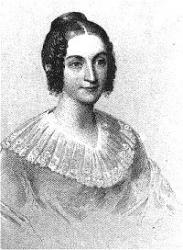
Mrs. Harry Coghill

1836 - 1907 Person Name: Annie L. Walker Topics: Conventions Author of "Work, for the night is coming" in The Sunday School Hymnal Coghill, Annie Louisa, née Walker, daughter of Robert Walker, was born at Kiddermore, Stafford­shire, in 1836, and married Harry Coghill in 1884. During a residence for some time in Canada several of her poetical pieces were printed in the Canadian newspapers. These were gathered together and published c. 1859 in her Leaves from the Backwoods. In addition to novels, plays for children, and magazine work, she edited the Autobiography and Letters of her cousin, Mrs. Oliphant, in 1898. Her popular hymn,"Work, for the night is coming," p. 317, ii., was written in Canada in 1854, and published in a Canadian newspaper, from which it passed, without any acknowledgement of the authorship, into Ira D. Sankey's Sacred Songs and Solos. Authorized text in her Oak and Maple, 1890, p. 17. --John Julian, Dictionary of Hymnology, New Supplement (1907) ====================== [See also: http://biographi.ca/en/bio.php?id_nbr=7126]

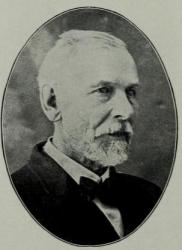
D. B. Towner

1850 - 1919 Topics: Choir and Convention Pieces for special occasions Composer of "[Drifting Away] " in The Search Light Used pseudonyms Robert Beverly, T. R. Bowden ============================== Towner, Daniel B. (Rome, Pennsylvania, 1850--1919). Attended grade school in Rome, Penn. when P.P. Bliss was teacher. Later majored in music, joined D.L. Moody, and in 1893 became head of the music department at Moody Bible Institute. Author of more than 2,000 songs. --Paul Milburn, DNAH Archives

T. C. O'Kane

1830 - 1912 Topics: Choir and Convention Pieces for special occasions Composer of "[How beautiful upon the mountains] " in The Search Light O'Kane, Tullius Clinton, an American writer, born March 10, 1830, is the author of "O sing of Jesus, Lamb of God" (Redemption); and "Who, who are these beside the chilly wave?" (Triumph in Death), in I. D. Sankey's Sacred Songs and Solos, 1878 and 1881. --John Julian, Dictionary of Hymnology, Appendix, Part II (1907) =========================== Tullius Clinton O'Kane was born in Fairfield County, Ohio, March 10, 1830. He resided with his parents in this vicinity until the spring of 1849, when he went to Delaware, Ohio, and entered the Ohio Wesleyan University, from which he graduated in 1852, with the degree A. B., and received his A. M. degree three years later from his Alma Mater. Immediately upon his graduation, he was tendered a position in the Faculty as Tutor of Mathematics, which he accepted and successfully filled for five years. The students always called him "Professor," by which title he is known to the present day. His musical abilities were early recognized in the University, and for years he was the musical precentor in the daily chapel devotions. He organized and maintained a Choral Society in the College, and was the first musical instructor in the Ohio Wesleyan Female College, which a few years ago was incorporated into the University. In 1857 he was elected to a principalship in the Cincinnati public schools, and served in that capacity until 1861, when he resigned his position to accept a place in the piano establishment of Philip Phillips & Co. He remained with this house until its removal to New York City in 1867, when, although urged to be transferred with the house to that city, he preferred to remove with his family back to Delaware, Ohio. For the ensuing six years he traveled over the state of Ohio as the general agent for the Smith American Organ Co., of Boston, Mass. During this time he visited conferences, Sunday-school conventions, both State and County, introducing his Sunday-school singing books, and in this way became well known throughout his native state, and quite extensively in some of the adjoining states. His musical compositions were first published in Philip Phillips' Musical Leaves, in 1865, and since then but few Sunday-school singing books have appeared without one or more of his compositions. His first music book, Fresh Leaves, was issued in 1868. This was followed at intervals by Dew Drops, Songs of Worship, Every Sabbath, Jasper and Gold, Redeemer's Praise, Glorious Things and Morning Stars. In connection with his son, Edward T. O'Kane, who is himself a most excellent composer and a very skillful organist, in 1882 he issued Selected Anthems, a book designed for use by the more advanced choirs. In association with J. R. Sweney and "Chaplain" McCabe, he issued Joy to the World, a song book for prayer-meetings, and the same editors, with the addition of W. J. Kirkpatrick, compiled Songs of Redeeming Love, No. 1, in 1882, and No. 2 in 1884. He also issued Songs of Praises, Unfading Treasures and Forward Songs. Some of Professor O'Kane's best known songs are Glorious Fountain, The Home Over There, On Jordan's Stormy Banks, Say, are You Ready? and many others. With Mr. O'Kane, music and musical composition have ever been a recreation, rather than a profession. He is an excellent leader of choirs, but his forte seems to be in leading large congregations, Sunday-schools and social religious meetings in sacred song. He sings "with the spirit and the understanding also " — with a due appreciation of both words and music — and very naturally infuses his enthusiasm into his audiences so that they cannot "keep from singing." In his music he endeavors to catch the spirit of the hymn, and then give it expression in the music he composes for it. This sometimes seems to have been almost an inspiration, and could be illustrated by a reference to the circumstances under which many of his compositions have been made. One of his earlier and more widely known pieces is that entitled, Over There. He says he cut this hymn out of some newspaper and put it with others in his portfolio, intending some time when he felt like it to give it a musical setting. One Sunday afternoon, after studying his lesson for the next session of his Sunday-school, he opened his portfolio, and turning over the selections, found these words, and something seemed to say, "Now's your time." He sat down at the organ, studied the hymn intently for a few moments, and then, as his fingers touched the keys of the instrument, melody and harmony were in every movement, and when the stanza was ended, melody and harmony found their expression in the chorus, and Over There was finished. Another of his well known songs is Sweeping Through the Gates. One cold, blustery day he had occasion to go from his residence to the railroad depot, about a mile distant, and in his route had to cross the river on a suspension foot-bridge. As he came down to the bridge, he thought of the "river of death," so cold, with no bridge, and then the words of the dying Cookman came to his mind, and he exclaimed to himself: 'Who, who are these beside the chilly wave? " Words, melody and refrain seemed to come all at once and all together, so that by the time he arrived back at his home, the composition was complete. Professor O'Kane is a genial, modest Christian gentleman, who carries sunshine wherever he goes. His greatest joy comes from the consciousness that his music has cheered and comforted the hearts of Christian people all over the world, and has been the means of winning thousands from the pleasures of the world to the higher enjoyments of the Christian religion. His song, Sweeping Through the Gates, will be sung till all the ransomed are gathered Over There. -Hall, J. H. (c1914). Biographies of Gospel Song and Hymn Writers. New York: Fleming H. Revell Company. ======================== O'Kane, Tullius Clinton. Died 10 February 1912, Delaware, Ohio. Buried in Oak Grove Cemetery, Delaware, Ohio. --DNAH Archives

Peter Williams

1723 - 1796 Person Name: P. Williams Topics: Conventions Author of "Prayer for the spread of the Gospel" in The Gospel Psalmist Peter Williams (b. Llansadurnin, Carmarthanshire, Wales, 1722; d. Llandyfeilog, Wales, 1796) was converted to Christianity by the preaching of George Whitefield and was ordained in the Church of England in 1744. His evangelical convictions soon made him suspect, however, and he left the state church to join the Calvinist Methodists in 1746. He served as an itinerant preacher for many years and was a primary figure in the Welsh revival of the eighteenth century. After being expelled by the Methodists in 1791 on a charge of heresy, he ministered in his own chapel during the last years of his life. He published the first Welsh Bible commentary (1767-1770) and a Bible concordance (1773); he was also one of the annotators for John Canne's Welsh Bible (1790). In addition Williams published a Welsh hymnal, Rhai Hymnau ac Odlau Ysbrydol (1759), as well as Hymns on Various Subjects (1771). Bert Polman

Palmer Hartsough

1844 - 1932 Person Name: P. H. Topics: Conventions Author of "Forward Go" in The Endeavor Hymnal Rv Palmer Hartsough USA 1844-1932. Born in Redford, MI, he attended Kalamazoo College and Michigan State Normal school (later MSU). He became an author, editor, lyricist, and librettist. After working as a traveling singing teacher in MI, IL, IA, OH, KY and TN, he opened a music studio in Rock Island, IL, around 1877, also directing music at a Baptist church there. In 1893, due to his poetic abilities, he moved to Cincinnati, OH, and joined the Fillmore Music Company, providing texts (over 1000) for their music. He also served as music director at the Bethel Mission and the 9th Street Baptist Church. He became a traveling song evangelist in 1903, and was ordained a Baptist minister in 1906, serving in Ontario, Canada, and MI from 1914 to 1927. He then returned to Plymouth, MI, where he lived the rest of his life. He never married, but was close to his two sisters, and wrote them a weekly letter for many years. With Fillmore Company he helped publish 20 songbooks. He died in Plymouth, MI. John Perry

L. H. Sigourney

1791 - 1865 Person Name: Mrs. Sigourney Topics: Conventions Author of "The Gospel for all" in The Gospel Psalmist Sigourney, Lydia, née Huntley. This distinguished name stood at the head of the female poets of America a generation ago, and is still well remembered. Born in Norwich, Connecticut, in 1791, she conducted a school in the same town from 1809 to 1814, when she removed to Hartford, where she was married to Charles Sigourney in 1819. Most of her subsequent life was spent at Hartford, and she died there, June 10, 1865. Her first publication was Moral Pieces in Prose and Verse, 1815. This was followed by 58 additional works. A thorough exploration of these, or of such of them are poetical, would be necessary to trace her hymns with accuracy. They, however, are more numerous than important. Many have been used in the older collections; some are still in use, but few are extensively and none are universally so. The principal hymnbooks in which they appeared were the Congregational Village Hymns, 1824; Kipley's Selection, 1829; and the Connecticut Psalms & Hymns, 1845; the Baptist Additional Hymns by Winchell, 1832; and Linsley and Davis's Select Hymns, 1836; and the Universalist's Hymns for Christian Devotion, by Adams & Chapin, 1846. Her best known hymns chronologically arranged are:— 1. When adverse winds and waves arise. In Affliction. A graceful lyric, possibly inspired by Sir R. Grant's " When gathering clouds around I view." 2. Blest Comforter divine. Whitsuntide. This is one of four hymns by Mrs. Sigourney, which appeared in Nettleton's Village Hymns, 1824, under the signature of "H." It is sometimes altered to "Thou Comforter divine." Her best hymn. 3. We mourn for those who toil. Death and Burial. This poem on "Mistaken Grief" appeared in Cheever's Common Place Book, 1831 4. Choose ye His Cross to bear. Holy Baptism. This was given in Ripley's Selection, 1829-31. 5. Saviour, Thy law we love. Holy Baptism. In Winchell's Additional Hymns, 1832. 6. Onward, onward, men of heaven. Missions. This missionary hymn appeared in three different books in 1833, including the Christian Lyre Supplement, &c. 7. Labourers of Christ, arise. Home Missions. This was contributed, with nine others, by Mrs. Sigourney, to Linsley & Davis's Select Hymns, 1836. This is one of the most widely used of her hymns. 8. Pastor, thou art from us taken. Burial of a Minister. Sung at the funeral of the Rev. G. F. Davis, D.D., circa 1836. 9. Go to thy rest, my [fair] child. Death of a Child. From a Selection from her poems published in London in 1841. 10. Not for the summer hour alone. Holy Matrimony. In the same Selection as No. 9. 11. Where wilt thou put thy trust? Leaning upon God. In the Connecticut Cong. Psalms & Hymns, 1845. 12. Lord, may the spirit of this feast. Holy Communion. In the same as No. 11. 13. We praise Thee if one rescued soul. Temperance Anniversary. In Adams and Chapin's Hymns for Christian Devotion, 1846. In addition to these hymns there are several others in the collections named above. As, however, they are not repeated in modern hymnbooks they are omitted from this list. We would add that two hymns, not noted above, "Little raindrops feed the rill" (Power of little things), and "There was a noble ark," are in common use in Great Britain; and that a selection of her pieces is given in the Lyra Sacra Americana, London, 1868. [Rev. F. M. Bird, M.A.] -- Excerpts from John Julian, Dictionary of Hymnology (1907) ================== Sigourney, Lydia, p. 1057, ii. Additional hymns are: 1. We thank Thee, Father, for the day. Sunday. This in Stryker's Church Songs, 1889, is dated 1850. 2. When the parting bosom bleeds. For Use at Sea. From Adams and Chapin's Hymns for Christian Devotion, 1846. 3. Prayer is the dew of faith. Prayer. 4. We praise Thee, Lord, if but one soul. An altered form of her hymn on Temperance (No. 13). --John Julian, Dictionary of Hymnology, Appendix, Part II (1907)

Howard B. Grose

1851 - 1939 Topics: Conventions Author of "Forward into Service" in The Endeavor Hymnal Born: September 5, 1851, Millerton, New York. Died: May 19, 1939, Ballston Spa, New York. Buried: Ballston Spa, New York. Grose attended the University of Chicago, Illinois, and the University of Rochester, New York (AB 1876, AM 1880). He was ordained a Baptist minister in 1883, and served at the First Baptist Church, Poughkeepsie, New York (1883-87) and the First Baptist Church, Pittsburgh, Pennsylvania (1888-90). He also served as president of the University of South Dakota (1890-92), taught history at the University of Chicago (1892-96), was assistant editor of The Watchman in Boston, Massachusetts (1896-1900), and editorial secretary for the American Baptist Home Mission Society (1904-10), and edited the Missions journal for 23 years. He lived his later years in Mount Vernon, New York. His works include: The Endeavor Hymnal (New York: 1902) Aliens or Americans, 1906 The Incoming Millions, 1906 The Praise Book, with George B. Graff (Boston, Massachusetts: United Society of Christian Endeavor, 1906) Advance to the Antilles, 1910 Never Man So Spake, 1924 --www.hymntime.org/tch

Jack P. Scholfield

1882 - 1972 Person Name: J. F. S. Topics: Conventions Author of "The Clarion of Battle" in The Endeavor Hymnal

Pages


Export as CSV
It looks like you are using an ad-blocker. Ad revenue helps keep us running. Please consider white-listing Hymnary.org or getting Hymnary Pro to eliminate ads entirely and help support Hymnary.org.