You help make Hymnary.org possible. More than 10 million people from 200+ countries found hymns, liturgical resources and encouragement on Hymnary.org in 2025, including you. Every visit affirms the global impact of this ministry.

If Hymnary has been meaningful to you this year, would you take a moment today to help sustain it? A gift of any size—paired with a note of encouragement if you wish—directly supports the server costs, research work and curation that keep this resource freely available to the world.

Give securely online today, or mail a check to:
Hymnary.org
Calvin University
3201 Burton Street SE
Grand Rapids, MI 49546

Thank you for your partnership, and may the hope of Advent fill your heart.

Person Results

Text Identifier:"^all_people_that_on_earth_do_dwell$"
In:person

Planning worship? Check out our sister site, ZeteoSearch.org, for 20+ additional resources related to your search.
Showing 51 - 60 of 66Results Per Page: 102050

Carlotta Stanley

Translator (Apache) of "All People That on Earth Do Dwell" in Christian Worship

Simon Phiri

Translator (Tonga) of "All People That on Earth Do Dwell" in Christian Worship

Slavie Radechovská

Translator (Czech) of "All People That on Earth Do Dwell" in Christian Worship

John Hopkins

1470 - 1570 Person Name: Hopkins Author of "All People that on Earth do Dwell" in Hymns for Schools, with Supplement

Daniel A. Jasko

1907 - 2002 Person Name: D. Yasko Translator (Russian) of "All People That on Earth Do Dwell" in Christian Worship Also transliterated "Yasko". According to a history of the «Bethany» Baptist Church of Los Angeles, "On March 27, 2002 after prolonged sickness, Brother Daniel Aleksandrovich Yasko went to be with the Lord. Shortly before that, the church celebrated his 95th birthday. During his ministry at the church, he was active in preaching and was a Sunday school teacher. His lessons were interesting and very edifying. He had labored a lot in the publishing of Christian literature. It is important to note at least a brief summary of his ministry: publishing of 5 hymnals with notes, a few books, a lot of radio programs, and first volume of Bible dictionary (unfortunately only for the first 9 books of Gospel)." Leland Bryant Ross

William Wallace Gilchrist

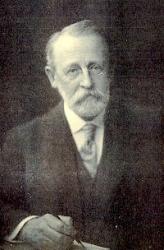
1846 - 1916 Person Name: W. W. Gilchrist Composer of "ALLEGHENY" in Bible Songs Born: January 8, 1846, Jersey City, New Jersey. Died: December 20, 1916, Easton, Pennsylvania. Buried: Saint Thomas’ Episcopal Church, Fort Washington, Pennsylvania. Gilchrist’s family moved to Philadelphia, Pennsylvania, when William was nine years old. He attended school there until the outbreak of the American civil war, when his father’s business failed and William had to seek other work. Having a good voice, he sang in choirs and choruses, first as a soprano, and later a smooth, flexible baritone. He began singing some of the principal parts in the Handel and Haydn Society, where his first real musical life began. At age 19, Gilchrist began studying organ and voice with Professor H. A. Clarke, gradually concentrating on theory. At age 25, he spent a year in Cincinnati, Ohio, as organist and teacher, returning to Philadelphia to take post of choir master at St. Clement’s Protestant Episcopal Church. He later became conductor of the Mendelssohn Club, Tuesday Club of Wilmington, and Philadelphia Symphony Society. Gilchrist was best known as a composer. His first success was in 1878, winning two prizes from the Abt Society of Philadelphia for best choruses for male voices. In 1881, he won three similar prizes from the Mendelssohn Glee Club of New York. In 1884, he took a $1,000 prize from the Cincinnati Festival Association; the judges included Saint-Saëns, Reinecke, and Theodore Thomas. This work was an elaborate setting of the Forty-Sixth Psalm, and was enthusiastically received. Gilchrist afterwards modified it and brought it out at the Philadelphia Festival in 1885. Gilchrist also served as editor of the 1895 Presbyterian hymnal, as musical editor of The Magnificat in 1910, and wrote symphonies, chamber and choral music. His works include: An Easter Idyll Psalm 46 (New York: 1882) One Hundred and Third Psalm Ninetieth Psalm Fifth Psalm Prayer and Praise De Profundis The Rose (New York: 1887) Ode to the Sun A Christmas Idyll (Boston, Massachusetts: 1898) The Lamb of God (New York: 1909) © The Cyber Hymnal™ (hymntime.com/tch)

Henry A. Bruinsma

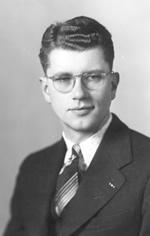
1916 - 1991 Adapter of "ALL LANDS" in Psalter Hymnal (Blue) It was in Bruinsma's musical compositions that his brilliance was most displayed. “Henry’s personality was … embodied in his music: colorful, radiating charisma, magnetic in a nonverbal way,” niece Jane DeGroot said. Bruinsma displayed musical potential even before he was considered old enough to take music lessons, said his wife, Grace Hekman Bruinsma. The preschooler would eavesdrop on his older brother’s piano lessons. After the teacher left, Bruinsma would climb onto the piano bench to practice his brother’s lesson assignment. Later on, he chose to attend Ottawa Hills High School in Grand Rapids, Mich., for its music program. Following high school graduation in 1933, Bruinsma attended the University of Michigan for a degree in music. He stayed on to complete a Ph.D. in musicology, becoming the first musicologist to graduate from the University of Michigan. It was during his graduate work that Bruinsma wrote Scherzo on a Dutch Nursery Song. “He never lost his love for Dutch history or Dutch Reformed music,” Grace Bruinsma said. It was also during his time at U of M that Bruinsma began taking Grace to music concerts, and in 1939 they were married. Bruinsma began his time as a professor of music at Calvin College (1946-55). In addition to his teaching duties at the college, Bruinsma taught the first music and theology course at Calvin Seminary. He also chaired the first Conference on Liturgy of Music. However, not long after his time at Calvin, Bruinsma decided he was being called to move from teaching to education administration. Of note is his time at Ohio State University (1959-64), where he served as the director of the School of Music. He also held the position of executive committee member of the College of Education. Next, Bruinsma moved to what is now Arizona State University (1964-79), another notable mark in his education administration career. During that time, he served first as chair of the School of Music, then as founding dean of the College of Fine Arts. He is also known to have started the first religious studies program at Arizona State as part of the university’s interdisciplinary studies program. Due to the amount of time he spent in education administration, much of Bruinsma’s musical compositions were never published. After his death, Grace Bruinsma contacted Gerry Bouma of Morningside College in Sioux City, Iowa. Bouma and Henry Bruinsma had met in 1969 at a Grand Rapids Christian High School concert in Chicago. “For whatever reason, Henry and Grace treated us like we were their kids,” Bouma said. Grace asked Bouma to catalog and publish the 10,000 pages of Henry’s material. Taking a semester sabbatical, Bouma began his work. Bouma’s catalog of Bruinsma’s work can be found in the Heritage Hall Archives at the Hekman Library, Calvin College. The Archives also hosts additional works from Bruinsma’s time at Calvin. --Excerpted from Calvin Spark, Spring 2006 issue

Debbie Dietrich

Adapter (Apache) of "All People That on Earth Do Dwell" in Christian Worship

Cornelius Becker

1561 - 1604 Translator (into German) of "All People That on Earth Do Dwell" in Psalms for All Seasons Becker, Cornelius, son of Adrian Becker, merchant of Leipzig, was born at Leipzig, Oct. 24, 1561. After studying at the University, where he graduated 1584, he kept a private school till his appointment, in the beginning of 1588, as one of the masters of the St. Thomas School, a post he vacated in Sept., 1588. on being appointed diaconus at Rochlitz. In 1592 he became diaconus, and in 1594, pastor of the church of St. Nicholas, Leipzig; and subsequently Professor of Theology in the University, from which, in 1599, he received the degree of D.D. On account of false accusations he was deprived of his charge on June 5, 1601, but was vindicated and restored on Nov. 29 following. He died suddenly at Leipzig, May 25, 1604 (Koch, ii. 219-223; Allgemeine Deutsche Biographie, ii. 221). He wrote a few hymns, but his principal work was his version of the Psalter, 1602. The only version translated into English is:— Der Herr ist mein getreuer Hirt, Dem ich mich ganz vertraue. [Ps. xxiii.] Appeared in S. Calvidus's Harmonia Cantionum Ecclesiasticarum, Leipzig, 1598, and then in Becker's Der Psalter Dauids Gesangweis, Leipzig, 1602. Thence in Wackernagel, v., p. 369, in 3 stanzas of 7 lines, entitled "The Good Shepherd." In Bunsen's Allgemeine Gesang-Buch, 1846, No. 2. It is translated as "My Shepherd is the Saviour dear," by Miss Dunn, 1857, p. 19. [Rev. James Mearns, M.A.] -- John Julian, Dictionary of Hymnology (1907)

Ernest Y. L. Yang

1899 - 1984 Person Name: Ernest Yang Alterer (Chinese) of "All People That on Earth Do Dwell" in Psalms for All Seasons Ernest Y. L. Yang (b. Wuxi,Jiangsu, China, 1899; d. China, 1984), served on the committee that prepared the interdenominational Chinese hymnbook Hymns of Universal Praise (1936). He wrote over two hundred hymns, including melodies, arrangements, translations, and original texts. Regarded as an outstanding musicologist in China, he is known especially for his important two-volume history of ancient music in China, Zhongkuo Gudai Yinyue Shigao (1944). A graduate of St. John's University in Shanghai and Guanghua University, Yang taught at Yanjing University, the National Conservatory of Music, and Jinling Women's University. Psalter Hymnal Handbook, 1988

Pages


Export as CSV
It looks like you are using an ad-blocker. Ad revenue helps keep us running. Please consider white-listing Hymnary.org or getting Hymnary Pro to eliminate ads entirely and help support Hymnary.org.