You help make Hymnary.org possible. More than 10 million people from 200+ countries found hymns, liturgical resources and encouragement on Hymnary.org in 2025, including you. Every visit affirms the global impact of this ministry.

If Hymnary has been meaningful to you this year, would you take a moment today to help sustain it? A gift of any size—paired with a note of encouragement if you wish—directly supports the server costs, research work and curation that keep this resource freely available to the world.

Give securely online today, or mail a check to:
Hymnary.org
Calvin University
3201 Burton Street SE
Grand Rapids, MI 49546

Thank you for your partnership, and may the hope of Advent fill your heart.

Person Results

Topics:commitment
In:people

Planning worship? Check out our sister site, ZeteoSearch.org, for 20+ additional resources related to your search.
Showing 61 - 70 of 1,645Results Per Page: 102050

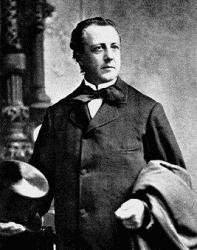
Ray Palmer

1808 - 1887 Topics: The Church in the World Commitment: Trust; Commitment Author of "My Faith Looks Up to Thee" in Voices United Ray Palmer (b. Little Compton, RI, 1808; d. Newark, NJ, 1887) is often considered to be one of America's best nineteenth-century hymn writers. After completing grammar school he worked in a Boston dry goods store, but a religious awakening prodded him to study for the ministry. He attended Yale College (supporting himself by teaching) and was ordained in 1835. A pastor in Congregational churches in Bath, Maine (1835-1850), and Albany, New York (1850-1865), he also served as secretary of the American Congregational Union (1865-1878). Palmer was a popular preacher and author, writing original poetry as well as translating hymns. He published several volumes of poetry and hymns, including Sabbath Hymn Book (1858), Hymns and Sacred Pieces (1865), and Hymns of My Holy Hours (1868). His complete poetical works were published in 1876. Bert Polman =================== Palmer, Ray, D.D., son of the Hon. Thomas Palmer, a Judge in Rhode Island, was born at Little Compton, Rhode Island, Nov. 12, 1808. His early life was spent at Boston, where he was for some time clerk in a dry-goods store. At Boston he joined the Park Street Congregational Church, then under the pastoral care of Dr. S. E. Dwight. After spending three years at Phillips Academy, Andover, he entered Yale College, New Haven, where he graduated in 1830. In 1835 he became pastor of the Central Congregational Church, Bath, Maine. During his pastorate there he visited Europe in 1847. In 1850 he was appointed to the First Congregational Church, at Albany, New York, and in 1865 Corresponding Secretary to the American Congregational Union, New York. He resigned in 1878, and retired to Newark, New Jersey. He died at Newark, Mar. 29, 1887. Dr. Palmer's published works in prose and verse include:-- (1) Memoirs and Select Remains of Charles Pond, 1829; (2) The Spirit's Life, a Poem, 1837; (3) How to Live, or Memoirs of Mrs. C. L. Watson, 1839; (4) Doctrinal Text Book, 1839; (5) Spiritual Improvement, 1839, republished as Closet Hours in 185; (6) What is Truth? or Hints on the Formation of Religious Opinions, 1860; (7) Remember Me, or The Holy Communion, 1865; (8) Hymns and Sacred Pieces, with Miscellaneous Poems, 1865; (9) Hymns of my Holy Hours, and Other Pieces, 1868; (10) Home, or the Unlost Paradise, 1873; and (11) Voices of Hope and Gladness, 1881. Most of Dr. Palmer's hymns have passed into congregational use, and have won great acceptance. The best of them by their combination of thought, poetry, and devotion, are superior to almost all others of American origin. The first which he wrote has become the most widely known of all. It is:— 1. My faith looks up to Thee. Faith in Christ. This hymn was written by the author when fresh from College, and during an engagement in teaching in New York. This was in 1830. The author says concerning its composition, "I gave form to what I felt, by writing, with little effort, the stanzas. I recollect I wrote them with very tender emotion, and ended the last line with tears." A short time afterwards the hymn was given to Dr. Lowell Mason for use, if thought good, in a work then being compiled by him and Dr. T. Hastings. In 1831 that work was published as Spiritual Songs for Social Worship: adapted to the use of Families, &c. Words and Music arranged by Thomas Hastings, of New York, and Lowell Mason of Boston. It is No. 141 in 4 stanzas of 8 lines, entitled "Self Consecration," and accompanied with the tune by Dr. L. Mason, there given as "My faith looks up to Thee, "but subsequently known as Olivet. (Orig. text of hymn in Thring's Collection, 1882.) It has passed into most modern collections in all English-speaking countries, and has been rendered into numerous languages. That in Latin, by H. M. Macgill (p. 708, ii.), begins "Fides Te mea spectat." 2. Fount of everlasting love. Praise for renewed Spiritual Life. This also appeared in the Spiritual Songs, &c, 1831, No. 191, in 4 stanzas of 4 lines, and headed "Praise for a Revival." The hymns which are given below are all in Dr. Palmer's Poetical Works, N. Y., 1876, and the dates appended in brackets are those given by him in that work. 3. Thou who roll'st the year around. (1832.) Close of the Year. In several American collections. 4. Away from earth my spirit turns. (1833.) Holy Communion. Appeared in Lowell Mason's Union Hymns, in 4 stanzas of 4 lines. In the Church Praise Book, N. Y.. 1882, it begins with st. ii., "Thou, Saviour, art the Living Bread." 5. Before Thy throne with tearful eyes. (1834.) Liberty of Faith. 6. Stealing from the world away. (1834.) Evening. Written at New Haven in 1834, and is very popular in America. 7. Thine [Thy] holy day's returning. (1834.) Sunday Morning. 8. Wake thee, 0 Zion. (1862.) Zion Exultant. 9. We stand in deep repentance. (1834.) Lent. This last, No. 9, in common with Nos. 10, 11, 12, is marked "original," in the Presbyterian Parish Hymns, 1843. Probably they were given to the editors of that book in manuscript, and had not previously appeared. 10. And is there, Lord, a rest? (1843.) Rest in Heaven. Written at Bath, Maine, in 1843. 11. 0 sweetly breathe the lyres above. Consecration to Christ. This was accidentally omitted from Dr. Palmer's Poetical Works, 18?6. S. W. Duffield says:— "It was written in the winter of 1842-43, at a time of revival. At the previous Communion several had been received under circumstances that made Doddridge's hymn, ‘0 happy day that fixed my choice 'a most appropriate selection. Not caring to repeat it, and needing something similar, Dr. Palmer composed the present hymn." English Hymns, N. Y., 1886, p. 432. 12. When downward to the darksome tomb. (1842.) Death Contemplated. Written at Bath, Maine, 1842. From 1843 there comes a long break, and Dr. Palmer seems to have done no more hymn-writing until called upon by Professors Park and Phelps, of Andover, for contributions to their Sabbath Hymn-Book, 1858. His hymns written for that important collection rank amongst the best that America has produced. This is specially true of the first four (Nos. 13-16) from the Latin. 13. Jesus, Thou joy of loving hearts. (l858.) Translation of a cento from "Jesu dulcis memoria" (p. 588, ii.). 14. 0 Bread to Pilgrims given. (1858.) Translation of “O esca viatorum" (q.v.). 15. 0 Christ our King, Creator Lord. (1858.) Translation of “Rex Christe, factor omnium " 16. Come Holy Ghost, in love. (1858.) Translation of “Veni Sancte Spiritus" (q.v.) 17. Jesus, these eyes have never seen. (1858.) Christ loved, though unseen. This hymn is accounted by many as next in merit and beauty to "My faith looks up to Thee." 18. Lord, my weak thought in vain would climb. (1858.) God Unsearchable. This hymn deals with the mysteries of Predestination in a reverent and devout manner. 19. Thy Father's house! thine own bright home. (1858.) Heaven. The next group, Nos. 20-27, appeared in Dr. Robinson's Songs for the Sanctuary, 1865. 20. Lord, Thou wilt bring the joyful day. (1864.) Contemplation of Heaven. Written in New York City. 21. Eternal Father, Thou hast said. (i860.) Missions. 22. Jesus, Lamb of God, for me. (1863.) Jesus, the Way of Salvation. Written in Albany, New York. 23. Take me, 0 my Father, take me. (1864.) Lent. 24. Wouldst thou eternal life obtain. (1864.) Good Friday. 25. Come Jesus, Redeemer, abide Thou with me. (1864.) Holy Communion. 26. Lord, Thou on earth didst love Thine own. (1864.) Fellowship with Christ. 27. Thou, Saviour, from Thy throne on high. (1864.) Prayer. The next four (Nos. 28-31) present another group. They appeared in D. E. Jones's Songs for the New Life, 1869, and the Reformed Dutch Hymns of the Church, N. Y., 1869. The dates of composition are from Dr. Palmer's Poems, 1876. 28. Lord, Thou hast taught our hearts to glow. (1865.) Ordination, or Meeting of Ministers. 29. When inward turns my searching gaze. (1868.) Evening. 30. 0 Jesus, sweet the tears I shed. (1867.) Good Friday. 31. Jesus, this [my] heart within me burns. (1868.) Love. The hymns which follow are from various sources. 32. 0 Christ, the Lord of heaven, to Thee. (1867.) Universal Praise to Christ. Appeared in the author's Hymns of my Holy Hours, 1867. It is a hymn of great merit, and is widely used. 33. Behold the shade of night is now receding. (1869.) A translation of "Ecce jam noctis." (p. 320, i., and Various). 34. Hid evening shadows let us all be waking. (1869.) A translation of "Nocte surgentes" (p. 809, i.). 35. I give my heart to Thee. (Aug. 20, 1868.) A translation of "Cor meum Tibi dedo," p. 262, ii. 36. Holy Ghost, that promised came. (1873.) Whitsuntide. From the author's Poems, 1876. 37. 0 Holy Comforter, I hear. The Comforter. Appeared in the Boston Congregationalist, September 7th, 1867. 38. Lord, when my soul her secrets doth reveal. (1865.) Holy Communion. Most of the foregoing hymns are in common in Great Britain, and all are found in one or more American hymnbooks of importance. [Rev. F. M. Bird, M.A.] -- John Julian, Dictionary of Hymnology (1907) =================== Palmer, Ray, D.D., p. 877, i. The following original hymns by Dr. Palmer are also in common use:— 1. O Rock of Ages, since on Thee. Faith. From his Poetical Works, 1876, p. 27, where it is dated 1869. Bp. Bickersteth says "This hymn"... is "worthy of Luther." (Note Hymnal Companion, ed. 1876.) 2. Thy holy will, my God, be mine. Resignation. From his Hymns of my Holy Hours, &c, 1868, p. 47. Also in his P. Works, 1876, dated 1867. 3. We praise Thee, Saviour, for Thy grace. Holy Communion. From his Hymns and Sacred Pieces, &c, 1865. Also in P. Works, 1876, dated 1864. --John Julian, Dictionary of Hymnology, Appendix, Part II (1907) ========== Ray Palmer was born at Little Compton, Rhode Island, in 1808. He studied at Phillip's Academy, Andover, Mass., and graduated at Yale College in 1830. In 1835, he was ordained pastor of a Congregational Society in Bath, Maine, from which he removed, in 1850, to the pastorate of a Congregational Society in Albany, N.Y. He has published many hymns, some of his own authorship, and some translations. He has published some sermons and reviews. --Annotations of the Hymnal, Charles Hutchins, M.A. 1872.

Charles C. Converse

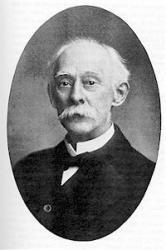
1832 - 1918 Person Name: Charles Crozat Converse Topics: The Church in the World Commitment: Trust; Commitment Composer of "FRIENDSHIP" in Voices United Pseudonyms: Clare, Lester Vesé, Nevers, Karl Re­den, Revons ================================= Charles Crozat Converse LLD USA 1832-1918. Born in Warren, MA, he went to Leipzig, Germany to study law and philosophy, as well as music theory and composition under Moritz Hauptmann, Friedrich Richter, and Louis Plaidy at the Leipzig Conservatory. He also met Franz Liszt and Louis Spohr. He became an author, composer, arranger and editor. He returned to the states in 1859 and graduated from the Albany, NY, Law School two years later. He married Lida Lewis. From 1875 he practiced law in Erie, PA, and also was put in charge of the Burdetta Organ Company. He composed hymn tunes and other works. He was offered a DM degree for his Psalm 126 cantata, but he declined the offer. In 1895 Rutherford College honored him with a LLD degree. He spent his last years in Highwood, NJ, where he died. He published “New method for the guitar”, “Musical bouquet”, “The 126th Psalm”, “Sweet singer”, “Church singer”, “Sayings of Sages” between 1855 and 1863. he also wrote the “Turkish battle polka” and “Rock beside the sea” ballad, and “The anthem book of the Episcopal Methodist Church”. John Perry

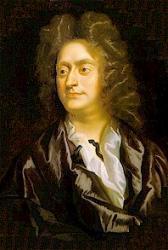
Henry Purcell

1659 - 1695 Topics: The Church in the World Commitment: Peace and Justice; Commitment Composer of "WESTMINSTER ABBEY" in Voices United Henry Purcell (b. Westminster, London, England, 1659; d. Westminster, 1695), was perhaps the greatest English composer who ever lived, though he only lived to the age of thirty-six. Purcell's first piece was published at age eight when he was also a chorister in the Chapel Royal. When his voice changed in 1673, he was appointed assistant to John Hingston, who built chamber organs and maintained the king's instruments. In 1674 Purcell began tuning the Westminster Abbey organ and was paid to copy organ music. Given the position of composer for the violins in 1677, he also became organist at Westminster Abbey in 1679 (at age twenty) and succeeded Hingston as maintainer of the king's instruments (1683). Purcell composed music for the theater (Dido and Aeneas, c. 1689) and for keyboards, provided music for royal coronations and other ceremonies, and wrote a substantial body of church music, including eighteen full anthems and fifty-six verse anthems. Bert Polman

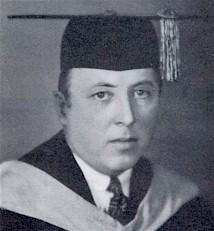
Earl Marlatt

1892 - 1976 Topics: Commitment Author of ""Are Ye Able," Said the Master" in Chalice Hymnal Marlatt, Earl Bowman. (Columbus, Indiana, May 24, 1892--June 13, 1976, Winchester, Ind.). One of twin boys, he was born into the family of a Methodist Episcopal minister at Columbus, Ind. Graduating from DePauw University, Phi Beta Kappa, in 1912, he continued his studies at Harvard and Boston Universities, Oxford, England, and the University of Berlin. Upon returning to America he spent one year in newspaper work at Kenosha, Wisconsin, and then joined the United States Army, serving as a second lieutenant of field artillery in World War I. He joined the staff at Boston University as Associate Professor of Philosophy in 1923, becoming Professor two years later, was Professor of Literature, Boston University School of Theology, and Dean, 1938-1945. In 1946 he became Professor of Philosophy of Religion at Perkins School of Theology, Southern Methodist University, Dallas, Texas. Member of many learned societies, a poet of distinction, he won the Golden Flower at the May Day Poetry Tournament in Boston, 1925, and has been President of both the Boston Browning Society and the Boston Authors' Club. A writer of prose as well as verse he has contributed widely to American journals. Marlatt was closely associated with and was literary advisor to H. Augustine Smith who compiled a series of hymnals during the 1920s, most of which were for young people. He was associate editor of The American Student Hymnal, 1928, one of the Smith books, and for many years a member of the Executive Committee of the Hymn Society. Sources: Who's Who in America; handbooks of various hymnals; personal acquaintance and correspondence. --Robert G. McCutchan, DNAH Archives

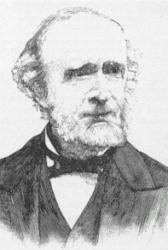
Aaron R. Wolfe

1821 - 1902 Topics: Commitment and Submission Author of "A Hymn of Joy We Sing" in Hymns for the Family of God Wolfe, Aaron Robarts, was born at Mendham, New Jersey, Sep. 6, 1821, and educated at Williams College, 1844; and the Union Theological Seminary, New York, 1851. On April 9, 1851, he was licensed by the Third Presbytery of New York. For some lime he had charge of a school for young ladies at Tallahassee, Florida; and in 1859 he established "The Hillside Seminary for Young Ladies" at Montclair, New Jersey. In 1858 he contributed 7 hymns under the signature "A. R. W." to Hastings's Church Melodies. These are:— 1. A Parting hymn we sing. Close of Holy Communion. 2. Complete in Thee, no work of mine. Complete in Christ. Published in the N. Y. Evangelist, 1850 or 51. 3. Draw near, O Holy Dove, draw near. Holy Communion. 4. How blest indeed are they. In the Likeness of Christ. 5. My God, I thank Thee for the guide. Conscience. 6. Mysterious influence divine. The Cross of Christ. 7. Thou Maker of our mortal frame. Chief end of Man. The most popular of these hymns are Nos. 1, 2, and 3. [Rev. F. M. Bird, M.A.] -- John Julian, Dictionary of Hymnology (1907)

Hubert P. Main

1839 - 1925 Person Name: Hubert P. Main, 1839-1925 Topics: Commitment To Christ Arranger of "ELLISDIE" in Psalter Hymnal (Blue) Hubert Platt Main DD USA 1839-1925. Born at Ridgefield, CT, he attended singing school as a teenager. In 1854 he went to New York City and worked as an errand boy in a wallpaper house. The next year he became an errand boy in the Bristow & Morse Piano Company. He was an organist, choir leader, and compiled books of music. He also helped his father edit the “Lute Songbook” by Isaac Woodbury. In 1866 he married Olphelia Louise Degraff, and they had two sons: Lucius, and Hubert. In 1867 he filled a position at William B Bradbury’s publishing house. After Bradbury’s death in 1868 the Bigelow & Main Publishers were formed as its successor. He also worked with his father until his father’s death in 1873. Contributors to their efforts were Fanny Crosby, Ira Sankey, Wilbur Crafts, and others. In addition to publishing, Main wrote 1000+ pieces of music, including part song, singing school songs, Sunday school music, hymns, anthems, etc. He also arranged music and collected music books. He 1891 he sold his collection of over 3500 volumes to the Newberry Library in Chicago, IL, where they were known as the Main Library. Some of his major publications include: “Book of Praise for the Sunday school” (1875), “Little pilgrim songs” (1884), “Hymns of Praise” (`1884), “Gems of song for the Sunday school” (1901), “Quartettes for men’s voices: Sacred & social selections” (1913). In 1922 Hope Publishing Company acquired Bigelow & Main. He was an editor, author, compiler, and composer, as well as publisher. He died in Newark, NJ. John Perry

Johann Hermann Schein

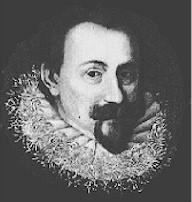
1586 - 1630 Person Name: Johann H. Schein, 1586-1630 Topics: Commitment Composer of "EISENACH" in Hymns of the Saints Schein, Johann Hermann, son of Hieronymus Schein, pastor at Griinhain, near Annaberg, in Saxony, was born at Grünhain, Jan. 20,1586. He matriculated at the University of Leipzig in 1607, and studied there for four years. Thereafter he acted for some time as a private tutor, including two years with a family at Weissenfels. On May 21, 1615, he was appointed Capellmeister, at the court of Duke Johann Ernst, of Sachse-Weimar; and in 1616 he became cantor of I3t. Thomas's Church, and music director at Leipzig, in succession to Seth Calvisius (d. Nov. 24, 1615). This post he held till his death, at Leipzig, Nov. 19, 1630. Schein was one of the most distinguished musicians of his time, both as an original composer, and as a harmoniser of the works of others. As a hymnwriter he was not so prolific, or so noteworthy. Most of his hymns were written on the deaths of his children or friends, e.g. on seven of his children, and on his first wife. They appeared mostly in broadsheet form, and were included, along with his original melodies, in his Cantional oder Gesang-Buch Augspurgischer Confession, Leipzig, 1627; 2nd ed., 1645. [Both in Wernigerode Library.] Those of Schein's hymns which have passed into English are:— i. Machs mit mir, Gott, nach deiner Güt. For the Dying. First published, as a broadsheet, at Leipzig, 1628, as a Trost-Liedlein á 5 (i.e. for 5 voices), &c. [Berlin Library.] The words, the melody, and the five-part setting, are all by Schein. It was written for, and first used at, the funeral, on Dec. 15, 1628, of Margarita, wife of Caspar Werner, a builder and town councillor at Leipzig, and a churchwarden of St. Thomas's. It is in 6 stanzas of 6 lines; the initial letters of 11. 1, 3, in st. i.-iv., forming the name Margarita; and the W of st. v. 1. 1 standing for Werner. In Schein's Cantional, 1645, No. 303 (marked as Trost-Liedlein, Joh. Herm. Scheins, á 5), and later hymn-books, as e.g. the Unverfäschter Liedersegen, 1851, No. 830, st. vi. was omitted. It is Schein's finest production, and one of the best German hymns for the sick and dying. Translated as:— Deal with me, God, in mercy now. This is a good and full translation by Miss Winkworth, in her Chorale Book for England, 1863, No. 191, set to Schein's melody of 1628. ii. Mein Gott und Herr, ach sei nicht fern. For the Dying. First published, with his name, in his Cantional, 1627, No. 262, in 9 stanzas of 6 lines. The initial letters of the stanzas give the name Margarita, probably one of the daughters who predeceased him. It is included, in 5 st., in the 164-8, and later eds., of Crüger's Praxis. The translation in common use is:— My Lord and God, go not away. A good tr. of st. i., ii., iv., v., vii., by A. T. Russell, as No. 254, in his Psalms & Hymns, 1851. [Rev. James Mearns, M.A.] --Excerpts from John Julian, Dictionary of Hymnology (1907)

William Knapp

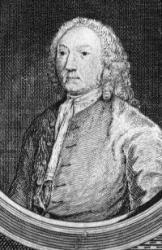
1698 - 1768 Person Name: William Knapp, 1698-1768 Topics: Commitment; Commitment Composer of "WAREHAM" in Christian Worship (1993) Born: 1698, Ware­ham, Dor­set­shire, Eng­land. Died: Sep­tem­ber 26, 1768, Poole, Dor­set­shire, Eng­land. Buried: Poole, Dor­set­shire, Eng­land.

Evelyn Simpson-Curenton

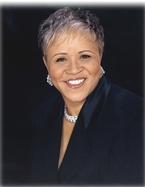
b. 1953 Person Name: Evelyn Simpson-Curenton, b. 1953 Topics: Commitment Arranger of "COME TO JESUS" in Lead Me, Guide Me (2nd ed.) Evelyn Simpson Curenton (born 1953) is a leading African-American composer, pianist, organist, and vocalist. Simpson Curenton began piano lessons at age 5, began to perform with the Singing Simpsons of Philadelphia, a family group, and earned a B.M., Music Education and Voice from Temple University. She has been commissioned to write works for the American Guild of Organists, George Shirley, the late Duke Ellington, and her sister, the late Joy Simpson, arranged music for Kathleen Battle, Jessye Norman, and the Porgy and Bess Chorus of the New York Metropolitan Opera, and has performed with musical organizations such as Philadelphia's National Opera Ebony (later renamed Opera North). Based in the Washington, D.C., area, Curenton is Music Director of the Washington Performing Arts Society's Men and Women of the Gospel and an associate of the Smithsonian Institution. She has given lectures and participated in workshops on early 18th-century black religious music and the music of African-Americans during the Civil Rights era. --en.wikipedia.org

A. Williams

1731 - 1776 Person Name: Aaron Williams Topics: Commitment Composer of "ST. THOMAS" in Moravian Book of Worship Aaron Williams (b. London, England, 1731; d. London, 1776) was a singing teacher, music engraver, and clerk at the Scottish Church, London Wall. He published various church music collections, some intended for rural church choirs. Representative of his compilations are The Universal Psalmodist (1763)— published in the United States as The American Harmony (1769)—The Royal Harmony (1766), The New Universal Psalmodist (1770), and Psalmody in Miniature (1778). His Harmonia Coelestis (1775) included anthems by noted composers. Bert Polman

Pages


Export as CSV
It looks like you are using an ad-blocker. Ad revenue helps keep us running. Please consider white-listing Hymnary.org or getting Hymnary Pro to eliminate ads entirely and help support Hymnary.org.