You help make Hymnary.org possible. More than 10 million people from 200+ countries found hymns, liturgical resources and encouragement on Hymnary.org in 2025, including you. Every visit affirms the global impact of this ministry.

If Hymnary has been meaningful to you this year, would you take a moment today to help sustain it? A gift of any size—paired with a note of encouragement if you wish—directly supports the server costs, research work and curation that keep this resource freely available to the world.

Give securely online today, or mail a check to:
Hymnary.org
Calvin University
3201 Burton Street SE
Grand Rapids, MI 49546

Thank you for your partnership, and may the hope of Advent fill your heart.

Person Results

Topics:omnipotence+of+god
In:people

Planning worship? Check out our sister site, ZeteoSearch.org, for 20+ additional resources related to your search.
Showing 61 - 70 of 92Results Per Page: 102050

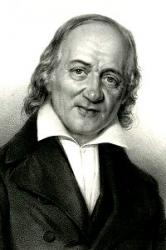
Gottfried W. Fink

1783 - 1846 Person Name: Gottfried Wilhelm Fink Topics: God Omnipotence of Composer of "BETHLEHEM (Fink) (SERAPH)" in Trinity Psalter Hymnal Rv Gottfried Wilhelm Fink PhD Germany 1783-1846. Born at Sulza, Thuringa, Germany, he was a German composer, music theorist, poet, and a protestant clergyman. From 1804-1808 he studied at the University of Leipzig, where he joined the Corps Lusatia, where he made his first attempts at composition and poetry. In 1811 he was appointed Vicar in Leipzig for some years, where he also founded an educational institution, leading it until 1829. Around 1800 he worked for the “Allgemeine musikalische Zeitschrift” (General musical mazazine). In 1827 he became the magazine's editor-in-chief for 15 years. From 1838 he was a lecturer at the University of Leipzig. In 1841 he became a Privatdozent of musicology at the university. That year he became a member of the Prussian Academy of Arts in Berlin, and a year later was appointed university Music Director. He was highly esteemed throughout his life as a music theorist and composer, receiving numberous honors and awards, both at home and abroad. The Faculty of Philosophy at Leipzig University awarded him an honorary doctorate. He wrote mostly Songs and ballads and collected songs as well. He authored important words on music theory and history, but was best known as editor of the “Musikalischer Hausschatz der Deutschen”, a collection of about 1000 songs and chants, as well as the “Deutsche Liedertafel” (German song board), a collection of polyphonic songs sung by men. He died at Leipzig, Saxony. John Perry

Alexander B. Morton

Person Name: A. B. Morton Topics: Afflictions Comfort under; Christ Ministry of; Christ Preciousness of; Christ Providences of; Christ Worshiped; Christians Graces of; Glory of God In Creation; God Compassionate; God Glorious; God Loving and Merciful; God Omnipotent; God Source of All Good; God Works of; Gospel Invitations of ; Gospel Prevalence and Power of; Gospel Privileges of; Heart Broken and Contrite; The Meek; Mercy of God Celebrated; Missions Influence of; Praise For Temporal Mercies; Praise Is Pleasant; Praise Of the Lord; Revival; Royalty of Christ Over All; Royalty of Christ Providential Composer of "[Praise ye the Lord, for it is good]" in Bible Songs

Henry A. Lewis

Topics: God Omnipotence of Composer of "MARY" in The Psalter

James Merrick

1720 - 1769 Person Name: Merrick Topics: Omnipotence of God Author of "Omnipotence; or, the power and Providence of God" in A Selection of Hymns Merrick, James , M.A., was born in 1720, and educated at Oxford, where he became a Fellow of Trinity College. He entered Holy Orders, but his health would not admit of parish work. He died at Reading, 1769. His publications include:— (1) Messiah, a Divine Essay. Humbly dedicated to the Reverend the Vice-Chancellor of the University of Oxford and the Visitors of the Free School in Reading. By James Merrick, Ætat. 14, Senior Scholar of the School at their last Terminal Visitation, the 7th of October, 1734. Reading. (2) The Destruction of Troy. Translated from the Greek of Tryphiodorus into English Verse, with Notes, &c. 1742. (3) Poems on Sacred Subjects. Oxford . 1763. (4) The Psalms of David Translated or Paraphrased in English Verse. By James Merrick, M.A., late Fellow of Trinity College, Oxford. Reading. J. Carnan and Co. 1765. 2nd ed. 1766. A few only of these paraphrases were divided into stanzas. In 1797 the Rev. W. D. Tattersall pulished the work "Divided into stanzas for Parochial Use, and paraphrased in such language as will be intelligible to every capacity . . . with a suitable Collect to each Psalm from the Works of Archbishop Parker." Merrick's paraphrases, although weak and verbose, were in extensive use in the early part of the present century, both in the Church of England and with Nonconformists. They have, however, fallen very much into disuse. Those in modern hymn-books, mainly in the form of centos, include:— 1. Blest Instructor, from Thy ways. Ps. xix. 2. Descend, O Lord! from heaven descend. Ps. cxliv. (In time of National Peril.) 3. Far as creation's bounds extend. Ps. cxlv. 4. God of my strength, the wise, the just. Ps. xxxi. 5. He who with generous pity glows. Ps. xli. 6. How pleasant, Lord.Thy dwellings are. Ps. lxxxiv. 7. Lift up your voice and thankful sing. Ps. cxxxvi. 8. Lo, my Shepherd's hand divine. Ps. xxiii. 9. Lord, my Strength, to Thee I pray. Ps. xxviii. 10. My heart its noblest theme has found. Ps.xlv. 11. O let me, [gracious] heavenly Lord extend. Ps. xxxix. 12. O turn, great Ruler of the skies. Ps. li. 13. Praise, O praise the Name divine. Ps. cl. 14. Sing, ye sons of [men] might, O sing. Ps. xxix. 15. Teach me, O teach me, Lord, Thy way. Ps. cxix. 16. The festal morn, my [O] God, is come. Ps. cxxii, (Sunday Morning.) 17. The morn and eve Thy praise resound. Ps. lxv. (Harvest.) 18. To Thy pastures, fair and large. Ps. xxiii. From his Poems on Sacred Subjects, 1763, the following centos have also come into common use: -- 19. Author of good, to Thee we turn. Resignation. 20. Eternal God, we look to Thee. Resignation. 21. 'Tis enough, the hour is come. Nunc Dimittis. John Julian, Dictionary of Hymnology (1907)

Charles Wood

1866 - 1926 Person Name: Charles Wood, 1866 - 1926 Topics: God Omnipotence of Harmonizer of "MEIN ARMUTH" in The Book of Praise

F. Venua

1788 - 1872 Person Name: Frederick M. A. Venua Topics: God Omnipotence of Composer of "PARK STREET" in Trinity Hymnal Frederic Marc Antoine Venua; English composer Evangelical Lutheran Hymnal, 1908 Born to an Ital­i­an fa­mi­ly in France, Ve­nua at­tend­ed the Pa­ris Con­ser­va­to­ry, and stu­died com­po­sition in Lon­don. He di­rect­ed and com­posed for the ball­et or­ches­tra at the King’s The­a­ter, and be­longed the Bri­tish Roy­al So­ci­e­ty of Mu­si­cians. He re­tired to Ex­e­ter in 1858. © The Cyber Hymnal™ (http://www.hymntime.com/tch/bio/v/e/n/u/venua_fma.htm">Frederick Marc Antoine Venua)

Horatio W. Parker

1863 - 1919 Person Name: Horatio W. Parker, 1863- Topics: Omnipotence of God Composer of "GARDEN CITY" in Methodist Hymn and Tune Book

Edward G. Taylor

1830 - 1887 Person Name: E. G. Taylor Topics: Omnipotence of God Composer of "LATAKIA" in Psalter Hymnal (Red) Taylor, Edward G. (Fox Chase, Philadelphia, Pennsylvania, November 25, 1830--April 10, 1887, Buffalo, New York). University of Lewisburgh, 1854; Rochester Theological Seminary, 1856. Pastorates at Terre Haute, Indiana, 1857-1860; Cincinnati, Ohio, 1860-1864; Chicago, Illinois, 1864-1870; New Orleans, Louisiana, 1870-1875; Providence, Rhode Island, 1875-1881; New York, 1881-1882; Newark, New Jersey, ?; Buffalo, N.Y., 1885-1887. Taylor was the author of a large number of hymns for use in Sunday schools. In the Service of Song for Social Meetings (1881) is one of his hymns that begins "Deal kindly with my master," with music by George W. Stebbins. Stebbins also composed music for Taylor's "Not saved are we by trying." For most of his hymns, Taylor composed the music as well as the words. Among these are the following: Able to save the uttermost is he All my trust is in Thee, Jesus Arise and be doing, the Lord be with Thee Calleth the Savior in tones of love Glad the ransomed of Jehovah O Lord from thy dwelling place hear our hearts say One thing I know, I was blind but now see Serve the Lord with willing mind Thank God for the Bible, more precious than gold The happy morn has dawned at last Trust him sinner, trust him now Why sit we here until we die Wine is a mocker, and strong drink is raging One hymn is a rendering into verse of Samuel 2:9, "At the King's table the kindness of God." --Alan Wingard, DNAH Archives

David Haas

b. 1957 Topics: Advent; Baptism; Birth; Confession; Creation; Death; Epiphany Season; Forgiveness; Funeral; God as Omnipotent; God as Omnipresent; God as Omniscient; God as Searcher; Grace; Life; Mercy; Nature; Providence; Sanctity of Life; Sin; St. Bartholomew; St. Luke; Suffering; Ten Commandments 9th and 10th Commandments (You shall not covet); Thanksgiving; Visitation Author of "Before I Was Born" in Christian Worship

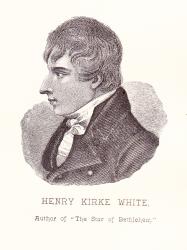
Henry Kirke White

1785 - 1806 Person Name: H. K. White Topics: Almighty Power and Majesty of God; Character, Attributes, and Providence of God; God his omnipotence Author of "The Lord, our God, is clothed with might" in Hymns for Christian Devotion White, Henry Kirke, a gifted English poet who died early in life, was born in Nottingham, England, March 21, 1785. Very early he manifested a remarkable love for books and a decided talent for composition. But his parents were poor, and he was apprenticed in early boyhood to a stocking weaver, from which uncongenial servitude he escaped as soon as he could and began the study of law; but later he was converted and felt called to the ministry. The story of his conversion from deism to Christianity is briefly but beautifully told in the poem titled "The Star of Bethlehem." He entered St. John's College, Cambridge, in 1805 as a servitor; but died October 19, 1806, in the second year of his college course, when only twenty-one years of age. In 1803 he published a small volume of poems. Some of them are very fine, but no doubt he would have produced others far better if he had lived to the ordinary age of man. His rare poetic genius, his victory over skepticism and subsequent faith and piety, his hard struggle with poverty and early death invest the story of his life with more than ordinary pathos. His hymns, ten in number, appeared in Collyer's Collection, 1812. Oft in danger, oft in woe 412 The Lord our God is clothed with 99 When marshaled on the mighty 124 Hymn Writers of the Church, 1911 ============================ White, Henry Kirk, remarkable both for the early development of his genius and for the untimely termination of his brief life of splendid promise, was born at Nottingham, March 21, 1785. His father was a butcher, but his mother must have been a superior woman, since for a number of years she successfully conducted a boarding-school for girls. The writing-master in her establishment was for some time Henry's teacher, and under his instruction he made remarkable progress in Latin and other subjects. At the age of 13 he composed the lines "To an early Primrose," which were subsequently printed with his poems. At 14 he left school, and was put to the stocking-frame in order to learn prac¬tically the business of a hosier; but, disliking the employment, he was removed to an attorney's office in Nottingham, with a view to the legal profession. All his spare time was now devoted to literary pursuits, the acquisition of languages, and the composition of poetical and other contributions for the periodicals of the day. At the age of 15 he obtained from the Monthly Preceptor a silver medal for a translation from Horace, and a pair of globes for the best description of an imaginary tour from London to Edinburgh. When only 17 he was encouraged to publish his Clifton Grove and other Poems, which were certainly excellent as the compositions of a mere boy. About this time he was inclined to scepticism, but. through the perusal of Scott's Force of Truth and the arguments and appeals of a young friend, R. W. Almond (afterwards Rector of St. Peter's, Nottingham), he was led to earnest faith in Christianity. His well-known hymn "When marshall'd on the nightly plain" is understood to be a figurative description of his spiritual experience at this period. He now desired to become a Christian minister, and through the generosity of his employers he was released from his articles in 1804. With the help of the Rev. C. Simeon and other friends, he became a student of St. John's College, Cambridge. There he speedily distinguished himself, and the highest honours seemed within his grasp; but over application to study destroyed his health, and he fell ill and died Oct. 19, 1806, in the 22nd year of his age. Universal regret was expressed at his untimely end. Southey published his Remains, accompanied by a short memoir. Lord Byron composed some beautiful lines on the sad event. Josiah Conder and others wrote commemorative verses. The entire literary young manhood of England and America seemed moved with sympathy. A monumental tablet, with a medallion by Chantrey, was erected in All Saints Church, Cambridge, at the expense of a citizen of Boston, in the United States. Ten hymns are ascribed to H. K. White, which were printed by the Rev. Dr. W. B. Collyer in his Supplement to Dr. Watts's Psalms & Hymns, London, 1812. Of these four of the most popular are annotated as follows: "Awake, sweet harp of Judah, wake"; "Christians, brethren, ere we part"; "Much in sorrow, oft in woe"; “When marshalled on the nightly plain." These are all in extensive use. The rest, all in common use at the present time, are:— 1. 0 Lord, another day has flown. Evening. From this the hymn "0 let Thy grace perform its part" is taken. 2. 0 Lord, my God, in mercy turn. Penitence and Faith. 3. The Lord our God is full [clothed in] of might. Divine Sovereignty. 4. The Lord our God is Lord of all. Divine Sovereignty. 5. Through sorrow's night and danger's path. The Resurrection. Sometimes given as "When sorrow's path and danger's road." 6. What is this passing scene? Human Frailty. This hymn consists of selected stanzas from his “Ode on Disappointment." [Rev. W. R. Stevenson, M.A.] -- John Julian, Dictionary of Hymnology (1907)

Pages


Export as CSV
It looks like you are using an ad-blocker. Ad revenue helps keep us running. Please consider white-listing Hymnary.org or getting Hymnary Pro to eliminate ads entirely and help support Hymnary.org.